

Unlike competition models or regular carving skis, freeski models come in a huge variety of shapes and widths. They can be enjoyed on any slope, not just the groomed runs at ski resorts, but also in the backcountry, and they can be used in a variety of ways, not just for gliding but also for flying and scrubbing. With that in mind, let's start by looking at the basics of what a freeski model is and learn the basics of choosing a ski
*Basic information about ski structure and materials was provided by rider and ski developer Masayuki Akiba of Vector Glide.
*Ski specifications: D (dimension = sidecut), L (length), R (turning radius)
POINT 1 Different characters depending on waist width
The most important thing to distinguish between different freeskis is their waist width. The wider the waist, the more buoyancy, and the narrower the width, the quicker the edge changes. In other words, the wider the waist, the better it is for powder, and the narrower the waist, the better the turning ability. The next thing to consider is where to strike a balance between buoyancy and turning ability.
It's also worth noting that each brand adds ingenuity to the outline and structure to compensate for the disadvantages of each.
[Waist > 90mm]
This board transfers leg power directly to the edges, making it ideal for carving on packed slopes. The overall slim volume also makes it ideal for lightweight touring models.

Waist width: 90-100mm.
This is the typical waist width for park models. It makes edging easy even on hard surfaces, and the not-too-narrow outline (waist) makes jumping and freestyle tricks easy.

Waist width: 100-110mm.
This versatile waist width allows you to enjoy carving on groomed runs and provides the buoyancy you need in powder. If you plan on using one ski for the entire season, this size range is recommended.
[Waist = 110-120mm]
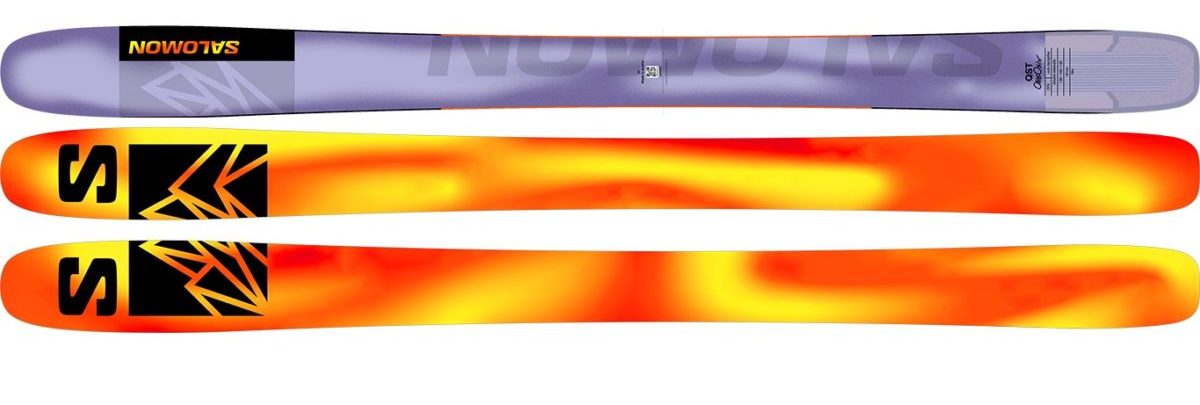
Skis that prioritize powder fun, but don't want to sacrifice edge control on hard snow.
[Waist = 120mm and up]
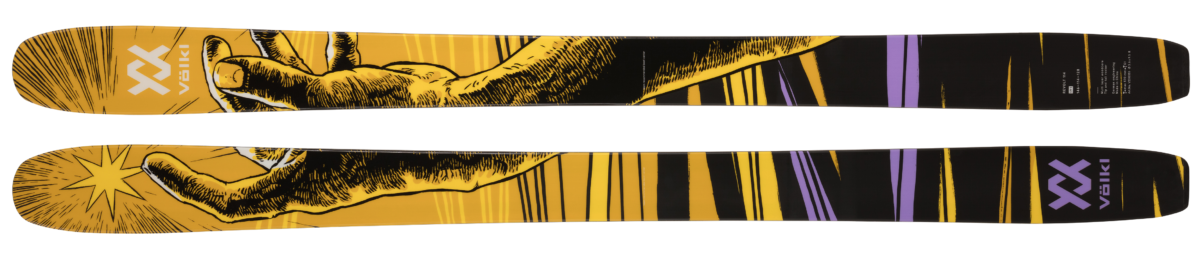
A deep powder model with an extremely thick outline. It can turn on groomed runs, but is more suited to deep snow as a second model.
POINT 2 <BOTTOM DESIGN> Camber and rocker
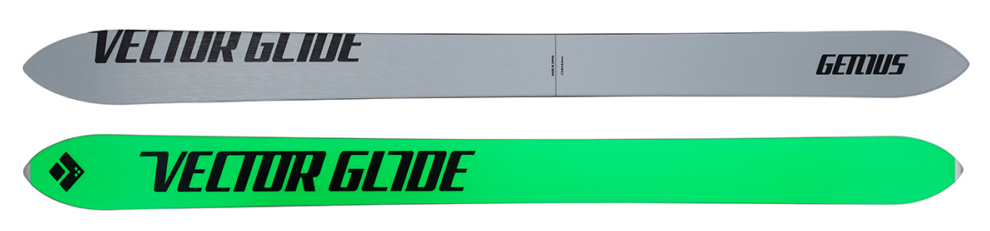
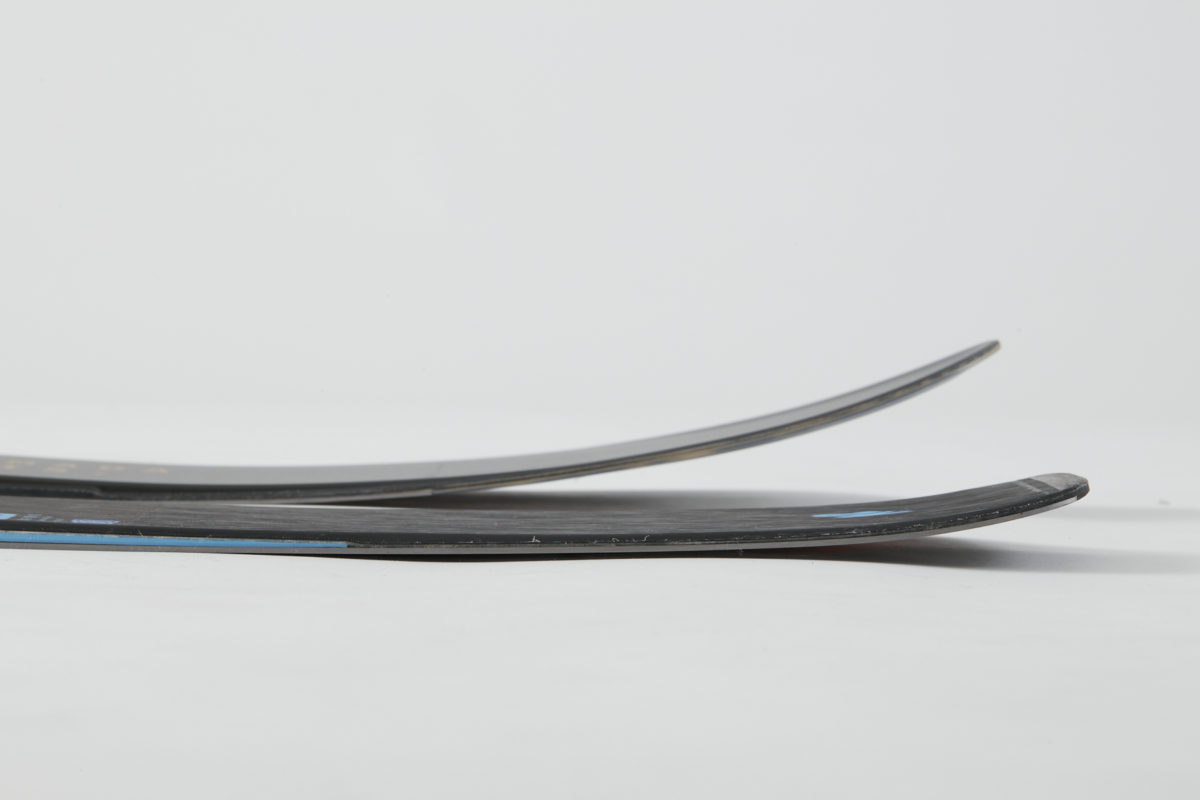
Differences in bottom design have a big impact on the maneuverability and riding feel of skis. Basically, camber allows for quicker turn transitions, nose rocker promotes buoyancy and easier turn initiation, and tail rocker makes it easier to slide the tail. There are several combinations of these, and they are adopted depending on the purpose of the ski
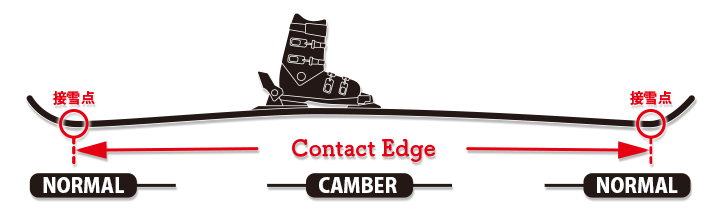
[Camber model]
A classic bottom design with no rocker. The long contact edge and camber create agility and stability in turns, but require a certain level of skill in powder.
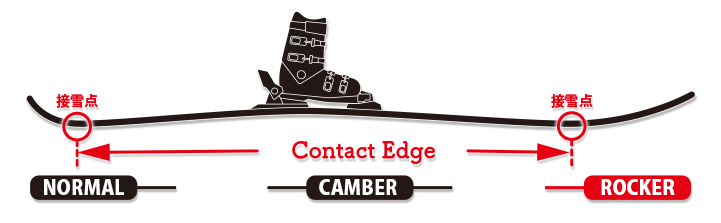
[Nose rocker + camber model]
This bottom design is used on most directional models. The nose rocker promotes buoyancy in powder, and the straight tail creates stability in the latter half of the turn.
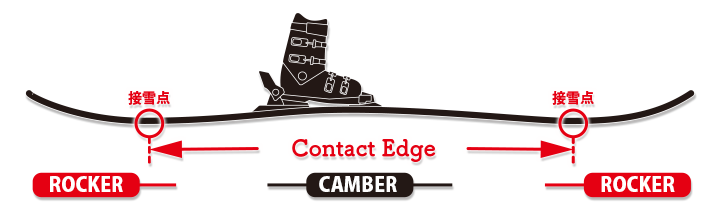
[Nose rocker + camber + tail rocker model]
The effective edge is short compared to the overall length, giving you great freedom in riding, and the tail rocker allows you to slide and glide as you wish. This is common in thicker freestyle models.
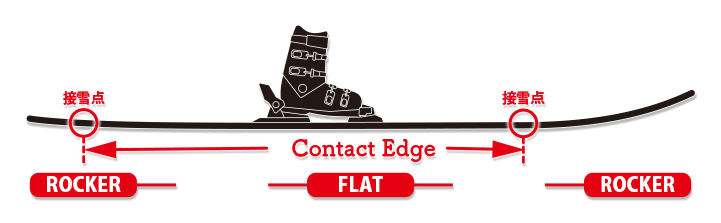
[Full Rocker Model]
The full rocker creates a smooth arc across the entire bottom. The nearly flat underfoot makes sliding easy. This allows for comfortable and free riding on banks, natural terrain, and deep snow.
POINT 3Directional and Freestyle
There are two main types of freeski model outlines: "directional" and "freestyle.
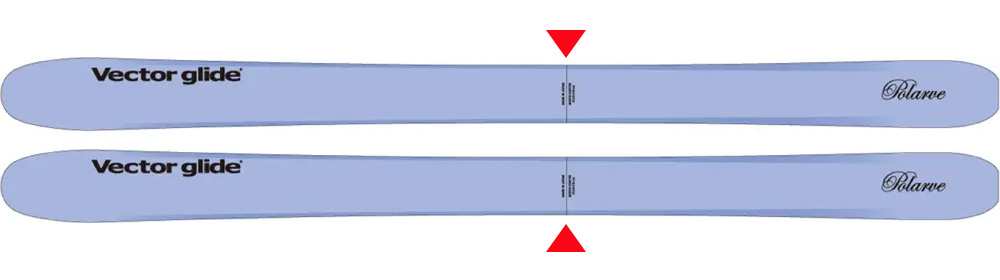
" "Directional" comes from the word "direction," meaning bearing or direction, and is designed for skiing forward. If a skier from before the advent of twin-tip skis were to read this, they'd probably think, "What? That's obvious!" But that's what it means: this type of ski has the same orthodox shape as a regular carving ski. It excels in turning and high-speed stability, allowing you to enjoy stable, high-speed turns even on hard surfaces.
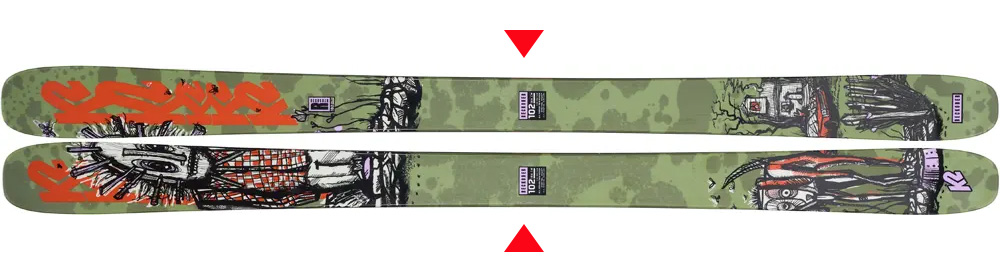
The "Freestyle" skis are twin tip or twin rocker models with a distinctive curved tail. They're perfect for not only turning, but also flying, scrubbing, sliding, and even switch landings, making them truly freestyle skis. The binding attachment point is set near the center of the ski, providing excellent swing balance and superior maneuverability and stability for jumps, freestyle tricks, and switch runs
POINT 4 Basic structure
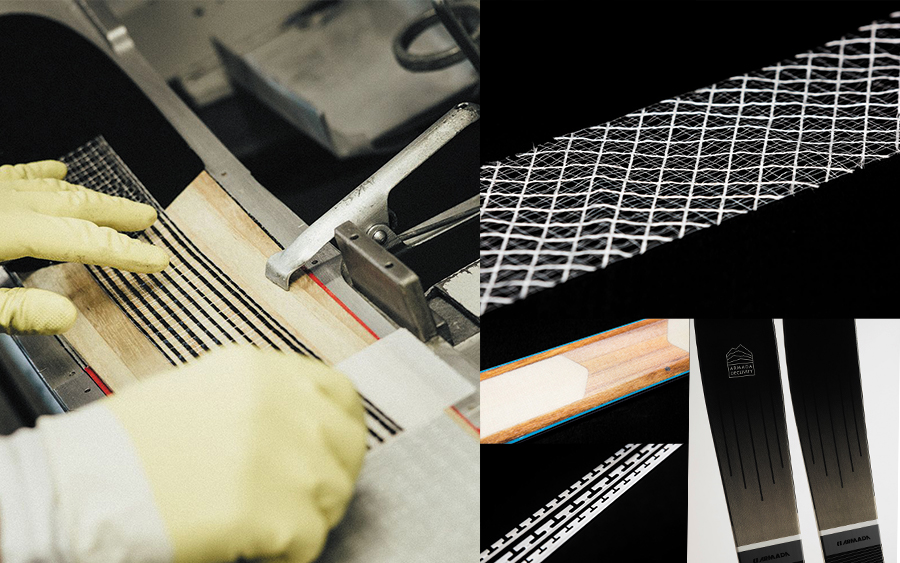
The wooden core is reinforced with fiberglass, resin, or metal materials, and the sliding surface is made of edges and base material, with a topsheet topped with a graphic. This is the basic structure of a ski. Each part is glued together and then pressed together with pressure in a press. There are endless options for the type, combination, and shape of core and reinforcement materials, which gives rise to the individuality of each brand and the differences in performance of each model
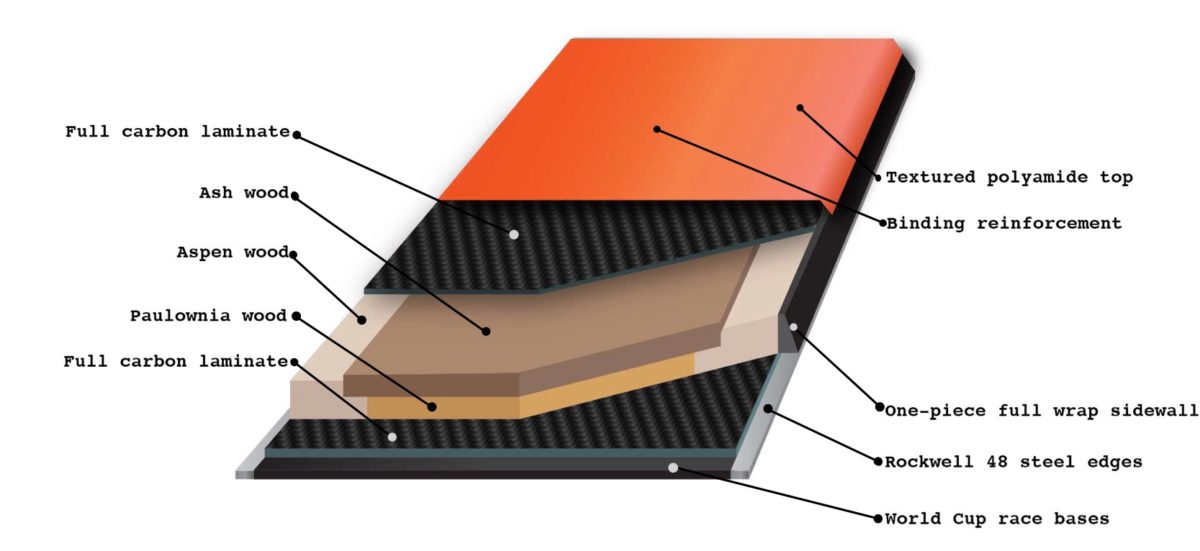
When you pick up a ski and push down on the center, it bends smoothly, and when you release it, it returns to its original shape. This important property of skis is mainly the function of the core material. The role of the reinforcement material is to compensate for the strength of the long, thin, and easily breakable core material, while balancing the elements that determine the ski's performance and ride feel, such as tension, toughness, resilience, and vibration absorption. With this core material and reinforcement material at the center, it is important to consider what materials are combined and how, including the top sheet, sidewall, base material, and edge material. This is the technology of modern skis
POINT 5 <CONSTRUCTION> Side structure
When it comes to ski construction, we often hear about sandwich or cap construction, or a semi-cap construction that combines the two. The differences between these two don't have much of an impact on the performance or ride feel of the skis. The main reason for the different side structures is purely manufacturing-related. Roughly speaking, the cap construction is suited to mass production, while the sandwich construction, which requires the time and skill of a craftsman, is not.
However, recently there have been signs of change in this construction. The 3D shaped construction that we've seen more and more recently is a precursor to this. The semi-cap and cap constructions offer greater flexibility and the advantage of being lighter than the sandwich construction, and many brands are adopting them.
POINT 5 Material
[Core Material]
With the exception of junior and entry-level models, wood is the mainstream core material for skis. When it comes to achieving the supple rebound and smooth flex required of skis, nothing beats a wood core. Naturally, the species, part, and quality of the wood affect the ski's specifications. However, the hardness and lightness of the wood are not directly reflected in the ski; it all depends on how the layers are combined. Most wood cores are made of laminated wood, not single ply. This is because the flexibility and strength are adjusted by combining different materials. There are also cases where advanced materials such as carbon are inserted as stringers.


[Reinforcement]
Glass fiber is the most commonly used reinforcing material for wood cores. It is a flexible reinforcing material that is easy to process. Carbon fiber is a lightweight material with strong resilience. Titanal, an alloy of titanium and aluminum, has excellent vibration absorption properties. Each material has its own negative aspects depending on how it is used, but companies are currently pooling their technological capabilities to find ways to make the most of these materials.

Supervised by: Masayuki Akiba (VETCTOR GLIDE Producer)
Text/Chikara Terakura