

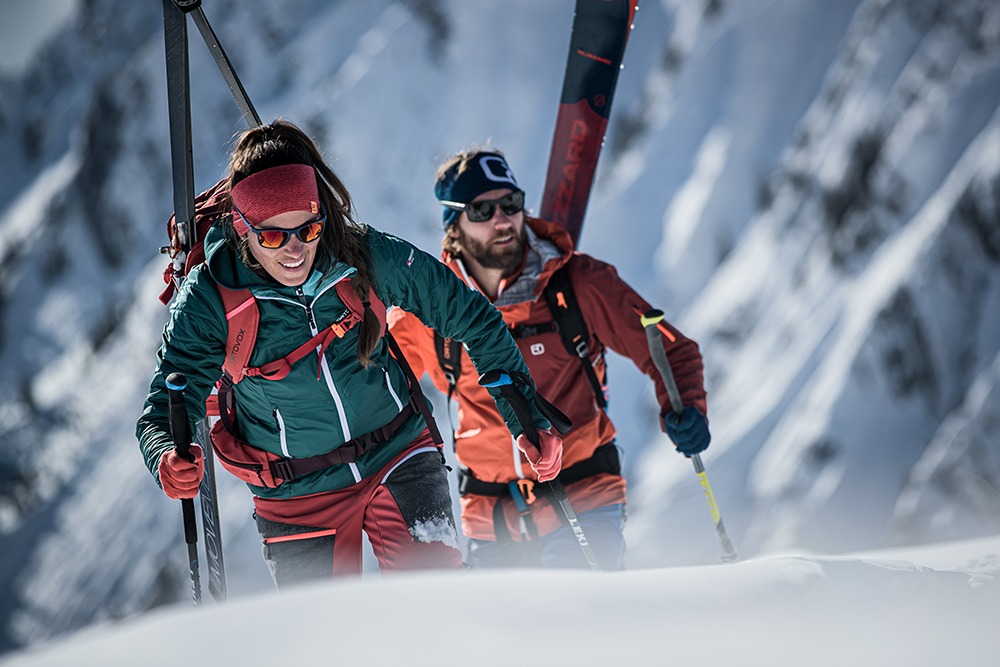
Photo by ORTOVOX
The human body is well designed. When you exercise and your body temperature rises, sweat soaks into your skin, and the resulting evaporative heat lowers your body temperature. This sweating process may be just a "nice breeze" in the summer, but it can be deadly on a snowy mountain in the dead of winter. That's why clothing is required to allow you to move and stop without sweating. That's where layering comes in
First of all, what is layering?
Layering means "dressing in layers." It refers to regulating body temperature by putting on and taking off multiple layers of clothing to maintain body temperature and prevent sweating
In summer mountains, you can get by with just two or three layers at most, but in winter mountains, you need to add models with high thermal insulation such as mid-layers and insulated jackets, so the number of layers increases and the actions become more complex
The less you exercise, the less necessary layering is, but as your activity level increases, the more important it becomes, and the more functionality you require from your clothing and the actions you take.The ideal layering is one that maintains a good balance of the two opposing functions of warmth and breathability (moisture permeability) at all times, meaning you can stay sweat-free
Why is layering necessary?
Needless to say, the principle of layering in snowy mountains is to keep your body warm. If you're standing still with no physical activity, you can just focus on keeping your body warm by wearing clothes and a hat. However, when humans move, they produce heat and steam. This heat and steam is produced in proportion to the energy the body consumes, and it needs to be released through clothing. That's right, to prevent sweating
The key to enjoying skiing or snowboarding on snowy mountains is walking without sweating and how to deal with sweat. Listen to your body and layer or remove clothing flexibly. If your level of activity fluctuates greatly, you'll need to layer more frequently, which can be quite hectic. However, everyone's perceived temperature and sweat levels vary. The key is to find your own layering technique through trial and error
Layering in snowy mountains: its types and roles
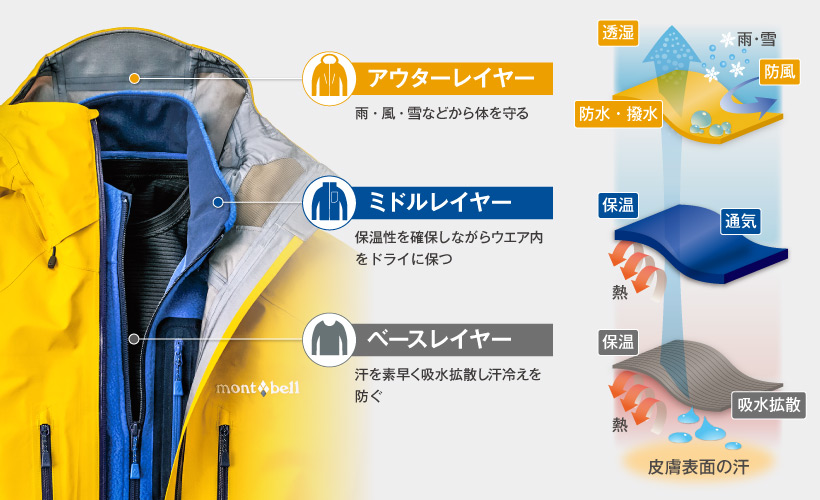
1. Base layer
It is the thinnest layer of clothing that comes into contact with the skin. Its functions are diverse, including heat retention, elasticity, quick drying, and deodorization. The material is generally limited to two choices: merino wool or synthetic fibers, and recently hybrid models that combine the best of both worlds have also appeared
Merino wool is the wool of Merino sheep bred in Australia and New Zealand. It has excellent heat retention, is soft to the touch, and prevents chills from sweat. It is also a natural material that suppresses the growth of bacteria that cause unpleasant odors. Synthetic fibers are mainly polyester, which is quick-drying, durable, and stretchy. It is often worn during times of heavy sweating, as it absorbs sweat between the fibers, disperses it, and dries it
The most important function on snowy mountains is how well the material handles sweat. The most important thing to consider is absorbing sweat between the fibers and preventing body heat from being lost through evaporative cooling, i.e., preventing sweat from cooling you down. It is also important that the absorbed sweat dries quickly, so cotton, which is difficult to dry, is a no-no
Recently, a new category of highly water-repellent dry layer has become popular. Worn under a base layer, this quickly wicks sweat away from the skin and onto the base layer, preventing chills from sweat. This innovative undergarment is widely used for cold-weather mountain climbing and other activities, such as river climbing. Models that combine the dual structure of a dry layer and base layer into one have also appeared, and the base layer market is keen to prevent chills from sweat
◆Example of a 100% merino wool base layer
ORTOVOX | ROCK'N'WOOL LONG SLEEVE
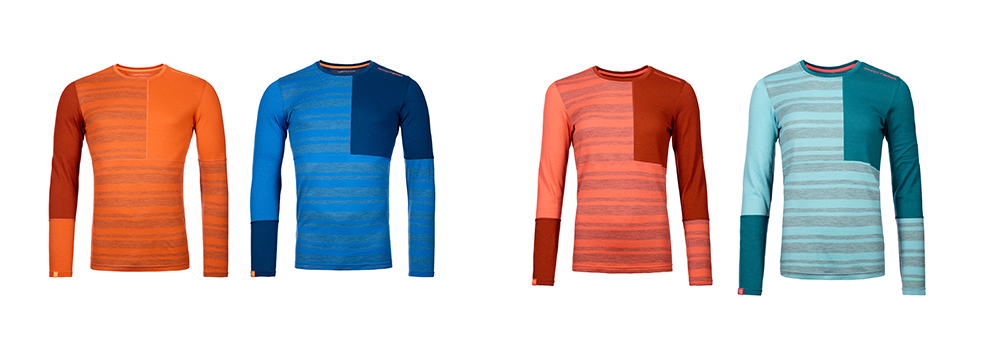
Made from 100% virgin merino wool from Tasmania, it feels incredibly soft against the skin. While it's not as good as synthetic fibers, it dries quickly and doesn't get stuffy. Being 100% wool, it's also incredibly odor-resistant, which is a plus. Not only is it extremely warm and perfect for the winter season, but the material's breathability also makes it comfortable to wear in the summer. It's warm and comfortable enough to wear just one top and bottom in your everyday life, even indoors in the winter
◆ Example of a hybrid base layer
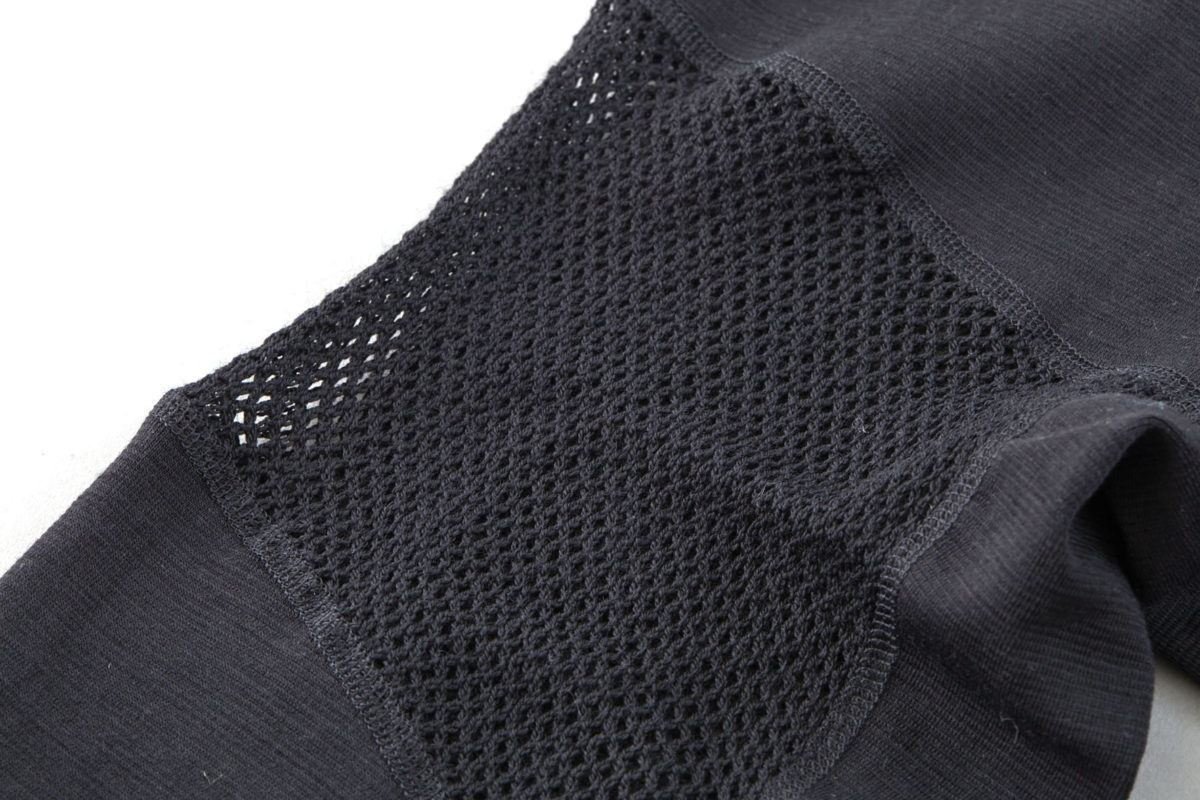
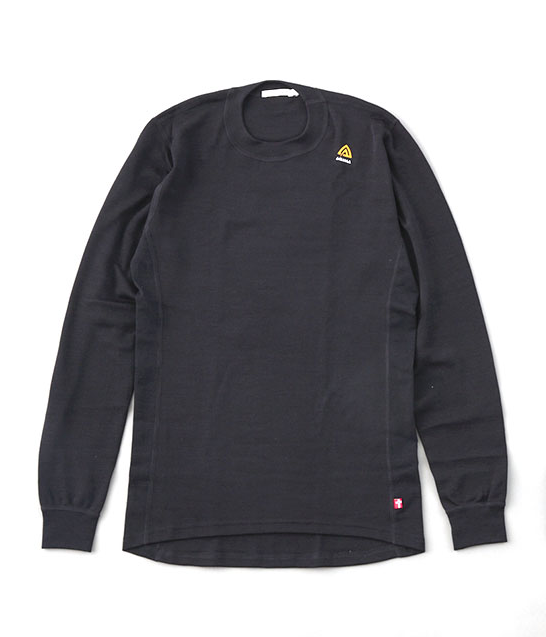
ACLIMA
WarmWool Crew Neck
12,100 yen
Sizes: XS to 3XL
Colors: 3 colors
This signature model from ACLIMA is made from high-quality merino wool, grown with consideration for the natural environment and farming conditions. It's a blend of 80% merino wool and 20% polyamide. It wicks sweat, dries quickly, and keeps your skin dry
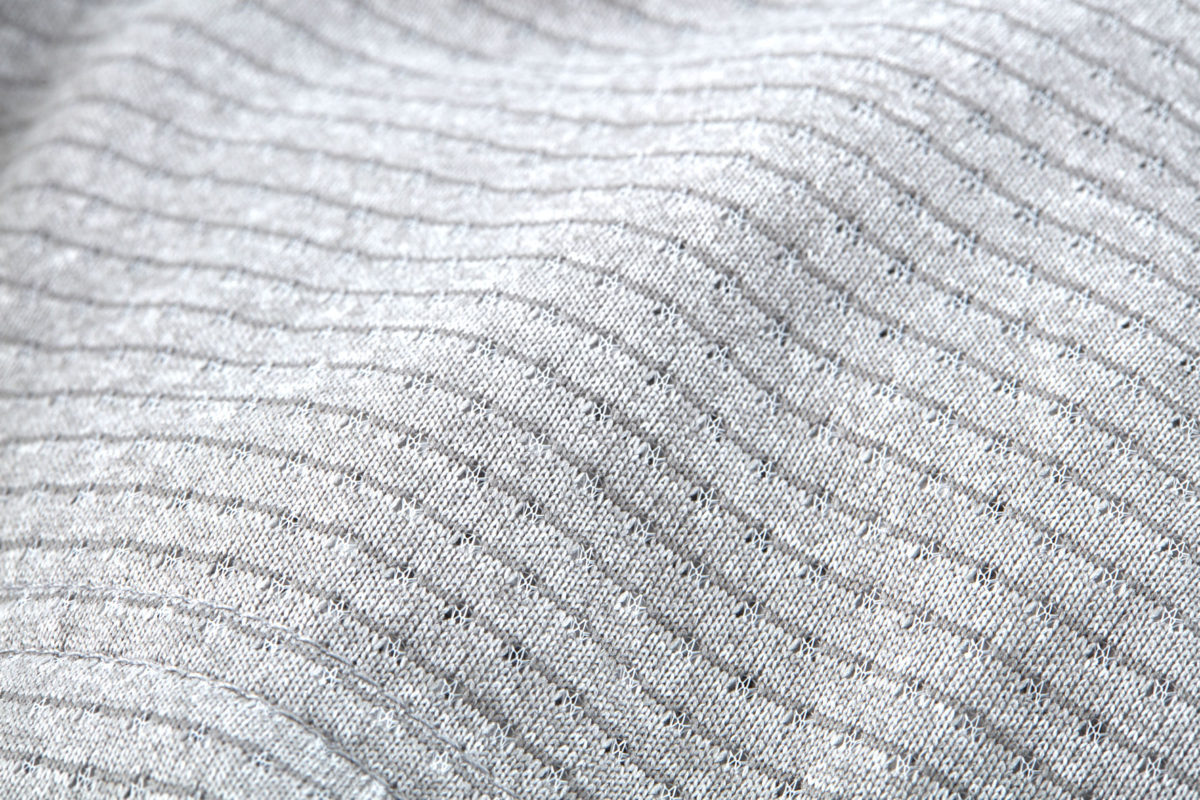

MILLET
WHOLE GMT WAFFLE WOOL HD M
16,500 yen
Size: XS, S-M, L
Color: 3 colors
This hybrid base layer is made of 73% high-quality merino wool and synthetic fibers. Its lightweight, warm, three-dimensional waffle construction reduces stress on the skin and provides a soft feel. It also has high breathability and quick-drying properties
2. Midlayer
As the name suggests, it is a mid-layer worn between the base layer and outer shell. It is required to have insulation and stretchability to keep warm air in, as well as adequate breathability to let out moisture
The most popular type is the fleece jacket. It is made of brushed polyester fabric that traps warm air, making it highly insulating. However, it has the drawback of being windproof and bulky. Other types include traditional wool sweaters and those made of merino wool woven into a pile
Recently, models that use minimal synthetic fiber filling, known as active insulation, have become popular. Also known as dynamic insulation, these garments minimize the amount of filling to prevent overheating during activity and increase breathability. When you're moving, they pump out moisture as you move, and when you're stationary, they provide just the right amount of insulation to keep you warm. Materials used for filling include Polartec Alpha and Primaloft Gold Active
◆ Example of a fleece mid-layer
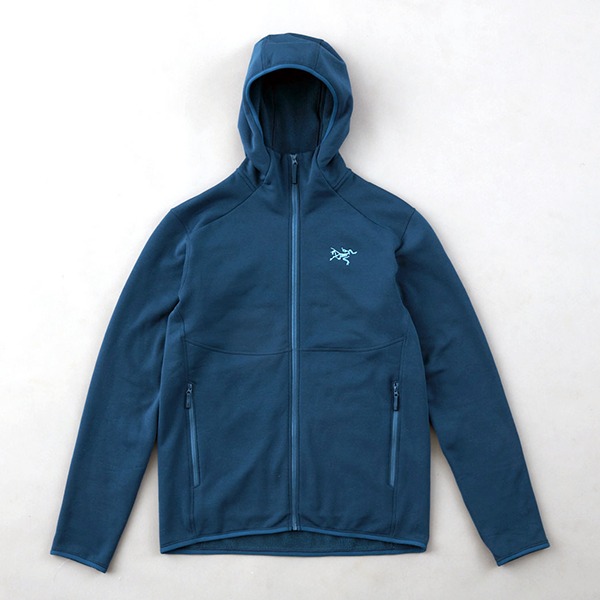
ARC'TERYX
Kyanite AR Hoodie
24,200 yen
Size: XS to XXL
Color: 5 colors
This versatile fleece is flexible, light, and just the right amount of warmth. Its relatively thin fabric allows for easy movement even when layered, and allows moisture to escape easily
◆ Example of active insulation

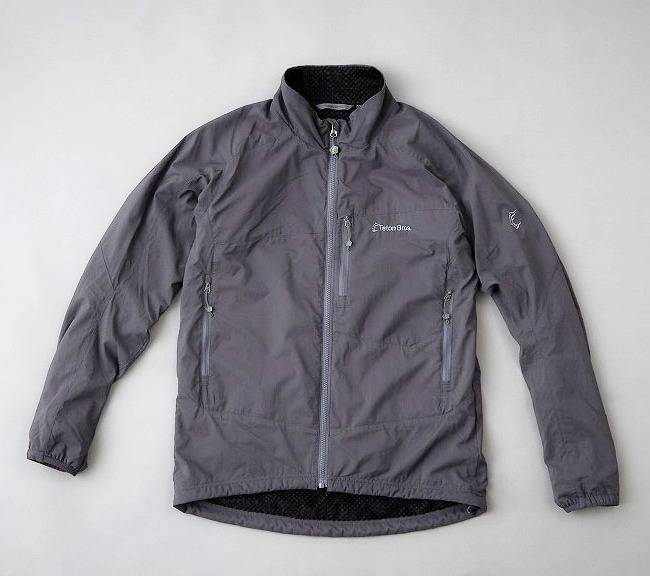
TETON BROS.
SUB JACKET
26,400 yen
Size: XS-XL
Color: 6 colors
This active insulation jacket offers a balanced combination of warmth, breathability, and light weight. It keeps you dry and prevents overheating even during intense hikes
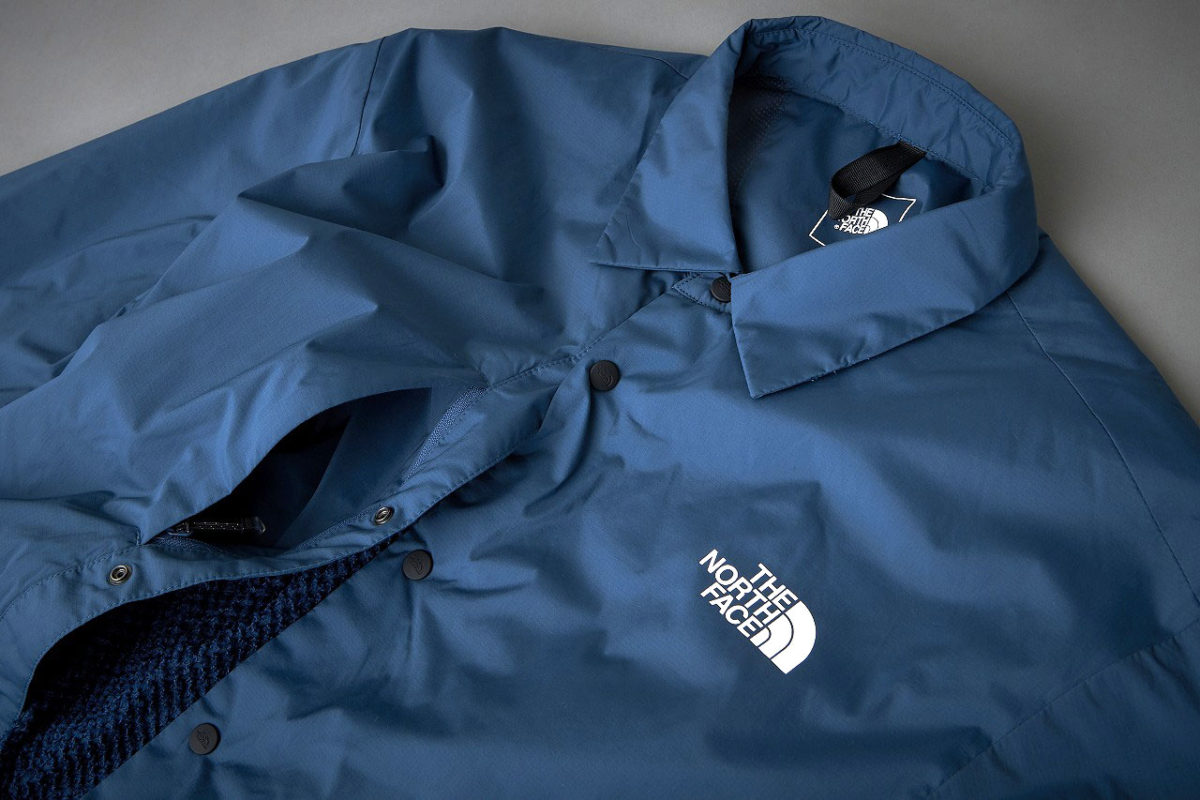
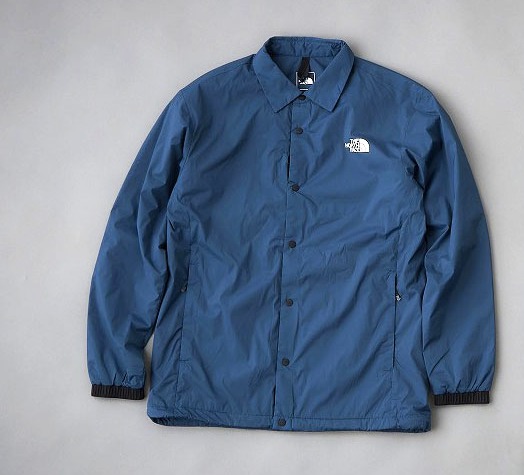
THE NORTH FACE | VENTRIX SHIRT & HYBRID VENTRIX PANT
THE NORTH FACE
VENTRIX SHIRT
27,500 yen
Sizes: S-XL
Colors: 2 colors
The Active Insulation series offers a perfect balance of four functions: water repellency, breathability, warmth, and stretch. The Ventrix synthetic cotton, which has slits for increased stretch and breathability, maintains heat retention when stationary, and the slits open to allow moisture to escape when active
3. Outer shell
Shells are literally garments that protect the body from snow, wind, and rain like a shell. Winter models typically have a three-layer structure, consisting of a waterproof and breathable outer layer, a waterproof and breathable membrane, and a lining. Outer shells are required to be waterproof and windproof, as well as breathable to allow heat generated during activity to escape
Gore-Tex is synonymous with waterproof and breathable membranes. The thin film-like Gore-Tex membrane has 1.4 billion tiny holes per square centimeter, allowing water vapor to pass through but not water. This allows for a high level of waterproofness and breathability
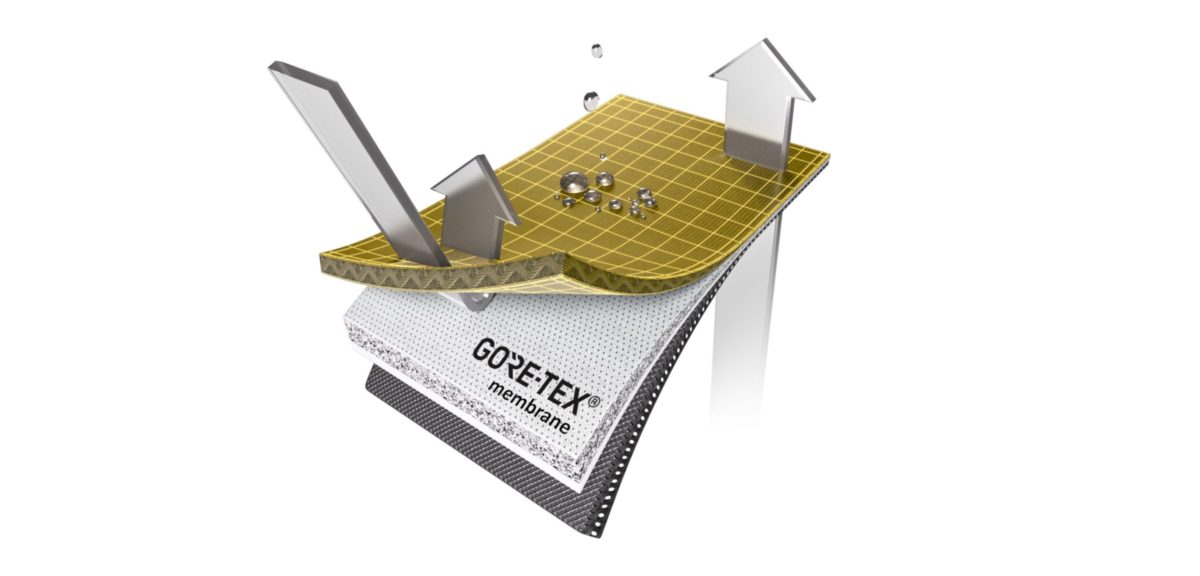
provided by Gore Japan LLC
◆ Example of an outer shell made with Gore-Tex
PeakPerformance | SHIELDER R&D JACKET & SHIELDER R&D JACKETPANTS
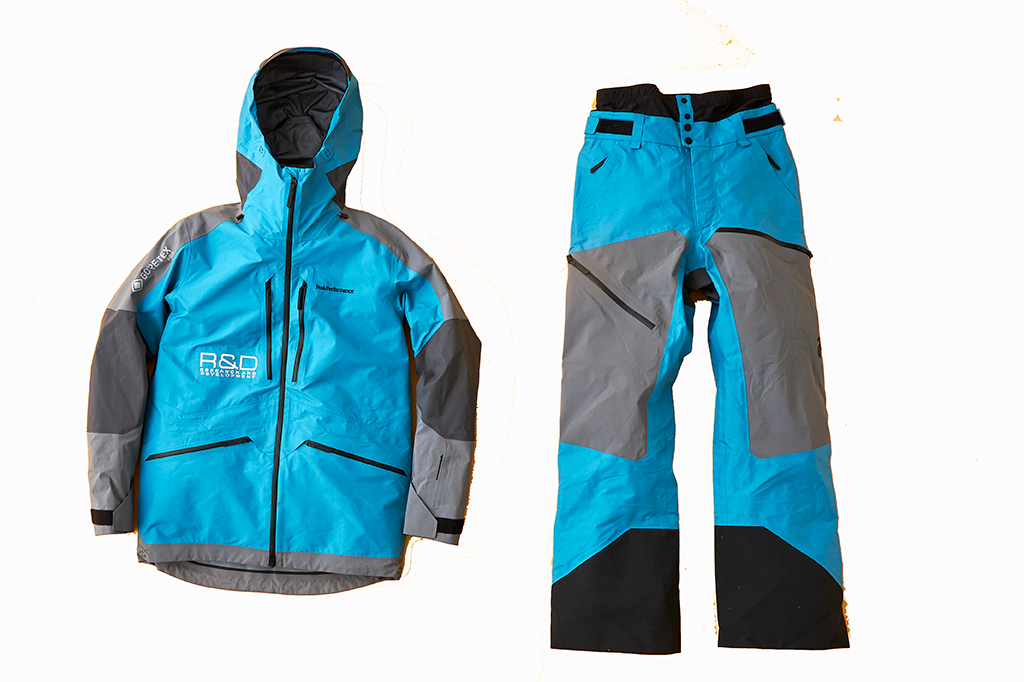
SHIELDER R&D JACKETPANTS 79,200 yen / S-L / 2 colors available
This high-spec model, developed in collaboration with athletes, is new for the 2021 season and uses Gore-Tex Pro, which offers the highest level of breathability
You have to find your own comfortable layering
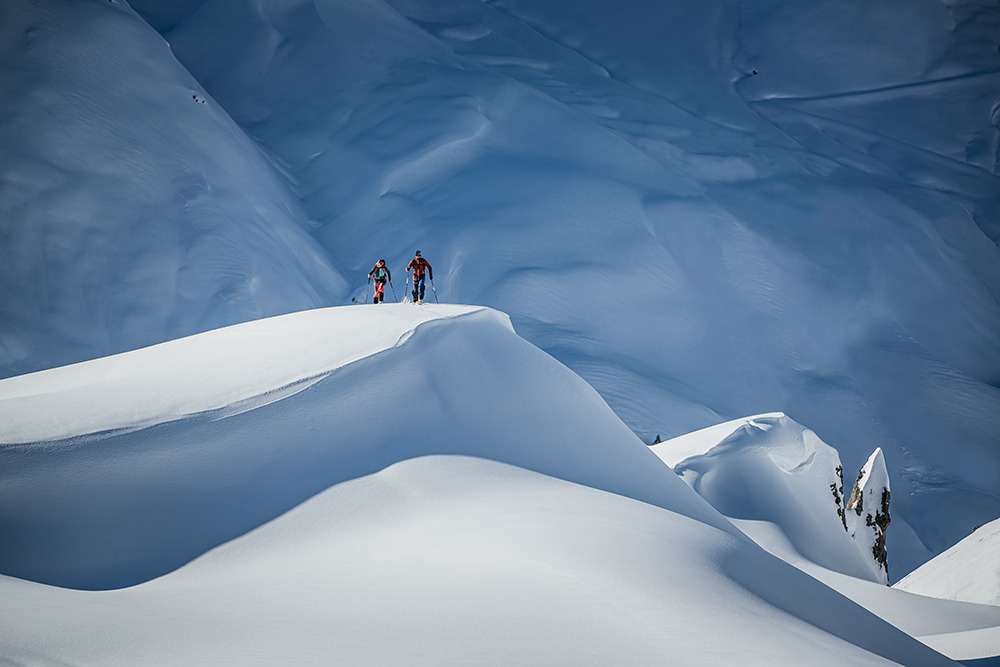
Each person's temperature perception and heat output vary. Some riders are sensitive to heat and only need two layers, a base layer and an outer shell, even in the coldest winter, while others prefer to wear an insulated jacket even when hiking uphill
Layering is not something that can be said with certainty for everyone. Each person has to experiment on the spot and find their own layering method
The shortcut to finding your ideal layering is to know your body well. Can you use your imagination to predict what will happen if you keep walking like this? What kind of clothing do you need when the temperature is minus 5°C at an altitude of 1,500m and the wind speed is forecast at 10m/s? Should you put on an outer shell or a wind shell by the time you leave the forest and reach the ridge?
Once you learn to listen to your body and respond quickly, you can say that you are well on your way to creating a comfortable layering routine
summary
Humans are creatures that have evolved and migrated. By acquiring clothing, or layering, we have been able to adapt to a variety of environments, from the equator to the Arctic, and spread to every corner of the globe
Clothing incorporating new materials and functions will continue to appear, making layering smoother and more comfortable. With technological innovation, the day may not be far off when clothing like wild animal fur is developed that can be worn comfortably throughout the seasons. Until that day comes, layering will remain a way for humans to survive in confrontation with nature
Text by Shinya Moriyama