


When it comes to choosing gear, we tend to focus on skis and boots, but in backcountry skiing (BC), ski poles are an essential piece of equipment. At BCs in the great outdoors, ski poles are used in a completely different way than on the slopes. So, we asked Amari of Ishii Sports, who has experience at BCs and extensive knowledge of gear, about how to choose and use poles
The role of poles in the backcountry
Many skiers don't use poles when riding in parks, but poles have many roles in backcountry. For example..
- To gain propulsion when climbing
- To maintain balance when skiing
- To prevent getting buried in powder when skiing
- To operate bindings etc.
- Sometimes used as a probe for avalanche gear
Poles are essential, especially in the backcountry, including when climbing, and they play an important role in terms of safety

Pole structure
The pole structure is as follows. Let's review the names of each part and what you should pay attention to when using a BC
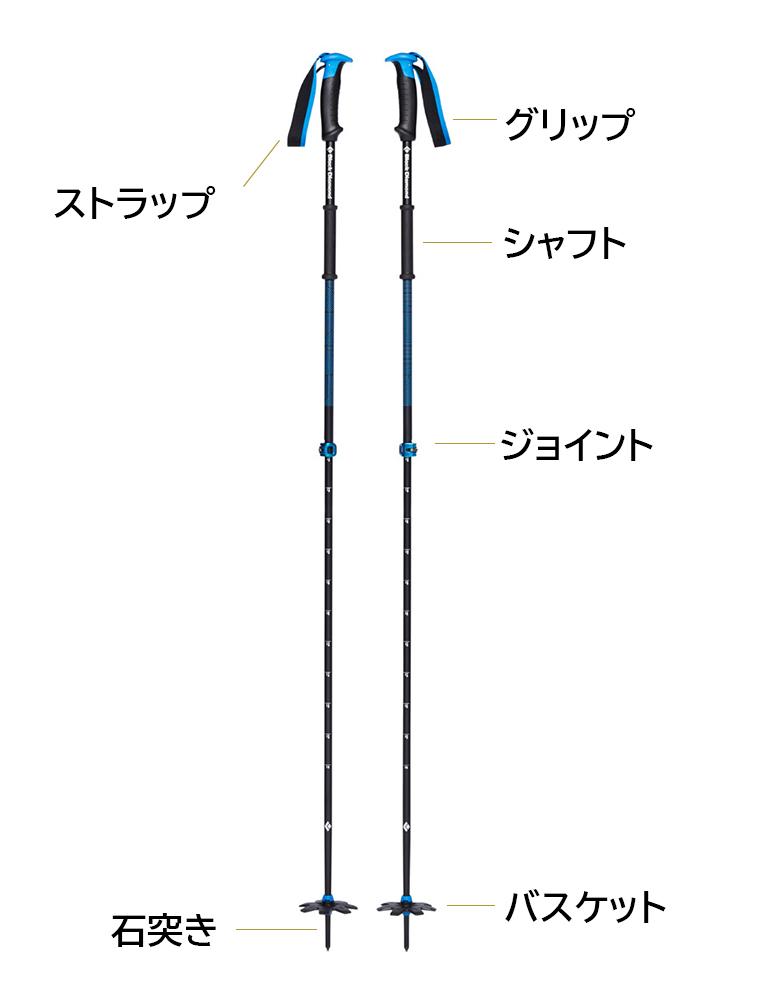
the grip
shape and material. Many are ergonomically shaped for ease of grip, but some are designed to be used with mittens or to take into account the swing when skating. The material is mainly lightweight thermoplastic polyurethane. Some use elastomer, a soft material with a rubber-like elasticity, to increase grip strength.
The shaft
material has a significant impact on swing weight and balance.
telescopic
or fixed joints. In addition, in the case of telescopic joints, there are two types of locks.
Basket
: When skiing in the backcountry or powder, if the basket size and shape are not appropriate, it can be difficult to climb or glide. This is a bit of a problem for on-piste skiing.
Points to consider when choosing poles

We asked Amari about the key points to consider when choosing a pole
"Poles designed for use in the backcountry often come in models that can be used as probes when necessary, or have an extendable style that allows you to adjust the length to suit the depth of the powder. The shaft material affects durability, weight, and operability. There are also a variety of grip shapes and materials, and of course it's best to choose one that fits comfortably in your hand
I think the poles that are right for each person will vary depending on the user's skiing style. However, the reality is that at first, it's hard to know what really suits you. You need to actually try out different poles and gain experience. Roughly speaking, as long as you keep these two points in mind, you can enter a BC
① Comes with a snow basket
② Comes with a length adjustment function
With that in mind, here are my own thoughts on how to choose:
Skiers with a background in alpine and basic skiing place great importance on pole work, which involves using the wrists and elbows as fulcrums. Therefore, poles with a lighter swing weight and tapered tips (thinner diameter and thickness) tend to feel better
I believe that skiers with a background in freeskiing tend to ski well using what is called the rotational movement in skiing technique, so I think that a low-center-of-gravity pole with a ring that moves forward slowly would be a good fit
Check out the key points of each part!
Length adjustment function "lock"
Clip lock type ( snap-fasten with a clip)
The locking parts of clip locks come in "plastic" and "aluminum" types, but the aluminum type is by far the stronger. The plastic type is at risk of breaking if subjected to excessive force. The clip type is less likely to break than the twist type
Twist lock type (turn to tighten)
Twist locks have a smaller locking mechanism than clip locks, which means the stock has better swing balance, but if you tighten it too much, the internal parts can break, and if you tighten it too little, it can cause the length to change the moment you attach the stock
Pole length
As for the standard length, the general guideline is "height x 67%." When skiing, you should use this as a guide to find the length you like. For example, I value "snowboarding in powder just like on the slopes," so I'm 157 cm tall and my pole length is 107 cm. I think that generally, poles are a little shorter
When hiking uphill, it is easier to handle if the length is adjusted a little longer, so I usually adjust it to be about 5cm longer before climbing
Basket size
Powder baskets are essential in the harsh winter. Without them, your poles will sink into the snow. Also, in the backcountry, if you don't have the right basket, you won't be able to grip the snow when climbing, making it difficult to walk. Your first choice should be to choose a type of basket labeled "powder basket" or "wide basket" by the manufacturer
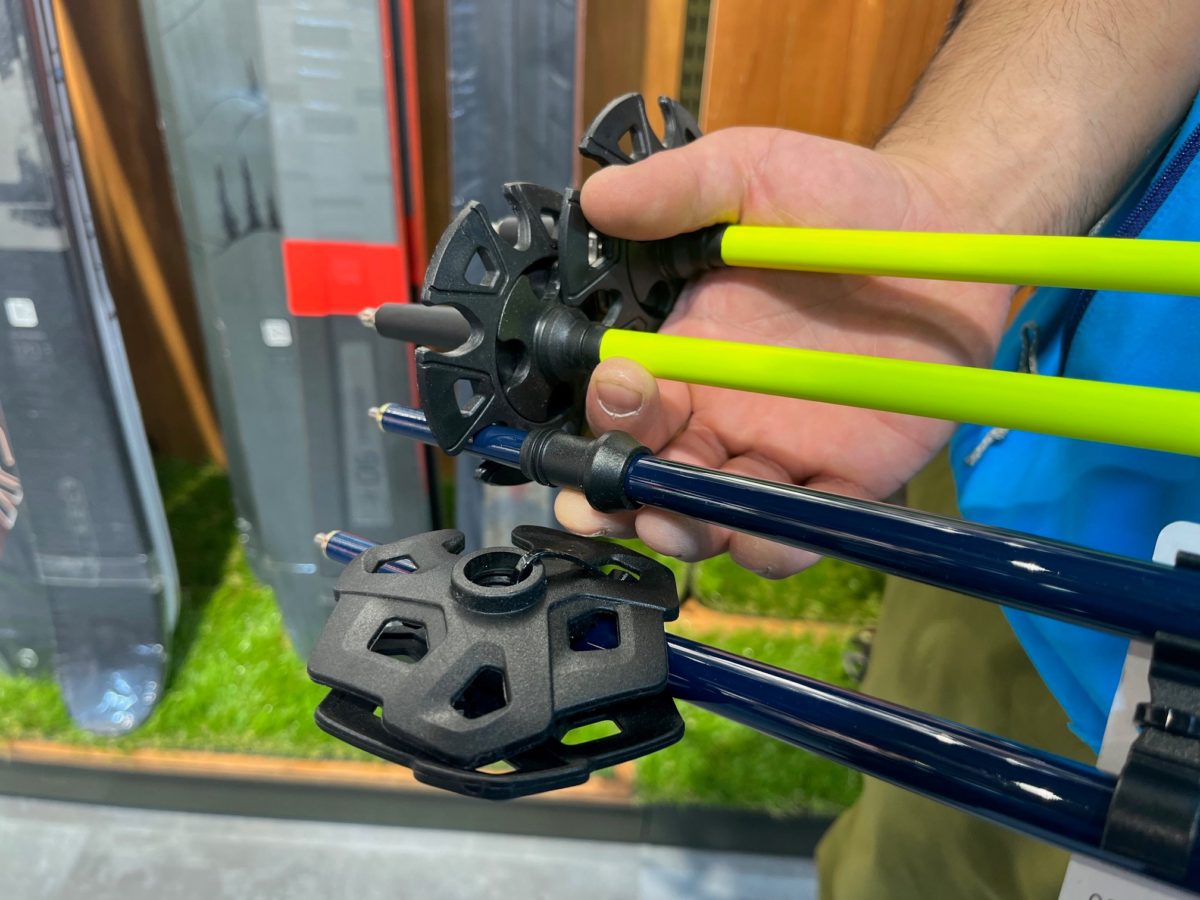
Furthermore, even powder razors come in a variety of shapes and soft materials. The feel of the swing and the sensation of using it vary, so it's up to your personal preference to decide
Length of the ferrule
Some people care about the length of the spike from the snow basket to the tip. With BC, it is more convenient to have a certain length to use when climbing and when attaching and detaching bindings
Shaft material

The shaft needs to be moderately heavy and durable. The materials are usually aluminum or carbon. The shaft in the back of the photo is aluminum, and the shaft in the front is carbon
However, there are many different types, and the characteristics vary depending on the material
Aluminum: There are many different types, but high-end models are strong. Racing models tend to use a lot of aluminum.
Carbon: Lightweight, the shaft can be molded thin, allowing for a lighter swing. Excellent shock absorption.
Bamboo: Lightweight and looks cool.
Nowadays, even carbon poles have aluminum alloy reinforcement inside, and to be honest, there are many things you can't really tell until you cut the pole in half! (laughs) There are many mountain ski models that combine strength and balance by using different materials for the upper and lower shafts
Price
As for price, if you are particular about your choice, you will inevitably end up with a more expensive model. (In comparison, more expensive models are easier to get off and put less stress on your hands when hiking uphill.) However, if you just want to be able to use them in the mountains, I don't think you need an expensive model. Just because a model is cheap doesn't mean it's prone to breakage!
What I value most is "grip"
When choosing poles, I pay particular attention to grip, because my main goal is to be able to ski in the same way as on the slopes
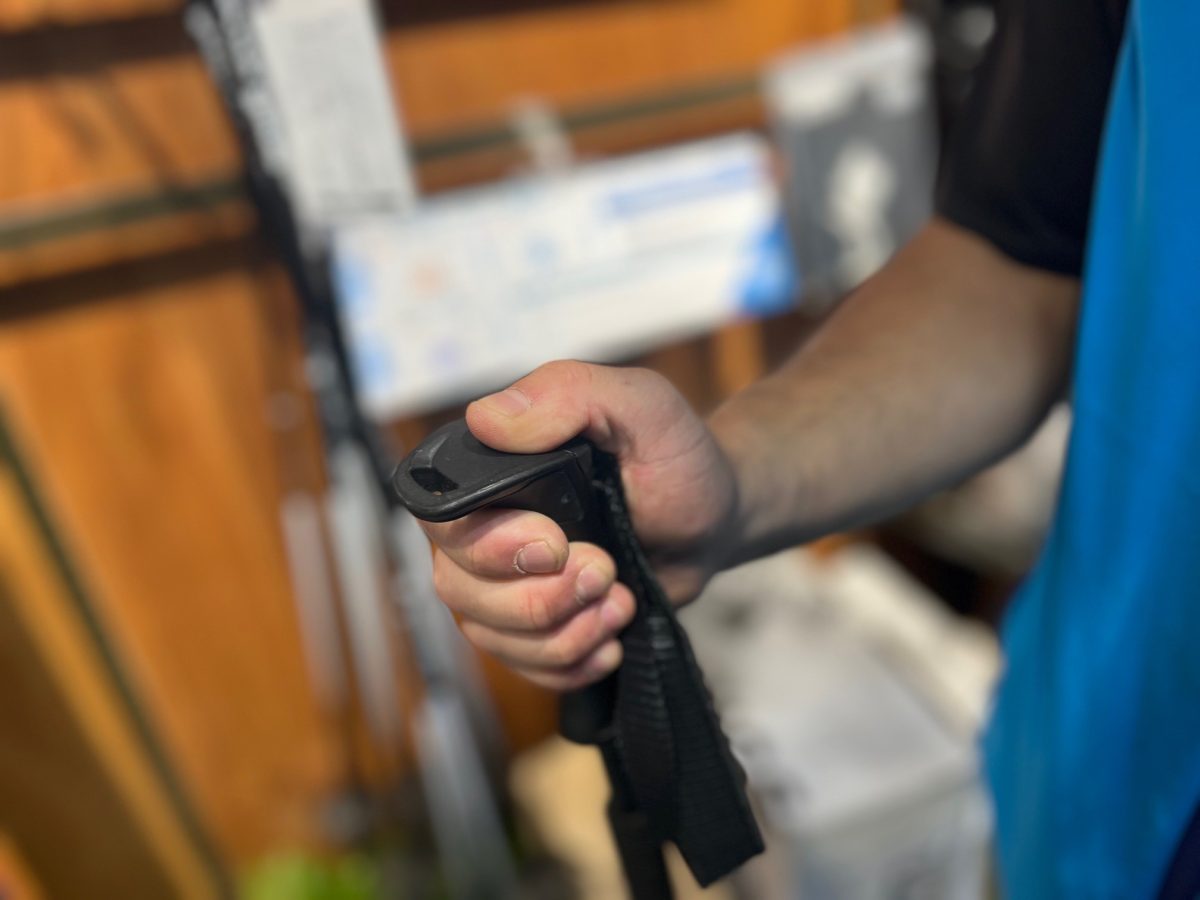
Grip shapes can be broadly divided into three patterns depending on how you hold the pole.
1. Thumb-index finger type
2. Pinky finger-middle finger-index finger type
3. Thumb over grip head type
For me, the grip with my thumb over the grip head, as shown in this photo, is the most relaxing and also stabilizes arm positioning. The KG-M grip introduced below is just right for me, as I don't have large hands, and the grip head shape makes it easy for my thumb to fit over it.
If you're going to be skiing for a long time, like "top to bottom," you need to be careful about this, otherwise your arms will pump up and you won't be able to do the stock work necessary to maintain balance and timing. In the worst case scenario, you might even drop your poles
That's why I recommend the Kizaki KG-M Grip.
It's a grip I'd recommend to those with relatively small hands and those who are troubled by the large grip of overseas models. It can accommodate a variety of grip styles, so
one of its charms is that it can be adjusted to suit a variety of users.
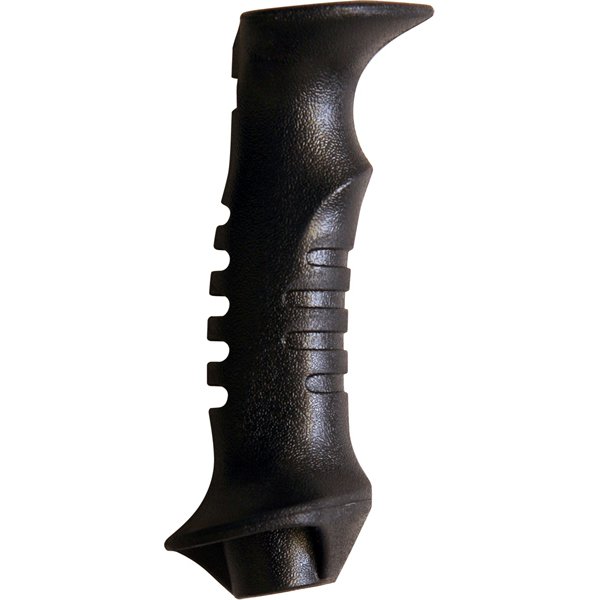
KG-M
φ11,14,16,18
left and right set ¥1,650
◆Official website: https://art-nko.com/kizaki/ski-accessory/

My favorite poles are the "Swix Sonic R1."
They're incredibly lightweight and durable carbon poles. Many poles with multi-handle grips feel heavy and unbalanced.
However, the "Sonic R1" offers the same feel as poles used on the slopes. While there aren't many models with dual-section carbon shafts, the Sonic R1 features one. This allows for exceptional shock absorption when using the poles. Another key point is the minimal amount of paint used, which contributes to the lightweight design. The
specially shaped powder ring reduces both material and air resistance, which may also contribute to the light feel.
The grips may appear large and difficult to hold, but surprisingly, it's not. I highly recommend these poles for skiers who rely on timing with their pole work.
By the way, I found the existing poles too long, so I cut them off by 10 cm. Please contact the store for more information!
SWIX|SONIC R1

◆Official website/ https://swix.jp/
This is the recommended model for beginners to BC!
My top recommendation is the Blackdiamond Laser Carbon Pro Pole. It offers great value for money, performance, and ease of use, so you won't go wrong with it as your first pole
Blackdiamond Laser Carbon Pro Pole
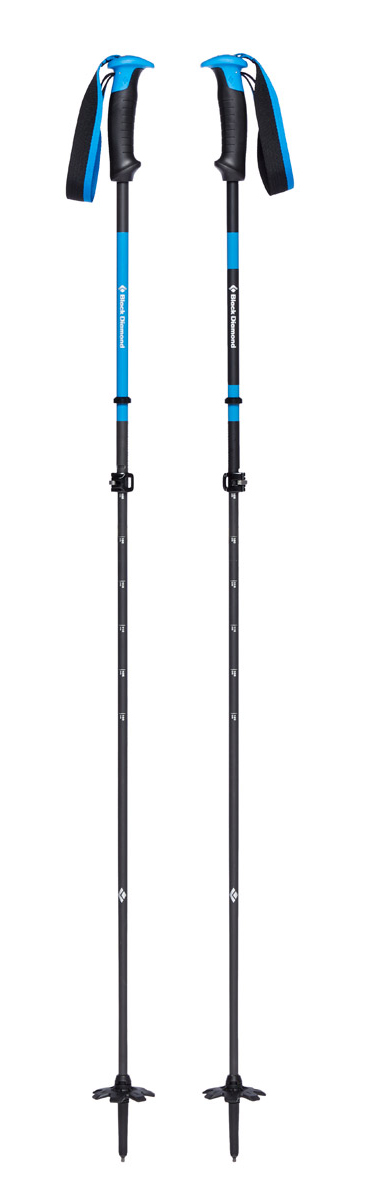
This high-spec pole offers excellent swing balance and a wide range of functions. Its lightweight and durable two-piece construction combines a 14mm diameter aluminum shaft with a 12mm diameter carbon shaft. It also features a switch release strap that can be released in an emergency
The Flick Lock Pro secures the rope after adjustment. A grip ring is included, which is convenient for traverses
Weight: 524g (100-125cm)
542g (115-140cm)
Size: 100・115cm ◆Official HP/ https://www.lostarrow.co.jp/store/g/gBD42141100/
If you're an experienced drinker, this is the next one you should buy! (Recommended by Amari)
Komperdell | Carbon Cloud Bamboo Vario
The CARBON CLOUD BAMBOO VARIO has been updated with running changes while maintaining its appearance .

CARBON CLOUD BAMBOO VARIO
This unique pole boasts a nostalgic look and high-tech performance. The upper shaft is made of bamboo-reinforced carbon fiber, while the lower shaft is made of titanium for exceptional lightness and excellent swing balance. It's 40% lighter than standard carbon fiber poles. Komperdell is the only manufacturer that produces its own carbon fiber and carbon fiber poles
¥45,650
◆Official website: https://www.igrek-okumura.jp/
summary
Finally, Amari taught us the key points of choosing a pole
"When choosing poles, you should consider the material, functionality, and ease of use, and then you can also choose based on price and your personal preference for appearance. I think the most important things are appearance and the desire to use them. This is because poles are gear that can be used for a long time, and I think the most important thing is to feel attached to them
"loving and using good gear for a long time"
is a keyword that will become even more important in the future. As skiers and snowboarders, we feel the effects of climate change and environmental issues firsthand through the filter of the mountains, and our way of thinking and mindset towards the equipment we wear is also shifting. You could also say that a model that doesn't change means it will never go out of style. I hope you all choose a piece that you will grow to love more and more with each trip!
the person who taught me

Yuki Amari
He pursues climbing from spring to autumn and mountain skiing from winter to spring. He is a mountain specialist who is active in the mountains in tune with the rhythm of the seasons. In summer, he climbs Mt. Mizugaki and Mt. Ogawa. In winter, he often goes out into the backcountry in Niigata and Nagano
He started trail running last year to learn more about mountains. His favorite mountain is Yatsugatake. His current goal is to complete a 100km ultra marathon and obtain a guide qualification. His goal in life is to continue enjoying the mountains even when he becomes a grandfather