

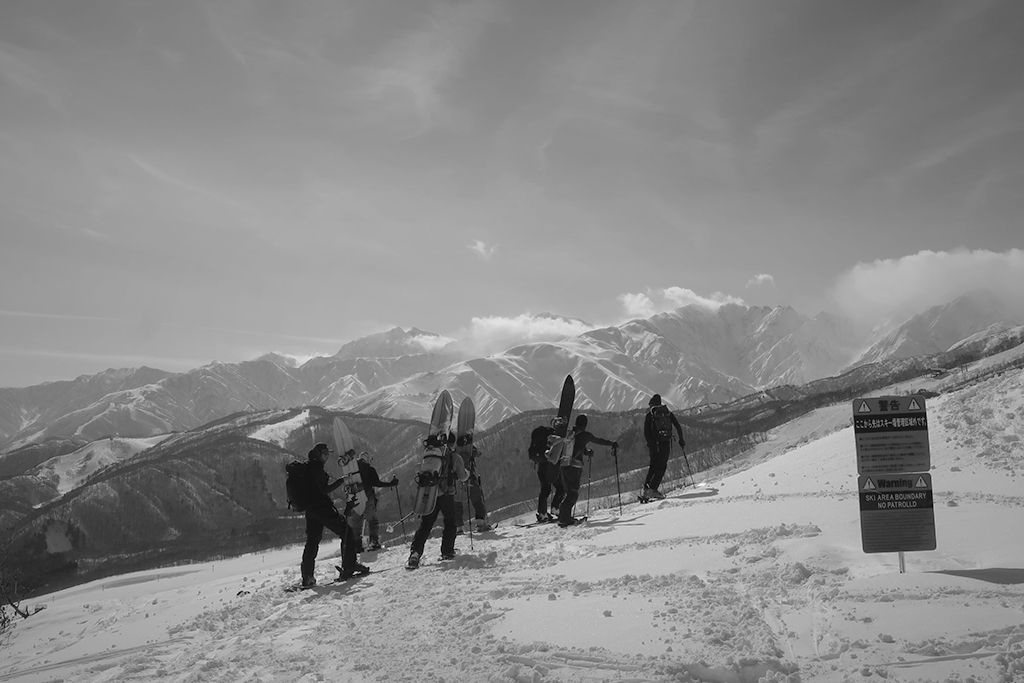
The untouched environment of backcountry skiing (BC) differs in many ways from the managed slopes of ski resorts. There are no ski patrols, no rest houses to take refuge in if a blizzard hits, and no shops to rush to if your bindings break. For those heading out to BC for the first time, this field is likely an unknown world. Let's take a look at what beginners to BC skiing should know in order to enjoy backcountry skiing while staying safe in nature
*This article is a remake of the one published in the 2023-2024 season
Understand the idea that everything in the mountains is at your own risk
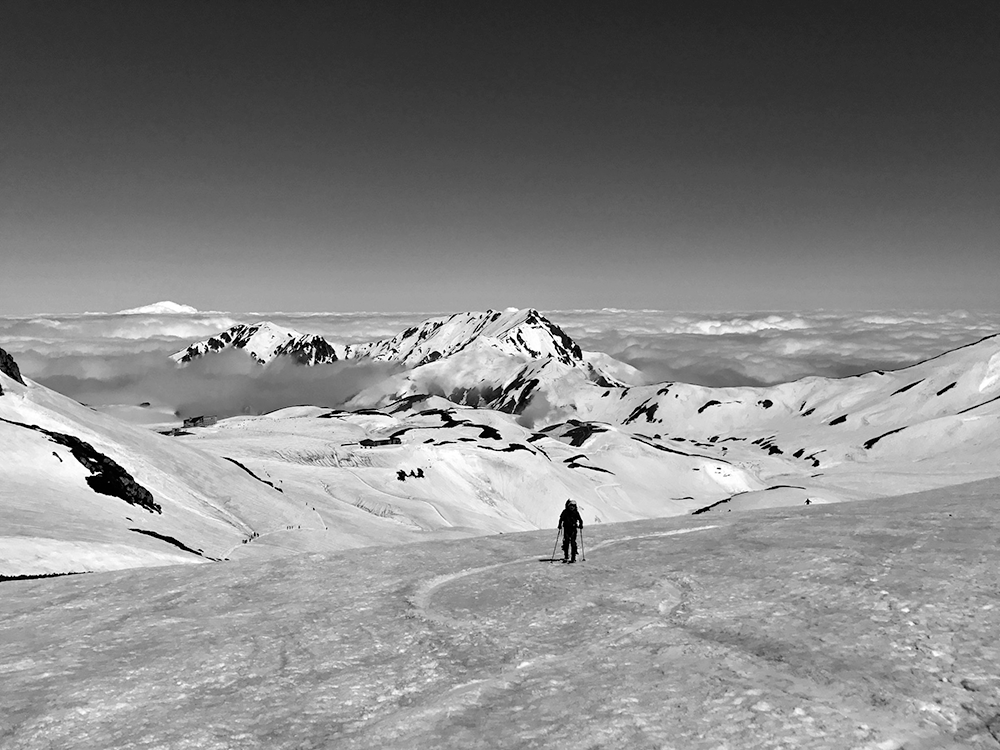
It is important to understand that all areas outside the ski resort's management area are natural snow-covered mountains. If a search or rescue becomes necessary, it will be very costly, and of course this will be at the expense of the individual. I would like to understand the mindset of approaching everything with the premise that "mountains are not safe."
Know and do what you need to do to start backcountry skiing
| 1. Gain prior knowledge (collect information from magazines, the web, shop staff, etc.) |
| 2. Check your skiing skills and physical strength to be able to go to backcountry. If you don't have the skills, acquire them |
| 3. Prepare the equipment for the BC |
| 4. First, learn the rules and know-how on a guide club tour |
| 5. Gain experience and acquire the skills to ski on your own |
| 6. Other things you might want to do |
1. Gain prior knowledge
If you are a complete beginner, you should start by gathering information from magazines and the web, and then visiting a shop and gathering information from the staff based on the equipment you need
2. Check your skiing skills and physical strength to be able to go to backcountry. If you don't have the skills, acquire them
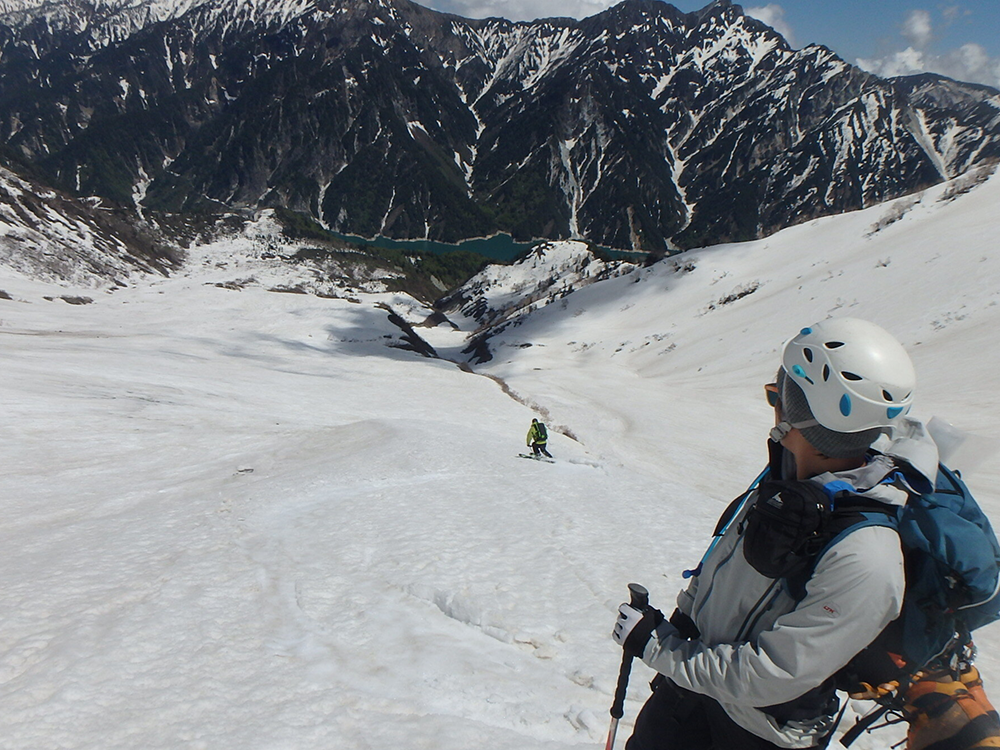
Find out whether you have the skills and stamina to ski at a backcountry. By joining a guided tour for beginners or beginners, or a private guide, you can find out whether you can walk on the slope for more than an hour, whether you can ski on slightly deep new snow or bad snow that makes your feet slip, and so on. You will be able to find out how difficult it is, and what you can and cannot do
3. Prepare the equipment for the BC
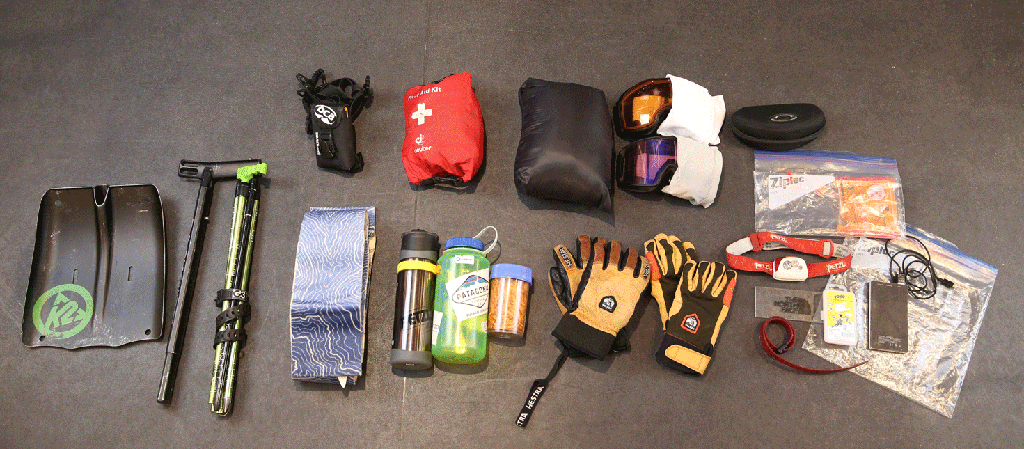
Backcountry skiing requires a variety of specialized equipment, from essential safety gear to convenient gear for enjoying backcountry skiing, as well as essential supplies like water and snacks, and an emergency kit for just in case
The choice will vary from person to person, but the article below summarizes the equipment required for BC

4. Start by learning the know-how through a guide club tour
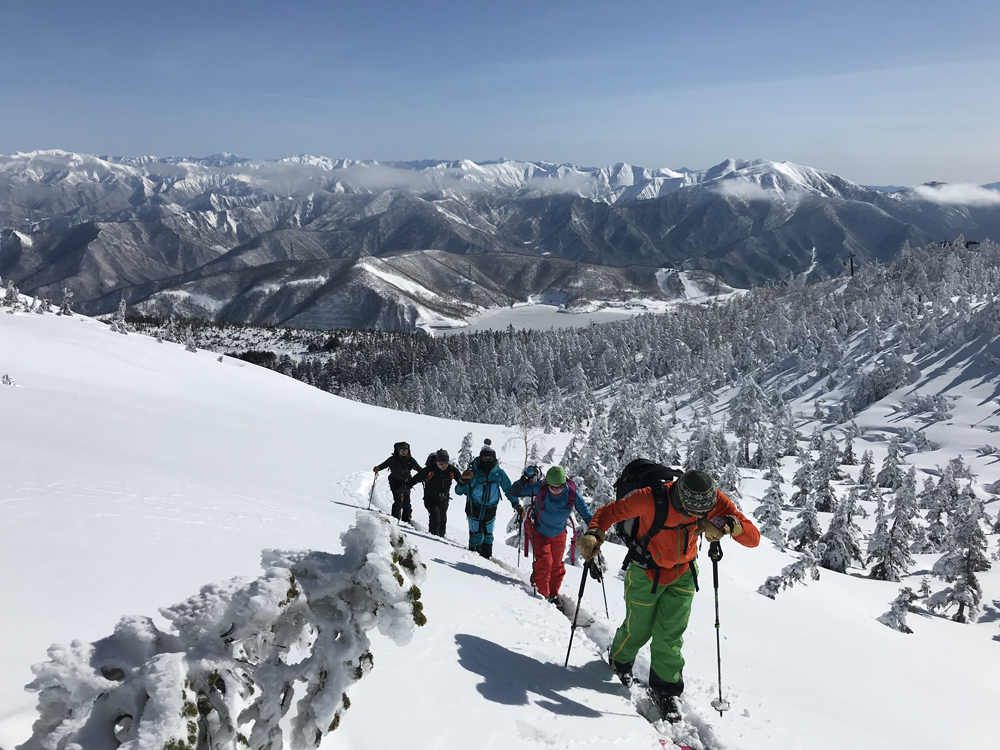
The best way to learn about BC skiing is to join a tour with a professional guide. The experience of going on a tour where you are taught by an expert is surprisingly informative, covering the necessity of equipment, how to use it, how to read the weather, how to walk on the slopes, how to choose a course, how to ski, how to deal with problems, and the basic rules and etiquette at BCs. However, it is difficult to learn by simply following the guide's instructions, but by observing and thinking about each step as you go, you will gain the knowledge and experience you need to spend time at a BC
For beginners who are nervous about heading straight to a backcountry, some guide clubs offer programs where they first get their skiing skills checked on the slopes and learn basic skiing techniques
The article below lists guide clubs and tours that are aimed at BC beginners and those with little experience
5. Gain experience and acquire the skills to ski on your own
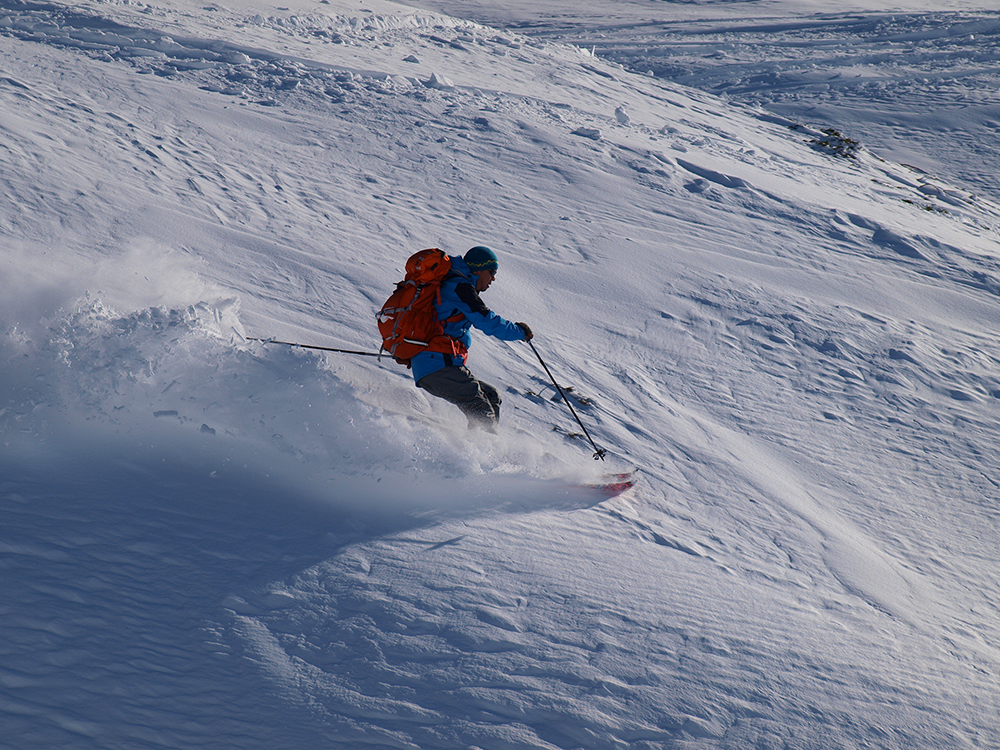
The only way to ski in the backcountry is to gain knowledge and feel for it through a lot of experience. You won't develop skills by skiing only on good days. Join advanced backcountry skiers or backcountry guided tours to hone your skiing techniques, gain experience, and build confidence. The only way to judge the route, weather, and snow conditions is to be aware of them and gain experience through repeated experience
6. Other things you might want to do
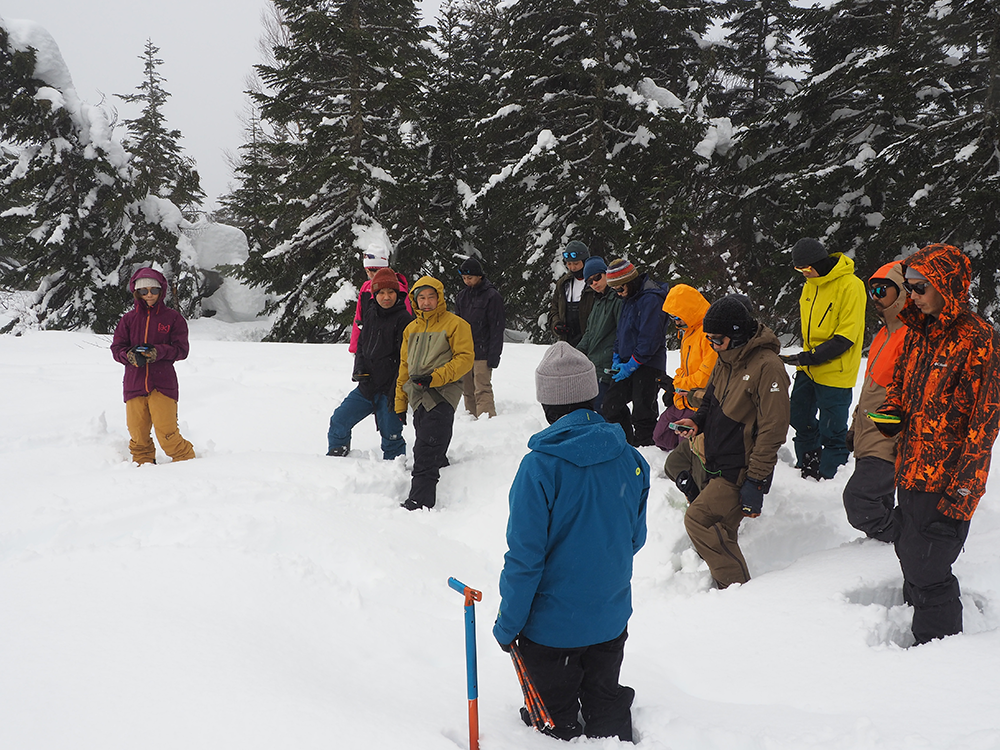
■ Participate in a seminar to gain knowledge about avalanches
The Japan Avalanche Network holds safety seminars aimed at beginners and experienced climbers to increase their knowledge of avalanches, as well as on-snow training sessions to learn rescue techniques as avalanche safety measures. These opportunities also increase knowledge about snow and improve skills

■ Get mountain insurance
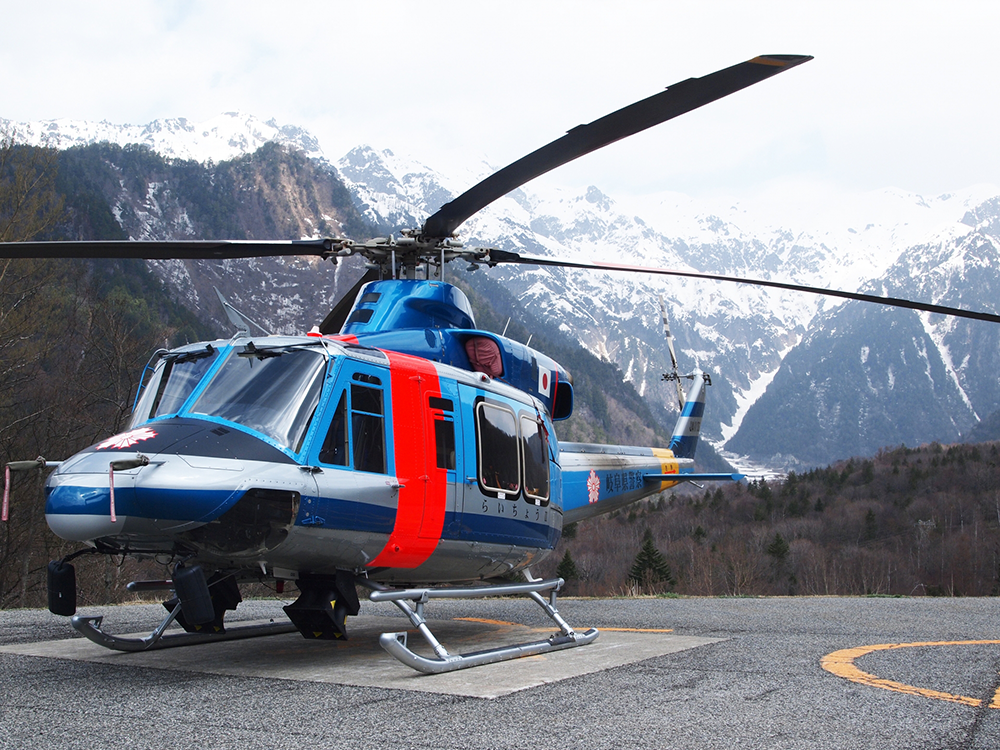
If you get lost on a snowy mountain, the search costs are enormous. It is said that the cost of a rescue by private helicopter can be as much as 600,000 yen per hour. Mountain insurance is there for times like these. It not only covers rescue costs in the event of a disaster or accident, but also compensation for injuries. Some mountain insurance also covers breakdown, damage, and theft of cameras and other personal belongings. Many guide clubs require that you have mountain insurance in order to participate in BC guided tours. Be sure to take out mountain insurance just in case
As an example, "YAMAP Insurance" works like this
| kinds | Compensation details | Insurance premiums |
| Outdoor leisure insurance | ・Rescue costs covered up to 3 million yen ・Injury compensation that can be paid smoothly without waiting for hospitalization or outpatient treatment to be completed ・Rescue costs covered up to 3 million yen Covers a wide range of situations, from mountain climbing, camping, and surfing to everyday life ・Rescue costs covered up to 3 million yen ・Rescue costs covered up to 3 million yen ・Climbing in snowy mountains and climbing where crampons, ice axes, ropes, etc. are used is also covered ・Rescue costs covered up to 3 million yen ・Applications are accepted for individuals, groups, and families (family = relatives living with the insured person) | 7-day plan from 580 yen, 30-day plan from 1,470 yen, 1-year plan from 5,480 yen |
■ Submit a mountain climbing notification
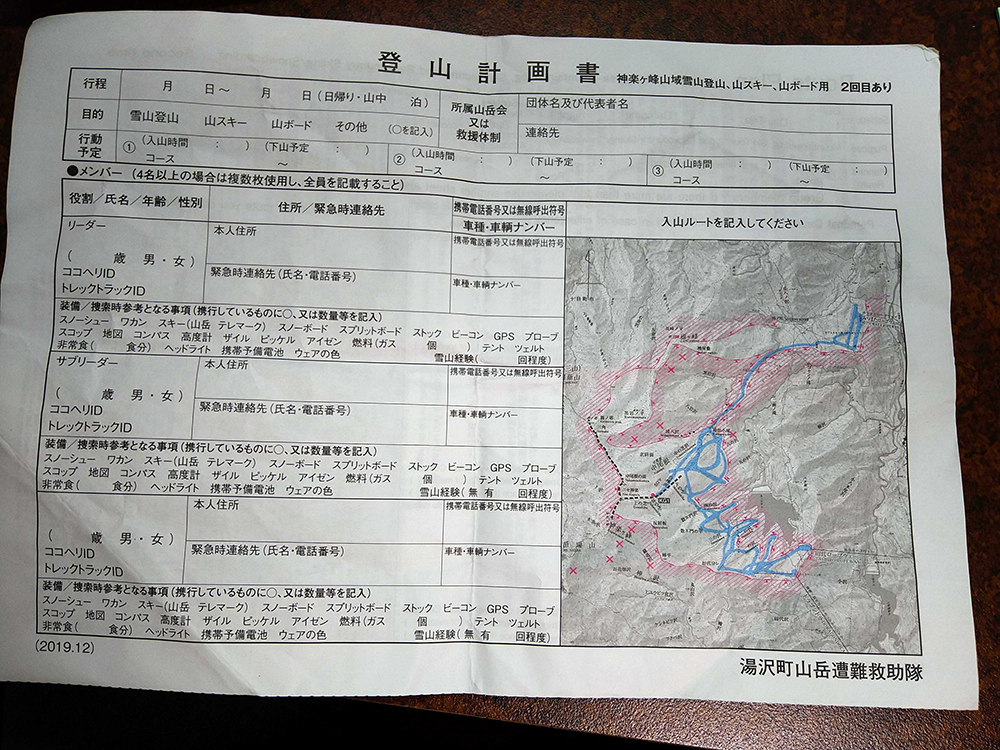
To enter a BC field, you must submit a climbing plan at a designated location. There is no set format for the climbing notification, but each prefecture's police headquarters, mountaineering clubs, ski resort-related organizations, etc. have their own designated plans. The photo above is the climbing plan used at Kagura Ski Resort in Niigata Prefecture. It is mandatory to submit it at the BC gate at the top of the slope
The climbing plan must include the climbing route, planned activities, contact information for group members, and equipment. Plan forms can be downloaded from the websites of each prefecture's police headquarters
Although you should write down your mountain activities in a plan, it is important to gather information properly and make a solid plan in advance. It is essential to leave early in the morning when going up into the mountains, and it is also important to frequently check the local weather and avalanche information
■ Obtaining a backup
In addition to mountain insurance, there is also a growing trend to sign up for "Cocoheli," a revolutionary search system developed in Japan to prepare for the unlikely event of a mountain accident. When you join, you are loaned a transmitter-shaped membership card, and if you get lost in the mountains, a helicopter will quickly and accurately determine your location and connect you to rescue agencies. Searches can be conducted in mountainous areas throughout the country. In cases where search and rescue is necessary, up to three helicopter flights can be used free of charge
In addition, I would like to actively make use of smartphone map apps and GPS
❖ COCOHELI
■ Select skis that suit the conditions and your skill level
Although it's generally referred to as backcountry skiing, the conditions of the ski field vary depending on the season, snow conditions, and location. The feeling of skiing also varies greatly depending on the conditions. In January, when the snow is deep enough to bury you up to your waist, fat skis with a waist width of 105mm or more are more comfortable, as they provide more buoyancy. For enjoying the granular snow of spring, skis with a width of 90-100cm are recommended,
as they are lightweight and have some torsion. Experienced backcountry skiers will ideally have multiple skis and choose one based on their style of skiing and the conditions at their destination, but this isn't the case for backcountry beginners. First, consider your skill level and find a single ski that can handle all conditions.
■ Make it a habit to wear a helmet
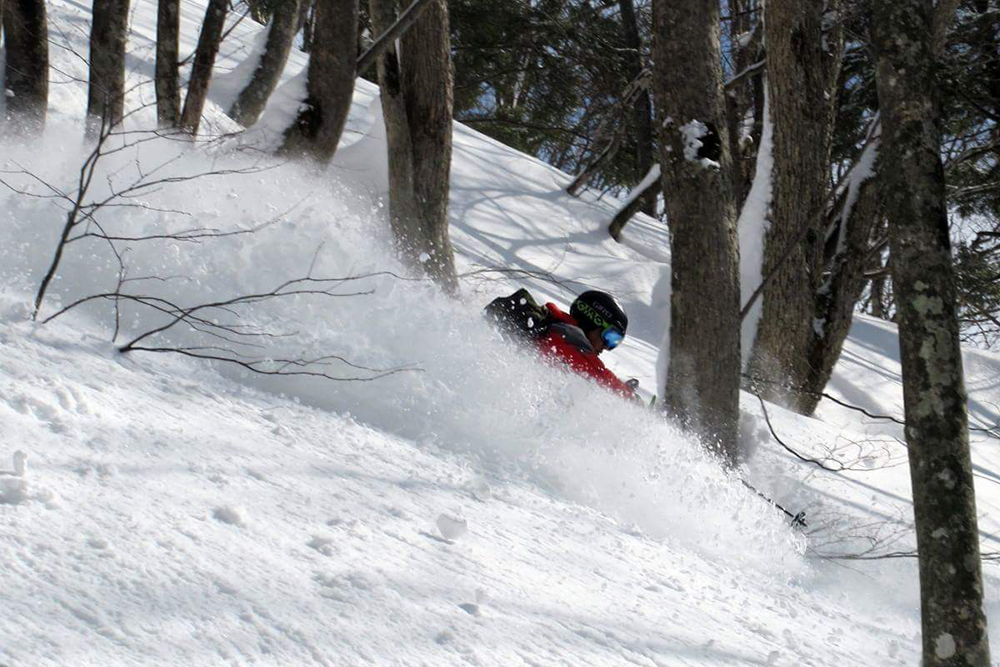
You never know when you might encounter trouble at a BC. Falling from going too fast, hitting trees, sliding down, and other risks are high, so a helmet is essential. It's a good idea to make it a habit to wear a helmet on a daily basis, even when skiing on the slopes or in the side country. You may feel stressed about suddenly having to wear a helmet all day at a BC, and if you're not used to the feeling, you may not be able to concentrate on enjoying your skiing
■ Know the rules and manners
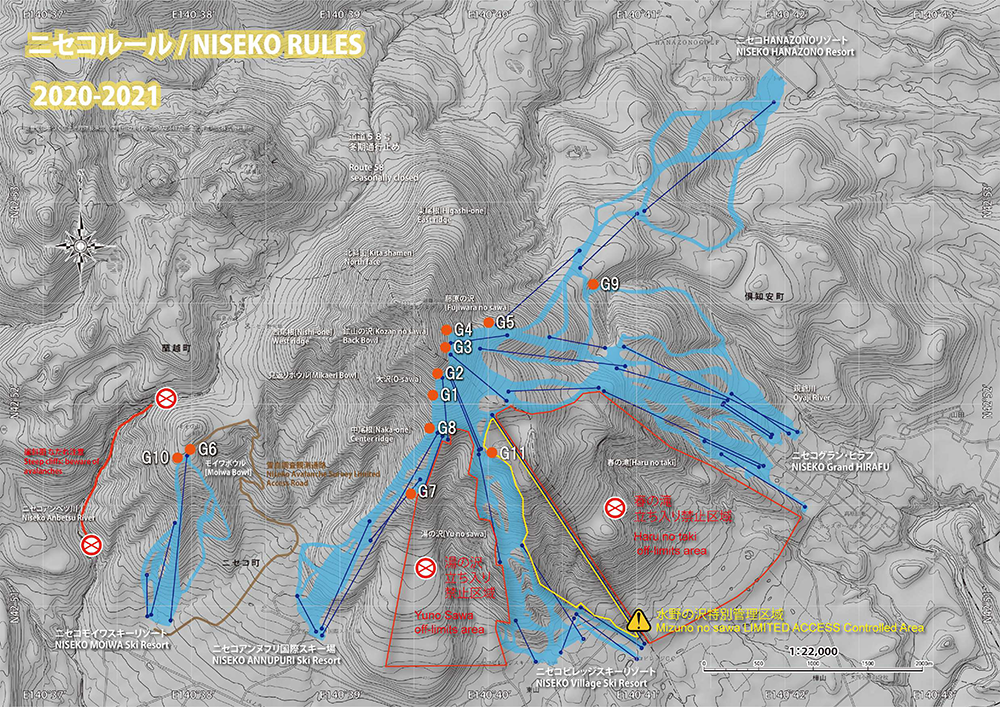
With the number of backcountry fields accessible by lift from ski resorts on the rise, it's important to follow the rules and etiquette established in each area. For example, the five ski resorts in Niseko, Hokkaido, have 11 gates to backcountry ski areas, and each resort has its own set of "Niseko Rules." Below are the six rules
- You must exit the ski resort through the gate
- Do not go under the ropes and ski outside the ski area
- Outside the ski resort, wearing a helmet and an avalanche beacon is considered the bare minimum for safe skiing
- You must not leave the ski resort when the gates are closed
- No one should enter the restricted areas. This does not include search and rescue or investigation activities
- Elementary school students are prohibited from skiing outside the resort
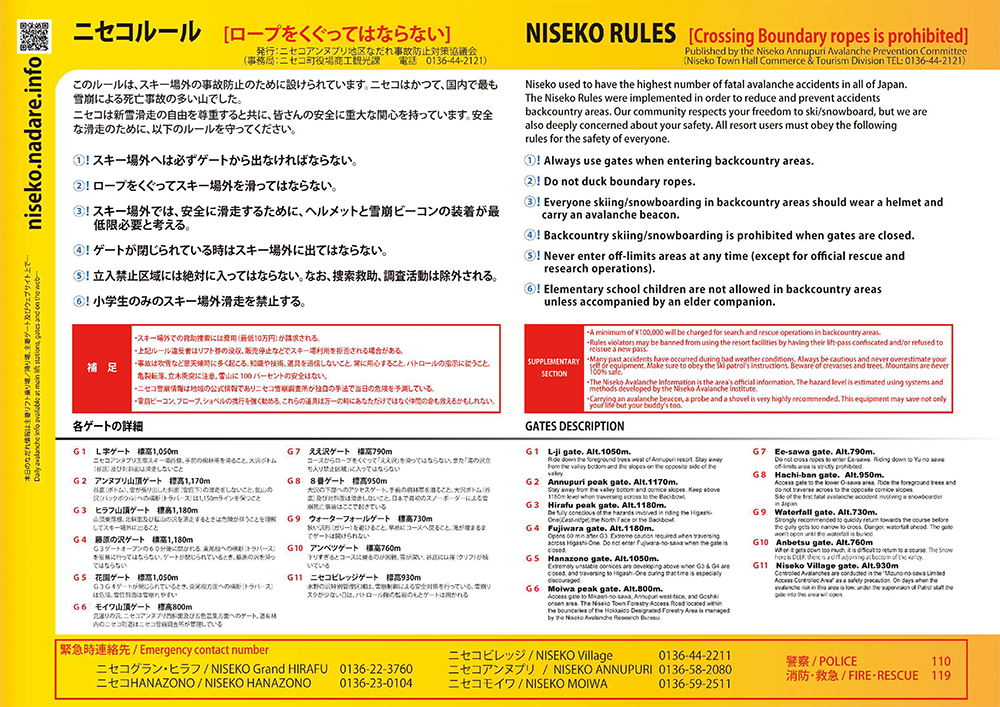
Similar rules also exist in Hakuba, Myoko, Minakami, and Yuzawa, and most people who ski there follow these rules. It's important to follow the rules, take all possible precautions to avoid causing trouble to others, and enjoy yourself safely while being mindful of your manners in nature