

Photo/Tomohiro WatanabeInterview
cooperation/ Kagura Ski Resort
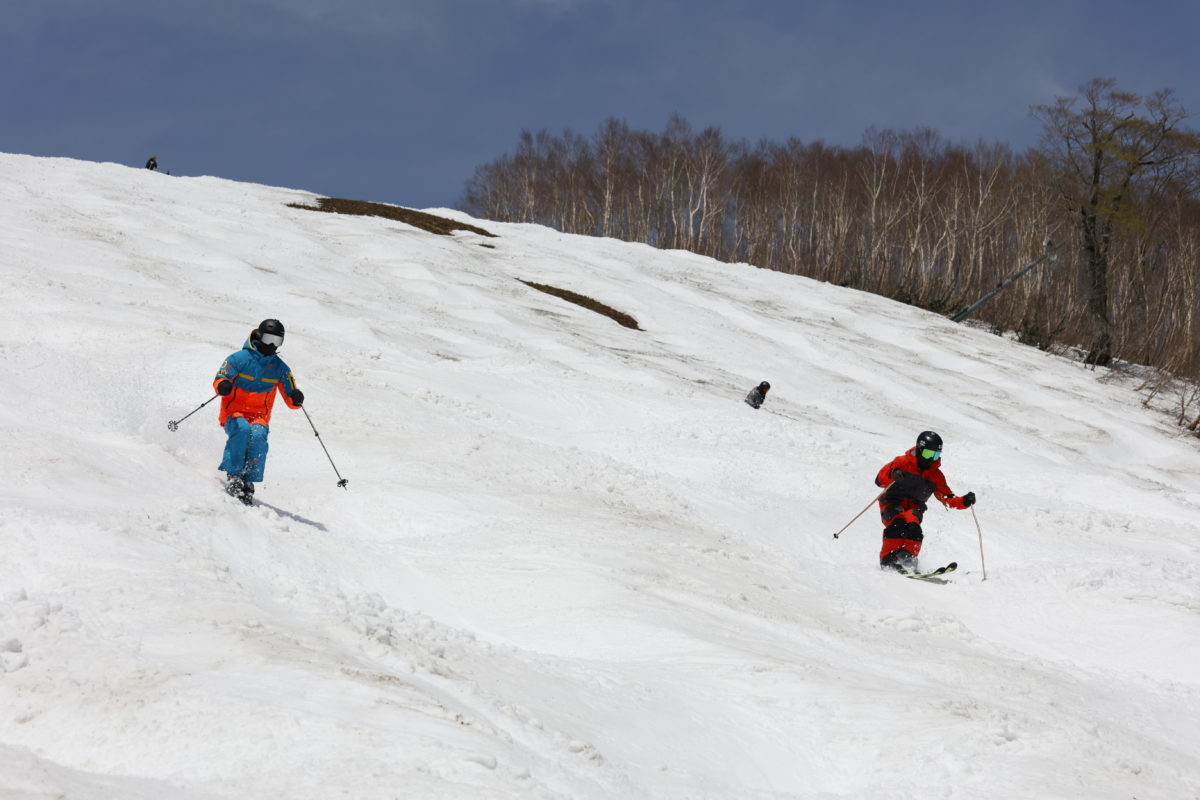
Spring is the perfect time for mogul skiing, as the sun shines brighter and the snow softens. Unlike the hard snow of the high season, the impact is absorbed more easily when skiing straight, making it easier to gain speed. This makes it the perfect time to push your limits
Spring is the time to improve your mogul skiing skills. Nishi Nobuyuki, principal of the Kandatsu Fusion Bump School, who was a member of the Japanese national team for around 16 years and competed in three consecutive Olympics from Vancouver to PyeongChang, and Horishima Yukimasa, a bronze medalist at the recent Beijing Olympics, held a session on the theme of "Skiing mogul skiing faster."
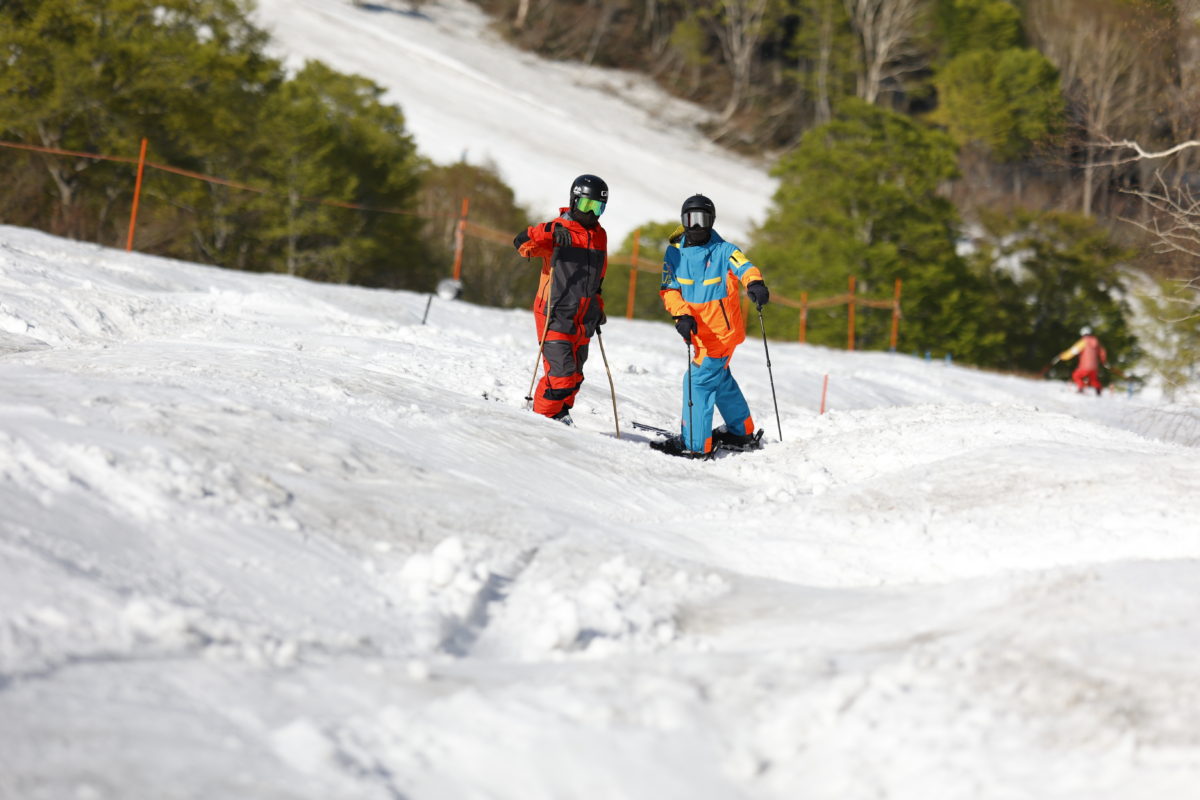
The soft spring snow is perfect for speed training. Both of them share this common understanding
With people who are already somewhat proficient at mogul skiing in mind, we asked them to talk about the appeal of skiing fast and the techniques and strategies needed to do so
We will also introduce Nishi and Horishima's methods for skiing faster on moguls
The appeal of speeding over moguls
Editorial Department (hereafter referred to as "eds."): What is the fun of skiing quickly over moguls?
Nishi Nobuyuki (hereafter Nishi): For me, "fast = cool." Skiing is all about standing out, right? I've often skied in Hakuba since I was little, and for example, at Usagidaira in Happo-one, there's a lift right next to the course. If there's no one on the lift, I think about giving up, but if there are a lot of people on the course or on the lift, I feel like it's about time to go (laughs).
Until there are more people, I'll fiddle with my boots or touch my skis. It's not like I want people to look at me, but I have a very strong desire to stand out and look cool.
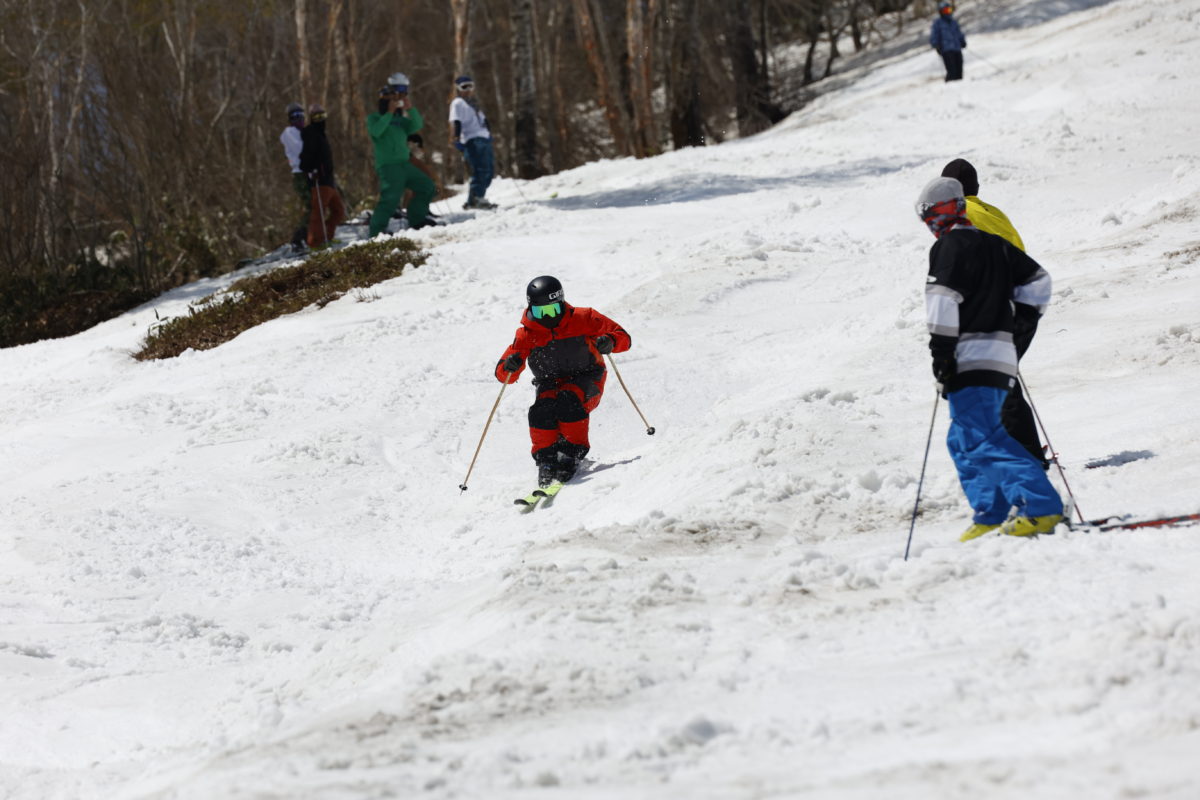
Nishi Nobuyuki, who believes that "the more you stand out, the better" this will remain the same even after he retired as a player and became a coach
Horishima Yukimasa (hereinafter Horishima): I think I understand what you're saying. I get conscious of the lift being nearby. This isn't limited to mogul skiing, but I don't think you can get the same sense of speed as skiing with just your feet. Even if you run, you'll never get the same sense of speed as skiing. So, the sense of speed and skiing down mogul slopes is fun. It feels like you're exceeding your limits.
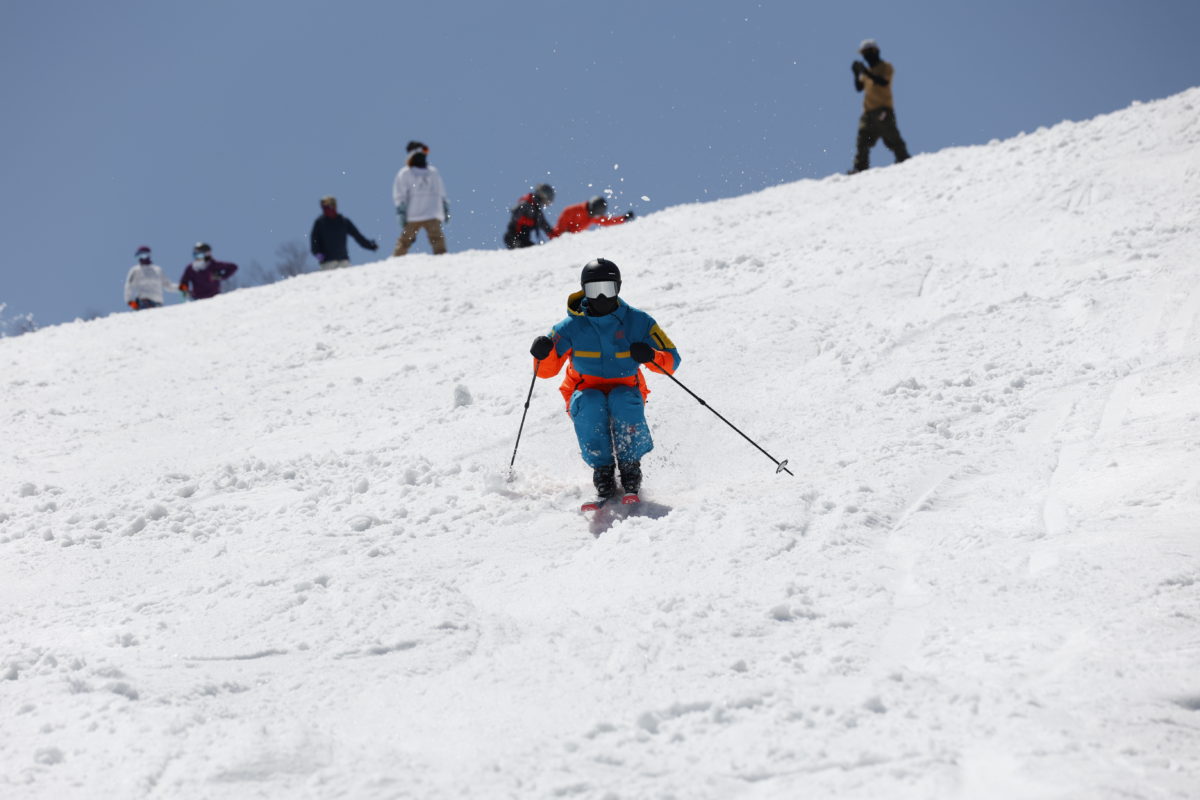
Horishima Yukimasa also says he is conscious of the gazes of the people watching. Finding the limit of speed is one of the joys of moguls
Nishi: When I was competing, people would look at my airs and turns and give me scores. But speed is different. I've always been very particular about speed, and even though it's okay to make a few mistakes, I just wanted to skate faster than anyone else.
There's a reason why the person who can skate the fastest is also good at moguls. Of course, there are things you have to do to skate beautifully and get good scores, but I've had a vague idea in my head since I was little that "fast speed = good."
Horishima: When I was still active, I was on the same level as Nobu, and we competed in about three dual moguls competitions, losing two and winning the last one. That's how fast Nobu is in my mind. I learned a lot from him when I was still active, so I thought it would be interesting to find out how Nobu and I were able to skate so fast.
How do you think each other is doing on moguls?
Editor: How do you view each other in terms of speed?
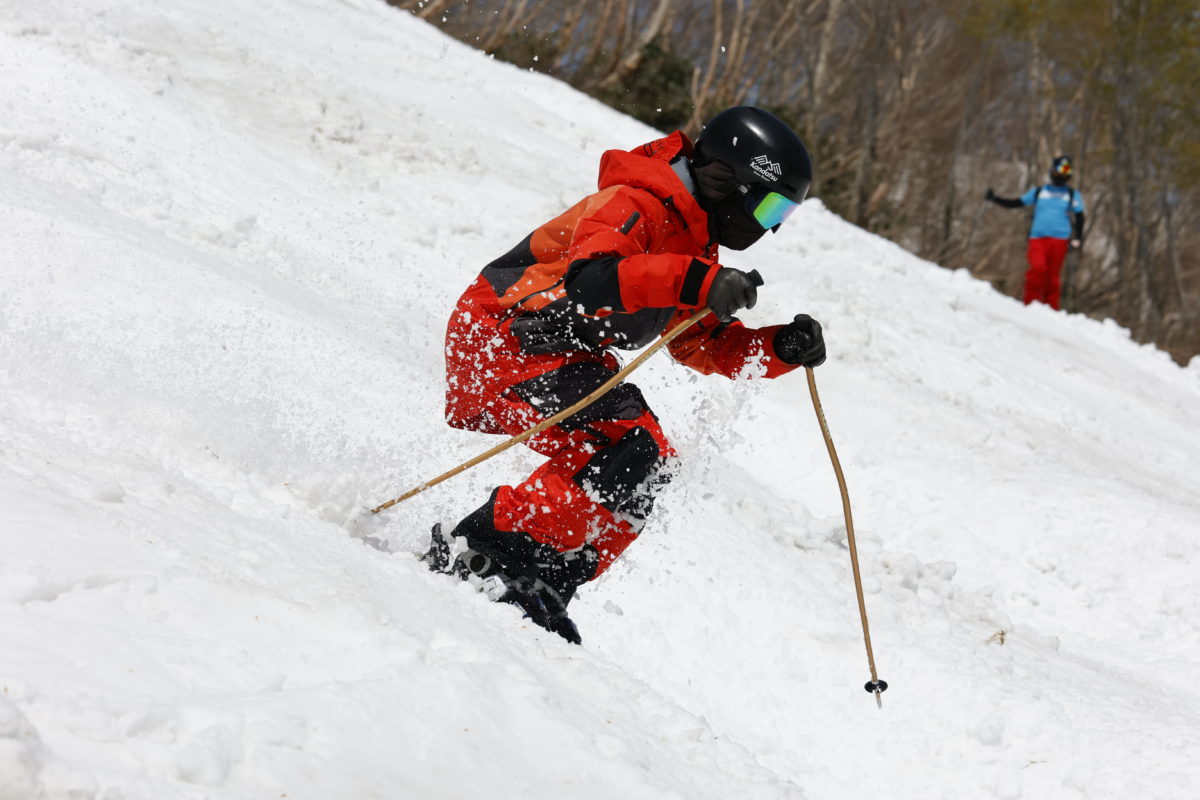
Nishi Nobuyuki gradually increases his speed over the regularly spaced bumps
Horishima: I joined the national team in my first year of high school, and skied with Nobu until he retired after the PyeongChang Olympics. He was confident in his speed, and I really tried to imitate him because I thought being fast was cool. The
first time I competed against Nobu in dual moguls was at the All Japan Championships when I was in my third year of junior high school. It was there that I first saw and felt the speed of Nobu and his friends competing on the world stage, and I think I learned a lot from him - how to maintain a stable speed, how to keep increasing your speed while maintaining a sense of stability, and how to always reach the finish line even if you get wild.
Nishi: I think there are two main ways to gain speed and fly over moguls. To put it in extreme terms, there is the option of riding a little forward from the center of the skis and stepping on the backside of the moguls to accelerate, and the option of riding a little further back, without leaning backward, to improve the freedom of the skis and ski faster. I think there are these two patterns.

Horishima keeps his position closer to the front and increases his speed
Speaking of which, Ikuma said he doesn't really know how to ride at the back and gain speed. He's in a really good position. I think he's the type to ride very far forward and gain speed. I'm more conscious of getting off the moguls. I'm good at riding a little further back to get off the moguls better and gain speed. I think that's the biggest difference between the two of us
Horishima: There may be a difference in positioning.
Editor: From the outside, is the difference almost indistinguishable?
Nishi: I think so. It's just a little bit forward and a little bit behind the riding position. I think it's an extremely exquisite position.
The sensation of speed is slightly different for both drivers
Editor: What steps will you two take to increase your mogul speed limit?
Nishi: I think the faster you go, the more fear you feel. So I think it's very important to find a way to eliminate that fear. It's very
important to have as much confidence as possible and to increase the number of successful experiences you can have. For example, it's impossible to ski fast down really hard, large, steep moguls from the start, but you can do it on gentler moguls. It's important to increase the number of successful experiences like that.
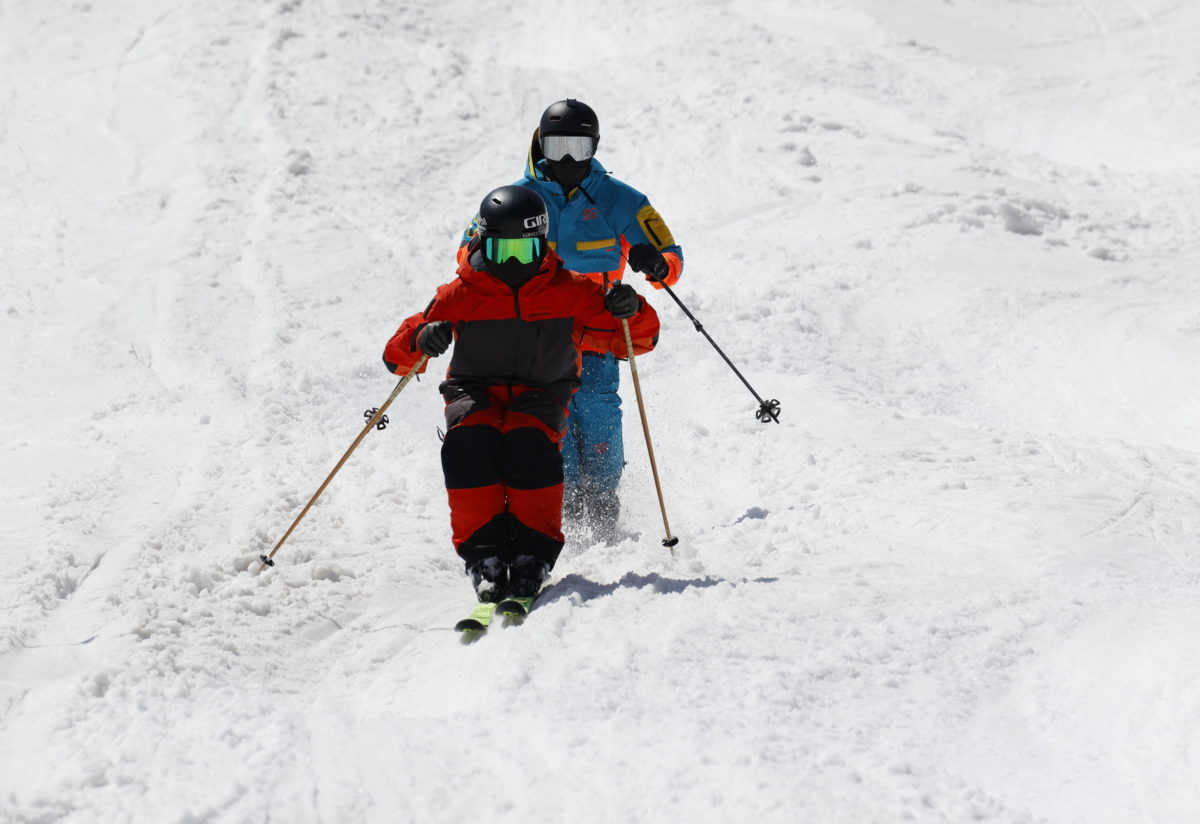
Gentle slopes are perfect for pushing your speed limits. It's important to gain experience skiing well
No two moguls are alike. I believe the more experience you have, the faster you can go. So, the order of things is to have your body memorize successful experiences in order to eliminate fear, and then apply those experiences to various slopes and moguls, thereby further increasing your experience
Horishima: I think that's a very valid point. It's very important to gain experience of success.
On top of that, from a technical standpoint, it's about making contact with the snow. If you can ski as if your skis are constantly touching the snow, you'll feel more stable when you pick up speed. If you get airborne, you'll feel scared. But when we ski seriously, our skis end up floating in the air.
I think the final stage is when you can ski without making contact with the snow, and go over the moguls at high speed, as if building a bridge between them.

The faster the speed, the less contact there is with the snow
Nishi: What I always keep in mind is to be conscious of applying pressure to my shins near the top of the ascending mogul, as seen from the skier's perspective. This is especially true when skiing fast in a straight line.
The other thing to do is to constantly balance the pressure from the moguls with the force you exert yourself. The faster you go, the stronger the pressure from the moguls, even if you're skiing over the same moguls. If you're skiing at the same speed, for example, if the pressure from the moguls is 5 out of 10, you should return it with a force of 5 yourself. This is how I imagine it when descending at an even speed
When you want to slow down, counter the pressure of the bump that comes at you at 5 with pressure at 6 or 7. This way you can slow down without having to change your line too much. Conversely, when accelerating, I try to adjust my speed by applying pressure of about minus 1 or 4 to the pressure that comes at you at 5
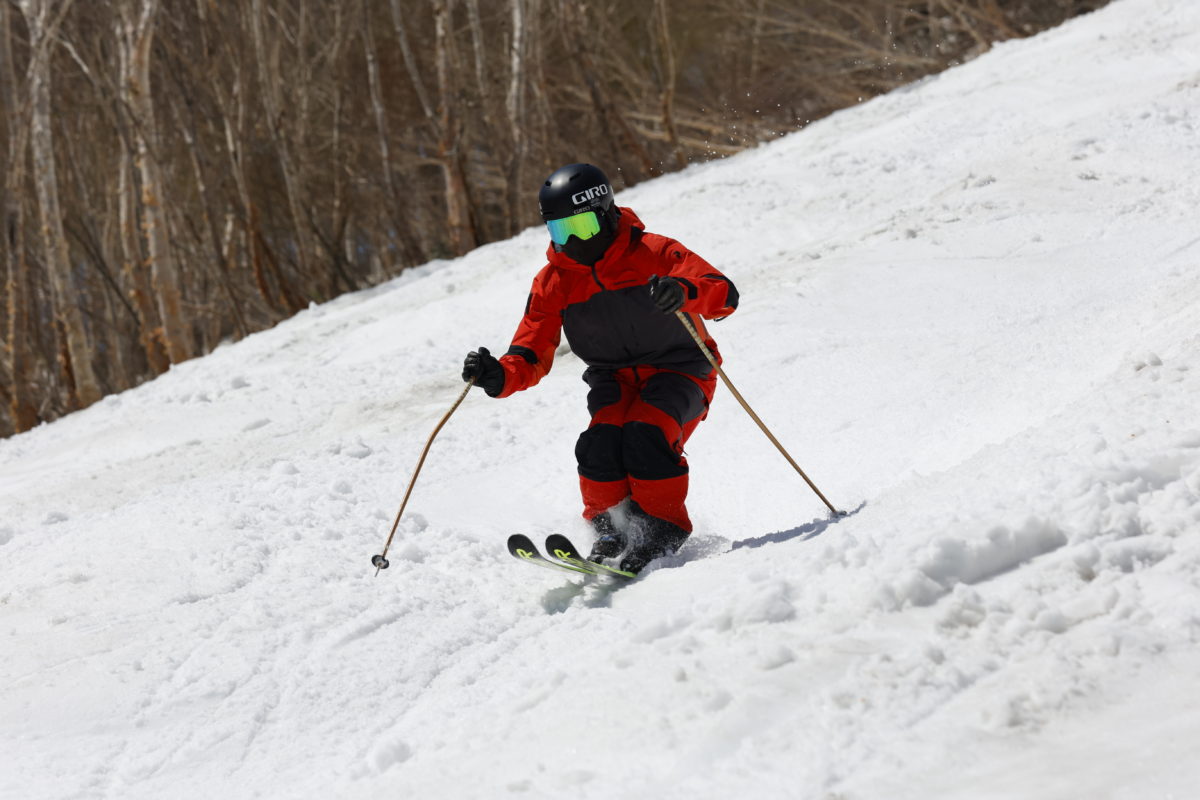
Nishi skis at high speeds, as if he is having a conversation with the moguls
Horishima: I understand that feeling. By the way, when you say how to apply pressure, do you mean the sensation of touching a bump?
Nishi: Yes, that's about it. It's about how much pressure you apply at any given time. I don't really feel like I'm pulling my knees up, but more like I'm reducing the pressure. I don't pay much attention to the position of my hips, whether high or low. My skis are under my body. In particular, if my boots go out to the side or forward from under my body, the skis will slide away, so when I'm controlling my speed, I make sure my boots are always under my hips and I apply more pressure.
Yukimasa Horishima's bump speed adjustment method
Editor: Mr. Horishima, what kind of speed adjustment method do you have in mind?
Horishima: In Haruyuki's case, I'm very conscious of "stepping on the backside (of the mogul)."
I position myself a little forward so that I can quickly get from the surface of the mogul to the backside. It's like moving forward with each turn, raising my hips, and once I'm on the backside of the mogul, I put power into my feet, which allows me to step on the board, which gives me the feeling that I'm stepping on the board on a steep slope, and helps me gain more and more speed.
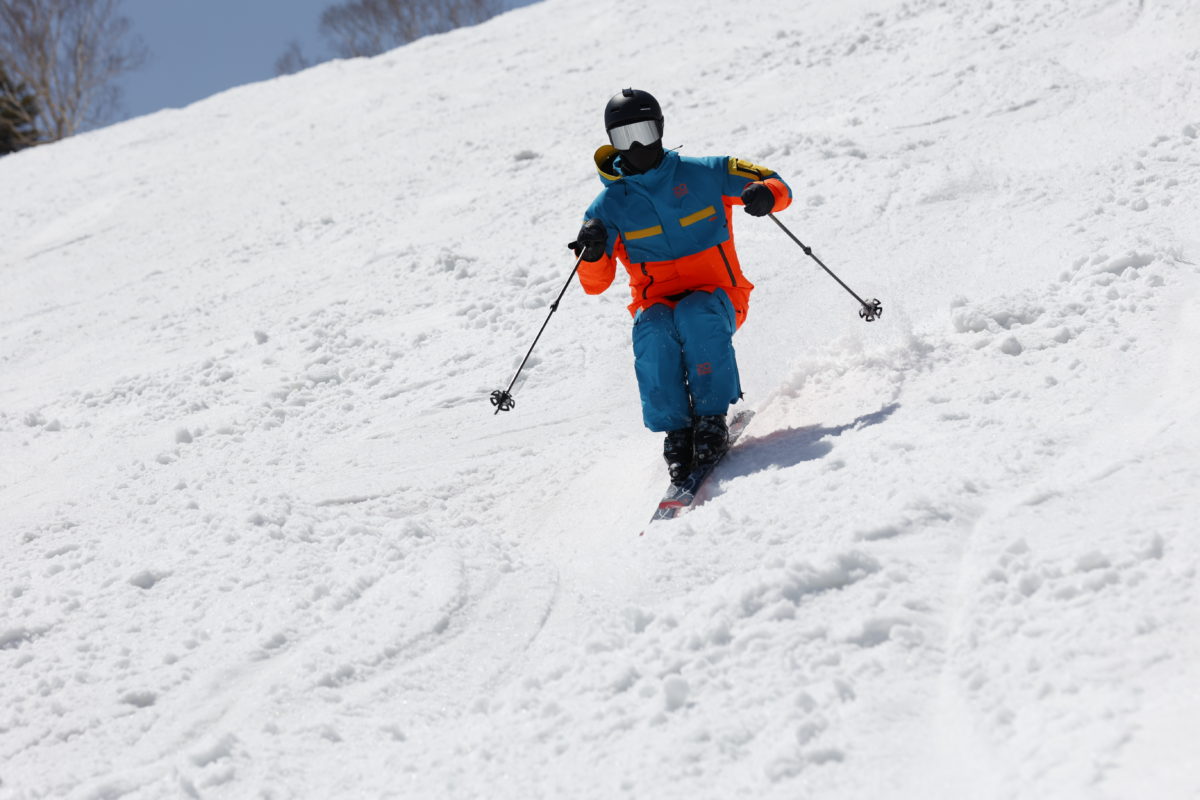
However, you can't always step on the backside of the mogul, so after stepping on it, when you hit the top of the mogul, you have to maintain your balance by keeping the top of your skis in a position that causes them to drop. After that, once you've picked up some speed, you can keep your balance almost completely still
Nishi: That's the image I have of Ikuma. Like he's stepping on the gas (speeding up).
Horishima: Anyone who can go fast will understand this feeling. But you only accelerate by stepping on the underside of the moguls for the first one or two turns. After that, you hardly make that kind of movement. On really hard runs, you hold back on each turn. Even so, you'll still gain speed, so the most important thing is how long you can keep your skis under your body. While you're going fast, you need to maintain your position and touch the snow surface. If you make big, strong scrapes, your speed will drop, but if you make light scrapes, there will be less friction and you'll feel like you're controlling your speed.
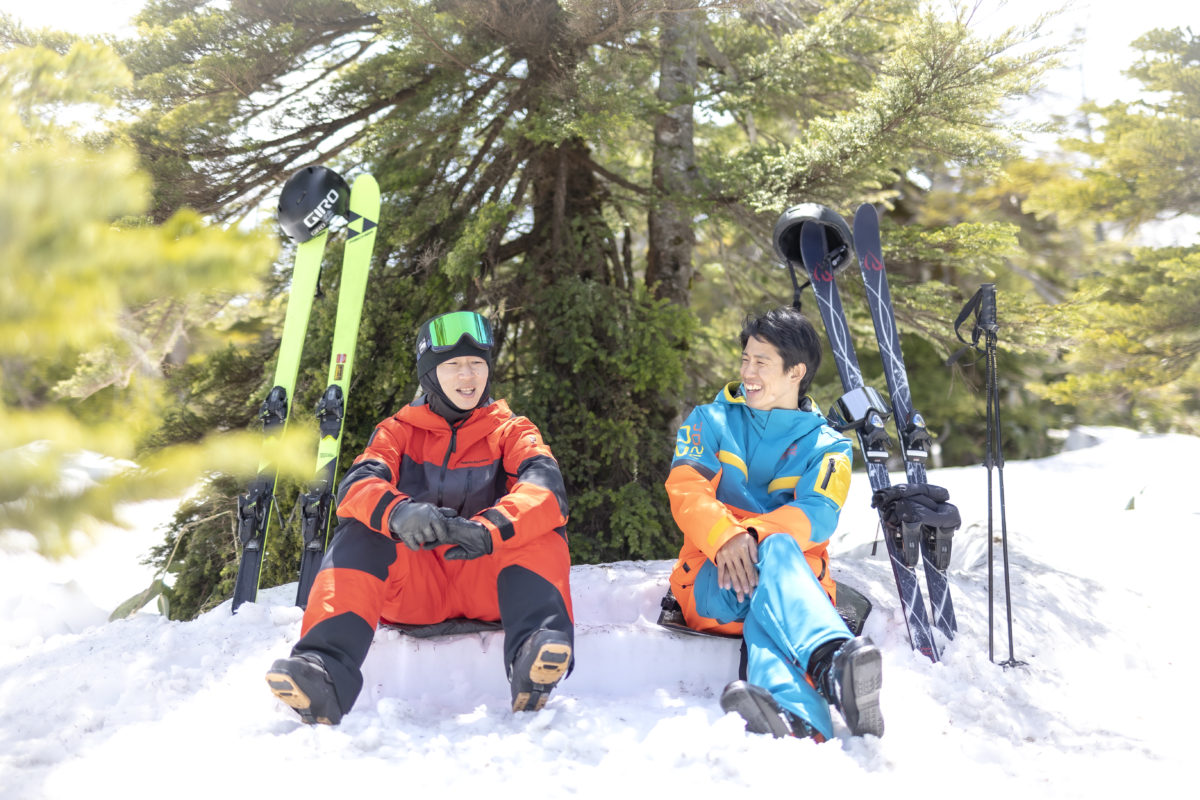
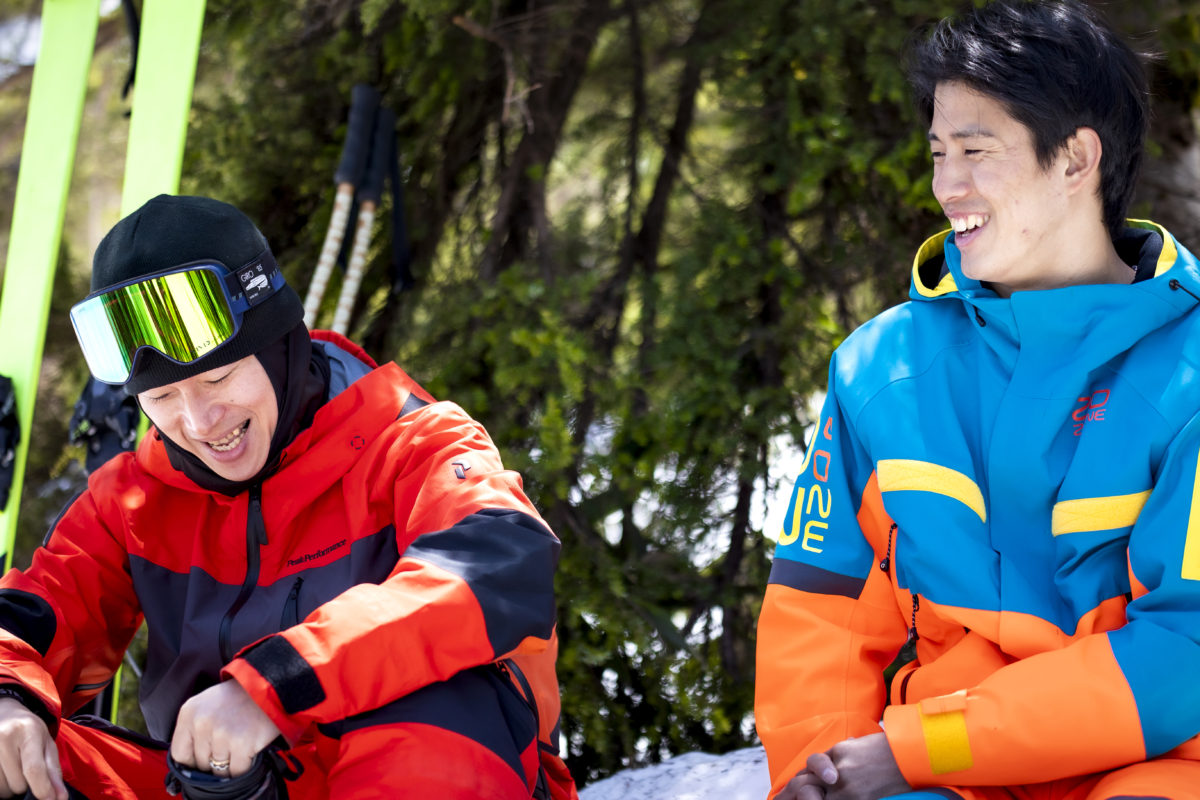
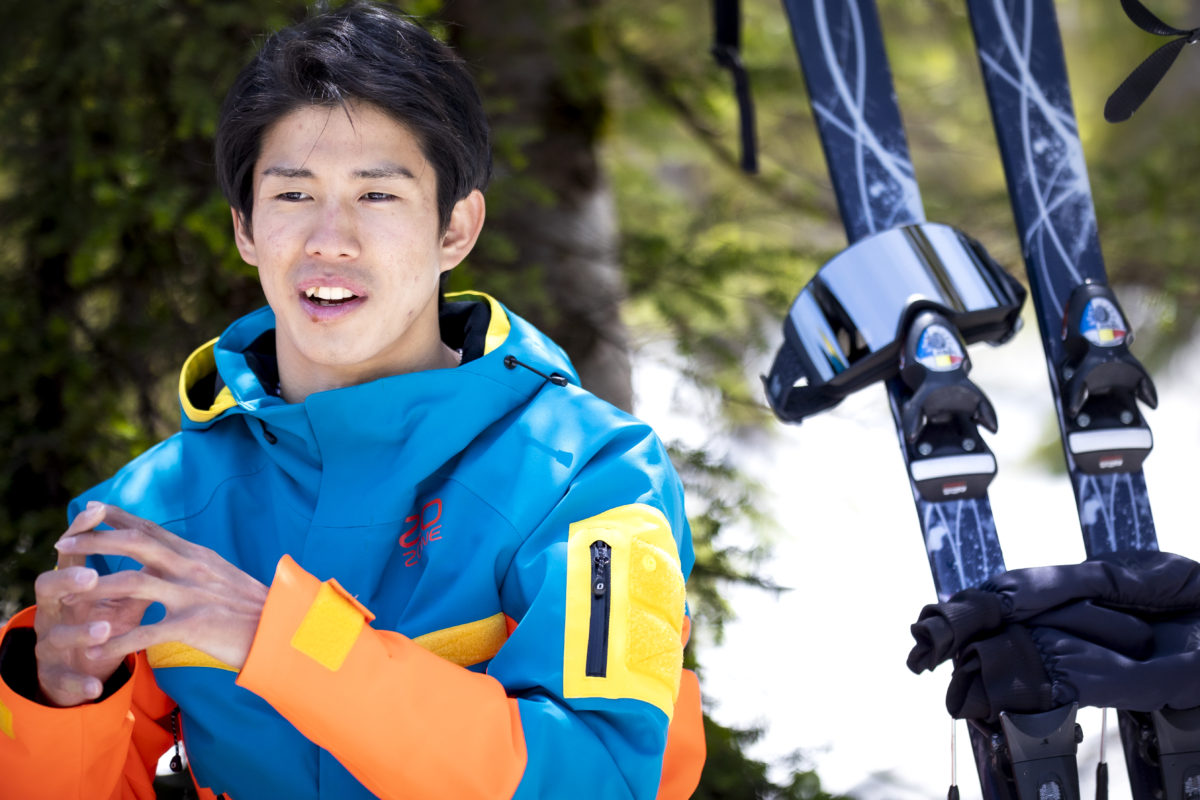
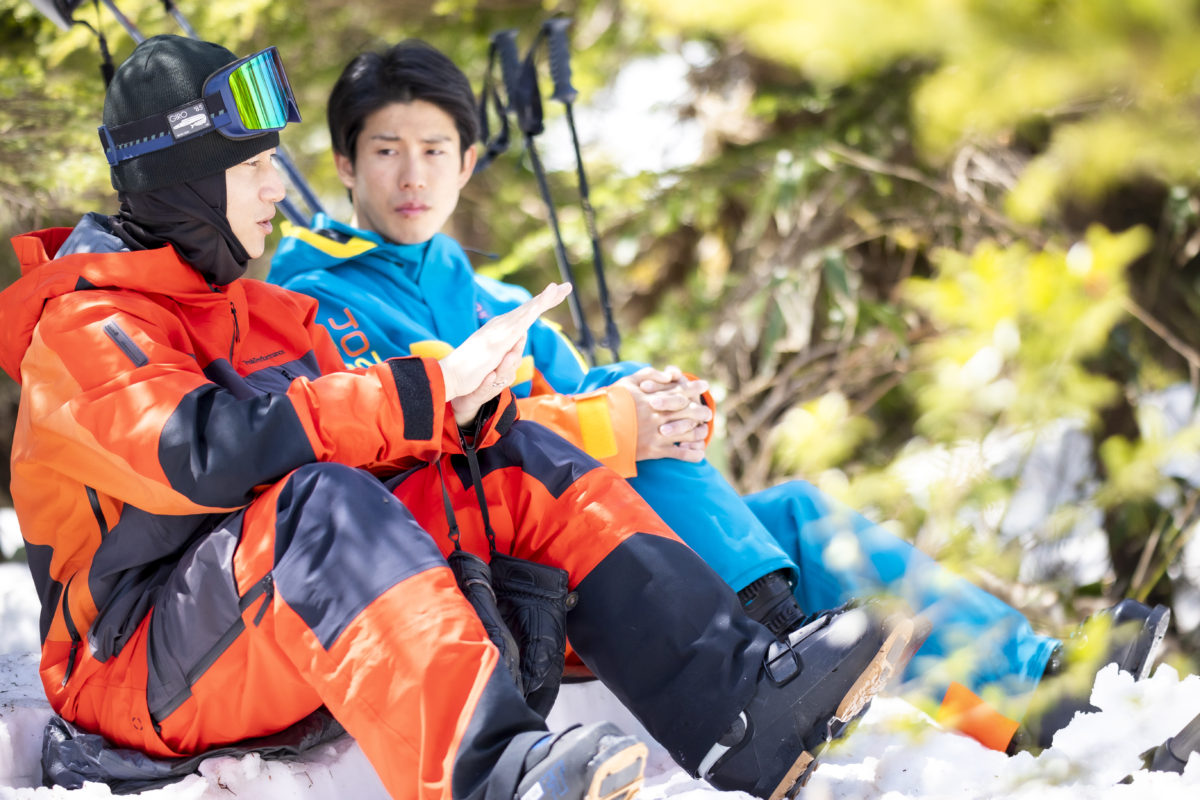
The two are engaged in lively discussions about mogul skiing. They discuss each other's techniques while using hand gestures
Editor: Could you please give us an example of how you adjust your speed during a competition?
Horishima: When you're skiing in the middle section, if you don't adjust your speed before the second air, you'll fly too far. About five moguls before the second air, you start to apply a little more pressure to the snow surface. After about five moguls, your speed will drop just enough, so you can use that speed to fly the air and complete the run. The position for skiing fast is also where it's easiest to lose balance, so I try to keep that in mind while skiing. I try not to increase or decrease my speed too much.
Editor: I see, thank you very much
To coincide with the discussion on the theme of "Skiing faster on moguls," Nishi and Horishima have prepared five methods for skiing faster on mogul slopes
Nishi Nobuyuki will be sharing two things: "Maximize pressure at the top of the mogul" and "Gain experience of success."
Horishima Yukimasa will be sharing three things: "Step on the back of the mogul," "Timing for hitting the pole," and "Ski in a straight line over the mogul."
These will be introduced in videos at a later date.
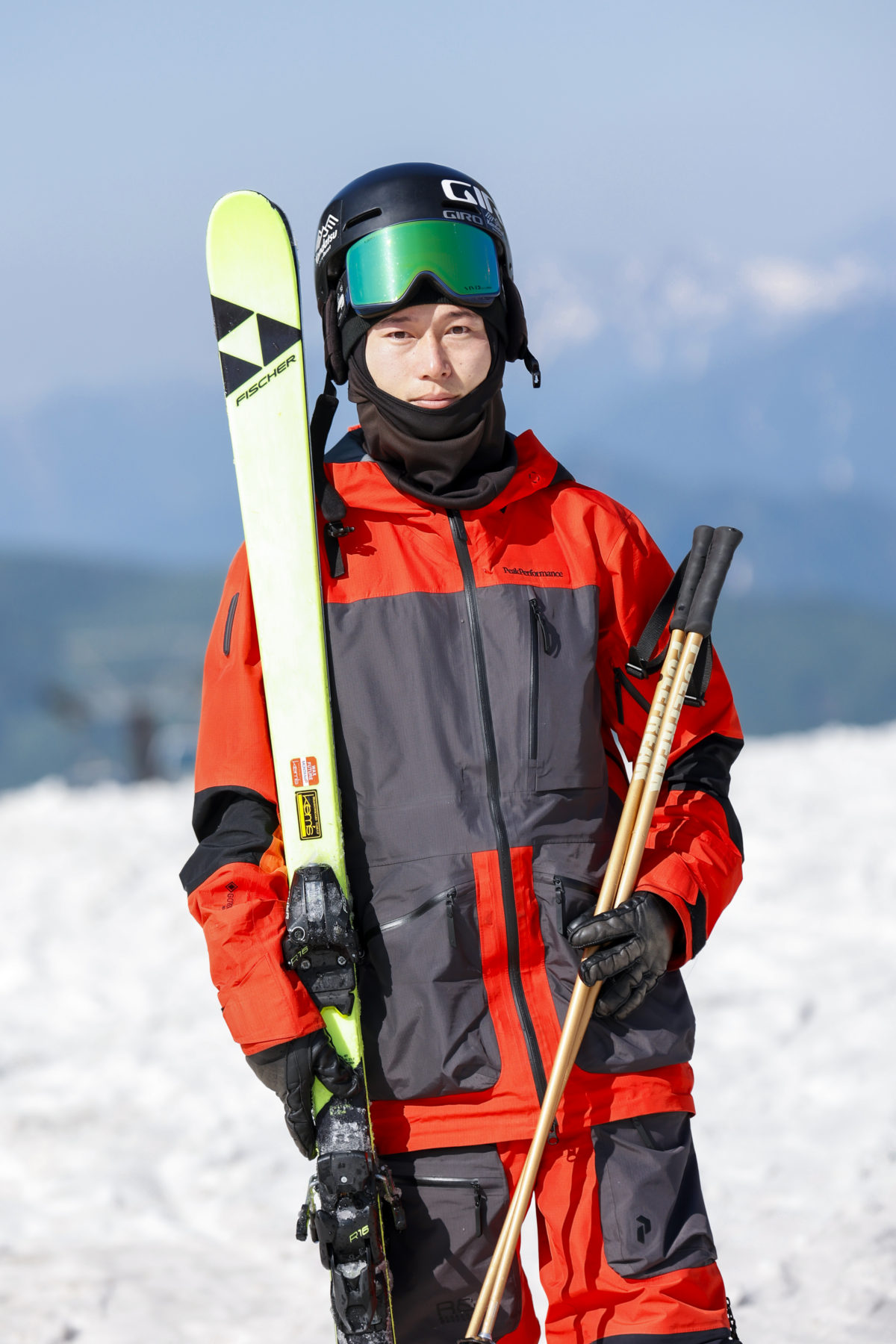
Nobuyuki Nishi
Born July 13, 1985 in Kawasaki, Kanagawa Prefecture
He was a member of the national team for 16 years from 2002. He won silver medals at two consecutive World Championships and participated in three Olympic Games in Vancouver, Sochi, and Pyeongchang. He is currently the principal of Kandatsu Fusion Bump School, where he spreads the joy of mogul skiing to the public
Instagram: nobuyuki_nishi_241
Kandatsu Fusion Bump School https://www.kfbs.jp/
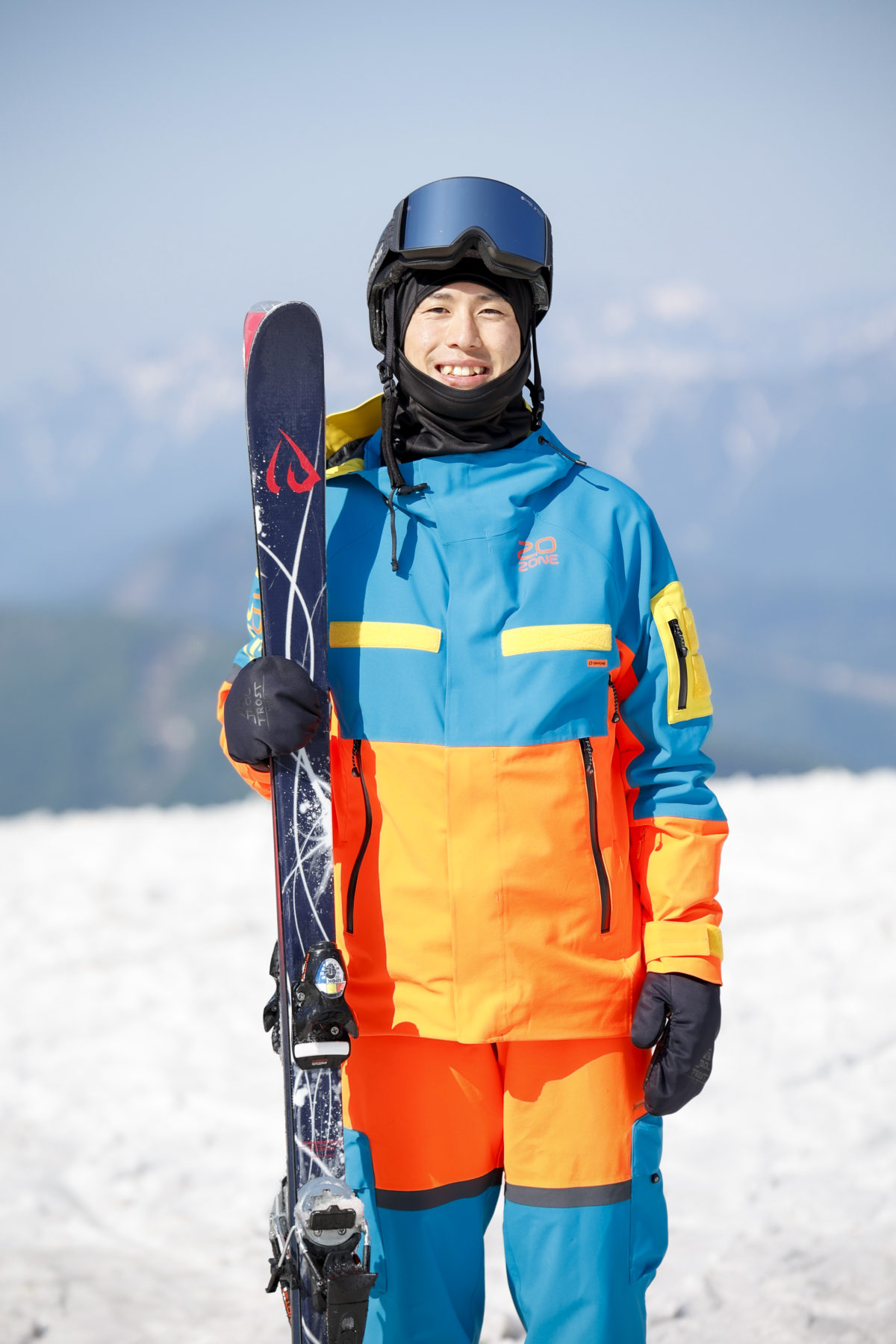
Ikuma Horishima
Born December 11, 1997 in Ikeda, Gifu Prefecture
He is a member of the Toyota Motor Corporation Ski Club. He is undoubtedly the ace of the Japanese men's moguls. In 2022 he achieved impressive results, coming in second overall and winning a bronze medal at the Beijing Olympics. In 2023 he won both the dual and moguls events at Les Alpes in France. He continues to maintain his good form and lead the Japanese team
Instagram: ikuma1211