

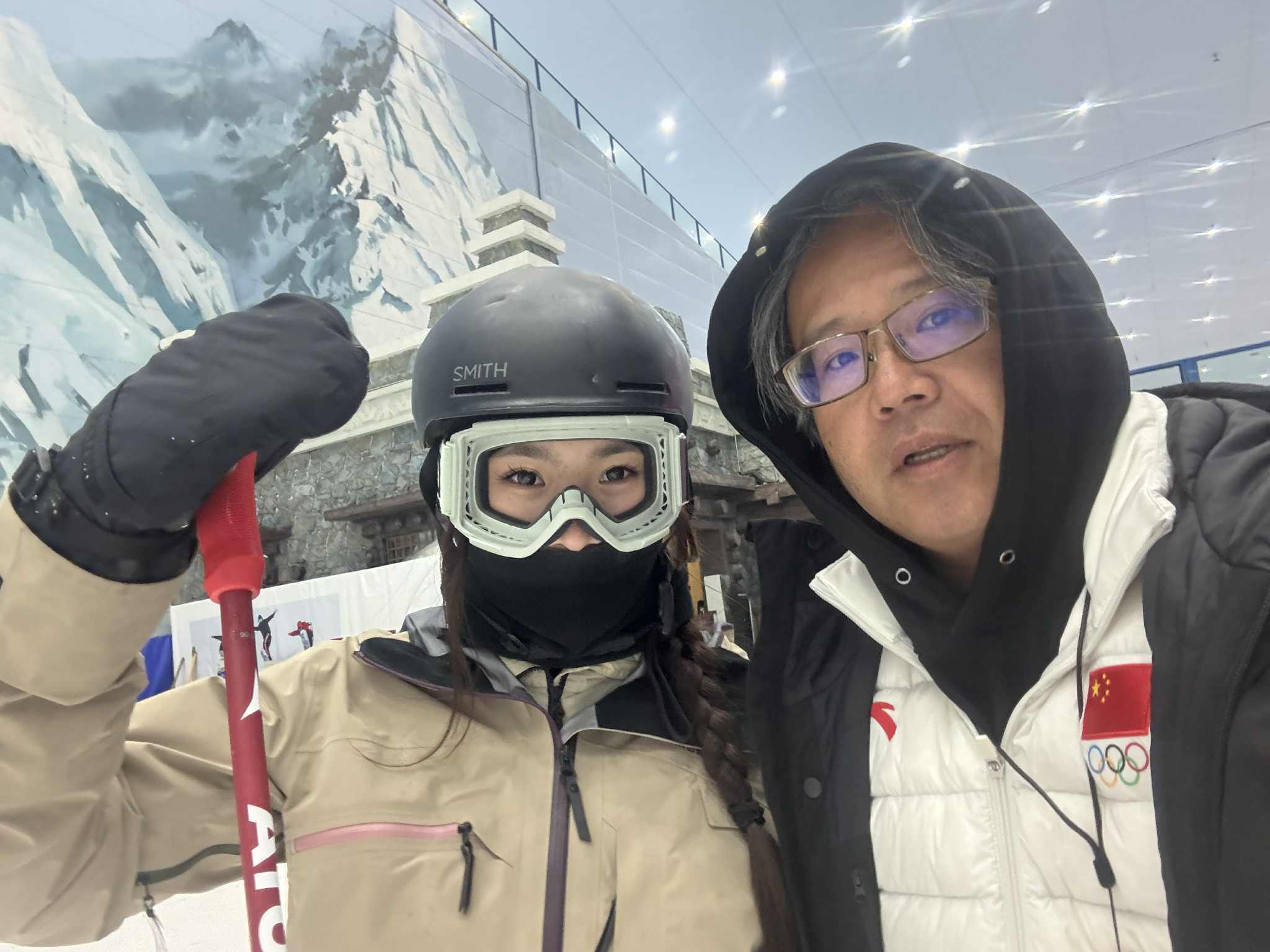
In his hands, a toddler's wedge turns into a 900 on a huge kicker, and a child with no skiing experience becomes an Olympian. All in just three years and four months. Japanese coach Daisuke Shirakawa traveled to China and led the Chinese national team at the Beijing Olympics. Through this challenge, he saw a different world that was previously unknown
Its roots
No one is more suited to the phrase "Where is that person now?" than Shirakawa Daisuke. When short skis known as "skiboards" were introduced to Japan from the USA in the late 1990s, and the freeskiing movement was exploding worldwide, Shirakawa Daisuke was undoubtedly at the center of the scene
This was around the time when LINE, a freeride icon, was launched in the USA, and shortly thereafter the French company SALOMON released the legendary twin-tip ski "Teneighty" globally
Daisuke Shirakawa was a member of the basic ski club during his student days, and after graduating he worked as an instructor at Fujishima Ski School in Naeba for four seasons. Later, when he was coaching the mogul school at HAKUBA47, he discovered skiboards, which were then called fun skis

"In Hakuba, someone from a manufacturer who was trying to bring skiboards to Japan showed me a video of the SB1 skiboard, which was made by LINE founder Jason Levinthal and rider Mike Nick. I was blown away. I thought it was so cool. I got hooked, quit school, and flew to Stratton, Vermont, USA, where the LINE team was based
I spent about two months skating with Jason and Mike, learning about techniques, culture, and so much more, and it was incredibly inspiring. It made me realize that I needed to share American skiboarding with Japan
So, when I returned to Japan, I made Japan's first skiboard HOWTO video, "Fun Ski Real Riding." It sold over 10,000 copies, and then I made a how-to book called "How to Enjoy Fun Skiing," which also became a hit. Thanks to these, Shirakawa Daisuke became known in the ski industry."
Shirakawa Juku and the World

This is a skiboard magazine published around this time. It describes him as "the person who thinks most about skiboards in Japan."
"If you give up before you even try, your dreams will never come true. If you focus too much on reality, it's no fun."
What was the "dream" that Shirakawa Daisuke was imagining at that time?
It must have been "the world."
"At first, we were just a group of members who appeared in skiboarding videos, but we gradually grew into a team, and when members entered competitions, they had to write the name of their team, so we just wrote Shirakawa Juku. From there, before I knew it, it became 'Shirakawa Juku'. I didn't come up with the name (laughs)."
Freeskiing has always been about freedom and looseness, and the riders of the time were under the watchwords of "cool" and "style," behaving as if doing whatever they wanted was part of the culture. In this environment, Shirakawa Juku, "a dojo that's really like a cram school, where students train hard with the aim of becoming world champions," was probably seen as something of an oddity
However, even at this time, Daisuke Shirakawa demonstrated his talent as a leader and his ability as a teacher. He always had the idea of "nurturing talented people who can go out into the world."
In 2009, Shinji Nagata, a student of Shirakawa's, won the CANADA CUP held in Naeba and was invited to the WSSF held in Whistler in April. He went on to become the world champion in big air. Perhaps due to his achievements, Shirakawa was appointed coach of the All Japan National Team from 2009 to 2016, and he was put in charge of developing athletes who would compete on the world stage
At the 2014 Sochi Olympics, Shirakawa Juku members Kentaro Tsuda (currently the national team head coach) and Chiho Takao (a judge at the Beijing Olympics) competed on the Japanese slopestyle team. Although they had built up a track record as coaches, they also began to feel something was not quite right
From "I've been doing it in Japan for a long time..." to China
"After participating in the Olympics and seeing it with my own eyes, I realized that in order to win the Olympics, you have to be serious about it at the national level, just like how many other countries spend huge amounts of money to develop their athletes. That's why I began to think that there was no point in continuing to do it in Japan, where the athletes have no choice but to support themselves. To be honest, one of the reasons I thought, 'That's enough' was that the national team's salaries were so low (laughs)
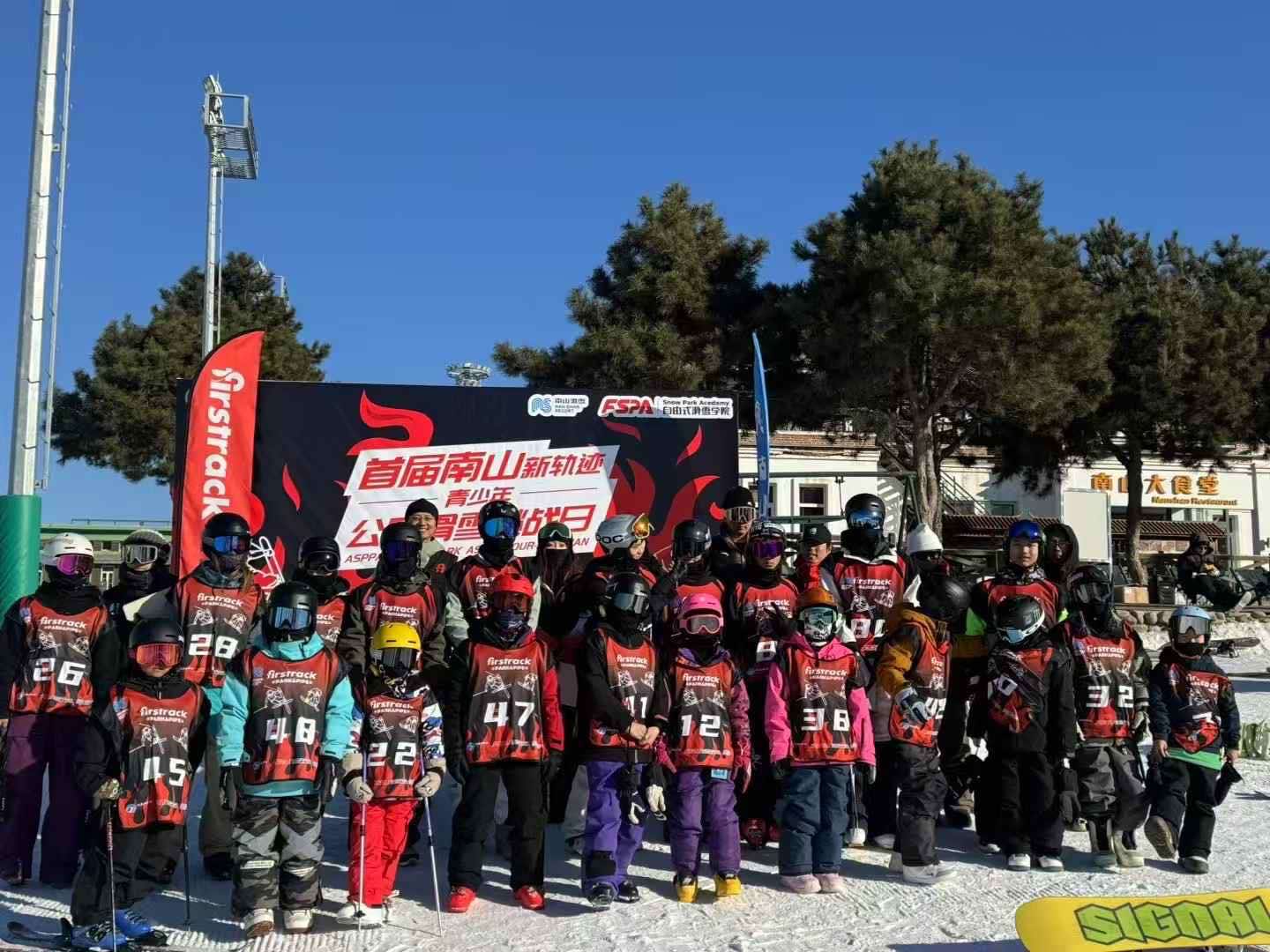
A few months before the 2018 PyeongChang Olympics, Captain Kondo (Hakuba's Kondo Makoto) invited me to come to the opening show for the air mattress he was making in Beijing. Captain Kondo had been involved in the construction of mogul courses and parks at Chinese ski resorts for a long time, back in 2000. That was my first opportunity to visit China."
It was just around the time that it was decided that the 2022 Beijing Olympics would be held, and he quit his job with the Japanese national team and a private team to take on the role of coach of the Chinese national team
"With the Beijing Olympics now confirmed, China is now forming a lot of teams, so someone told me that if I had that much experience coaching the Japanese national team, I might be able to form a team myself. I went to China myself and met a lot of people. I ended up connecting with a powerful agent at the China Sports Administration, which is the equivalent of SAJ in Japan, and I was able to form a team."
What does it mean to be able to create a team?
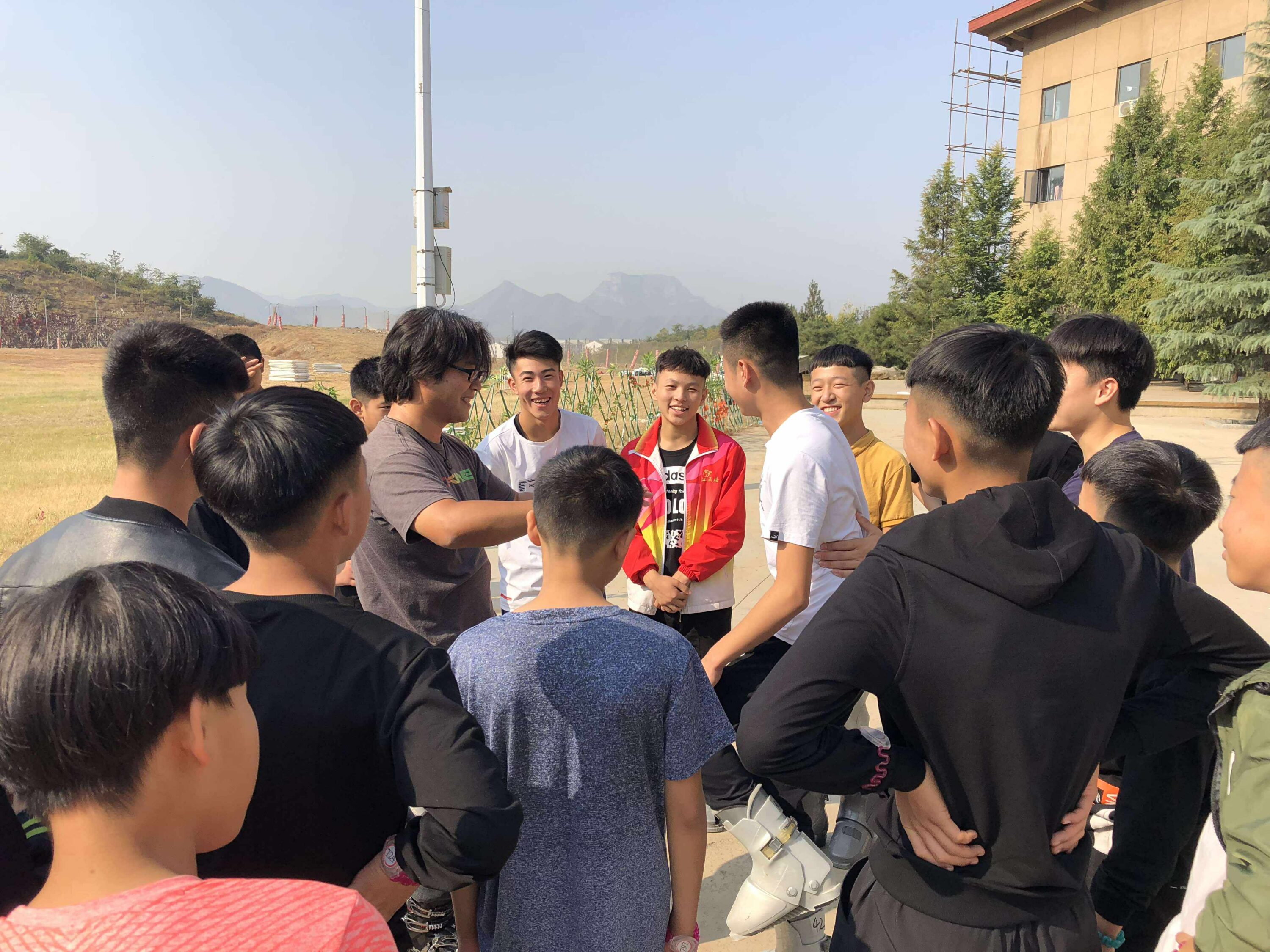
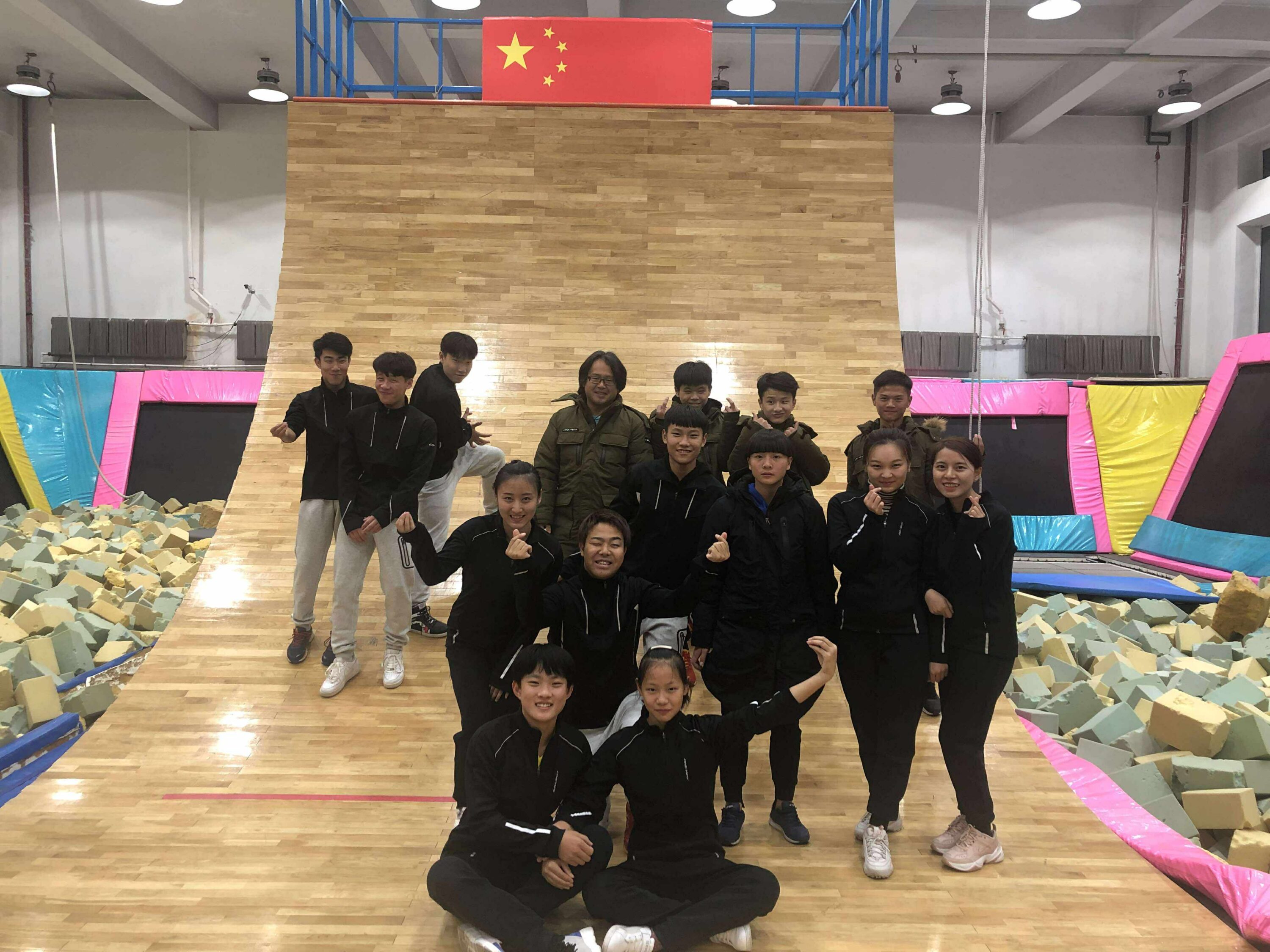
"The national team already had two teams, A and B. But to further strengthen the team, we thought it would be good to have a C team, so we decided to create a third team from scratch. We first auditioned around 400 kids at an indoor ski resort, and picked around 20 from among those who had done gymnastics but had never skied. Then we selected four more from around 500 kids who practice Shorinji Kempo at Shorinji Temple, so we started with a total of 28 kids. We got started in earnest in October 2018."

A very poor national team
Daisuke Shirakawa has been appointed as the coach of China's third freestyle team. He has signed a contract with the Chinese central government and is determined to work for the country's honor under the government's umbrella. His mission is to train athletes who can compete in the Beijing Olympics
"It seems like a reckless challenge to expect children with no skiing experience to perform well at the Beijing Olympics four years from now. Many people around me told me it was impossible (laughs), so I went to China with an even stronger desire to help them succeed
But if you watch the video of Team C when they first started, you'll be shocked. It'll make you laugh. They were so bad. You'd think, "Are they really going to be able to send someone like this to the Olympics?" More than half of the kids had never skied before, and they didn't even know how to put on their boots, so they would put them on backwards (laughs)
So, in order to first make them understand that this was the level we were aiming for, we had Captain Kondo and his daughter, Kokone, the top female skater in Japan, come all the way from Japan in December, two months after the team was formed
I showed them the heartbeat of a big kicker, spinning around like a normal kid, and told them that if they could beat him, or if they could become as good as him, they could do well in the World Cup. In other words, it started with the feeling that if they didn't do this, they wouldn't be here (laughs)."
An environment where nothing is allowed
From a young age, they dream of competing in the Olympics and train tirelessly, but even so, only a few people in their home country are able to get a ticket to the Olympics. To start from scratch and compete in the Olympics in just three years is a miracle, a joke, nothing more than a dream, right? Or so we Japanese would think
"I don't know why, but the environment in China is such that you have no choice but to do it. In the end, for the kids, once they're selected for the national team, it's a job. The team was made up of members aged between 11 and 14 or 15, and all of them started getting paid the moment they joined the national team. Even if they're kids, getting paid means it's a job, and so there are responsibilities. That's the system."
Is this the reality in China? Are those kids not going to school?
"I don't go to school (laughs). It can't be helped. Just being employed by the national team of the central government is an honor. So I'm going to work hard to win the Olympics."
What if you miss school for years and then get dropped from the team due to an injury?
"I don't really care what happened to the kids who didn't make it, but there are teams from each province under the central government's national team. I think they'll continue practicing there, aiming for revenge
I think the reason China has been so strong in the Summer Olympics and other events up until now is because of this system in place within the country. That's why it's so easy for sports that the country is suddenly putting effort into to develop. Every year the central government decides what to do with this amount of budget, and gives out the money and instructions
The 2022 Beijing Olympics were being held in Japan, so a huge amount of money was spent. My team also spent well over a billion yen in activity expenses in one year. The country provides the money, and the team is managed within that budget. That is also the manager's job, and the manager has the discretion to do so. I thought that with such a large budget, I could create the team I wanted to create."
Now, I wanted to ask about the contract fee: how much does a coach for the Chinese national team get paid?
"I can't really tell you the exact amount, but if you imagine my annual salary, it would be about the same as a manager at a top Japanese company. But taxes are high in China (laughs)."
Hmm, perhaps just one finger? That would be unthinkable in Japan. Here too, we see the reality of a "strong China."
Won the A team coaching position
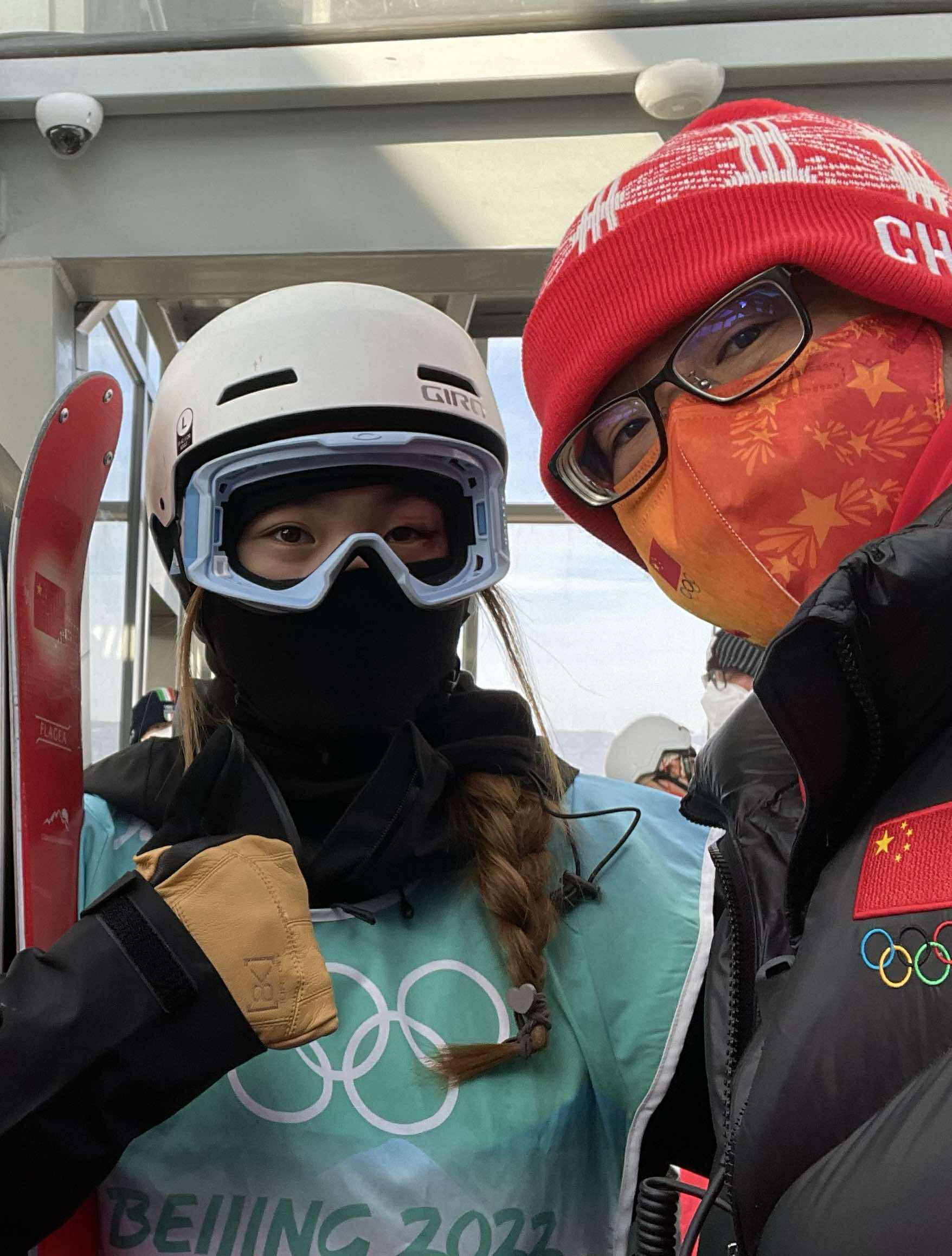
"However, it's not easy. In fact, it's extremely tough. I signed the contract in the fall of 2018, and they told me this: 'At the end of this season, in the spring, we'll play a tournament with the A team. If we lose that match, the C team will disappear. However, if we win, we'll absorb the A team, and you'll become the A team manager of the national team.'
We have to beat the national team A in just one season?! That sounds like an impossible task..
"But we won (laughs). So I was the manager of the A team from then until Beijing."
How on earth did they do it? The kids were supposed to be able to do the wedge-style in the fall... But this is the skill of the powerful coach, Shirakawa Daisuke. With Shirakawa's unique and systematic training method, the kids on the team are rapidly improving. Let's take a look at the indoor training
Shuorui Yang, also known as Yang-chan, is a girl who took up skiing in the fall and watched Kondo Konno's air tricks with her mouth agape. Two years later, she achieved results that surpassed Kondo's in competitions, achieving a peak of eighth place in the 2021-22 World Cup
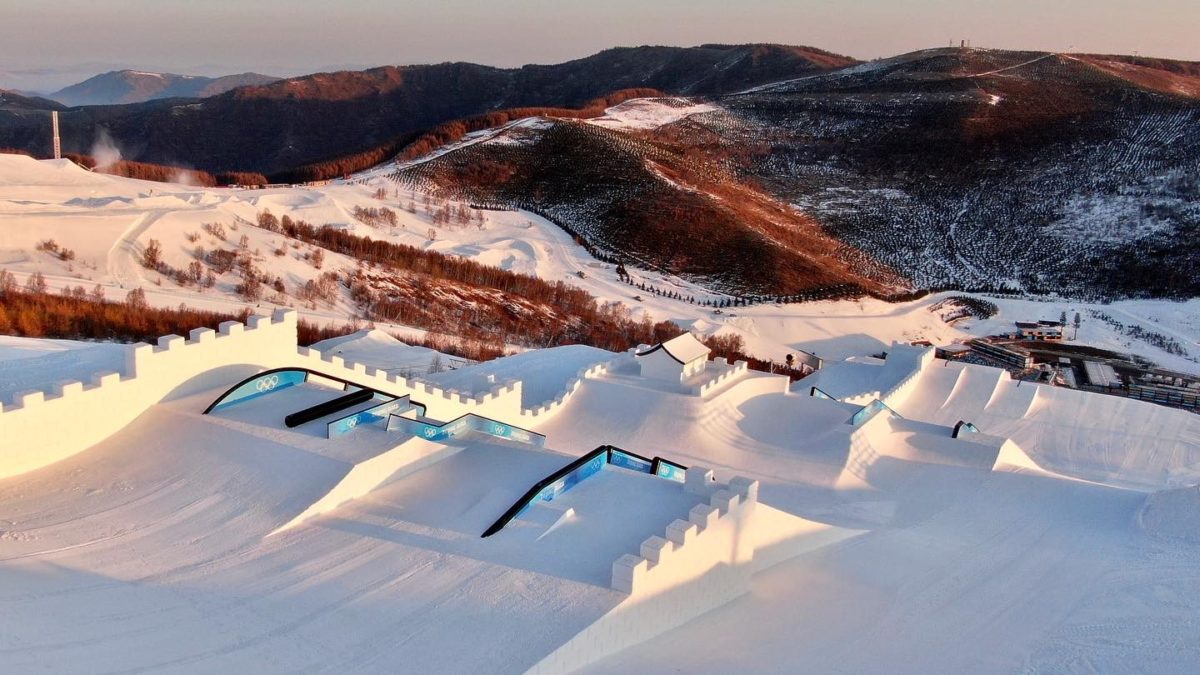
Shirakawa has taken a completely unknown athlete to 22nd place in the world rankings. Yang Shuorui has successfully qualified for the Olympics, where only athletes ranked within the top 30 in the world can compete. He showed the world his astonishing growth on the slopestyle stage of the Beijing Olympics, his dream. It has been
three years and four months since he became the coach of the National C team in October 2018. True to his promise, Shirakawa Daisuke has truly accomplished his mission of producing an Olympic athlete.
"The question is how to bring someone from a low level to a world-class level in such a short time. The fact that it took so long seems to be what is so amazing around the world. I have a logic, like an equation, for getting better, and I am confident that by combining this with the experience I have cultivated, I can achieve results."
On to the next challenge
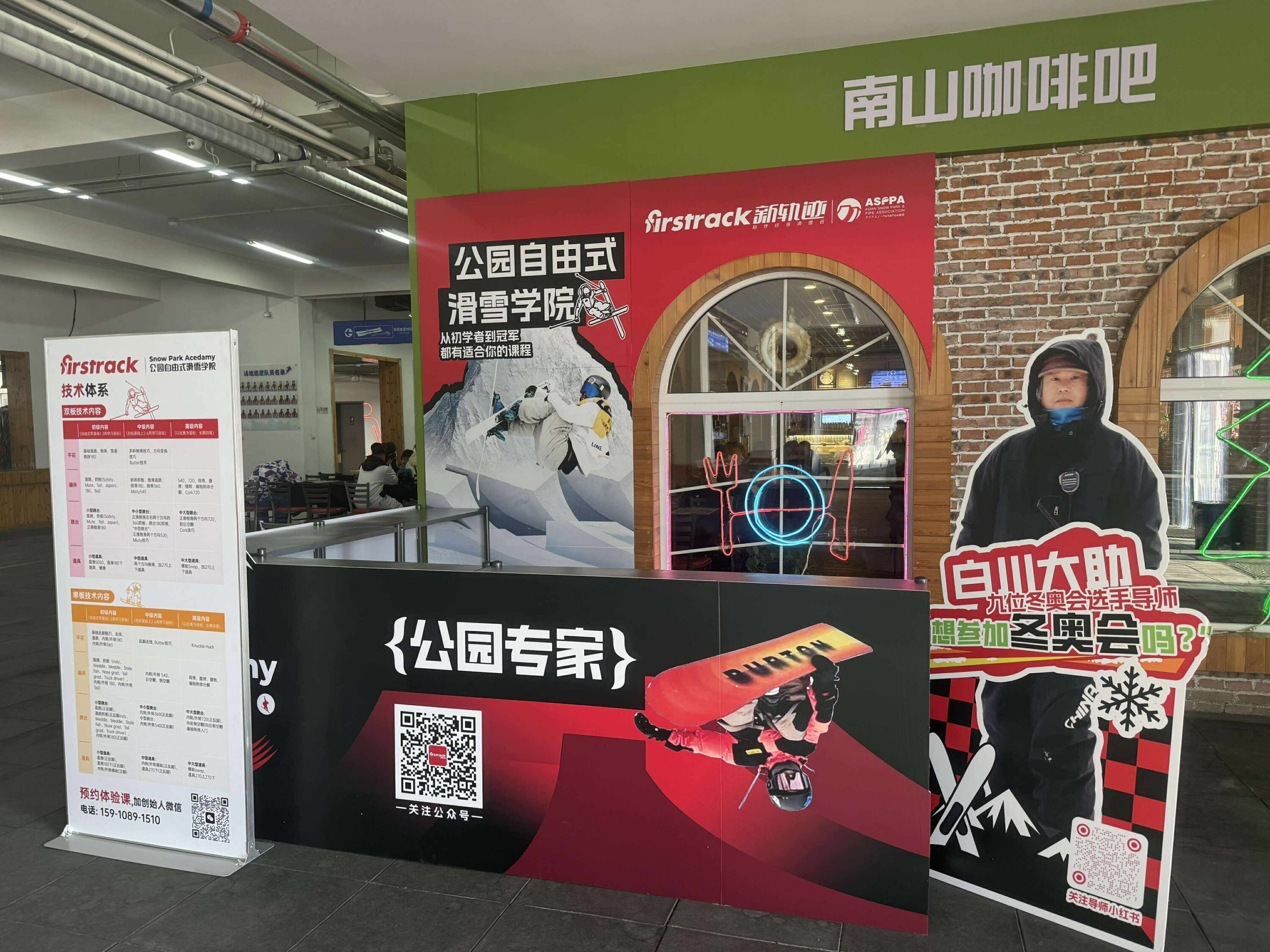
However, after the Beijing Olympics, Shirakawa Daisuke easily gave up his position as coach of the national team, which had achieved record-breaking results
"The reason is simple. After the Beijing Olympics, the government's budget disappeared. As a result, they couldn't hire a coach with a very high salary, so the B team coach, who was paid less than me, became the A team coach
I accepted the role of coach because I was told I could use activity funds in the hundreds of millions. This was because I imagined that even if I started from scratch, I could produce athletes who could make it into the world rankings. However, if the budget was cut by more than half, I wouldn't be able to go on tours or train hard. I realized that this was no longer what I wanted to do, so I quit."
However, thanks to the success of the Beijing Olympics, Japanese coach Daisuke Shirakawa's presence and influence became even greater. He was featured in various media outlets, and many "rich parents" gathered around him, wanting to receive his coaching
"There's something of a miracle I created in China. I took them from zero to the Olympics. And because everyone was interested in me, the groundwork was laid for me to start a new business
Wealthy Chinese people make their children play a variety of sports so that they can get into good universities in the future. Until now, it was basketball, tennis, golf, etc., but the population has become too large, and parents find it difficult to get their children to perform well among them, so they start to take an interest in new sports that have become popular. At the Beijing Olympics, Eileen Gu won three medals, a gold and a silver. This brought a lot of attention to skiing and snowboarding. This triggered a huge increase in wealthy parents who wanted their children to take up freestyle skiing. Naturally, this was expected to happen.
(Note: Eileen was training in the USA, where she lives, separately from the Chinese national team, in preparation for the Beijing Olympics, so Shirakawa was not coaching her.)
If I immerse myself in the national team, I won't be able to do other work, so now I'm self-employed, working as a private coach, running my own team in China, and looking after my children."
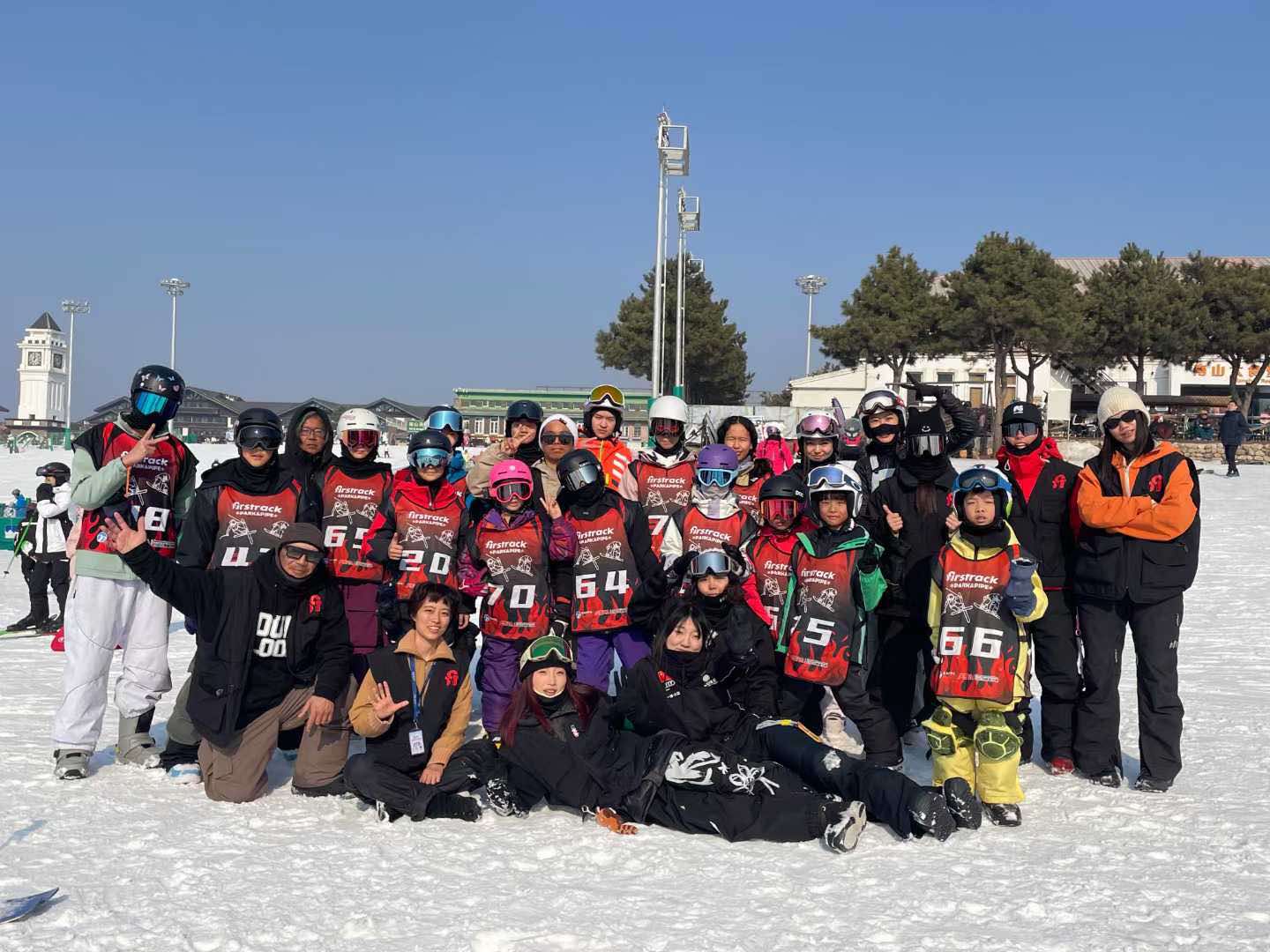
When we interviewed Shirakawa Daisuke for this article, he was in Australia in the Southern Hemisphere during the summer
"After this, Kondo Konne and Sato Masaka will be coming from Japan for a private training camp. We'll be putting together a process to coincide with the first FIS slopestyle competition in Austria in November."
Kondo Kondo is Japan's leading freestyle skater, and is almost certain to compete in the Milan-Cortina Olympics
Masaka Sato is a student at Waseda University. He began training under Daisuke Shirakawa's program and has rapidly grown over the past two years. There are two slots available for the Japanese men's W-CUP, one for big air and one for slopestyle. Masaka Sato currently has the most points in slopestyle, so he is almost certain to compete in the W-CUP
Shirakawa will continue to base himself in China, traveling around the world competing in the W-Cup with the athletes he supports, and his schedule is already packed.
What is the joy of being a coach for Shirakawa Daisuke?
"I find it more fun to train skaters from scratch to become truly strong, rather than just training skaters who are already strong. To become good, it's not just about skating technique; you also need to develop a strong mentality and interpersonal skills. I want to teach my skaters important things while encouraging and supporting them."
What is your vision for the future?
"In October, the indoor ski resort with the world's largest elevation change will open in Shenzhen. The park will be built there, so I'm thinking of setting up a new business division there, and I think that will be my final base. In life, you never know what constitutes success, but I do have a sense that I'm enjoying doing what I love."
Shirakawa is a "successful person" who traveled to China and achieved great things, but few people in Japan know about him. This is because Shirakawa does not post information about himself on social media or other platforms in Japan
"I don't need to be known in Japan. I'll continue to play in China. However, I'd be happy to support Japanese players if asked."
Shirakawa Daisuke's coaching career will continue to highlight talent and weave new stories
ProfileDAISUKE
SHIRAKAWA
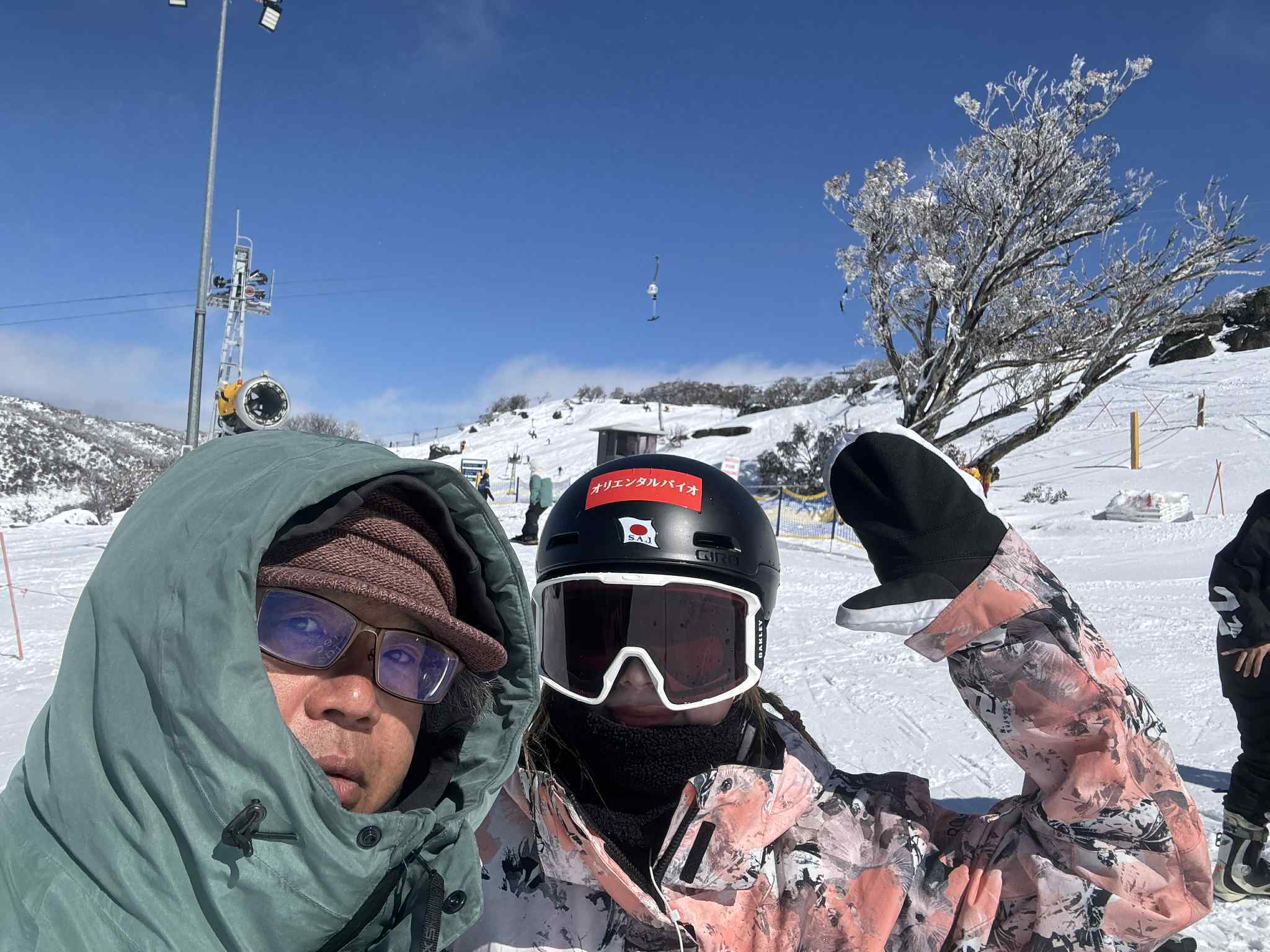
From the age of 20, he gained experience as a basic ski instructor at Naeba Fujishima Ski School, then became a mogul school coach at HAKUBA47 Ski Resort, ran a park and school at Okutone Ski Resort, and opened an academy to train professional skiers. From the age of 36, he ran a school and academy at Oze Tokura Ski Resort, and
from 2009 to 2016 he was the Ski Park & Pipe National Team coach at the All Japan Ski Association. From 2018 to February 2022, he was the director of ski slopes and big air and coached the Chinese national team. He also runs a specialized park school at Nanshan Ski Resort. After the Beijing Olympics, he has been training skiers with his own team and privately.