

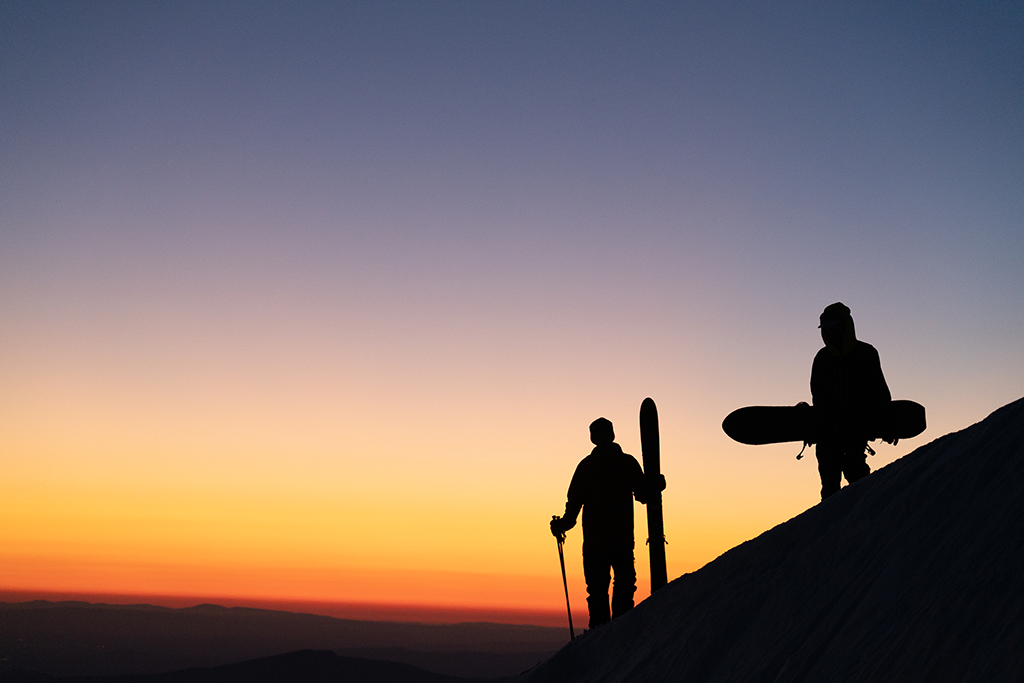
Eric Pollard produced Season. WHY and HOW
Eric Pollard gave up his 18-year career as a LINE rider to start his life's project, "Season Eqpt." from scratch. This interview delves into the whys and hows of his project (Part 2). Eric shared his stories with us as we toured the Season Eqpt. office in Mt. Hood, Oregon, USA. This is the first time in the history of Japanese freeskiing that we have seen such an in-depth look at the philosophy and lifestyle of Eric Pollard, who has always stood out at the forefront of the freeskiing scene. In fact, it may even be the first time in the world. Let's listen to what he has to say
The first part of the interview is here
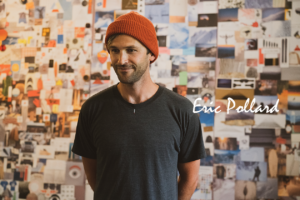
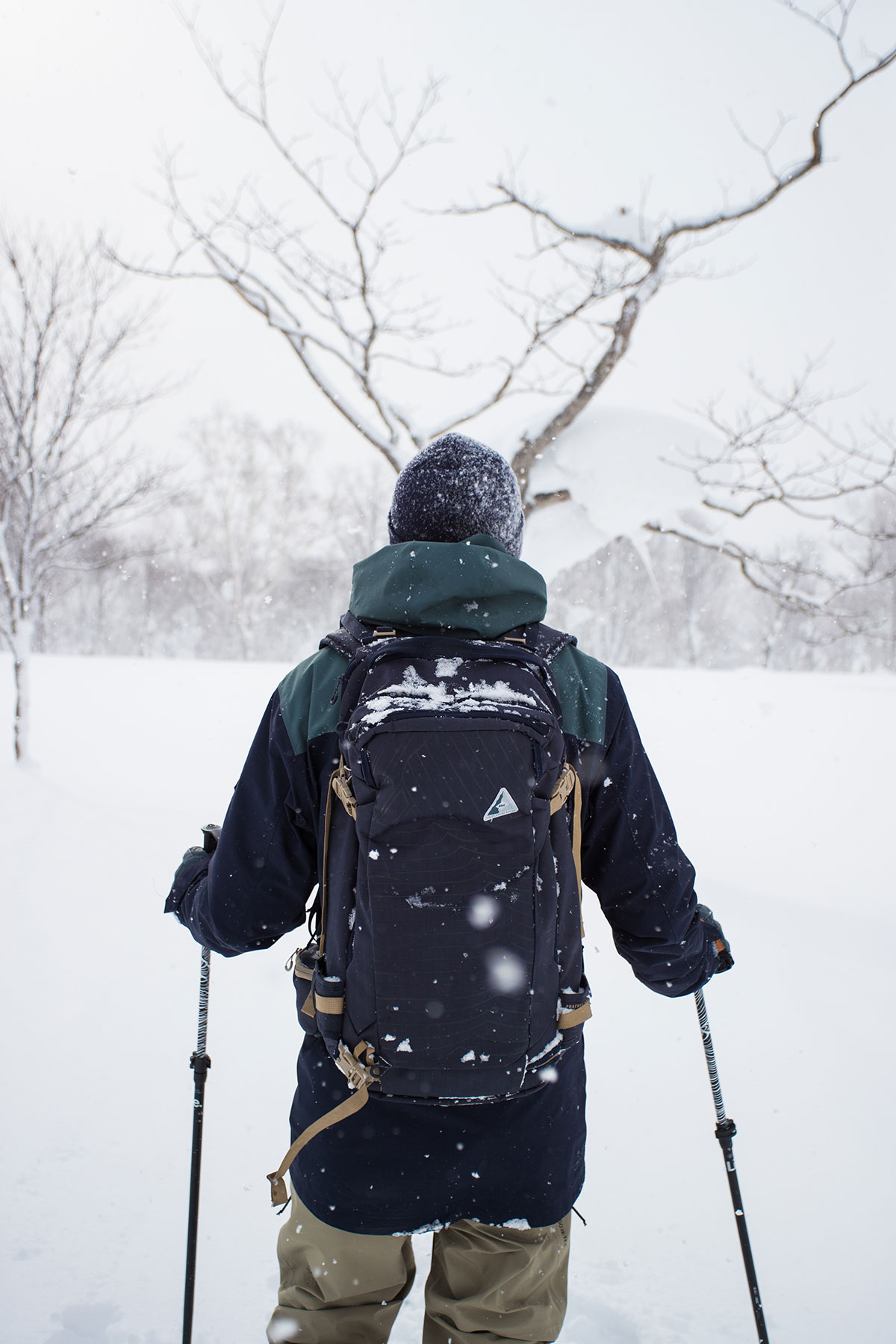
What was the most challenging thing?
-What was the most difficult part of this Season. project for Eric?
Eric: I learned a lot from creating Season. I knew starting a business wasn't easy. I think the most challenging thing was the combination of a few things. For me, communication was difficult.
Times have changed, and so has how we communicate information to consumers. I understand old-school magazines and film, but I'm surprisingly not very good at social media (laughs).
I wanted to express my sincere gratitude to LINE, so it was difficult for me to suddenly announce that I was quitting it. I love LINE
My career as a pro athlete at LINE was coming to an end, and I was transitioning into a new role, so I spent a long year on Instagram expressing my gratitude to LINE as part of my campaign. It was difficult, because there's always a risk that information will take on a life of its own
-That's typical of Eric. I'm sure the message, filled with consideration and respect, was conveyed.
Eric: With Season., it was difficult to condense our beliefs and communicate them through various media. Continuing to do this consistently is more difficult than we thought. Both
Austin and I had to break the momentum of LINE and NITRO, which we'd both been riding for a long time. So we had to start moving from a place of no momentum, a standing jump without a run-up. This was also difficult. From a business perspective, Austin and I were very successful and had momentum, but we had to stop that and restart from an earlier stage.
Apart from that, like most people in the ski industry, I had to wear many different hats when setting up the brand. I decided on the direction, beliefs and core values of the brand, came up with the visual concept for the products, did the architecture, designed the graphics, photographed the products, designed the website, built the shop booth, and even shot film this year. Juggling all these different areas was challenging, but it was also rewarding, and I learned a lot from it
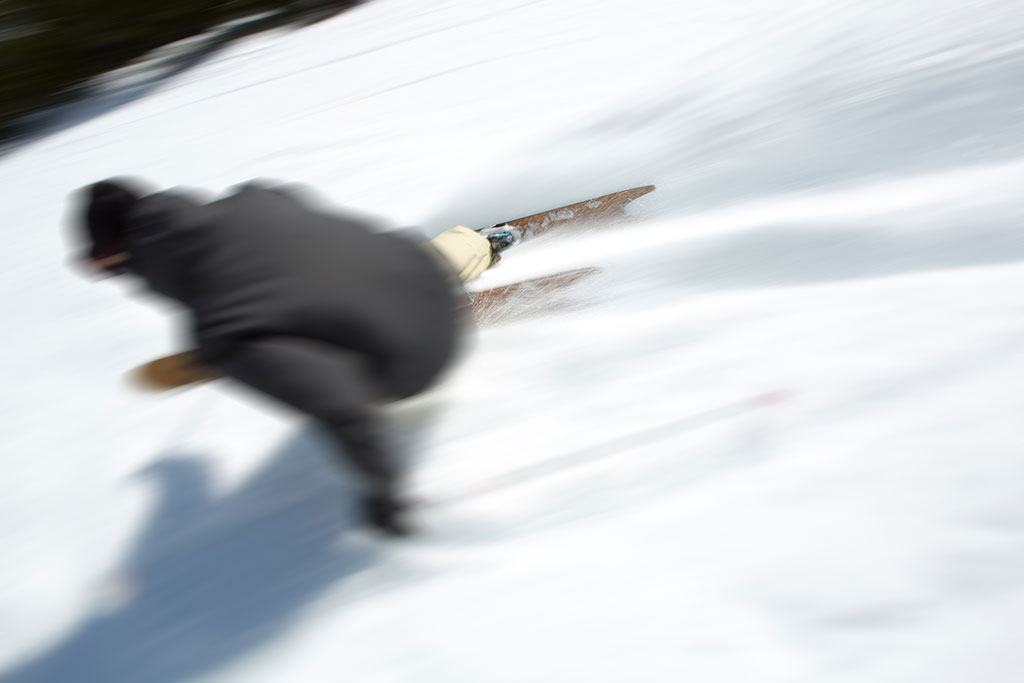
Season. is my baby!
-So, does that mean that Season. is run entirely by Eric and Austin?
Eric: Yes, pretty much. There are two people involved. One is an engineer, and the other takes care of everything else. But I have to do most of it myself, so Season. is really "my baby" (laughs). It's
very challenging and hard work, but there's a lot to be gained. And it's something I've always wanted to do. I was a little worried about how it would turn out, though. I felt like I would burn out if I specialized in just riding, just product design, just artwork, just filming, and pursuing each of them in depth like I had done in the past, so it's refreshing to be involved in the whole thing like this, and it's a good change.
-What do you think makes Season. special?
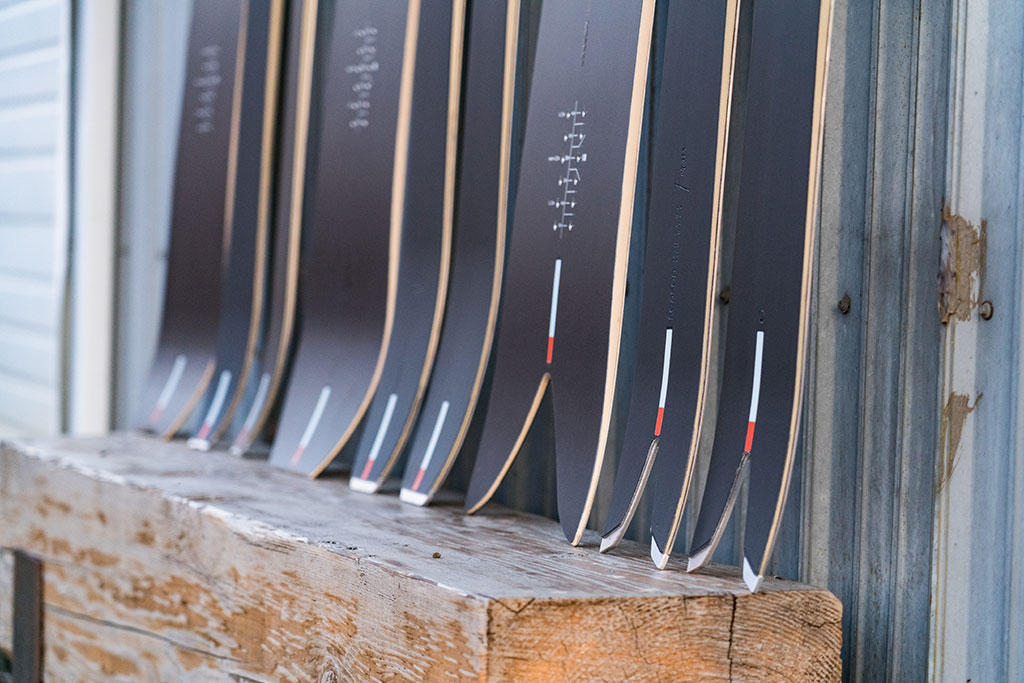
Eric: First of all, I have to say that I respect a lot of different brands. I like all the different brands created by a lot of different people, and I think they're all important. I don't listen to just folk, or just hip-hop, or just classical, or just rock, for example; I like to listen to a little bit of a lot of different music. I think that when a brand is cherished by people in this way, it becomes something like a music genre
It's okay to have different perspectives and approaches. I think a brand comes from the culture that it represents. Maybe I feel that way because I've been in the industry for a long time. I don't think that our skis and snowboards are particularly innovative or technologically different from other brands
What makes our brand unique is that, especially with skis, the products have been developed by me from the very beginning, from the idea. I've had this idea for 25 years, and no one has ever made a product based on an idea that has been around for that long
My ideas were acquired and refined through my years as a skier working at LINE. Every year I would review the concept and provide feedback on whether the board design was too focused on a particular condition, whether it hindered the benefits of other elements, and whether it made the board better or not
The goal of this process was to thoroughly understand the elements of design. So when designing these skis, I thought a lot about how to simplify them. This is a racing ski, this is a freestyle ski, this is an all-mountain ski, this is a carving ski, and once you start thinking about it, the sky's the limit. These are the categories, you know
We wanted to get rid of these classifications and create skis specifically for different types of snow: fresh snow, hard snow, medium snow, and a mix of both. We designed skis with the right specs for each condition to maximize performance
We considered what would make skiing on hard snow more comfortable, for example, a narrower waist width because you need precise edge control, less rocker because you don't need much buoyancy, and a slightly stiffer flex to perform well on hard snow
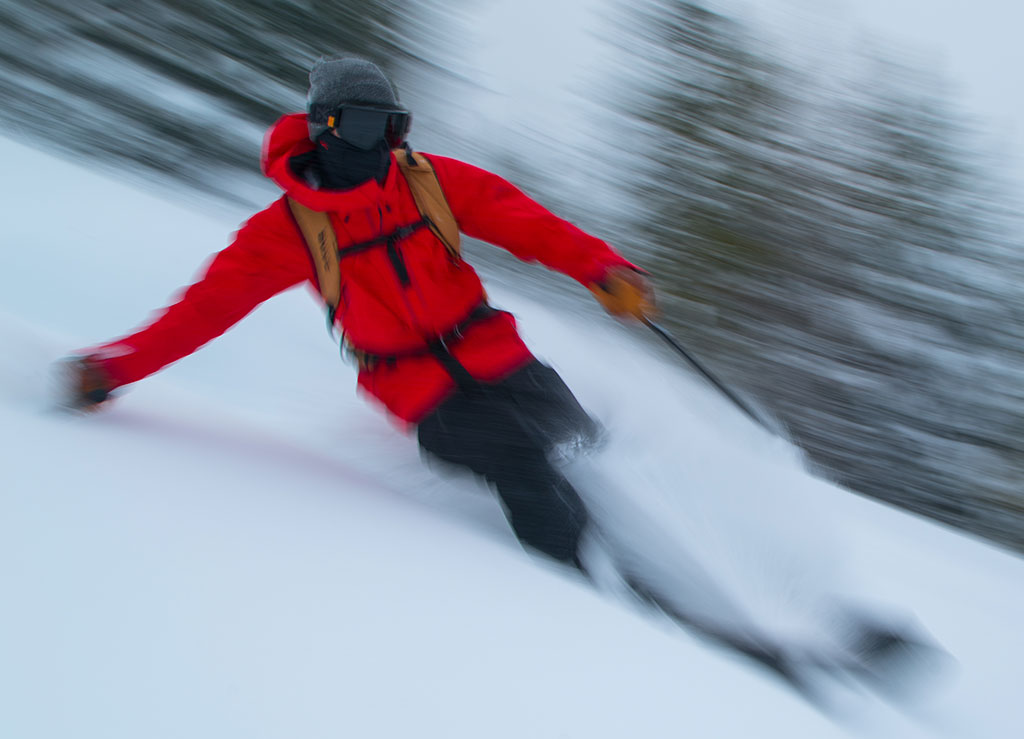
This approach is very different and I could never have done it without the experience I have had over the past 20 years, from which I have learned so much
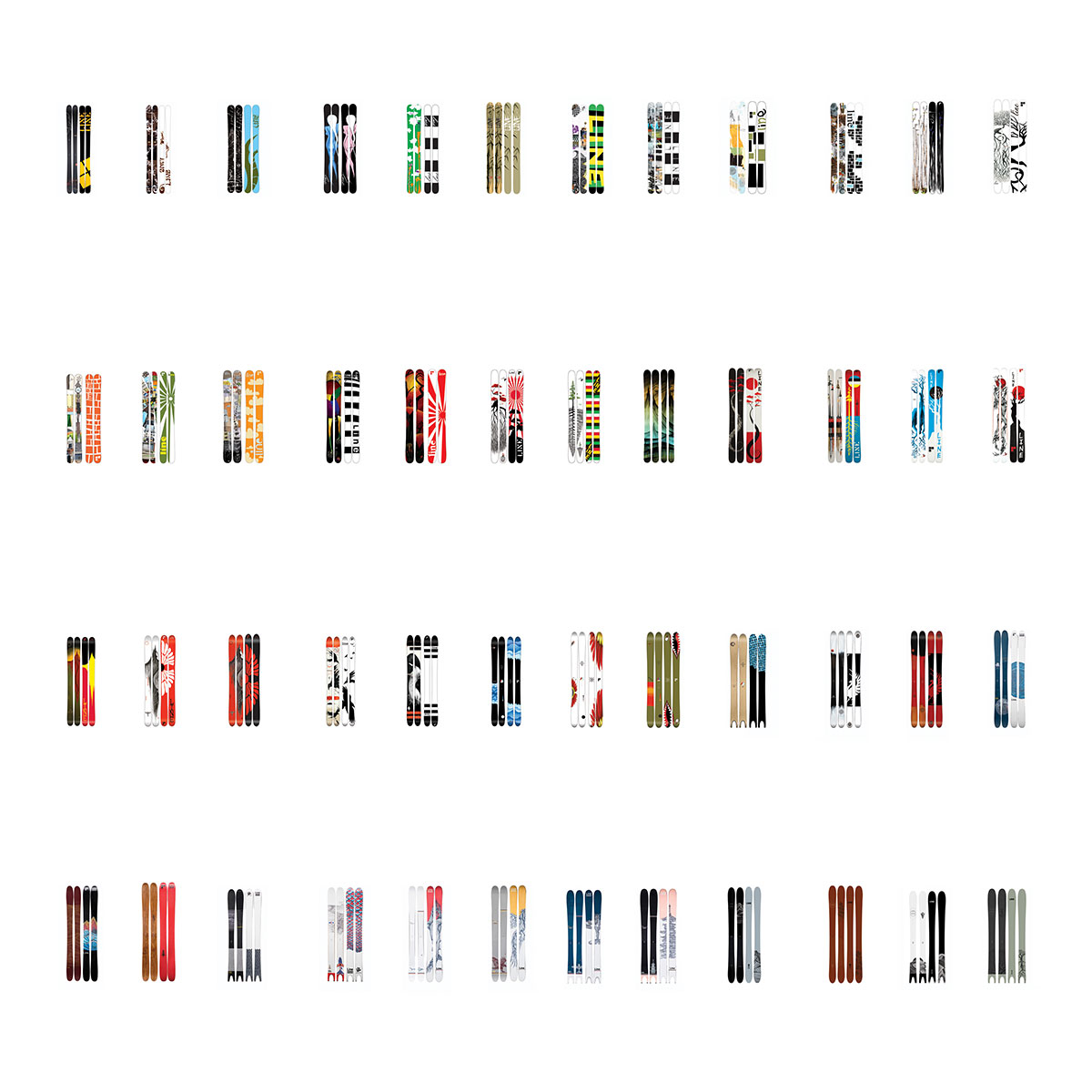
That's why these skis are so special in that they've been designed with a refined sense in mind
We've been developing the concept and the idea for 20 years. So, although it may look like our first ski, and it is, it has been developed with great precision. It's custom-designed for each snow condition. I think that's what makes Season. so special
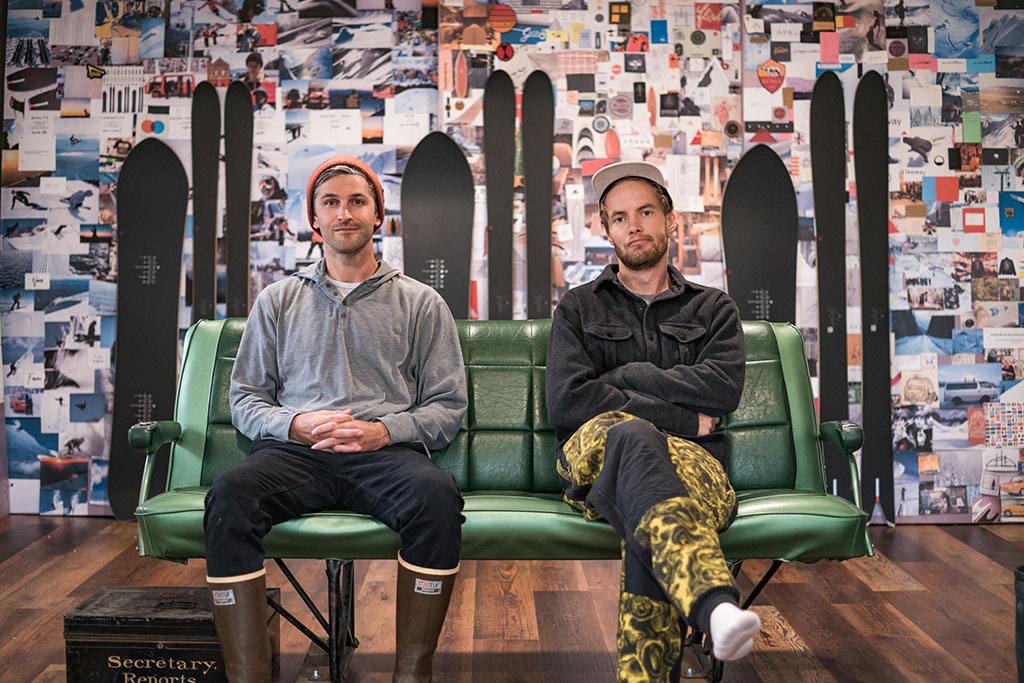
My partner, Austin Smith
-Does Eric's buddy Austin have the same ideas as Eric? What kind of person is Austin Smith?
Eric: Austin, he's a really, really interesting guy. We share a lot of the same ideas. That's why we can work together. Austin also thought that snowboard manufacturers could simplify their overly complicated product lines. Having a lot of models certainly sells well, but it's difficult to dig deep into each product. So we wanted to offer a more refined product line.
Austin and I share this idea of "less is more." Plus, he cares deeply about the environment, and he believes sustainability is very meaningful and something we should all do.
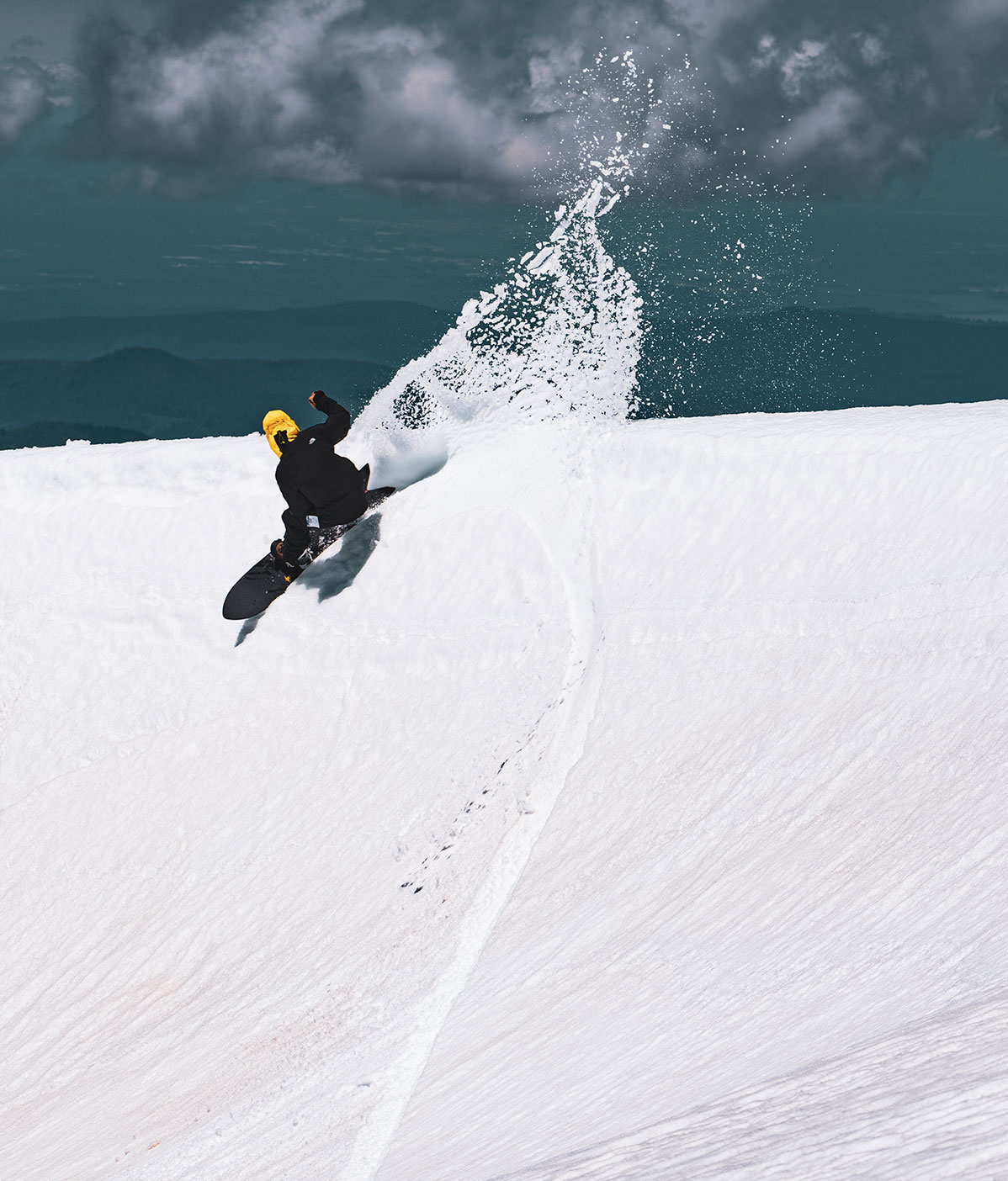
Austin is truly unique, just like the people we see on film. He lives a free and easy-going life. He lives in his truck, traveling the world, and one day he'll be racing in an adventure race, the next day he'll be snowboarding in the backcountry, the day after that he'll be skiing at a resort, and the next day he'll be surfing at the beach. Austin is always real, in the best sense of the word. A lot of people have this idea of who they are, and they try to fit that idea into their own beliefs. But he's different. He always lives his life as he is. I admire him.
What kind of person am I?
-What kind of person do you see yourself as, Eric?
Eric: Yes, there are definitely a few things I can say (laughs). Surprisingly, I'm quite critical about my own thoughts. I try to look at myself objectively as much as possible. In America, people like that are called control freaks, but I want my perspective to be precise, not vague. I don't feel at ease unless I have precise control over what I'm doing and what's happening
That's why I want to have complete control over the design of skis. I feel uneasy if I'm not in control of the filming and editing. I want to keep expressing my many opinions
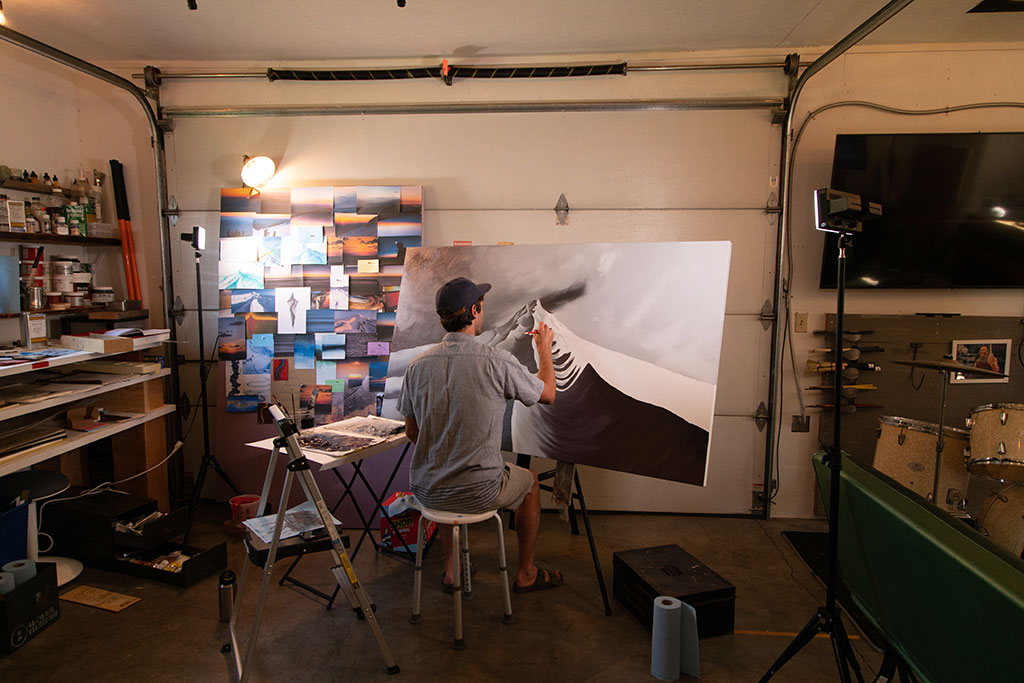
When it comes to communication, whether it's through video, art, writing or voice, I'm particular about accurately expressing my thoughts and feelings
I know that it's not always a good thing, but when I look at it objectively, I have to admit that I have that kind of personality (laughs)
- You're very organized, which is a good thing for a businessman, isn't it? (laughs)
Eric: Well, the strange thing is, business isn't something that really motivates me. It's not the highlight of my life
There's a quote I like from a music band: "Music is a life, life is not a business." I agree. Life is not a business. I always have ideas. If I develop them, they could become marketable products, and I think I have the skill set to develop and market products based on those ideas. But I don't want to turn it all into a business
My life and what influenced me
-What has had a major impact on Eric's life?
Eric: Wow, that's a tough question (laughs). Hmm, I'd say it would have to be the sport of skiing, and second would be snowboarding. When I started snowboarding, I was shocked, thinking, "Wow, this is amazing! It's completely different from skiing. The movements are similar, but it's somehow different." Thanks to skiing and snowboarding, I was able to meet important friends who are like family to me
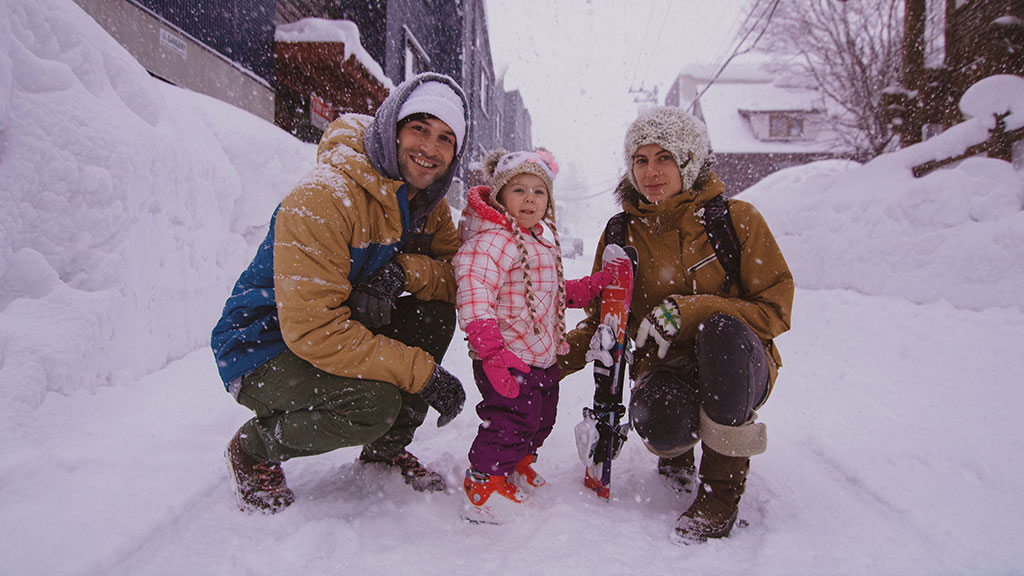
And the person who has had the biggest influence on my life is definitely my wife. We've been together for 20 years and married for 15. She's a professional snowboarder, so we've worked together and grown up together. She's the perfect balance in my life
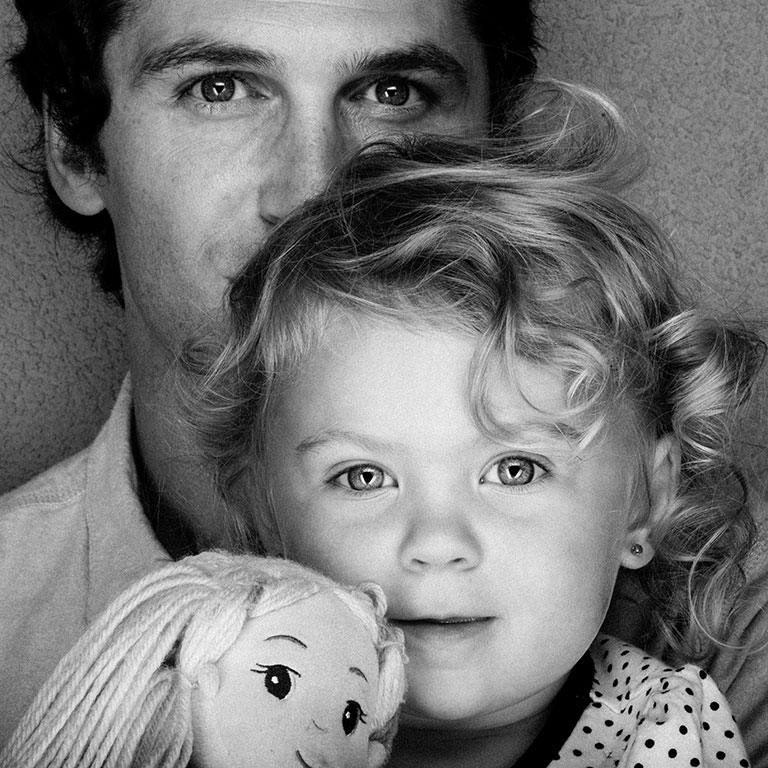
I've always been an extreme person, and when I get carried away, I tend to go to extremes. She helps me stay grounded, both mentally and physically, and balances me out. We're also starting a family together, with two adorable daughters, Isabella, 9, and Nova, 5. And of course, my parents have always supported me as I've been able to do what I want freely in this unique world
Another person I can't compare to is Jason Levinthal, the founder of LINE. I wouldn't be who I am today if I hadn't met Jay. Ever since I became a LINE rider at the age of 15, we've always been like big brothers, working together creatively.
Jay has always tried to understand my cutting-edge ideas and has always supported me wholeheartedly. We've done a lot of fun and silly things (laughs). Of course, there are also filmmakers, photographers, fellow riders, and the snow culture that's so special to me.
-That's right, Eric's meeting with Jason and the original LINE team are his roots
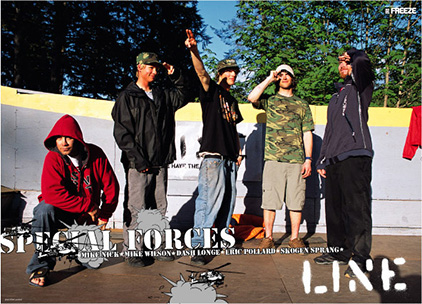
Click here for an in-depth interview with LINE founder Jason Levinthal
My Philosophy
-What is Eric's philosophy of life?
I'm not religious, so I don't have a systematic philosophy of faith or anything like that. However, I have studied philosophy and religion a little, and I've noticed that similar ideas can be found in concepts that are strongly regional or culturally specific. In a less specific sense, ideas found in Christianity can be applied to Buddhism, and ideas found in Hinduism can be applied to Islam. In the West, Judeo-Christianity is the basis for most faiths, but Eastern faiths and philosophies may seem completely different, but they are actually similar
I find all of this beautiful, but also terrifying, because it drives people who believe their interpretation is correct to the point of fighting for the facts of their interpretation. I'm not particularly religious, but I think all faiths are interesting and should be cherished
My philosophy is things like "What is the meaning of our existence?" and "How should we use our limited time and life?"
This is something that is often brought up by philosophers (laughs)
- (laughs) Eric is no less of a philosopher. He's a real thinker. His way of life and art speak for themselves
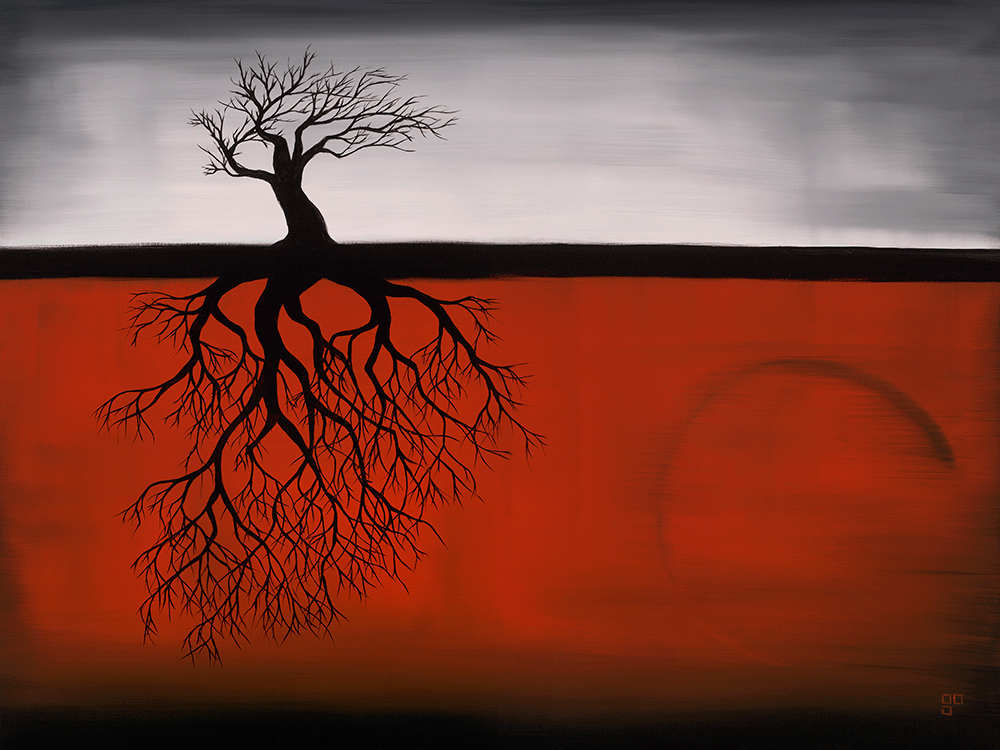
Eric: When I was little, my father often taught me the words of Joseph Campbell (American mythologist)
"Follow your bliss."
Basically, it means to pursue the feeling that where you are and what you're doing is right, and I think that's absolutely true.
Well, I can't deny that I'm biased because I've lived a happy life. I've been successful, so my interpretation of this phrase may be distorted (laughs). But I've lived my life believing this, just as my father taught me, and as I teach my children
For example, let's say you love painting, but one day you have more responsibilities, a family, and other things to protect. You don't know if you can make a living as a painter, so you decide to look for a proper job. But in reality, there's a chance that you might fail at that other job too
Even if you compromise your life's dreams and goals and make what seems like a safer choice, there's a chance that it won't work out because you don't have complete control. You work hard every day, making the sacrifice of giving up something you love, and you keep working hard even though you hate what you're doing, and then retirement approaches. Then, one day, you're suddenly fired and your severance pay is gone. This actually happened to someone I know, and I thought, wouldn't it be better to do something you love and fail than to end up like this?
Also, we made a film called "Drawn from here" with Nimbus, which expresses my perspective through the words of various people, and one of the words talks about the meaning of human existence. That meaning is something that is constantly changing, and I'm always searching for it
Another quote from the author of the book "War of Art" means "you will eventually face resistance." When you try to do something, you look at yourself and many reasons come to mind for not doing it. You think, "Maybe I should give up on this." But there are also many reasons to do it. So you feel conflicted. But that's normal, and you can decide for yourself whether the part of you that wants to do it or the part of you that wants to give up will win
This is a must-read for anyone who finds it hard to pursue their bliss, especially creative people, because it shows that feeling anxiety and doubt can be a good thing
When something deep inside of me tells me "Maybe I should stop doing this," it's actually a sign that "I should do it." I guess that's what my beliefs are
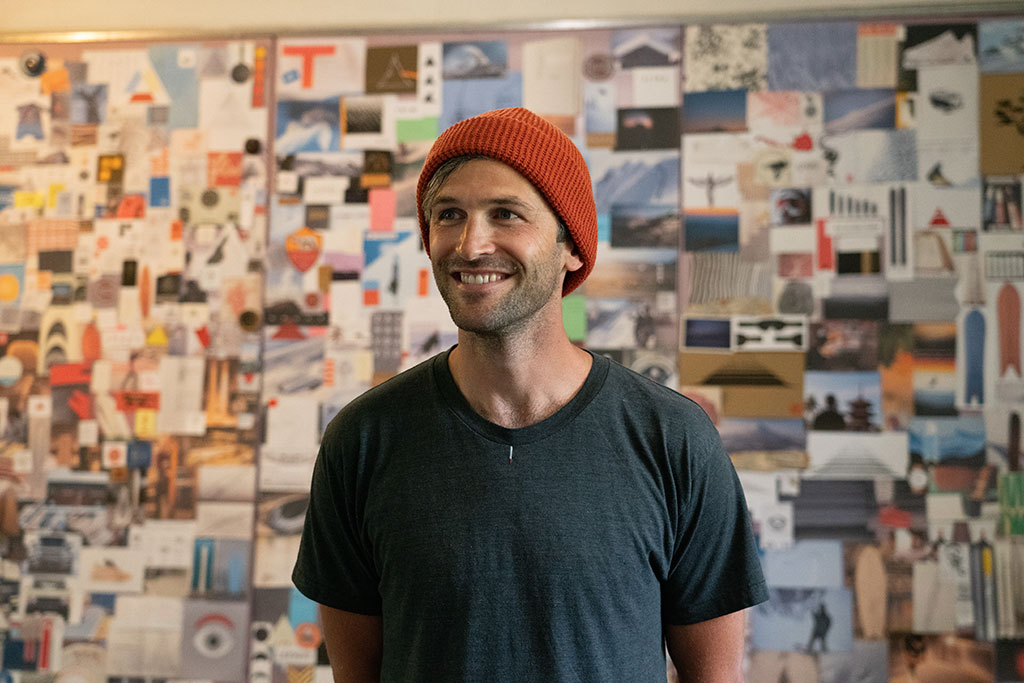
A new chapter is beginning
-What is Eric's next goal?
Eric: That's an interesting question. What's interesting is that I'm in the middle of redesigning my life right now. A new chapter is beginning
I'm still trying to figure out how much design I'm going to do, how much film work I'm going to do, how much skiing I'm going to do, how much snowboarding I'm going to do, how much time I'm going to spend with my family, how I'm going to interact with my family, etc. I'm asking myself these questions and thinking about what I really want to do
I think it's important to have goals. For example, let's say I want to be a psychologist. I need to know what I need to do to become one. It's not enough to just want to be one. I need to think about what I need to do specifically. I think this is the same in life
The future you envision should be as vivid and clear as possible, because that makes it easier to move towards that future
However, contrary to my expectations, I am still active as a professional skier, and since the future is so unpredictable, my future is quite uncertain. To be honest, I never thought it would turn out like this. (Laughs) I feel like my previous life is still going strong and is continuing in this way
But instead of pushing the boundaries of the sport of skiing and evolving the sport itself, I'm iterating on ideas I've had for a long time, and through these iterations, I'm continuing to more clearly communicate these once-radical concepts and ideas that are now shared by the snow community
Right now, I'm trying to figure out how I'm going to approach skiing. To be honest, I don't really know right now... (laughs) Before, I was focused on the goal in front of me, and everything I did was directed towards that. But now, I've changed so much that I'm re-examining what skiing means to me. Is it the same as before, or is it something completely different? How well can I ski? Will I ski in front of a camera, or will I ski for myself with friends and family? What will bring me the most happiness?
One thing I know for sure is that being a father to my children is an irreplaceable joy. And I truly cherish the time I spend with my family. For almost a year now, my children haven't been able to go to school because of COVID-19, so I've been homeschooling them. That's been a challenge (laughs). For the first time in my life, I learned the concept of "patience." (laughs)
Before this interview today, I was teaching my older sister Isabella how to do a front flip on the trampoline. I can't do it though. (Laughs) Kids are amazing, they can absorb anything and become able to do it in no time. It's a joy for parents to watch and support their children as they grow
So, to answer that question, I'm not sure what my next goal is yet, but I'm thinking about how much I want to ski and how I want to ski. Of course, I'll keep skiing, and that's always been my intention, but I'm still involved in promotions for a few manufacturers.
So I'm looking for a way to be involved with skiing that feels right for me. After all, I want to ski with my family and friends, and I cherish that time more than anything. I'm also thinking about how I can capture that and use it in my work.
Of course, there are a lot of things I'm thinking about for the future of Season. In fact, there are a lot of things I'm working on for next season, and I'm busy every day with that. I look forward to talking to you again next time about future developments for Season
-I see, that's great. Finally, Eric, please give a message to everyone in Japan. Please take a selfie!
Eric: Got it! Are you ready?
Thank you everyone for your support of Season. And thank you so much for your support of me over the years. I'm truly grateful. I love Japan, and so do the Japanese people. I can't wait to come back to Japan soon!
Special thanks to Eric Pollard
. Interviewer: Chise Nakagawa (CAST).
Interview recorded: May 25, 2021.
Interviewer/Editor:
Chise Nakagawa
At university, she was a member of the ski club and was absorbed in alpine skiing. Later, she worked on the production of a snowboarding magazine at Yama to Keikokusha, traveling overseas to places like Alaska, Scandinavia, and Europe. In 1999, she partnered with the US magazine FREEZE to launch the freeskiing magazine Generation-X. She traveled the world following the X-Games and filmmaking. Having worked with the LINE team based in the USA, she has been friends with Eric Pollard since Eric's debut on LINE at the age of 15. After being away from the front lines of the ski industry for a while, she returned to the scene with STEEP.