

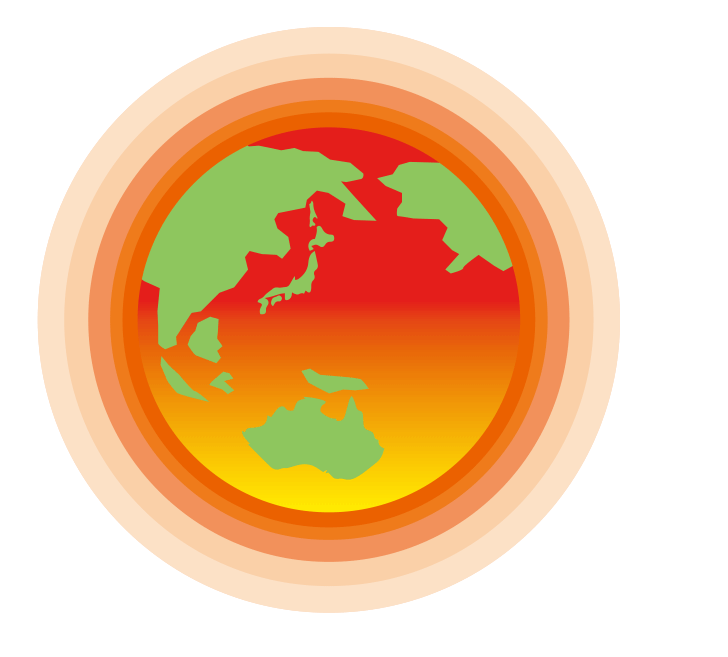
Global warming causes climate change on a global scale. The impact on the global environment, including the snowy mountains so important to skiers and snowboarders, as well as on land and sea, is immeasurable. First, let's have some basic knowledge about global warming
What is global warming? Its mechanism
The Earth is surrounded by a very thin layer of air. Sunlight penetrates this layer of air and reaches the surface, warming the air near the surface. The air contains gases that absorb heat, such as carbon dioxide (CO₂) and methane, and most of the radiant heat from the Earth's surface is released into space, but the heat absorbed by these gases is radiated back to the Earth's surface, and that heat remains in the atmosphere. This is the greenhouse effect. The carbon dioxide, methane, nitrous oxide, and chlorofluorocarbons that cause this effect are called greenhouse gases
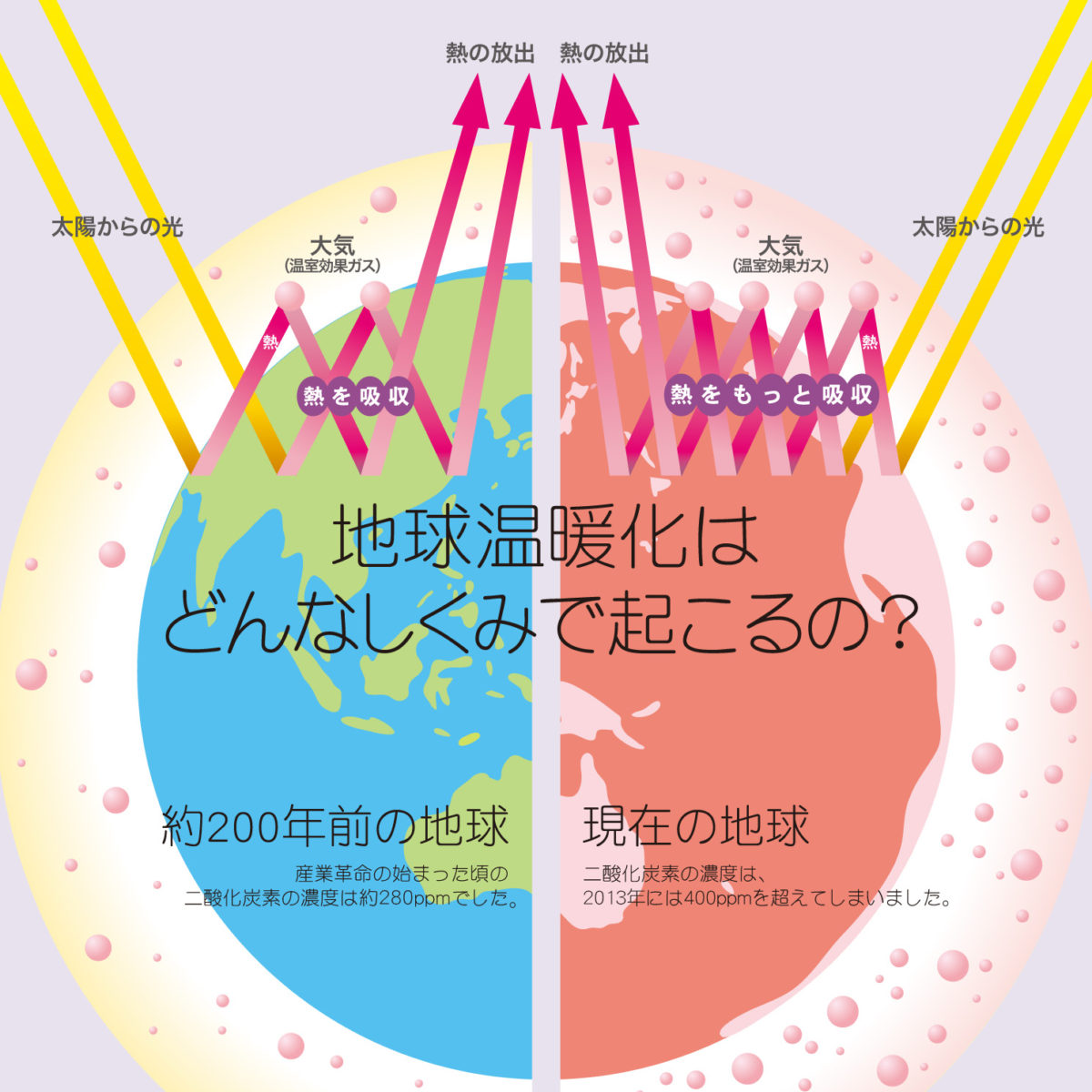
Without the greenhouse effect, the Earth's average temperature would be about 30 degrees Celsius lower than it is today, and the surface would be an icy world. Greenhouse gases prevent the Earth from cooling too much
However, since the Industrial Revolution, the amount of greenhouse gases in the atmosphere has increased excessively due to the mass consumption of fossil fuels, and the temperature near the Earth's surface has gradually risen. This phenomenon is global warming, which has a major impact on climate change, which refers to long-term changes in temperature and precipitation
Various crises caused by global warming
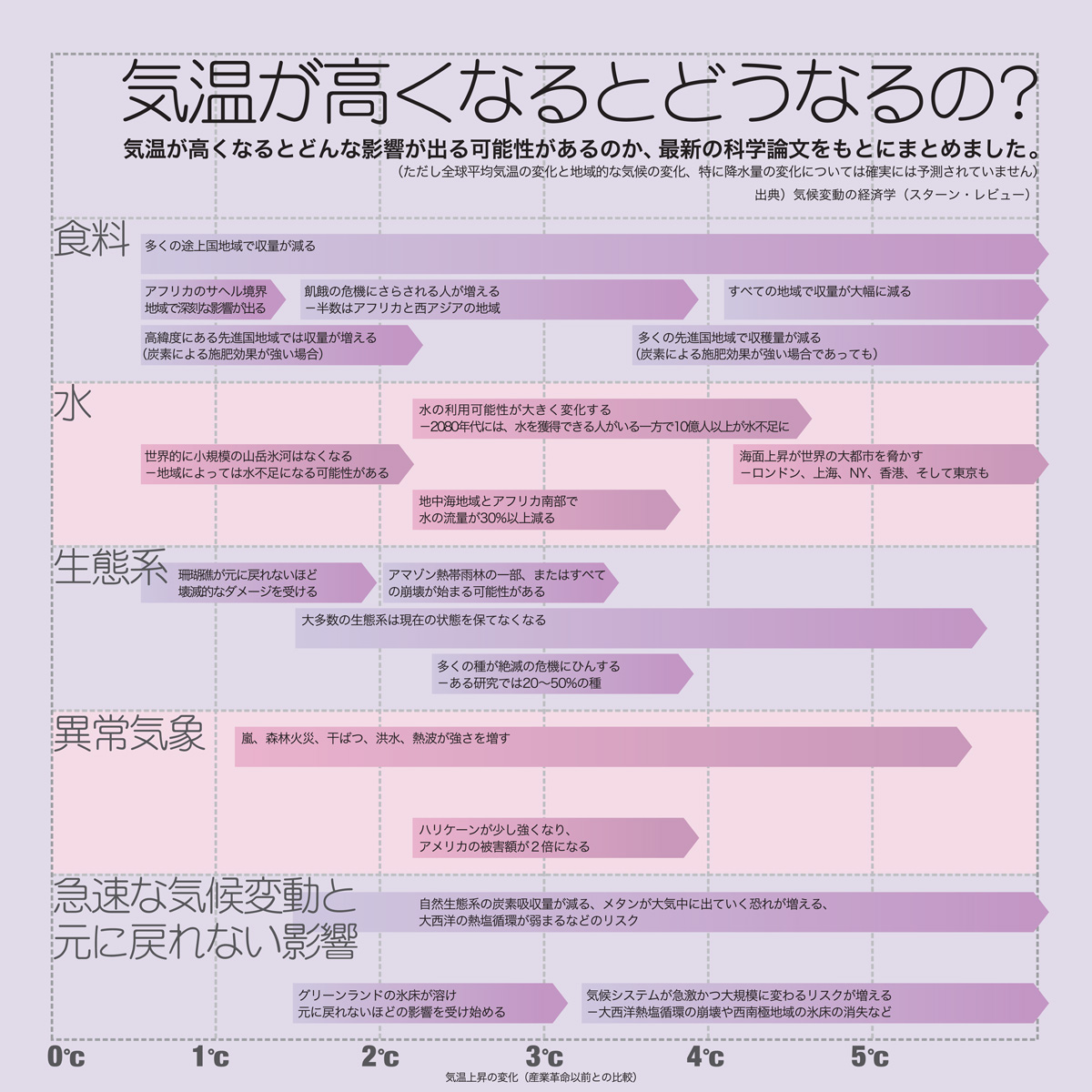
The average global temperature during the 20th century rose by approximately 0.74°C over the past 100 years, and in Japan the average temperature rose by approximately 1°C. According to a report (Fourth Assessment Report, 2007) published by an international organization called the Intergovernmental Panel on Climate Change (IPCC), if global warming continues at its current rate, by the end of the 21st century, the average global temperature is predicted to rise by approximately 1.8°C (1.1 to 2.9°C) in a society where environmental conservation and economic development are achieved on a global scale, and by approximately 4.0°C (2.4 to 6.4°C) in a society that achieves high economic growth
Such a rapid rise in temperature will have a variety of impacts on a global scale. First, rising temperatures will cause ocean water to expand and glaciers to melt, raising sea levels, which will result in flooding due to storm surges, coastal erosion, and the threat of flooding of low-lying areas
Furthermore, rising temperatures will not only cause these environmental changes, but will also cause significant damage to biological ecosystems and human life. As the polar ice melts, polar bears will lose their habitats and food, putting them at risk of extinction. In Japan, it is predicted that rice production will no longer be possible as before, and there will be an increased risk of the spread of infectious diseases common in tropical regions, causing serious damage to industry and human health.
Be sure to check out this video from the World Wildlife Fund (WFF).
▼YouTube video / Preventing global warming (1 minute 56 seconds)
What about snow?
Global warming has proven to have profound and irreversible effects on many aspects of our lives
The Ministry of Education, Culture, Sports, Science and Technology (MEXT) has announced that unless proactive measures are taken to curb the increase in greenhouse gases, Japan's average annual temperature is expected to rise by approximately 4.5°C and average winter temperatures by approximately 5°C by the end of the 21st century compared to the end of the 20th century.
(Source: Climate Change in Japan 2020 | December 2020, Ministry of Education, Culture, Sports, Science and Technology, Japan Meteorological Agency )
In midsummer, Tokyo will be scorching hot, with temperatures exceeding 40°C, and we may no longer need coats even in winter. Perhaps the cicadas will chirp when the cherry blossoms bloom. Will the scenery and people's lives change with the seasons? I can't help but imagine that global warming will shorten the season, or that we won't be able to ski on powder snow as much anymore
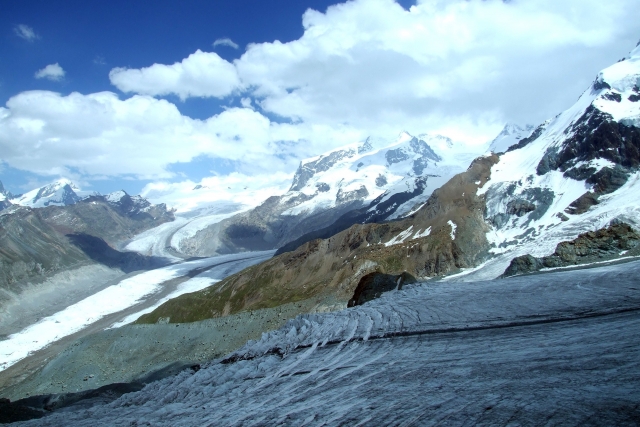
In fact, glaciers in the European Alps and the Rocky Mountains in North America are melting every year, and a shocking research result has been published in the journal Nature that, at the current pace, glaciers in the world's mountain regions could be completely lost by 2050.
" Accelerated global glacier mass loss in the early 20-first century " (Nature, March 9, 2021)
In Japan, research results have also been reported that the number of days per year that ski resorts can ski will decrease to about one-third of the current level between 2031 and 2050, and to about one-sixth between 2081 and 2100. (Prediction of the impact of global warming on the amount of snowfall and number of days that ski resorts can ski - using the Japan Meteorological Agency's RCM20 predictions, Nakaguchi Takehiro, 2010)
On the other hand, it is predicted that the amount of water vapor in the atmosphere will increase as sea temperatures rise due to global warming, resulting in "heavy snow" in the mountainous regions of Hokkaido and the Hokuriku region. Although snowfall will decrease nationwide due to rising temperatures, there will be variations depending on the region, and people will be at the mercy of heavy snowfall and light snowfall, and will suffer from damage
If things continue as they are, this future will come... and no one who has benefited from the snow-capped mountains can turn a blind eye to it. Each and every one of us must take the initiative and take urgent action to curb the progress of global warming. I think we all realize the necessity of this
 Various impacts of climate change (from the United Nations website)
https://www.unic.or.jp/activities/economic_social_development/sustainable_development/climate_change_un/climate_change_effects/
Causes of global warming
Why does global warming occur? There are several possible causes, but the IPCC has presented scientific data that supports the conclusion that "it is highly likely that anthropogenic greenhouse gases are behind global warming." The most prominent of these is CO₂, which accounts for 95% of greenhouse gases
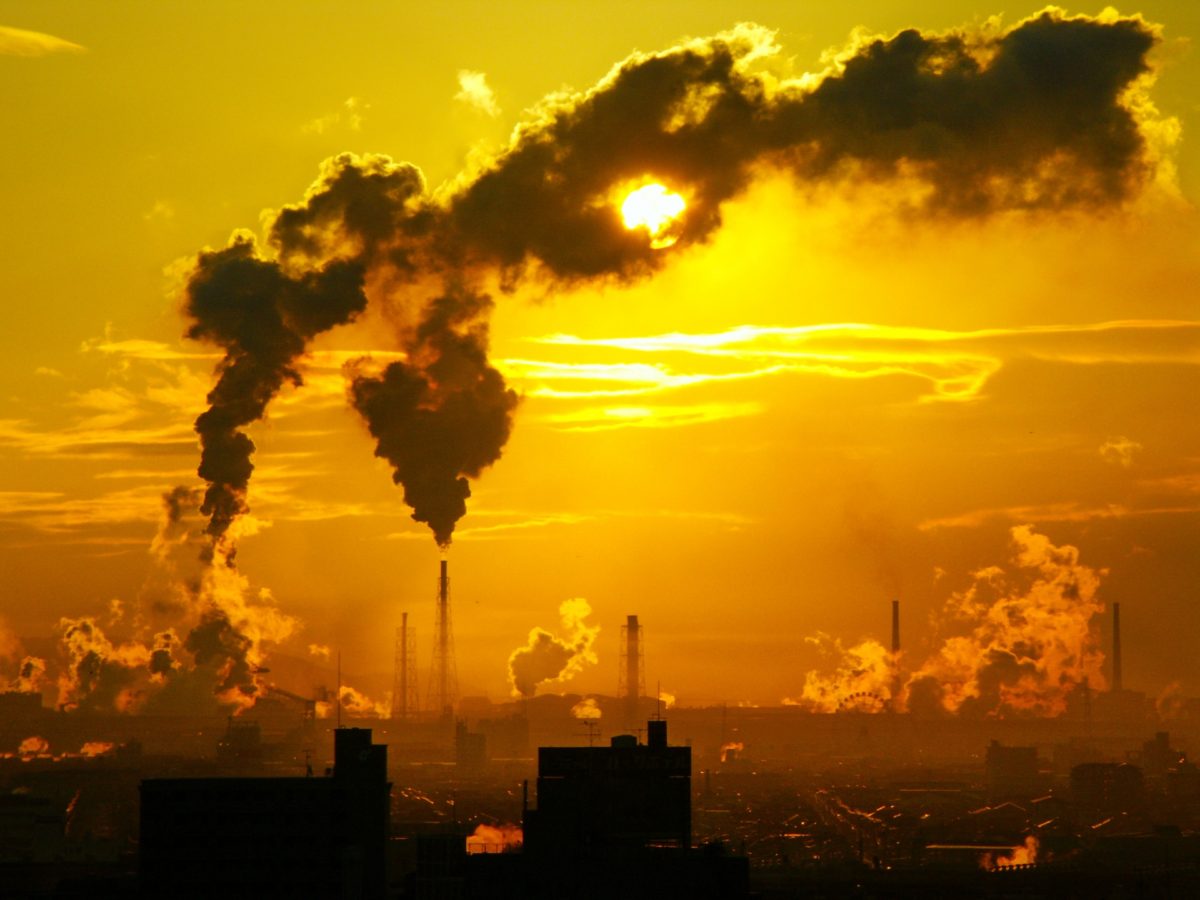
CO₂ is mainly produced when things are burned. For example, thermal power plants that burn plastics made from fossil fuels such as petroleum, factories, and gasoline-powered automobiles are major sources of CO₂. Most of the home appliances that people use in their daily lives also emit CO₂
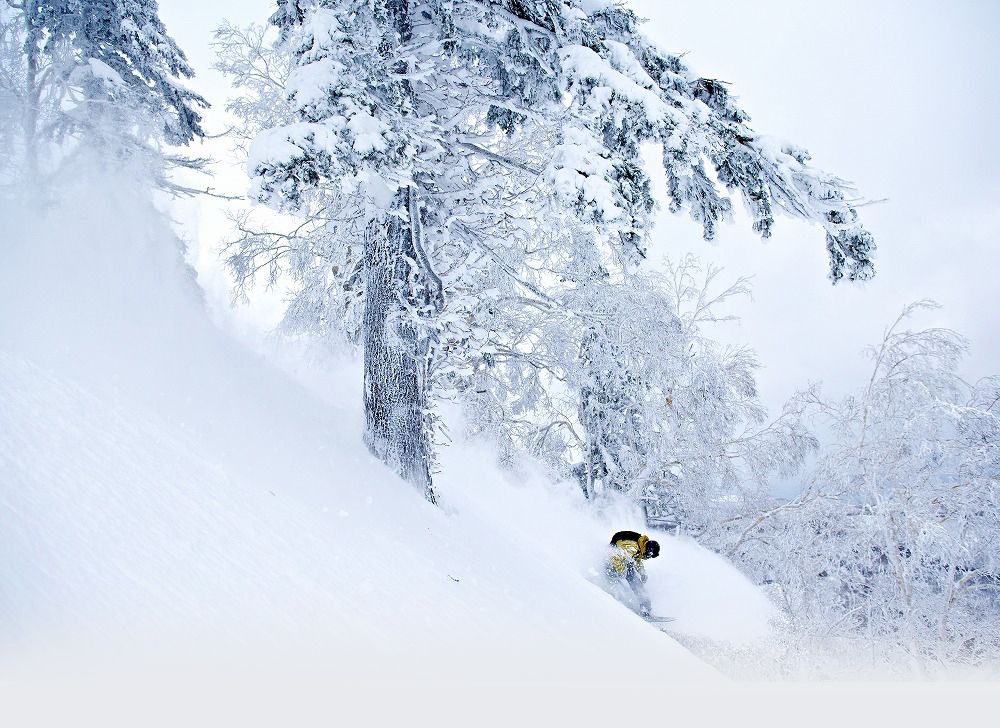
Therefore, to stop global warming, we must first reduce CO₂ emissions. What specific actions should we take to achieve this? And what can we do to protect the future of snow? We would love for everyone to think about this together
[References]
Introduction to SDGs: Changing the Future for Everyone, by Norifumi Kanie (Iwanami Shoten);
The Shape of the Earth in 2030 as Seen Through Data, by Kenji Fuma (Nikkei BP);
30 Ways to Protect the World from Climate Change: Our Climate Justice!,
International Environmental NGO FoE Japan Climate Change and Energy Team (Godo Publishing);
A Book to Understand the Basics of Environmental Issues, by Hitoshi Kadowaki (Hidewa System);
Global Environmental Keyword Dictionary, Global Environment Research Group (Chuohoki)
; Greenhouse Gas Reduction and Emissions Trading, by Mizuho Corporate and Mizuho Information & Research Institute (Nikkan Kogyo Shimbun)
; "Predicting the Impact of Global Warming on Snowfall and Number of Days Available at Ski Resorts - Using the Japan Meteorological Agency's RCM20 Forecast," by Takehiro Nakaguchi (2010);
" Accelerated Global Glacier Mass Loss in the Early 21st Century " (Nature, 9 March 2021)