

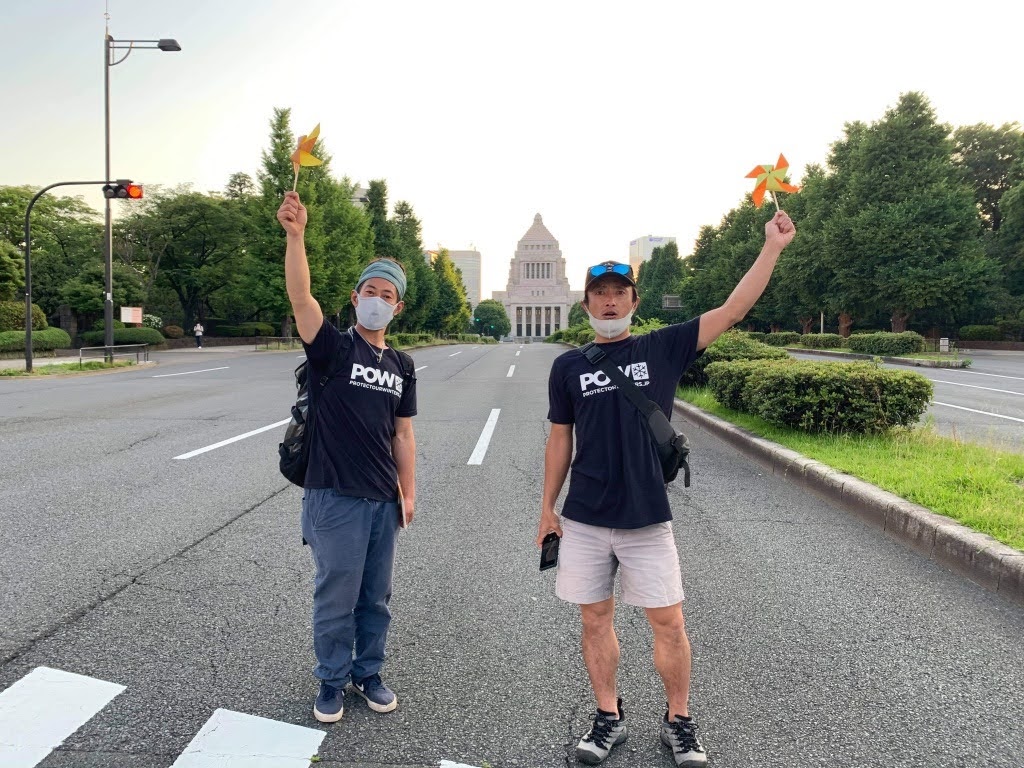
*The photo above shows ambassadors Takuma Oike and Chikara Nakajima in front of the National Diet Building, where they visited to submit the signatures for the petition "Now is the time to protect the future, four years left."
POW (Protect Our Winters) is a global organization that is raising its voice against climate change, which threatens the sustainability of snowfields that are so important to skiers and snowboarders. In this second part, STEEP's editor-in-chief spoke with Goro Komatsu and Hitomi Suzuki, the founders of POW Japan, who are actively working to protect the country
Click here for the first part of the interview with POW JAPAN

https://protectourwinters.jp/
There are so many friends who share the same thoughts
--What kind of activities is POW currently doing?
Komatsu: Changing the country is a big deal, isn't it? For example, I think there are many levels at which you can make your voice heard, such as at the city, town, or village level, the prefecture, or a company. While it may be difficult to get your voice heard at a loud level, it's possible to get your voice heard by the politicians elected in your area
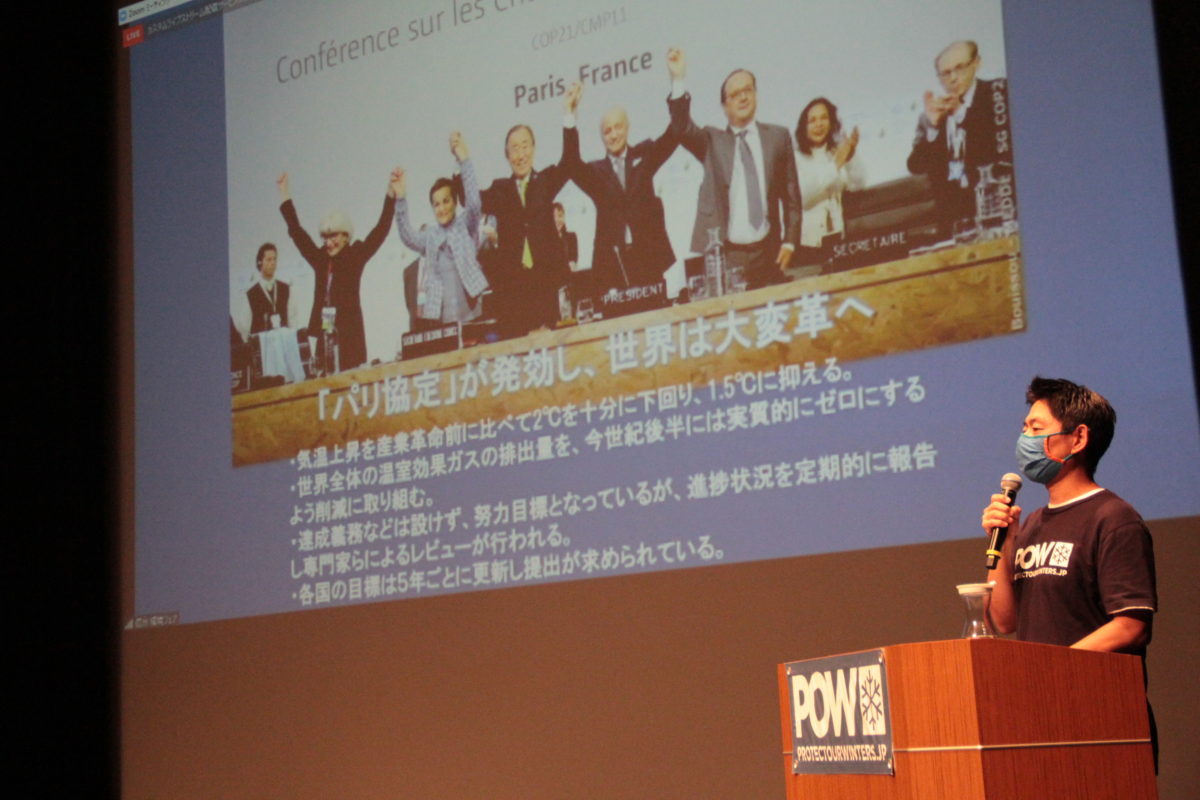
Last year, I had the opportunity to give a lecture at the Shinshu Environmental Fair held by Nagano Prefecture, and I also had the opportunity to participate in various government initiatives. There is a movement within the prefecture to work on the environment in various sections, and I had the opportunity to do various things with people involved in tourism, cable cars, ski resorts, and snow towns. I saw that being part of such movements can lead to various changes
As an example, we were connected with the Nagano Prefecture Ropeway Association, which gave us the opportunity to have the entire organization listen to what we had to say, and as a result, the entire prefecture's ropeway association became a supporter of POW
--Because you're a group, you can reach large organizations that are difficult to reach as an individual
Suzuki: Recently, when the proposed amendment to the Energy Conservation Act for Buildings was on the verge of being shelved, POW was asked for its opinion and participated by signing the petition
Komatsu: That was amazing. It had been almost certain that the bill would be shelved, but in the end, things changed dramatically and it is now being submitted to the Diet. The efforts and thoughts of many people came together to become one great force that moved the country. It was an experience that really made me feel that
Suzuki: It was refreshing to see that snowboarders' opinions were sought and that POW's identity as an outdoor enthusiast was conveyed to the country and politicians
-That's amazing!
Suzuki: In January, I had a chance to speak with someone from the Sapporo Sports Promotion Bureau, who asked for my advice, saying that if they want to host the 2030 Winter Olympics, they won't be able to put their hand up unless they are taking action on climate change and the environment. I think it's a good trend that skaters have the opportunity to speak out and have their opinions reflected there
--I see. So, just by signing the petition or registering your email address and reading POW's newsletter, we users can get the feeling that we're making a commitment to climate change and working together with the movement
Komatsu & Suzuki: Yeah yeah!
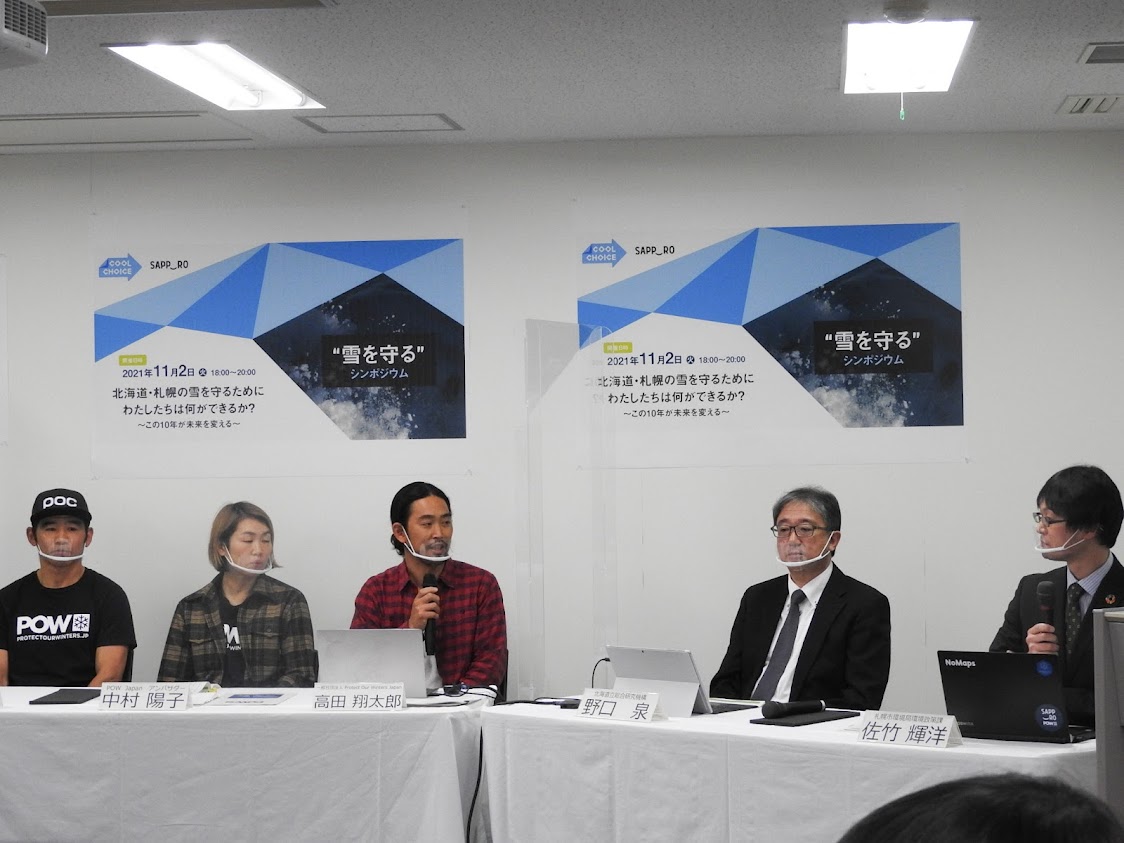
-Speaking of Sapporo, I believe it is said to be the lowest latitude location that can host the Winter Olympics
Komatsu: In fact, a report released last year predicted that Sapporo will be the only city that can successfully host the Winter Olympics at the end of this century without any problems. It's quite shocking that, of all the snowy regions around the world that have hosted the Winter Olympics in the past, such as Vancouver, Canada, Sapporo might be the only city that can. It makes you wonder just how much the Earth will warm
--As you saw in the SDGs video for Hakuba Valley, it's not just a matter of worrying about climate change, but rather a message that we're at a dangerous time if we don't take action now. Is that the situation we're in already?
Komatsu: Right now, many climate disasters are occurring all over the world, and they're happening frequently in Japan too. I don't think the situation has been like this before. When I went to Hokkaido last August, the temperature was over 36 or 37 degrees Celsius every day. I lived in Hokkaido as an elementary school student, and I vividly remember screaming "It's so hot!" when the temperature reached 25 degrees Celsius in the summer. Last year seemed like an exception, but now it feels like everything has changed. I think everyone can sense, if they think about it objectively, that "we've already come this far." I wonder what will happen if we continue at the same pace for the next 20 or 30 years..
Suzuki: Did you know that if we don't keep the temperature rise below 1.5 degrees Celsius since the 1880s, when the Industrial Revolution began, we'll be in big trouble? 1.5 degrees is the limit at which we can barely maintain human life amid climate change, and it's said that we've already risen by 1.2 degrees. However, scientists recently announced that if countries around the world currently set targets for how much their country will reduce its carbon emissions, they won't be able to keep the temperature below 1.5 degrees
It's true that the situation is that serious, but it's also said that there are options to mitigate it if immediate measures are taken. So, I think that change needs to be made on a large scale, such as at the national level, and that our voices need to be heard in order to achieve this.
*Learn about the cycle behind why snow disappears - "To protect snow" from climate change
What each individual can do
-In addition to getting your voice heard, what can you do as an individual skier or snowboarder?
Komatsu: There are many ways to do this by changing our awareness and behavior. When we burn something, carbon dioxide (CO₂) is released, so I think the most common thing anyone can do is to try to limit that as much as possible. For example, reducing the frequency of driving, using trains and buses as much as possible, and being careful not to produce as much garbage as possible. Currently, most electricity in Japan is generated through thermal power plants, which are the source of the most CO₂, so we need to move in the direction of reducing that
Individual households can easily choose to use renewable energy electricity. There are many different power companies and plans available, so it's actually very easy to switch your home's electricity to renewable energy. Electricity bills have risen overall due to various recent social issues, but the cost of electricity generated from renewable energy sources is not that different from conventional electricity
For example, in my household, our electricity bill has gone up in 10 or 100 yen increments, but that's how it is for now. However, if changing that will lead to a social movement to stop paying for thermal and nuclear power and increase the use of renewable energy, then I think that's a good choice. It may be like making a small investment in the environment, but it's very simple, and yet has a big effect. I would encourage everyone to think about it
--There's a lot that each person can do
Suzuki: It's said that if 3.5% of the population changes, it can bring about change in society, and this has already been proven. Let's become that 3.5%
Komatsu: Considering Japan has a population of 120 million, that's about 4.2 million. That's a pretty big number, isn't it? But I also think it's 3.5%. It feels like there are probably that many skiers and snowboarders.
-- 4.2 million. That's right. I think that's about where it is now. It was said to have peaked at around 18 million, but it's steadily decreased and now seems to be around 6 million in total (see the Leisure White Paper).
Suzuki: If we assume there are 6 million skiers and snowboarders, then if we include the outdoor enthusiast population, the number must be even higher. It seems to be around 10 million
Komatsu: You've got plenty of room for that (laughs), that might be a good idea. "Let's become 3.5% Campaign"! (laughs). I think it would be a great help if skaters could spread the word to those around them
Suzuki: When you say taking action, it might seem like a big deal, and you might imagine that your life will become more restrictive than it is now, but conversely, I think it often enriches you. For example, you might think, "It feels good to be trash-free and clean," or you might enjoy choosing your own eco-bag. The reality that awaits us in the future is quite serious, but if taking action doesn't seem fun, it's hard to convey it to others around you and get them involved. I think it's good to have the leeway to do it a little bit as if it's fun
Komatsu: This kind of activity feels somewhat core, doesn't it? It can sometimes feel like you're a little angry at society. But if the goal is to make things better, to protect the things you love and cherish, then I think it's fine to have fun doing it. After all, we want to look forward to the future, too
Suzuki: We held a POW JAPAN ambassador session at Hakuba Norikura in February during the season. One of the participating high school students said, "I had so much fun skating with the ambassadors. The skating was amazing, and I felt their energy. People who skate like that are spreading the word about climate change and are committed to it, so I want to follow in their footsteps." I realized that that's what's important. Even if it's a gradual process, as long as everyone doesn't give up, sowing the seeds is definitely meaningful
Komatsu: I think that not only professional athletes like us and the media, but also local guides and school instructors have the potential to deliver powerful, life-changing messages. I think that time spent playing in the snow is truly precious for many people, so it would be great if we could deliver a positive message
I think we all have an instinctive attraction to nature, so I think that by coming into contact with nature, we can feel not only its beauty but also its harshness. The feeling we get from things that are not made by humans is really big, like we are being shaken in some way, and we instinctively resonate with nature
In cities, this is quite lacking. I think there are many things that are efficient and convenient, but there are important, wonderful parts to life on this planet that are far removed from that, and I think nature is the best way to be in touch with them. I think the best way to be in touch with nature is to enjoy it, and there is much to be gained from playing in it
Skiing, snowboarding, and other outdoor activities allow you to do this, so I think it would be great for more people to try them out and experience them, and it would also inspire them to want to protect nature and snow. I think it's a very natural progression to then gradually connect to POW. That's why I want to create more opportunities for people to experience playing in the snow and get in touch with nature through snow
As a professional snowboarder, I have always thought that my job was to convey to as many people as possible that "nature is the best and it's fun!", so it felt natural to me at all to convey at POW that "in order to continue enjoying nature, we need to protect it."
I think there are a lot of people who think they can't say anything unless they know a lot about climate change, decarbonization, the goal of achieving net-zero CO₂ emissions by 2030, and achieving carbon neutrality by 2050, but that's not the case. I think it's enough just to know that snow is decreasing. Just
saying, "The snow is decreasing. I want to do something about it," is enough motivation to take action.
--After listening to your story, I think the best thing that skiers and snowboarders who support POW can do is to base themselves on doing even the smallest amount of good for the environment, and then take as many people around them as possible to the snowy mountains and experience it together, saying, "Let's go ski together."
Komatsu: That's true
Suzuki: Yes!
--Thank you very much, Goro and Hitomi! STEEP has also launched a new channel called " THINK SNOW " to provide various information on environmental issues. We would like to continue to follow POW's activities.
the person who taught me
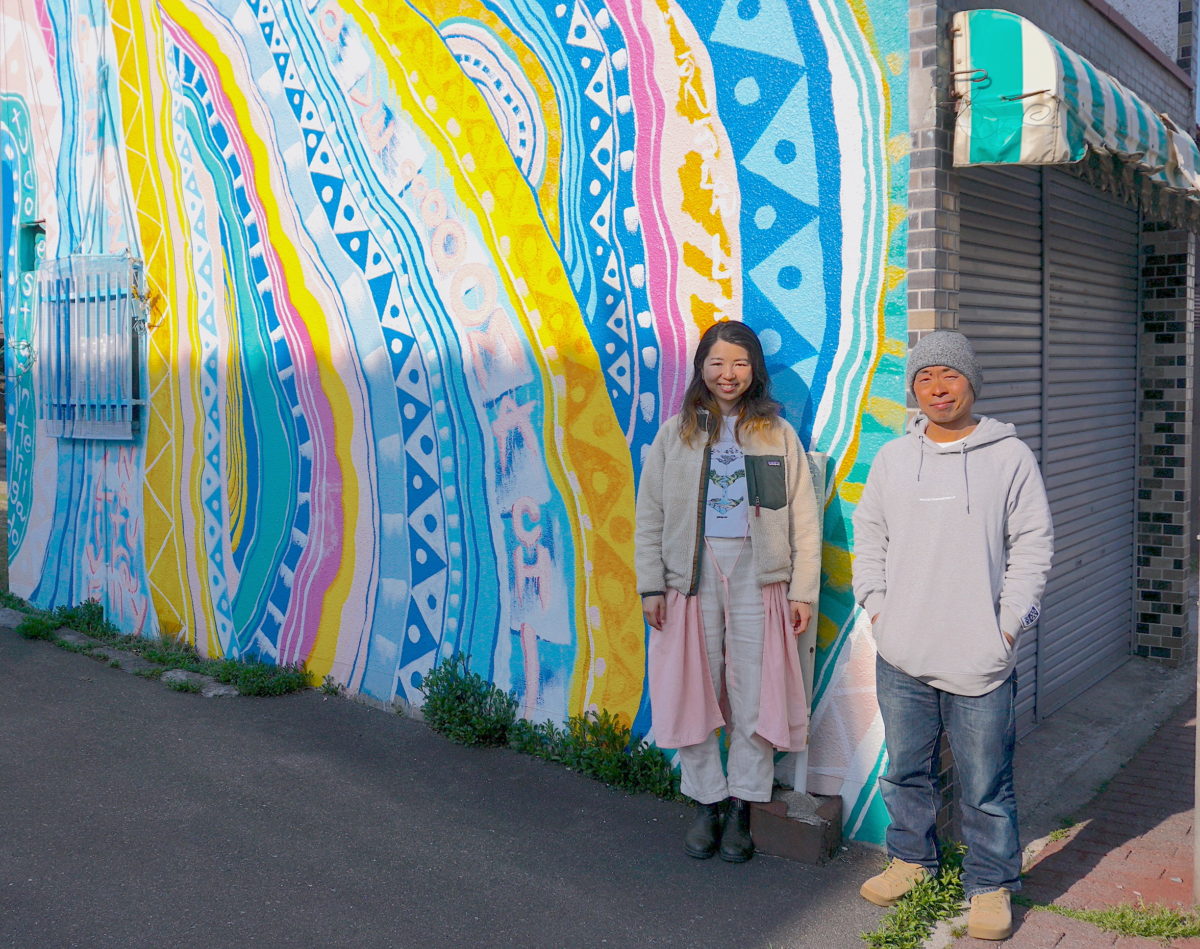
Hitomi
Suzuki
Digital Marketing
Born in Fujisawa City, Kanagawa Prefecture, and currently living in Omachi City, Nagano Prefecture.
After working in customer service at Patagonia, he gained experience in digital marketing. Wanting to live closer to nature, he moved to Nagano Prefecture after meeting POW JAPAN.
Goro
Komatsu
representative director
Originally from Niseko Town, Hokkaido, he currently lives in Omachi City, Nagano Prefecture.
He began skiing at the age of four, moved to British Columbia, Canada at the age of 12, and became a professional snowboarder. Even before founding POW while living in Canada, he has been advocating for reducing the burden on the natural environment. In 2018, he launched POW JAPAN as its representative director.
Narration: Goro Komatsu, Hitomi Suzuki (POW JAPAN) Interviewer: Takeru Ogawa (STEEP Editor-in-Chief)
Interview recorded: April 2022