

Photo by Yoichi Watanabe (POW JAPAN)
Text by Ryu Okawa
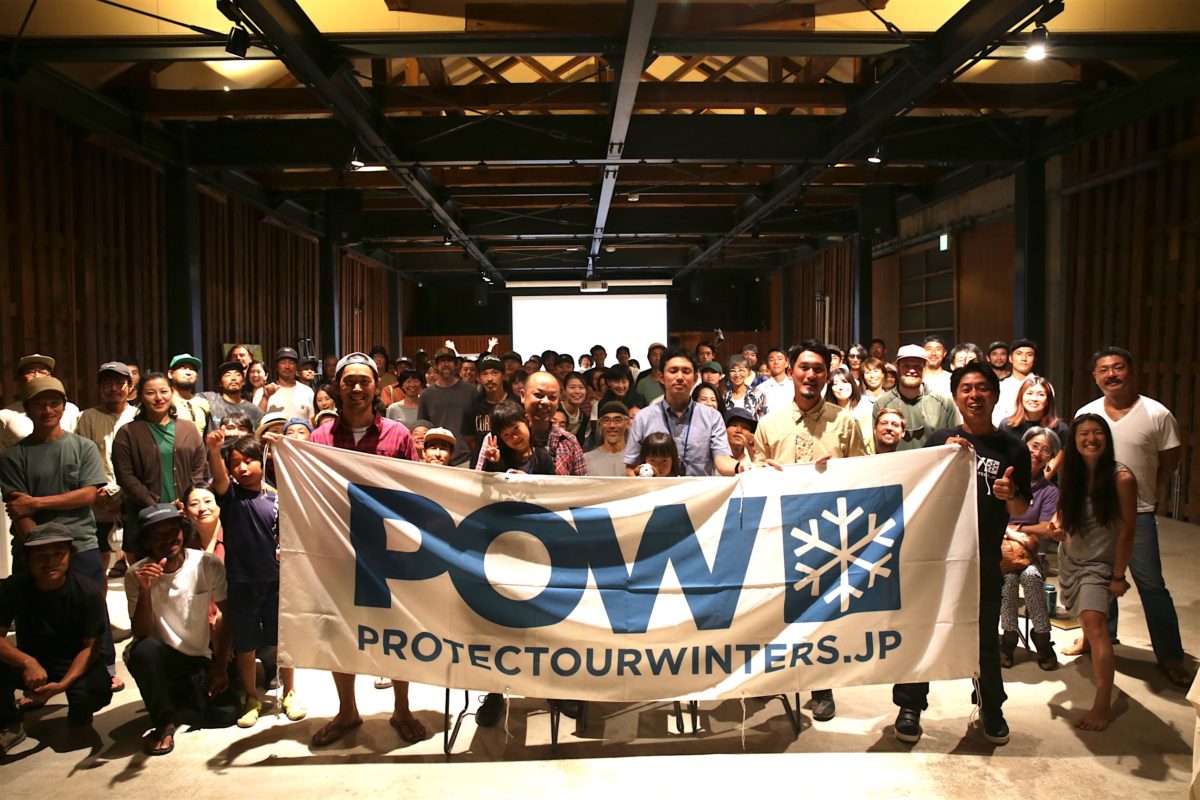
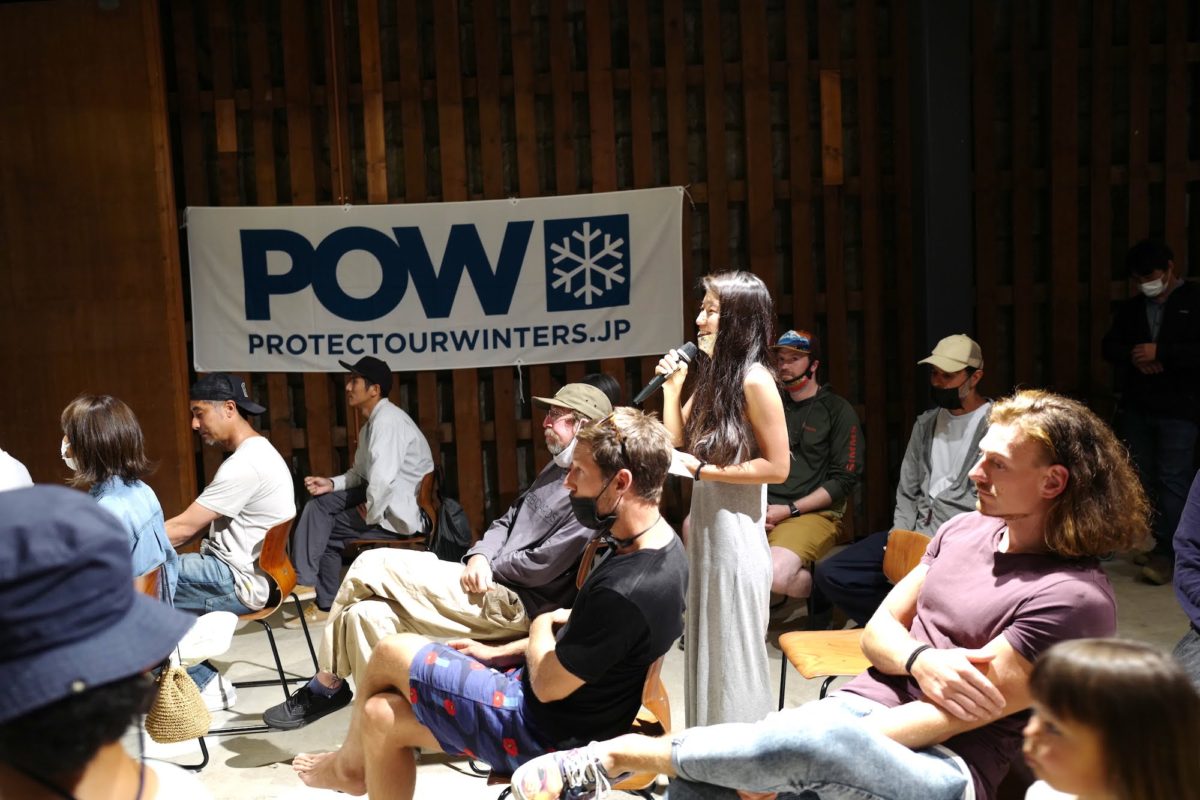
On Sunday, August 21st, snowboarders, skiers, and nature lovers living in the Niseko area gathered to hold the POW Meeting, with the aim of deepening their understanding of climate change, "considering what they can do," and "creating an opportunity to spark a local movement originating in Niseko."
The event was a great opportunity for many people to deepen their connections, with talks centered around Shoma Hasebe, Niseko Town's Eco-Model City Promotion Officer, and Arata Matsumoto, who is working on plans to build a large-scale wind power plant in the Date no Otaki area. Ryu Okawa, who helped out with the event and attended with his family, reports from his perspective
●
The short summer in Niseko was drawing to an end. As if reluctantly cherishing the last day of summer, after spending the morning at the beach with my family on a Sunday evening, I headed to an event space in Niseko Town that had been renovated from an old stone warehouse. I was there
to help out and participate in POW's first event in Niseko.
If you're a snowboarder, you've probably come across the organization "Protect Our Winters" (POW). It was founded in 2007 by Jeremy Jones, a top big mountain snowboarder
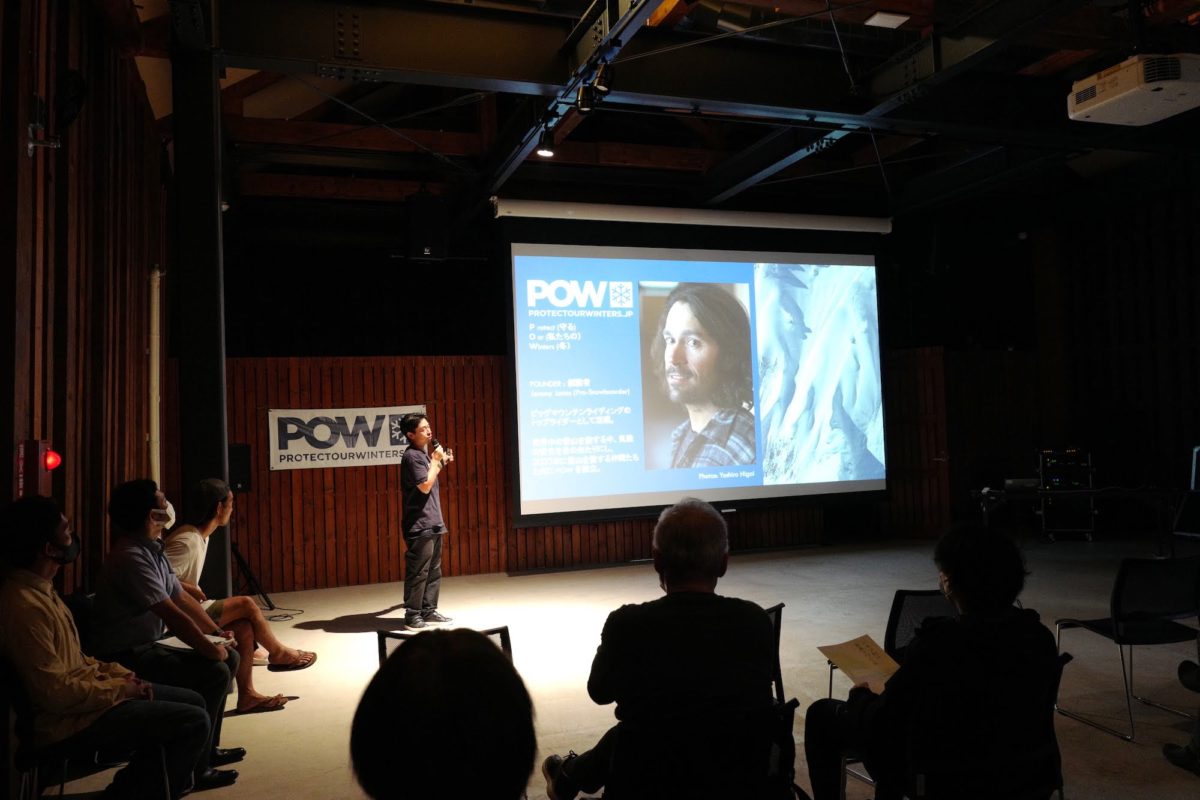
Currently, the group has expanded to 13 countries, and in 2019 it expanded its activities to Japan as POW Japan. The group's mission is to "support fellow members who are passionate about outdoor activities and take action to protect their fields and lifestyles from climate change."
An hour before the event began, a friendly pre-meeting began with representatives from POW and supporting companies and organizations.
Everyone had strikingly healthy, tanned skin and toned bodies, and they had the air of the kind of people you often see in the mountains or at the sea, like elementary school kids who've grown into adults.
I, too, was captivated by the snow in Niseko, started going there, and before I knew it, I was living here. I instinctively sensed that it would be fun to be with these people.
While enjoying catering from
the organic cafe POW BAR I'm sorry to be making a preconceived notion, but I thought that a meeting of an environmental protection organization would have a serious and tense atmosphere, but they were just as I'd imagined them to be, and I found myself wanting to spend more time with these people.
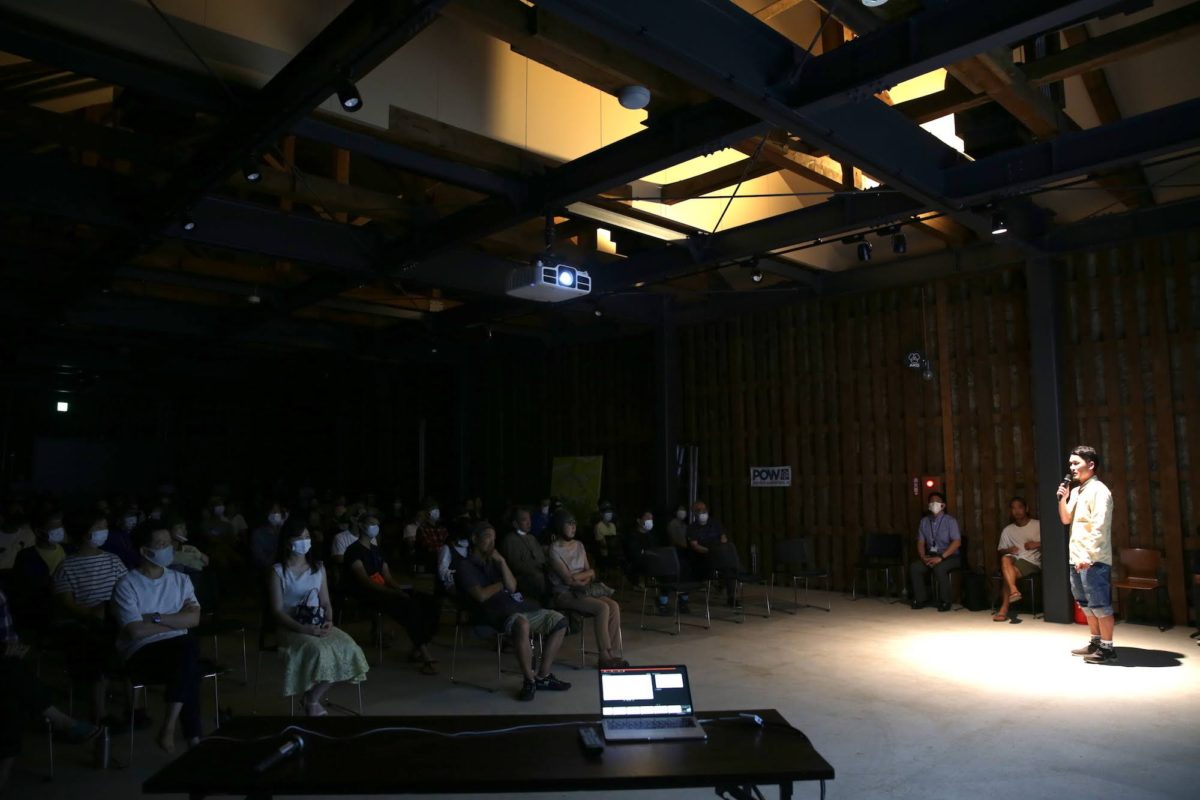
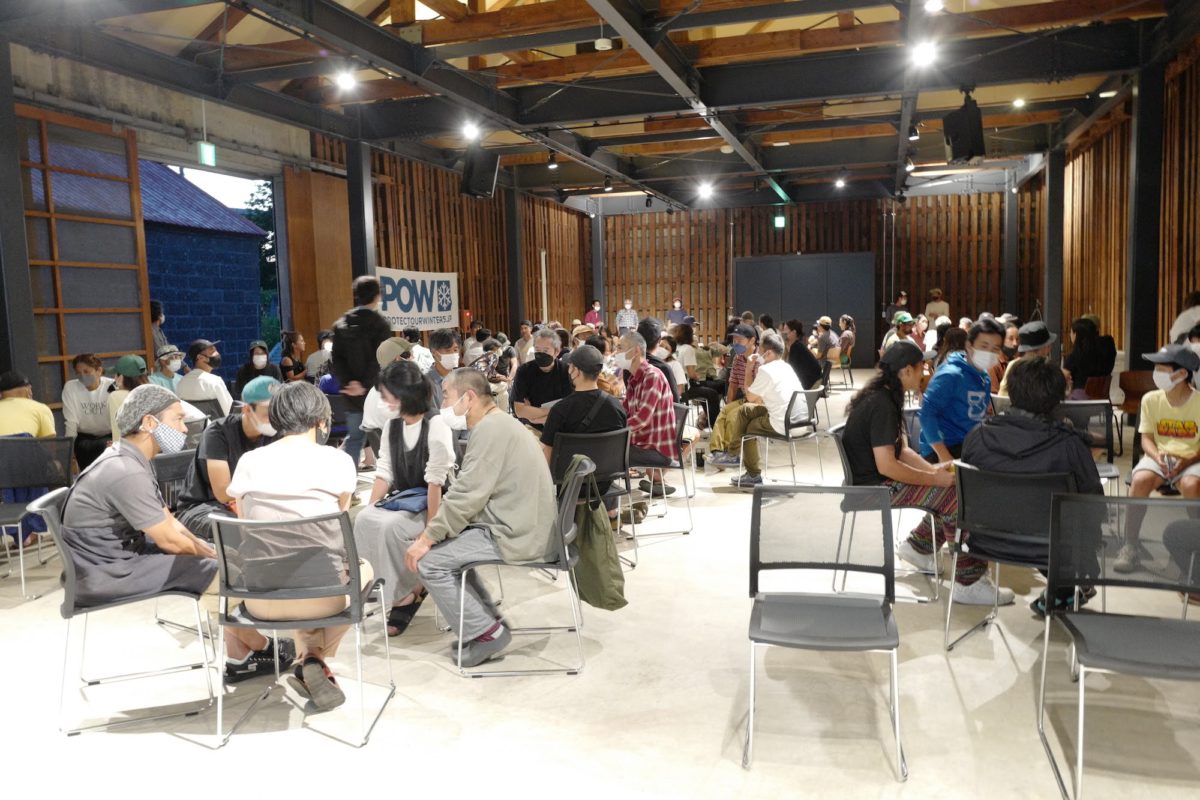
I was assigned to be the parking attendant, directing the participants' cars. Cars loaded with campers, surfboards, and fishing rods kept arriving. There were over 100 participants who were truly passionate about outdoor activities. The large number of participants spoke to the high level of interest
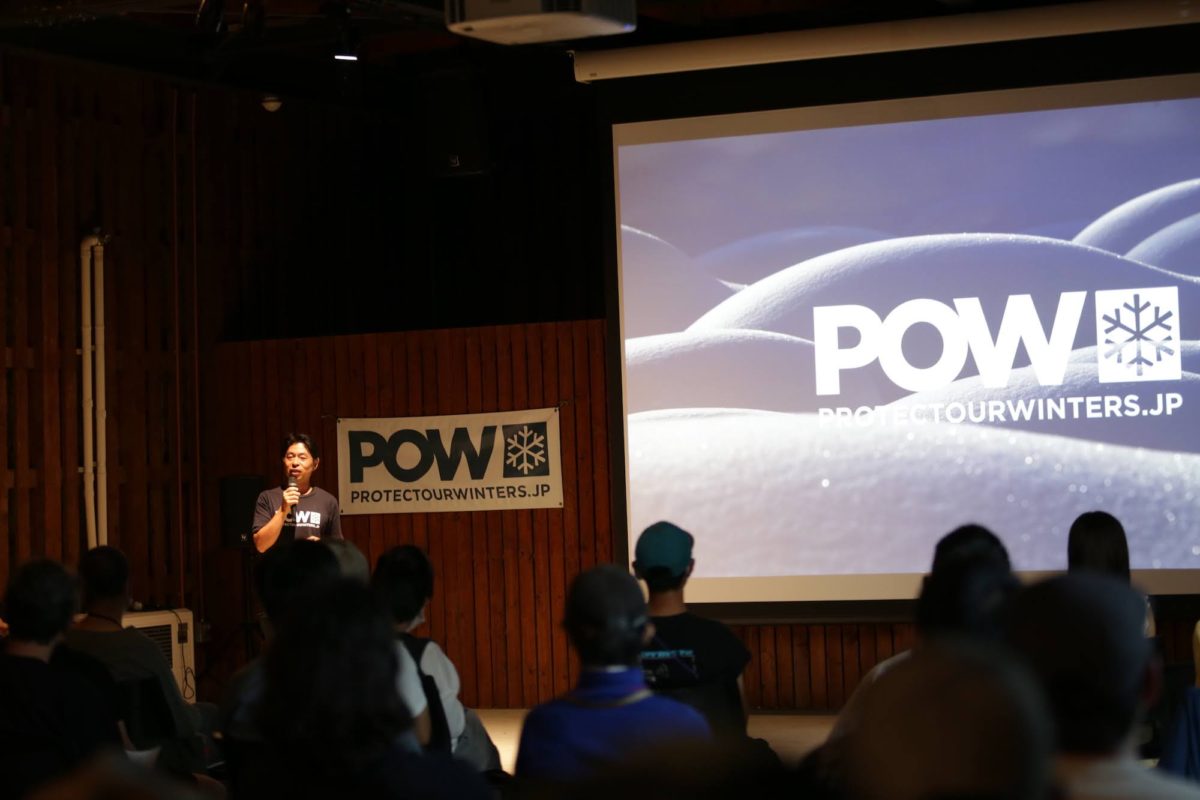
When I returned to the venue from the parking lot, I was greeted by an explanation of the current state of climate change caused by POW. It explained how climate change is being caused by human activity. What will happen to the Earth if things continue as they are? It made me feel anxious
At this point, my daughter, who had come to play with my wife, began to get bored. I didn't want her to be noisy at the venue, and it certainly wasn't interesting for a three-year-old. I took her outside. The conversation
suddenly shifted from the larger theme of the environment back to the theme of family. As I walked hand in hand with my daughter, I remembered that my wife had expressed reluctance about us attending an event that started at 6pm on a Sunday.
The next day was Monday, and she had work and daycare. If we stayed late at night, the morning would be difficult. I had no words to respond.
I think that for many residents, attending a meeting is a high hurdle. They will likely prioritize their own immediate problems, time with their families, or work the next day. I probably wouldn't have
attended if I hadn't been invited to attend. I'm impressed by how amazing everyone here is, knowing that they've made compromises in their own lives to attend.
Before I had a family, I was interested in environmental issues, though not particularly passionate about them. However, once I had a family, I naturally found myself drifting away from such events.
My daughter and I strolled around the outside of the venue before heading back. Near the entrance, some children, bored with the adults' presentations, were playing happily in the dark.
Watching these children, who will likely outlive me by many decades, I felt guilty about making the Earth an even more uncomfortable place. Family issues and environmental problems are by no means separate problems; they are closely related.
Group work had already begun at the venue. Participants split into groups of four or five, each discussing their own practices and ideas. In the preliminary meeting, we had been asked to help out if any groups were not actively discussing, but all the groups were lively, so there was no need to worry.
Common ideas such as "don't buy plastic bottles," "produce locally as much as possible," and "use energy efficiently" were being discussed. While we all thought we knew all of these things, it's these small things that allow us to take concrete action. Rather than waiting for a major decision or technology that will overturn everything, it's really important to move forward with what we can do, and that will lead to big changes.
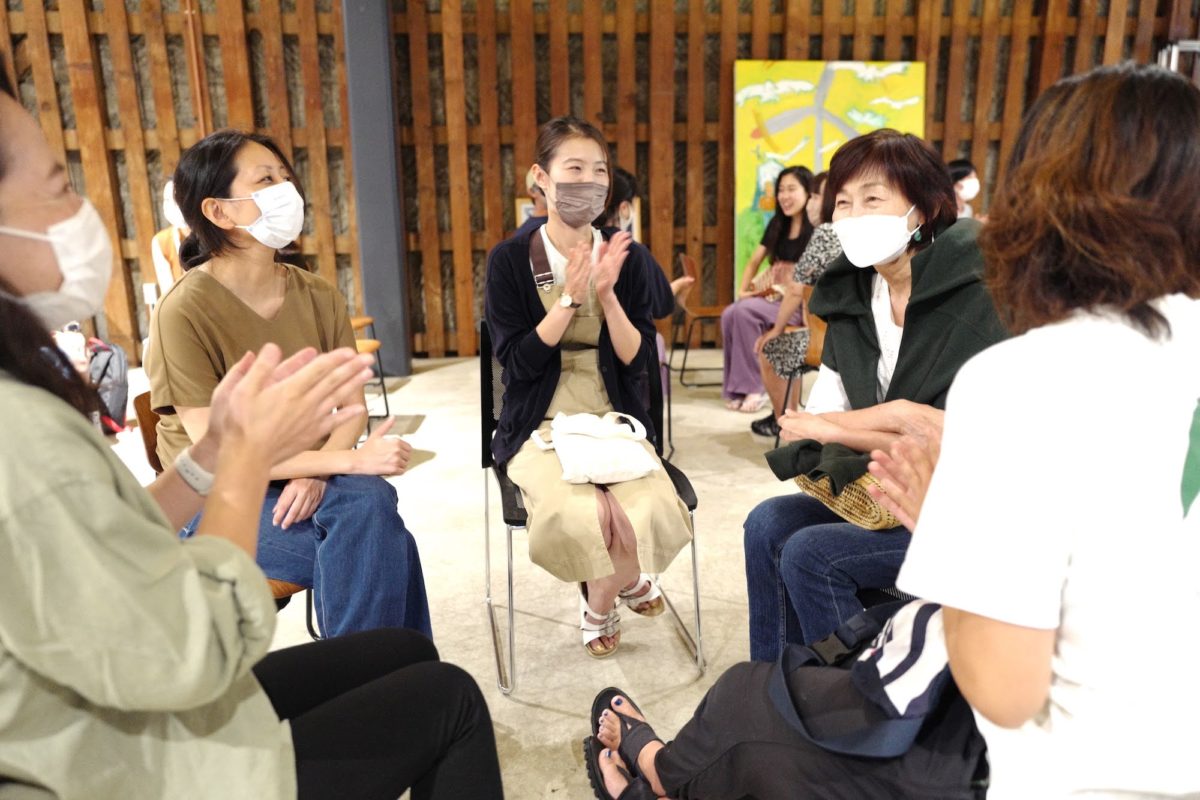
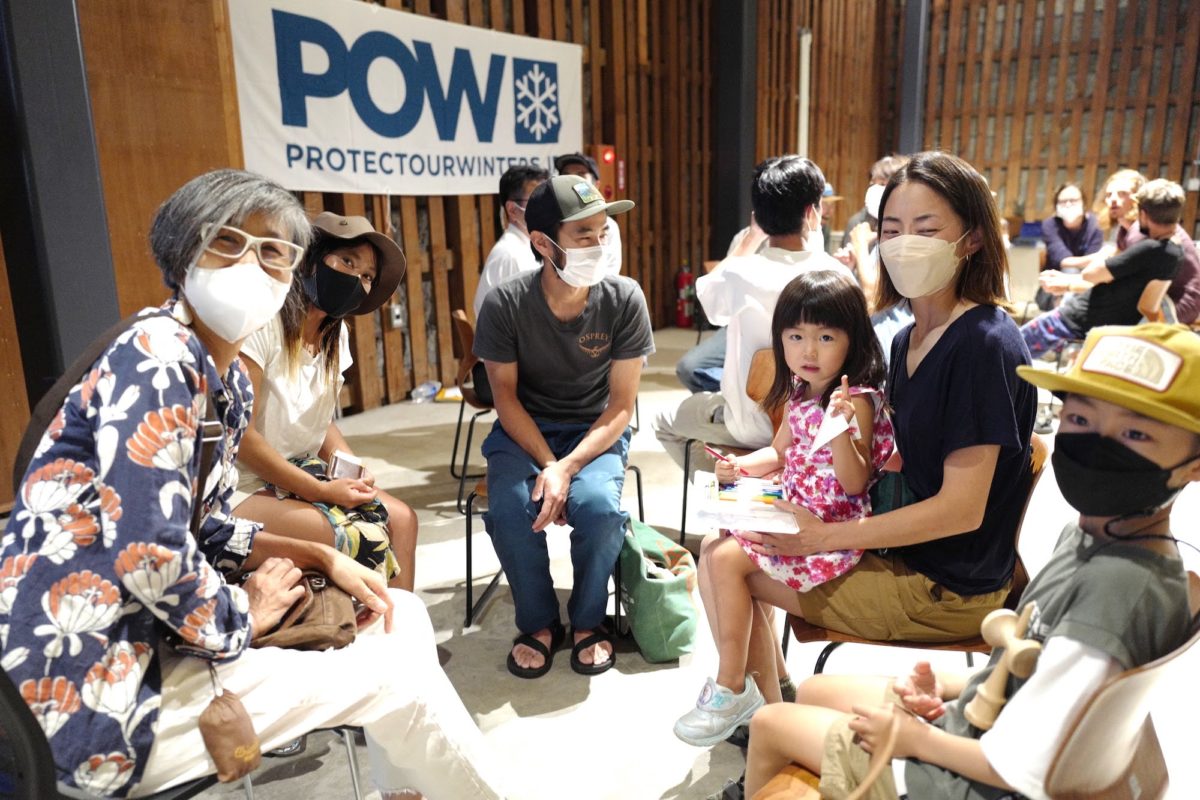
Being easily bored and lazy, I found myself tending to take the easy way out and feeling like it was something that didn't concern me, but by participating in the meeting, I was able to revive some of the motivation I had been fading away for my small endeavors.
I was heartened by the message from the representative, Goro Komatsu, that "Never give up. I will never give up."
Next, Arata Matsumoto of the fly and lure fishing area BIG FIGHT Matsumoto gave a presentation about the construction plan for a large-scale wind power plant in the Otaki area of Date. He said that while large-scale wind power generation and mega solar power plant construction are based on the noble cause of renewable energy, the construction itself has a huge impact on the environment, and by solving problems they create new problems. The current development in the Otaki area is a perfect example of this, and local residents are deeply distrustful of the construction company, ORIX Corporation ( see the online petition site here ).
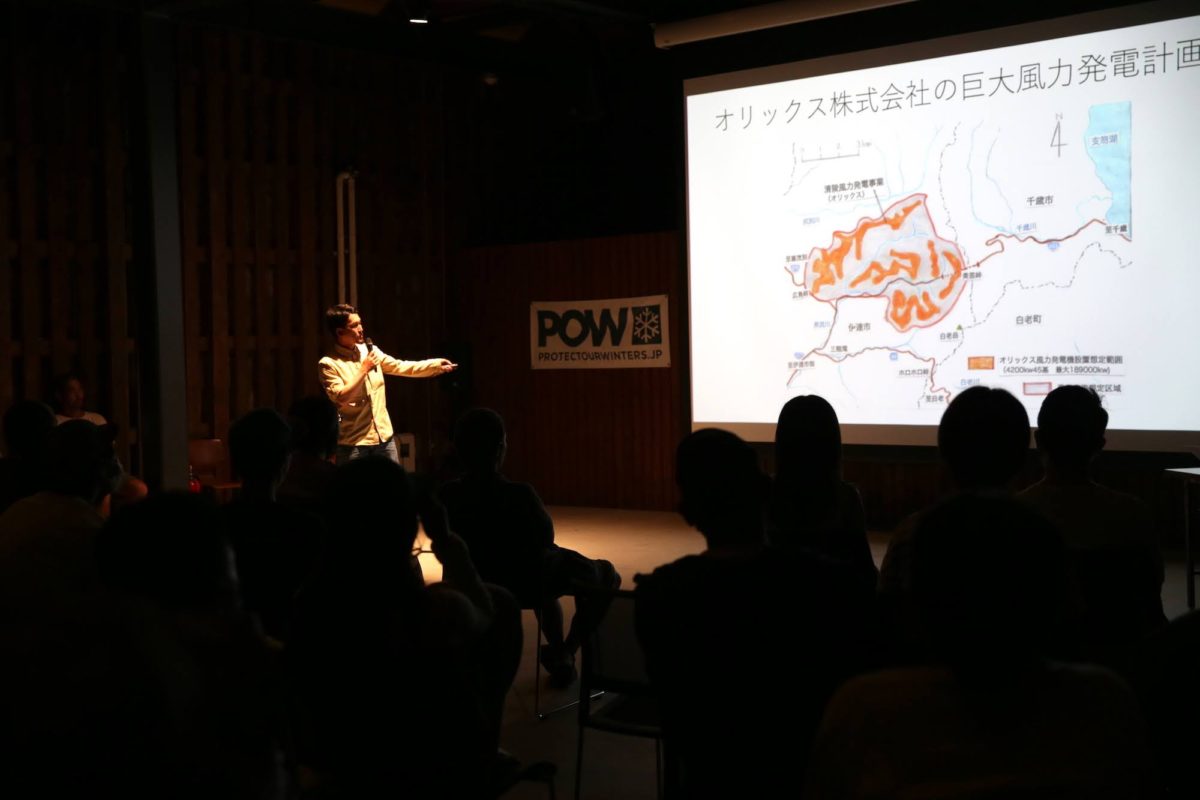
When Matsumoto first heard about wind power, he thought it was a good idea to have an environmentally friendly image, but as it was close to his fishing spot, he looked into it and found major contradictions and problems.
At this point, environmental issues that had previously seemed like someone else's problem became something that became his own. It was impressive that he emphasized the importance of this.
It was a packed, intensive two hours. "So, what should I do after all?" I thought to myself at a loss, but POW Japan's Takada Shotarou kindly replied with a friendly smile, "I think that's fine. I think the important thing is to keep thinking." It
may be difficult to keep thinking alone, but by sharing it with someone like this, even someone like me who tends to be lazy feels like I can manage. My
initial impression that "it would be fun to be with the POW people" became even stronger.
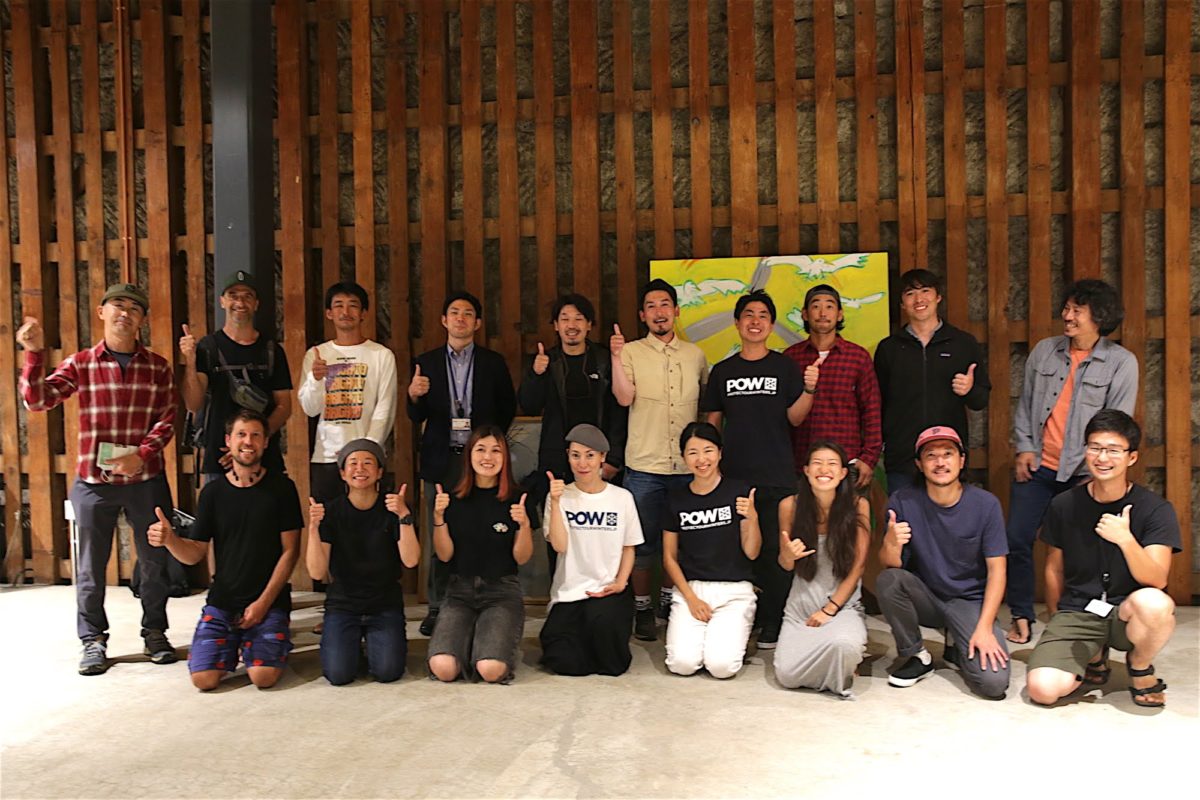
The POW JAPAN website contains information about this event as well as various other information about snow and the environment.
writer
Ryu Okawa
Born in Kanagawa Prefecture in 1984, Ryuo lives in Rankoshi Town. In winter, he works as a ski instructor at FAR EAST SNOWSPORTS. This is not just a ski school or a concierge, but is attracting attention as a service that helps create an unparalleled Niseko and snow vacation.
Instagram: @ryu_okawa