

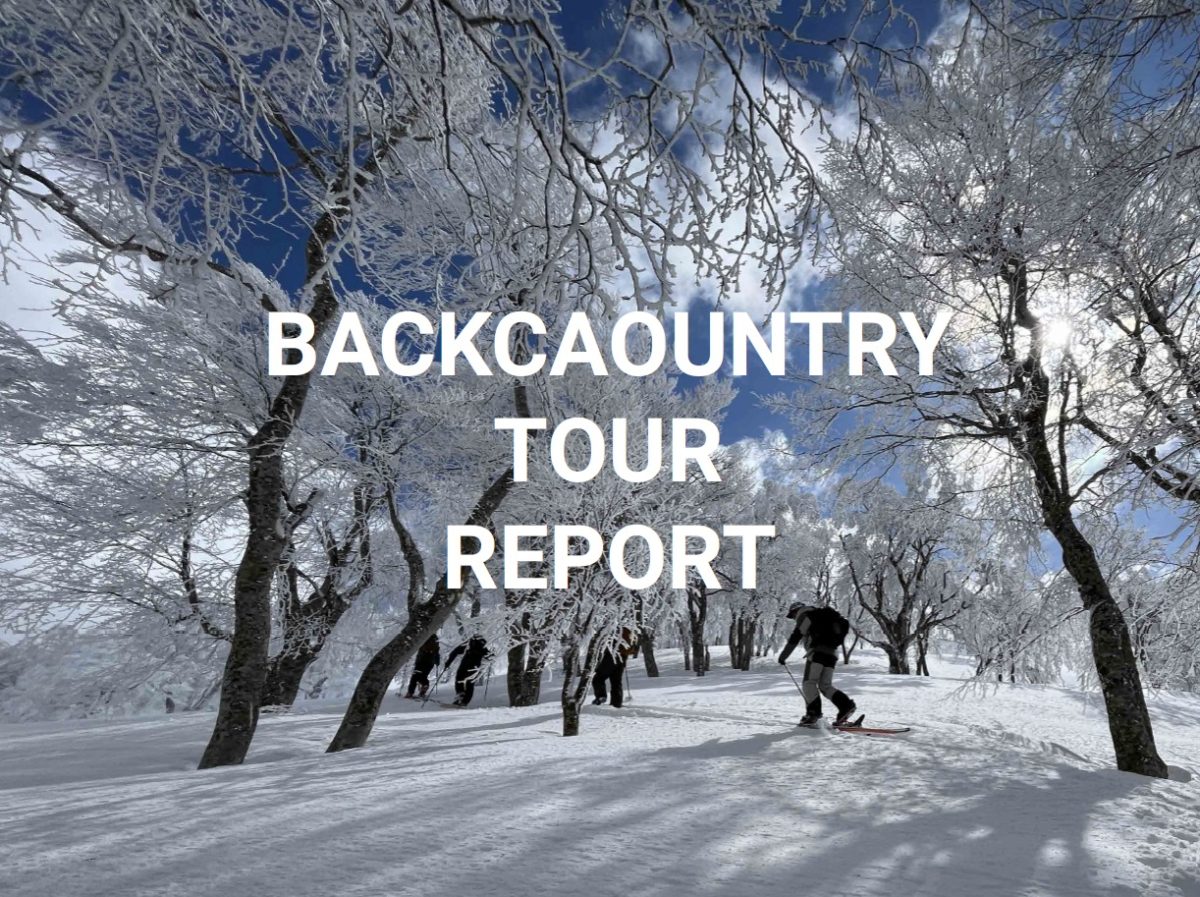
Mount Hakkoda (1,266.5m above sea level) in Aomori Prefecture is a popular backcountry skiing spot beloved by many.
When you climb Mount Hakkoda, you'll see a beautiful, solitary peak towering to the west.
That's Mount Iwaki. At 1,625m above sea level, it's the highest peak in the prefecture. Along with Mount Hakkoda, it's one of Aomori's most iconic mountains.
Its unique shape also earned it the nickname "Tsugaru Fuji."
Mount Iwaki, the prefecture's representative mountain range, is a mountain range that doesn't often appear on the public stage, in contrast to Mount Hakkoda, which frequently appears in the media. However, when you actually ski down it, you'll find that it's a mountain with steep and mellow slopes spread out everywhere, which is a delight for skiers and snowboarders like us.
Here is a one-day tour report from accompanying an Akita Adventure Guide.
[1 DAY TOUR -Mount Iwaki-]
9:30 Meet at Aomori Spring Ski Resort
10:00 Start hiking up
11:30 First drop just before Saihoji Forest
12:00 Second drop from regroup point
12:15 Lunch
13:30 After climbing back up, third drop in the forest
14:00 Continue with fourth and fifth tree runs
14:30 Return to the bottom of Aomori Spring Ski Resort - End
There are four main routes to the Iwakisan backcountry: one starting from Hyakuzawa Ski Resort on the south side of the mountain, one starting from Yayoi Recreation Forest on the east face, one starting from Oishi no Sato on the east face, and one starting from Aomori Spring Ski
Resort on the north face. This time, we took a tour using the ski resort's cableway to start climbing the backcountry while conserving our energy.
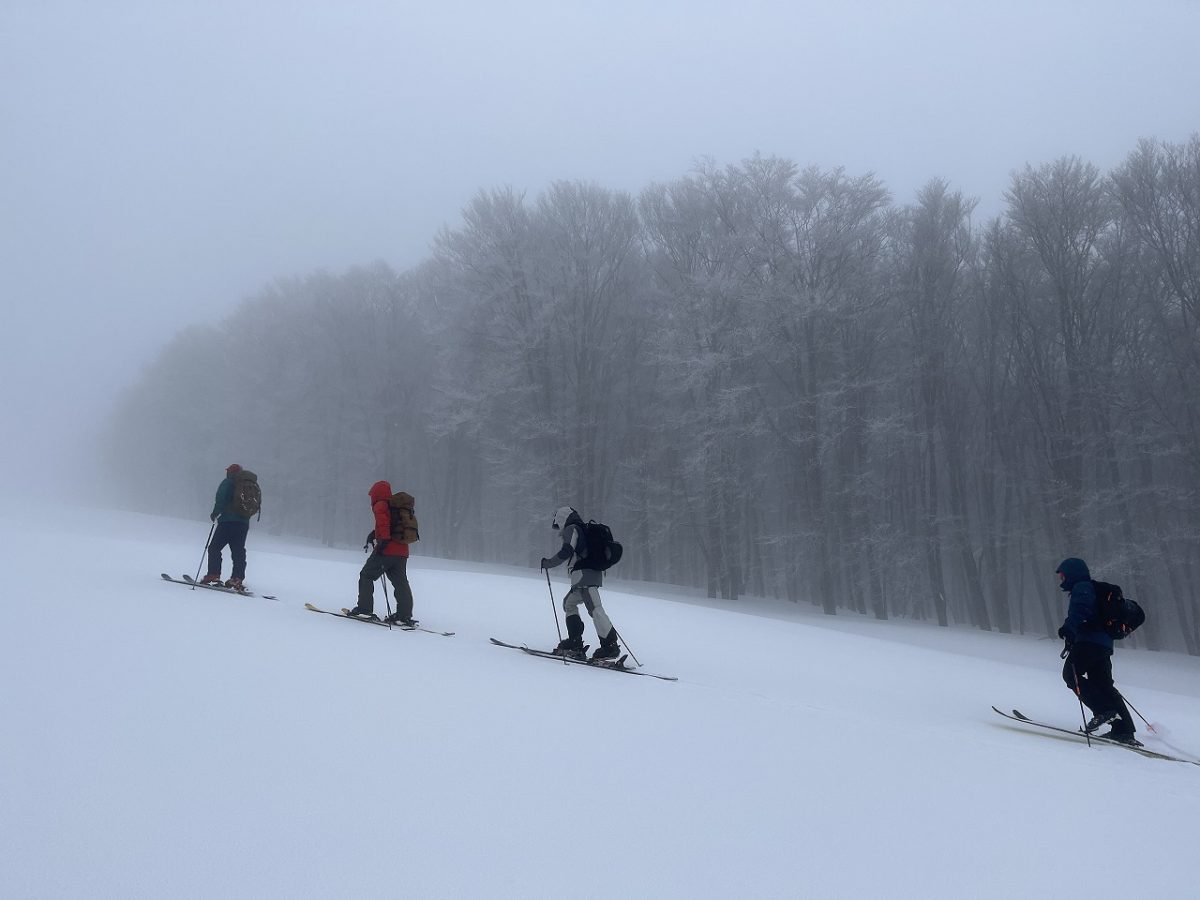
Due to a mechanical breakdown, the gondola that takes you to the summit at Aomori Spring Ski Resort was out of service during the 2021-2022 season, so you take the Quad 1 lift up to the middle of the mountain. From here, you put on climbing skins and walk about 20 minutes to the Gondola Summit Station. You
then begin the full-scale climb to Mt. Iwaki from the entrance to the backcountry area at the summit (approximately 900m above sea level). The
area near the summit of Mt. Iwaki is covered in scrub due to strong winds blowing in from the Sea of Japan, making it impossible to ski. Your actual destination is just before Saihojimori, a small peak at 1,288m above sea level.
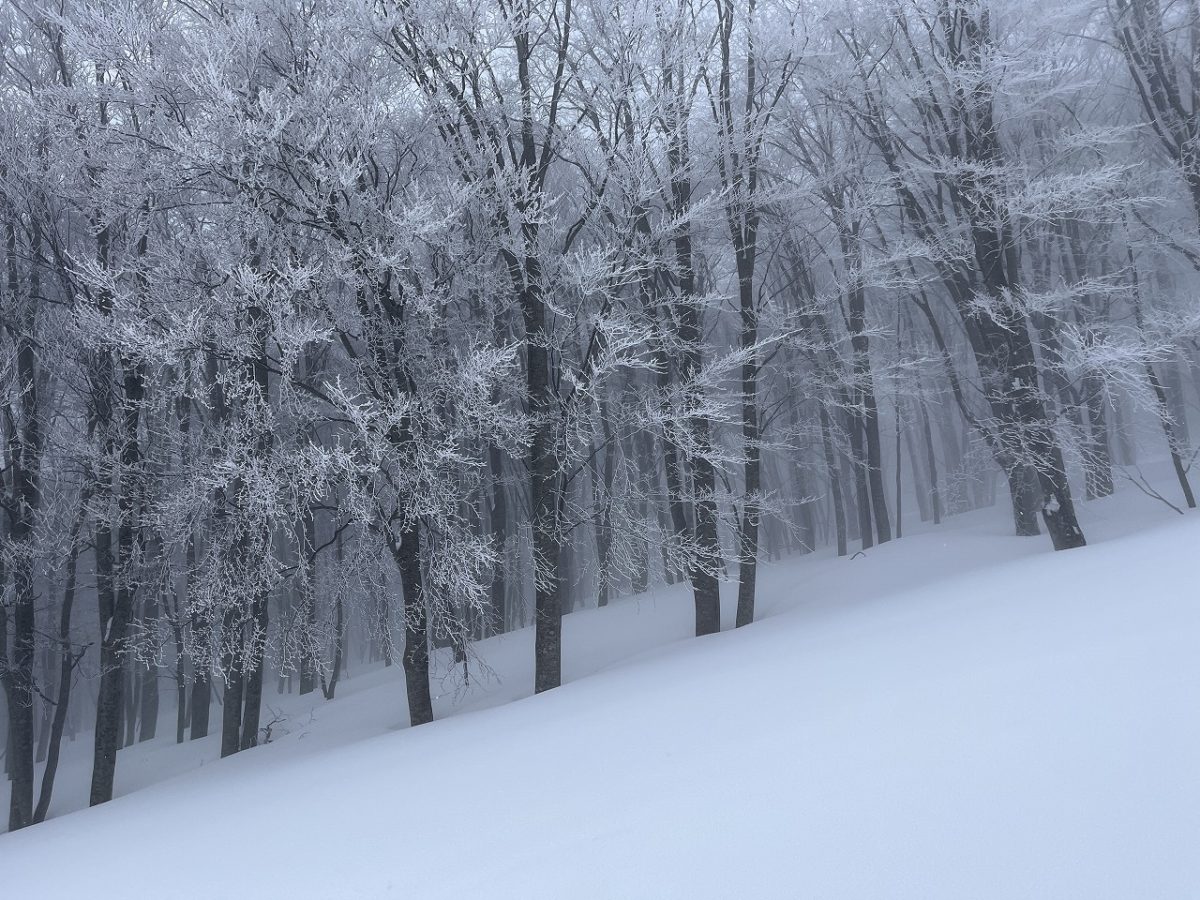
As we begin our hike, we pass through a beautiful beech forest reminiscent of the Shirakami-Sanchi mountain range on the border between Aomori and Akita prefectures.
Being among the trees means the trail is less affected by the wind, making it easier to walk. Mount Iwaki is not often visited, and on this day we only saw traces of a single advance party. As we walk, we come across a slope where it looks like we could enjoy a trackless tree run.
"As we walk, customers often ask us, 'Is this slope skiable?' and 'I want to ski here.' There are so many appealing slopes popping up everywhere. If there's a slope you'd like to ski, please don't hesitate to let us know,"
said Fujimura Taketake, an Akita adventure guide who was our guide.
About 30 minutes after leaving the ski resort, we arrived at a large area with a view of the foot of the mountain. We had been walking for almost an hour, so we took a short break.
From here, we could see Mutsu Bay.
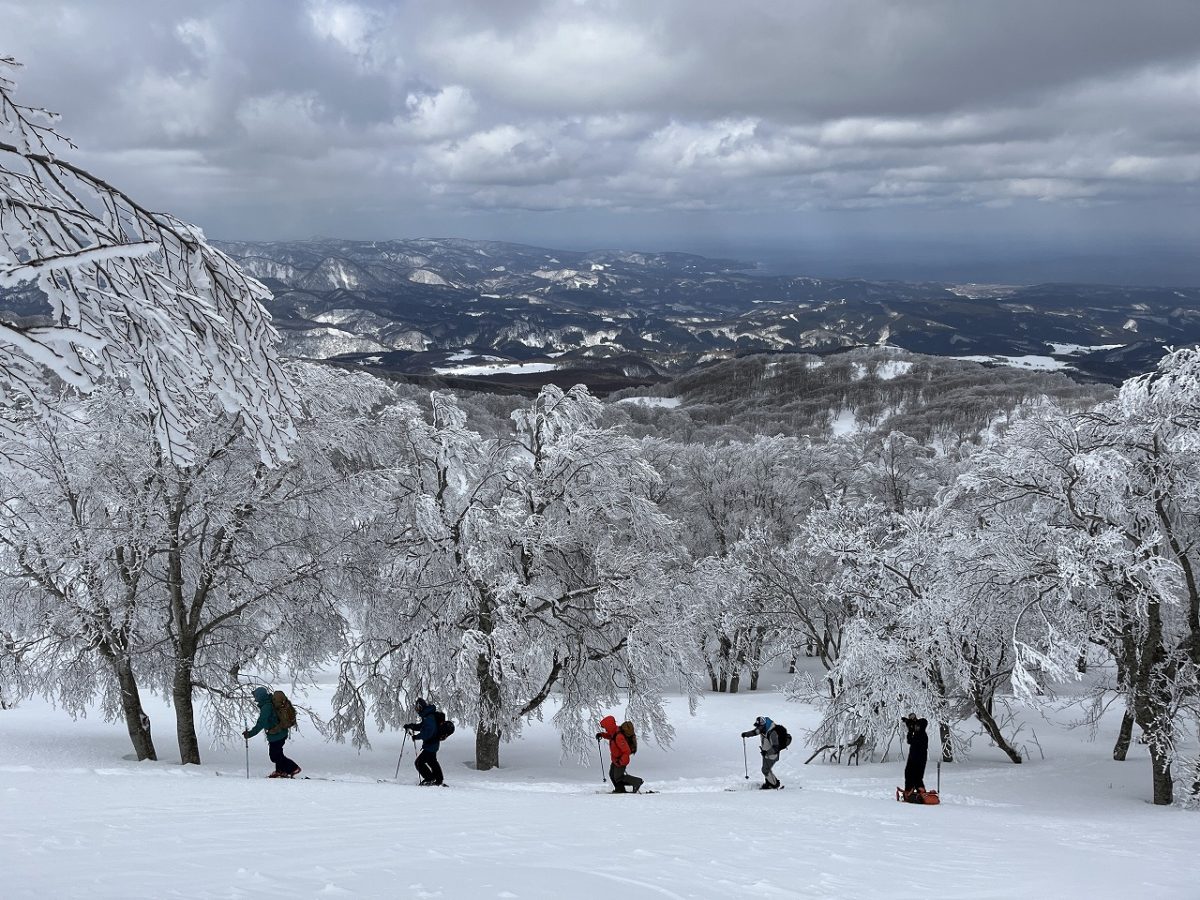
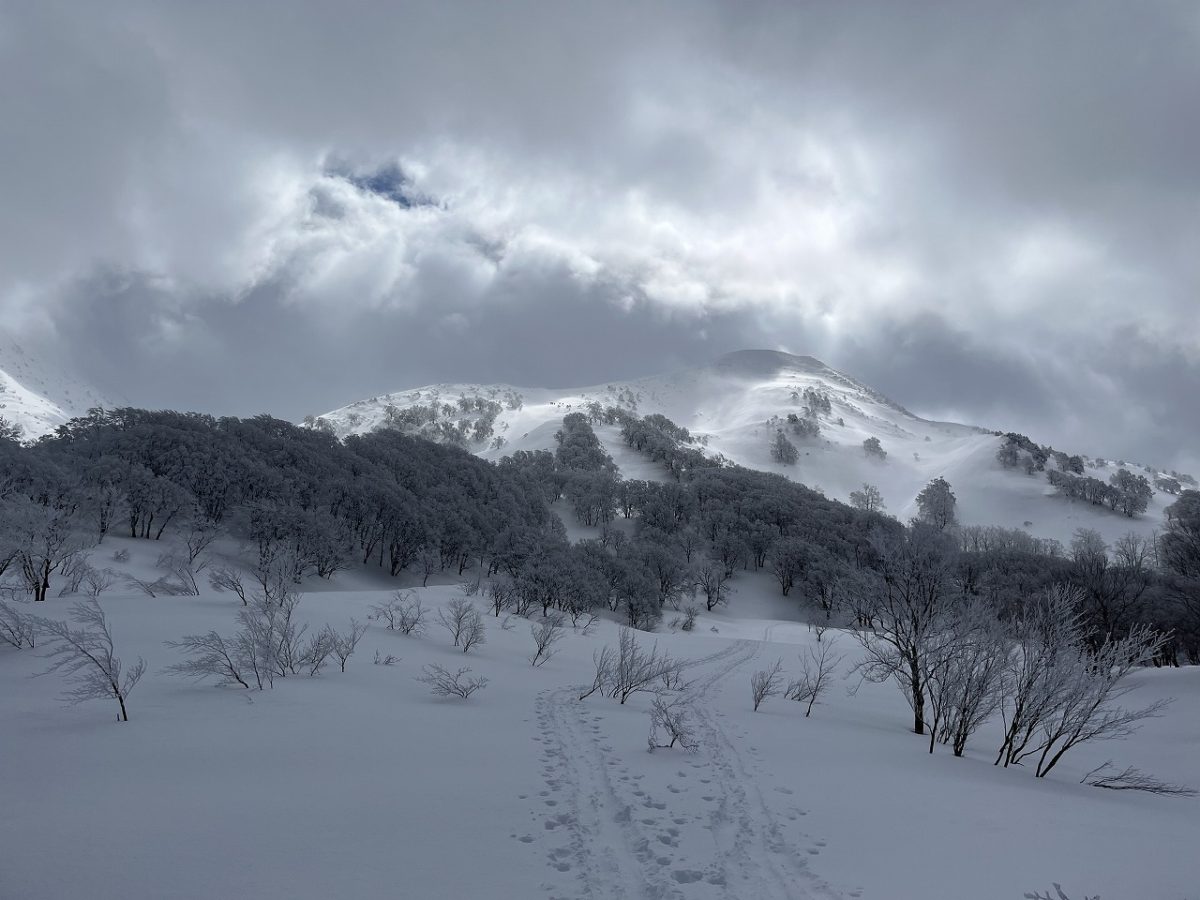
After the break, we set off again, heading for Saihoji Forest. After the break, we continued on through the sparse forest with open views. After another hour of walking, we arrived at the drop point just before Saihoji Forest. As we were at the tree line, there was nothing to block the wind, and a strong wind was blowing.
The slopes were packed tightly by the wind, so be careful not to let your skis or luggage drift away.
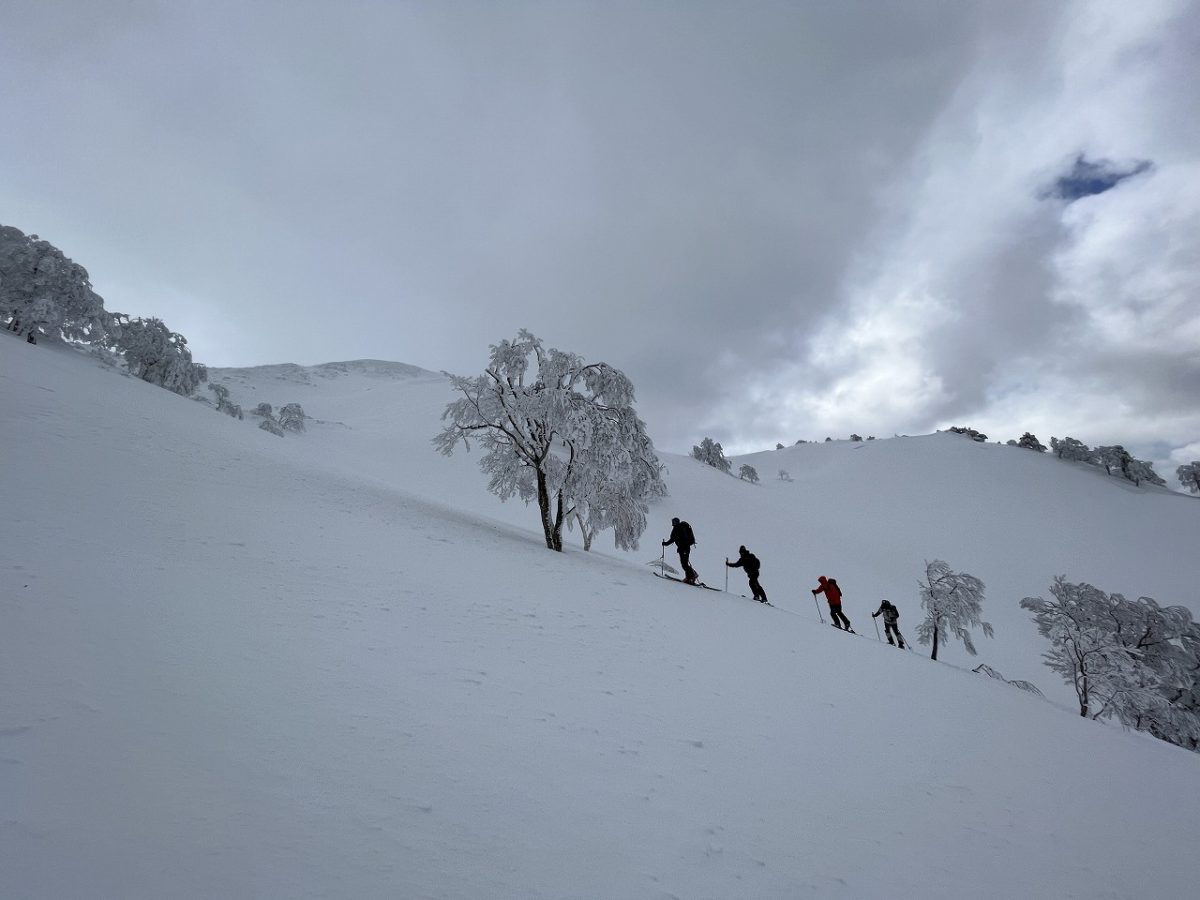
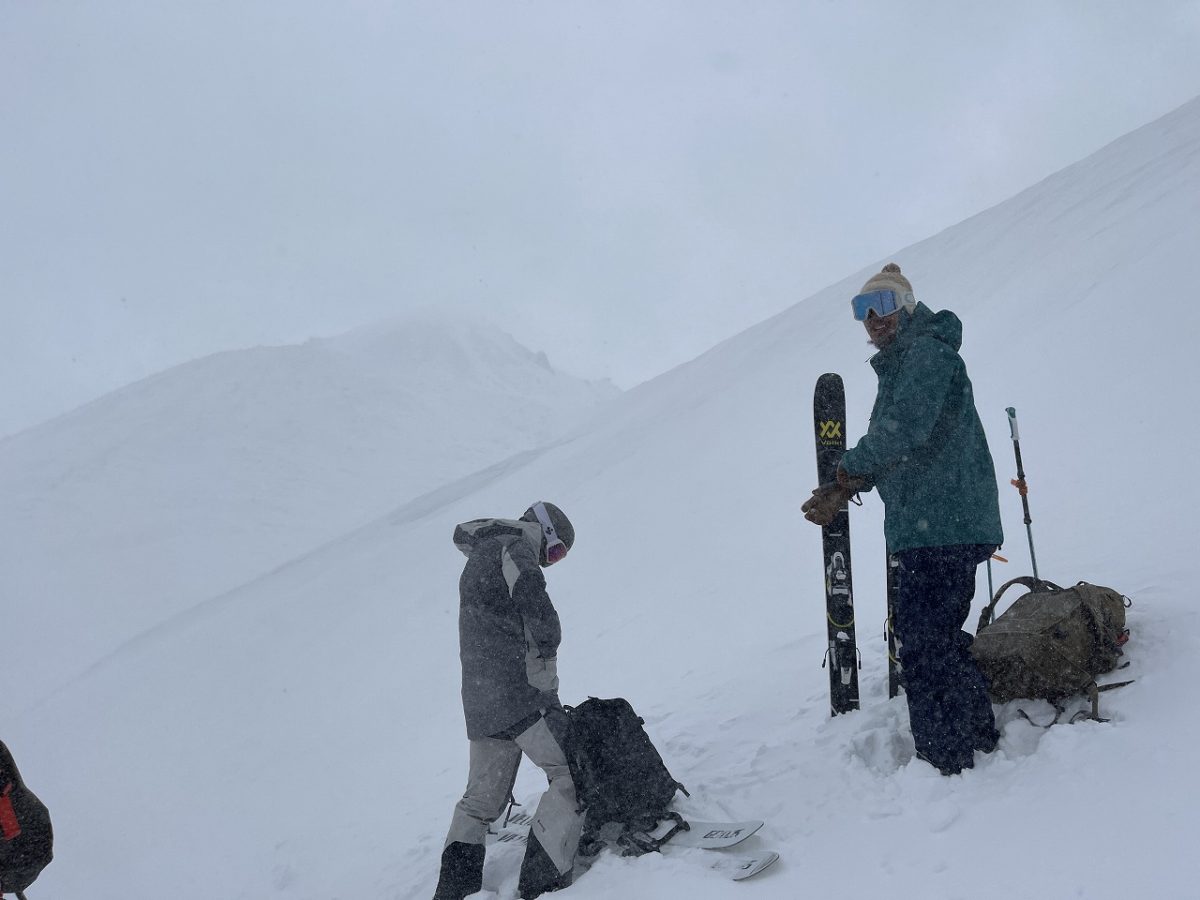
From Saihoji Forest, you can see the peak of Mt. Iwaki right in front of you. As you drop onto the open run, you
'll be under the watchful eye of Mt. Iwaki. The snow is packed down nicely, and as you run and step on it, you can feel the fluffy snow beneath your feet, making for a very comfortable run.
It's an exhilarating ride down the slopes amidst the most beautiful scenery.
And then another one from the regroup point. There was less wind here, so there was a lot of powder
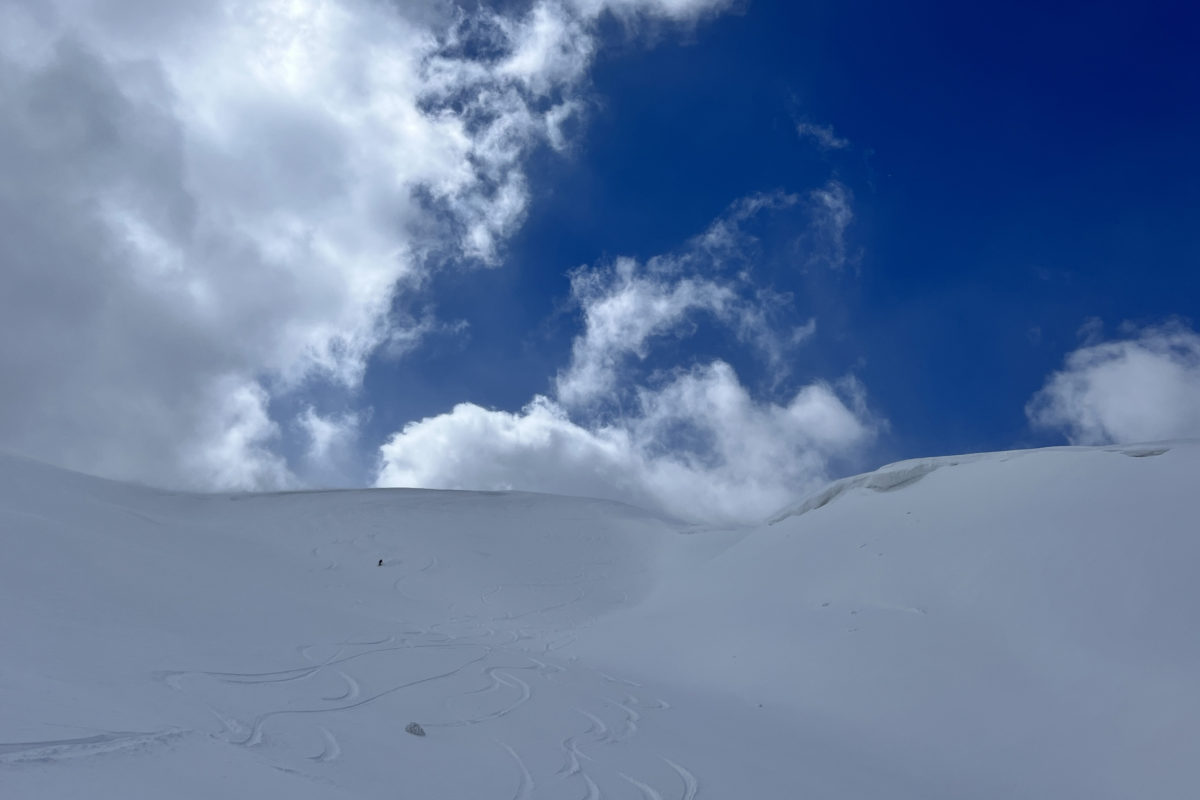
After enjoying the open burn, we traverse downhill and head into the forest. Here we take a lunch break.
"Different guides have different ways of eating lunch, but I like to sit down and take the time to eat,"
says guide Fujimura. You can enjoy an extraordinary picnic atmosphere in the beautiful beech forest.
The next point we reached was a spectacular spot where we could ski while overlooking Mutsu Bay. We could do tree runs and open skiing. Each member discussed where to ski and then dropped off. The skiable area was wide, so no matter where we skied, there was no track
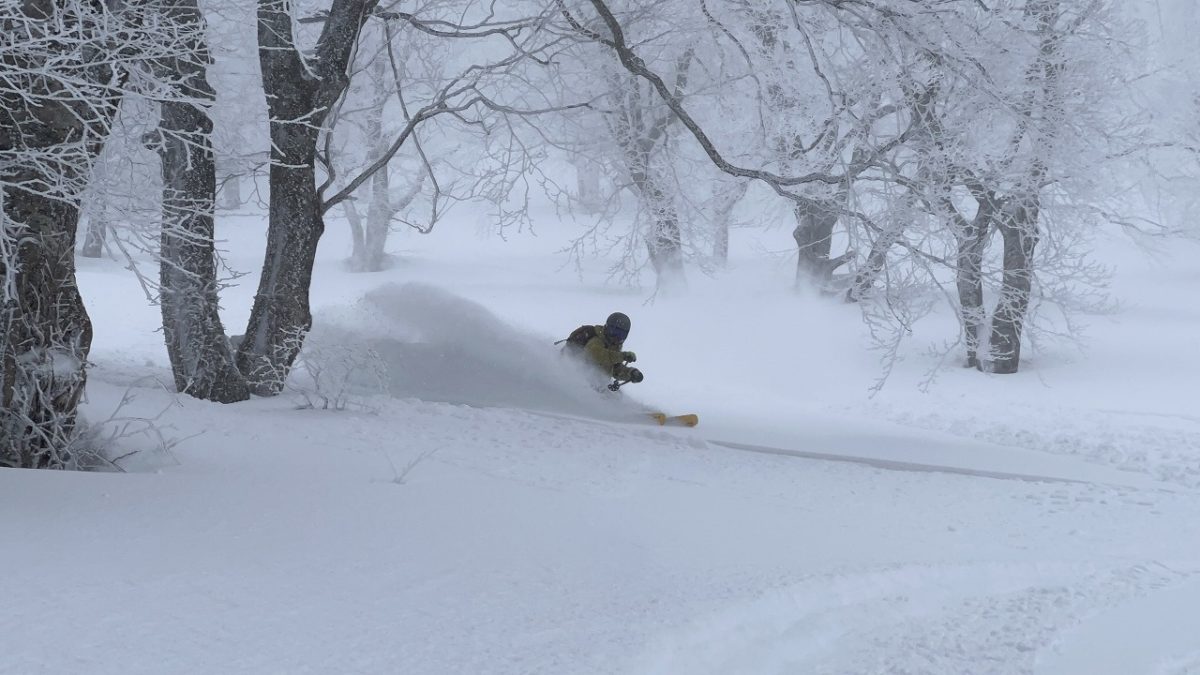
We continued skiing through the forest for two more runs. The forest is less affected by the wind and there is plenty of light, fluffy snow. Even though it is mid-March, there is still plenty of high-quality powder snow lying dormant
After enjoying the open runs and tree runs, you will ski through the stream and return to the slopes of Aomori Spring Ski Resort to finish the day
By mid-March, spring skiing was in full swing at ski resorts across Honshu, but Mt. Iwaki still had snow from the peak season. You can gain altitude from the ski resort using the cable car, and there were relatively few people there (there were only two other groups besides us that day), and the powder was well-preserved, with open runs and just the right amount of spacing between the trees. It was a mountain that seemed to have all the charms of the backcountry packed into it
| Tour Name | Mt. Iwaki Tour (Akita Adventure Guide) |
| Average hike time | Approximately 2.5 hours |
| Guide Ratio | Guide 1-2: 1-10 guests |
| Required equipment | Beacon, shovel, probe, climbing equipment, helmet (recommended) |
| Difficulty (required BC experience level) | BC beginner/intermediate skiers: Skiing skills are intermediate or above and can handle fresh snow |
| Participation fee | From 12,000 yen, private guide (1-6 people) 46,000 yen |
| Reservations and inquiries | MAIL : ftarbo0928@gmail.com TEL: 090-9516-5114 |
Interviewed and written by Daigo Onozuka