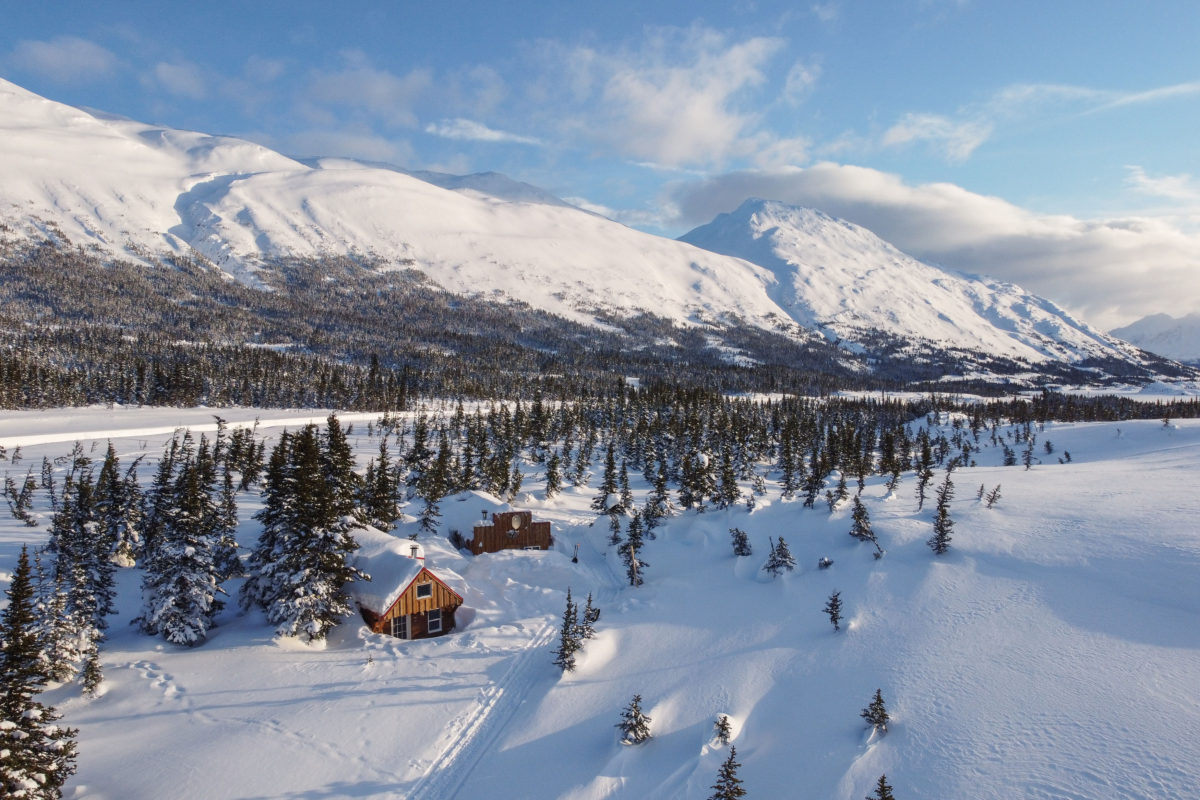

The Yukon Territory lies in northwestern Canada, bordering Alaska north of 60 degrees north latitude. Its vast area is 1.3 times the size of Japan, but its population is only about 40,000. With wild animals such as bears and caribou far outnumbering people, this area truly deserves to be called the far northern wilderness
This time, I visited the southwestern part of the Yukon Territory, a mountainous area near the coast that includes a series of high peaks, including the Coast Mountains that run along the Pacific Ocean and the St. Elias Mountains, which are part of a World Heritage Site. This area, which also connects to Canada's highest peak, Mount Logan at 5,959m, is known worldwide as a dynamic backcountry spot
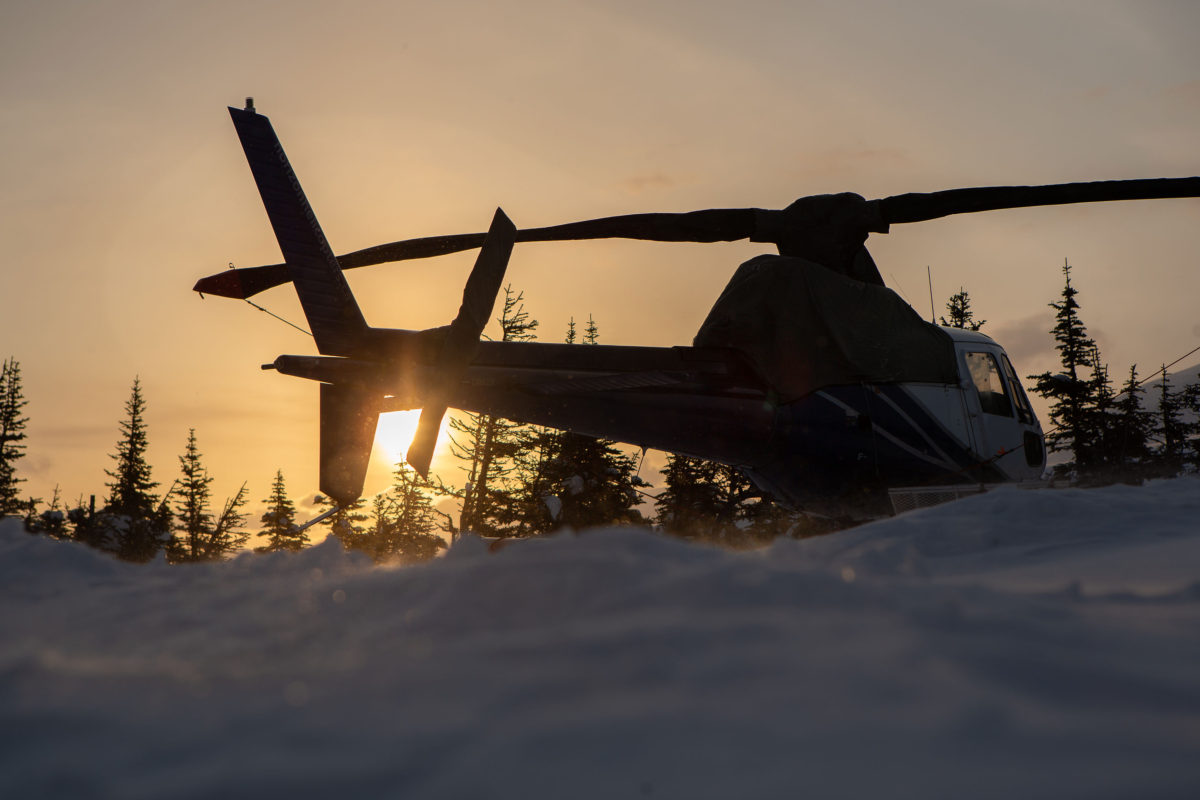
Yukon Heli Skiing is based in the heart of the mountain range, at a pass called White Pass, and operates a truly comprehensive heli-skiing operation. I joined a five-day tour with this heli-skiing company, the only one of its kind in the Yukon, which has incredible potential. Here is a look at one of the amazing days
Report: "Yukon Heli-skiing in One Day"
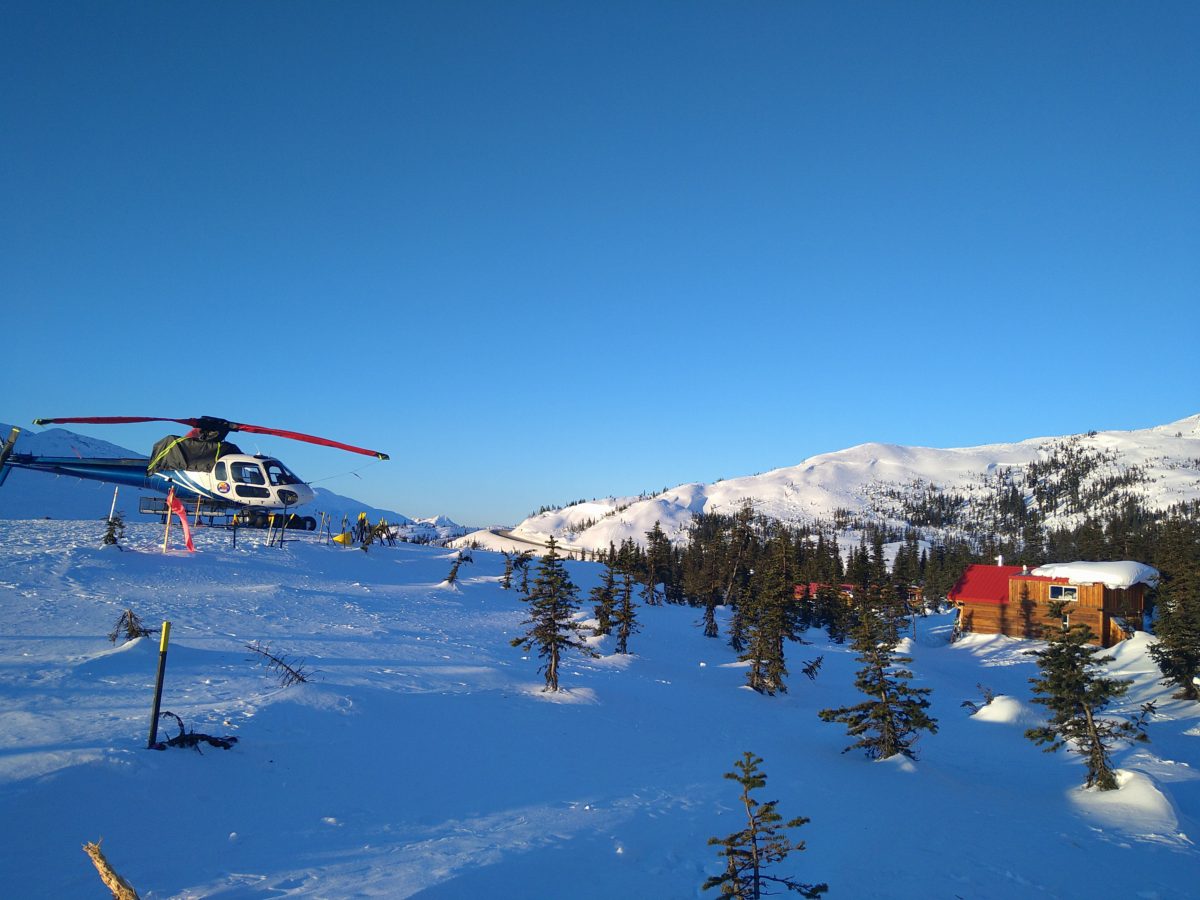
The sky was clear and blue from the morning on this day as well. I took a sharp breath of dry air and the cold stung my throat. It was 8am and the temperature was a little chilly at -20°C. After finishing my meal and heading towards the heliport, the sunlight got stronger and I felt more ready to take off
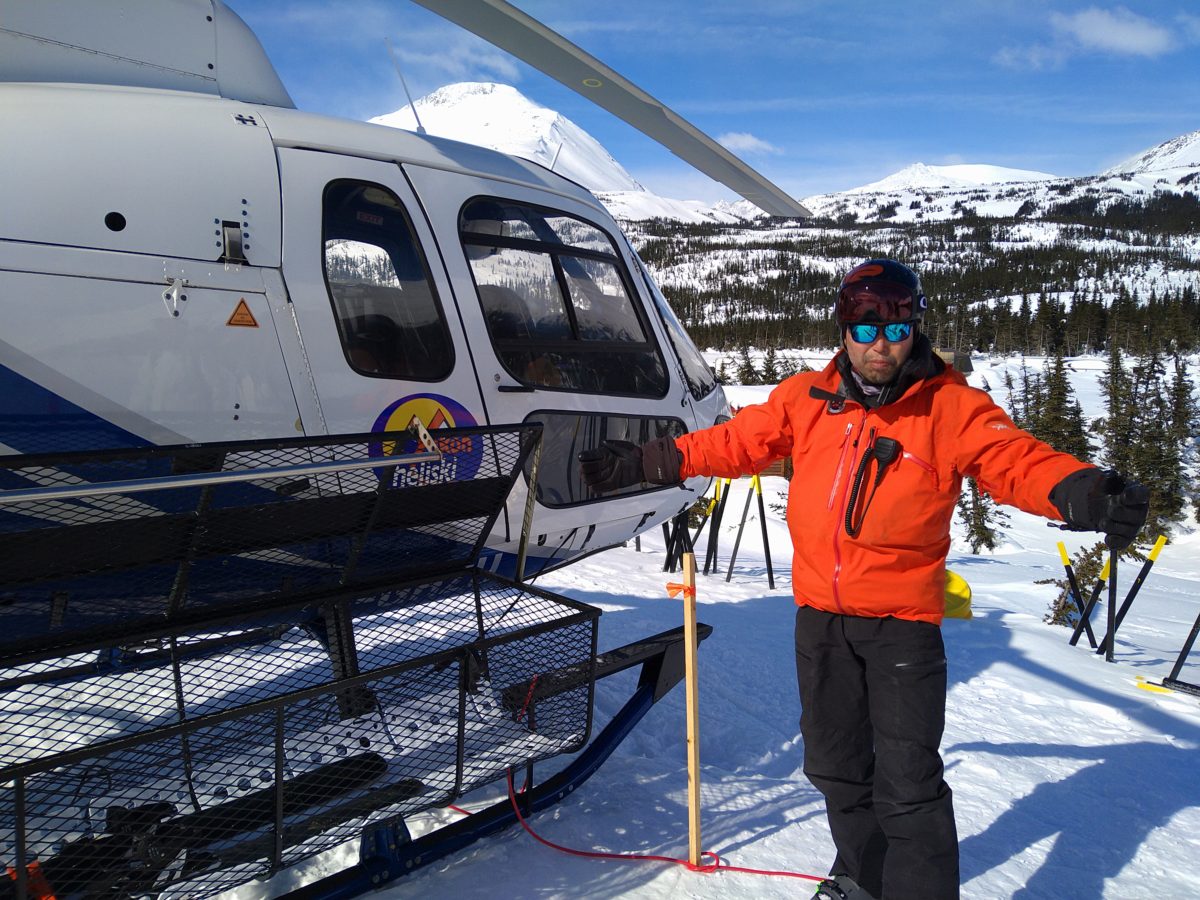
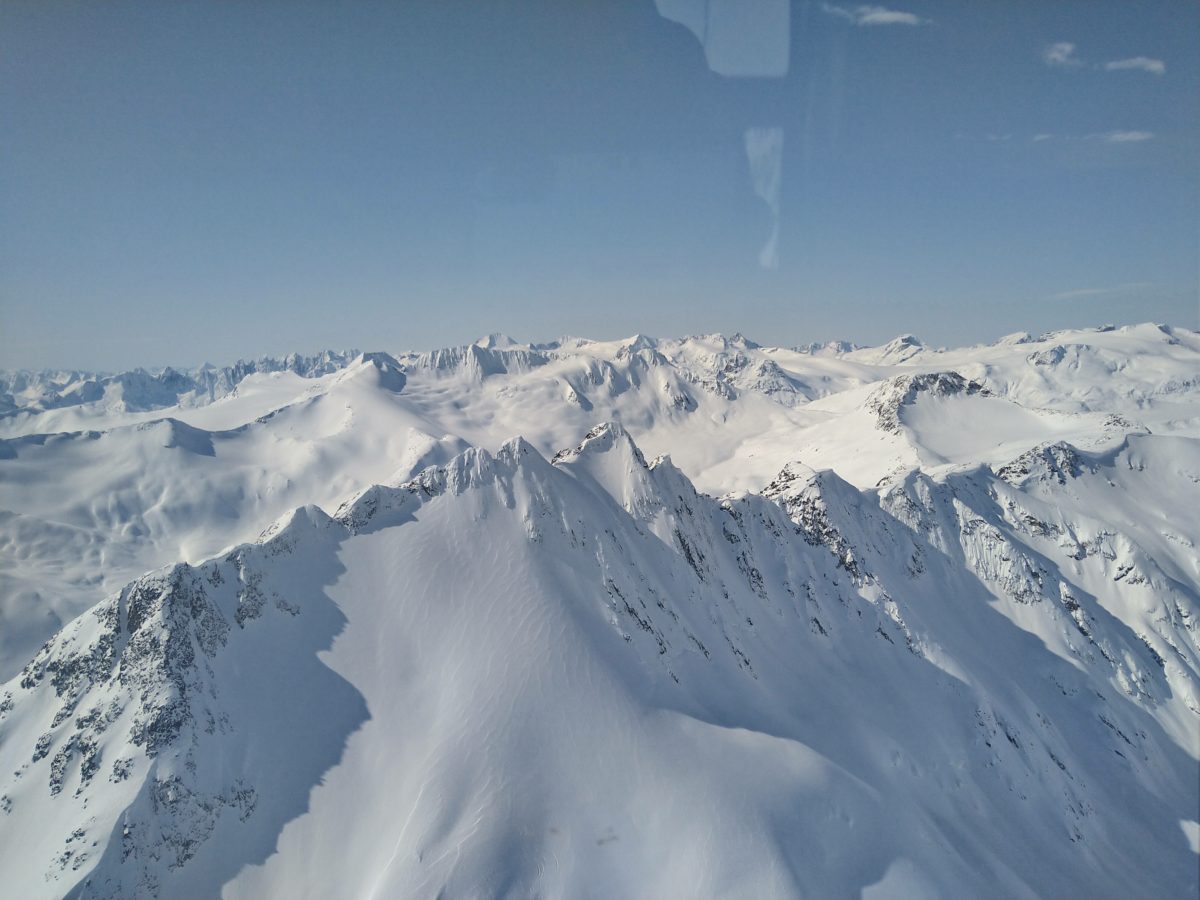
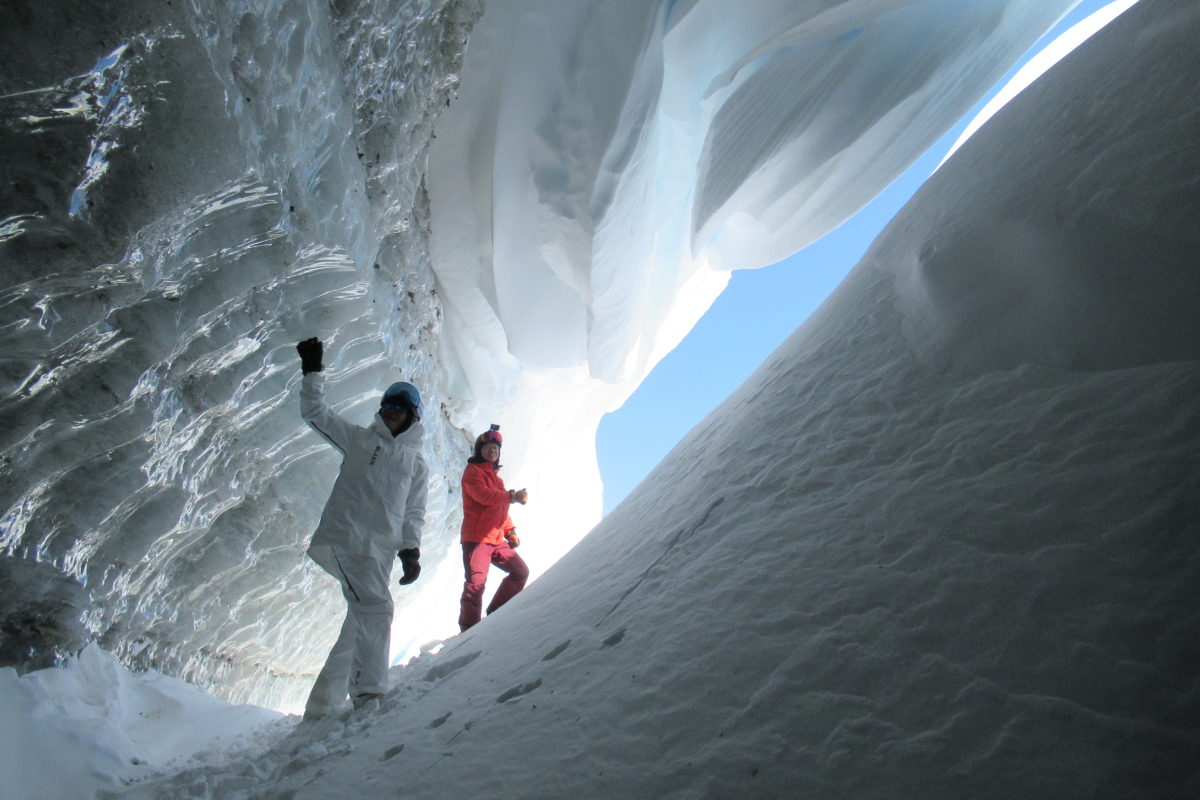
After hearing some important points from our guide, Jun Yanagisawa, we set off. The back seat of the small A-Star helicopter is the guest seating area. Everyone fastens their seatbelts and puts on headphones to drown out the loud noise before setting off. The first leg warm-up run starts from a point about five minutes from the heliport. We land on the summit ridge of one of the mountains, where numerous huge glaciers stretch out. We quickly disembark and everyone's skis are taken out of the baskets, and the helicopter quickly disappears from view. With the helicopter gone, it's silent at the summit. There's no wind and it's calm, but the view looming before us is magnificent
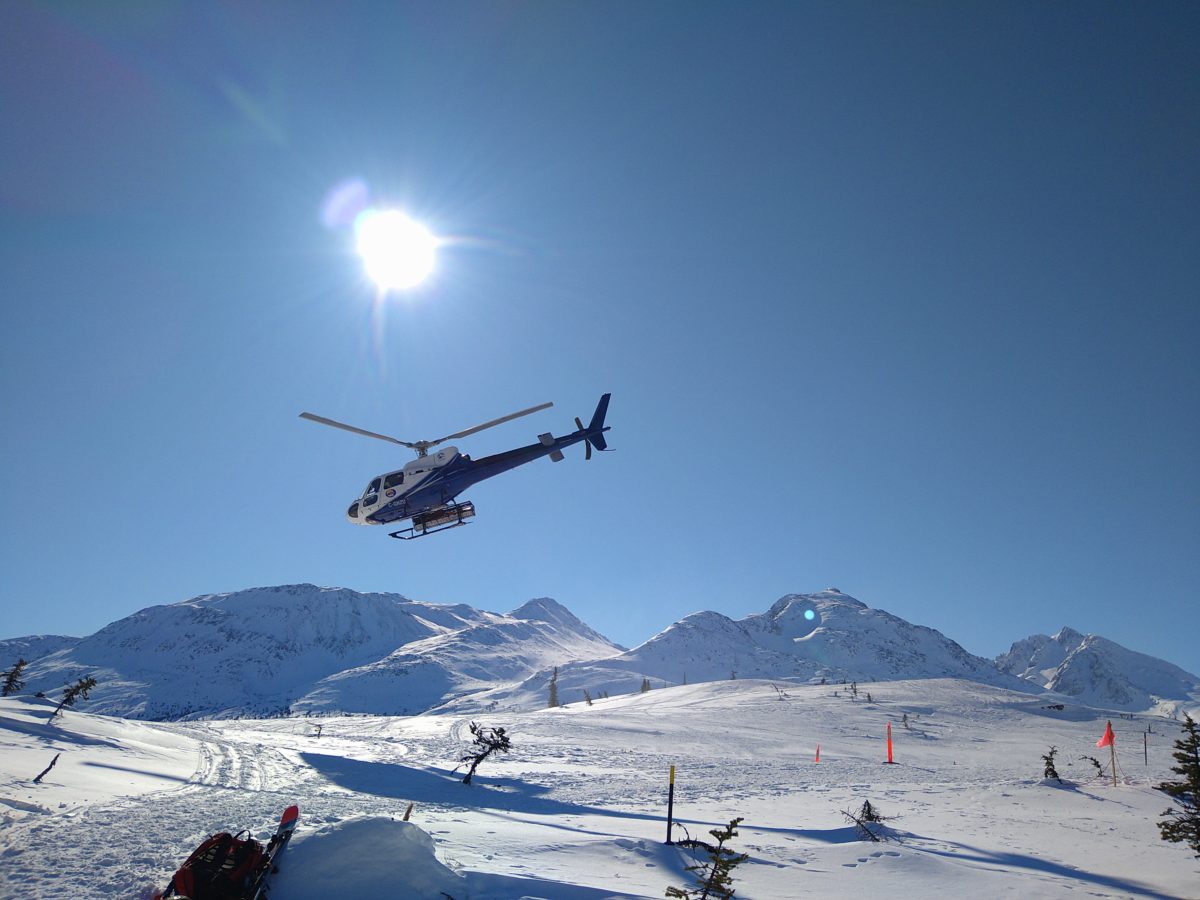
"Those mountains are just like Alaska. I skied the slope next door for the first time last week. The location was amazing," says owner Pete
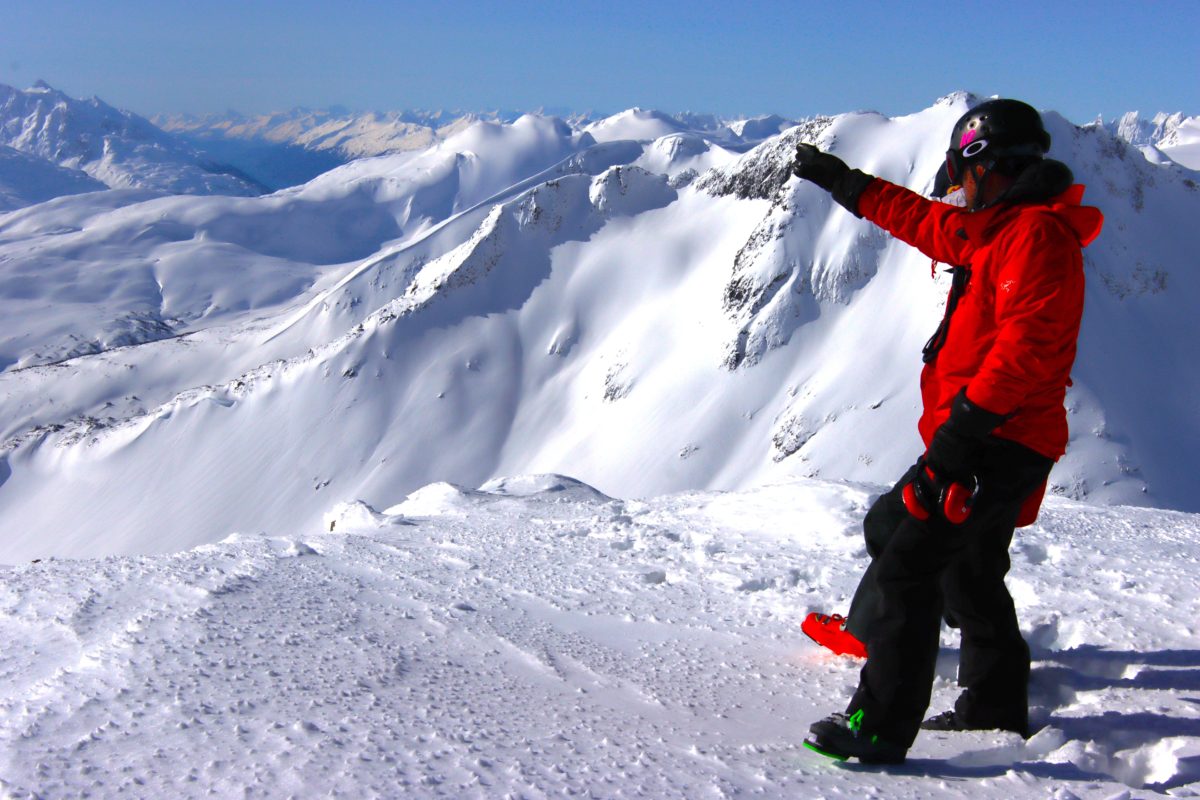
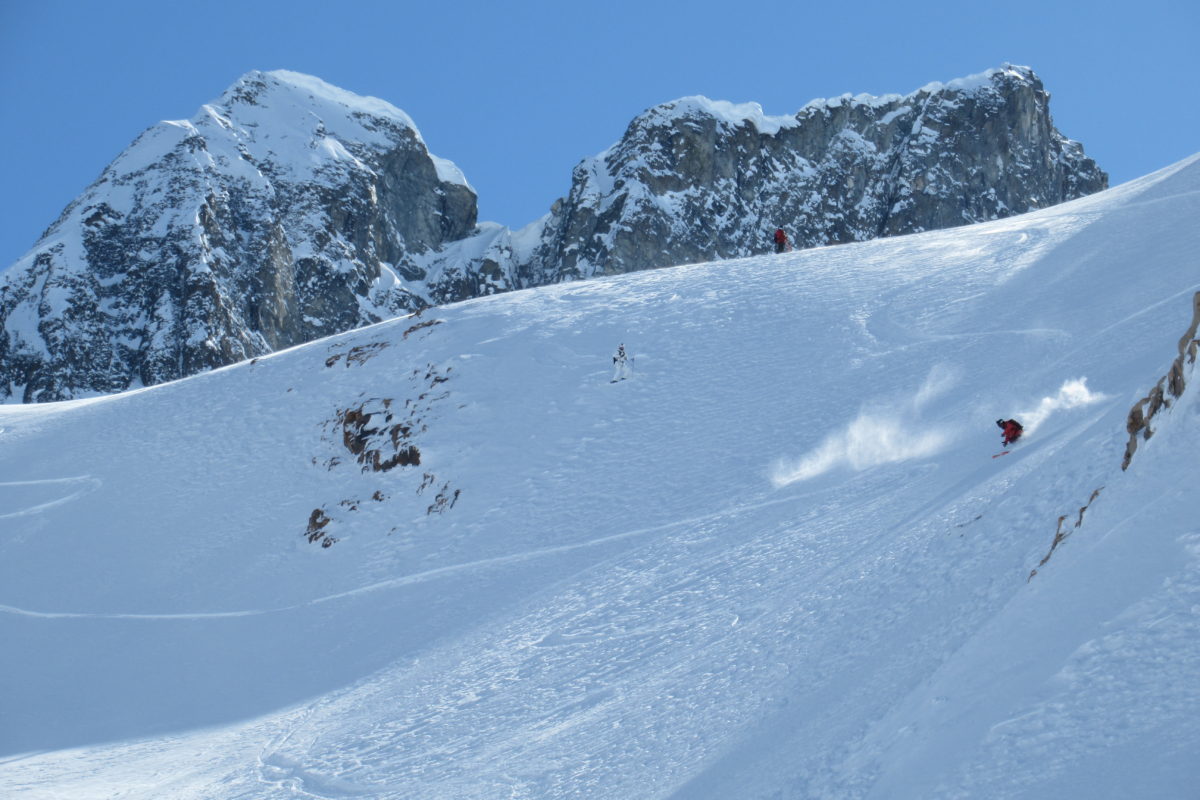
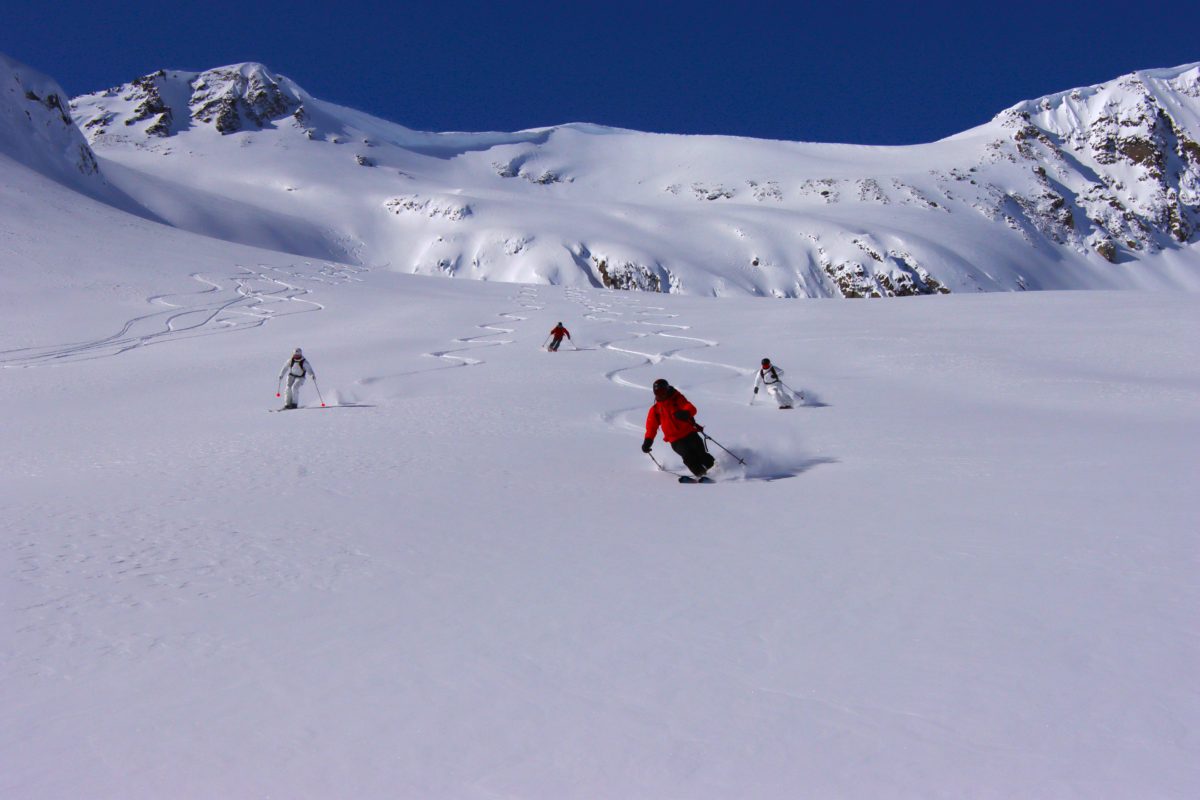
Today's run begins in high spirits. We make big turns in a vast bowl with huge walls looming on both sides. There are seven guests in total today, including us in two groups. Because we're a small group, we don't have to worry about making tight turns
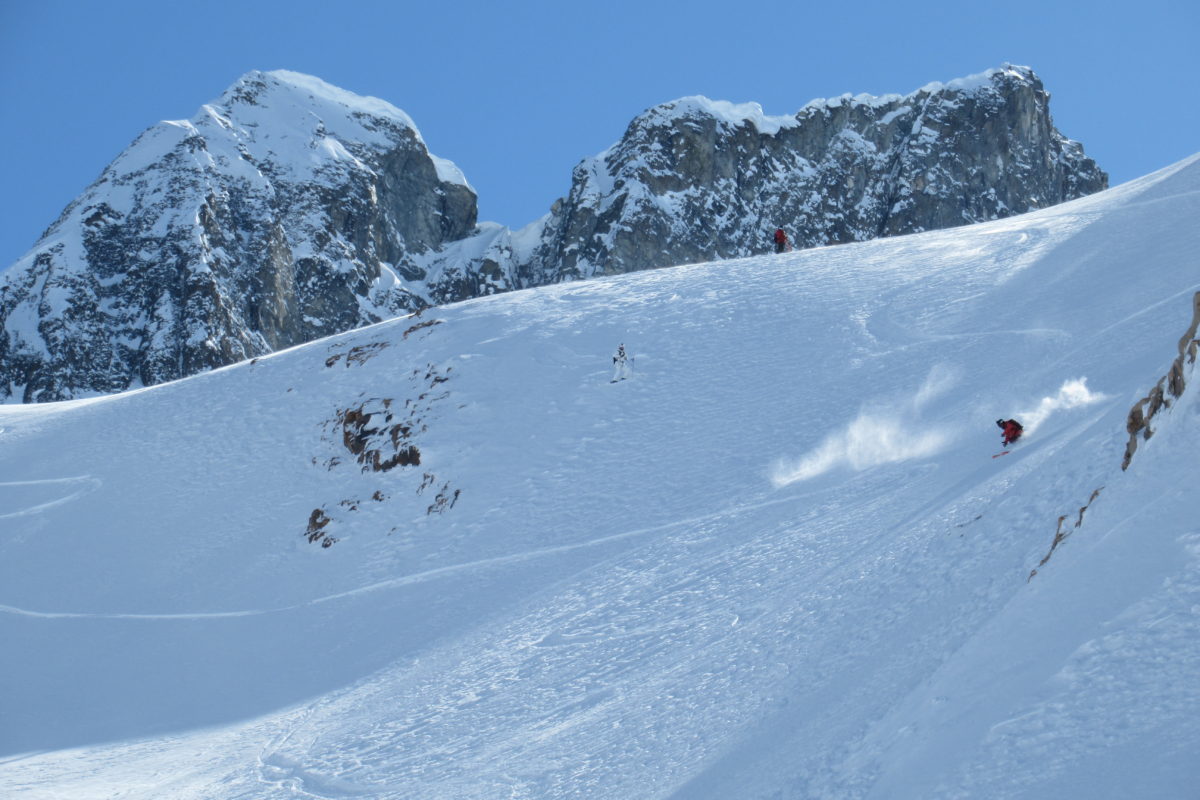
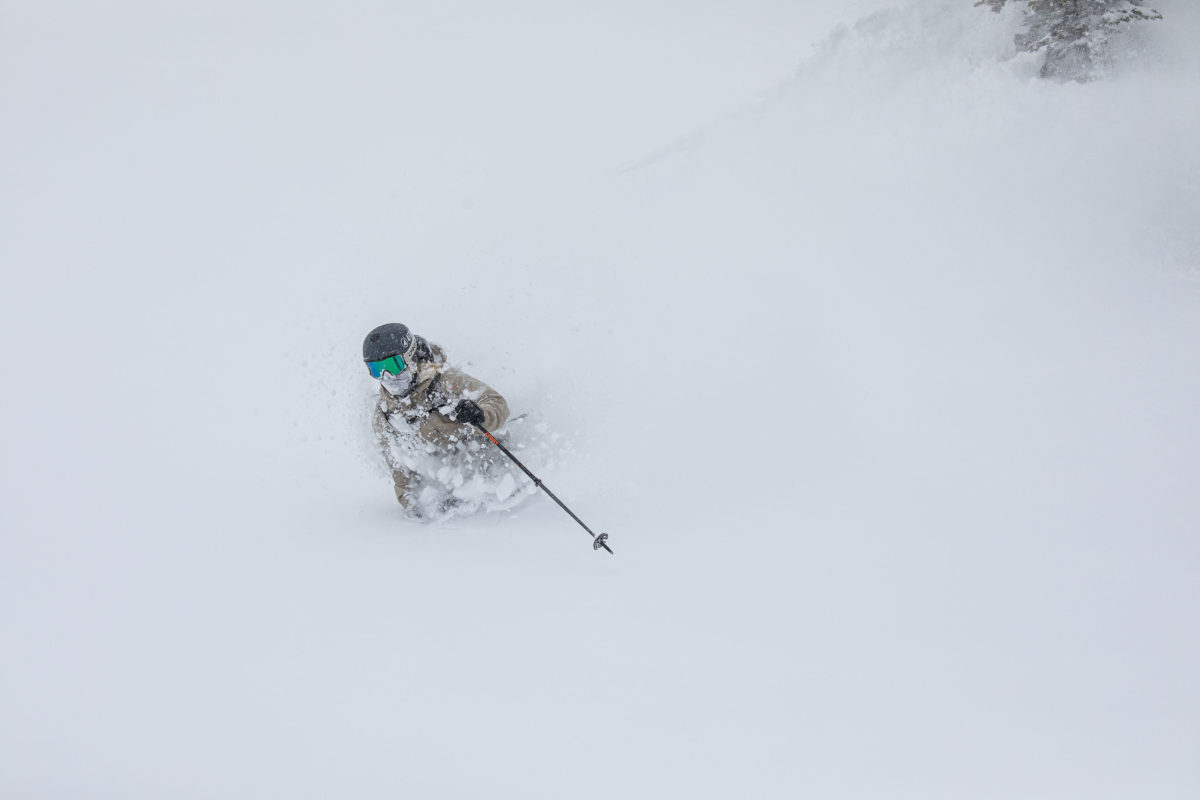
Because the scenery is so vast, even though I thought I was skiing lightly, I found myself unconsciously picking up speed. The snow had firmed up due to several days of sunny weather and wind, and if I wasn't careful, my skis would slip away on the slopes where the sun was shining, but the north slopes and the shade were powdery smooth. Each of the varied slopes was long, so my legs quickly became sore
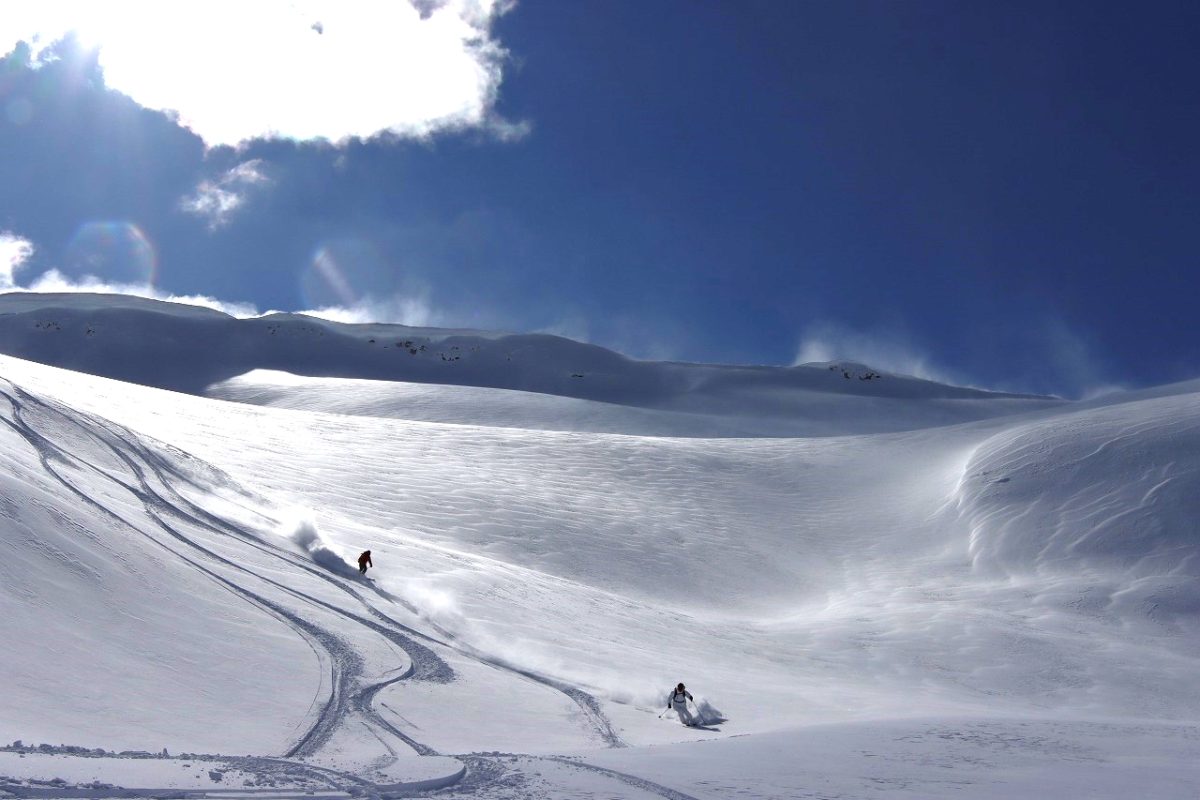
After skiing down a slippery slope of around 25 degrees, the route is flat at the bottom. We slowly drift towards the helicopter waiting in the distance. Once we reach the helicopter, we gather up our skis and place them in a large basket attached to the side of the aircraft, then climb back onto the rim and head off to the next point. It takes about 30 minutes from the time we leave the helicopter base to board the next helicopter, with each run taking 20 minutes for a short run and 50 minutes for a long one. On the first day, we did seven runs, including a lunch break. If the group's skills are consistent and the conditions are good, it's not unusual to do more than 15 runs in a day, so we need to carefully consider our physical strength balance when skiing
In just the morning, we were escorted to one incredible spot after another, including courses with slopes of over 30 degrees, a large bowl, a ridge with a dangerous start, and a heavenly run in full powder
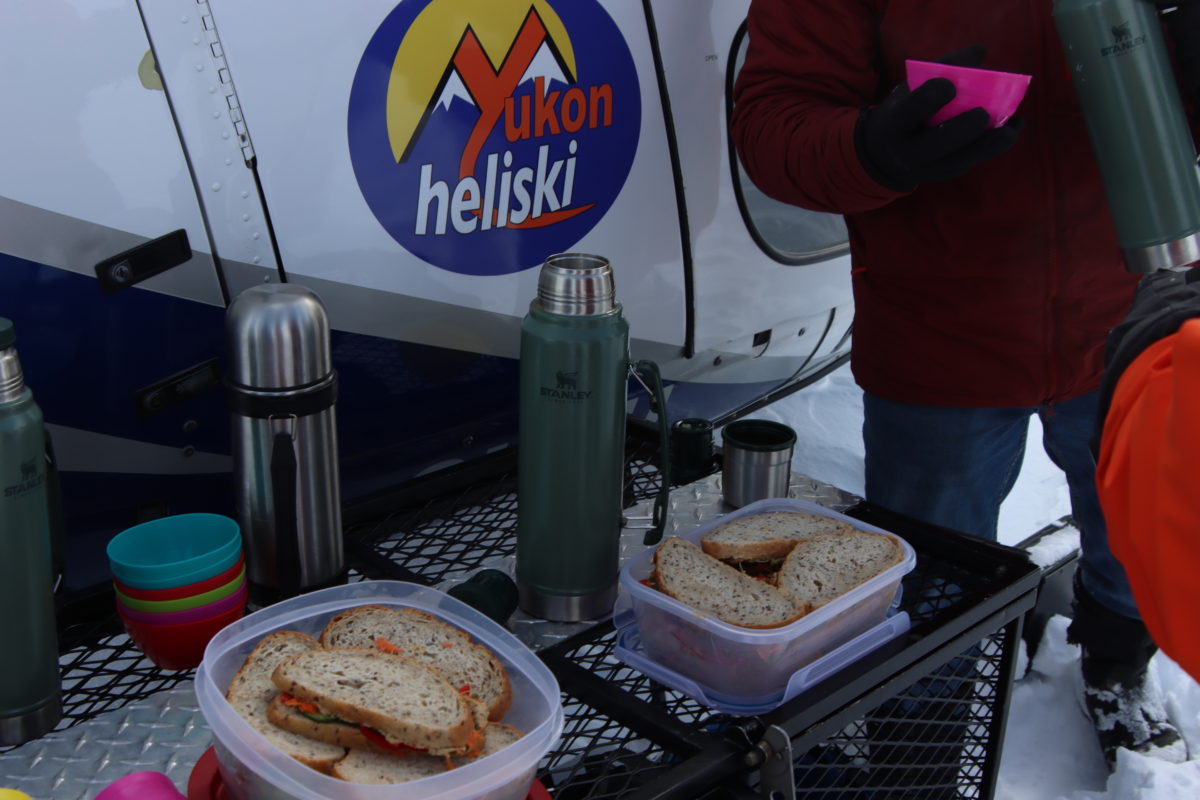
Lunch on the way consists of soup, sandwiches, hot drinks, and fruit. It is usually eaten at the bottom of the mountain where the helicopter is parked. On warm, windless days, it is sometimes eaten at the summit, enjoying the spectacular view
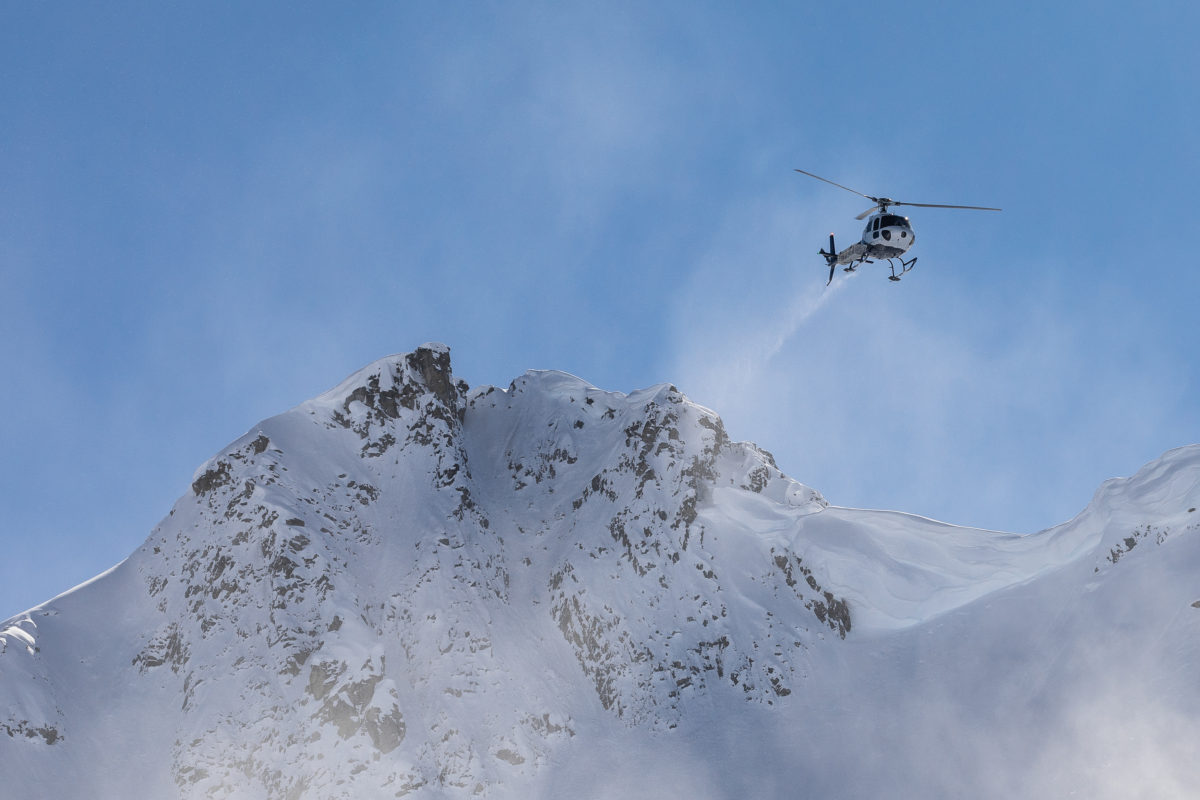
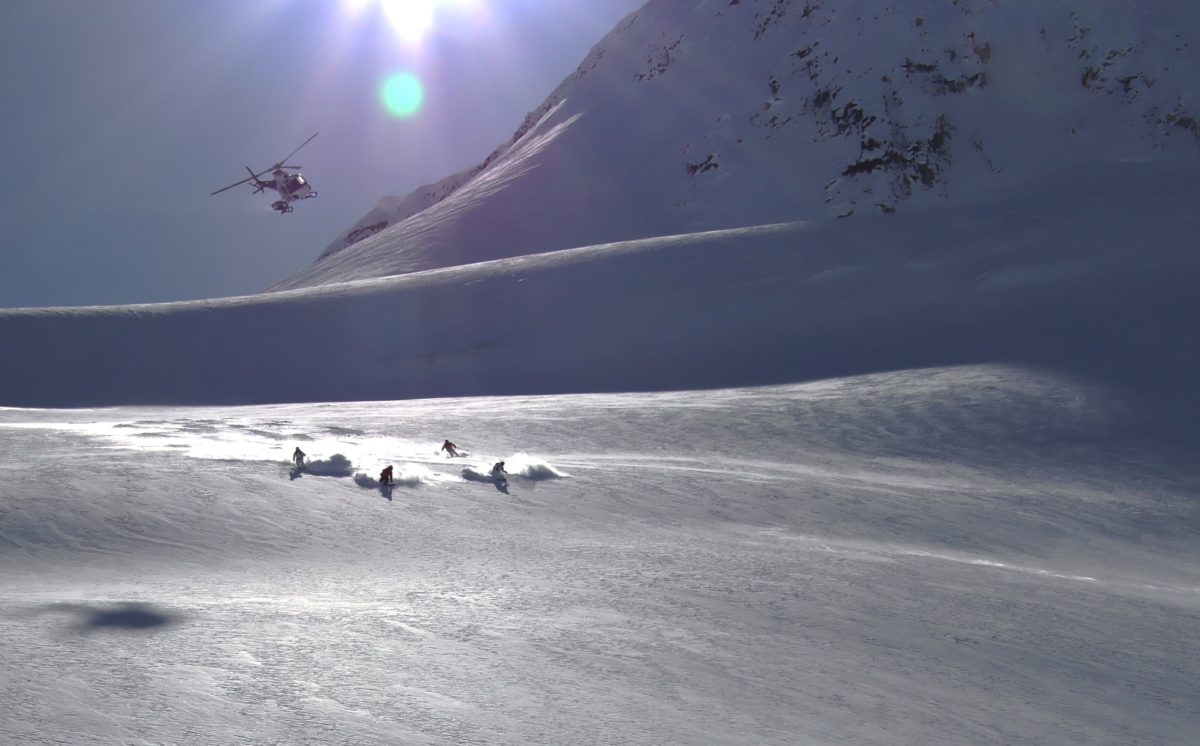
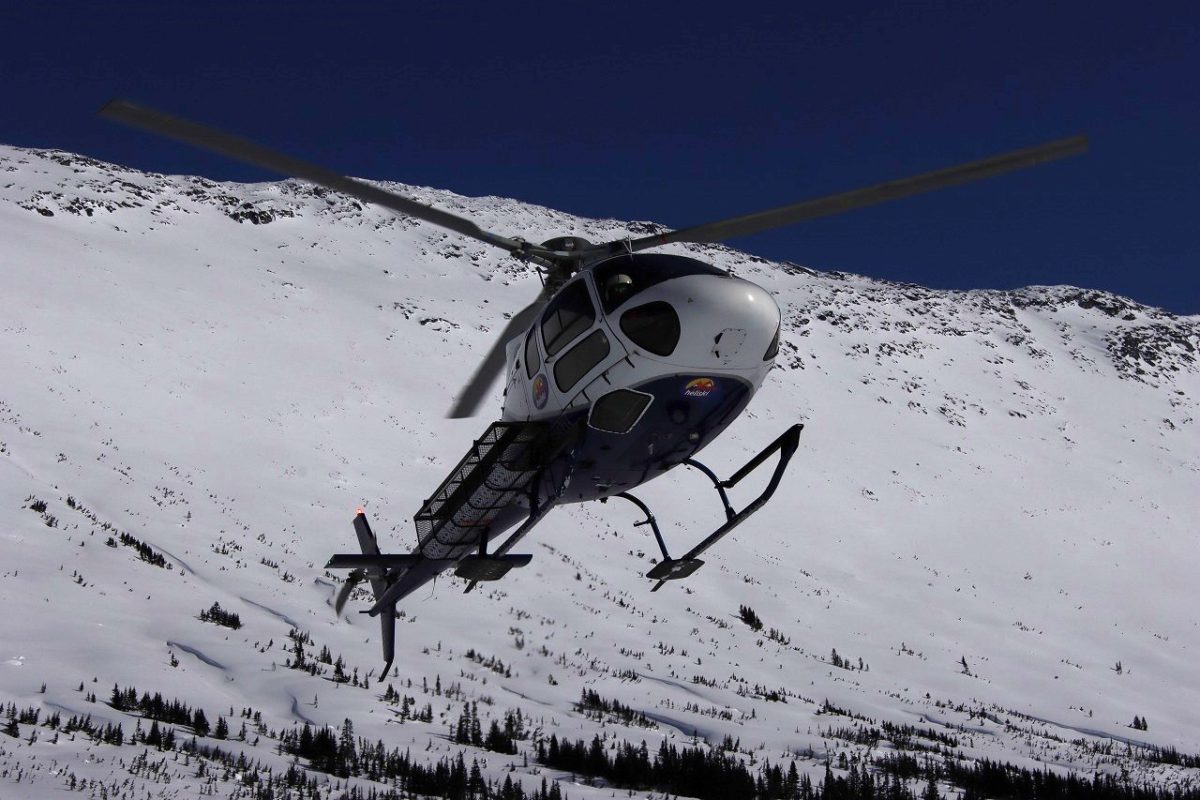
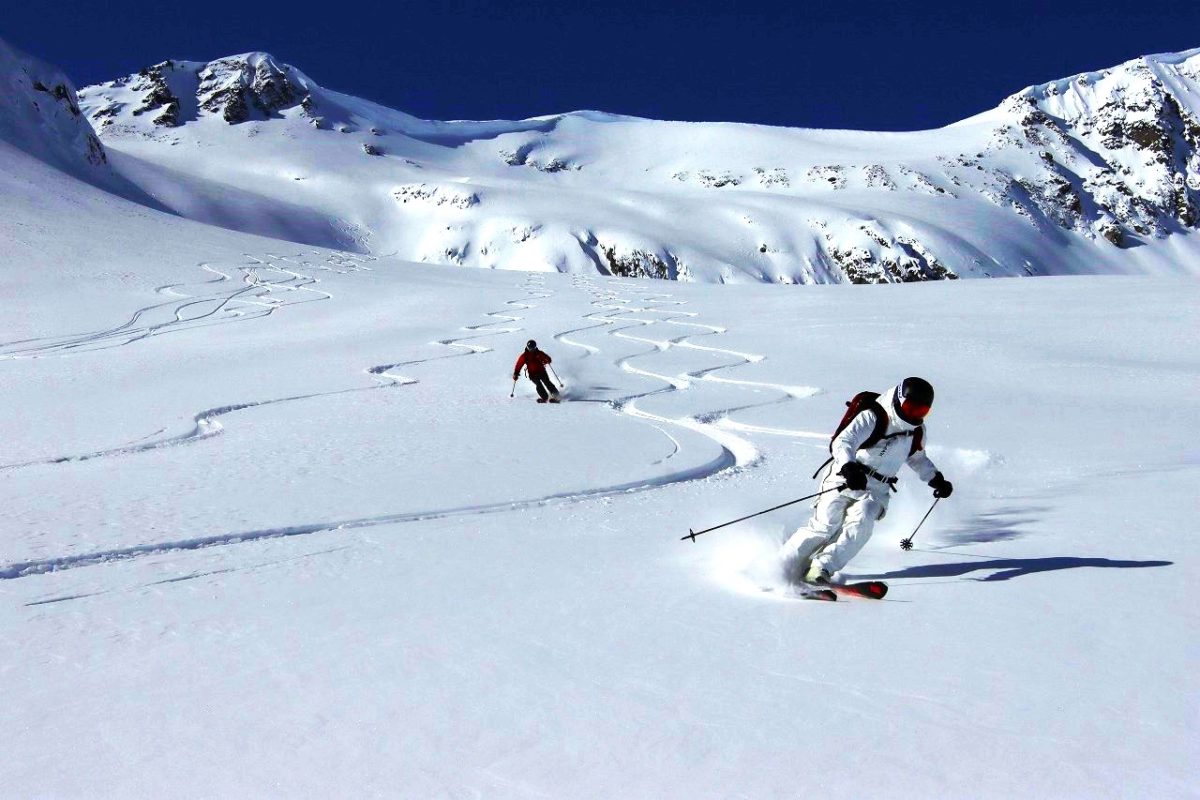
Another spectacular run began in the afternoon. After being dropped off at the top, everyone followed Yanagisawa and rhythmically carved out a track. The shot below shows the helicopter flying over us, tracing the course. It felt amazing
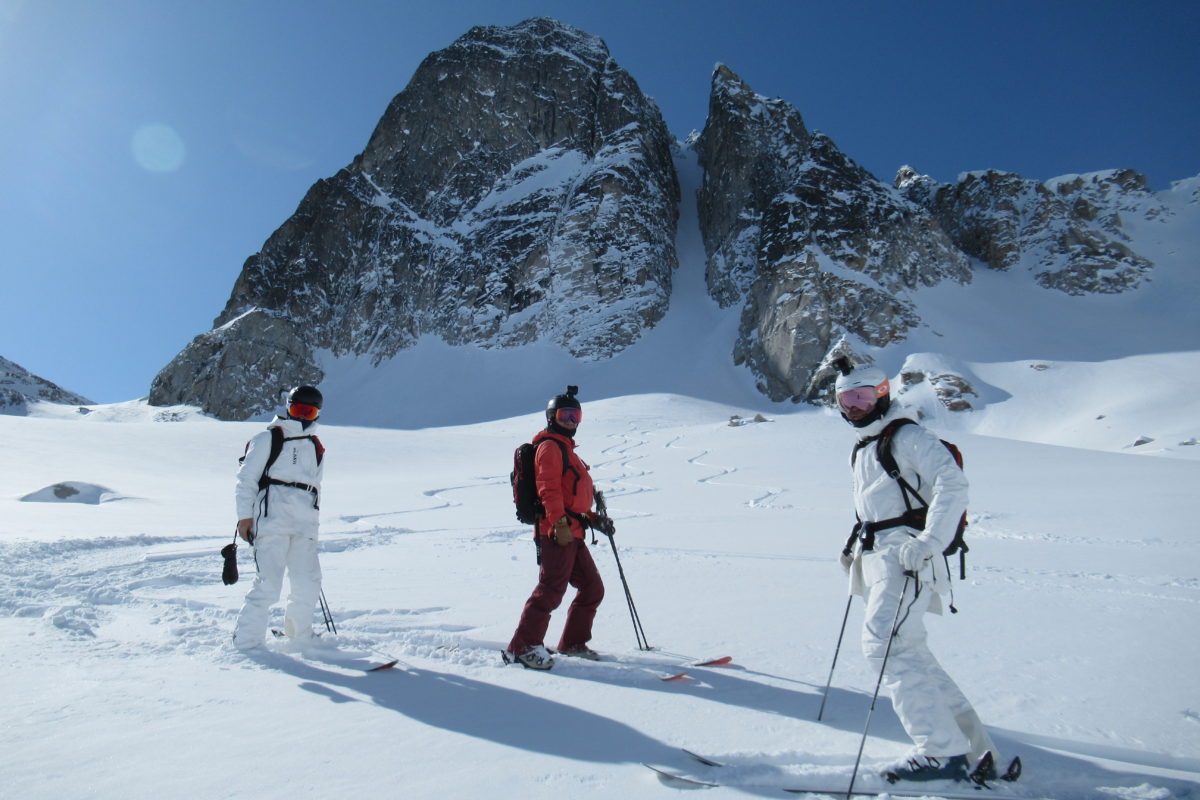
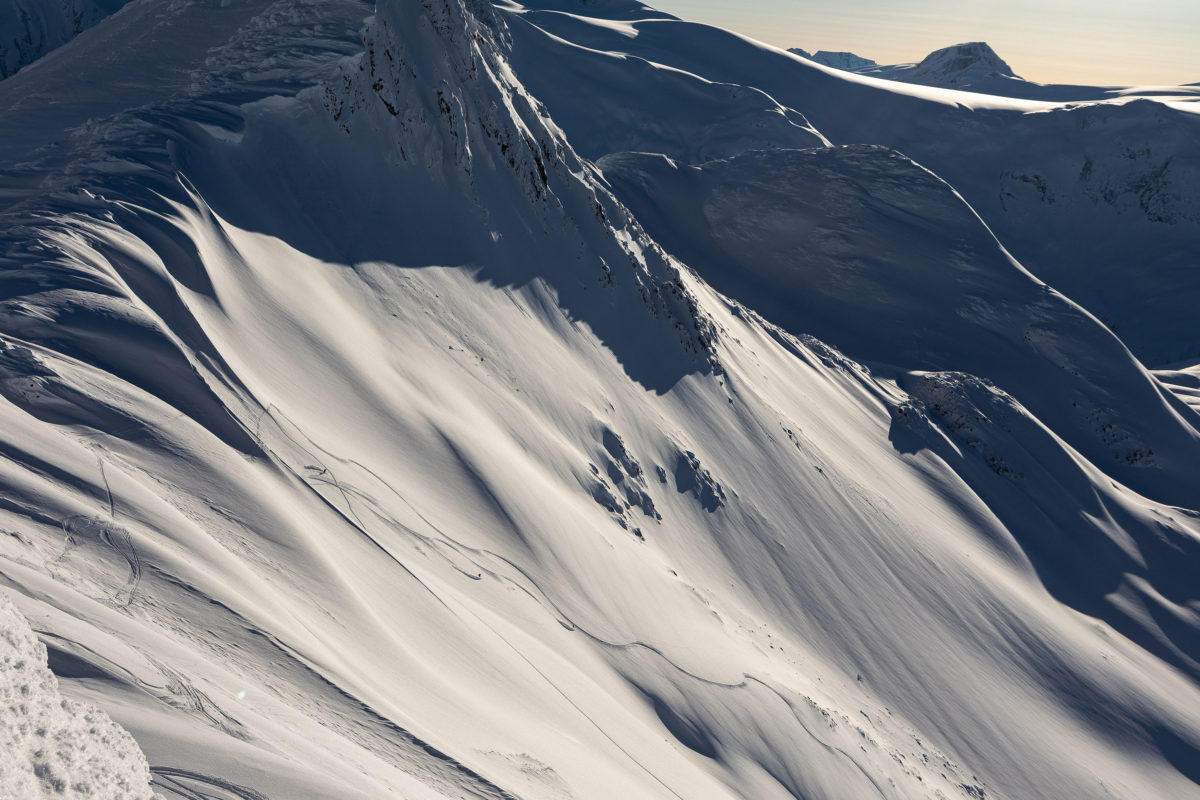
Although it looked flat, the slope was over 25 degrees, and with a light flurry of snow, I skied down an elevation difference of about 400m in one go. With the sharp mountains looming before me, my whole body was delighted by the feeling of skiing, which was completely different from that on the slopes
The skiing continues with a unique experience, including runs down narrow chutes and turns that seem like your legs will give out on a long course that goes on forever
Backcountry skiing by hiking can only get you one or two runs a day, so being able to ski multiple runs without having to walk is a complex joy, a feeling of gratitude and guilt
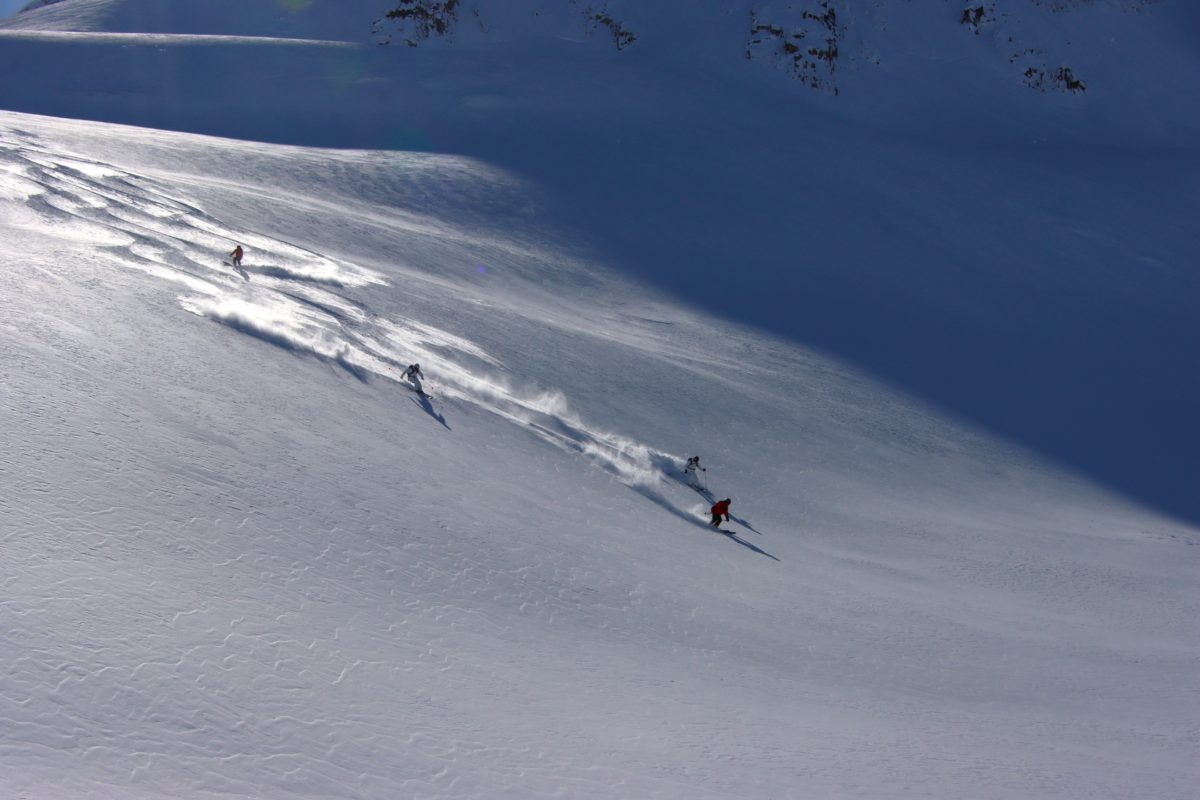
We finished with eight runs today. The weather looks good tomorrow as well. We could still ski, but the tour lasts for five days, so we need to adjust our schedule based on our physical strength. The total elevation difference over the five days is guaranteed to be 20,000m, but if we go over this, we'll have to pay extra. That thought crosses my mind when the weather is nice
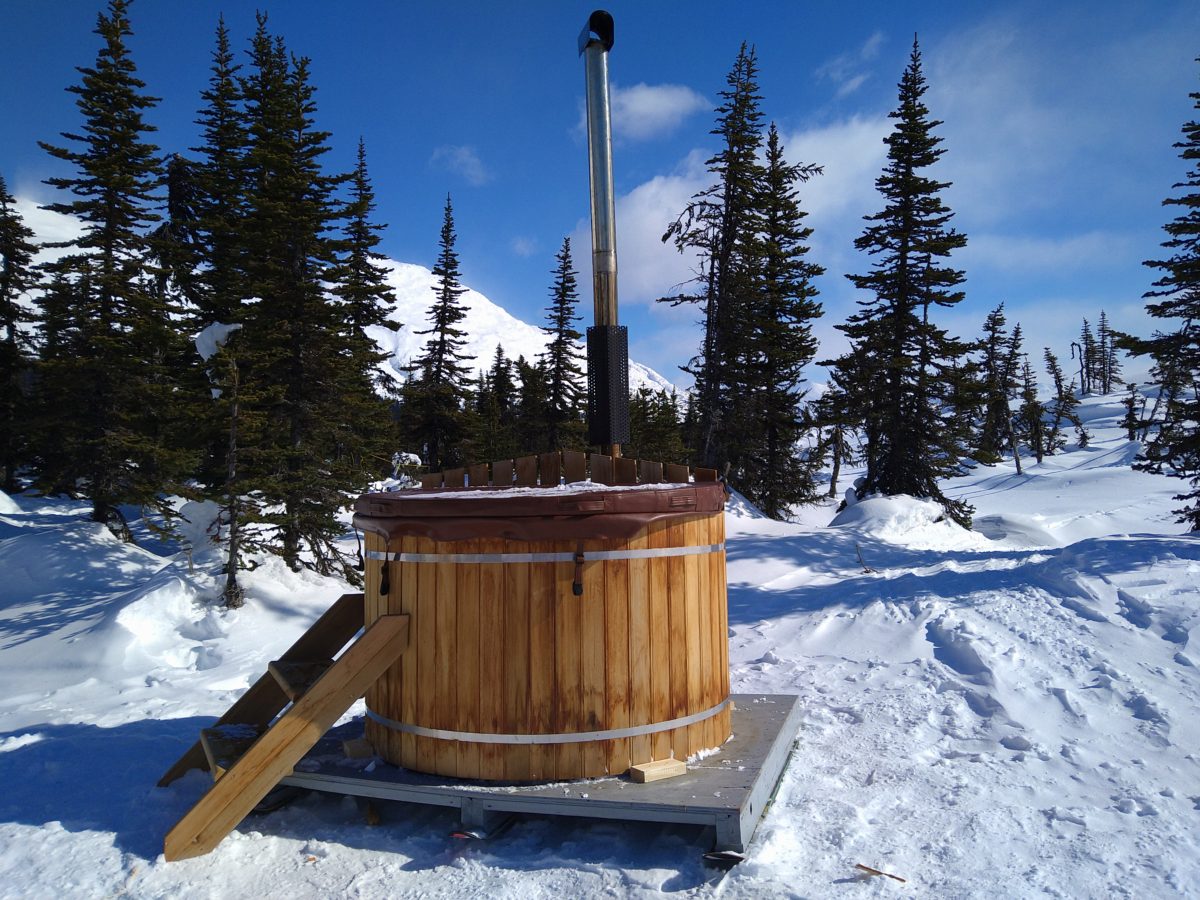
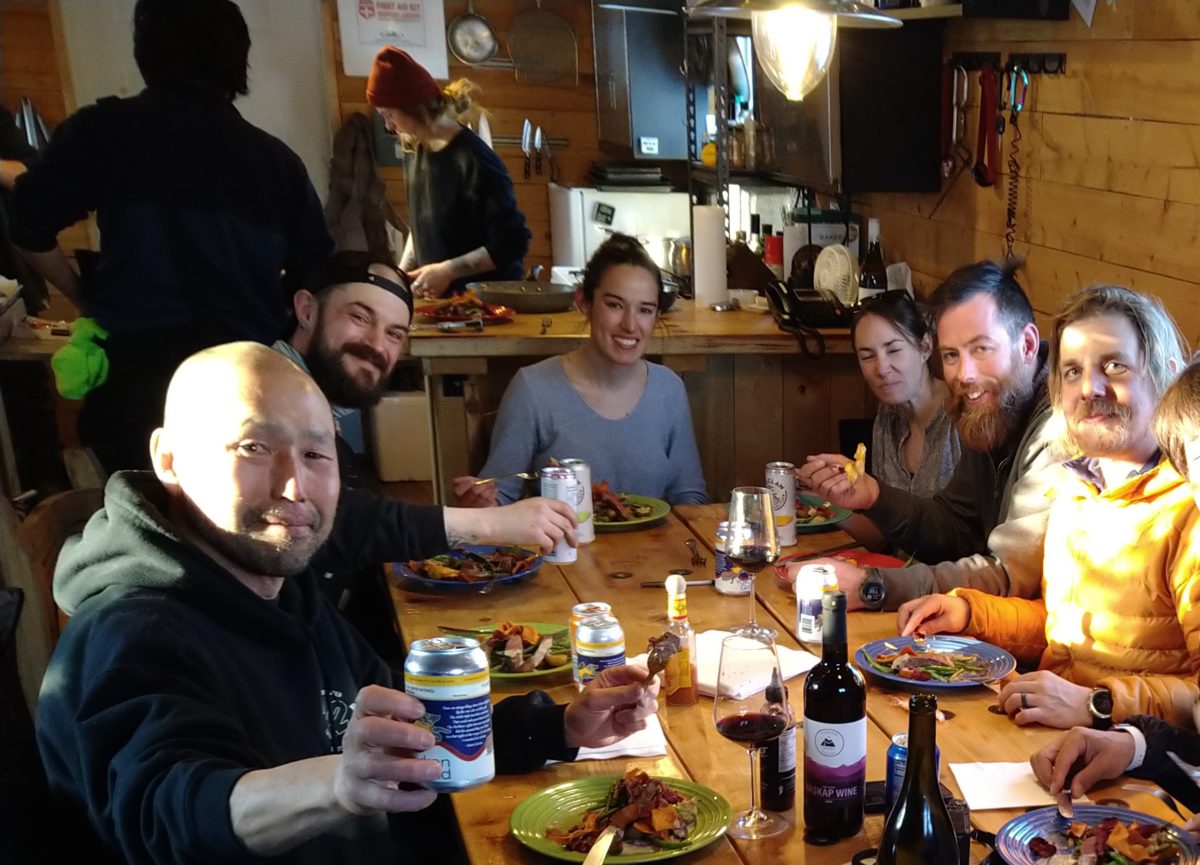
After the helicopter ride, we dived into the bath made from cypress. The staff heats the cold water every day using firewood to make it just the right temperature. There's also a dry sauna, which is great. By March, the days are getting longer in the far north. There's nothing better than spending time in the evening with a beer while the sun is still high in the sky
In the evening, we usually enjoy a chef-prepared dinner in the main cabin. However, on this day we decided to cross the US border and go to a restaurant in Skagway, Alaska. Passports are essential for crossing the border. Due to the impact of COVID-19, it took longer than usual, but we passed through passport control along the highway without any problems
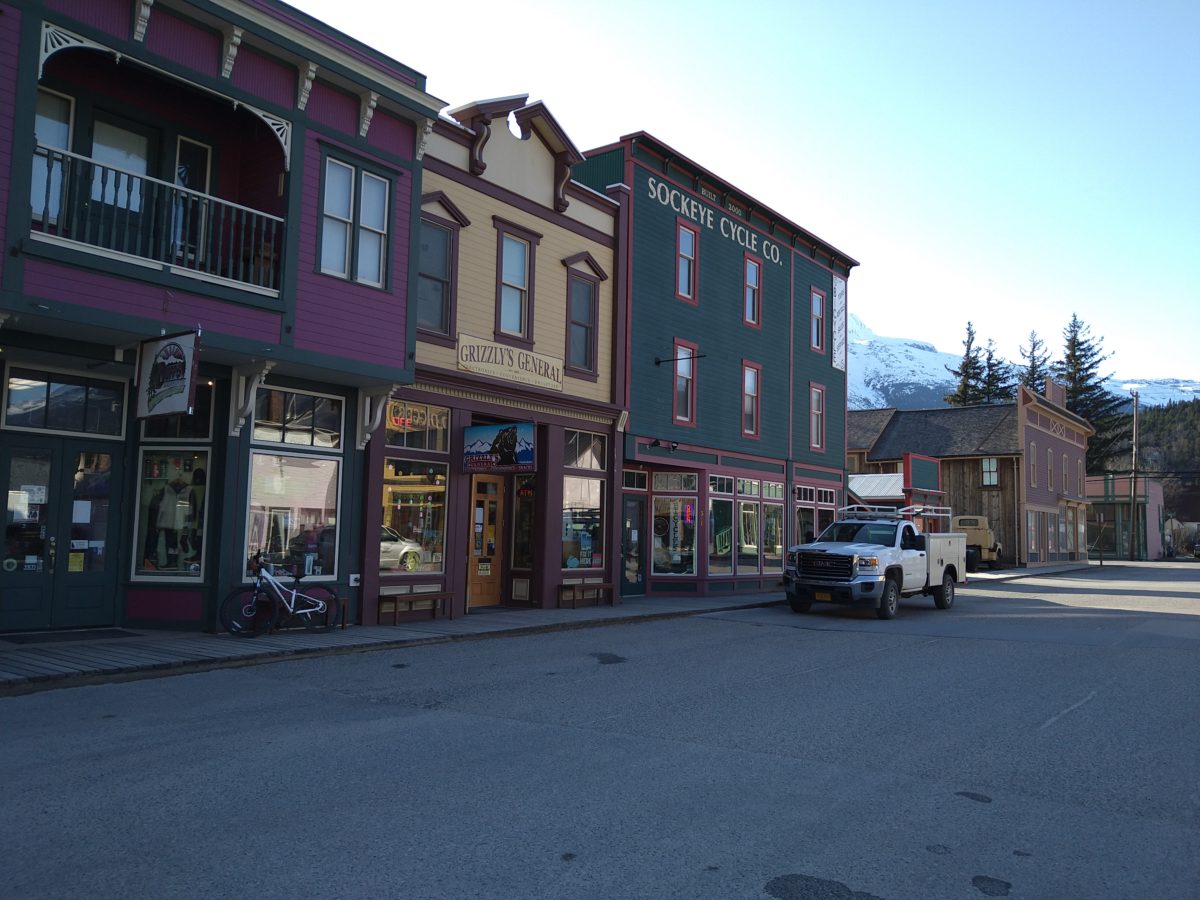
We arrived in Skagway, a port town that large cruise ships stop at in the summer. In this town that still retains the atmosphere of the Gold Rush era from over 100 years ago, we enjoyed some typical American hamburgers and steaks
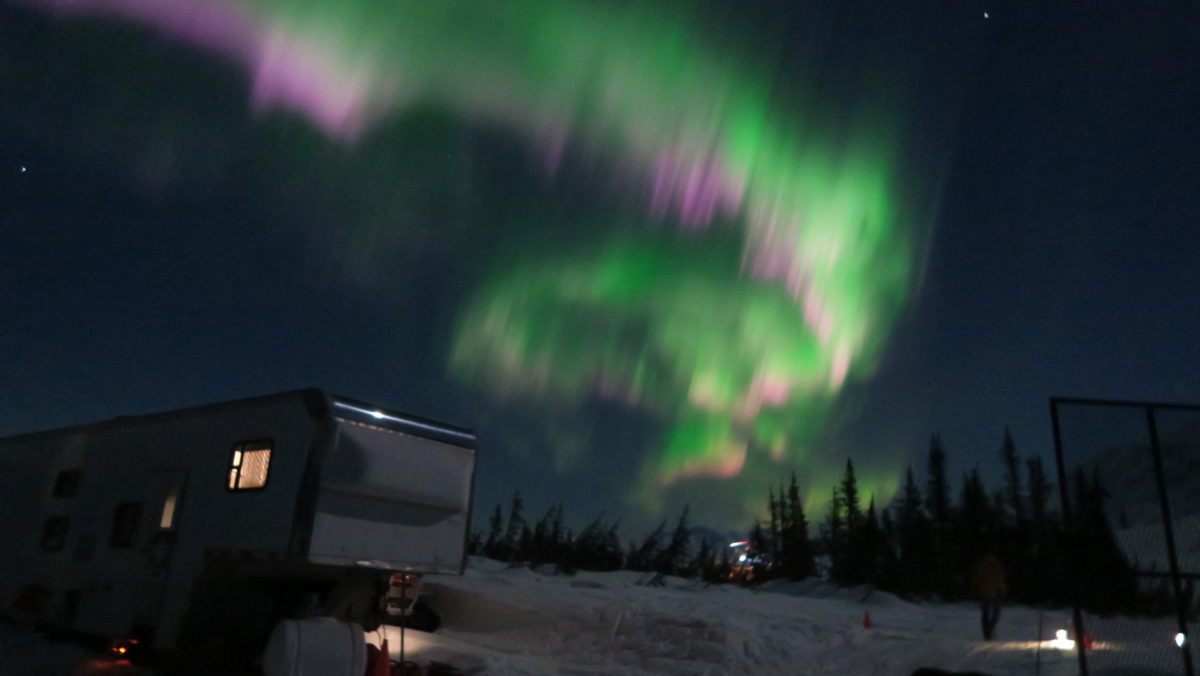
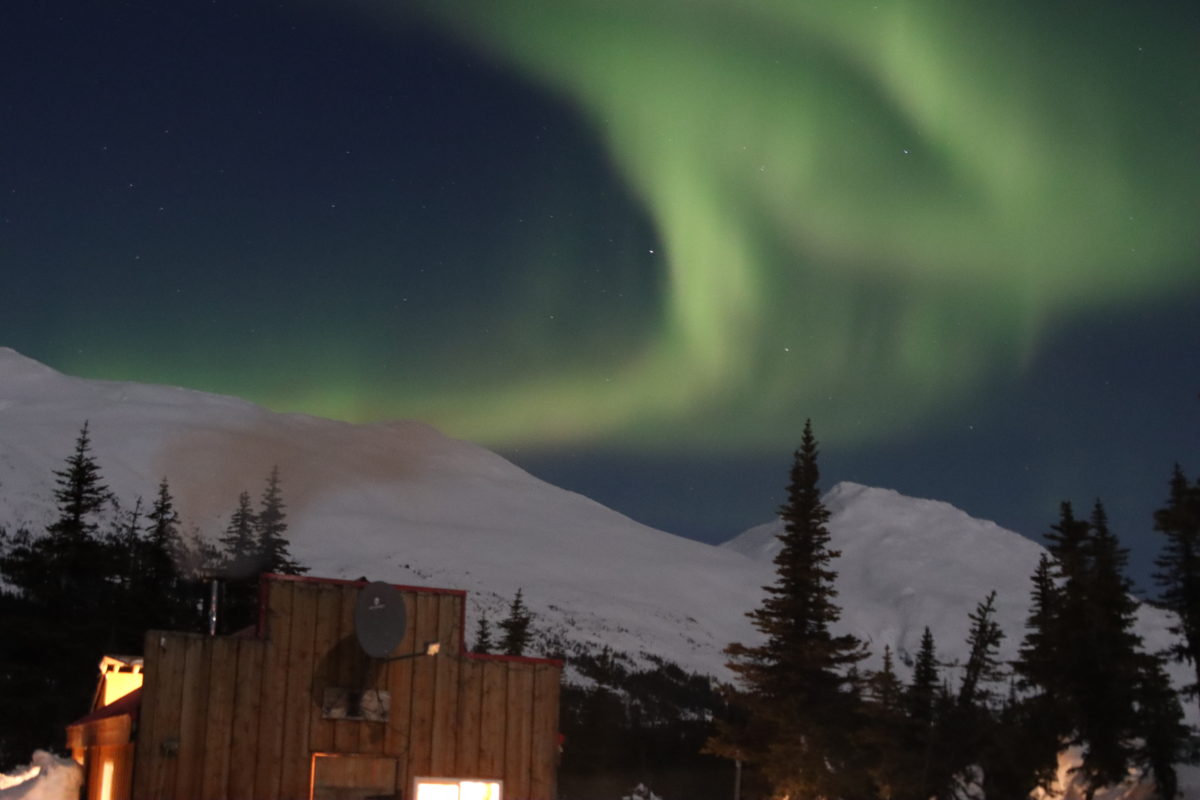
Returning from a few hours' trip to the US, I noticed a huge green curtain appear directly above the helibase. It was the aurora. It was a phenomenon that continued from the night before, but today the green drape was particularly clear. Soon, a mixture of purple, pink, and yellow lights appeared, and they began to sway with incredible force. The blur in the photo is not due to camera shake, but the aurora itself, which moved dramatically in a short space of time. It beautifully filled the sky, changing shape, and the spectacular show continued for over 30 minutes. It was too cold, below -20°C, to even put my hand out, but I couldn't help but look up, and it was an indescribably exciting moment. I felt lucky, but apparently this is not at all uncommon in the Yukon. Heli-skiing, sightseeing in America, the aurora... a very fulfilling day in the Yukon came to an end
As this was the first time we had Japanese guests since the COVID-19 pandemic, a welcome party was held on the last day. We were treated to whole roasted Alaskan king crab, sushi and steak prepared by a Japanese chef living in the area, and local indigenous people also attended, providing an opportunity for cultural exchange
In the end, over the course of five nights and six days, we skied almost the full required elevation gain of 19,500m and 30 runs. We encountered not only powder but also challenging snow conditions, but we were able to fully enjoy the magnificent natural scenery. The weather was sunny every day, and we even got the added bonus of seeing the aurora borealis on two nights.
We enjoyed an incredibly dynamic heli-skiing experience in a wilderness area 8,000km from Japan. It was definitely an experience of a lifetime.
STEEP Editorial Department (Photo by Hiroshi Owada/April 13, 2022)
Yukon Heli-Skiing - This is amazing!
1. Private/semi-private classes are the rule, with a maximum of two groups and four people per group
The helicopter is an Aerospatiale AS350, commonly known as Eystar, a small six-seater aircraft, and for skiing, the standard number of people on board is a pilot, guide, and four guests. Since operations are usually in two groups, a maximum of eight guests per day will have the vast slopes all to themselves. This is because grouping is very important in heli-skiing; it's fine if you're with people who are roughly the same skill level as you, but it can be stressful if you're not. For this reason, we limit the number of people (maximum eight) to make it easy to form groups with friends and acquaintances. This time we stayed at Tiny Town, but upon request, it is also possible to rent out a lodge in Skagway exclusively (for an additional fee)
Heli-skiing companies using large helicopters typically accommodate around 10 guests, with a maximum of three groups sharing one helicopter, meaning 30 people ski the slopes selected that day. This requires choosing slopes and bowls wide enough to accommodate 30 people, making it difficult to access narrow runs or ridges that are difficult to access with a large number of guests. Photos of multiple, uniform, short-turn tracks piled up one on top of the other are often seen in heli-skiing promotions, but this is also because making big turns can be a nuisance to other skiers. With Yukon heli-skiing, you can make bold, big turns without hesitation. The maneuverability of the six-seater helicopter means you often encounter adventurous slopes
2. The ski area is currently under development. Even general guests may be able to try their hand at the first descent
There are currently around 30 runs available for skiing. These are also under development every day, and at the time of our visit there were several runs that we were skiing on for the first time, and each time we did, we were naming them
3. The best snow conditions await you from March onwards
Unfortunately, the skiing season is very short, from March to early May. In January and February, the days are short and the temperatures drop well below minus 30 degrees, making the conditions unsuitable for skiing. This is unavoidable given the high altitude in the far north, but the snow quality is excellent
Guaranteed 20,000m elevation change over 5 days
It operates with two groups of four people per day, meaning that one helicopter can be used by two groups of one guide and four guests, for a total of 10 people, to ski around the area
A day's runs can range from 6 to 15, depending on the location, the skier's skill, and physical strength. While the number of runs is easy for skiers to understand, in the case of heli-skiing, it is calculated based on the elevation difference
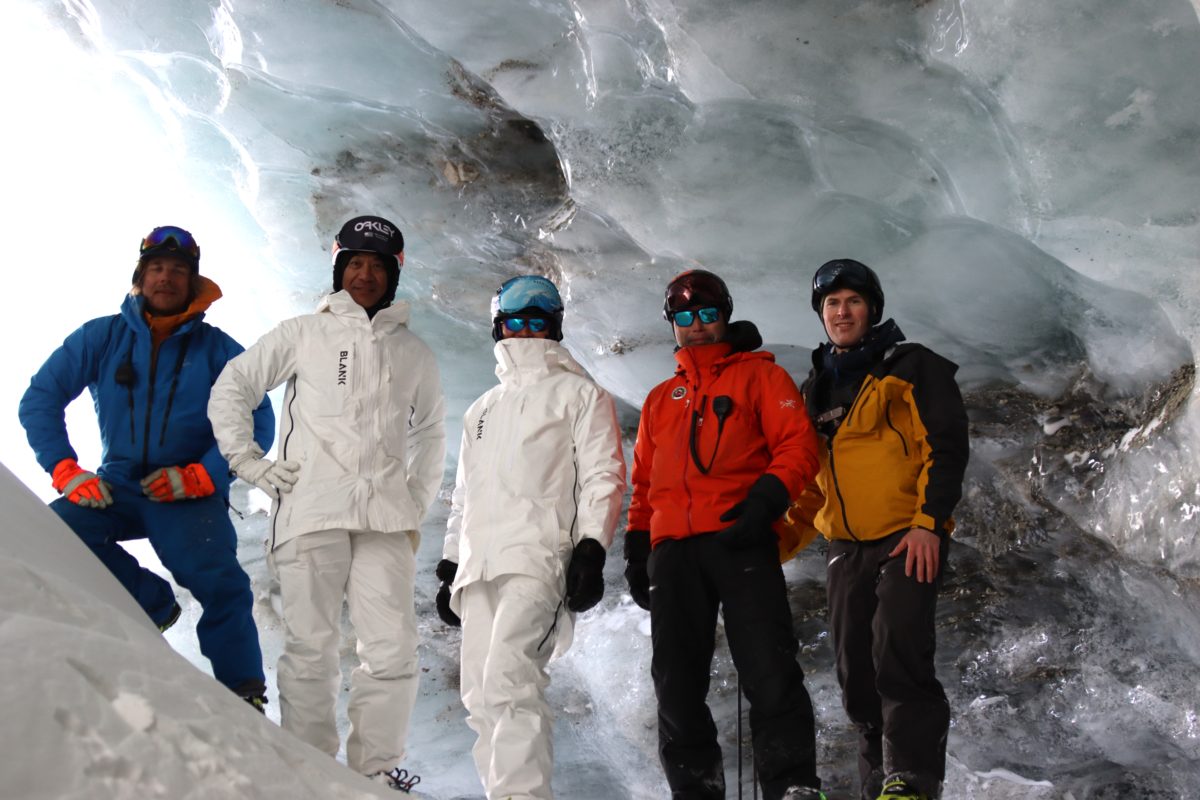
Yukon Heli's five-day course includes a base price that includes a 20,000m elevation gain. If you are unable to ski the full amount due to weather or other reasons, you will receive a refund, but if you ski more than the full amount, an additional fee will be charged
Although the weather was good for this interview, there is no guarantee that it will be sunny or that the helicopter will operate every day. Apparently, there are cases where the helicopter does not fly for two days during a five-day stay. On the other hand, when the weather is good, it seems that people concentrate and ski more than 15 runs in one day
All necessary equipment provided
If there is little wind and visibility is good, the helicopter will take off and the guide will escort you to the best location for the conditions of the day
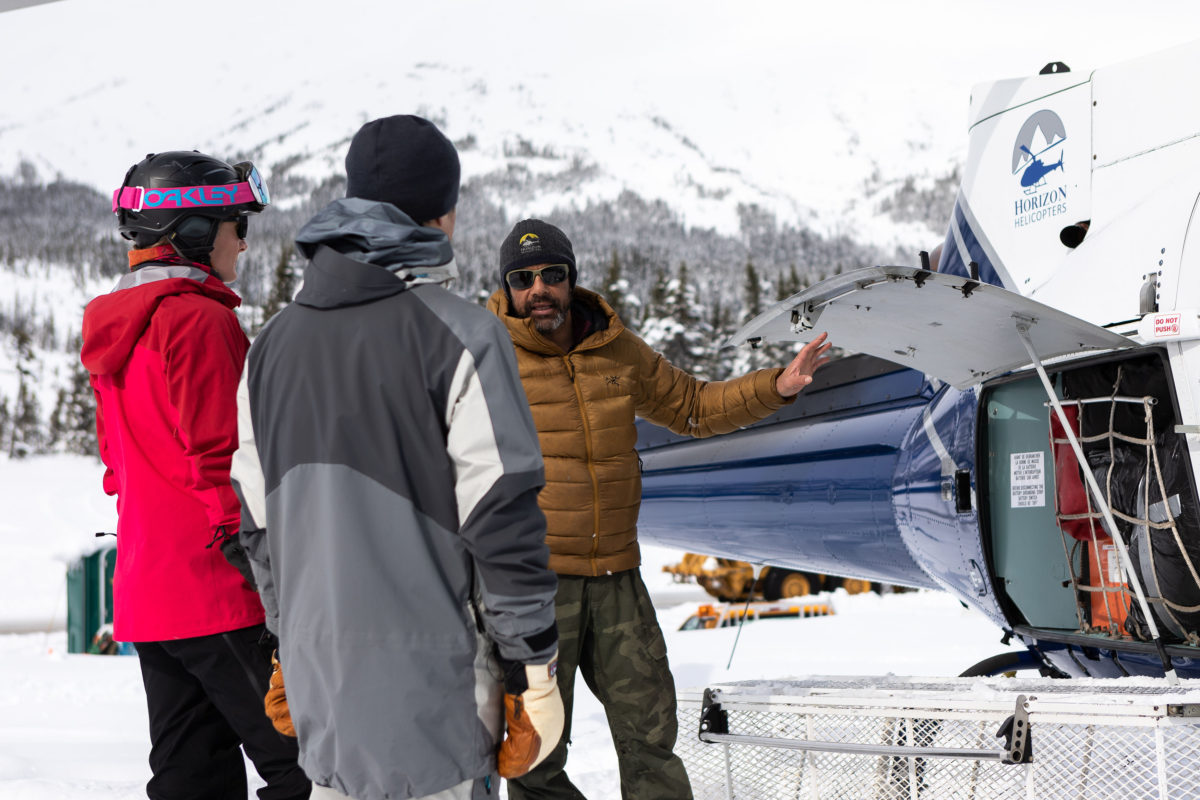
Guests are provided with an avalanche airbag and avalanche kit during their stay. The bag is a compact 15L type and is almost weightless. Water is always available in the helicopter as a sports drink. Toilets are only available once the helicopter leaves the pad, so guests relieve themselves in nature while skiing
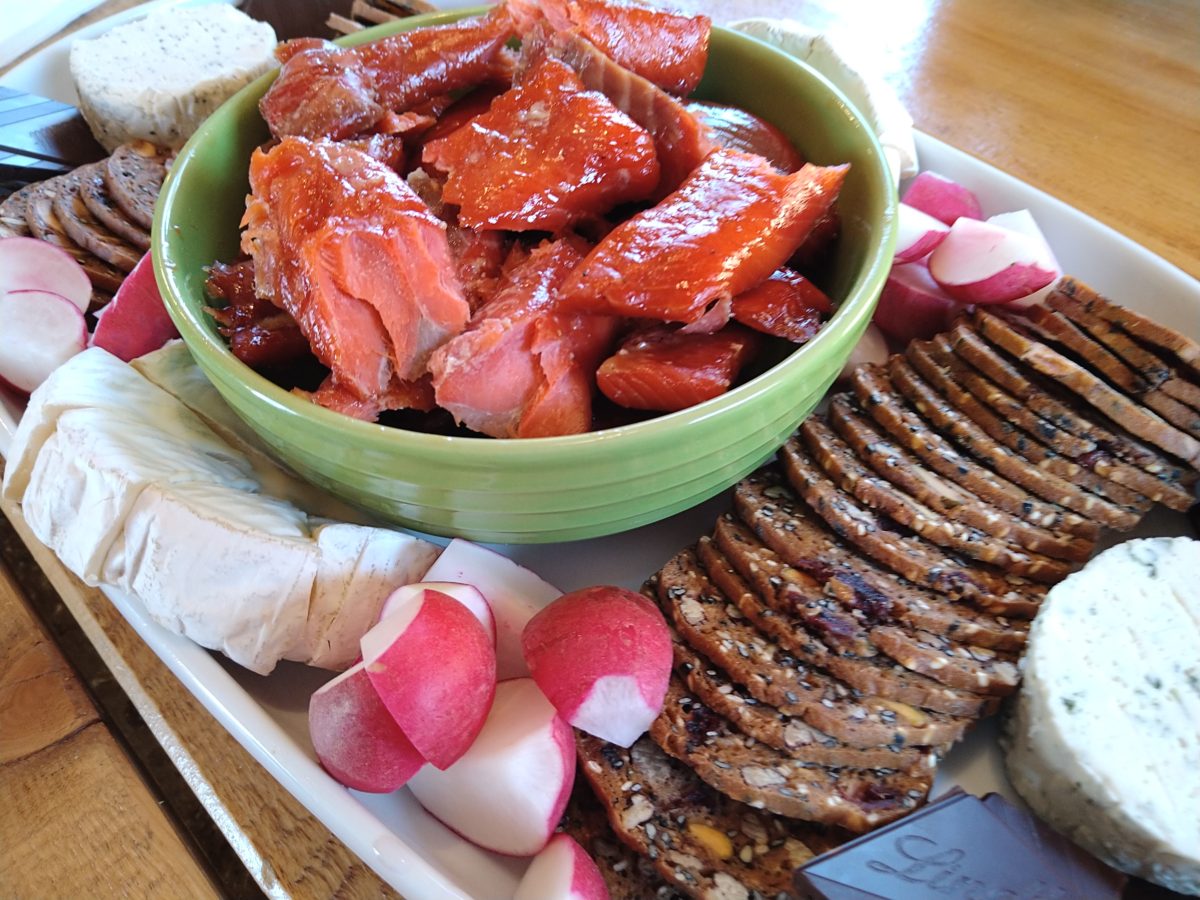
Lunch is served on the snow between runs and includes sandwiches, soup, hot drinks, fruit, cookies, etc. (The menu changes daily.) After the run, complimentary snacks that go well with beer are also provided
Costs and Japanese-speaking tours
There are 3-day and 5-day courses departing and returning to Whitehorse. Heli-skiing (guaranteed elevation gain: 12,000m/3 days, 20,000m/5 days), transportation from Whitehorse, accommodation, and meals are included. Alcohol is not sold, so you will need to bring your own if necessary
Additionally, there are tour dates scheduled once or twice a season with Jun Yanagisawa, a heli-skiing guide based in Whistler, Canada. For details, please see https://canada-info.jp/tour23/
Location and Access
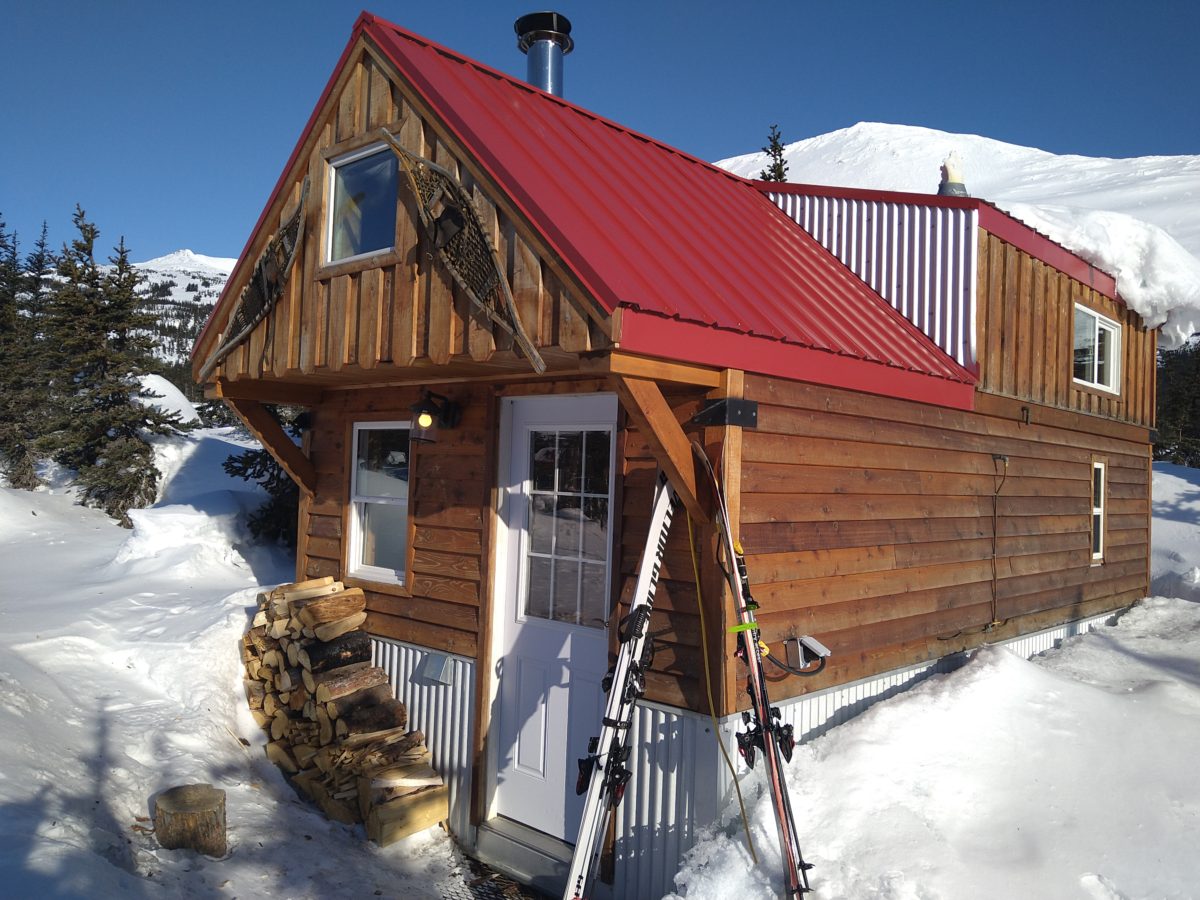
White Pass, home to Yukon Heliskiing, is a mountain pass between Whitehorse, the capital of the Yukon Territory, and Skagway, a port city in Alaska. It's about a two-hour drive from Whitehorse and a 40-minute drive from Skagway. When gold was discovered in the Yukon in the late 19th century, sparking North America's largest gold rush, people hoping to strike it rich traveled by boat to Skagway and then crossed the mountains into the Yukon. Many gold panners passed through here during this time. Today, the Klondike Highway stretches through the area. However, there are no towns here, and in winter, the land is covered in snow. Yukon Heliskiing builds small cabins and trailer homes in the wilderness during the winter. They call it "Tiny Town" and use it as a base for helicopter flights to the surrounding mountains
Yukon Heli Skiing: http://www.yukonheli.com/ (English)