

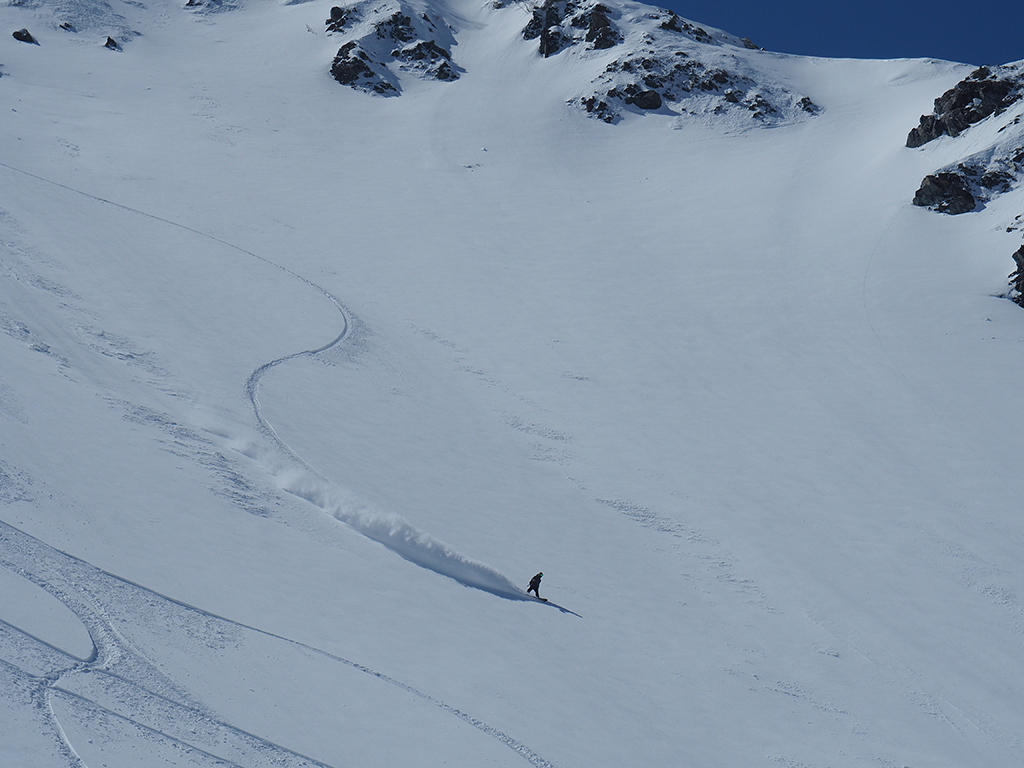
Rider: Yu Takeo
In the untouched snowy mountains, you never know when or where danger may lurk. Unlike ski resorts, there is no human-managed safety management, so in the backcountry, you need to predict and avoid danger yourself, and if you find yourself in a dangerous situation, you need to deal with it yourself. A professional guide shared basic knowledge about the dangers of the backcountry and how to avoid them
Backcountry risks you should be aware of
What are the possible dangers (risks) when skiing in the backcountry? Broadly speaking, these can be classified as: 1) dangers due to weather, 2) dangers due to geographical conditions, 3) injuries or illness, and 4) problems with equipment
1.weather
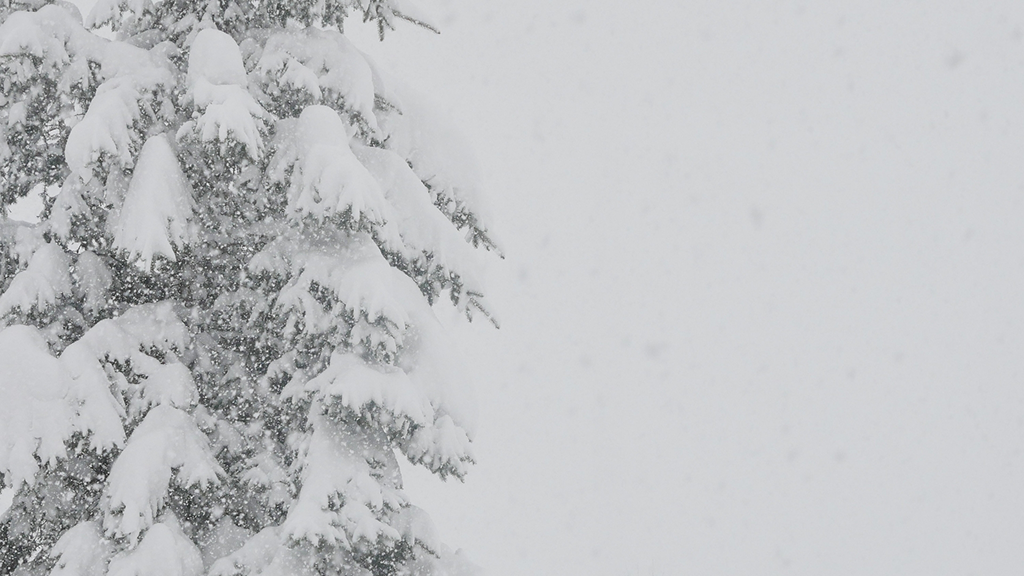
Whiteout
In the mountains, the weather can suddenly change, causing a thick fog or snowstorm that turns everything white, blocking visibility and causing a whiteout. Because it becomes impossible to distinguish direction, slope, or unevenness of the ground or snow, many people get lost, and in bad conditions, it can even lead to disaster. During a whiteout, your sense of position becomes impaired and you lose track of your direction, and if everything becomes white down to your feet, you lose your sense of balance and may even get dizzy
If you feel like a whiteout is coming, it's important to look at a map and keep track of your current location at all times. If you're unsure of your current location, the safest thing to do is to stay put and wait until visibility clears. Also, while it's assumed you can read a map, it's not difficult to turn back if you have a GPS (or a smartphone app). In that sense, having map reading skills and carrying a GPS will help you avoid risk
Blizzards and strong winds
Poor visibility is a problem, but the biggest risk is hypothermia. The wind lowers the perceived temperature, making it feel much colder than the predicted temperature. If your core body temperature drops below 35°C, your body's normal functions begin to be affected, and if hypothermia becomes severe, you could freeze to death
It is necessary to prepare for blizzards and strong winds by wearing layers suitable for snowy mountains. In terms of behavioral measures, if bad weather is forecast, you can reduce the risk by descending to a lower altitude and choosing an area with less wind, such as a forest
rain
The weather in the mountains is often changeable, especially in the spring, and it can sometimes rain. The biggest risk of rain is that the cold can cause body heat to be lost, leading to hypothermia. Getting wet can cause a significant drop in body temperature. An outer shell with strong waterproofing is essential. If rain is forecast, consider not going to the mountains
In snow and rain, your body temperature drops when the outside of your clothes gets wet, but in the backcountry, the inside of your clothes often get wet due to sweating while hiking. If you wear an inner layer with low breathability, the sweat can then cool due to wind and other factors, which can lead to hypothermia. Layering is important to avoid the risk of hypothermia
2.geographical conditions
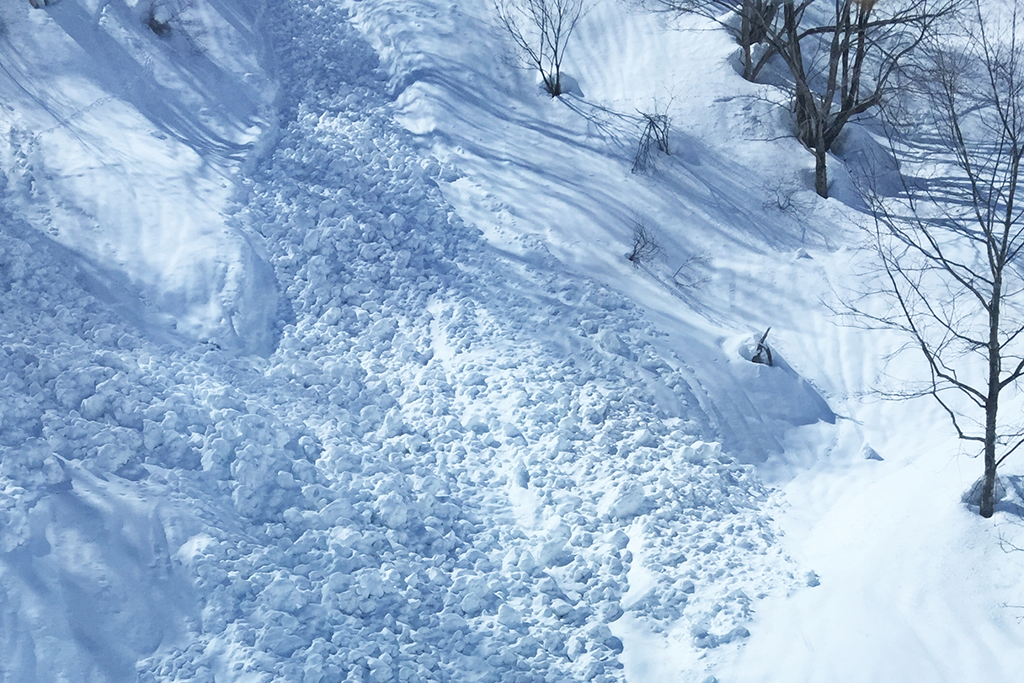
avalanche
In the backcountry, the most important thing is to be careful of avalanches. If you are caught in an avalanche, you could suffocate or be swept away by the avalanche and hit a tree or rock, potentially killing you
There is also the possibility that an avalanche you caused could harm someone. Many avalanche accidents occur due to human error. The main causes are people carelessly entering a slope despite unstable snow conditions, sliding down when there are people below and triggering an avalanche, or hiking up into an avalanche-prone area. However, no one can judge 100% whether an avalanche will occur or not. It is that difficult to assess changes in the snow and the condition of the slope
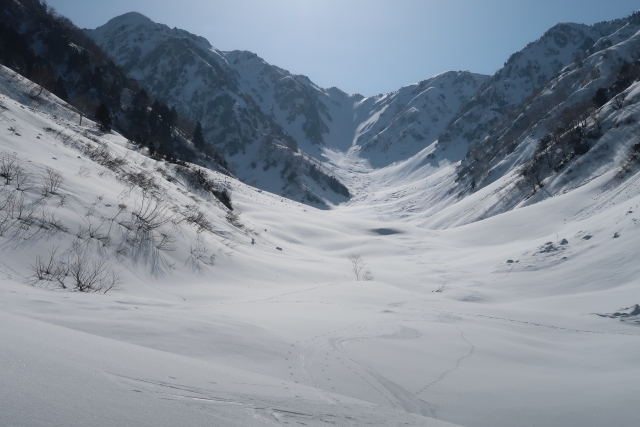
Therefore, as a basic rule, first learn the terrain where avalanches are likely to occur and the areas where avalanches will not reach even if they do occur. There are three types of avalanches: the area where they occur (the source area), the area where they flow down (the track), and the area where they stop (the accumulation area), and the general rule is to avoid these. Essentially, anywhere that is even slightly higher is safe
The most important thing to do to avoid the risk of avalanches is, first and foremost, to always assess your own position and the terrain before acting. This includes planning your route when hiking up, resting points, and regrouping points after skiing where you will split off from the group.
When traveling in a group, always ski individually. When stopping, choose a location off the fall line. Even if an avalanche occurs at the top of the slope, stop in a place where the avalanche will not reach your position. Also, keep an eye on the skiers even while waiting. This will make it easier to identify the approximate location of burial if you are caught in an avalanche. The general rule is to hike up and pass through dangerous areas individually. It is important to always create a situation where, even if you are caught in an avalanche, at most only one person can escape.
If you are not confident in your ability to judge the terrain, it is important to take advantage of a backcountry guided tour and get support from someone with considerable experience
Getting lost
Getting lost can lead to disaster, so it's something you want to avoid at all costs. Unlike in summer mountains, there are generally no markers on the route. You're free to go anywhere, but if you lose track of where you are, it can be difficult to descend. It's important to memorize the route beforehand, and to use a map and compass or GPS while you're out and about so you don't lose track of where you are. It's important to always know your route, and if you feel even the slightest bit unsure, return to a point where you can confidently determine your current location
3.Injury or illness
slipping down
There are two main types of falls:
1) Falling on a cliff or other drop;
2) Sliding downhill on frozen snow or granular spring snow;
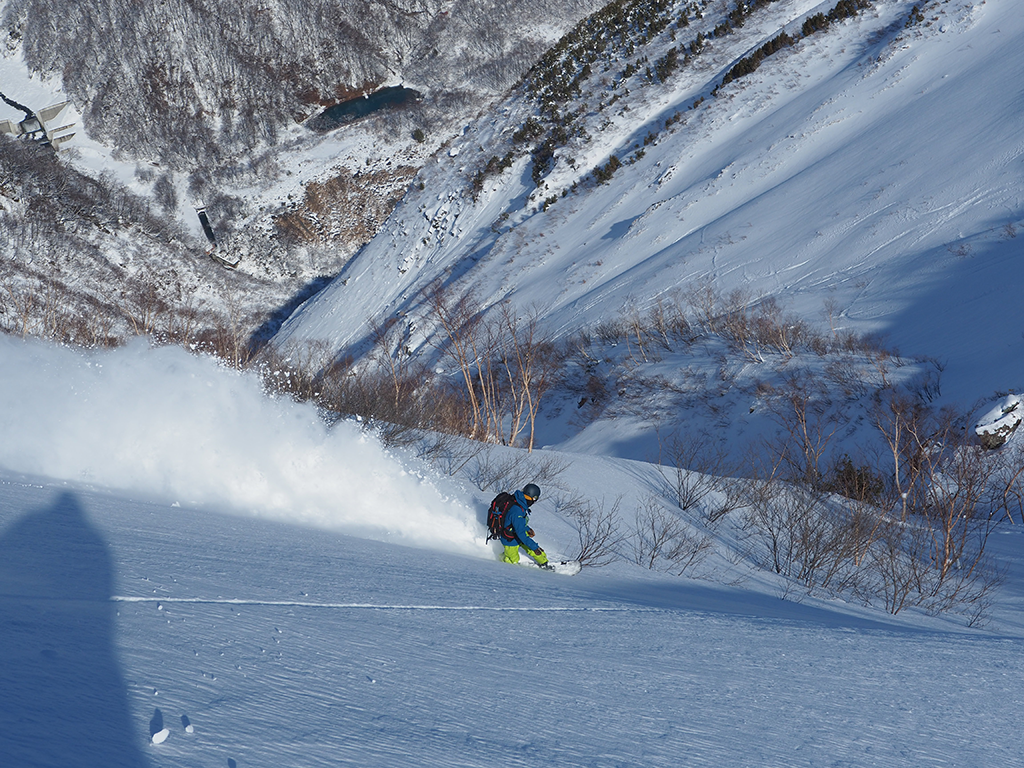
1) It's important to check large cliffs in advance using a map, but there are countless steps and cracks that aren't even on the map. It's best to know your route before you start, but there may be times when this isn't possible. On slopes with no-see-before-you-go terrain, approach at a speed that allows you to stop at any time, so you can stop before you fall. Furthermore, stopping at a place where you can move from the stopping point to a place where you can continue skiing is a good way to prevent falls in advance.
② When you need to slide down an icy slope where your edges don't work, use the toe edge of your snowboard and, if you have an ice axe, use it effectively to descend the slope. This is because edging is weaker on the heel side, increasing the risk of falling.
On skis, slowly slide sideways or diagonally downhill while adjusting the pressure on the inside edge of your outside ski and the outside edge of your inside ski. Depending on the location, you may need to use kick turns to change your position as you slide down.
Falls on granular snow often occur while hiking up or during breaks in the snow during spring skiing, when you are putting on or taking off your skis on the slope. To avoid this, put on crampons early and consider where to put on and take off your skis. Keeping a wider field of vision and skiing a little more conservatively than when skiing on the slopes will make it easier to avoid accidents.
Injuries and fractures due to falls and collisions with trees or rocks
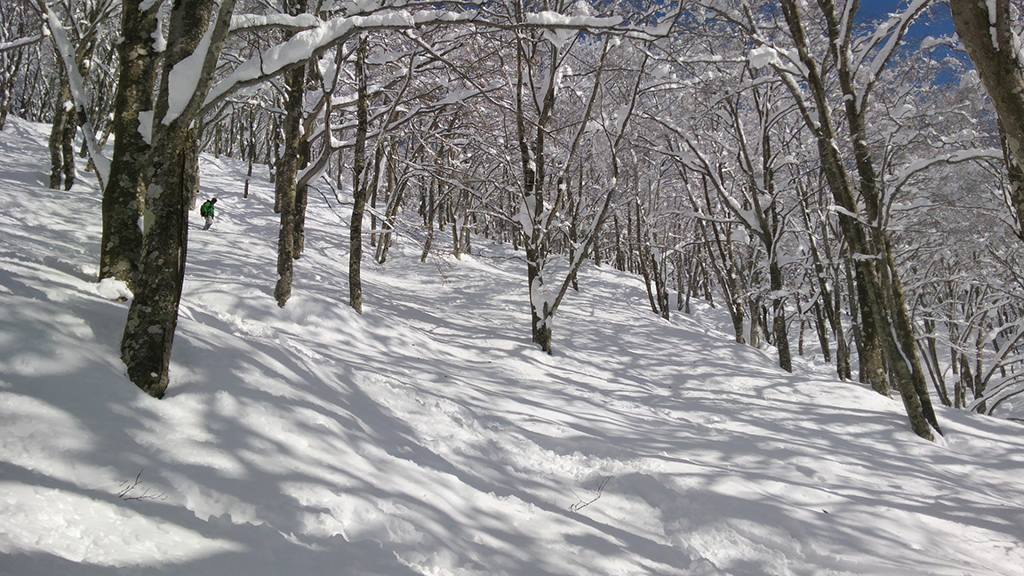
These are likely to occur when you fall while skiing or hiking, or when you get caught in an avalanche. You may not be able to adapt to changes in the snow conditions and crash into a tree or snow block. Wearing a helmet is essential in the backcountry.
If you are injured and bleeding, stop the bleeding. For fractures, sprains, etc., it depends on the situation, but the basic rule is to immobilize them with whatever you have. Always carry a first aid kit and be familiar with basic first aid techniques. If you are injured to the point where you can't move, or if you have potentially fatal injuries such as head or cervical spine injuries, do not try to move and call for helicopter rescue. Mountain insurance is essential for such unlikely events.
frostbite
In the backcountry, frostbite often occurs on exposed areas such as the cheeks, nose, fingertips, and toes.
Even if your body is only slightly cold while hiking up, exposed areas are exposed to wind and snow. It's also possible to get frostbite without realizing it, so it's important to keep your skin covered.
When it's cold or windy, you can prevent frostbite by keeping your skin covered, keeping your fingertips moving, and drinking warm drinks. If you do get frostbite, first aid is important: don't warm the area too quickly; warm it with lukewarm water or body temperature, and don't stop treatment halfway through.
4.Tool trouble
The board was washed away, buried and can't be found
Losing your skis is a common problem for skiers. In powder snow, your skis can slide off the snow, making them difficult to find once they're lost. If you can't find them, you should plan your descent.
Snowboarding is possible if someone in your party has snowshoes, but without snowshoes, it's difficult to move around barefoot. You'll need to either create something like simple snowshoes using a shovel frame or poles, or work together to pack the snow down enough that you can walk barefoot before descending. Attaching a leash cord is a preventative measure, but leash cords also have drawbacks in the event of an avalanche, so it's a tricky decision. Increasing the release value of your bindings can also help prevent this, but it can also increase the risk of injury if you fall.
My goggles became foggy and I couldn't use them
On snowy mountains, goggles often fog up, obscuring the slopes and routes, causing inconvenience. Goggle fogging is caused by the temperature difference between the inside and outside of the goggles. The air inside the goggles is warmed by your body heat, while the outside air is cold. This temperature difference causes fogging inside the lenses. Losing your field of vision slows down your ability to spot unevenness on the slopes, increasing the risk of falls.
Depending on the conditions, one strategy is to use sunglasses instead of goggles while hiking, and then switch to goggles when you're ready to ski. It's a good idea to bring spare lenses with you when you're in the backcountry. Recently, magnetic lenses are available for easy lens replacement, so it's convenient to replace them if they fog up. Many high-end models also have anti-fog coatings built into the lenses, making them less likely to fog up. At worst, you can ski down the mountain slowly wearing sunglasses, so don't try to force yourself to descend the mountain wearing foggy goggles.
Gloves get wet and cause frostbite
When your skin gets wet, it loses body heat. Bring spare gloves with you when you go into the backcountry and change into new ones as soon as they get wet. As a general rule, gloves made from genuine leather are best as they are extremely waterproof. We recommend genuine leather gloves that don't get wet to prevent frostbite. They are soft and adapt to your hands with use, and if properly cared for, they will last a very long time
The binding broke
If your bindings are severely damaged on the mountain, you will be unable to ski and will be in trouble. For those who use skins, even a small damage can make it difficult to walk. To avoid this, first check in advance for loose screws and deterioration due to aging.
If your bindings are damaged on the mountain, first aid can often be done with cable ties, duct tape, wire, etc., so bring these items with you. Repair the first aid and descend the mountain using a safe route without overexerting yourself.
❖ The person who taught me
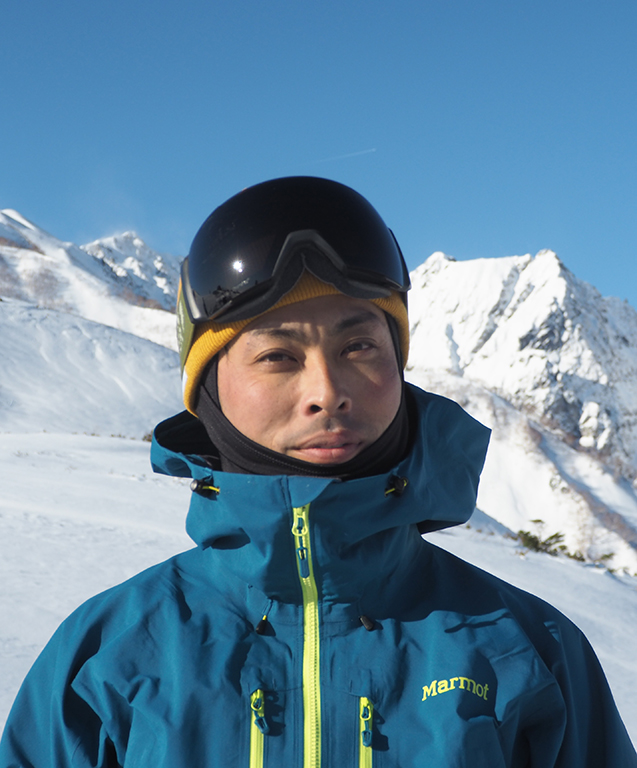
Bantei ~Bamboo tail~
Representative Chief Guide
Yu Takeo
A professional snowboarder with 20 years of experience as a guide based in Hakuba. His solid skills and accurate guiding have earned him the trust of many. In addition to guiding, he also focuses on backcountry safety awareness activities, developing beacon checkers and providing consulting services to resorts.
Qualifications:
Japan Mountain Guides Association certified ski and snowboard guide, stage II
; Japan Mountain Guides Association certified mountaineering guide, stage II
; Shinshu mountaineering guide
; WFA Wilderness First Aid
; Japanese Red Cross Society first aid paramedic.
❖ COLUMNS
Beacon checker developed by Yu Takeo
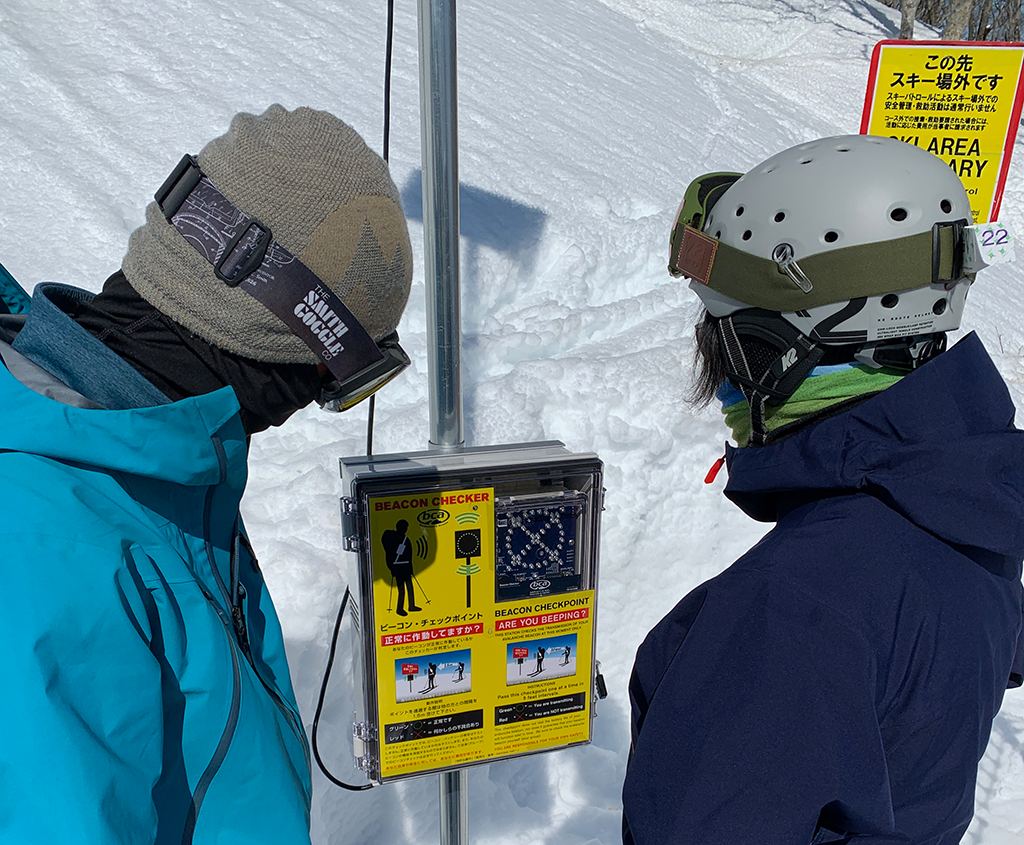
Avalanches are a major risk in the backcountry, and a beacon is an essential item for avalanche rescue. When multiple people enter the mountains, a group check is conducted at the entrance to check that the beacon is working properly, but sometimes people go alone or due to human error, the check is not completed or is forgotten.
The beacon checker prevents this from happening. When you pass in front of this device, you can instantly see whether the beacon is turned on or off. The device allows you to visually check by automatically displaying a circle or an X on an electronic display board.

Originally, bca had released a beacon checker, but conventional beacon checkers required a power source in the mountains, making it difficult to install in locations where they would actually be effective. To solve this problem, bca's headquarters in the US and K2 SKI, which handles the bca brand in Japan, collaborated to develop a standalone beacon checker that runs on solar power (sunlight). This was developed by backcountry guide Yu Takeo
"We developed this because there have been cases where people have been caught in avalanches because they forgot to turn on their beacons, and we wanted to prevent these accidents and also raise awareness among people who enter the mountains without proper precautions. We started using it in the Hakuba and Myoko areas from the 20-21 season, and it worked without any problems throughout the season. We hope to gradually increase the number of areas where it is installed. We hope to reduce avalanche accidents even just a little! With that in mind, we are calling on ski resorts to introduce it."
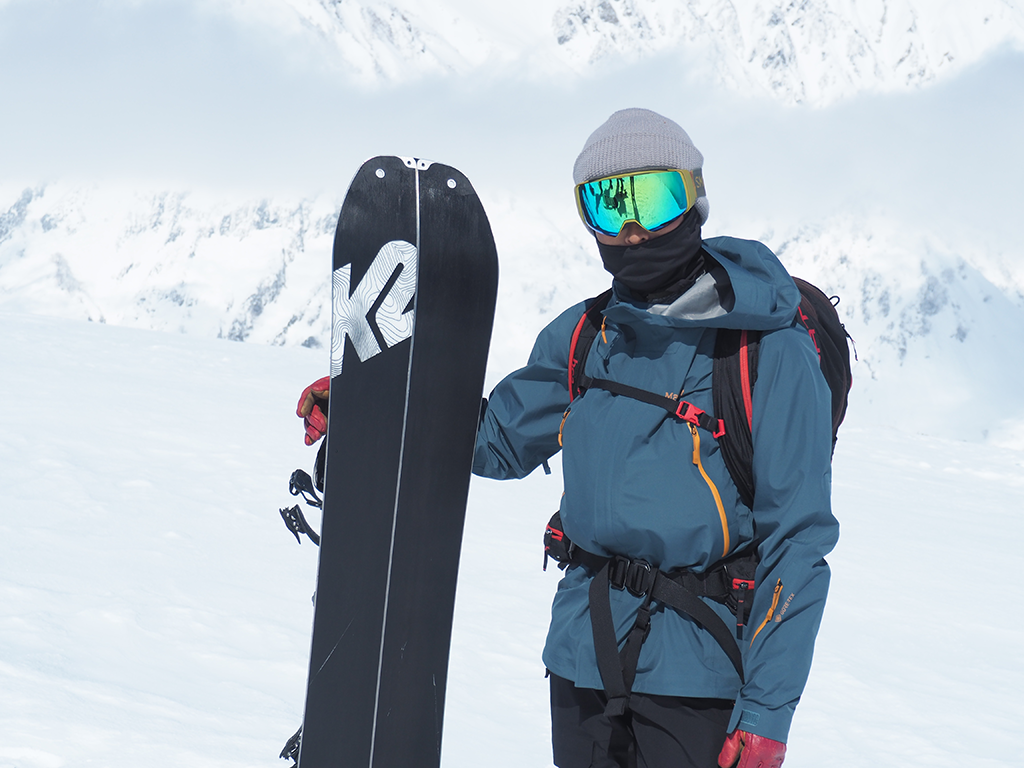
There are countless risks in the backcountry, but improvements are also being made to improve safety. Please understand the risks in the backcountry and enjoy the mountains with a strong sense of safety