

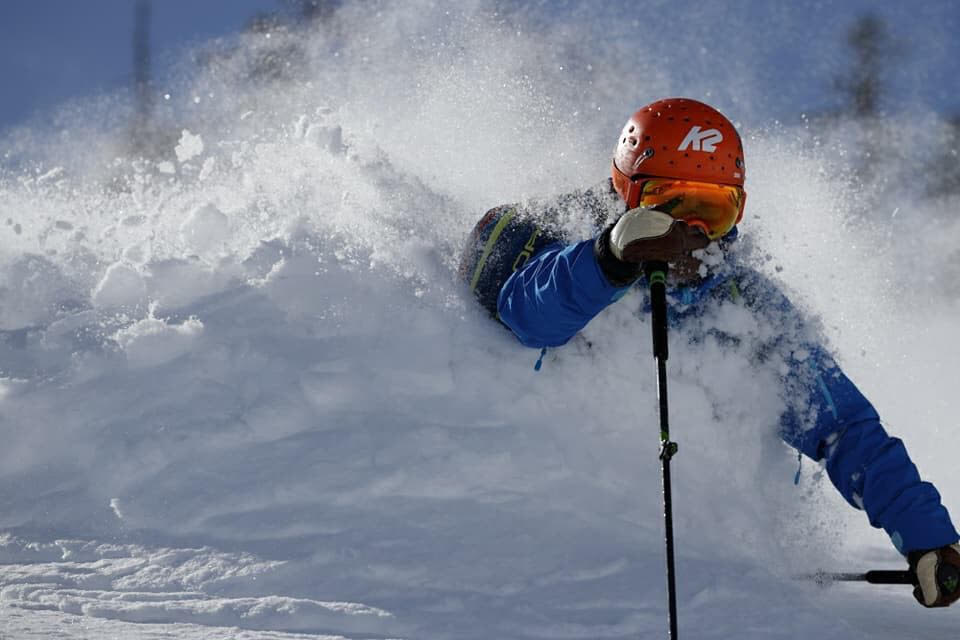
The backcountry environment has changed dramatically in the last 10 years.
It's no longer uncommon to see skiers enthusiastically heading to the backcountry, equipped with safety gear such as helmets and beacons.
Amidst this movement, "Kagura" in the Yuzawa area of Niigata Prefecture has been attracting considerable attention in recent years.

At Kagura, during peak season in January, the 5th Romance Lift at the top of the ski resort opens, and a whole new world unfolds beyond the top of the slopes
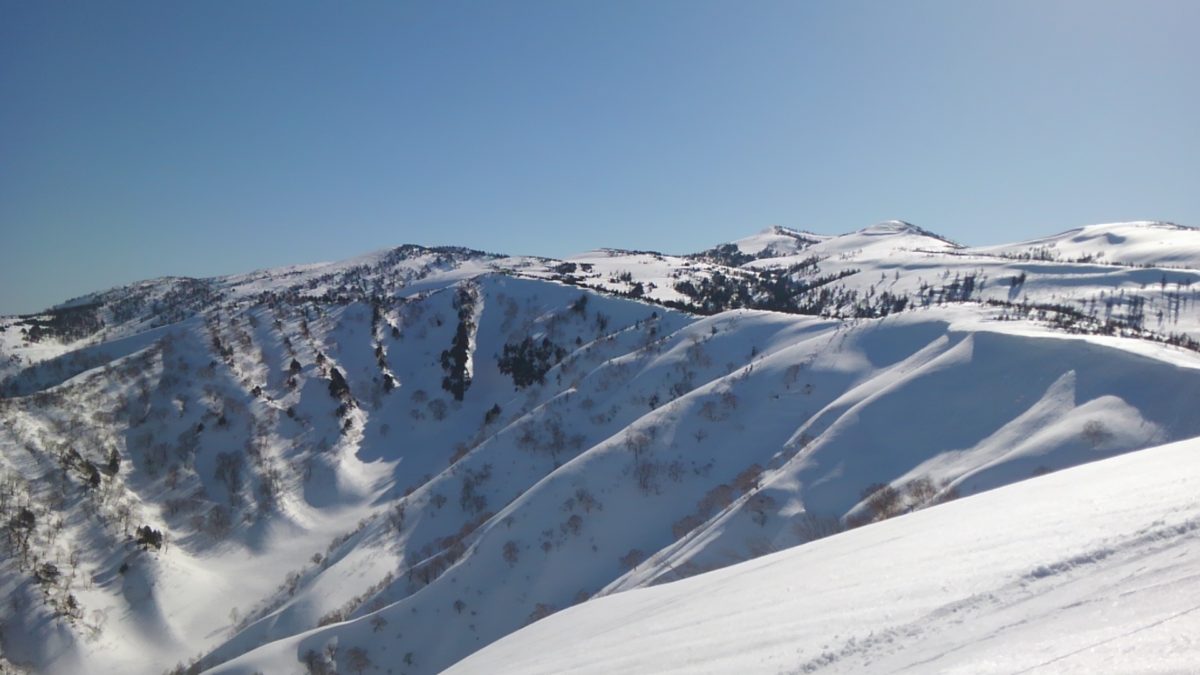
Nicknamed "Goroma" by regular skiers, the gate set up just beyond the lift leads to the vast snowfield of the Kaguramine mountain range, which continues on to Mount Naeba. When fresh snow falls, it naturally transforms into a superb powder land. With a guided tour, even powder beginners can experience the vast world of backcountry, making it a frequent destination for many powder lovers
Kagura used to be known as a ski resort for its early season skiing and spring skiing. However, former Kagura manager Minoru Nakazawa has dramatically changed the resort's atmosphere, saying, "The powder snow in the peak season is exciting."
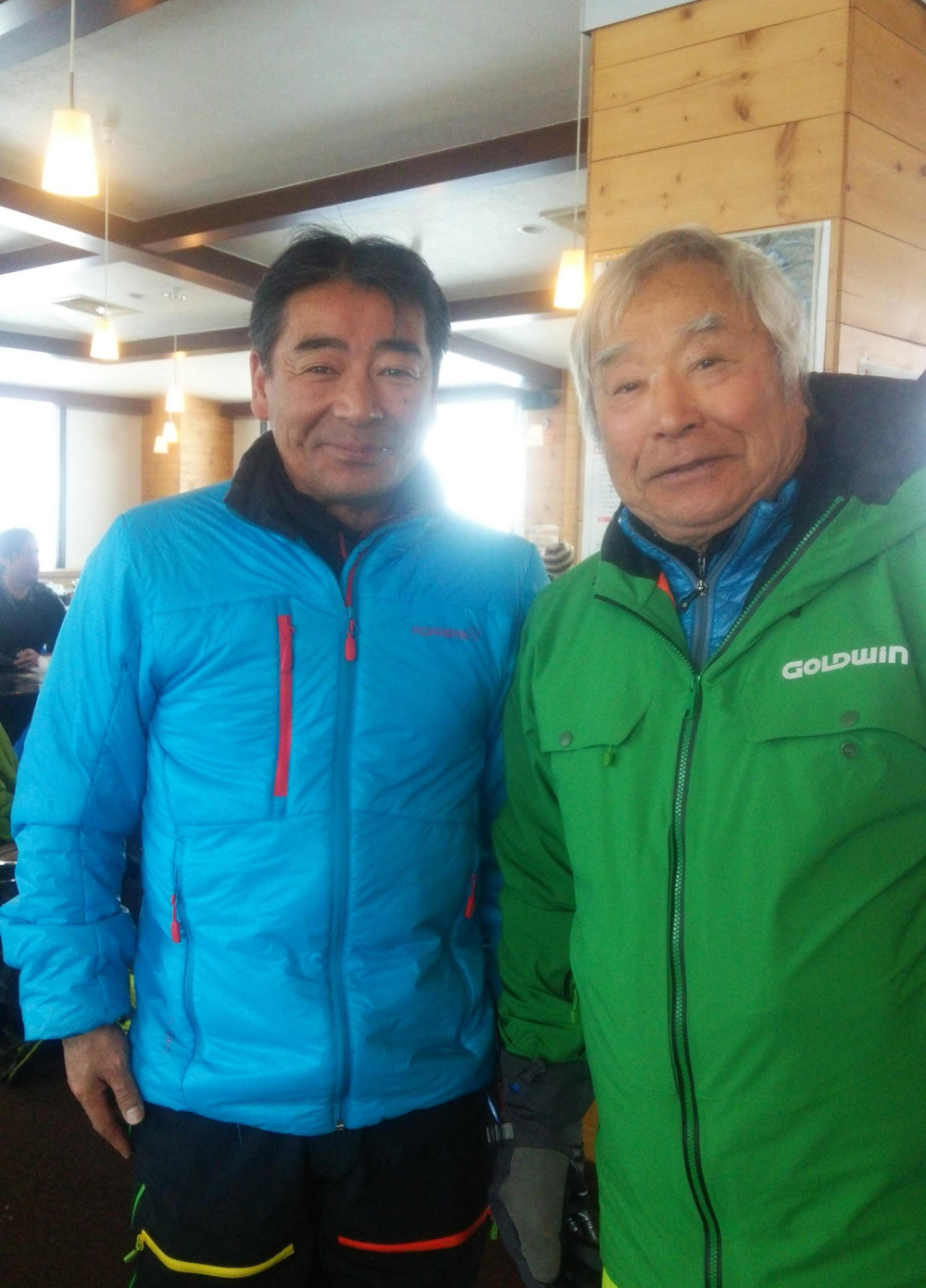
From 2005 until his retirement in 2016, Mr. Nakazawa served as the general manager of Kagura Ski Resort (Prince Hotels Co., Ltd.), overseeing the resort's management. Even after reaching retirement age, he remained at the ski resort as sales manager under special arrangements, striving for further development of the backcountry environment. However, he completely retired from the company in June 2020.
During his 15 years as top executive, Mr. Nakazawa implemented countless innovative initiatives. Wanting to learn more about them, we interviewed Mr. Nakazawa about the evolution of Kagura's backcountry.
There, we found the trajectory of "the man who created Kagura."
(Interview recorded in August 2020)
When the ski boom was over and the core skiers were the focus, we thought about what we could do in Kagura
What started it all
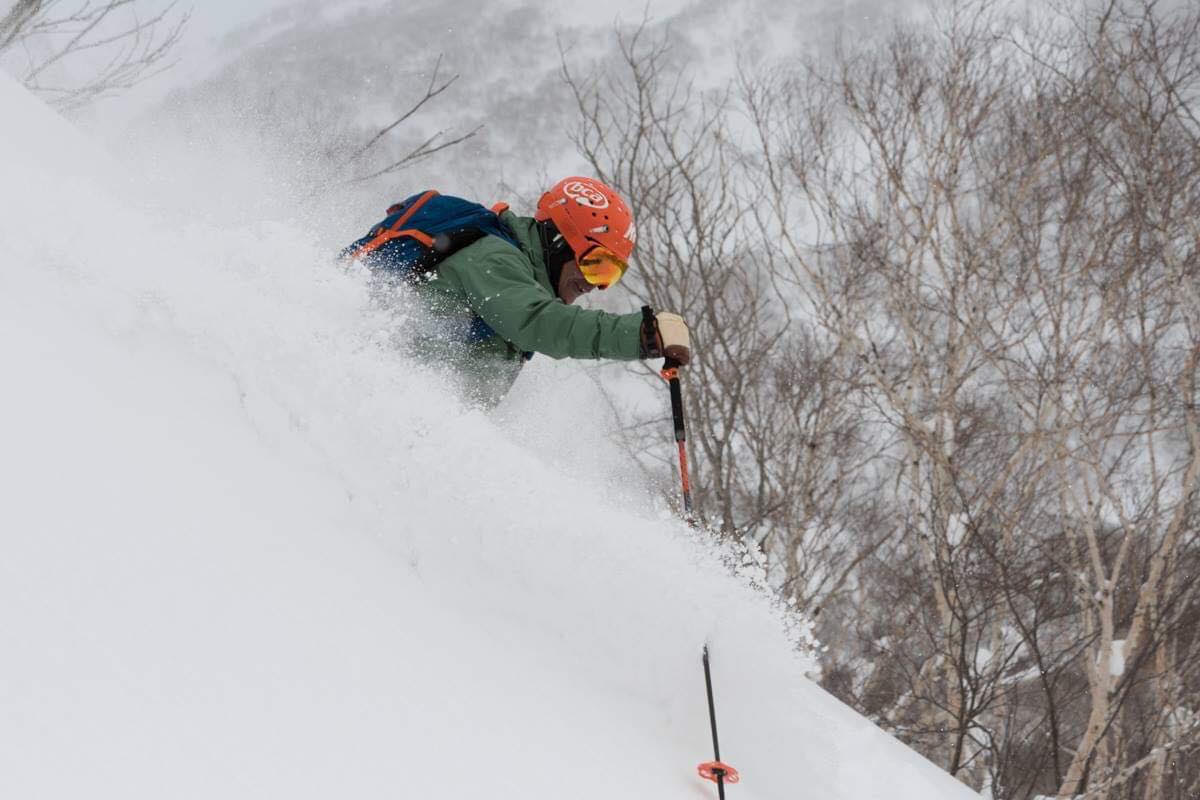
Kagura has now become a hugely popular field that attracts everyone from backcountry beginners to experts. But what was the background behind Kagura becoming a place that has attracted the devotees of freeskiers, to the point that it can be called a mecca for backcountry and powder snow?
"Before the powder snow trend really took off, the local Mitsumata Tourism Association was running ski tours in this area. They even did heli-skiing. I participated every year since I was living in Naeba, and I thought the scenery was great and Kagura was a wonderful mountain. Looking at the north slope, I would think, 'It would be amazing to ski down here.' It was
around that time that I started thinking that while Kagura is great in the spring because the snow and weather are stable, I wondered if there was a way to make it better in the winter. I think it was around my second year as manager of Kagura in 2005."

The beginning of the scheme
"One of the things that gave me the push I needed was meeting Hideo Yoshizawa, who runs a shop called BLACKDIAMOND. In 2006, Yoshizawa told me that he wanted to spread the word about Kagura's powder and open a shop there.
At the time, Yoshizawa had a lot of experience doing powder tours in the Canadian backcountry. One day, he brought some foreigners to Kagura who wanted to try a powder tour there. I still clearly remember the four of us going down the north slope together. I
also heard that there would definitely be a powder boom in Japan, and that there were all sorts of goods and equipment coming out overseas, so I thought, 'Ah, that might be a good idea.'" It
just so happened that Nakazawa was thinking about introducing fat skis to the ski resort's rentals. Yoshizawa approached him and said, "I'd really like to run a shop with the concept of renting out fat skis and letting people experience the fun of powder." Their ideas aligned, and they agreed, and in 2006, Yoshizawa opened "Kagura Powder Station."
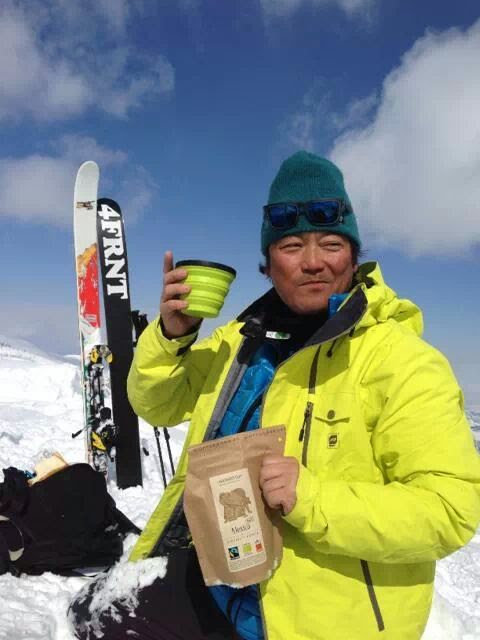
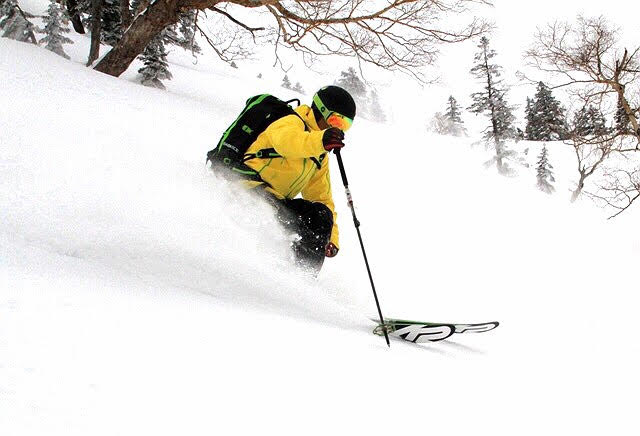
From that season onwards, Nakazawa, along with freestyle skier Yoshizawa Hideo, skied down Kagura's forest slope, commonly known as the "north slope," and the vast open run known as the "reflector," rediscovering the profound charm of Kagura's backcountry
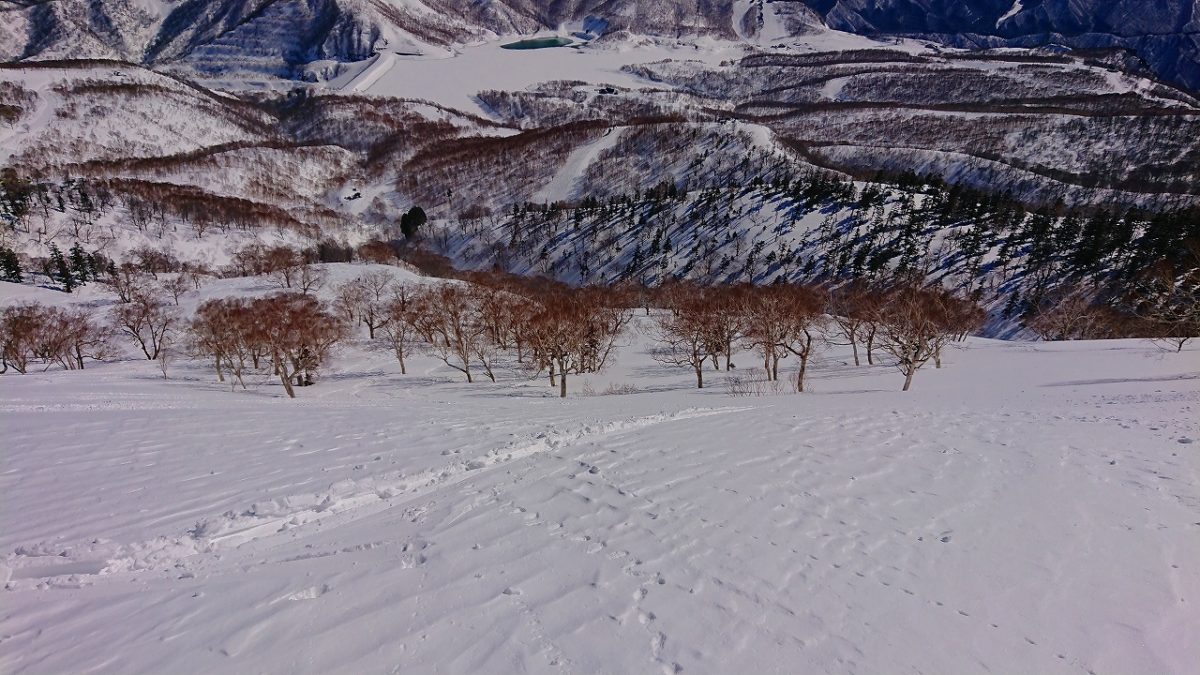
There are three reasons
"There are actually three reasons why I consciously decided to take up backcountry skiing. The second reason, following my meeting with Yoshizawa, is that I love mountains and powder snow, and I'm the type of person who likes to go out before others and ski hard, so it's also a hobby of mine (laughs). I thought it would be fun for me, and that it would be great
The third reason is definitely the nature of Kagura. The weather in Kagura is generally bad until around the end of February. We get a lot of snow, but the number of customers during the peak season was overwhelmingly low. It was more of a ski resort that opened in December and continued into spring from March onwards, so we thought about how to attract customers in January and February.
As a result, we thought, since there was a lot of powder and the snow conditions were good at that time, why not keep Goroma open and let people ski the powder higher up as well? It was kind of a spur-of-the-moment idea, but that's how it all started."
Commonly known as Goloma
When talking about Kagura's backcountry, one thing that always comes up is "Goroma." Goroma is the No. 5 Romance Lift that takes you to the top of the slope at 1,845 meters above sea level, heading towards the summit of Kagura-ga-mine at 2,020 meters above sea level
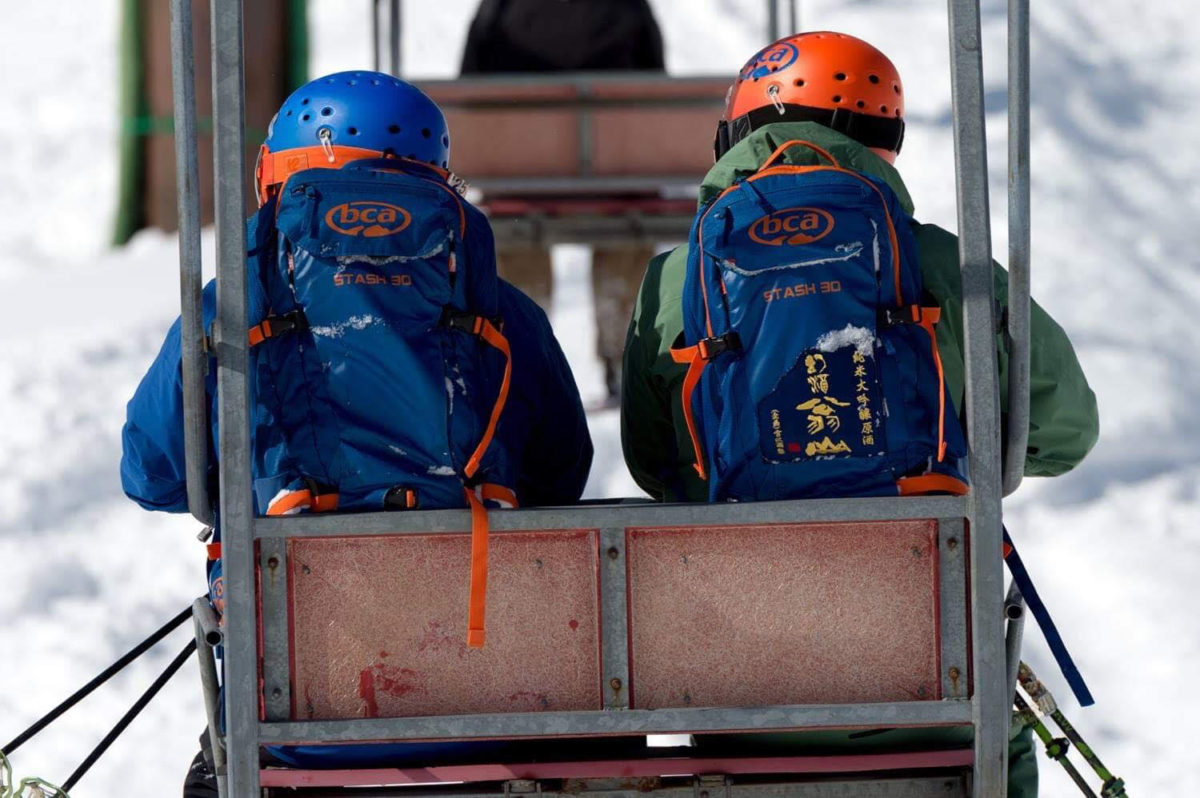
"Goloma opened on April 1, 2006. We had tour skiing and such. Then, in 2007, we started operating from the beginning of March, and the following year we started a little earlier, gradually opening earlier
Actually, Goroma was built in 1988, but due to heavy snowfall and avalanches, the lifts were shut down after about two years.
Back then, there weren't many people who skied powder snow. We started operating again in 2006, and fat skis came along, and from around 2011, people who love powder snow started going up the mountain."
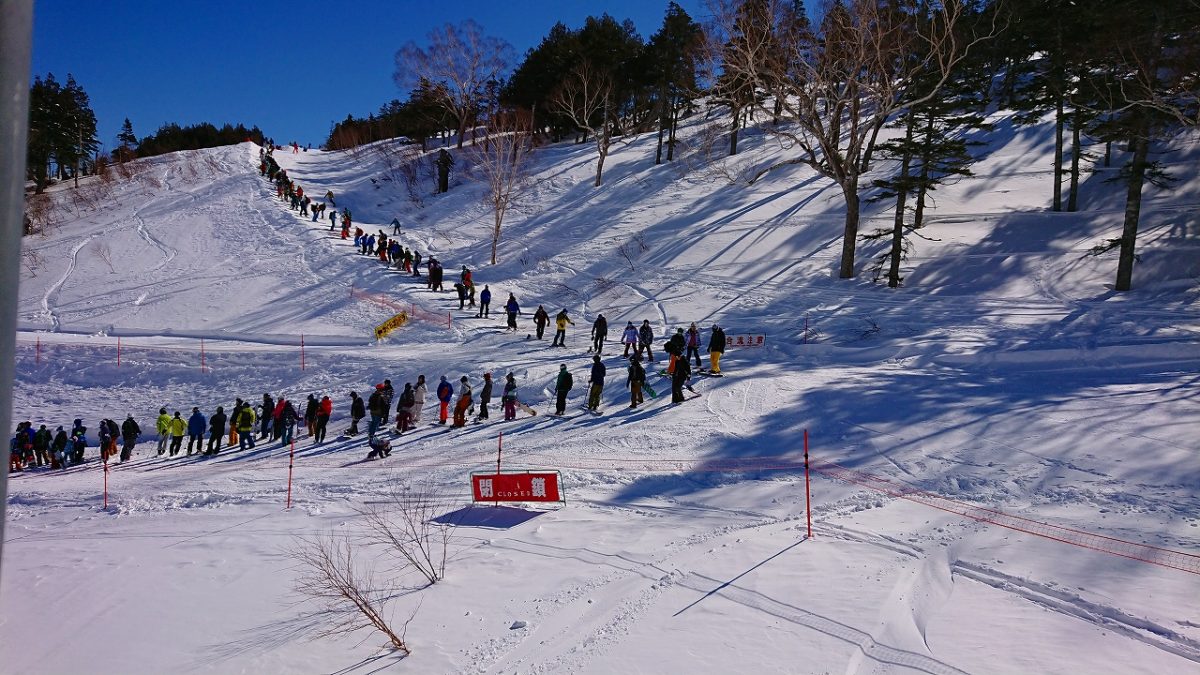
When Goroma reopened in 2006, it opened in late March to avoid peak season. Over the next few years, the opening date was gradually brought forward, from late February, to early February, to January, and so on, until finally, in 2015, it was opened on New Year's Day, which was entirely at Nakazawa's discretion
Around the Gate
Since Goroma began operating on New Year's Day in 2015, gates have been installed at the entrances to the backcountry and staff have been stationed there
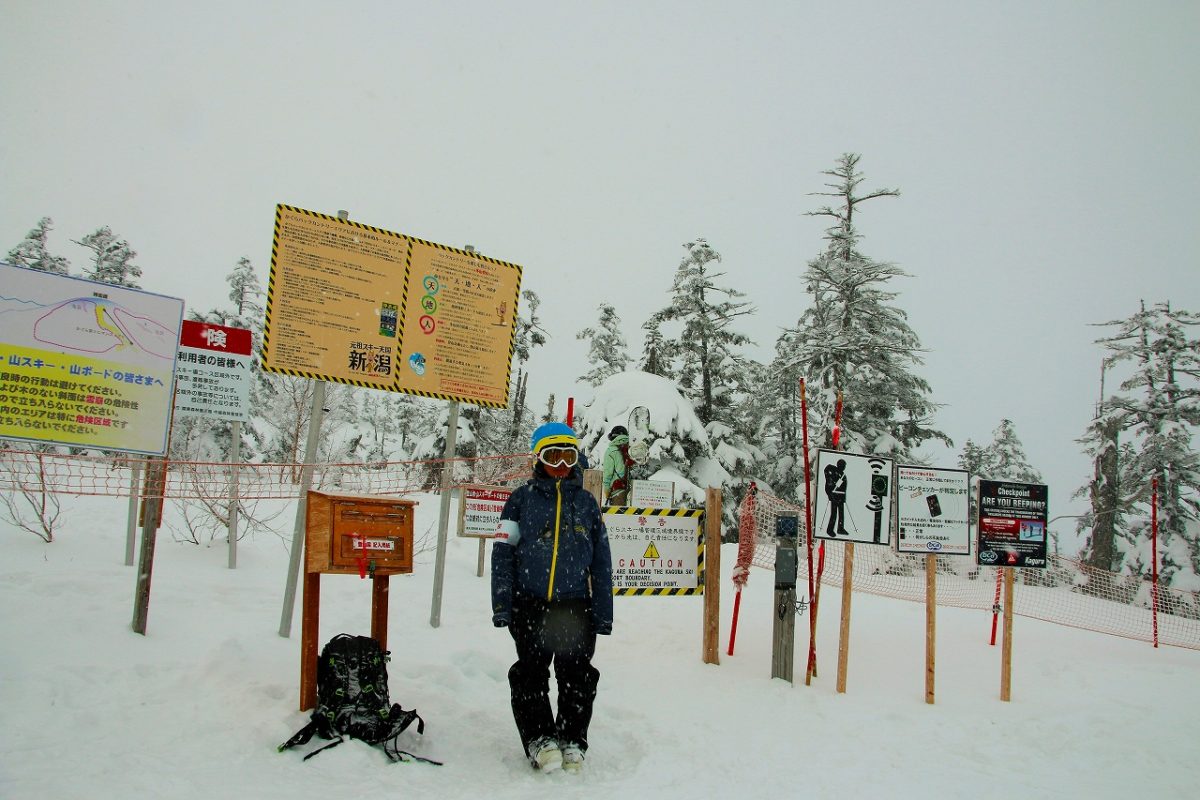
"We first installed the gate itself in 2012. We announced it to our customers on our website, but the police intervened. They said that we couldn't have people doing that without permission, and that it was practically inviting people into the mountains.
As a result, we closed the gate and went back to using ropes the following year. Even then, customers kept coming in. At the time, everyone was just sneaking through the gaps in the ropes."
Perhaps in light of this situation, since 2013 it has been made mandatory to submit a mountain climbing report when entering the backcountry, and to contact the office upon returning from the mountain
"Even so, 2014 saw a huge number of backcountry accidents, including fatalities. That's when the media started to become aware of the dangers and accidents in the backcountry, and whenever there was a skier getting lost in the mountains, TV stations would always chase after it, make a big fuss, and it would become news. It
was a time when we faced headwinds, but the deputy chief of the Minamiuonuma Police Station at the time was very supportive. He said, 'It's easy to give up, but let's discuss if there's any way we can make it work.' So we had many discussions with the relevant parties, came up with various ideas, and arrived at the current system of rebuilding gates and stationing people to check entry and exit. It took about two years, but that was in January 2015."
Unstoppable evolution
The initiative to promote backcountry skiing accelerated even further after Mr. Nakazawa transitioned from general manager to sales manager, starting with the installation of gates and staff in 2015.
The following year, with the cooperation of K2 Japan, they introduced BCA beacon checkers at the gates, set up a BCA beacon training area on the slopes, and began holding training sessions to teach how to use the beacons.
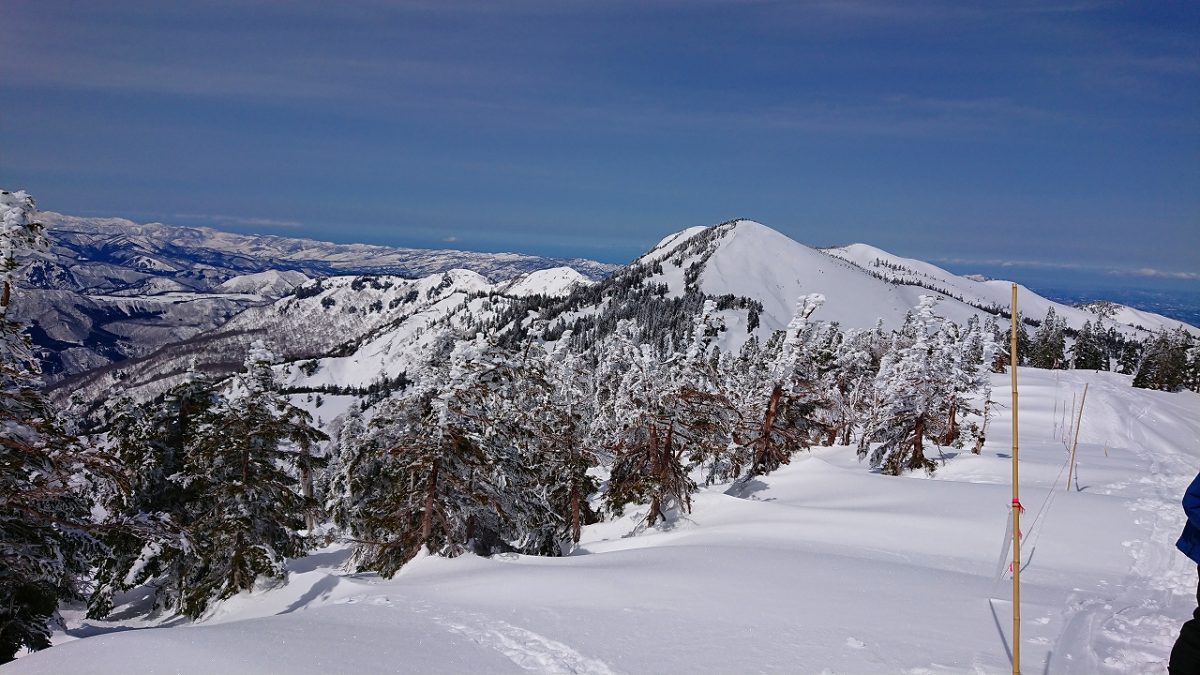
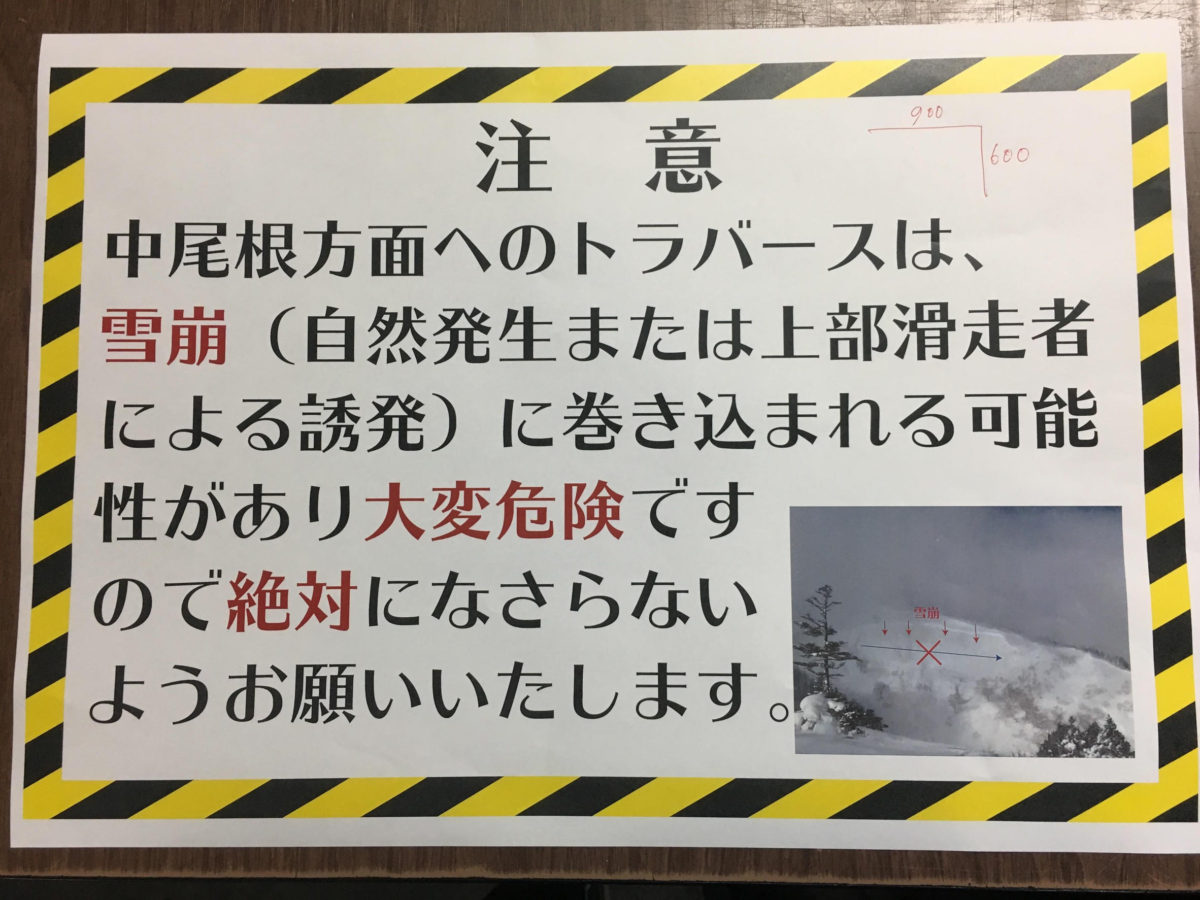
Furthermore, he has promoted a series of safety awareness initiatives, including patrolling the backcountry area, setting up signs to warn people against risks, installing poles and guide ribbons to prevent accidents along the Kagura Peak ridgeline, and starting the rental of TREK TRAK, a GPS device for responding to accidents. Kagura's backcountry has steadily expanded and evolved under Nakazawa's guidance
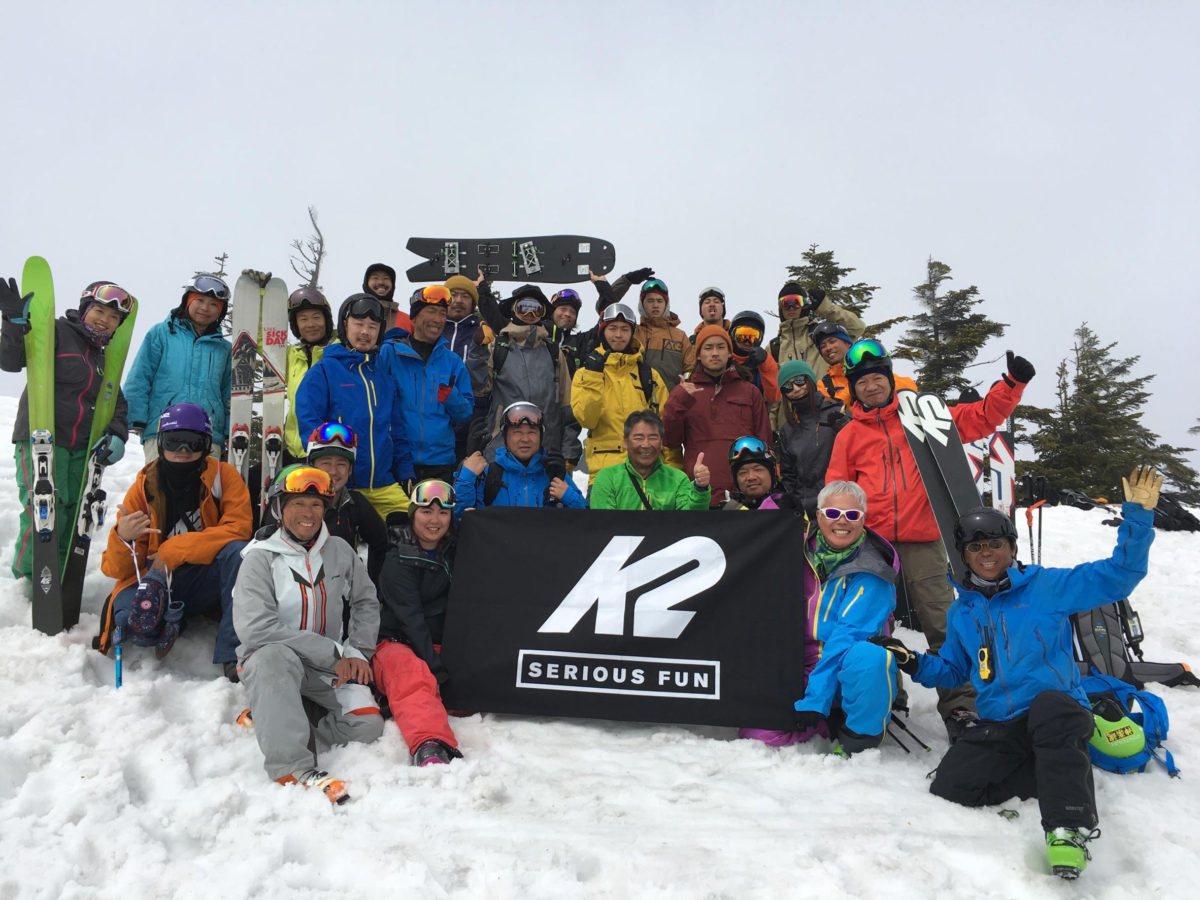
"Thanks to K2 using Kagura for their test rides and events, we were able to get to know various experts, such as Yuichiro Miura and Akio Shintani from Niseko (*1), and receive advice and support from them.
At first, we started with no gates or anything, and we used ropes to prevent people from going outside, but everyone was crawling under the ropes, so we knew we had to do something. Back then, customers were entering the backcountry at their own risk by crawling under the ropes. However, gradually, the understanding of backcountry has spread to the general public, and things have changed."
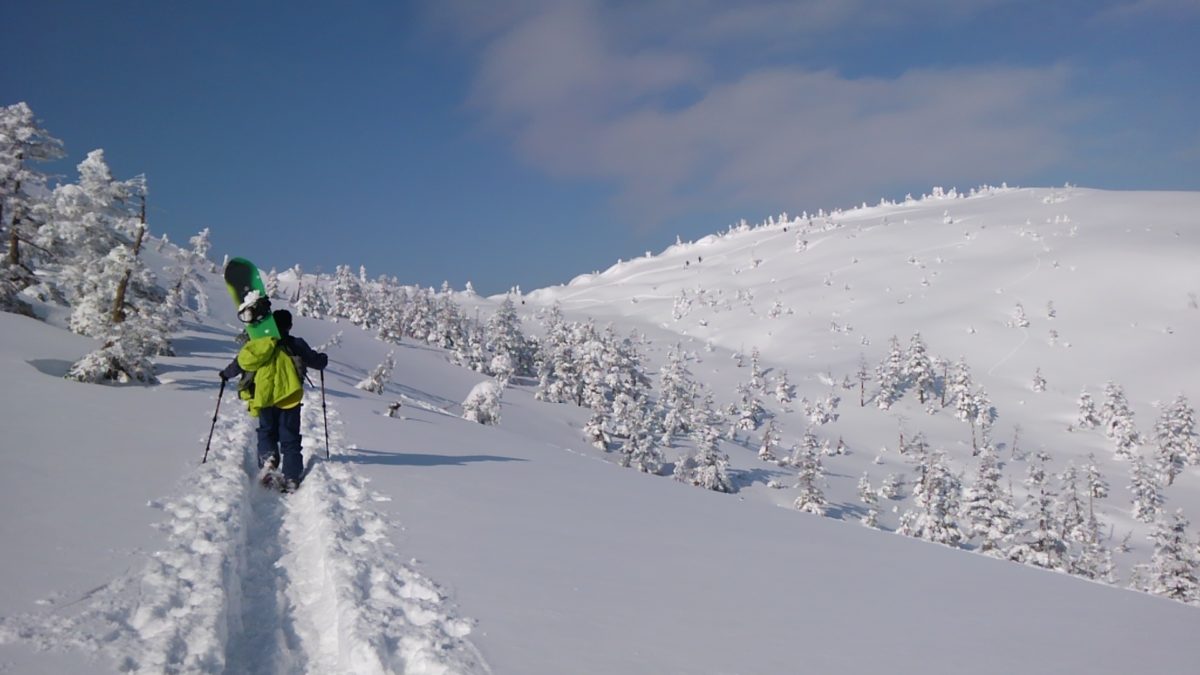
You should do it more and more
Even so, for a well-known company like Prince Hotels, and one that is directly connected to Japan's top ski resort, Mt. Naeba, to actively develop backcountry areas off the slopes would generally be met with warnings to "stop," but was there no opposition from management at the time?
"Strangely enough, no one has ever said anything to me about it (laughs). The president at the time actually said, 'You should just go ahead and do it.' Of course, that wasn't the case from the beginning; it was only after we had installed gates and were able to manage safety
Naeba is a tough place with many slopes where you could get caught in an avalanche if you stray from the course, but Kagura is relatively less dangerous than Naeba, so perhaps they thought it was okay to ski there. That may have been a factor, but either way, the patrols wouldn't be able to make it in time. Once one person gets in, everyone else gets in, so it's impossible to keep an eye on them
So just leave them alone. It's their own responsibility to go off-piste, so stop giving them warnings. If there's a rescue request, then you can go out then. They have cell phone service, after all. You can just charge the rescue fee to the person who made the request.
Off-piste areas are outside the ski resort's management. No matter how much you warn them, people who like to go off-piste will go anyway, and if you nag them too much, many customers will rebel and escalate the situation, so just let them ski at their own risk.
In other words, our stance is to tell our customers, "It's okay to go, but please follow the rules to ensure your safety." It's like we're guiding them in the direction of "protect yourself." This is a unique approach, but we've created a situation where customers have to submit a proper climbing plan and enjoy skiing at their own risk."
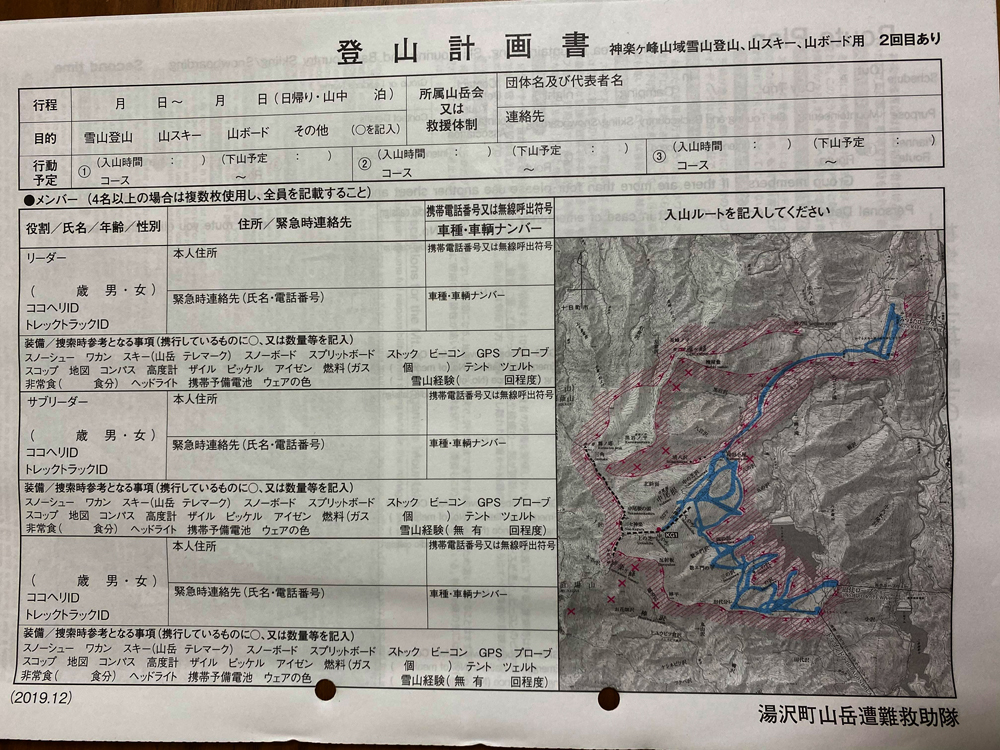
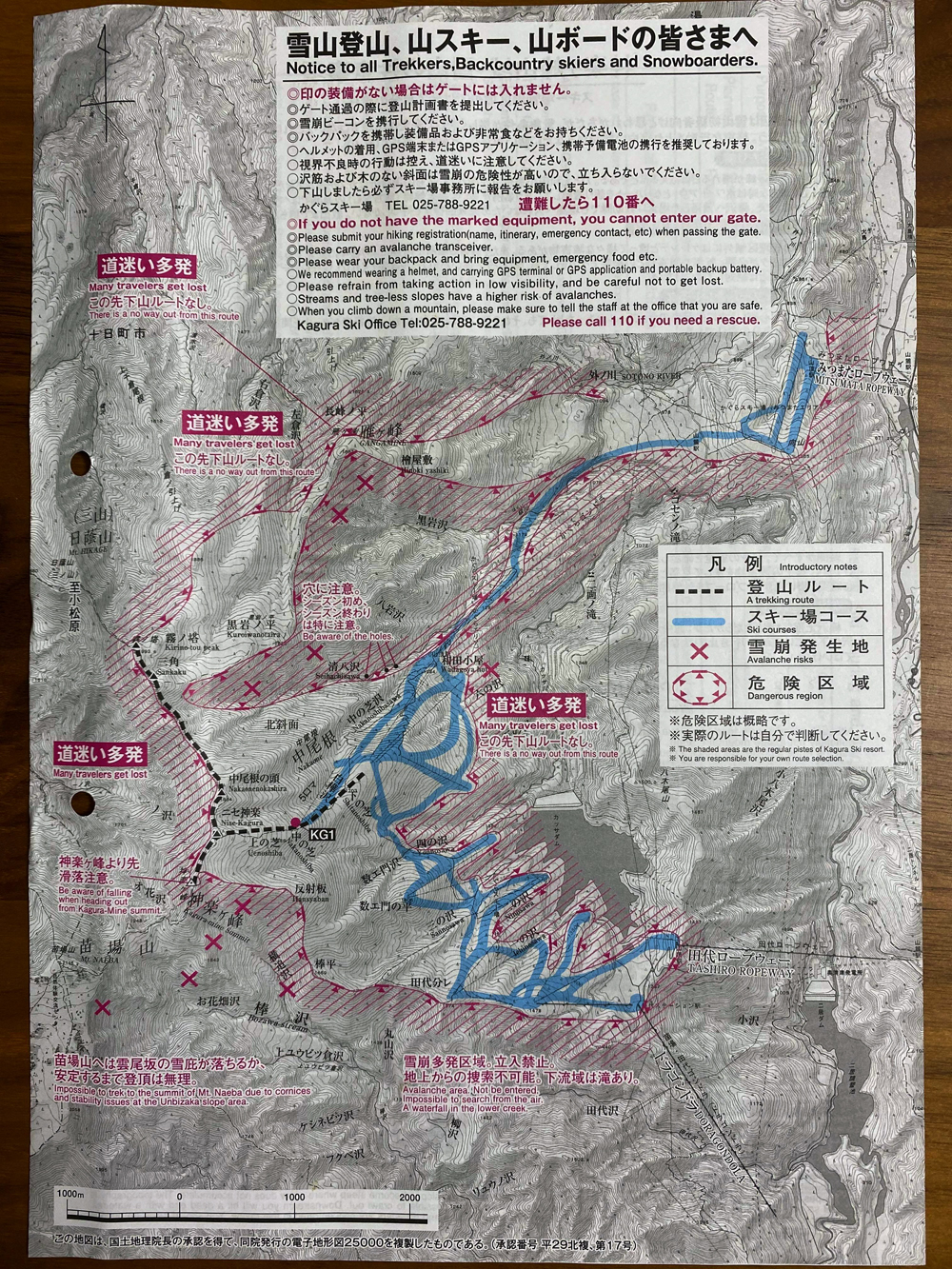
as a matter of fact
"There are still quite a few accidents, but the police and fire department don't say anything to us and they even support us. I don't know if they've just given up or what (laughs). When
there's an accident, it's a matter of saving lives, so rescue helicopters fly in right away. As the police say, it's best if there are no accidents, but accidents do happen in the mountains in both winter and summer. I think it's fine as long as we all communicate with each other and do everything we can to reduce accidents."
I think it's good that places like Niseko have established rules that prioritize safety. The most important thing is to strictly warn people about places they shouldn't go.
Kagura doesn't have as high an avalanche risk as Niseko, but unlike Niseko, the mountain is larger, so people tend to get lost. More than 90% of accidents are due to getting lost. Currently, they are installing poles and doing various other things, but they need to strengthen that aspect a bit more.
However, I don't think it's right to be overly protective, but I think it's better to more clearly indicate the places that people shouldn't go, and then have people enjoy themselves with a strong sense of safety. Just like with summer mountain climbing, I think it's best to choose a mountain that suits your skill level and ski on it.
Also, join a tour with a guide and ski safely. I think that's the basis of backcountry skiing. Kagura doesn't require a license to operate as a guide, so many backcountry ski guides have come here. Basically, anyone is welcome, so I hope that people can ski safely and freely and enjoy Kagura's wonderful backcountry skiing
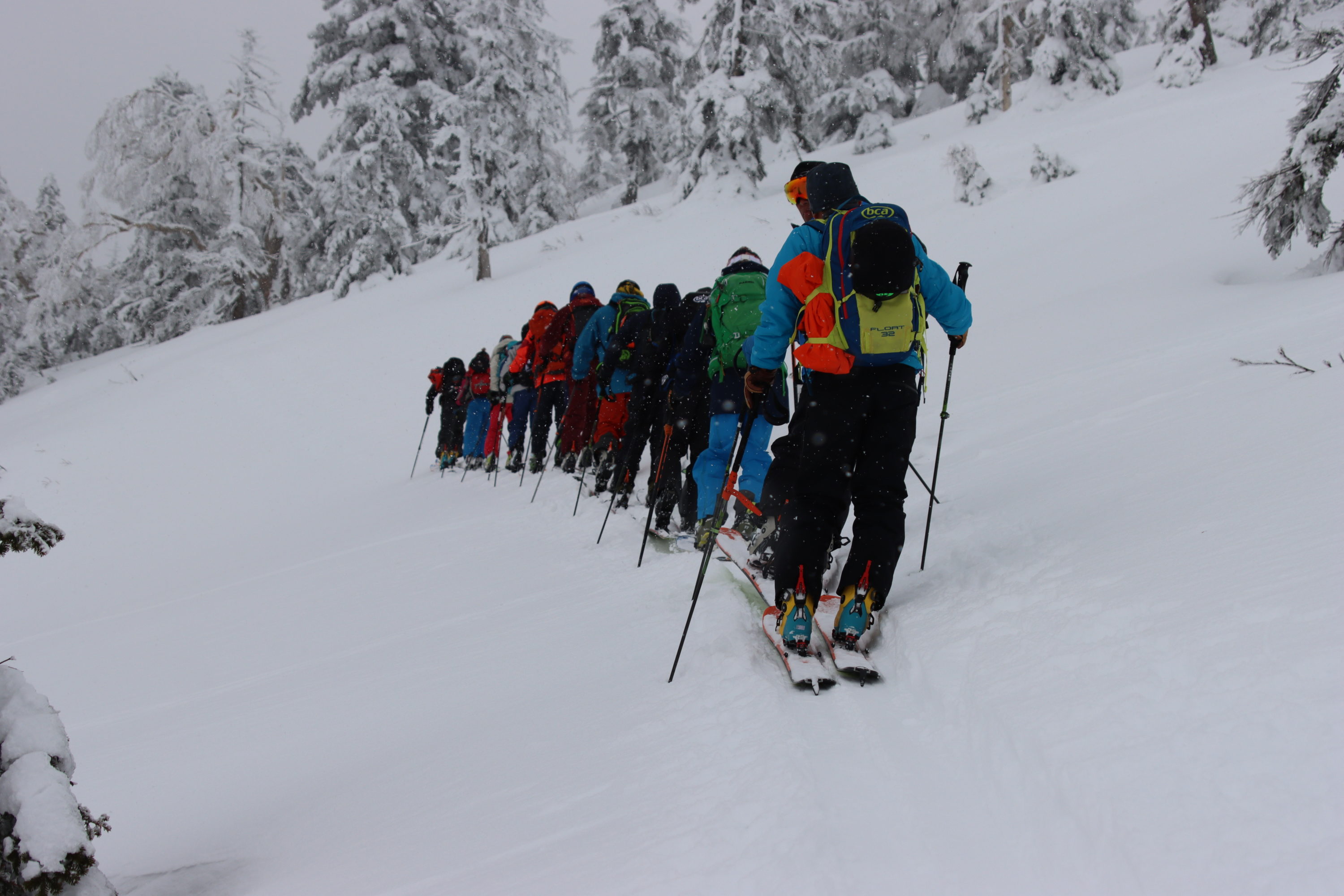
The Kagura BC environment has been revitalized
In 2005, even when the weather was good, there were only one or two people skiing in the mountains. But now, when conditions are good, over 100 people can be found skiing outside the gates. What does Nakazawa, the creator of Kagura, think of the current situation?
"Looking back, what I realize is that you really can't get results unless you actually try things. In that sense, we are where we are today because of all the different initiatives we've undertaken. We're still not at 100%, but the number of people has definitely increased. In particular, the number of customers has steadily increased from the beginning of the year through to February.
After installing the gates, we've been checking all the climbing plans and counting the number of people entering the mountain, and in recent years, the cumulative number of customers going up the mountain each season has been around 6,000 to 7,000. When it exceeded 7,000, we implemented a rule requiring people to wear beacons, and since then, it has settled down to the low to mid-6,000s."
But I think it would be great if more people could enjoy the mountains. People who are serious about mountain skiing don't go to the backcountry, which starts at the ski resort like Kagura does, but go directly up the mountain. I think that's the style of advanced skiers, so I hope that people who want to enjoy skiing on the slopes and powder snow will come to Kagura and go all the way to the top
When the weather is good, especially from late February to the end of March, Mt. Naeba is so beautiful covered in snow, so just looking at the mountain and coming home feels really good. It's completely different. Of course, skiing is a good goal, but I think it's also nice to enjoy skiing while looking at all the different views in the majestic natural scenery of the mountains, and then when you get home, say with a smile, "I had so much fun today!" and have a lively conversation
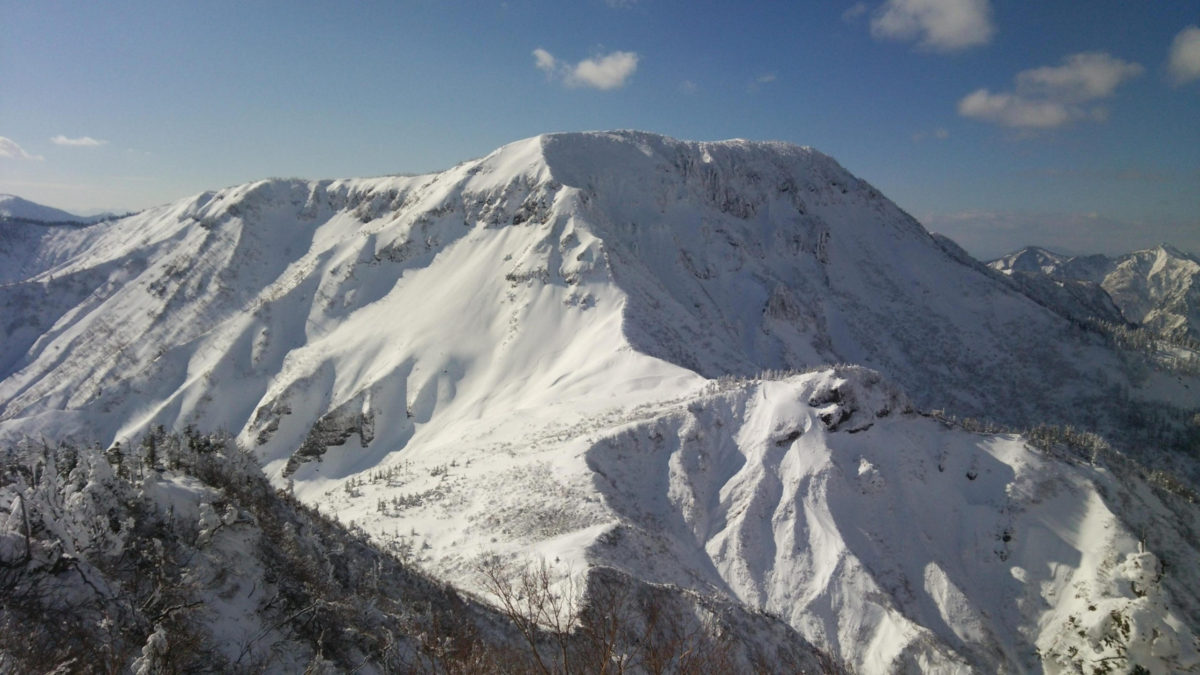
Work done
Recently, Nakazawa was presented with a letter of appreciation from the Niigata Prefectural Police for his contributions to safety education in the Kagura backcountry and rescue efforts, as well as his contributions to preventing mountain accidents
"I don't deserve such an award. I love backcountry skiing myself, so I've spread the word about it, and if I hadn't spread it, the number of people going up the mountains wouldn't have increased, and the accident might not have happened. More people mean more accidents. It's strange that someone who advocates backcountry skiing is being awarded for rescue efforts after an accident."
Nakazawa says with a wry smile, "But in fact, over the 15 years from 2005 to 2020, he has implemented a wide variety of innovative initiatives to liven up Kagura's backcountry."
In addition to the initiatives mentioned above, they installed fat ski racks on the gondola and renovated Wadagoya, which had few guests staying overnight in the winter. They also offered fast-track service to guests, transforming Wadagoya into an extremely popular powder lodge that is hard to book on weekends. They also actively recruited backcountry guide clubs, creating jobs in the guide industry
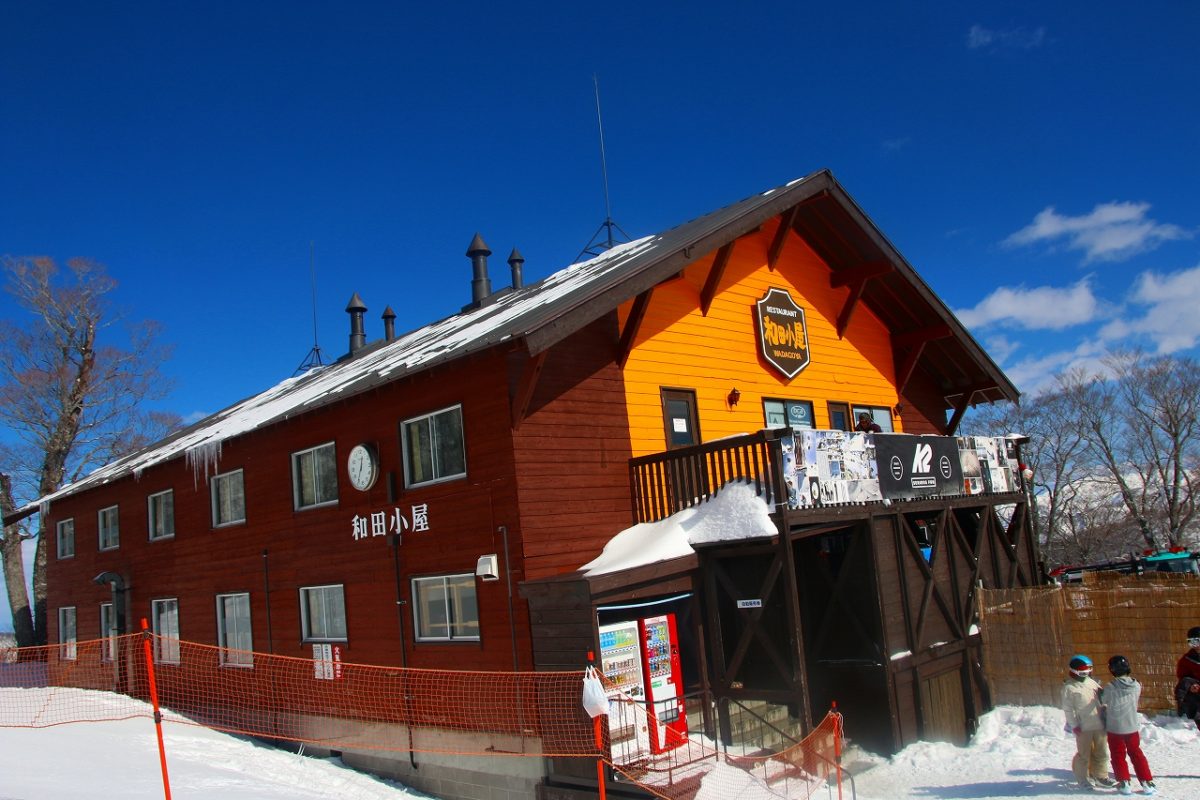
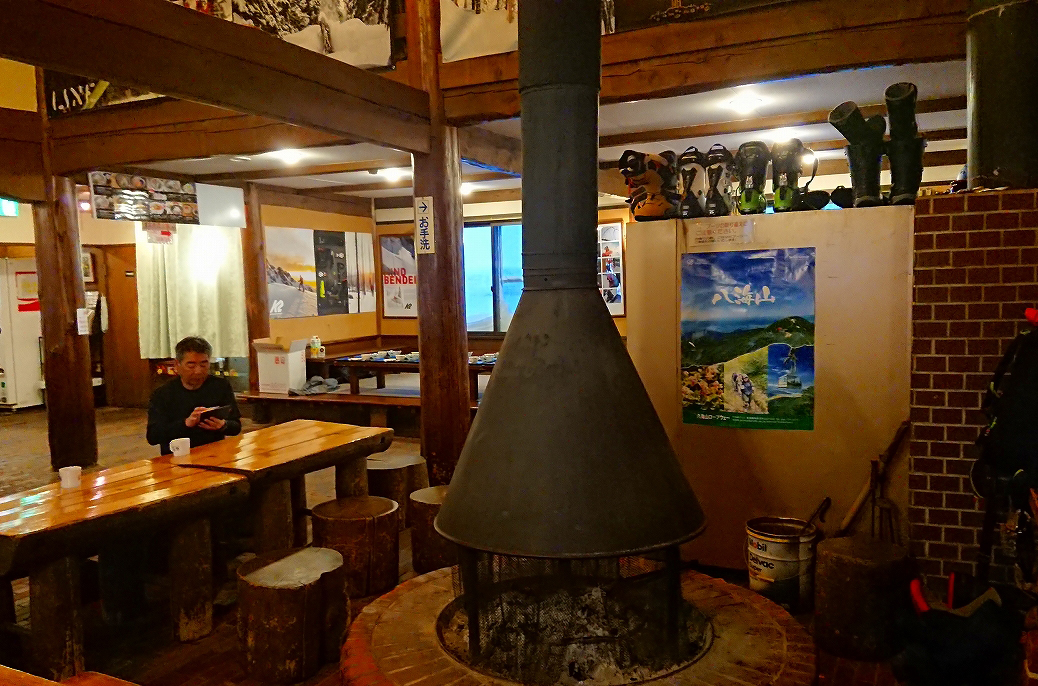
He has appeared as a skier model in brochures and posters for Kagura Ski Resort, showcasing his photogenic powder riding. His image has sent a powerful message that has influenced the industry and general skiers. He has expanded Kagura's snow business with his various skills
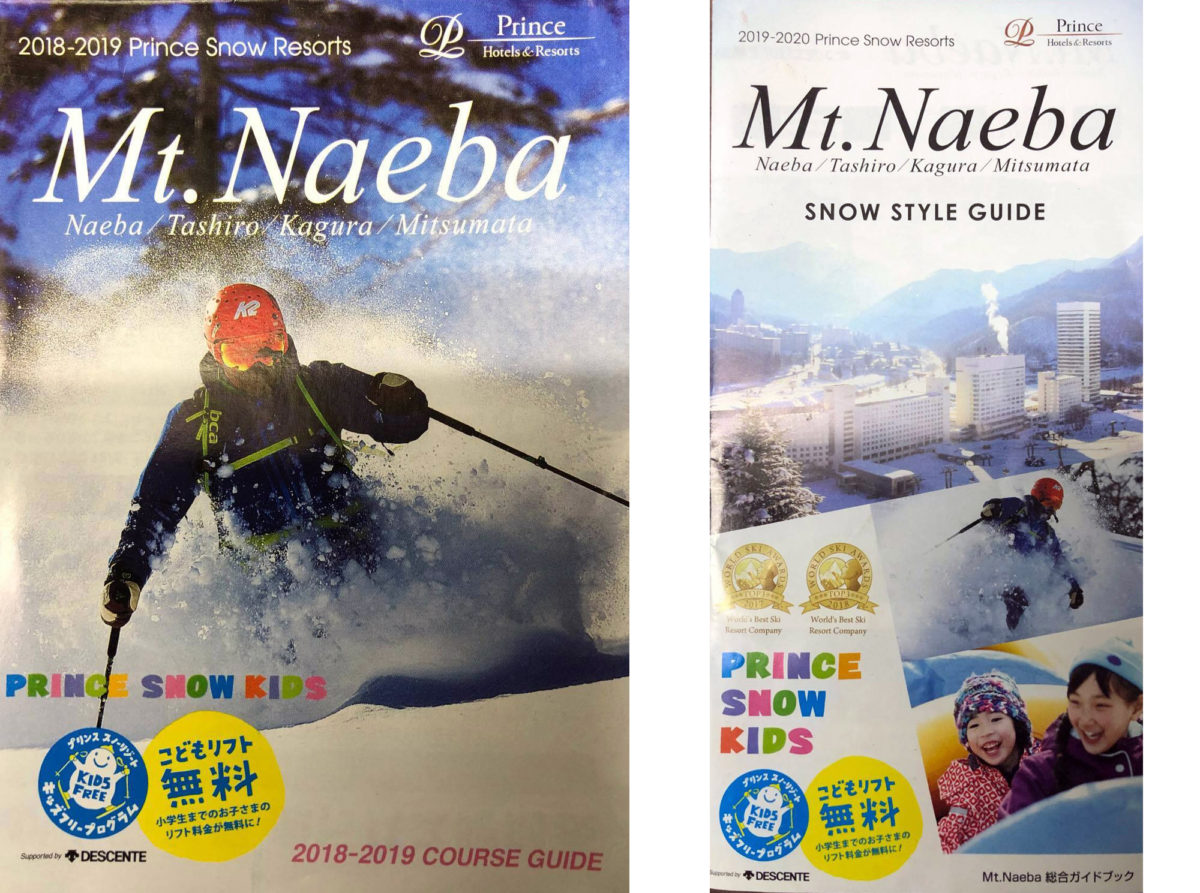
"That might be one way of looking at it, but half of it was me having fun (laughs). Actually, backcountry skiing isn't my main job, so it was just one way to make the most of the Kagura ski resort.
Aside from that, I challenged myself with various projects, such as building a new rest house, replacing the lifts, creating a summer slope using Pislab mats, and renovating the parking lot and changing rooms."
In that respect, skiing with the top executives of Seibu Holdings and being involved outside of work gave me the opportunity to freely talk about my ideas and thoughts about what I wanted the ski resort to be like. I think I was very fortunate in realizing many of these things
I think that these efforts have contributed more to the ski resort as a whole than the backcountry."
The future landscape
Nakazawa has achieved a variety of innovative things in an era where it is difficult to do new things, and what kind of world will he see in the future as he draws to a close after 15 intense years?
"I'm troubled when people say, 'When Nakazawa-san retires, there won't be any models to skate with,' (laughs), but I think that once he retires and his position changes, it would be fine if he could just look after Mount Kagura safely. I'm not saying that I want to do this to anyone, but..
Yes, I think it would be a good idea to have people wear helmets, as there are still people out in the backcountry without helmets
What's next? I'll just work casually (laughs). Yes, the Myoko mountains are great. The altitude is high, and I think it'll be fun if you do it properly. The backcountry movement is becoming quite popular these days, and I'm interested."
The number of people interested in powder snow and backcountry skiing in Kagura is sure to continue to grow. I hope that the reforms made so far will continue to evolve without stopping, and that the safe skiing environment will be maintained
This is not the end for Nakazawa, and we can't help but hope that he will continue to make use of his experience in his activities
Finally, I'll tell you a secret: the best place
Finally, we asked Nakazawa, who knows Kagura's backcountry better than anyone, about the most comfortable and best place
"If the conditions are right, everything is great. The north slope is good, and you can ski long distances in the Sankaku area. Everyone says "north, north," but the north slope is a bit difficult to traverse back, so I think it's best for skilled, advanced skiers. It has steep slopes and tree runs, so advanced skiers can enjoy it
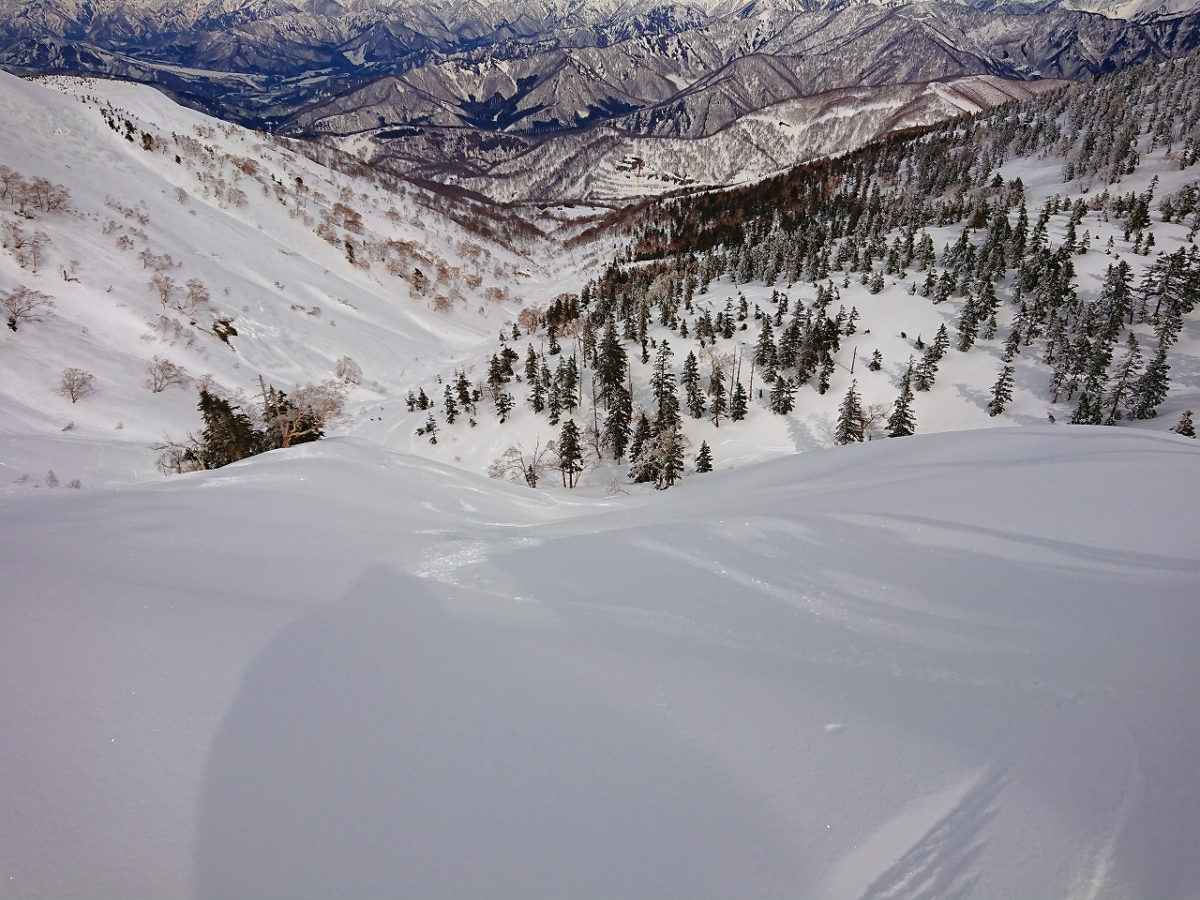

For intermediate skiers, I think it would be fun to enjoy a long, comfortable slide down the wide, reflective slope, and then escape to the upper part of Tashiro's 8th Romance without following the stream
There are lots of fun places, but actually, the one I like the most is... well, I can't really go into details. There are so many fun places, you know. There's a really great slope that requires about an hour of hiking and involves some uphill climbing. It's a spot known only to those in the know, but I'll keep it a secret.
If the weather's nice, everywhere is fun!
*1) A mountaineer living in Niseko, Hokkaido. Director of the Niseko Avalanche Research Center of the Avalanche Prevention Council
[ Nakazawa's journey into BC ]
1988: Goroma (Romance Lift No. 5) newly constructed and begins operation - closed after 2 seasons.
2006: Goroma reopens and Kagura Powder Station is attracted.
2012: BC gate constructed at the summit.
2012: Goroma gradually starts operating earlier.
2013: Patrols are established and climbing permits are made mandatory.
2013: Backcountry guide club is attracted.
2014: Wada Hut is renovated and first-track service is provided to guests.
2015: Goroma opens on New Year's Day and personnel are stationed at the gate.
2015: Ribbons are placed on the course.
2016: BCA beacon checks are introduced at the gate with the cooperation of K2 Japan.
2016: BCA beacon training area is established on the slopes.
2016: Disaster prevention poles are installed on the Kagura Peak ridge.
2018: Rental of TREKTRAK GPS devices for disaster response begins.
2018: Racks for fat skis are installed on the gondola.
2020 Received an award from the Niigata Prefectural Police for their contributions to preventing accidents and missing persons.
Profile
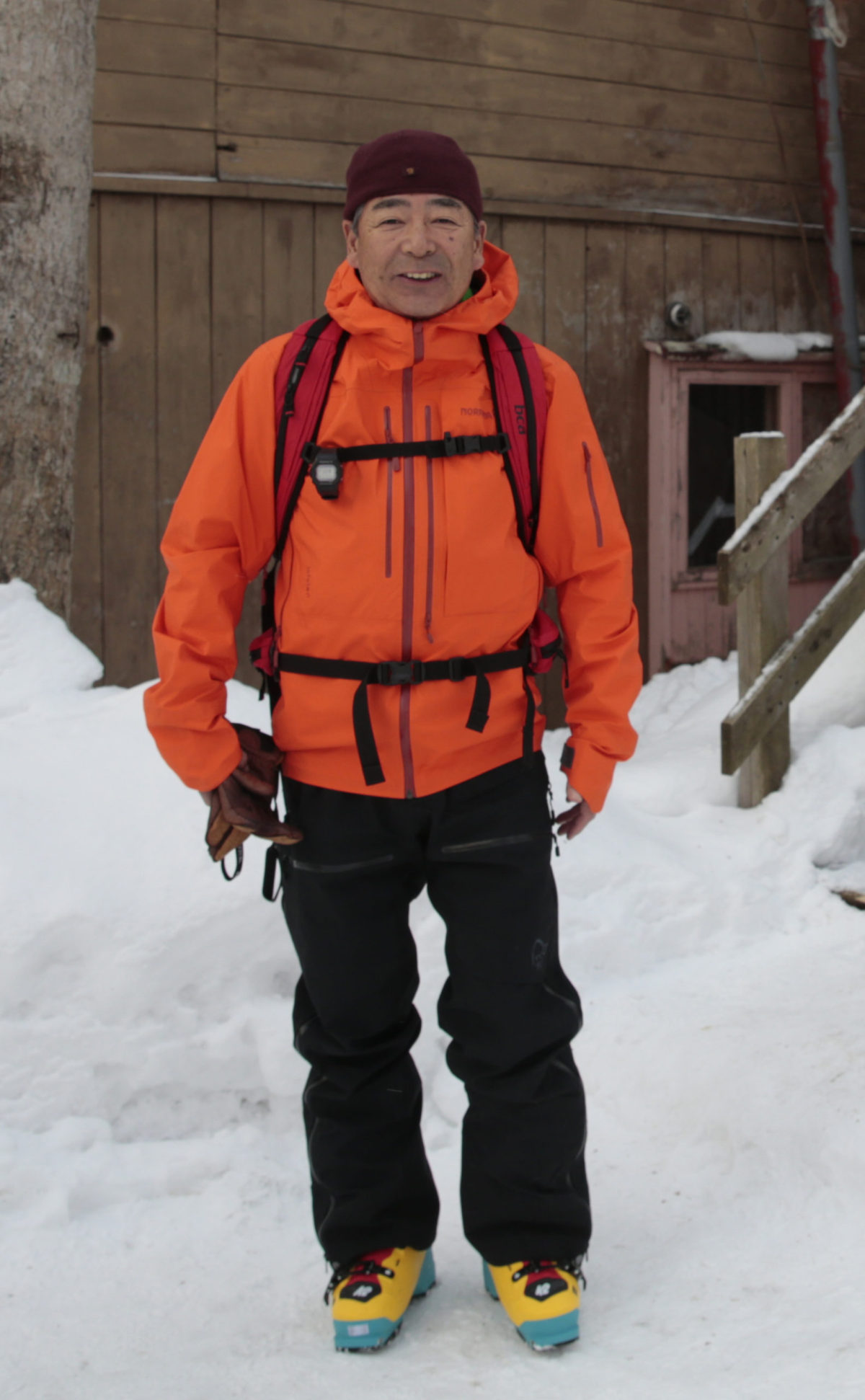
Minoru Nakazawa
served as General Manager of Kagura Ski Resort at Prince Hotels, Inc. from 2005 to 2016, and as Sales Manager from 2016 to 2020. Through the development of the Kagura backcountry, he created new value for Kagura Ski Resort by introducing powder snow. He also undertook various innovative initiatives that contributed to the development of the ski resort, such as expanding facilities and promotions within the resort.
[Gear & Clothing Used]
K2
, NORRONA
, HESTRA
, BCA
Composition: Tomoyo Nakagawa (Editorial Department) Photos: Minoru Nakazawa, Takahito Mizutani, Daigo Onozuka, Hiroshi Owada