

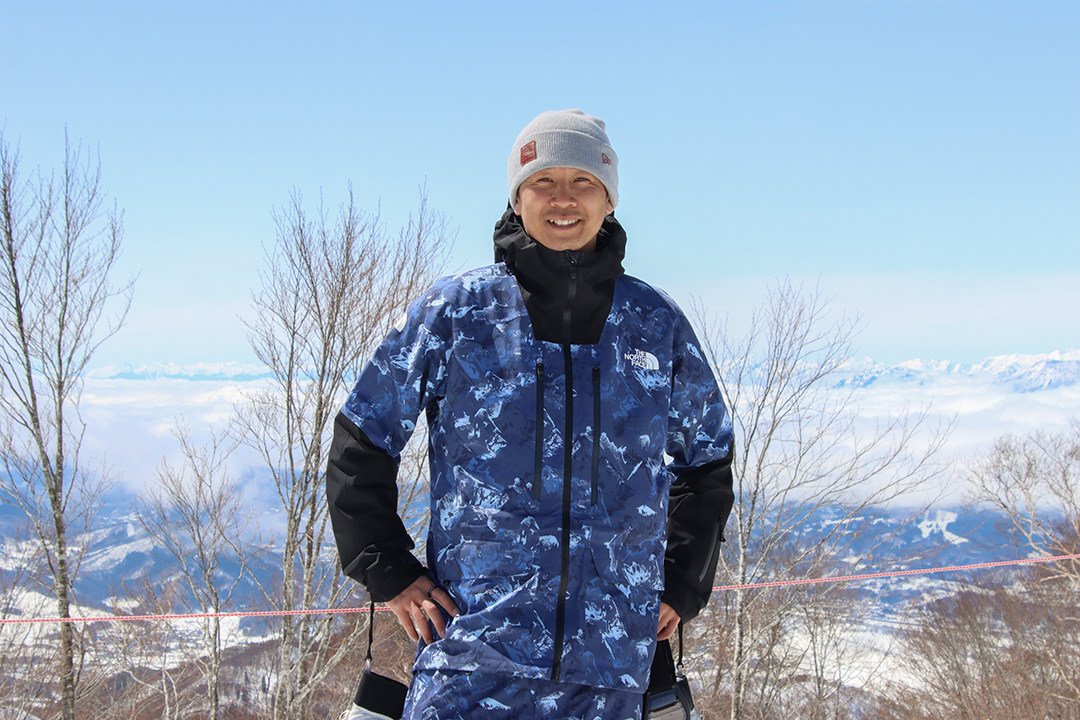
On March 24th, Akira Sasaki suddenly announced his return to alpine racing and his intention to compete in the Italian Olympics. As he posted about the event in real time on social media, we spoke to him once again about the true meaning behind this announcement
The following interview was also filmed
While this passion is still burning, let's press on. There's no way out
Three years ago, in 2019, my feelings about making a comeback were very conflicted.
After the 2014 Sochi Olympics, I felt I needed to learn more about mountain skiing than racing, so I started skiing in the mountains, using the term "switching" from alpine skiing.
I said "conversion" for two reasons. One is that there will definitely come a time when I want to race again
Another reason is that I feel that the word "retirement" is very disrespectful to the seniors who built the culture of big mountain skiing. (Mountain skiing) is a tough place, and it's not a world that retired people can easily enter
So I used the word "convert."
I had originally planned to aim for Beijing in 2019, five years after Sochi, if my performance hadn't declined, but the film I was working on, "Twin Peaks" (※1), hadn't been completed yet
At the time, I naturally considered creating artwork and alpine racing at the same time, but my passion, or rather my soul, was directed towards wanting to ski down Mt. Tanigawa, so it was impossible for me to switch on the alpine switch
After that, I didn't have enough time to make it to the Beijing Olympics, so I just went about my daily life, but I got the impression that I spent those three years feeling very frustrated
So, I think that my actions over the past three years have been like, "Let's just do fun things!" and that can be seen on my Instagram. I guess I was trying to distract myself
However, the more I do that, the more empty I feel
I was struggling with the idea that I had the performance and I thought I could do it (the race). But I just couldn't get myself to turn on, and I was overwhelmed by negative thoughts like, "What if I fail?", and I couldn't make a decision
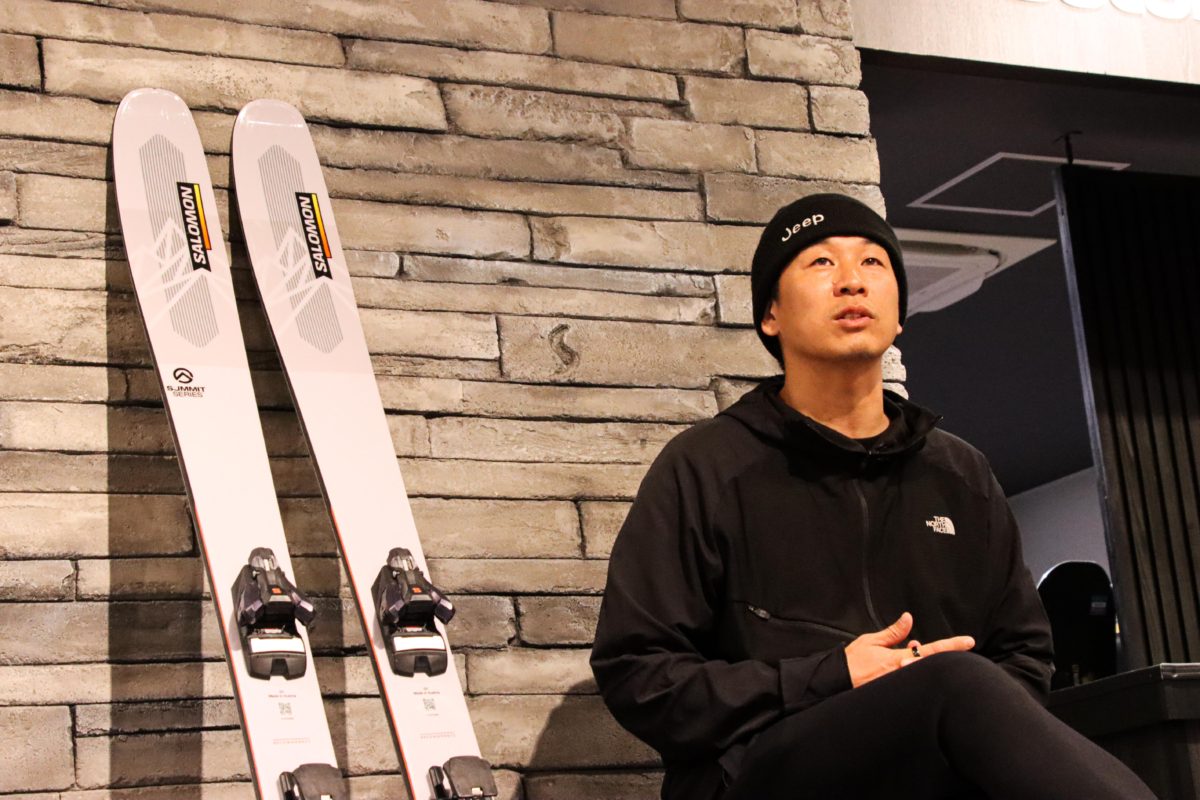
At that time, when my buddy Naoki Yuasa announced his retirement on January 27th, I became worried that the Japanese alpine skiing world might be left behind in terms of international recognition and training opportunities. After all, Yuasa is internationally recognized and has great respect from coaches in other countries, so he is able to train in a variety of places
I thought it would be a bit bad if the current cool Japanese players were to drift away from the world, so I was thinking about what would be the best thing to do. I had been working as a head coach for the domestic training team, and while doing that, I started to think, "These guys are so cool." I was like, "What am I jealous of?"
Then came the Tokyo Olympics, followed immediately by the Beijing Olympics. I was moved to tears in front of the TV, and I was so impressed, thinking, "That's so cool!" Just when I thought I should try my best too, I realized I didn't know what I should be trying my best at. I had been keeping my eyes on it, but I had been turning away from the idea of "comeback," and I felt like, "This is my only option." I had this feeling of wanting to commit to it since around February of this year
I was worried about what would happen if I failed, I don't know what it was, but it was probably the atmosphere around me, or the way people looked at me... But when I thought about whether I was living my life worrying about what others thought of me, I realized that wasn't the case
So, on March 9th, I was in a hotel in Sapporo. I was sitting on the bed, checking Instagram, and the moment I put my phone down, I was like, "Let's do it. I can do this." That was the moment a switch flipped. It just clicked, and everything became unquestionable
From there, I contacted Keisuke Iyama and my partner and told them what I had decided, and they said, "Isn't it too late (to make the decision)?" and I replied, "You're right."
Iyama said, "By doing it now, you'll gain more supporters, and something bigger will definitely happen than before. More than anything, I think everything will have changed when you've accomplished it, so there's no reason not to do it. You absolutely must do it."
My partner also said, "You can do it, so you should definitely do it! You only live once, so you should definitely do it. I think something big, invisible, and wonderful will be set in motion by taking on this challenge again now."
I immediately contacted my entire team, including the medical, training, strength and motion analysis teams, and told them, "I'm going to do it, so be prepared and be ready." Naturally, I also called Ito-san, the service technician, and told him that I didn't know what would happen after that, but that this is how I felt, and I contacted the media that same day
I haven't decided on any sponsors or anything, and I haven't said anything to anyone, so nothing is moving forward right now, but it's like I'm suddenly throwing a fastball. I feel like I want to go all out while this passion is still burning. I'm not leaving any room for escape
*1 TWINPEAKS: A video project conceived by Akira Sasaki, completed in 2020 after he skied in Norway, Mongolia, and Tanigawadake.
Since we all started from the same place, age doesn't matter. We're all buddies and rivals
There are several ways to compete in the Olympics, but the easiest way is to first compete in FIS races in Japan. From there, work your way up the rankings, become champion in the Far East Cup, and join the All Japan team. From there, go to the European Cup, and from the European Cup to the World Cup, and from the World Cup to the World Championships. That's the quickest way. The World Championships are in your second year. Then you'll stand on the Olympic stage, but I'm not going that route
I'm going to do exactly what I did when I was 16, but at this age.
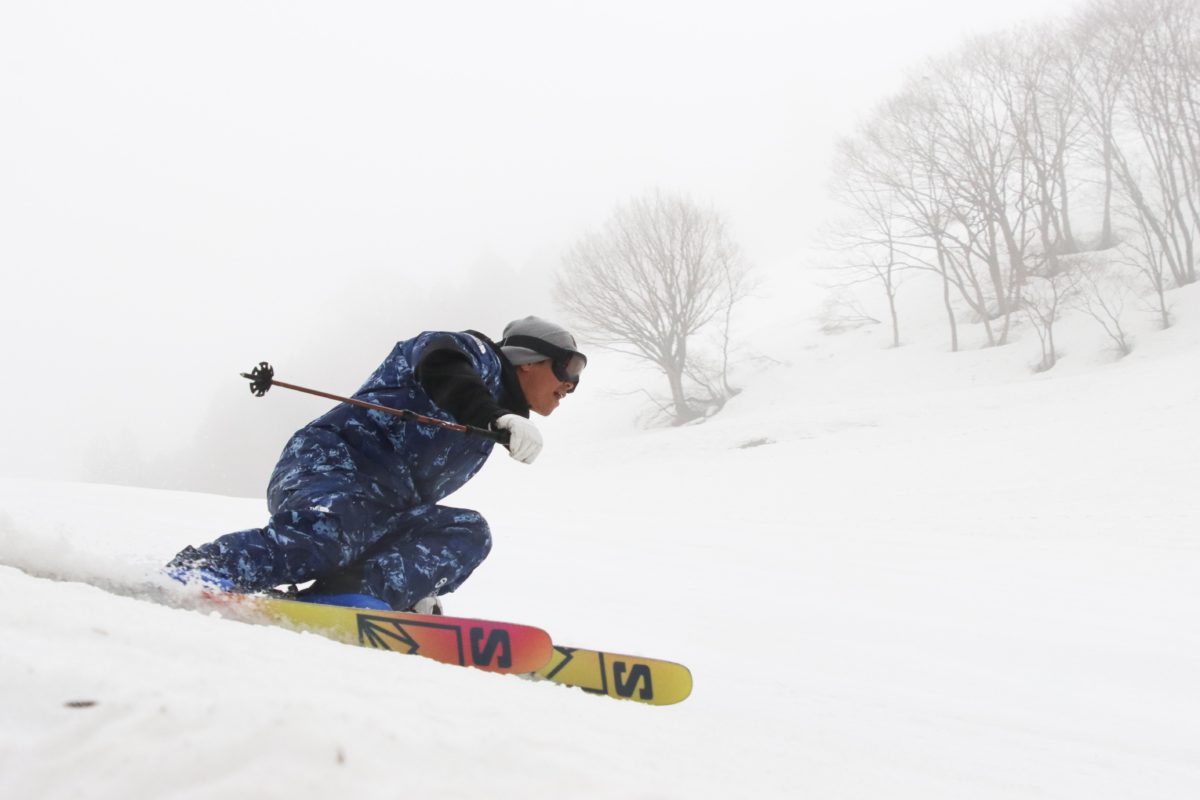
My first race wasn't in Japan, it was in North America. So I'm going to make my debut in North America, in Loveland, Colorado, a really high-altitude ski resort, train there, accumulate FIS points in America, and aim to become the Norwegian champion.
To tell you an ideal scenario that sounds too good to be true, I plan to achieve results in Norwegian next February and then move on to Europe.
The reason I chose America is because I have no points yet. I'll be
starting from the same position as the debut athletes, so I'll be starting at 120th place.
To win from 120th place, I'll definitely need to compete in several races. When you consider the snow quality, artificial snow, high altitude, and stable weather in America, the probability of finding a race with good conditions because the weather doesn't deteriorate is very high. This is probably the shortest path to aiming for the Milan-Cortina Olympics in Italy. At the same time, I think it will be a very mentally tough race.
I could compete in European competitions from the start, but if there's a high chance of the course being rough, then the shortest route won't do. So, if I'm not competing entirely in Europe in my second year, then it's too late in terms of the schedule. If I compete in Norham in my second year as well, then (Olympic participation) will become more and more distant. Everything will be decided in my third year. I think it will be Wengen, the year before the Olympics. I'm working with the desire to get a confirmation the year before. So I'm already imagining the shortest and strongest schedule for everything
I think the players who will debut with me are very lucky. I was born in 2006 and am in my third year of junior high school, and will be a first-year high school student this spring. They will be able to see the world's standard. In the last 10 years or so, there hasn't been a single player who can be considered world-class
There was a fierce feeling when we were playing. There was Minagawa Kentaro who said, "We're seriously going to be number one in the world," and everyone, including Yoshioka Daisuke, was looking at the same thing and competing on the world stage, getting beaten to a pulp, but they were like, "We won't lose." When we went on tour, we were overseas for three to four months straight. After all, we were challenging the world, so if we didn't have a strong will, it would be impossible
That feeling shows in the race, and ultimately it affects whether you win a medal or not, whether you stand on the podium or not, whether you create a fan club around the world or not, whether you are respected or not. Can you
show it or not? Are you just an ordinary person or will you become a star?
I think that feeling is absolutely what makes the difference. I don't want to choose the easy path.
That's what we can leave behind for the Japanese skiing world. When we think about what we can leave behind for the alpine skiing world, both the current athletes and I get fired up. We don't want to lose to the athletes I've coached, so we're both fired up.
Since we all started from the same point, age doesn't matter. We're all buddies and rivals. It really means we've become teammates who can push each other to improve.
I just want to improve my physical condition. Skiing is my second priority
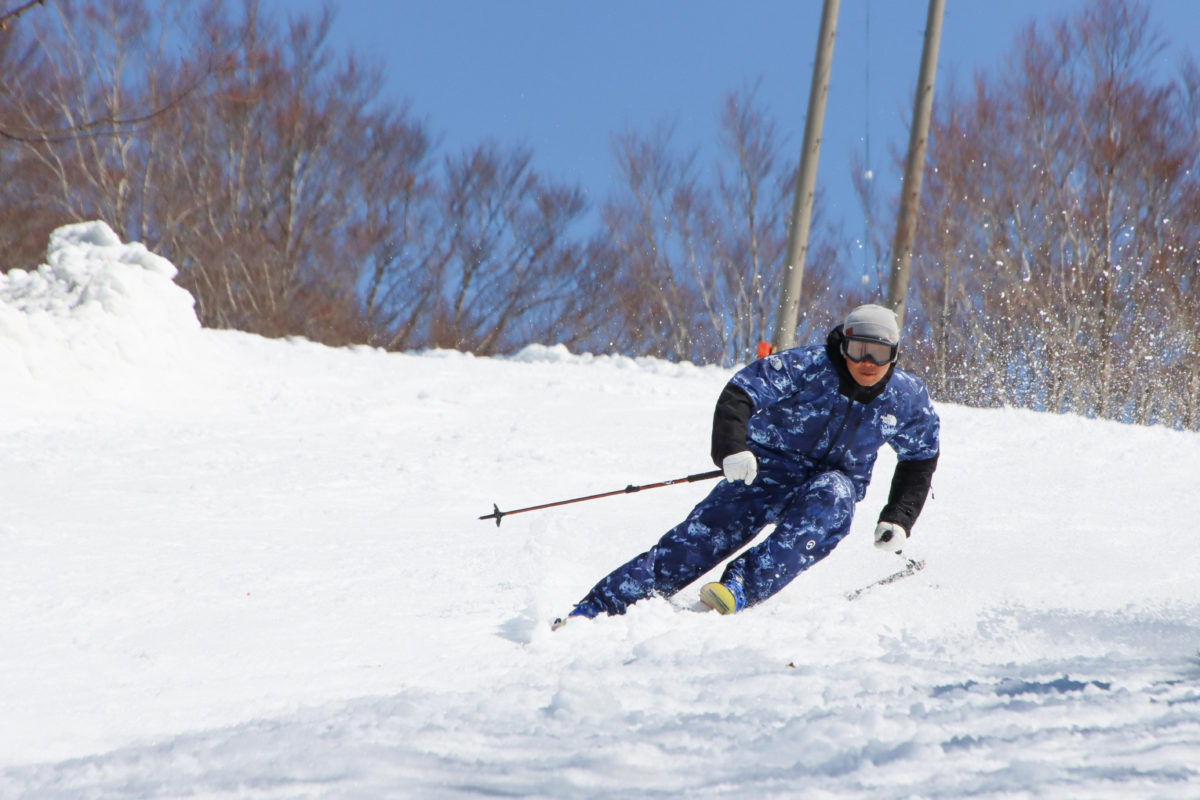
First of all, I have to get my physical condition back as quickly as possible. There's the muscular system, which recovers quickly, and the aerobic system, which never recovers quickly. Then there's the nervous system, the speed at which the brain thinks, the eyes see, and the body reacts takes time. Naturally, this is something I have to do with little time to spare, so skiing is my second priority. First of all, I have to get away from skiing and just focus on getting my physical condition up
In the world of martial arts, there's a concept called "unity of sword and Zen," which, simply put, means that even when you're not actually doing anything, by visualizing what you want to do and creating that image in your brain, heart, skin, and senses—everything—you can achieve the same effect as actually doing it. For seven months after I tore my ligament, I didn't slip even once; I only focused on physical training. The reason was that I wanted to eliminate the risk of re-rupture.
During that time, I kept thinking that if I could do a run like that on my first attempt (after getting into the pole), then I knew I was in the making. If I had trulythe unity of sword and Zenon my first run back, I would have been way ahead of the other Japanese representatives (at the time).
So when I can completely materialize the image (in my head) of the scent, the coolness of the wind rubbing against my skin, the sensation, the feel of the clips holding the poles, the scenery, etc., there's no problem, because I've experienced it and I know how to create it (so skiing is secondary). Anyway, I think it's all about the physical aspect first
When you commit your time, mind, and body to alpine skiing, there's no other way but to climb
The next mountain I'm thinking of skiing is Obergabelhorn. It's an ice wall at 4,063 meters above sea level. It's not that I can't ski it with my current skiing style, but to ski to the fullest, fastest, and strongest, I just don't have enough time to commit to it. It's a physical thing. The time I've spent surfing, snowboarding, and skiing powder won't help me on those ice walls. So, if I could ski 100% on alpine skis, 1/100th of a second faster, then I'd be the strongest if I ever made it to that mountain
Above all, it's close to Austria, where I'm planning to base myself. I have no choice but to do it. The racing season runs until the end of March, and I'll be competing in national championships in various countries, but that will end in April. I'll be going when the ice is exposed, so it'll probably be after May
When that happens, you'll be prepared, your skiing technique will have improved, and you'll have a fighting spirit, so you'll be able to ski clearly differently than before. It makes sense. So, mentally, too, it feels like you're getting ready to ski down that mountain as fast as possible
(By returning to racing) that's what ended up happening. So I think I have that kind of personality. All the gears mesh together, they get bigger and bigger, and they start turning. I think that's possible because I'm always imagining different plans and never stopping to think
As things start to move forward, my passion becomes more focused, and the other things are just put on hold. It's not like I'm quitting this and doing that. That's why I don't throw anything away. When one thing really takes off, I absorb what was there and become bigger. I think of that as energy. I think it's my strongest point
So, these eight years have not been meaningless at all. Some people might say it was a long time (until I returned), but I skated more than anyone else in those eight years
Whether it's in Norway, on the Mongolian ice, or in a valley stream, you're under pressure not to fall, and you go as fast as you can, charging at maximum speed even though you don't know what the snow is like. But you can't fall. There's no situation like that where you can't make a mistake
My ski handling skills will come in handy. And recovery. Falling (on the mountain) is bad
If I wasn't in that ultimate state, I wouldn't be able to move like that. It's like adrenaline is already moving my body. It definitely comes in handy. When you commit your time, mind, and body to alpine skiing, there's no way to go but up. There's absolutely no going back. I owe my improvement since 2014 to the mountains
The power of support gives me an unknown power
The reactions on social media and elsewhere have been nothing but supportive, and people have told me things like "it's given me courage," which I never expected. My goal was to win the Olympics, and the first step was to decide to return, which took courage for me. It took three years, after all. I'm a little surprised that so many people were understanding
It was beyond my expectations. I didn't think there would be much of a reaction, and I didn't think I would have that much influence. In fact, I was living a normal life, so I made the decision knowing that there would probably be more people who would say, "Don't be ridiculous!"
The power of support gives you an unknown strength, and I felt it very strongly and actually received strength from it when I was not selected to represent Japan at the World Championships before the Sochi Olympics
I feel like I can start now with the same feeling I had back then
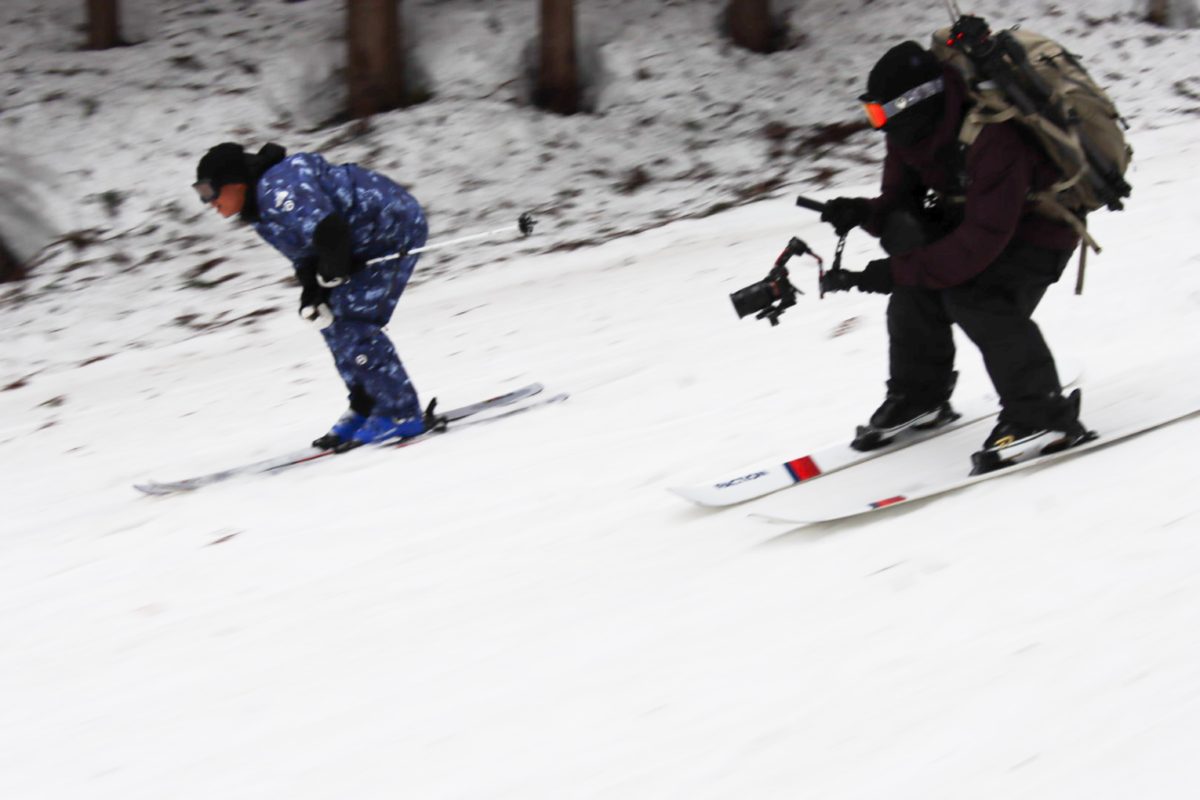
Akira Sasaki
was born in 1981 in Hokuto City, Hokkaido. He has stood on the podium three times in the Alpine World Cup and has competed in four consecutive Olympic Games from Salt Lake City to Sochi, achieving a rare feat for an Asian athlete. After retiring from competitive skiing, he developed the concept for video production while skiing around the world and started "Akira's Project." His self-produced video "TWINPEAKS," which features skiing in Norway, Mongolia, and Tanigawadake, garnered attention for using the proceeds to support the development of young alpine skiers.
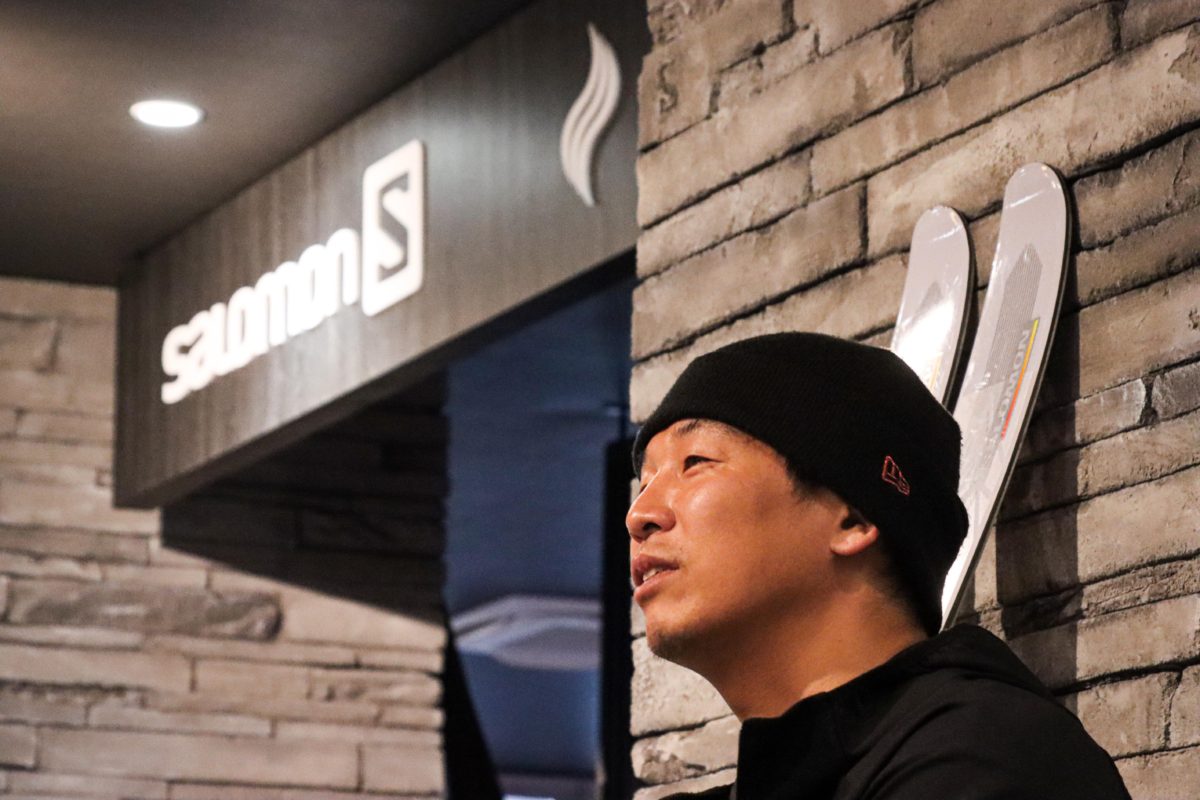
Special Thanks / Amer Sports Japan,INC..(Salomon)
NOZAWA ONSEN