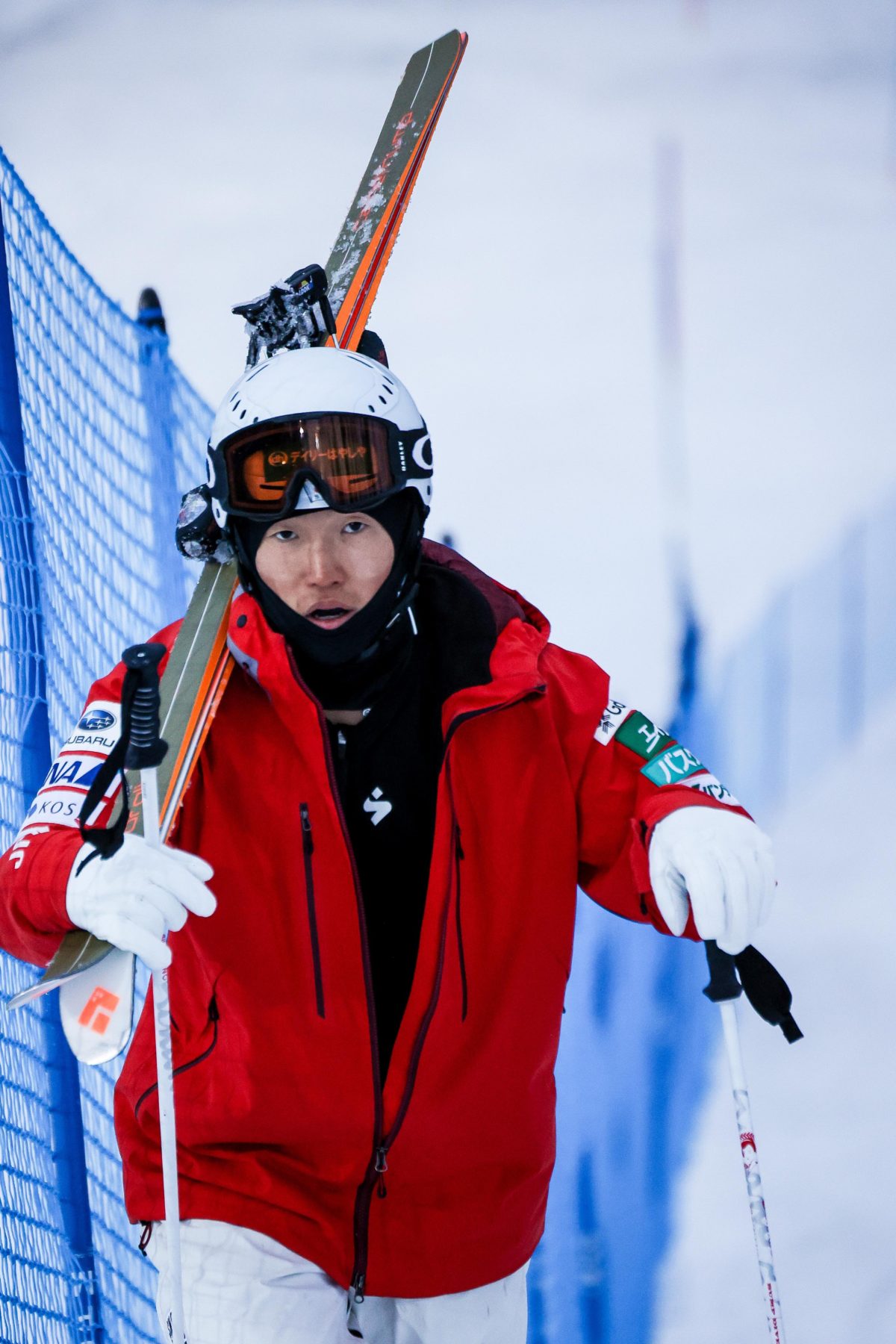

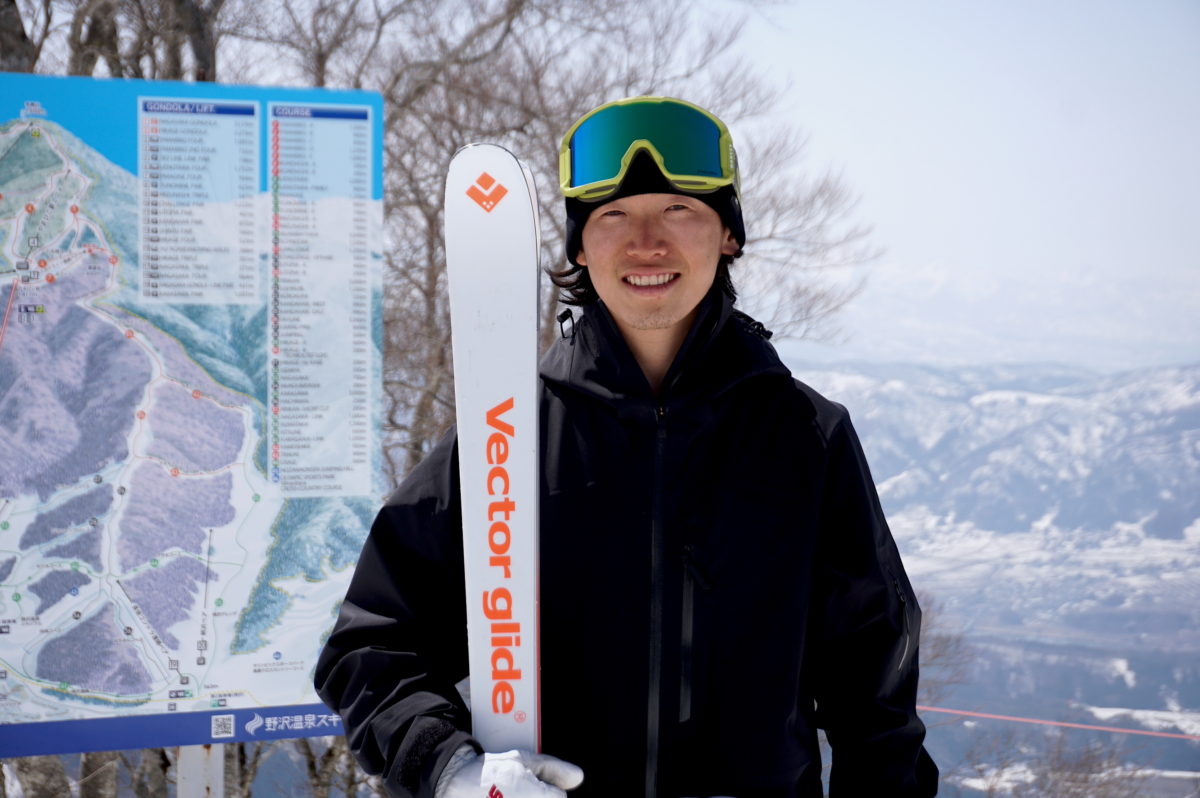
Although he was once dropped from the national mogul skiing team, Kosuke Sugimoto has since returned to the spotlight, placing fourth overall in the World Cup this season and ninth at the Beijing Olympics. In April, he was given a temporary break from the intense season, participating in a VectorGlide test ride event at Nozawa Onsen Ski Resort. We managed to find time between test rides and lesson camps to talk about this season, the Beijing Olympics, and the VectorGlide, which only he is using at the World Cup
--Thank you for your hard work this season. At the Beijing Olympics, you had an accident where your pole broke, but you still managed to come in 9th. Could you look back on the Olympics in your own words?
For better or worse, I had never experienced the Olympics, so it was good to have no preconceived ideas. I didn't have any strange trauma, so I was able to go in with an open mind
With Olympic symbols everywhere, it truly was a dream stage. I thought it was a very powerful place. But I've never been there before, so I don't know what the atmosphere would be like. The competition schedule for the Olympics was also a bit special compared to the regular World Cup. There were four days of official training, and so on. But when I stood at the start, I felt like I was enjoying myself, and I had great expectations. Now I think it was a place that made me want to go back again
*You can watch Sugimoto's final performance in the gorin.jp archives.https://www.gorin.jp/video/6295678071001
-Before competing in the Olympics, you commented that the Olympics would be a way to repay the support of those who had supported you up until then. What do you think about that?
That's right. I didn't make it to Beijing smoothly, so I missed Sochi and Pyeongchang and was dropped from the national team, but then I managed to make it to Beijing by the skin of my teeth
When I was dropped from the team because I didn't finish in the top 16 in any tournament, SAJ was also undergoing a reorganization, and the rules for joining the national team became much stricter for those aged 21 and over
When I went to Nor-Am, which is ranked lower than the World Cup, I was a player, but I had to arrange everything myself, including the plane ticket, accommodation, and rental car, which my coach had always done for me. Having experienced that, I'm truly grateful for the presence of my coach, who allows me to focus solely on the competition. Takashi Endo and Yugo Tsukuda of Fusion Bumps in Kandatsu took particularly good care of me. Thanks to them, I was able to return to the team
--Compared to when you couldn't even get into the top 16, you've had some good results this season. What has changed so much?
I think one reason is that I've changed my skis. The Vector Glide Camel Hump has excellent maneuverability, so I can move my skis precisely where I want them to go. However, I haven't changed my technique much since the time when I wasn't getting good results. I've just kept doing the same thing. And
because I kept doing it, the judges now appreciate my skiing. Before, my overall ability was low, but I think I've been able to raise my level overall.
-Apart from your technique, was there anything else you did to improve your physical or mental condition?
I still do strength training and lift weights, but I've stopped doing strength training that increases muscle size, known as muscle hypertrophy
I worked with a nutritionist to slim down. For the 21-22 season, I wanted to see how much weight I could lose to achieve my best performance. At one point, I lost 7 kilograms, and I got really dizzy. I thought, "This is bad, I can't do this." So then I tried gaining a little weight, testing the limits of my weight fluctuations.
As a result, I found that 68 or 69 kg is my ideal weight, and I'm training to keep that as the upper limit and avoid large fluctuations. So I don't do too much strength training, and I've decided on a set amount of time each week for long periods of cardio exercise.
After that, I consulted with a physical therapist and learned the correct way to move my body. I focused on moving my body efficiently, including how to move each joint. If I don't move correctly, it can easily lead to injury.
When I was removed from the national team, I had these things checked privately and gradually made changes.
-When you were dropped from the national team, did you act out of a sense that something had to change?
That's right. I haven't changed my skiing technique at all, but I realized that doing other things the same way wouldn't work. I think it's fine to keep doing the same thing and improve your basic abilities, but there are some things that remain constant, so I thought a lot about how to make changes to improve my skills. Incidentally, this season I tried something different in every race. Of course, I'm also trying new things for the Olympics
--What? Even at the Olympics? What did you try?
For the Olympics, I completely changed my usual routine: the way I started, the way I warmed up, the number of times I did image training, when I took off my down jacket before the race, when I put on my skis - I changed everything, and went into the race without any preparation
Strategically, after landing the first air, I made it my main goal to take the thinnest possible line over about three bumps. This was because I wanted to create a gap. I think that was a big factor in my being able to advance to the quarterfinals in second place
--I see. So you change it for every race
It was quite tough emotionally this season. I wanted to go into the matches with peace of mind, but I felt like my growth would stop if I didn't take on the challenge. But it's not reckless. I understood it in my head, and I imagined how I could do it if I did this, and I pushed myself in official training. I tried to be mentally motivated and take on the challenge in every match this season
--By the way, even after you were dropped from the national team, you still had a strong desire to compete in the Olympics. What was your image of the schedule working backwards to Beijing?
That's right. Olympic events are held every four years, and the cycle remains the same. I do plan by working backwards, but if I only think about my results, my skating tends to become increasingly small and focused. Most importantly, my mindset changed halfway through the competition to the idea that if I skated in the way that I thought was cool, the scores would naturally follow, so I focused only on skating well
On the other hand, when I was on the national team, I didn't have that mindset. I was always chasing numbers (results). I had to finish in the top 16, I had to go to the finals. That was all I thought about
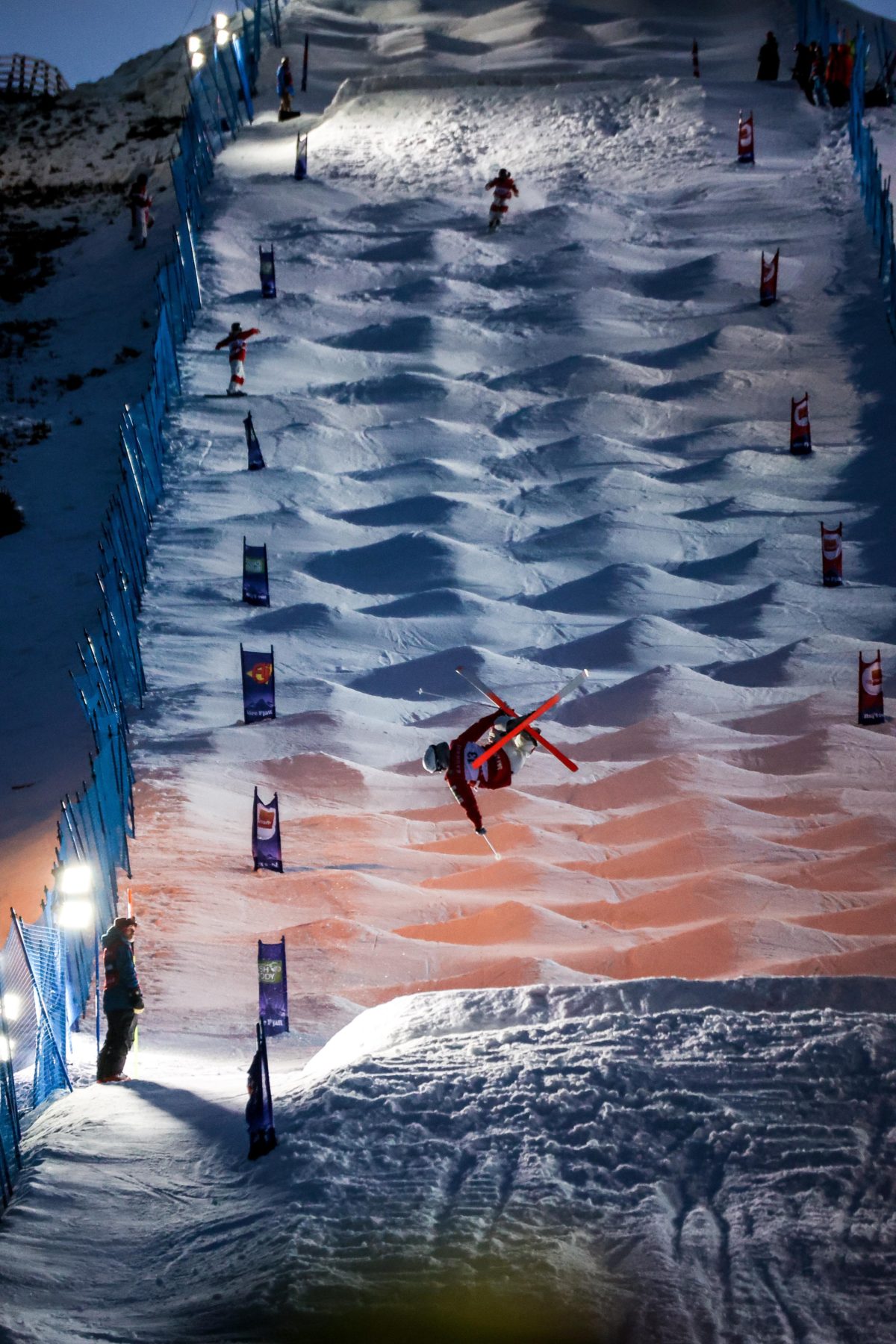
--I see. So, could you tell us about the skis you use? I think you're the only ski brand among the athletes competing in the World Cup that uses Vectorglide, but how did you come across them?
I had always used Heart skis before I started using VectorGlide. When the brand was about to go out of business, I decided to test all the mogul skis available from a flat perspective. I rode them all, including ID One, Rossignol, Faction, K2, Fischer, and VectorGlide, looking for skis that would suit my style of skiing
At that time, the skis that really suited me were the Vector Glides. However, there was one problem: while other brands met SAJ regulations and could be used in competitions, the Vector Glides were not officially approved by SAJ at the time
So even if you feel that the skis are good, you don't know if the brand will certify them as SAJ-approved gear
The first hurdle was expressing to Akiba his desire to use VectorGlide to return to the national team and compete on the world stage. Akiba listened to what I had to say and said he would support me, and I was able to quickly obtain SAJ official gear certification and transfer. I felt a sense of manliness about that
It's not an exaggeration to say that they got the official approval for me, so the pressure is immense. I'm the only one who wears them. It's not just because I like them, but after trying out all the skis, I found that they were the best fit for my style of skiing. It's been two years since I moved, but I'm still the lowest-ranking member of the brand, haha
In the past, Vectorglide has had a strong track record in the competitive scene in moguls, ski cross, and snowboard cross. While Vectorglide is known for its powder and backcountry skiing, the addition of Sugimoto and other skiers in 2020 has seen the team once again take on the challenge of competing in the competitive scene with Japanese skiers
--You said that it suited your skating style, but could you briefly explain the characteristics of your skating?
I think the defining feature of my skating is my overall strength. For example, there are many skaters who excel at turns and jumps. But one of the reasons I'm currently ranked fourth in the world is that I can maintain high quality from start to finish. For example, I think my strength right now is the way I connect the moguls after landing from a jump
--The skis fit perfectly with the overall quality of your riding. What about the finer details of how well the skis fit together?
I'm a Crown certified skier and have also done basic skiing. I think I'm the type of skier who puts a lot of pressure on the outside foot among mogul skiers. However, when I wore other skis, I felt that many of them couldn't withstand the force of my push. When I put weight on my outside foot and there was a slight bump, the ski wouldn't flex even when I pushed down, and in some situations my upper body would get crushed and I would end up stuck forward. The Vector Glide gave me a solid response when I pushed down. I thought that kind of gliding ability was amazing
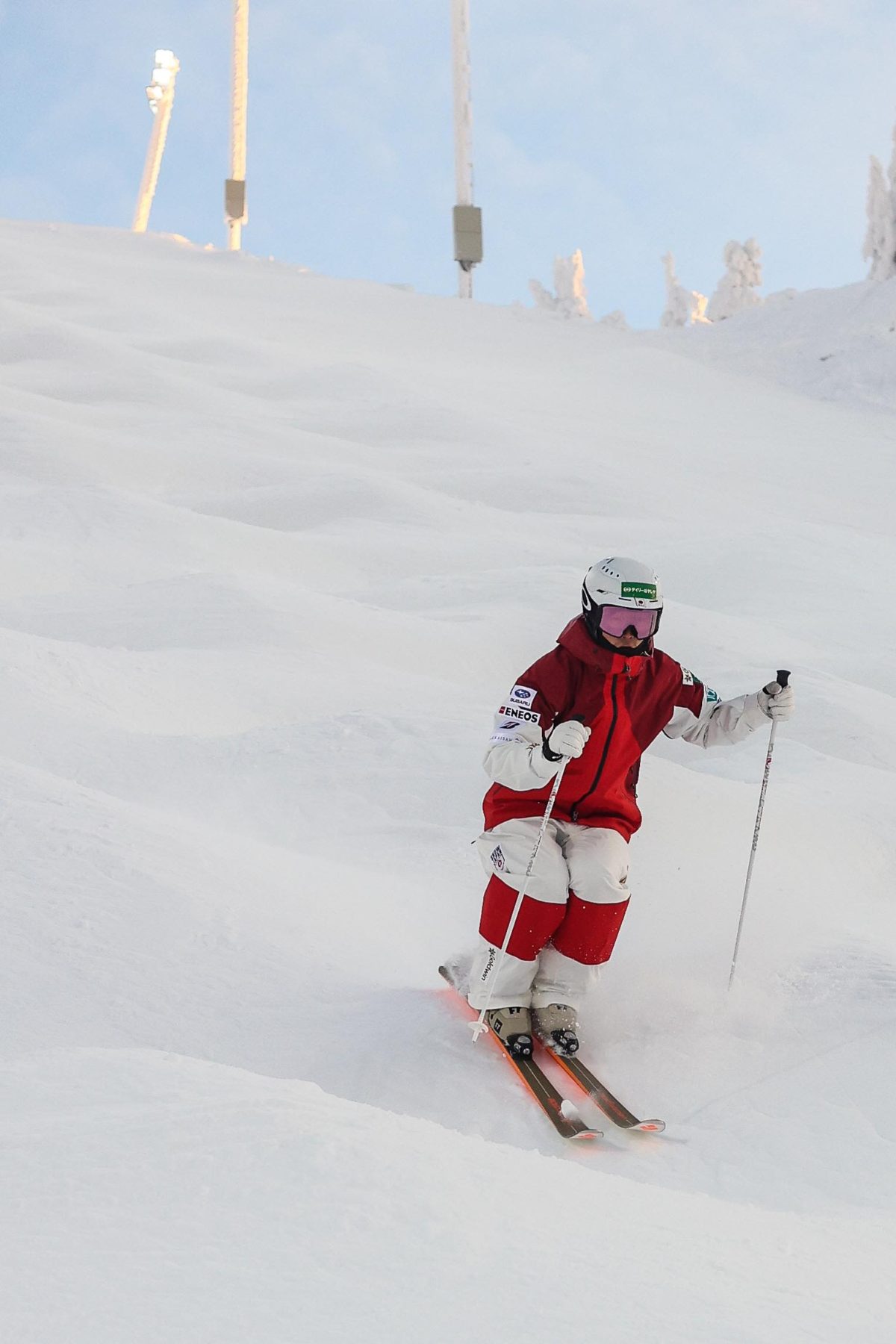

--I see. So you like skiing where you can step firmly on the board
I changed skis and then suddenly the World Cup came around, and if I didn't do well, people would blame it on my skis, which I really hated, haha. But luckily, everything I did went well. I really think Camel Hump was a big part of what helped me improve my technique
-Have you tried skiing on slopes other than mogul slopes?
That's right. I skied on flat slopes and also on moguls. There's also the order in which you start skiing in the morning. So, for three days, I tried skiing on hard runs first thing in the morning, shuffling the order each day
-Does it take time to fine-tune your skiing to your own style?
That's right. Especially the reaction when you step on it. Moguls aren't flat slopes, and the shapes of the bumps are all different. No two conditions are the same, so even if you ski with the same impression, the feeling you get from the bumps will be different. I think it must be quite difficult to match mogul skiing with your skiing
--In that case, it seems like there are a lot of things you won't know until you try skiing for an entire season
That's right. It depends on the snow, whether it's slush, icy ice, a little snow on top of the moguls, packed snow, etc. The slope also plays a role, of course. You really have to try riding for a season
Actually, I was trying out some new skis this season. They're a harder type than the standard model I currently have. I had them custom-made with 10% more flex and torsion from tip to tail.
They arrived during my overseas training camp before the Olympics, and I tried them out on flat ground to get a feel for them, and then on moguls. I tested them with the intention of stopping if I didn't like them after the first couple of runs, but I just couldn't get my skiing style to match the skis at all... I didn't have much time before the Olympics, so I didn't use them. But now that I think about it, I wonder if I could have gotten used to them if I had kept riding them a bit longer.
Right now I'm undecided, and I'm trying them out with the idea of using them next season.
-Do you already have an image of being able to raise the level of your skiing by mastering the slightly stiffer skis?
Yes, I think it will improve. Up until now, when I skied straight down sharp bumps, it flexed more than I expected. If the skis become stiffer than they are now, the flex will be reduced, which should lead to more forward propulsion. This should increase my skiing speed and make it easier to make straight, powerful turns. However , if the skis are made stiffer overall, they won't flex as much and will be more prone
も、スキー全体を硬くするとしならずに、バックウエイトになりやすい。スキーがどんどん前に走りやすくなるので、そこは気をつけないといけないとです。スキーを自由に動かせるベストポジションを保つのが、これまでよりも難しくなりそうですが。
--It's a little early to say, but I'm looking forward to seeing your performance next season. This season has been fulfilling, but what are your goals for next season and beyond?
One thing I want to do is improve the quality of my skating even more. Another goal is to achieve even better results at the World Cup
Profile
Kosuke Sugimoto
was born on December 2, 1994, in Fukuroi City, Shizuoka Prefecture. This season, he has consistently reached the Super Final in the World Cup, and achieved his long-awaited first podium finish with a 3rd place finish at the 8th event, Deer Valley. He finished 9th at the Beijing Olympics, 4th overall in the World Cup, and 10th overall in the DM, peaking in the Olympic year and rapidly rising in the rankings. He is the contemporary of Yukima Horishima and Daichi Hara.
Instagram @b1ackcoffee