

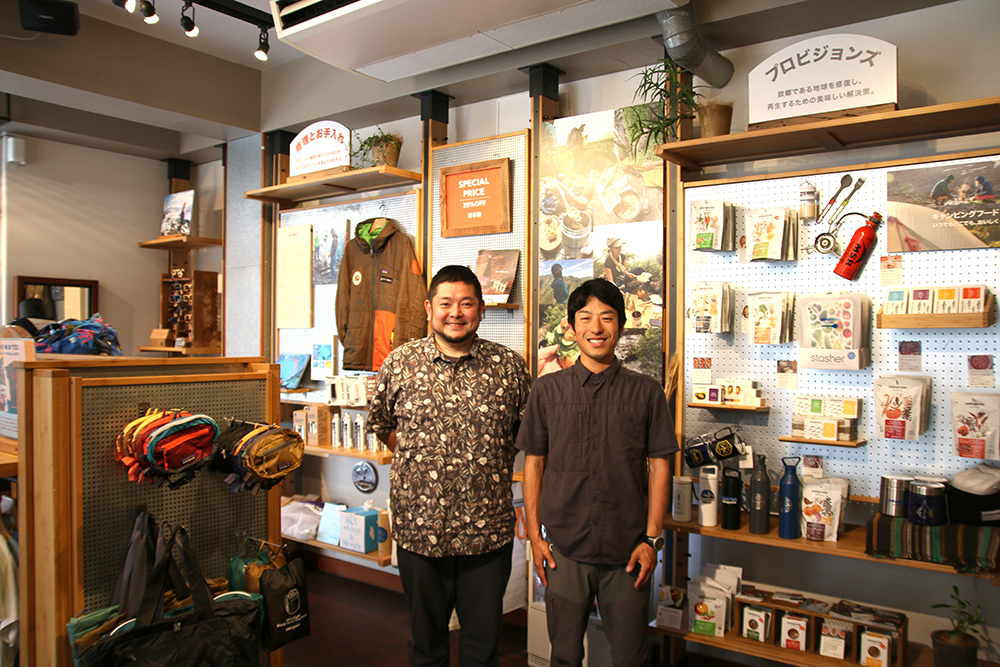
Patagonia Tokyo Kanda, which reopened in October 2021,
offers a full lineup of high-performance apparel designed for outdoor activities. Staff with expertise in areas such as skiing, mountaineering, and trail running provide advice based on their real-world experience. At the same time, it functions as a flagship store powerfully conveying Patagonia's message.
Patagonia Tokyo Kanda has launched a new initiative for the 2021-22 season, the first of its kind in Japan, which includes the sale of used products, primarily snow wear, as well as repair and reuse services, and snow wear rental
So, what was the reality of that initiative?
I visited Patagonia Tokyo in Kanda at the end of May, after the winter season had ended.
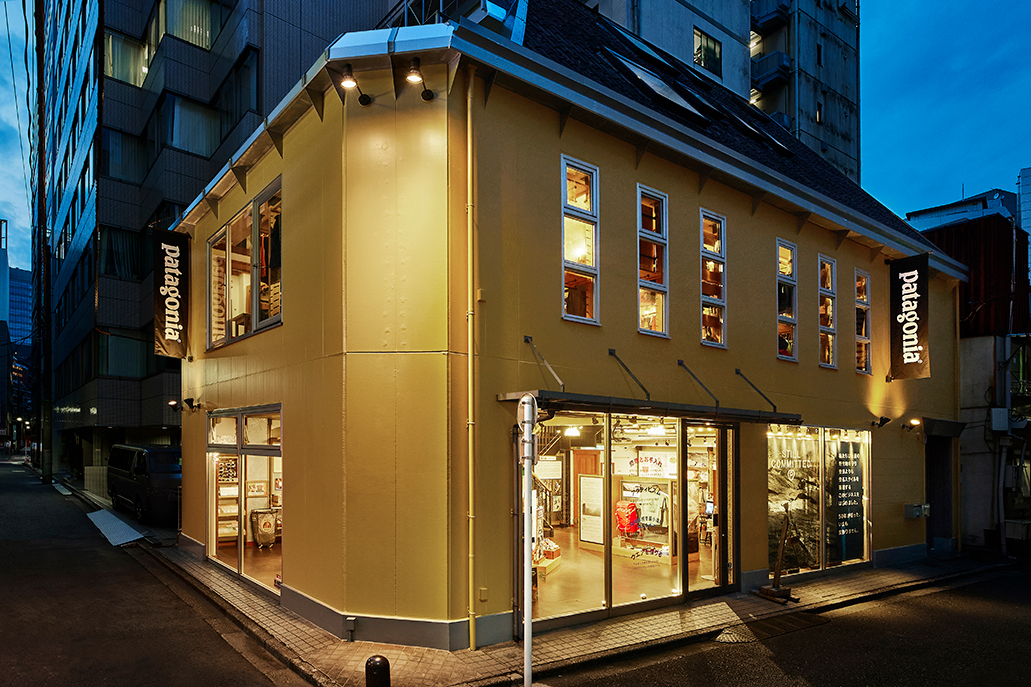
Background to becoming a technical store
The people who spoke to us this time were manager Mitsuhashi and Tsurumaki. Tsurumaki is the Activism Officer who leads action against the climate crisis and is always present at Patagonia directly managed stores. Tsurumaki spoke while looking back on the season
"We started changing our concept on October 9th, 2021. There were two purposes for making this major change to the store's concept as a 'technical store.' One was to convey the message that we should all come together to protect the snow-capped mountains, which are our precious field. The other was to increase our lineup of technical products, products that can be used effectively in the field, such as on snow-capped mountains, climbing, mountain streams and mountain biking, and to become a store that expresses the world of Patagonia's outdoor sports and shares field experiences with our customers
Before the concept change, we had a wide variety of lifestyle products, with the technical line on the first floor and lifestyle products on the second floor. With the renovation, we stopped selling lifestyle products and instead stocked the full lineup of high-performance wear that performs well in the outdoor field at the Kanda store
The first floor is designed to be a space that conveys Patagonia's environmental initiatives and messages, with tables where customers can sit and talk, and a spacious display of seasonal outdoor wear, allowing customers to feel the richness of nature and the changing seasons
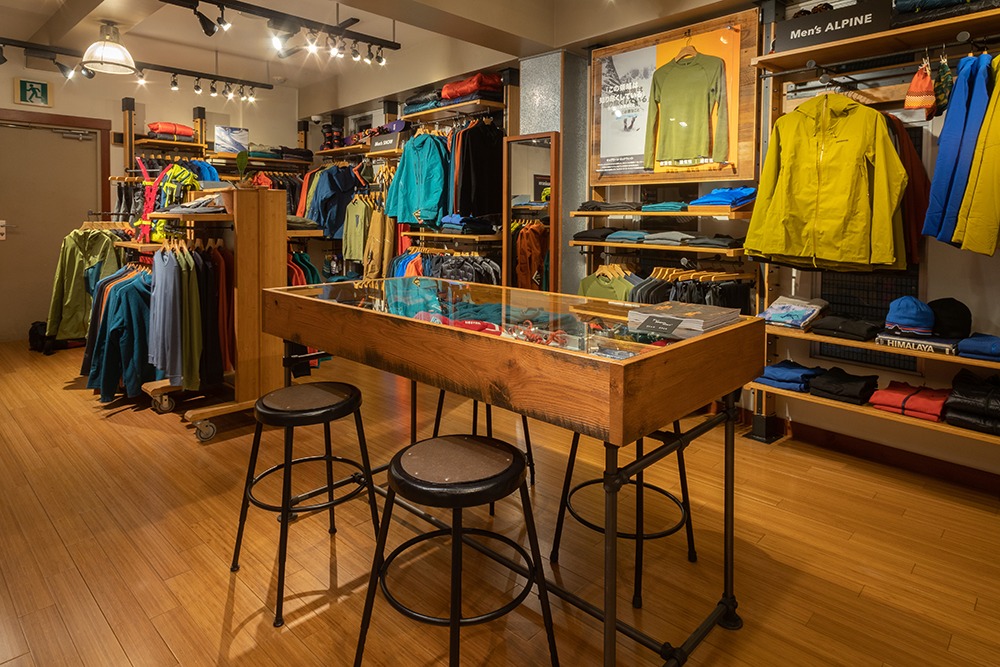
On the other hand, the second floor is packed with technical products. By clarifying these two objectives, the impression of the store has changed completely
Repair suggestions in the "Worn Wear Program"
Patagonia has been running a program called "Worn Wear" since 2013. It celebrates the stories behind clothing and encourages users to use their gear for a long time. It also provides an easy way to recycle products that can no longer be repaired. By using recycled materials and repairing what you need to use it for a long time, you will avoid buying unnecessary things. As a result, there will be less waste. It is an effort to reduce the environmental impact
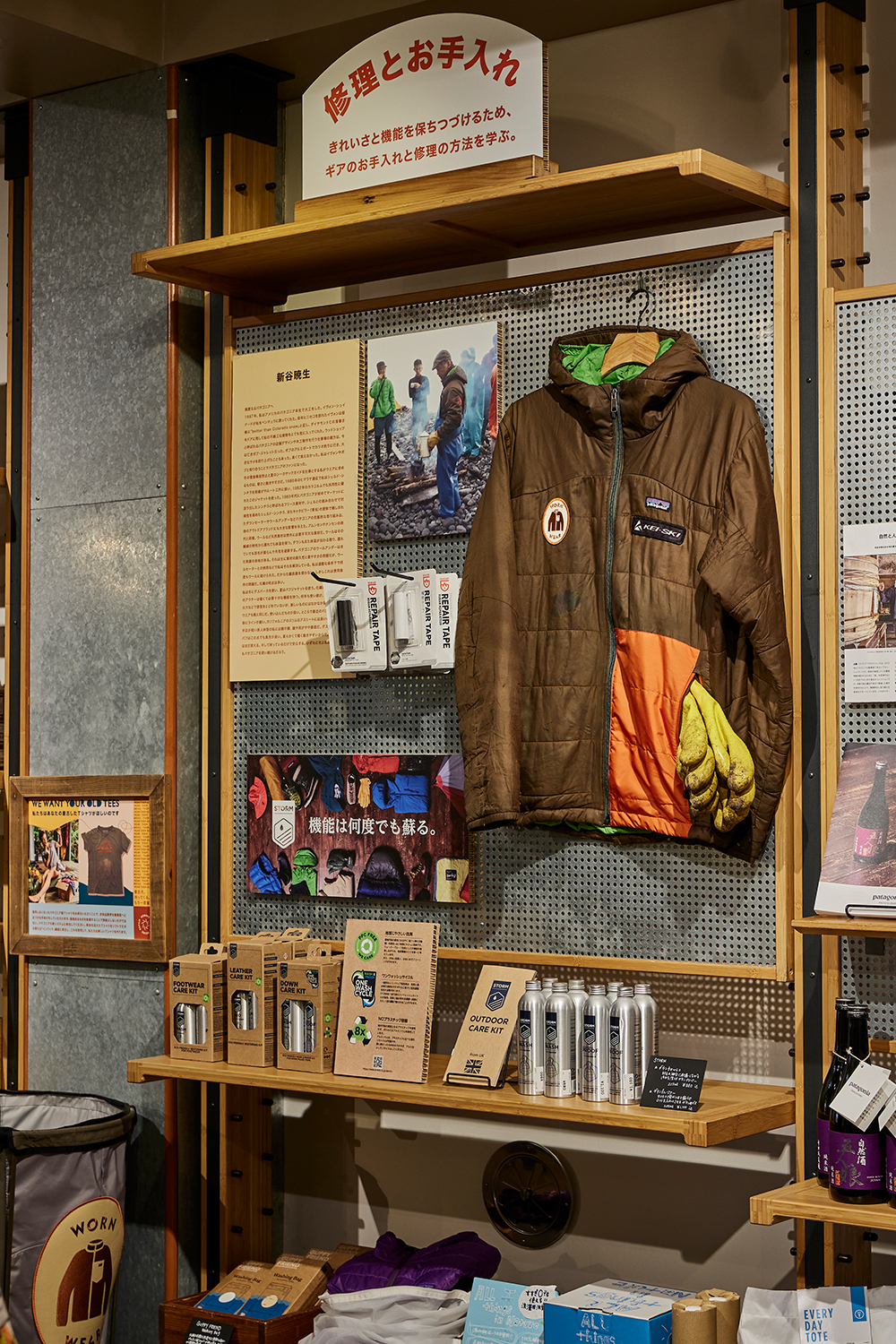
The Kanda store also had an exhibition on the floor, as shown in the photo, to send out the message about repairing and caring for clothing through "Worn Wear."
What was the repair process like at the Kanda store?
"We receive a wide variety of clothing for repair, including fleece, down, and hard shell items, but the majority of requests at our Kanda store are for repairs of products that are actually used in the outdoors. The most common are for tears and holes. For example, a garment may get ripped by getting caught on a tree while hiking, or the cuffs may get burned by a burner while cooking outdoors and melt, creating a hole
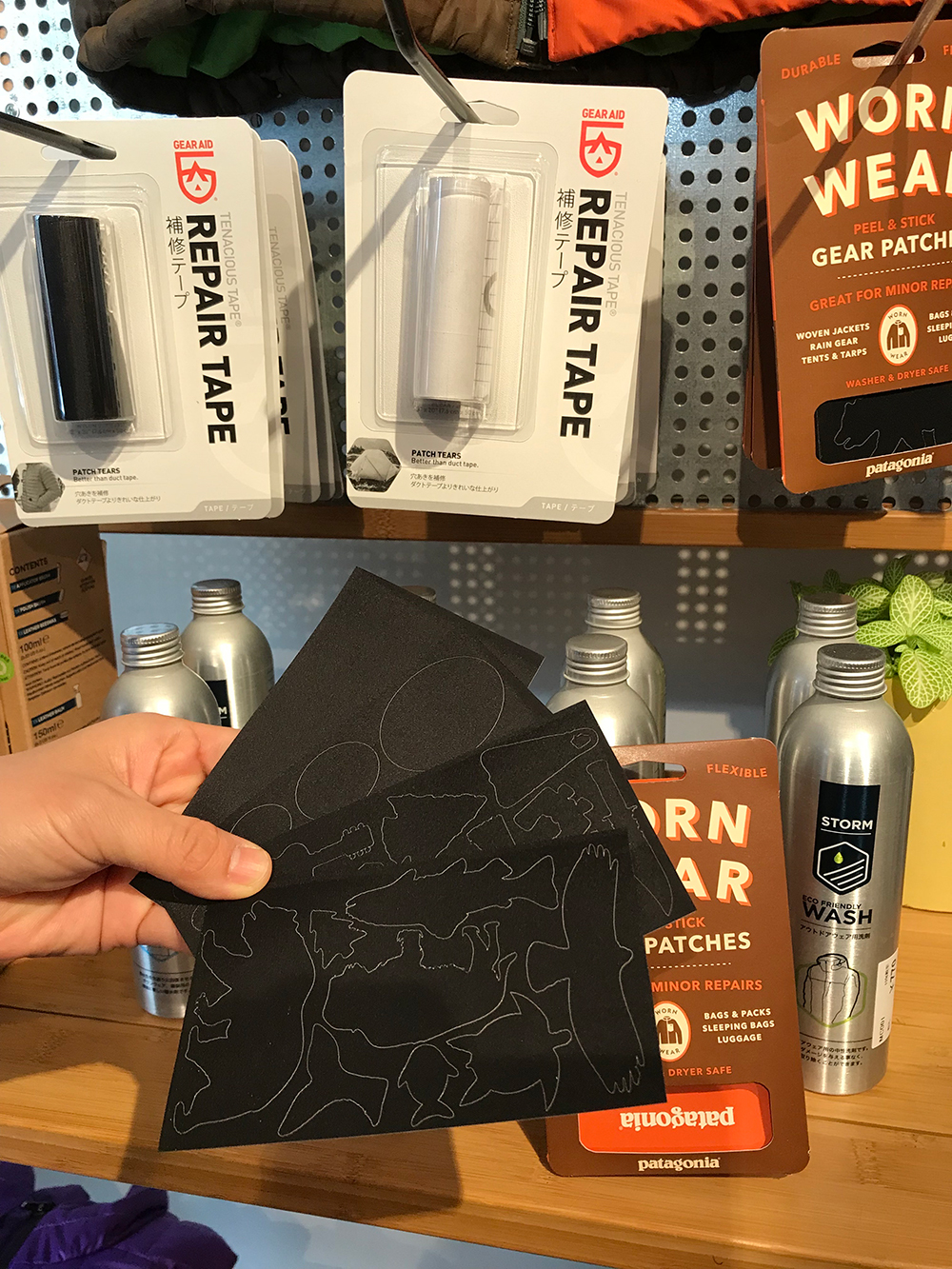
There are two main repair methods. The first is simple repair, where we explain the repair method and its advantages and disadvantages, and then work with you to carry out the repair work immediately at the store
To repair the hole, use a Worn Wear repair patch (there are also commercially available products such as the black sheet shown in the photo) and apply it to the size of the hole
It's simple and easy, and if you can just stick them on at a store, it doesn't cost anything and it saves time. Repair patches can be shaped like animals or arranged however you like, so they're fun and playful, and you can be original
All you have to do is attach snap buttons and you can make most things in just an hour
"Many people are satisfied and happy with this simple repair. For larger holes or zipper replacements that cannot be fixed with this method, we send the item to a repair service. Outdoor wear often needs to be strong enough for heavy use, so we put a patch on the garment and have the sewing staff repair it properly," says Tsurumaki
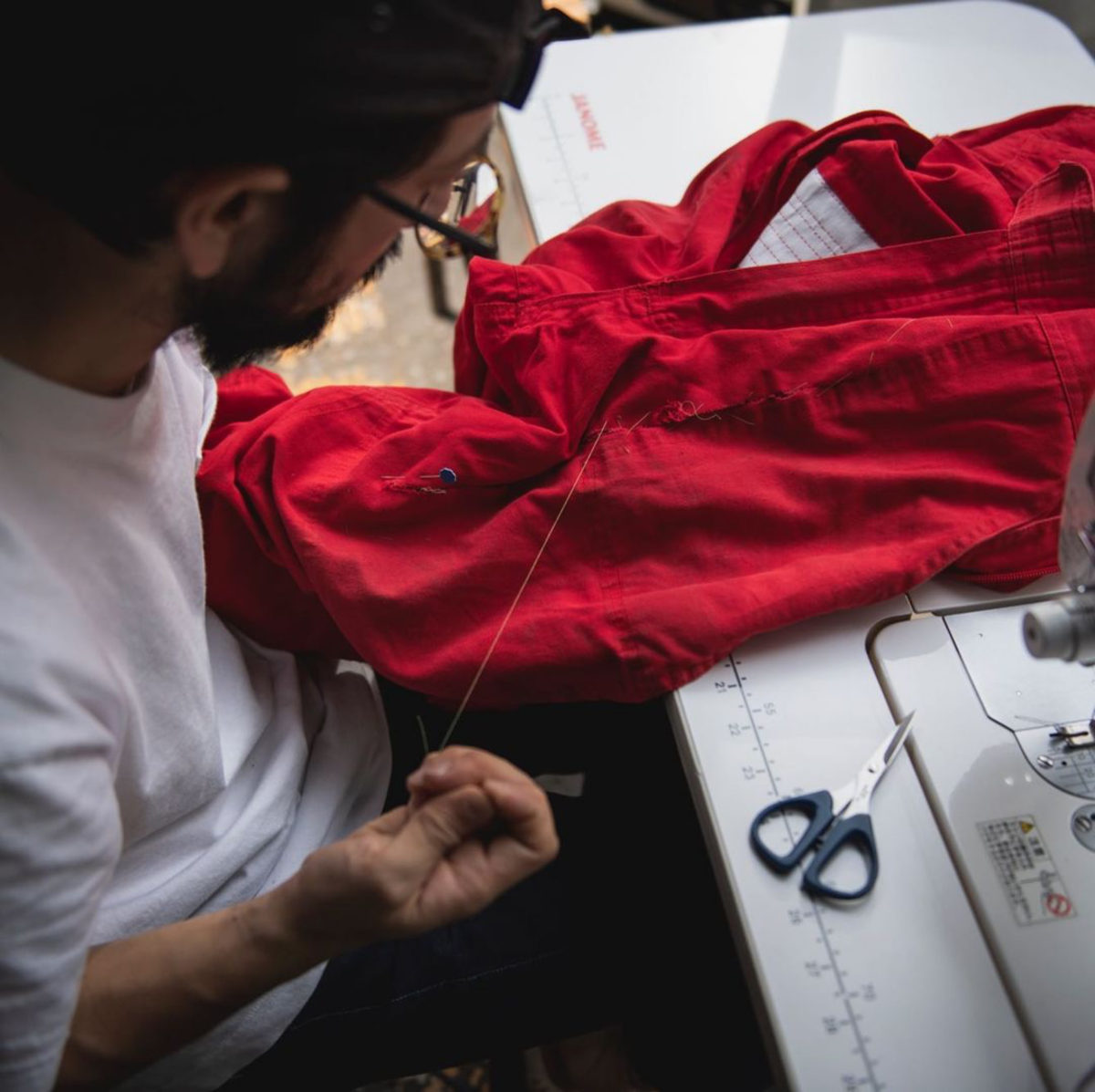
Communication born from repairs
The garments are spread out on a large table inside the store, and staff and customers work together to repair them. What kind of conversations will emerge there?
"We really enjoy hearing stories from our customers about where they use their products and how they get damaged. Whether it's during fun outings with family and friends, or when they challenge themselves in competitions or adventures, what kind of nature they've experienced, what memories they've made, and how the jacket has become a cherished possession.
Many of our customers have traveled to all sorts of places. We deepen our conversations and relationships by listening to them talk about how this jacket has traveled to so many different countries around the world, and by offering various repair suggestions. Even if it looks patched up, to the customer it's a one-of-a-kind jacket that they feel is absolutely essential. We also have the challenge of seeing how far we can go to help them with their passionate desire to use it again. It might be unknown or challenging for the staff, but we also learn a lot from them, which is especially fun for me." (Mitsuhashi)
We received 86 repair orders in just the month of April!
"We received 86 repair orders in April alone, the highest number among our 22 directly managed stores, at the Kanda store. We had even more in December and January. But when you go to the repair center, it's even more amazing. The shelves are piled high with products. Up until now, we've sent almost all of our equipment to the repair center, but now our staff have learned how to repair it, and we can now handle an increasing number of repairs in-store. People who go skiing every weekend often request that their equipment be repaired quickly because they want to use it on the weekend," says Mitsuhashi
If you bring your cherished garment here, the staff will listen with interest to your experience and repair your precious garment. This is surely a very happy experience for the user. It seems that "care" methods are gradually becoming established to wear your garment for a long time without needing repairs
Some people donate items that cannot be repaired as desired, likely because they sympathize with the environmental initiative and feel that if someone else uses the item, it would be better for them to use it rather than throw it away
"Much better than new." Patagonia's message is resonating with users, as evidenced by their track record of repairs
What's it like selling second-hand snowwear at Kanda Store, the first of its kind in Japan?
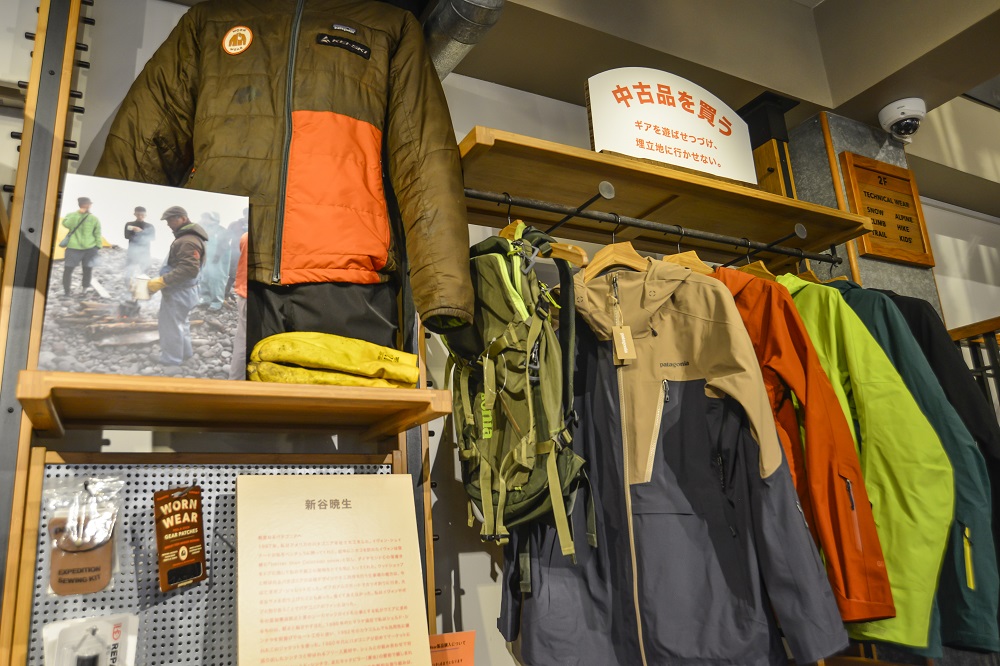
The Kanda store was the first in Japan to undertake the sale of used Patagonia snow wear. The rationale behind this initiative is to "continue the cycle of reusing gear and prevent it from ending up in landfills." Since no new products are being manufactured, CO2emissionsare reduced, and for users, the benefits are significant, as they can obtain high-performance wear at a bargain price of about half the original price. In the first year, the initiative was limited to items collected from Patagonia staff. After washing and water-repellent treatment with meticulous care taken in handling the functional materials and after inspection, the items were sold as reused goods.
"This was a huge success. As a technical store, Kanda sold second-hand products that could actually be used in the field. Among the various items, the most popular were three-layer hard shells and synthetic insulation with padding
The prices were set at half price or less, so the fact that high-performance products were affordable seems to have been a big factor. They sold out quickly, and the sales floor space continued to shrink. The three-layer shell and insulation are highly durable, and we are pleased that customers chose second-hand products because they empathized with Patagonia's quality and message of environmental conservation
"Because we're in a town with many schools, we've recently seen an increase in the number of students visiting our store, and they tend to choose second-hand items. Because new items emit CO₂ during the production process, they are more environmentally conscious and prefer to buy second-hand items so they can wear them for a long time," says Tsurumaki
"For customers with that kind of awareness, even though the items are secondhand, they carefully examine the technical wear before buying. They come in once, think about it for a while, and then come back again, and if they find it, it's fate. There was even a customer who said, 'I was thinking of buying it as a gift for my wife,' and left the store, only to find that it was gone when he came back. Each and every product was a 'meeting' with the customer." (Mitsuhashi)
We are entering a sustainable era where reused items are becoming gifts. This is not just about the environment, but also about cultivating a sense of appreciation for the stories behind items that someone once loved, and the respect and legacy they cherish. If it was worn by a staff member, it also exudes a sense of trust. It's also fascinating to imagine the landscapes and fields in the world where this clothing was worn
While there are still no plans for second-hand sales for the 2022-2023 season, in the US they have apparently started buying from and selling second-hand items to users. If they can get users involved, the scale will expand rapidly and the message will be more widespread. Let's keep an eye on whether there will be any new developments in Japan as well
First-time snowwear rentals are a big hit!
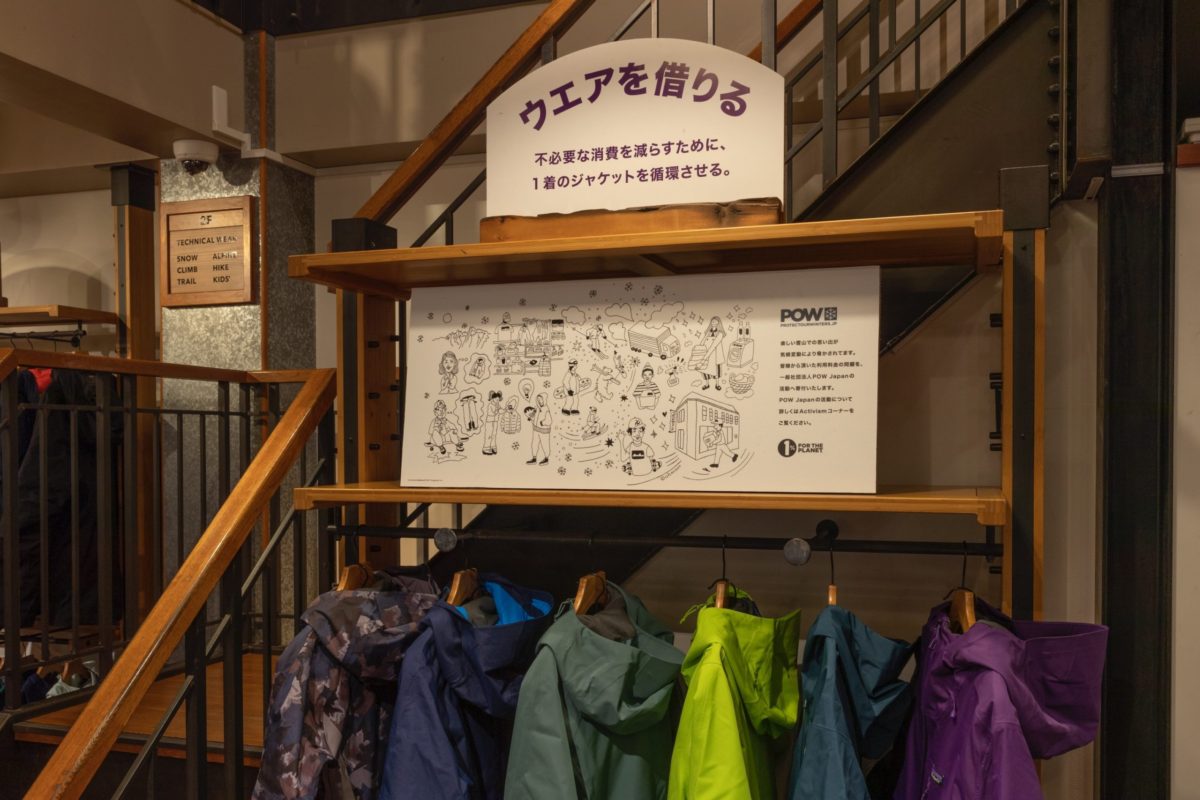
The final new challenge for the technical store, Kanda Store, is rentals. This time, for the first time, they have also started renting snowwear. Rentals are common at ski resorts and shops, but renting in-house brand items at stores directly operated by clothing manufacturers is not yet standard in Japan. While some may think, "Huh? I don't have to buy it? I can rent it?", they will probably also think, "It would be great if I could rent it for a short period of time."
Rental periods are in one-week increments. The fee is a simple 4,000 yen per rental, regardless of the number of days of use. Considering that rental wear at ski resorts and other places generally costs 3,000 to 4,000 yen per day, this is quite reasonable. It's also convenient because you can return it by mail after use
Reservations began in November, and rentals began in December. The service is targeted at people who want to experience snowy mountains for the first time, entry-level users who wear skis very infrequently, and those who have experience but have had a long break and are returning to skiing. To suit these target characteristics, three types of top and bottom shell sets have been prepared for men and women, including "Snow Drifter" and "Powder Bowl."
"This was an initiative that was only implemented at the Kanda store, and was a pilot program that began in the autumn/winter after the store was renovated, so at the time we had no idea how much demand there would actually be in the market. That's why we initially set a target of around 40 people using the service. But when we actually tried it, we had 135 uses! We were surprised by this
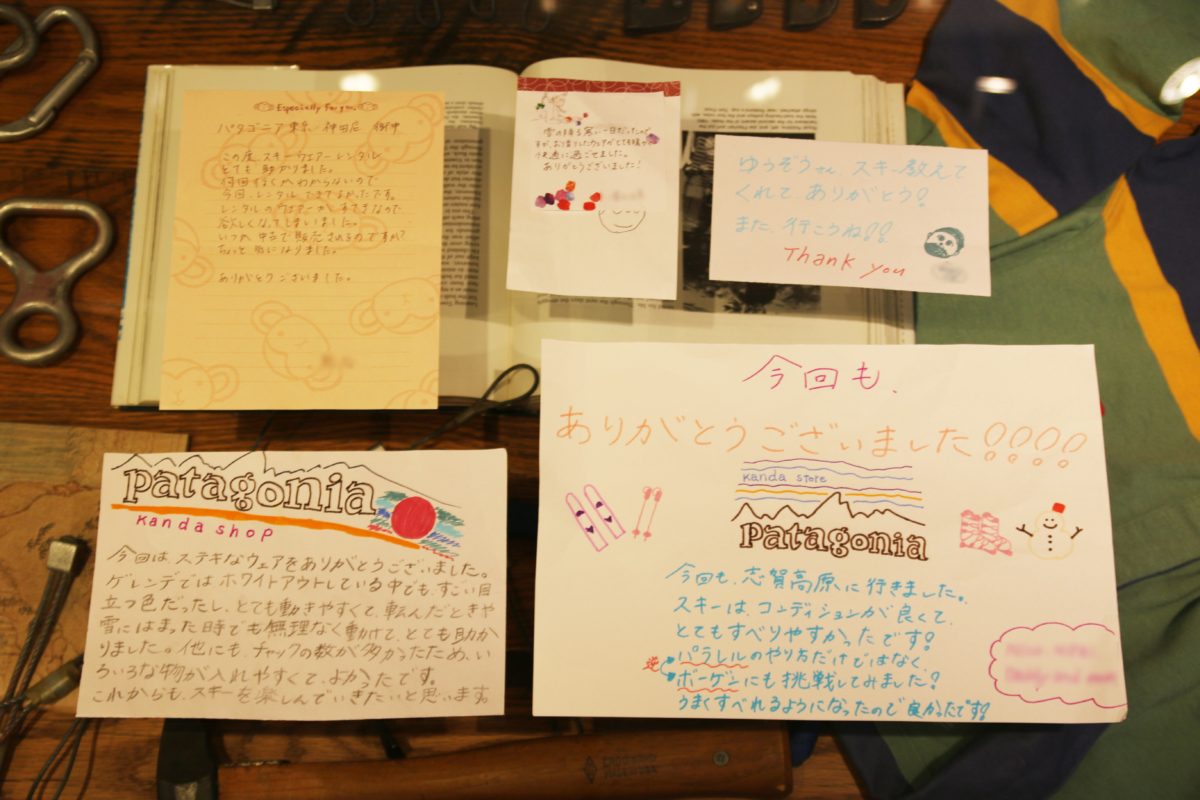
During the program, we received many requests asking, "Do you also rent children's wear so that families can go skiing together?" So, at the end of December, we added children's wear to our lineup. Many families have been able to use the service, and we have even received thank-you letters from children when they return the equipment. This made us very happy," said Tsurumaki
By renting, you can participate in environmental conservation activities
In addition to promoting reuse, this rental event had another major purpose. The 500,000 yen raised from rental fees was donated to POW (Protect Our Winters Japan). When we explained to customers that their rentals were being used to protect the environment and protect our own fields, many were surprised and delighted. This is what we most wanted to communicate, so we felt a great sense of accomplishment
You can rent gear at ski resorts, but coming to a Patagonia store and renting gear means you're doing something for the environment. Many people agreed with that, and that makes me really happy," says Tsurumaki
Repairs, second-hand sales, and rentals all far exceeded expectations, giving Patagonia Tokyo Kanda a sense of satisfaction that their message of protecting our precious fields is truly reaching users
Patagonia Tokyo Kanda is known for its participation in the Kanda Ski Festival, which is held every autumn, and for its collaboration with nearby universities, and for its ties with the local community in the area where the store is located. Its environmental conservation efforts will continue in various forms. We look forward to keeping an eye on the future of Patagonia Tokyo Kanda
The person who taught me
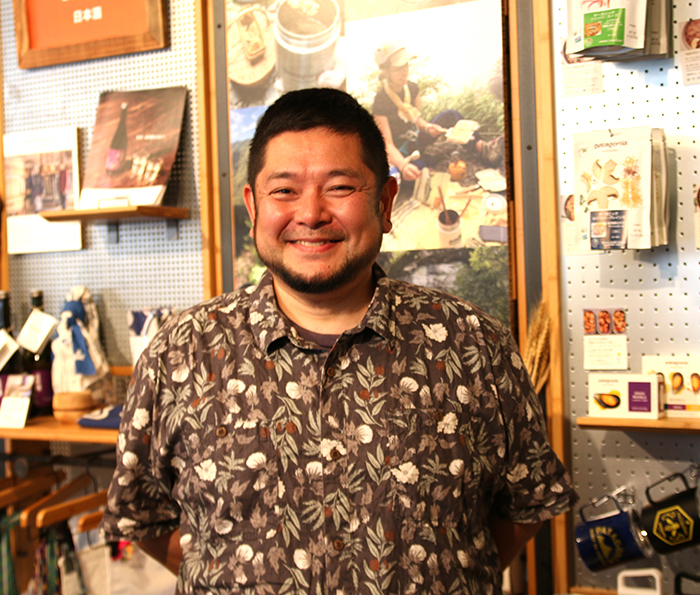
Toshio Mihashi, Manager at Patagonia Tokyo
Kanda
The store manager welcomes customers with this smile. He has been fond of skiing since he was a child, and discovered skateboarding in junior high school, and later started snowboarding. He spends the winter in Niseko, where he worked at the Patagonia store at Shugakuso in Sapporo, which led him to join the company. He still makes regular visits to Niseko in the winter
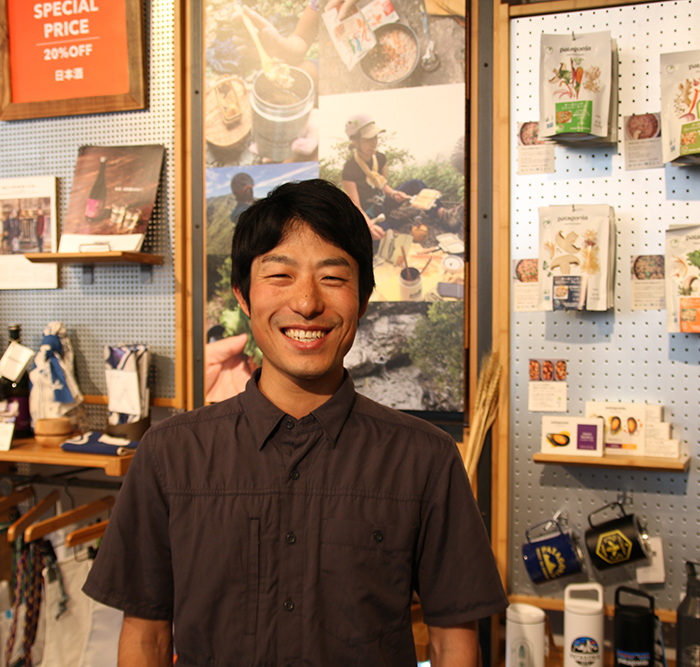
Taku Kanda Tsurumaki
, Patagonia Tokyo
As the activism manager for the Kanda store, he actively works with the local community and promotes environmental conservation efforts. He is also a mountain expert who teaches avalanche training. In his free time, he enjoys snowboarding with his family
Information
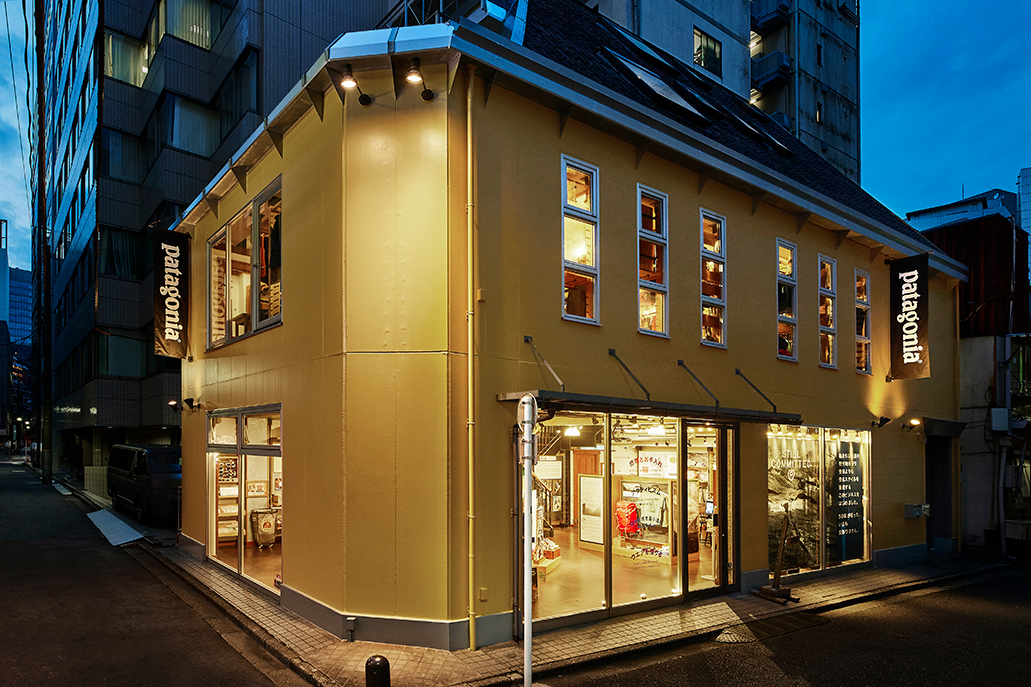
Patagonia Tokyo Kanda
101-0052,
Japan Tsuyuki Building No. 2
TEL:03-3518-0571