

More and more companies and individuals are working on SDGs and sustainability in response to climate change. For people who play or work outdoors, maintaining the natural environment is a major issue that directly affects their happiness in life. Vail Resort in Colorado, USA, is implementing sustainability initiatives with astonishing scale and passion to protect the fields they love, and has achieved great success. What exactly is going on at Vail? Let's take a closer look
Vail Resort's presence

Vail Resort is located in the beautiful natural surroundings of the mountains of Colorado, USA, where you can enjoy a variety of outdoor sports throughout the year. Among the countless resorts in the world, Vail Resort is ranked among the highest in quality, and has repeatedly won prizes at the World Ski Awards, the most prestigious awards in the global ski tourism industry
Vail, the envy of skiers around the world and even said to be the epicenter of ski culture, is an opinion leader among snow resorts around the world. The group owns an incredible 41 resorts in North America. In that sense, it is no exaggeration to say that resorts around the world are always paying close attention to the actions and messages that Vail takes and use their success as a good example to emulate
The road to zero

Vail Resorts has made a "Commitment to Zero" and set three goals for environmental protection in 2017
These efforts to achieve zero emissions are set out as a clear guideline known as the "Epic Promise." Not only as a company, but each and every employee and resort management staff member is carrying out this Epic Promise with unimaginable passion and strong commitment
1. Zero CO2 emissions by 2030. 2. Zero landfill by 2030. 3. Zero impact on forests and wildlife habitats.
Imagine just how daunting these three goals are. Aiming for "zero CO2emissions" is a goal that societies and companies are setting aside in the current SDGs movement, and you'll hear about it often in Japan. However, seriously setting "zero landfill" or "zero impact on forests and wildlife habitats" as goals is, in a sense, on a scale that seems almost insane.
However, Vail Resort is sane and serious about achieving these incredible goals. In fact, Vail Resort is taking these steps to achieve its goal of "zero CO2 emissions by 2030. "
● Reduce electricity and natural gas consumption by another 15%, in addition to the already achieved 19%, through a review of resort operations and investment in innovative energy-saving projects such as energy-efficient snowmaking equipment, environmentally friendly buildings, and energy-efficient snow compaction.
● Purchase 100% renewable energy
. ● Invest in programs such as tree planting to offset CO2 emissions associated with the use of gasoline, diesel, and other energy sources.
There is no other resort like this anywhere in the world, and the tree-planting program in particular is perhaps a symbol of Vail Resorts' commitment to the environment
Local energy andCO2emissions
Vail Resort is investing in lighting, refrigeration, and snowmaking technologies to reduce its environmental impact from CO2 emissions. Recent investments in snowmaking technology include a $500,000 snow groomer that can save as much as 1.2 million kWh of electricity per year * , as well as the automation of snowmaking at Vail Resort's Golden Peak and Simbaran resorts, and the installation of new snowmaking machines.
*1kWh is a unit of measurement for the amount of electricity used, and is the amount of electricity (electricity) used when 1kW (1,000W) of electricity is used for one hour

Additionally, facilities in areas such as Game Creek, Midvale, and Golden Peak have partnered with local power company Holy Cross Energy to install LED and other energy-efficient lighting
Additionally, Vail Resort partnered with a local refrigeration company to install seven outdoor-air-powered refrigeration units in its on-slope restaurants. These systems have reduced the energy consumption of walk-in refrigerators (huge, prefabricated refrigerators that you can walk into) by up to 97%, helping to reduce the amount of electricity needed. Additionally, Vail Resort is working with FridgeWise, another Colorado company, to replace the cooling fans and motors in its walk-in refrigerators, aiming to further reduce energy consumption
Even more surprisingly, Vail Resort also owns two solar power facilities within its ski resort grounds. These facilities generate over 70,000 kWh of electricity and have prevented more than £120,000 in CO2 emissions .
Zero landfill by 2030
To achieve this goal, we aim to redirect 100% of the waste generated by our operations to more sustainable uses
● Improving recycling and composting programs
● Working with suppliers to reduce packaging and sourcing products that can be recycled or composted
● Increasing reuse and disposal methods other than landfill through cooperation with local communities
● Improving employee and guest awareness through labeling, signage, and internal training
Full-time staff dedicated to waste management operations
Vail Resort has established four full-time positions specializing in waste management during the winter months to achieve its goal of "zero waste by 2030 through recycling, composting, and repurposing waste from landfills." This is another innovative initiative rarely seen in resorts.
This waste repurposing team is solely responsible for shipping 150 tons of cardboard, 90 tons of scrap metal, 14 tons of compost, 250 tons of non-compound waste, 7,000 gallons of vegetable oil, and several truckloads of recyclable materials for reuse by various suppliers and transporters. Considering that a light truck holds approximately 2 tons, the sheer volume of these items is astonishing.
And what's amazing is that the team patrols everywhere from the lift ticket counters to the summit, always on the lookout, looking for creative ways to recycle everything from lift tickets and granola bar wrappers to office memory cards and even coffee beans
Composting is commonplace, and there are also ideas for reducing heavy metal waste
Composting stations have been set up at Midvale, operated by Vail Resort, and behind many of the resort's restaurants. Composting is the process of fermenting and decomposing organic matter such as food waste and fallen leaves using the power of microorganisms to create compost. The resort has been composting the large amount of food waste generated daily as part of its operations since 2008, and the composting facility has been in operation since 2018
They also employ this unique method: every two years, they provide employees with electronic equipment and other items that are no longer needed at the resort, free of charge. This prevents heavy metals from being dumped in landfills and reduces CO2 emissions by eliminating the need to transport waste.They have succeeded in reducing waste by more than 5,000 pounds (approximately 2,300 kg) each time.
Zero impact on forests and wildlife habitats

Vail Resort is committed to these efforts to preserve the natural environment essential to resort operations
● Minimize the environmental impact of resort development
. ● Plant trees to replace those lost during development and operation.
● Continue and expand support for organizations that protect local forests and wildlife.
As an example of how each employee can contribute to this commitment, the group holds a community volunteer week each fall, during which approximately 300 employees volunteer at businesses in Vail and the Beaver Creek area in mid-September
The company also has an "Epic Volunteer Employee Program," which allows employees to take paid time off to participate in volunteer activities for 40 hours a year. Employees can use this time to participate in any volunteer project around the world. While many employees choose to volunteer locally, some also travel to other parts of the world, such as Nepal, Mexico, Patagonia, and the Dominican Republic
I asked John Plack , who is on the ground there

"If a goal isn't big enough that you don't know how to achieve it, then it's not a big enough goal to solve our environmental problems."
John Plack, Communications Manager at Vail Resort
We also spoke to John Plack, Communications Manager at Vail Resorts, for more details
-How did you set your current sustainability goals?
John: Our current "Commitment to Zero" was announced in 2017. Our Senior Sustainability Director, Kate Wilson, took the approach that "if a goal is so big that we don't know how to achieve it, it's not big enough to solve environmental problems."
As a company based in the heart of nature, we have a responsibility to protect the wonderful environment in which we live, work, and play. Our goal is to eliminate the environmental impact of resort operations by 2030 (zero total CO2emissions, zero landfill, and zero impact on habitats), and we have made significant progress towards achieving this. Currently, Vail Resort owns and operates 41 resorts, so our "commitment to zero" represents a significant opportunity for a single resort company to make a major contribution to environmental conservation.
-What are the results of your efforts so far? How do your employees view them?
John: All of our employees are deeply involved in sustainability efforts. We've had great success at all of our resorts, including here at Vail Mountain. We haven't finalized our next progress report yet, but as of last year, we had achieved 85% renewable energy for the electricity consumed at our 34 resorts in North America
You can see last year's progress report at this link ( http://epicpromise.com/media/2275/epic-promise-progress-report-2021_final-1.pdf )
At Vail Mountain, we're especially proud of the progress we've made in snowmaking efficiency. Our new snow guns (SMI Super PoleCat and HKD Phazer towers) are customized for our locations at Vail Mountain and are among the most energy efficient in the industry
This will reduce the energy used for snowmaking in Vail by 85%. That's about the same amount of energy as 73 average American households, and it will reduce CO2emissionsequivalent to 126 cars. As for the water used for snowmaking, 75% will not be consumed and will return to the nearby watershed.

-What are you struggling with in your current endeavors?
John: We have resorts in 15 states across the United States, some at elevations over 10,000 feet (approximately 3,048 meters), so I think zero landfill is the most difficult of our "zero commitments" to achieve. To achieve this goal, we prioritize not producing waste in the first place, reducing the amount of waste we have to separate, transport, and process
We work with our partners and suppliers to reduce and divert as much waste as possible, and what we can't reduce, we reuse, compost, and recycle to keep it out of landfills. All of our resorts, including Vail Mountain, are working to solve environmental problems in unique and innovative ways, and we believe that collaboration between resorts (sharing solutions and discoveries) is key to solving them
We're getting really close to our goal! For example, during the COVID-19 pandemic, we had to temporarily switch to disposable products for the safety of our guests and employees, but in the 2020-21 season, we recycled 9.8 million tons of waste (about 490 light truck loads), reducing waste by 483 tons compared to the previous season. We couldn't have gotten this far without our guests and our amazing team

-How did the position of Environmental Lead come about? What exactly does it involve?
John: Our company understands that achieving our sustainability goals won't happen overnight, so we've created new roles within the company and resorts, such as Environmental Leaders, to bring this initiative to life. From setting goals and tracking progress to implementing plans and driving innovation, these roles are responsible for ensuring all resorts are making progress toward achieving our sustainability goals
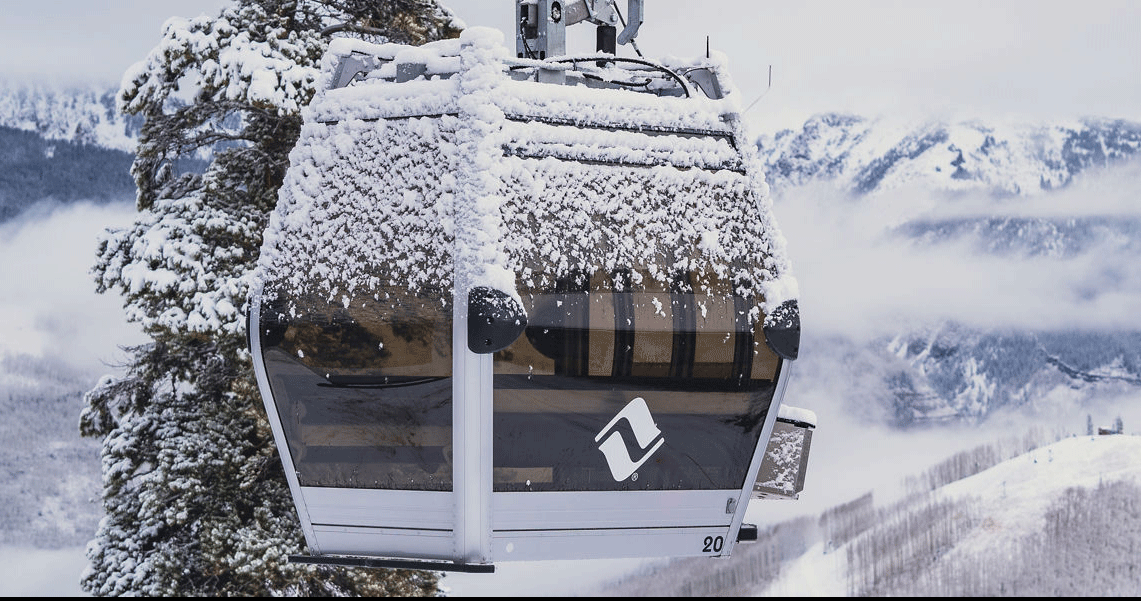
At Vail Mountain, they're integral in implementing new energy-efficiency programs and developing waste-diversion technologies. For example, environmental leaders oversee how waste is manually sorted on the mountain and transported via Vail's unique gondola system, unique in the world, to an underground recycling center. There, they focus on proper waste sorting through a network of partner organizations that upcycle and divert more waste each year
-How do employees individually address environmental issues?
John: Our employees are incredibly passionate about the environment. They love the outdoors and our beautiful mountain environment. From picking up trash on the mountain to sorting it at work, they're committed to achieving our sustainability goals
-How do you raise guests' awareness of environmental issues?
John: We reach out to our guests using all kinds of communication tools, including social media, blogs, and publishing progress reports. We also have a system in place that allows customers to donate to forest conservation organizations when they purchase products or services, similar to the National Forest Foundation's Skier Conservation Fund
But one thing worth noting is that we don't have many trash cans in areas where people eat. We ask that guests hand over their trash to the staff as much as possible so that they can see how it is sorted. We're often asked, "Where are the trash cans?" and accepting trash directly from guests is part of our service, but it also gives guests an opportunity to see our sustainability efforts in action
- Do you hand your trash over to staff? Is receiving trash part of the service?
John: Yes. I hope that people can see how serious we are. A goal that is so big that we don't know how to achieve it can only be achieved with the help and passion of everyone
Teaming up with guests and the local community

Vail Resort not only works with its own resort, but also with the city of Vail and the surrounding area to carry out a variety of large-scale activities. For example, each year, the resort donates a total of over $8.6 million (approximately 1.245 billion yen at 1 dollar = 140 yen) to over 250 NPO partners who are working to conserve the environment in mountainous areas around the country
Guests visiting Vail Resort are also eager to support these efforts. As of 2016, voluntary donations made by guests to forest conservation organizations when purchasing products and services within the resort exceeded $1 million (approximately 140 million yen at $1 = 140 yen). This is what makes Vail Resort so great. By supporting Vail Resort, guests are highly aware that they are also playing a part in environmental conservation efforts. They are proud to be guests of Vail Resort
You may also see donation boxes on the tables of restaurants on the slopes or next to cash registers at Japanese ski resorts. However, it's unlikely anyone would put a 10,000 yen bill in there. The exceptional level of awareness among guests is surely the result of Vail Resort's passionate commitment to sustainability. With the best management and the best visitors, Vail Resort is truly the world's top resort in both name and reality
"Committed to protecting the wonderful environment in which we live, work, and play,"
Vail Resort offers many lessons when considering the future of resorts in the carbon-neutral era, and the way we should live as individuals.
Photo credit & Interview assistance: Vail Resort
Interview & Translation by Suisei Nakagawa