

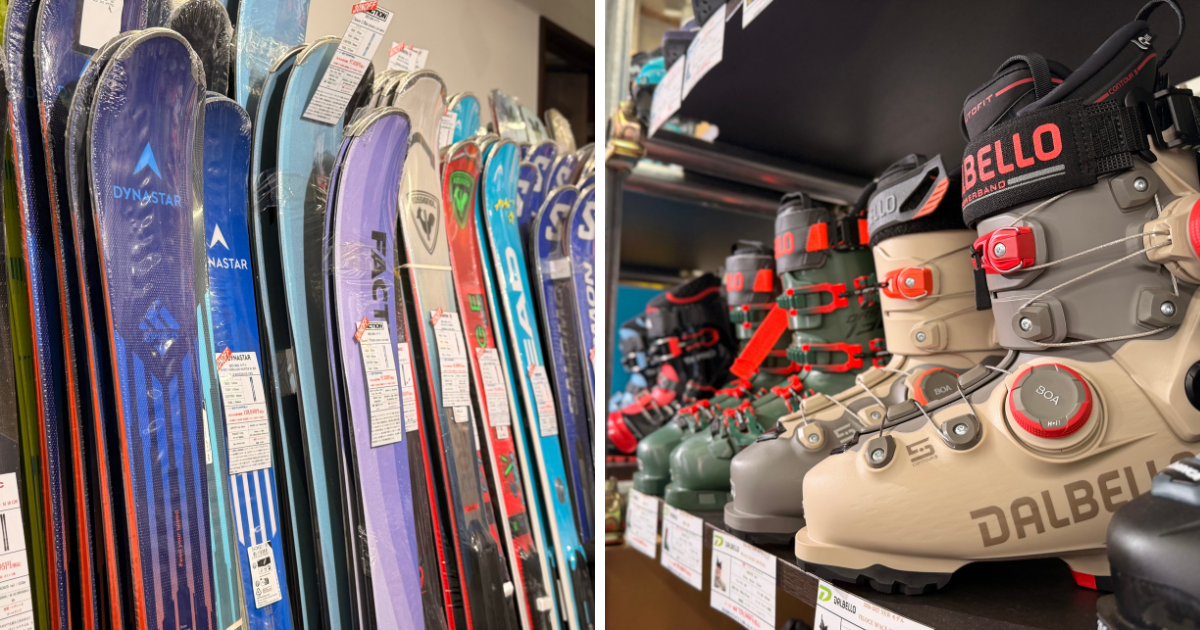
Even intermediate and advanced skiers who have become accustomed to choosing gear may be bound by preconceived notions they are unaware of, or lack a proper understanding of their gear. "Wide skis are difficult," "Boots should be one size larger"—are these really true? In this article, professional shops with extensive expertise and experience on the snow discuss the "blind spots in gear selection" that they have observed through their interactions with customers in their stores.
where they often judge products based on specifications and reviews and lack proper care knowledge,
I feel that the preconceived notion that "wide skis are only for powder" is deeply ingrained, and that only a small number of people understand that the characteristics of a ski cannot be judged solely by its width.
Also, I get the impression that quite a few people judge the quality of ski boots based only on brand image and reviews, without using fitting services. And I feel that many people don't know how to properly care for their ski wear, goggles, lenses, etc.
There seems to be a misconception
that "wide skis are difficult to ski with." I hear this from users almost every year. It's true that narrower skis have a quicker edge engagement, but I think there are ways to ski easily with wide skis once you get used to how to use the edges. In fact, even in slushy spring snow, wide skis can sometimes be more stable and less likely to sink into the snow.
Similarly, I've noticed that many people mistakenly believe freestyle skis are only for park riding, such as jumping kickers or jibbing. However, many freestyle skis are easy to handle, making them a great choice for first-time skiers and beginners. I hope people will consider freestyle skis as an option for regular skiing, rather than assuming they're only for the park
Choosing the "just right" size for both boots and ski wear can be dangerous.
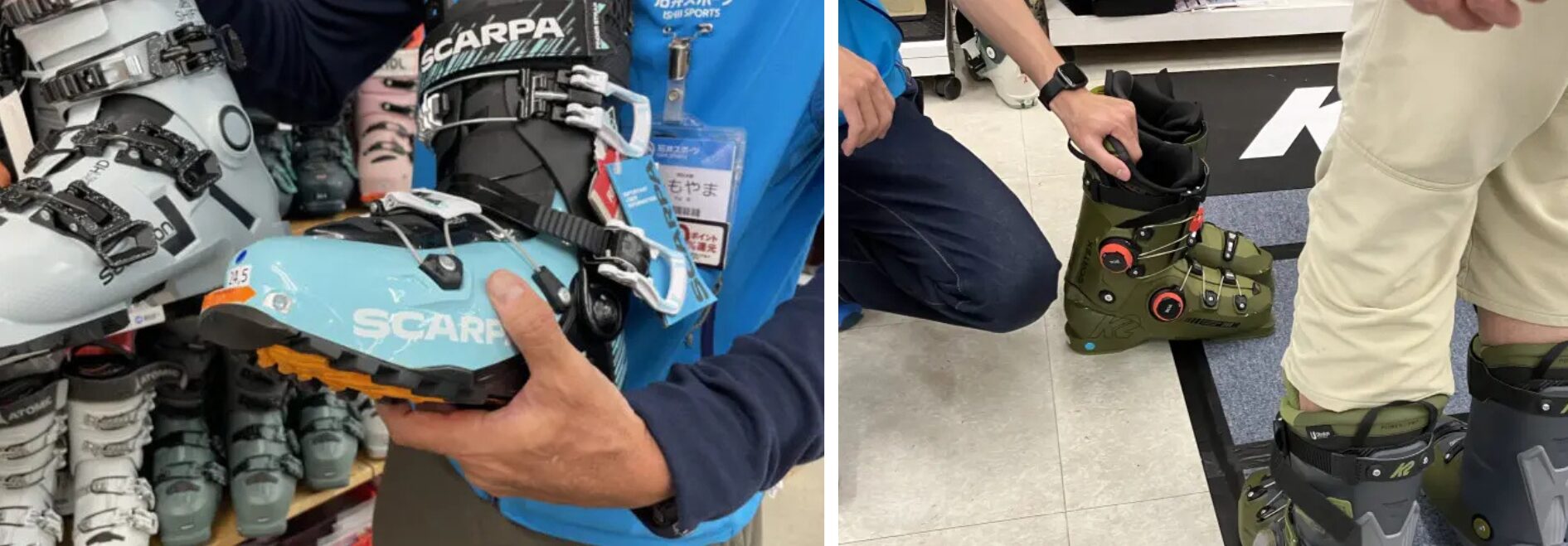
At our store, we've seen many customers choose ski boots the same way they would choose sneakers. At Mt.Peaks, we recommend sizes based on your actual foot size. The reason is that ski boots are "shoes for skiing," not "shoes for walking."
With sneakers, your toes tend to move forward when walking or going downhill, so you'll almost always choose a size with some room in the toe box. However, with ski boots, your feet are secured with buckles and your heels are firmly held in place, so there is less movement back and forth (this is not the case with backcountry boots, as they involve walking)
Therefore, the actual size is fine. However, most new customers have been choosing sizes one or two sizes larger than their usual size. They were buying larger sizes to find comfortable boots that didn't hurt their feet across the width of their feet
While 70-80% of ski boots currently on the market are heat-moldable, choosing a size that's too big can lead to a vicious cycle where further heat molding causes your foot to move back and forth and side to side, ultimately resulting in pain
As we age, the shape and size of our feet often change, so if it's been several years since your last purchase, we recommend having your feet measured at a shop and consulting with the shop staff to choose the right boots
Furthermore, when it comes to choosing ski wear, many people tend to select sizes without considering layering. Recently, there has been an increase in shell-type ski wear (wear without insulation) that prioritizes layering for skiers. Due to the rising temperatures in recent years, there are many warm days even during the peak season, so skiers are increasingly wearing shell wear and regulating their body temperature by adding or removing layers underneath
Therefore, if you choose a garment that fits snugly without layering clothes underneath, it will often become too tight when you do layer up, making it difficult to move and looking bad. When choosing a shell garment, we strongly recommend bringing the layers underneath (mid-layer and base layer) to the shop to check the size before purchasing. "A little on the big side" is often the best size!
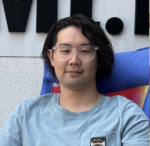
that simply wearing
fat skis will allow anyone to ski powder and backcountry skiing. This tendency is particularly pronounced in backcountry skiing. It's important to understand that when using fat skis, you first need to practice skiing in powder on groomed slopes.
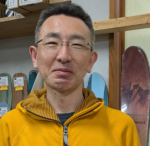
Junichi Sato, Staff member at outdoor shop Permark
There are many factors to consider when choosing skis. First, consult with a shop
to determine the appropriate ski model and size (length) based on your intended use, skill level, physique, and power. The length you choose will vary considerably depending on the type of ski.
The ski resorts around Morioka, where Narrows is located, have good slope conditions, and many of our customers in Iwate Prefecture are relatively skilled skiers. Therefore, for customers who come to our store after gathering information from the internet or magazines, we sometimes recommend skis that are one size longer than they initially imagined
Also, your choice will depend on the mountain or ski resort you mainly frequent, so I think it's best to consult with a shop first

constrained by brand and category imagesるもったいなさ
. A common tendency among users is to perceive products primarily within broad categories such as brand or product category. For example, many people think that twin tips are only for jumping and switching.
That's not necessarily wrong, but if you consider that twin-tip skis have a lighter swing weight and are easier to turn and slide, I think they can be very enjoyable as resort skis, so I sometimes feel it's a bit of a waste
Similarly, we often see cases where an individual product perfectly matches what the customer wants, but they dismiss it as "not right" because of the brand's image
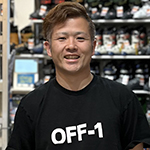
I want to change the misconceptions about ski length and advanced models.
It's a shame that so many people think the biggest factor determining ski length is their "height." For intermediate and advanced skiers, the length is determined by the purpose and situation of use. I want to make this more widely known.
Also, there are still a few people who think that using a higher-level model instead of one suited to their skill level will make them better skiers.

This is a common misconception among recreational and competitive skiers, as well as skiers who use typical comfort skis, and we want to free ourselves from this misunderstanding so that they can enjoy skiing with freeskiing
that "twin-tip skis require jumping, spinning, and skiing backward (switch), have poor turning ability and make carving turns impossible, and wide skis are not fun to ski on groomed slopes," and
as a result, some people have an aversion to freeskiing.
Of course, its pure carving performance is inferior to basic and competitive skis, but it can still perform carving turns to a certain extent. You don't necessarily need to jump or slide backward. On the contrary, it allows for turns with a moderate amount of sliding, making it easy to adapt to various situations. Its slightly wider shape makes it easier to ski on rough slopes, fresh snow, and challenging snow conditions
In a sense, I think it's a true all-around ski. I hope all kinds of skiers will enjoy skiing with this freeski

important to try things out first, rather than getting caught up in the specs. I
often see people getting so caught up in the numbers—the width of the skis, the radius, the last width of the boots—that they miss out on the gear that would actually be a better fit for them. The width of the skis can change depending on the balance of the rocker, and even boots with the same last width can feel quite different. Try them out first! I think that's the most important thing.
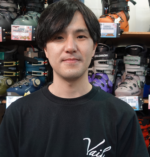
More and more people seem to think that everything they hear is from YouTube or AI, relying solely on online information . I think they should stop underestimating the staff at pro shops! (laughs). Fewer people are able to build relationships with shops like in the old days, so users who can't exchange information are missing out. If you only rely on YouTube and AI, you'll just end up with a rigid, uninteresting person, so it's important to know how to interact with them.
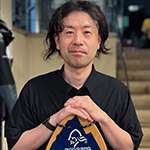
Before choosing larger-sized boots, consult with a shop.
Many of our customers are backcountry and touring skiers, and we often see them choosing larger-sized boots. They choose larger sizes to accommodate the width of their feet, or because they dislike being constricted. However, some modern boots allow for heat molding not only of the inner liner but also of the shell, so we strongly encourage you to consult with a shop.

What I learned from the shop's advice
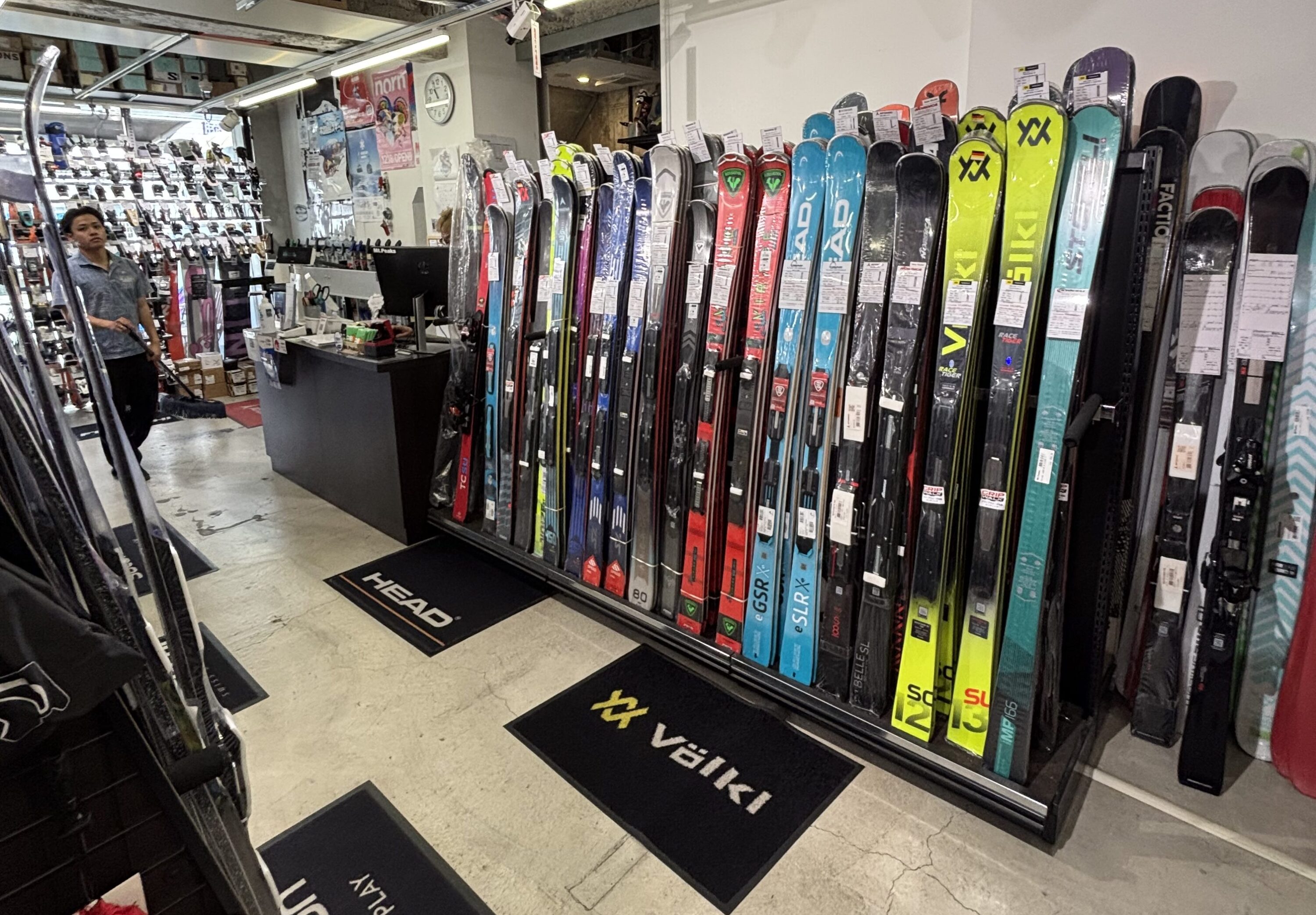
What emerged from the comments of the 11 shops is a blind spot: many skiers are swayed by "specs" and "image," and choose their gear without fully understanding its true performance
"Wide boards are for powder only," "Twin tips are for the park," "Advanced models will help you improve," "Choose boots that are a little larger than your usual size." While these theories aren't necessarily wrong, the evolution of gear in recent years means they don't always apply anymore. In reality, there are many models with unique characteristics that can't be judged by numbers alone, due to factors such as rocker shape, flex design, last design, and heat molding technology
Another point that many shops consistently emphasized"trying things out" and "consulting." Even something as simple as heat-molding boots can drastically change the fit, and skis with the same waist width can have vastly different skiing sensations. It is precisely in these aspects, which cannot be understood from specifications or online information, that the experience of shop staff and in-store fitting become invaluable.
In this age where information is easily accessible, using that as a starting point, but ultimately trying things out in person and talking to a pro shop that understands your skiing style, technique, and the terrain, might be the shortest path to choosing the best gear for you