

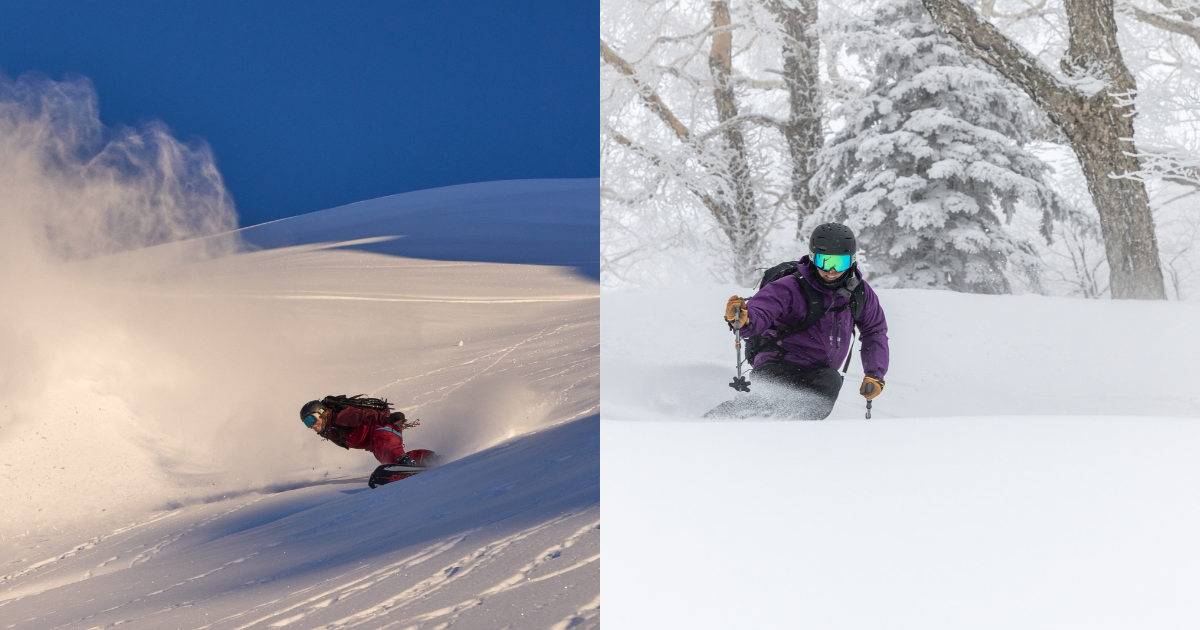
Why do riders choose those goggles? What do they look for in them? Takeshi Kodama and Yoko Nakamura, who have been skiing in the snowy mountains for years, talk about their individual choices and preferences. We delve into the essence of goggles required for backcountry skiing and their evolution
Having a better view of the terrain than others is a huge advantage for a rider
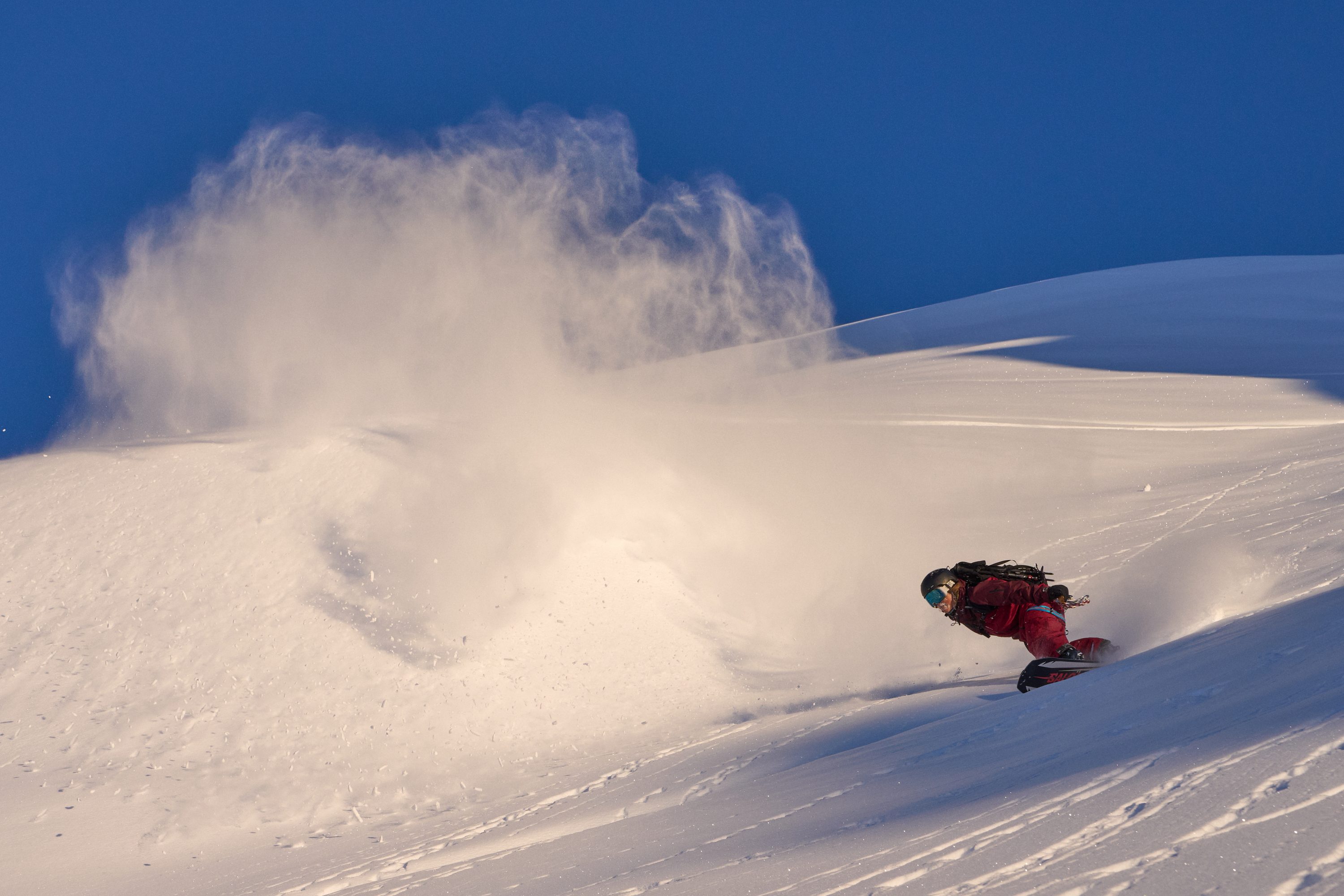
Kodama riding is that they "don't fog up," but what do you think, Yoko?
Nakamura: That's right. Of course, it's essential that they don't fog up. On top of that, what I simply look for in goggles is that they provide excellent visibility.
Kodama, is it still about your vision?
Nakamura : Yes. Snowboarders place a lot of importance on the terrain. Lenses that enhance contrast, like ChromaPop (lens technology that increases color contrast and makes it easier to see the unevenness of the terrain), make it easier to find points even on faint terrain. Being able to see the terrain better than other people is a huge advantage for a rider.
Kodama : I see. In my case, I often work for long periods in harsh weather, so not having cloudy skies is directly related to safety. If it suddenly starts to cloud over, it becomes dangerous.
Nakamura : Yeah, that's definitely true.
Kodama: However, I think that for something to be "fog-resistant," it's not just about the lens performance, but also about ventilation, a snug fit that prevents snow from getting in from the outside, and many other conditions that must be met.
Compared to how Nakamura used to be, has he really changed?
Kodama, it's completely different now. I used to be much more careful. I even had separate goggles for everyday use and for competitions and filming, and I would switch them out at the precise moment "just for this one minute." Now I hardly ever need to do that.
It would be the worst if it got cloudy just as we were about to start the Nakamura Tournament
Kodama: That's right. Of course, if you sweat a lot, ventilation may not be able to keep up, so in backcountry (BC) areas, you need to act in a way that prevents that from happening. Even so, in the past, even if you were careful, it would sometimes suddenly fog up. I think that's something that has improved considerably.
Nakamura's sense of security is completely different, isn't it?
Good gear is something you forget you're even wearing

Kodama: For me, the definition of good gear is "something you forget you're even wearing." Something that becomes an extension of your body. The 4D MAG satisfies all of these criteria at a high level, without exaggeration, in terms of field of view, resistance to fogging, and visibility in various conditions. I really never feel the need to take off my goggles because they're hard to see with, so I can wear them all the time.
Nakamura: I use both 4D MAG and Squad MAG.
Do you use them differently at Kodama Field?
Nakamura : Yes. If it's BC, I'd say 4D MAG is the most common. With 4D, you can see your hands really well, right?
Kodama: Yeah, the downward direction is wide.
Nakamura: That's right. You can see up to your chest. When putting on a backpack, I used to have to fumble around, but now I can see the buckles. Backcountry skiing is a bit chaotic with all the preparation (laughs), so having a wide field of view of your hands is a huge relief.
Kodama: Lens changes have become so much easier. Before, it took a long time to change them, and sometimes snow would get in during that time, so I often carried two pairs of goggles and swapped them directly. But now, because it's magnetic, I can change to the lens that suits the situation in an instant.
Nakamura: That's important to me too. When you jump and get stuck in the snow and fall, snow can get in and ruin your goggles. So being able to change them quickly is great.
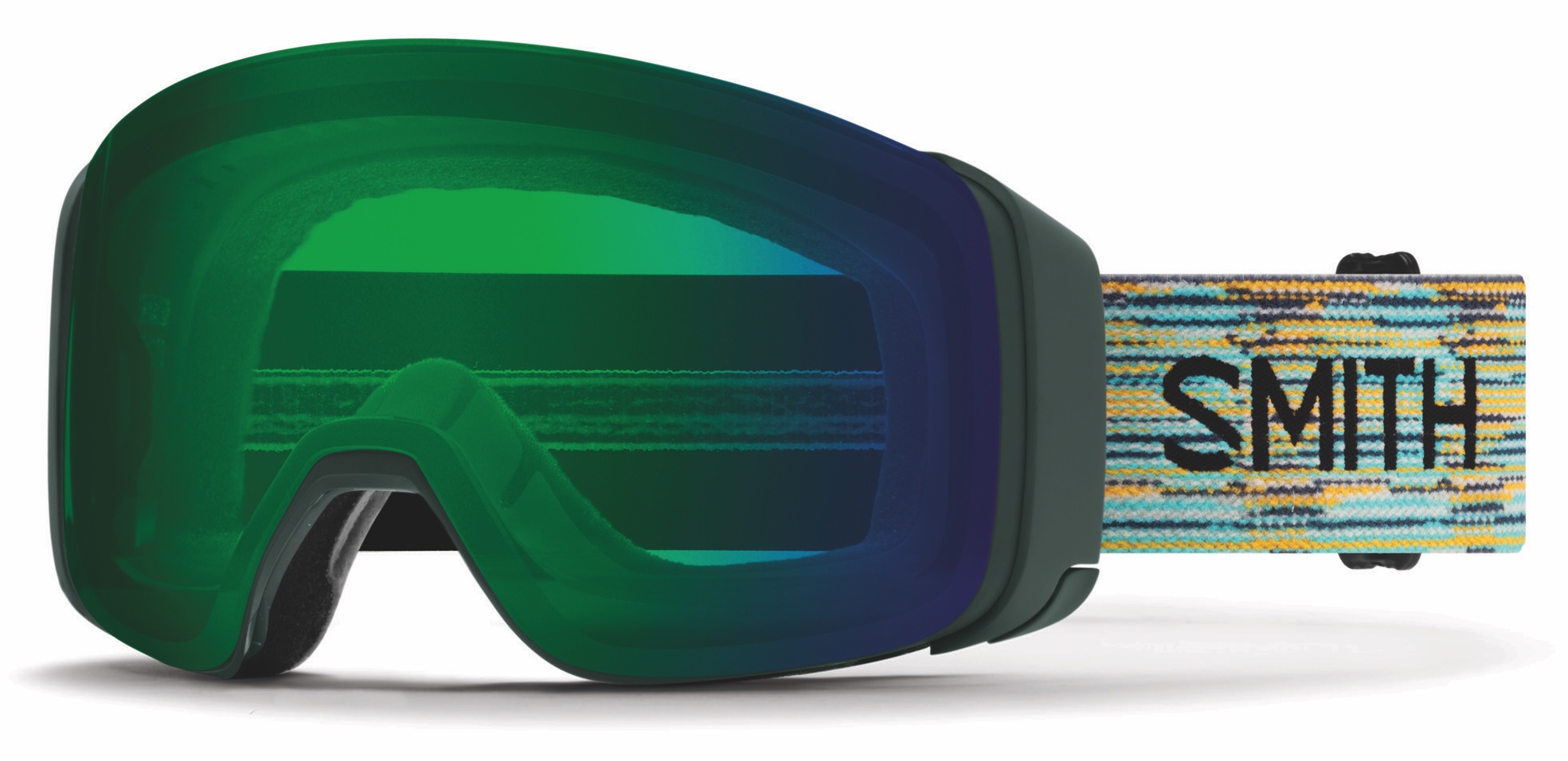
4D MAG Emerald ReNU Upcycled Scrap
The unique BirdsEye Vision design, with the lower part of the lens curving towards the face, ensures an exceptionally wide field of view. It also features ChromaPop lenses for high contrast and clear terrain detection, and the MAG system for quick lens changes
¥66,000 | Frame Color = Emerald ReNU Upcycled Scrap | Lens Color = CP Everyday Green Mirror | Included Lens = 1 (CP Storm Amber)
Kodama, by the way, does Squad MAG mostly perform on ski slopes?
Nakamura: That's right. I like the silhouette of the flat lens, or rather, the look of it, and I'm in love with the design (laughs). When it comes to goggles, it's just as important that you want to wear them as it is that they function well.
Kodama: That's true, goggles are like the "face" of a Kamen Rider.
Nakamura : That's right. It's also important that the goggles look cool when a camera is pointed at them. I think SMITH is really appealing not only for its functionality, but also for the wide variety of frames and bands that can be chosen.
Kodama: It's not just simple designs; there are some pretty elaborate ones too. And it's not just the design, but even when you think it's going to be difficult to create anything new with Smith, they keep evolving, which is amazing. The clarity of the lenses, the ease of changing them, the quality of each individual element is steadily improving.
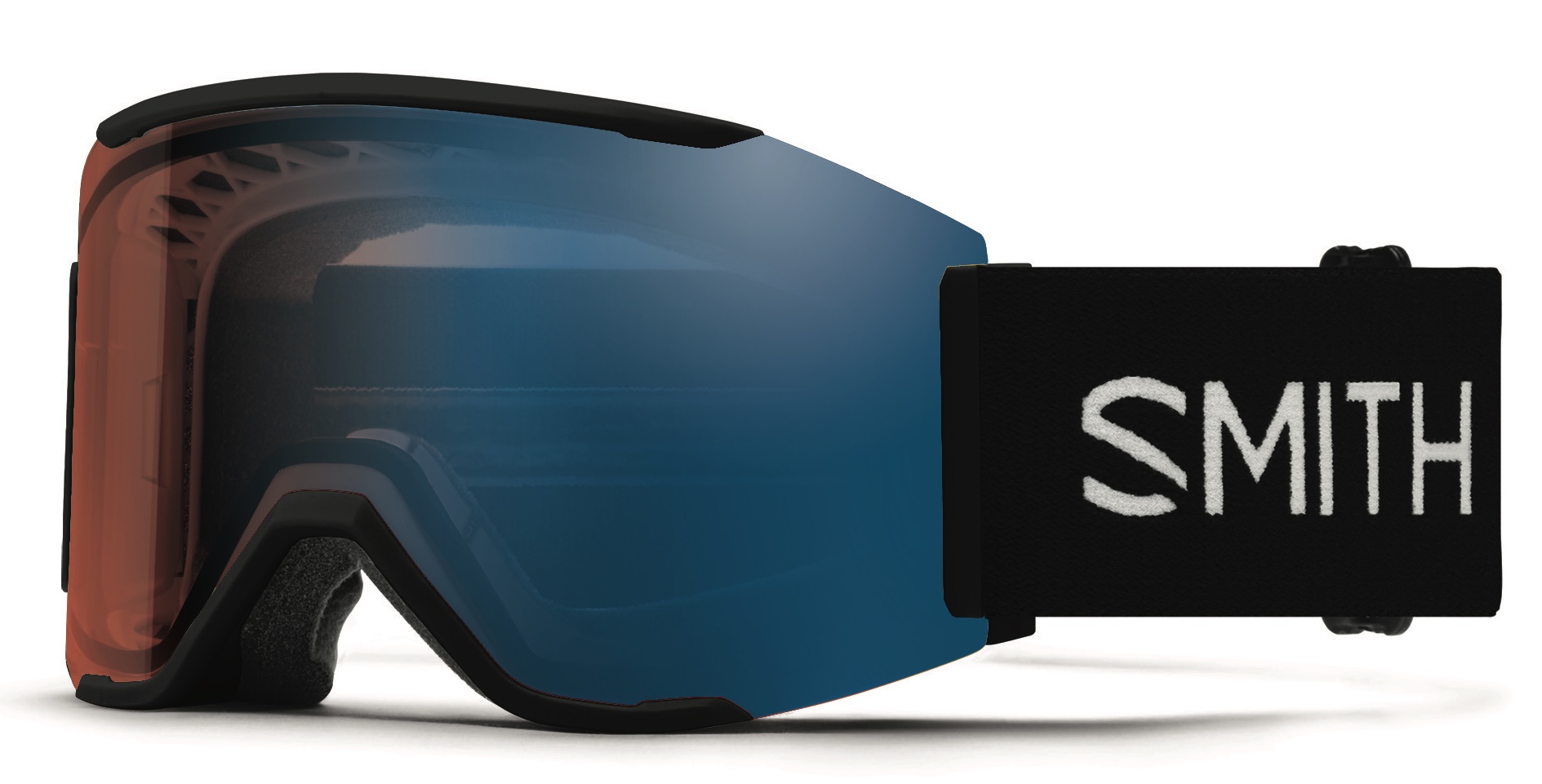
Squad MAG Black
While inheriting the iconic flat lens style of SMITH, it incorporates the MAG system. It also features ChromaPop lenses and 5X anti-fog technology, which offers five times the anti-fog performance of standard lenses, ensuring excellent visibility
¥52,800 | Frame Color = Black | Lens Color = CP Pro Photochromic Blue Mirror | Included Lens = 1 (CP Storm Amber)
Nakamura : I guess the next thing would be a scouter function? Like being able to see the opponent's combat ability (laughs).
Kodama, that might be important information (laughs). It would be great if microphones and cameras were built into the lens, so you could take pictures without having to attach a GoPro.
Nakamura AI supposed to make the terrain easier to see?
Kodama : Honestly, I can't imagine how far goggles will evolve. The possibilities are endless.
Profile
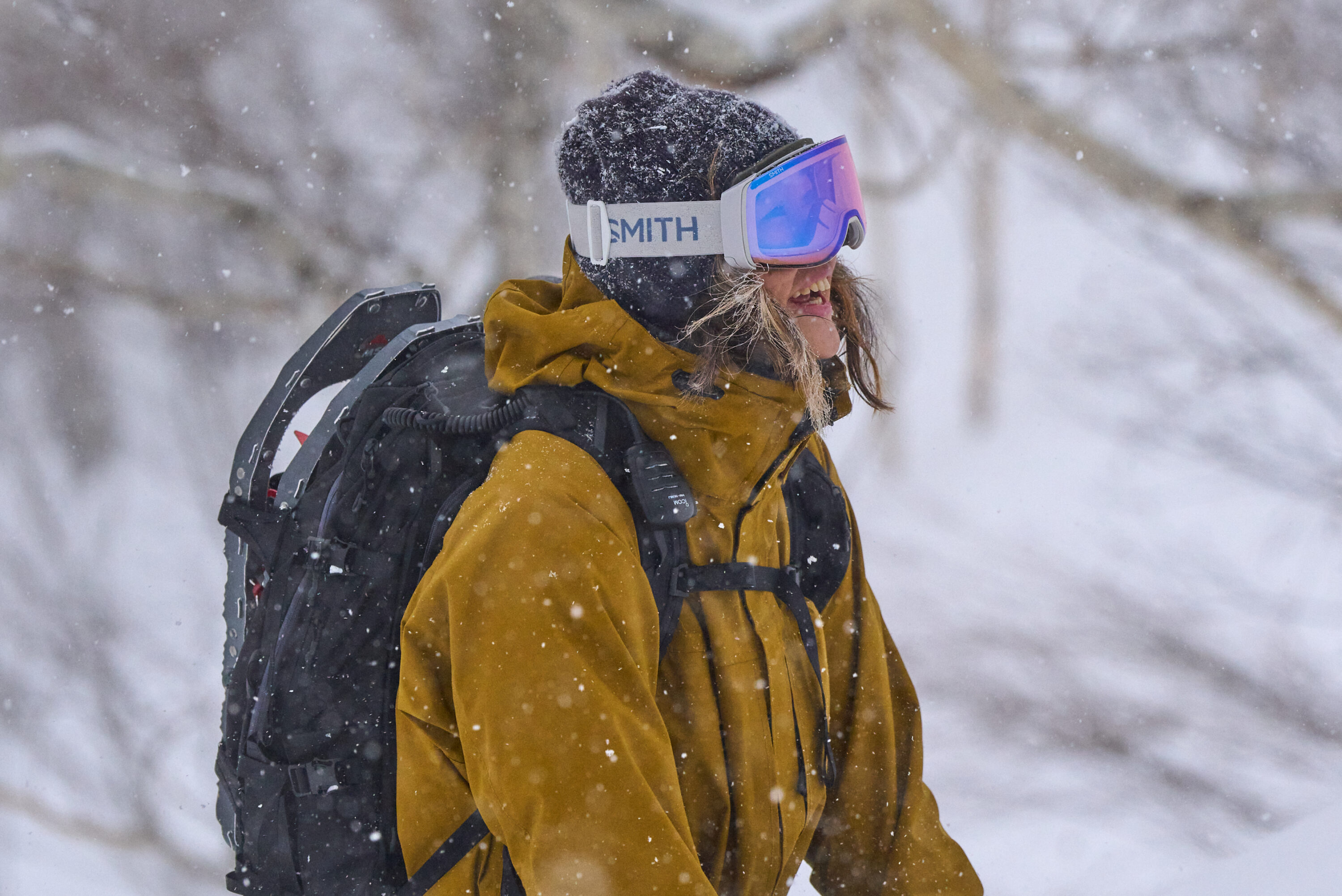
Yoko Nakamura
Born in Sapporo, Hokkaido. He started snowboarding in the winter of his second year of university, and after competing in halfpipe, he switched to freeride. In 2012, he placed second in a world championship held in Alaska, and the following year he won first place. He currently works primarily as a photographer, with backcountry locations both domestically and internationally as his main focus
Instagram:@yoooran
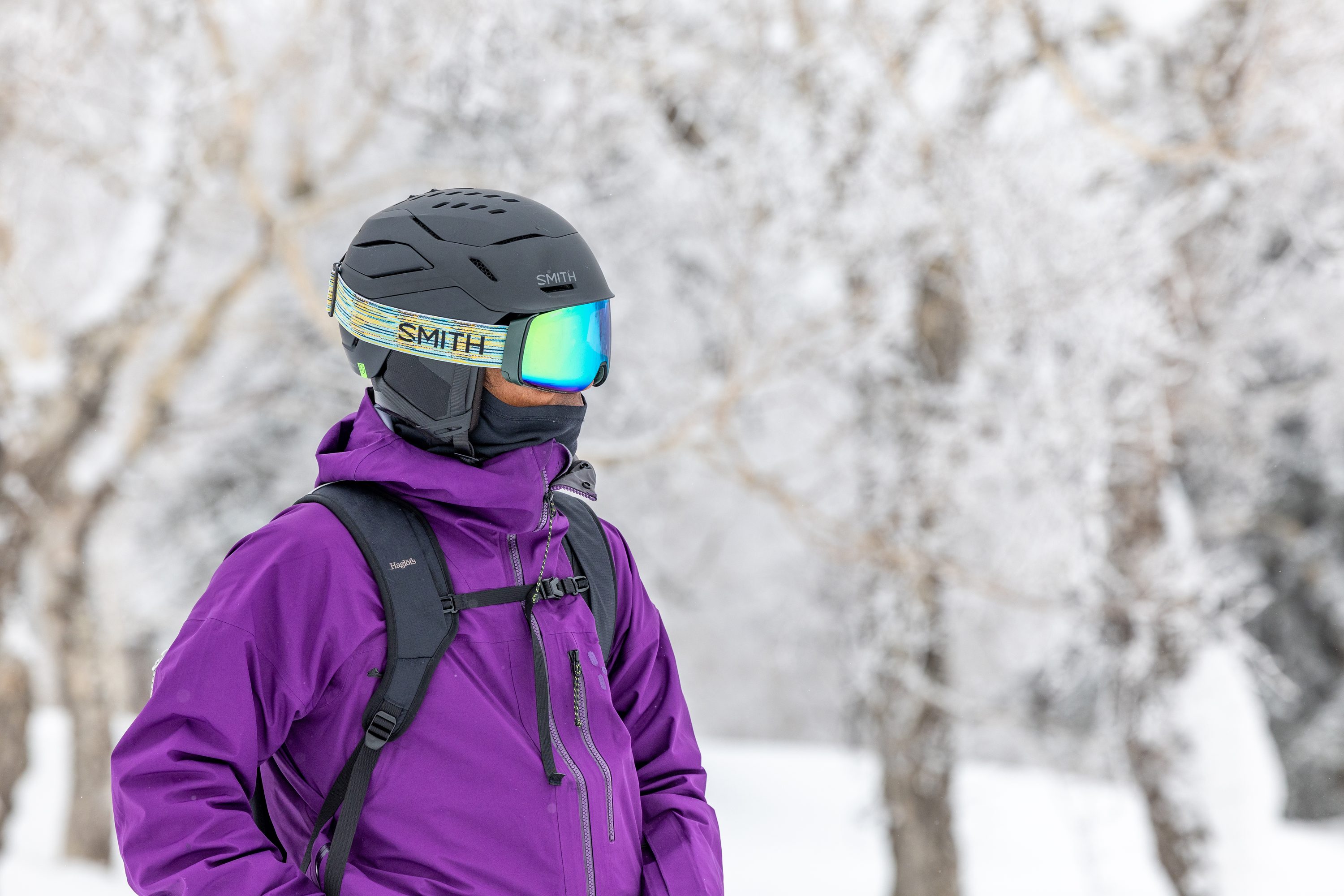
Takeshi Kodama
Born in Sapporo, Hokkaido. He started skiing at the age of 4 and joined the Yuichiro Miura & Snow Dolphin Ski School at the age of 19. He has participated in numerous expeditions to challenging slopes, polar regions, and high altitudes both domestically and internationally. Since 2012, he has been working with photographer Kei Sato on the project "Skiing Around the World," skiing in various parts of the globe
Instagram:@skiertake0728
Text=Tomoko Fukutaki
Information
SMITH
Official website: https://smithjapan.co.jp/
Official social media:Instagram|Facebook