

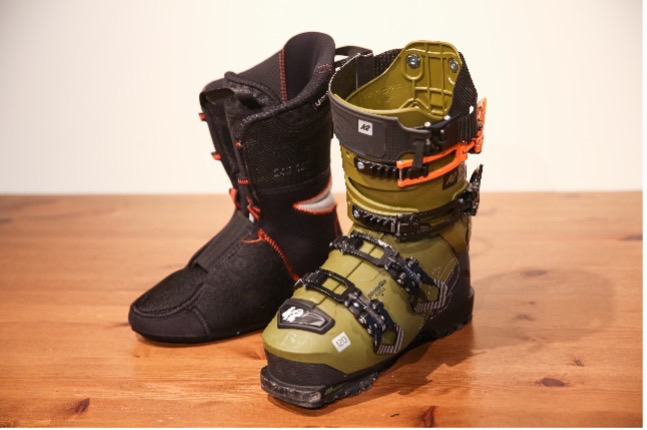
Have you ever heard the terms "shell heat molding" or "liner customization" when it comes to ski boots? This refers to the process of heat-molding the purchased boots to fit your foot shape, resulting in a better fit.
Many people may have a general idea of what it entails, but don't fully understand its effects.
This time, let's take a look at the basics of these boot customizations.
Many people have likely experienced discomfort when wearing boots, such as their little toe rubbing against the boot or their ankle rubbing against it.
Shell heat molding and inner lining customization are performed to eliminate this discomfort.
Ski boots are divided into two parts: an outer shell and an inner boot. Each of these parts is made of a material that changes shape when heated. After heating it with a special heater, you put your foot in and it will take on a shape that fits your foot perfectly
Inner boot customization
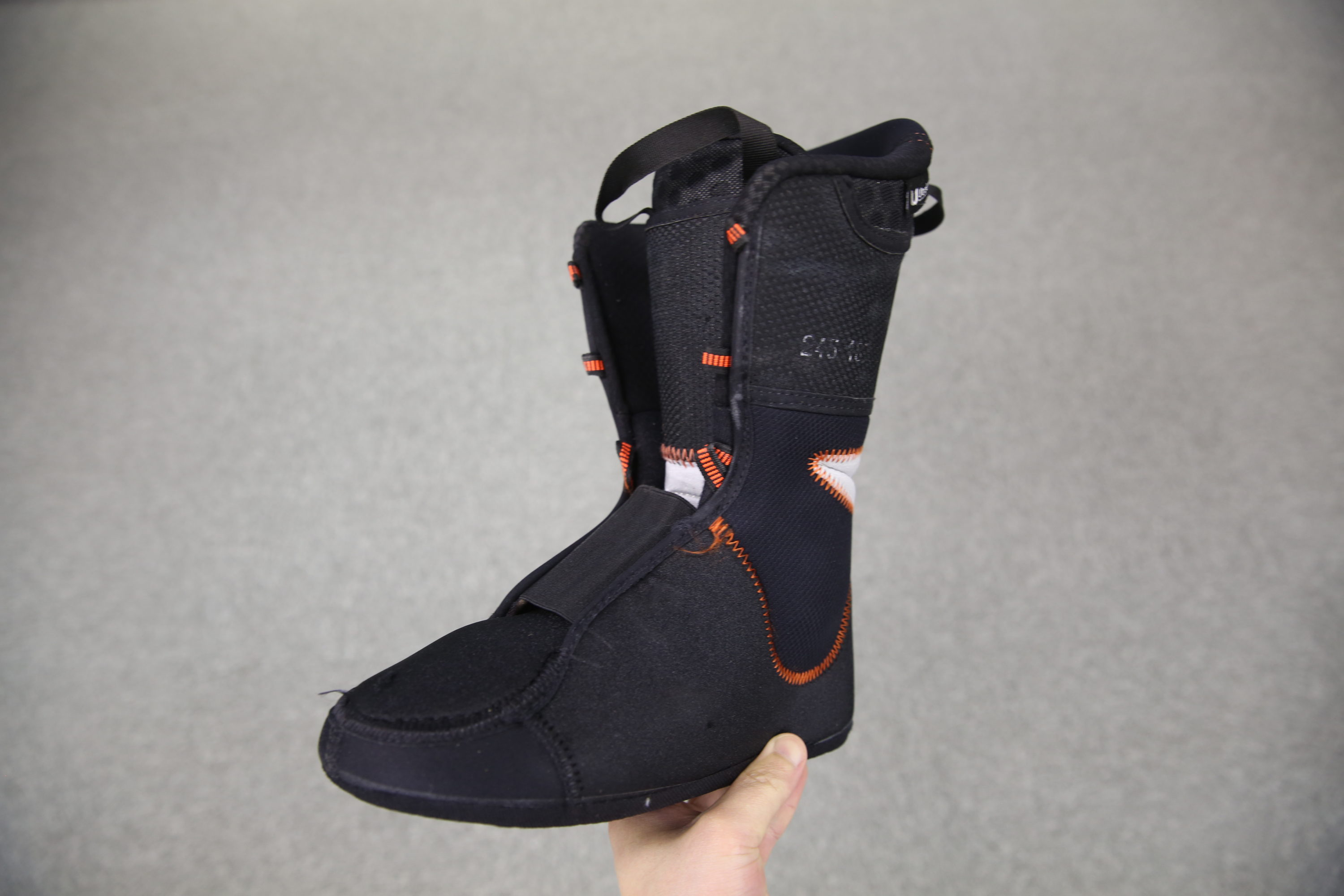
Molding is done in the order of inner liner → shell. This is because the inner liner can be molded repeatedly, whereas the shell cannot be restored to its original shape once it has been heat molded. Therefore, if you can solve your problem by customizing the inner liner, there is no need to heat mold the shell. This should only be done if you are unable to achieve the desired fit even after customizing the inner liner
The inner boots are made with a material that changes shape when heat is applied to the shins and calves through to the ankles. After warming the inner boots in a special heater, you put your feet in and wait, and the boots will change shape to fit your foot shape. This is what is known as inner customization
The advantages and disadvantages of customization are as follows:
Specific benefits
●Fits to the shape (concavities) of your feet
● Boots that can drastically shorten the time it takes for them to conform to your feet.
While boots naturally conform to the shape of your feet after being worn for several tens of days, these boots can shorten that time.
● This can eliminate the "wear and tear" of ski boots.
The inner liner gradually loosens over time with use. Heat molding tightens the liner and eliminates the looseness.
Are there any disadvantages?
●There are virtually no downsides.
If we had to mention one, it would be that each time heat is applied to the inner boot, some stress is put on it, which accelerates deterioration. Even if you reshape it many times to restore the fit, the effect will eventually diminish and disappear.It is said that the limit is about seven times. If you are going to customize the inner boot repeatedly, it is best to do it every two years or so.
About shell thermoforming
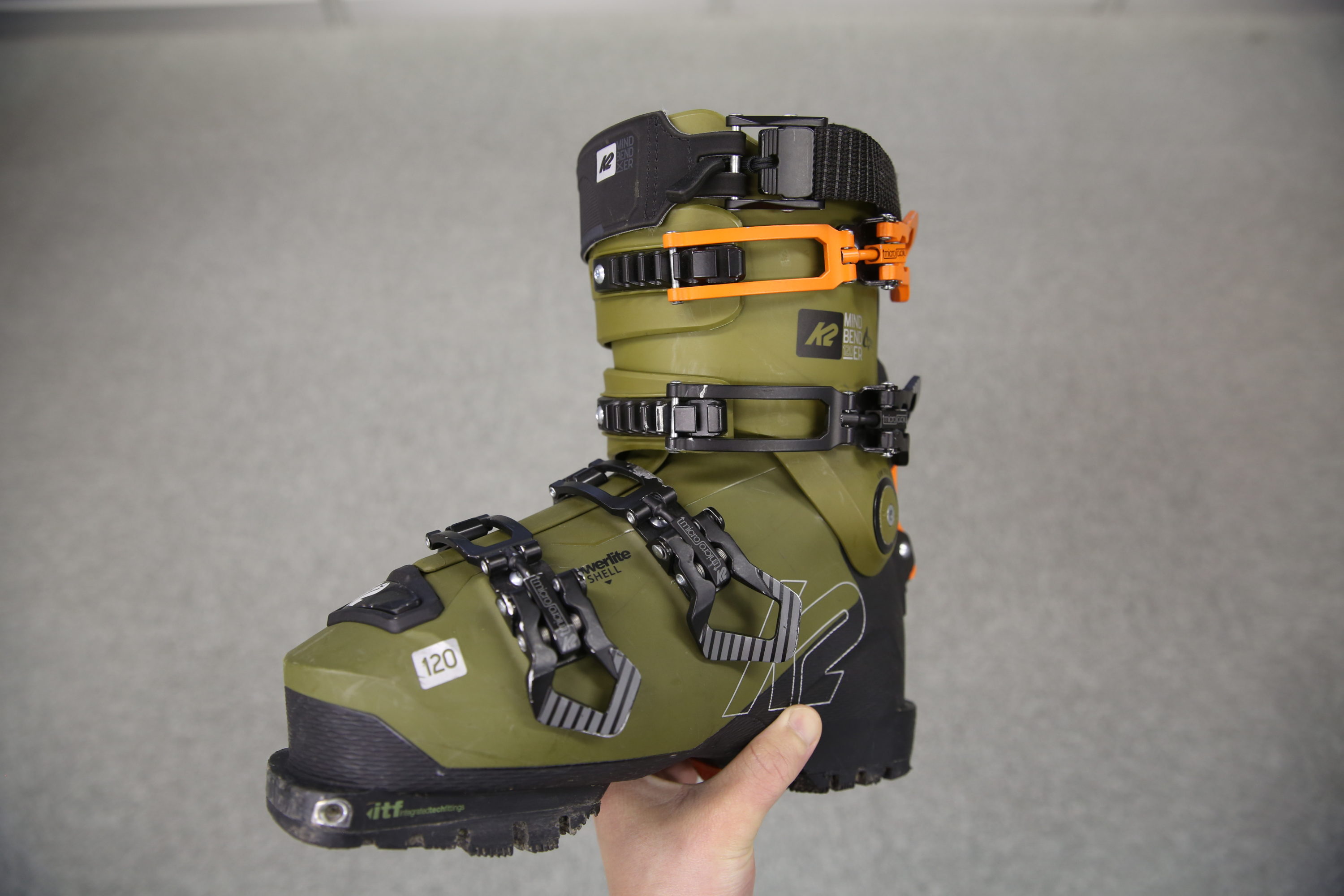
The principle behind heat-molding boots is similar to that of liner. The shell material is a thermoplastic, meaning it can be heated and softened to conform to the shape of your foot. The shell is shaped to remove any pressure, so you can only widen specific areas. It's important to remember that you can't fill in or tighten the space inside the boot
merit
●It can eliminate areas that still hit even after inner customization
Disadvantages
●Once you unfold the shell, it is impossible to return it to its original state. People who do not need to unfold it should not do so
Q&A about inner customization and shell thermoforming
Q. How long does it take?
A. Both inner customization and shell molding take about 30 minutes each.
- About 10 minutes to heat both the inner and shell with a heater
- About 10 minutes to let them cool down and fit your foot shape
- About 10 minutes to discuss your foot concerns and measure your foot size.
For example, if you only want inner customization, it will only take about 30 minutes.
Q. How much does it cost?
A. Nowadays, most shops have the necessary machinery for customization, and in many places, boot purchase and customization are offered as a package deal. Heat molding is free if you purchase the boots from the same shop. For example, even if you felt no discomfort when trying them on in the shop, but found some rubbing when you tried them on in the snow, you can take them back to the shop and they will customize them for you.
Q. If I'm not having any problems right now, is it unnecessary to do it?
A. There's no need to heat mold the shell. Inner customization has the benefit of improving the fit to some extent, and the disadvantages are practically nonexistent, so I would recommend trying it.
However, I repeat, once the shell is molded, it cannot be returned to its original state, so it's best not to do it unless necessary. If you're still concerned about pressure points even after inner customization, I recommend changing the insole.
Q. Do you never fail?
A. I almost never fail.
Q. Is it possible to dent the shell?
A. Basically, no. The shell is essentially a single sheet that doesn't stretch, so if you were to dent one part of it, that space would be created somewhere else. The only way to adjust the space inside the boot is basically by how tightly you fasten the buckles.
Q. Can I bring in boots that I bought at another store?
A. Inner customization is possible at some stores.
Let's take a look at the molding process
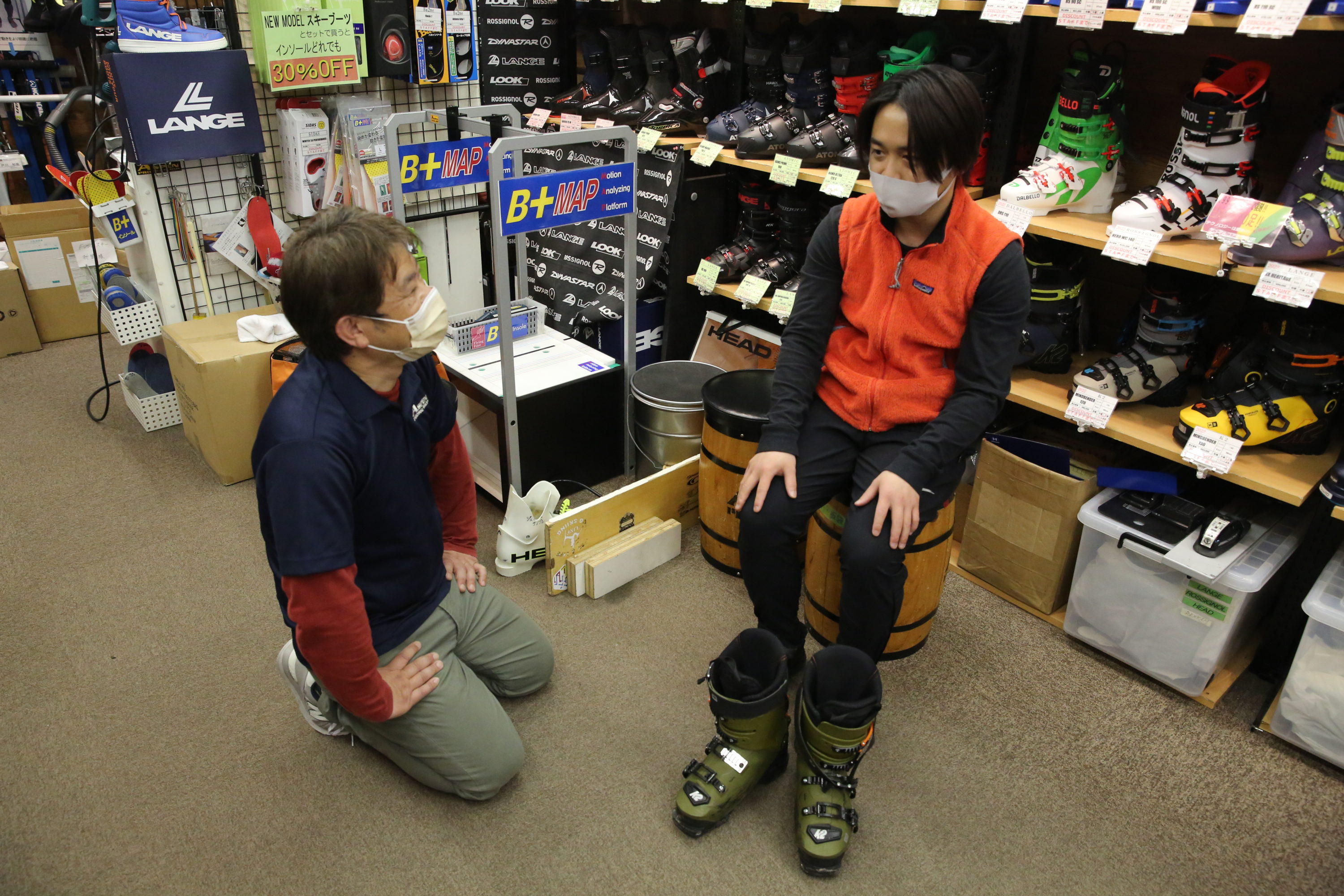
First, we'll discuss your fit concerns! Do you need customization or should you change your insoles? What kind of skiing do you do? Consult with our expert staff to determine what kind of treatment is needed
Inner customization process
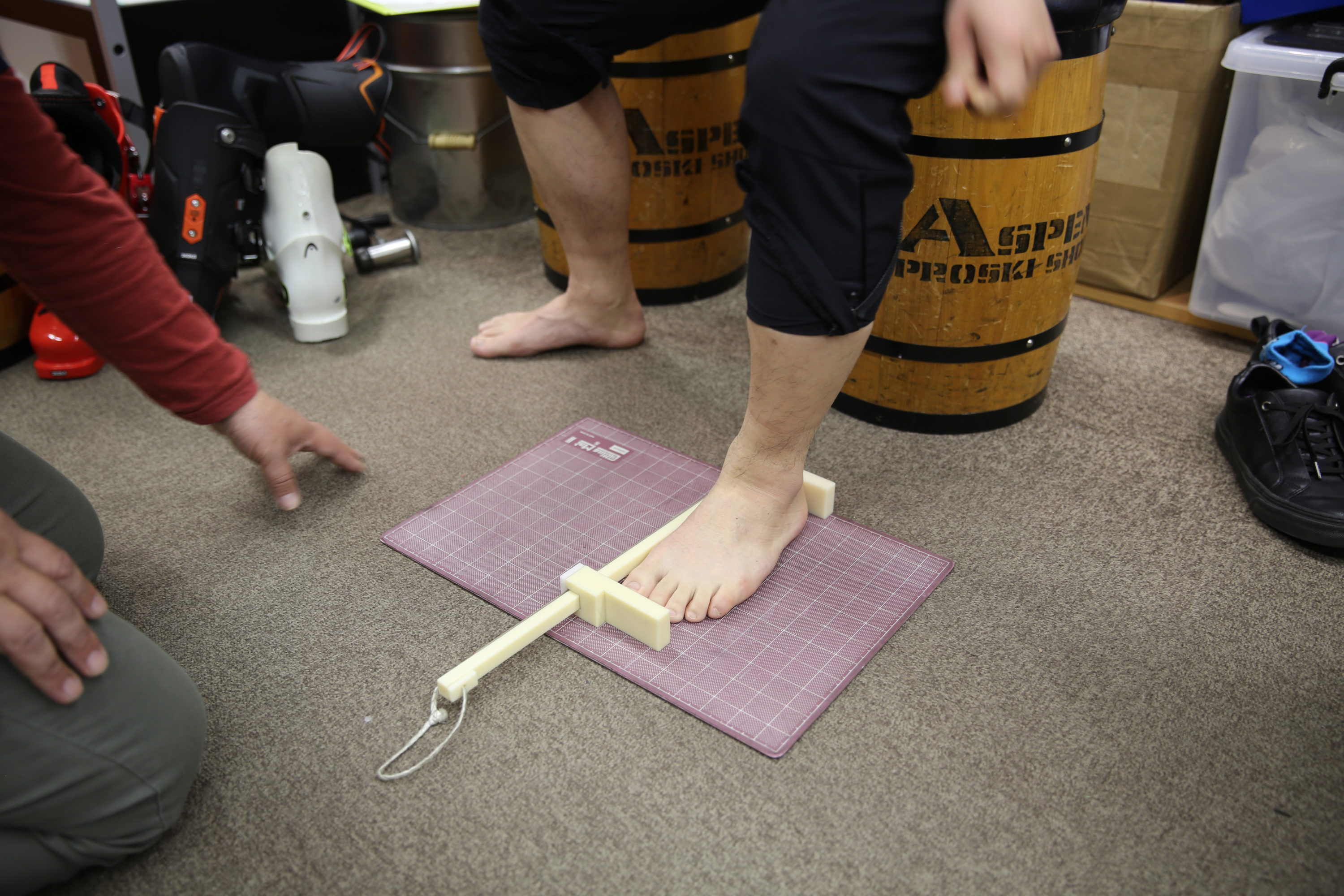
1. Measure your foot shape. Attach the pad to the area that touches the ground
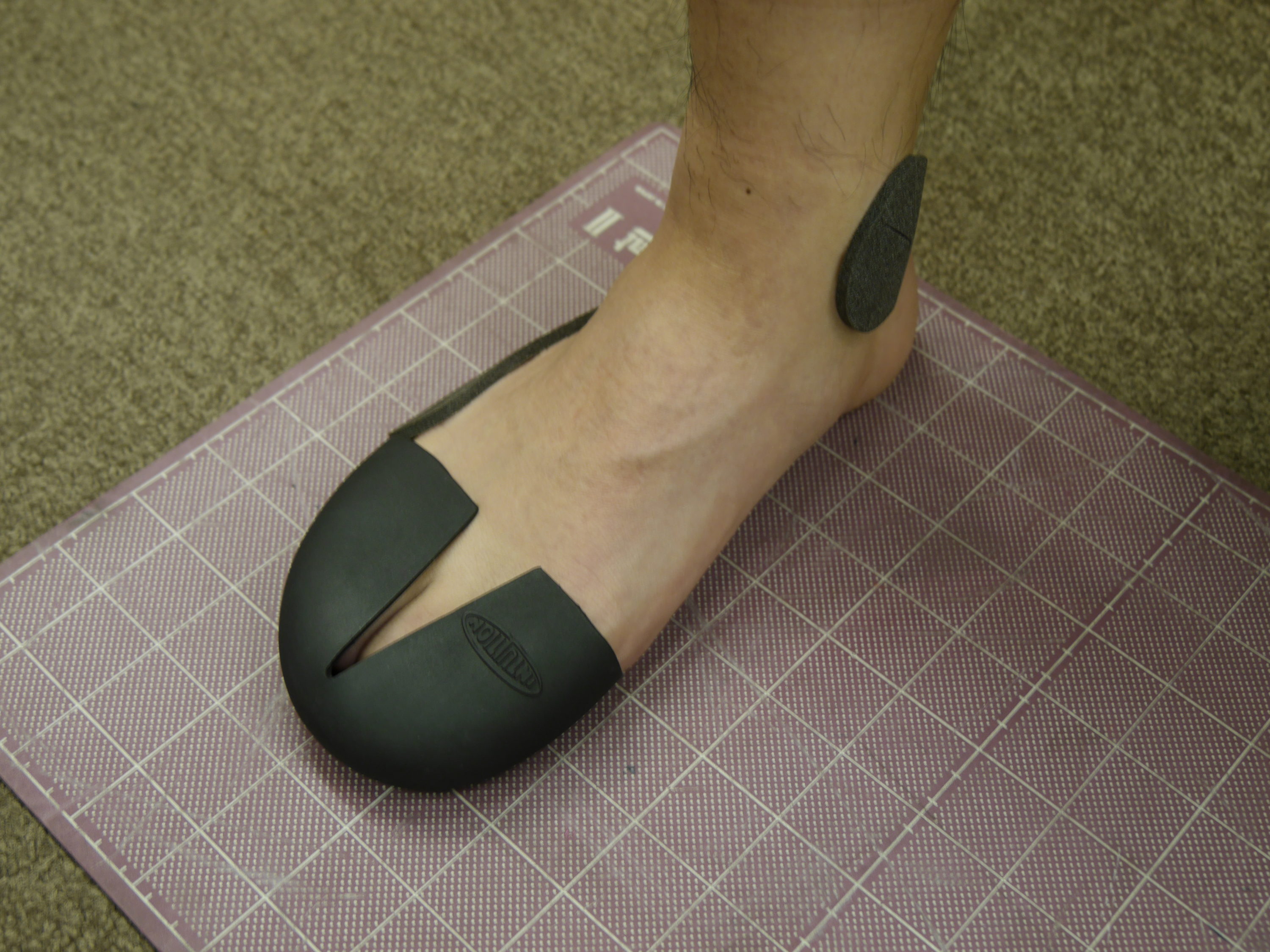
2. Stick the pad to the area you want to expand
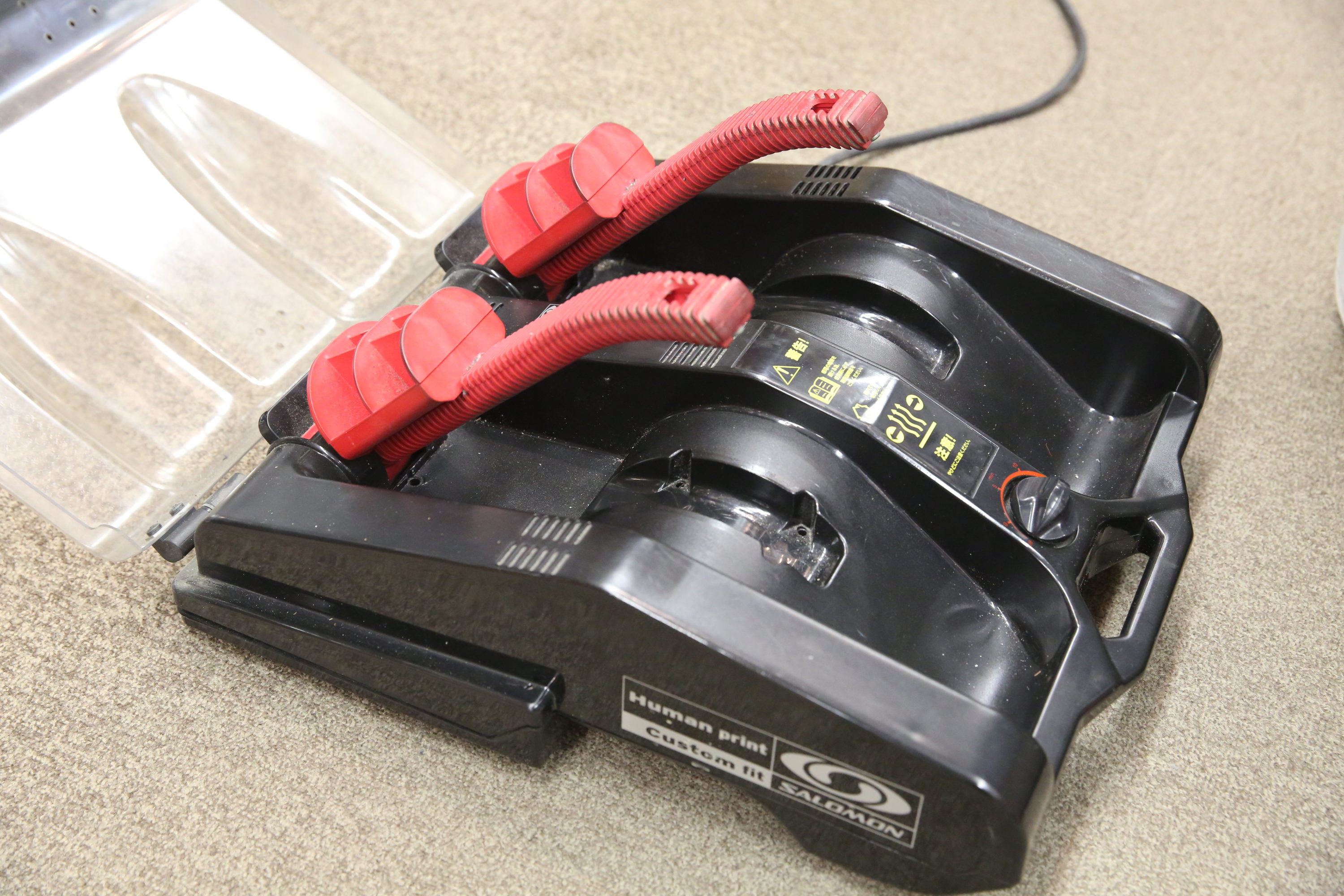
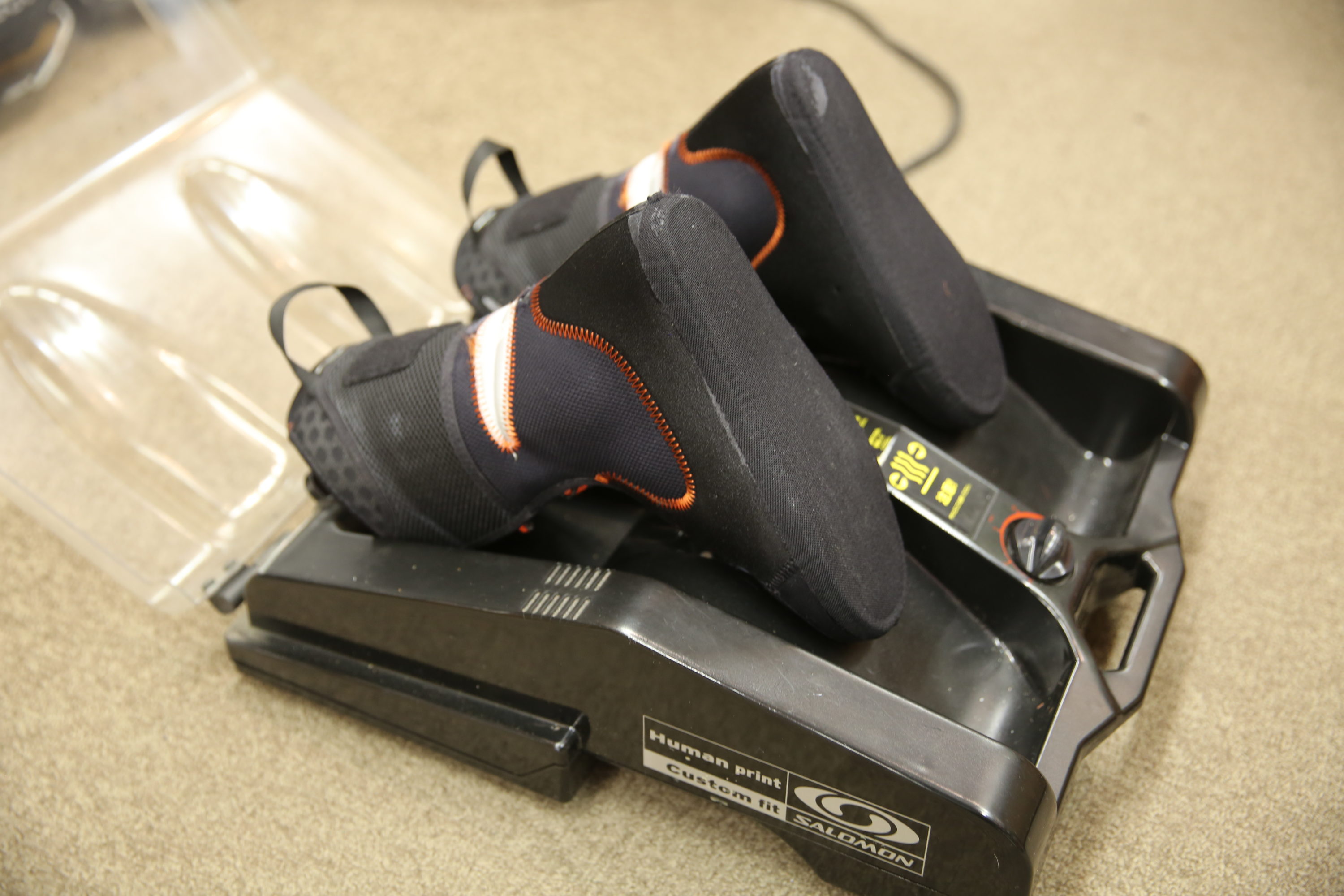
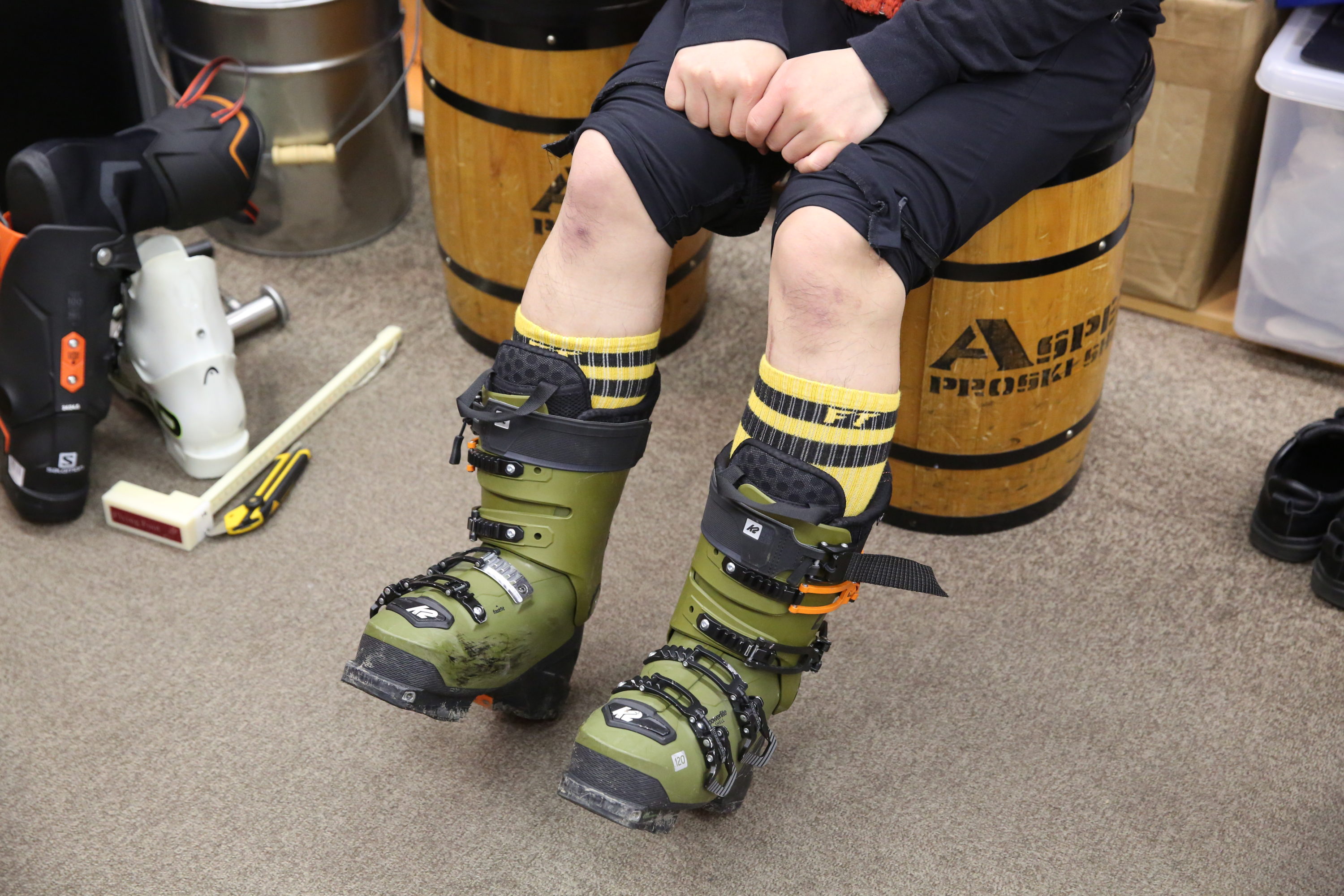
3. Put on the pads and wait for the inner boots to set in. Depending on how you want to deform them to suit your skiing style, you can either sit or stand while waiting
That's it
Shell thermoforming process
1. As with inner customization, attach the pad to the area that is touching
2. Warm your boots with a dedicated heater
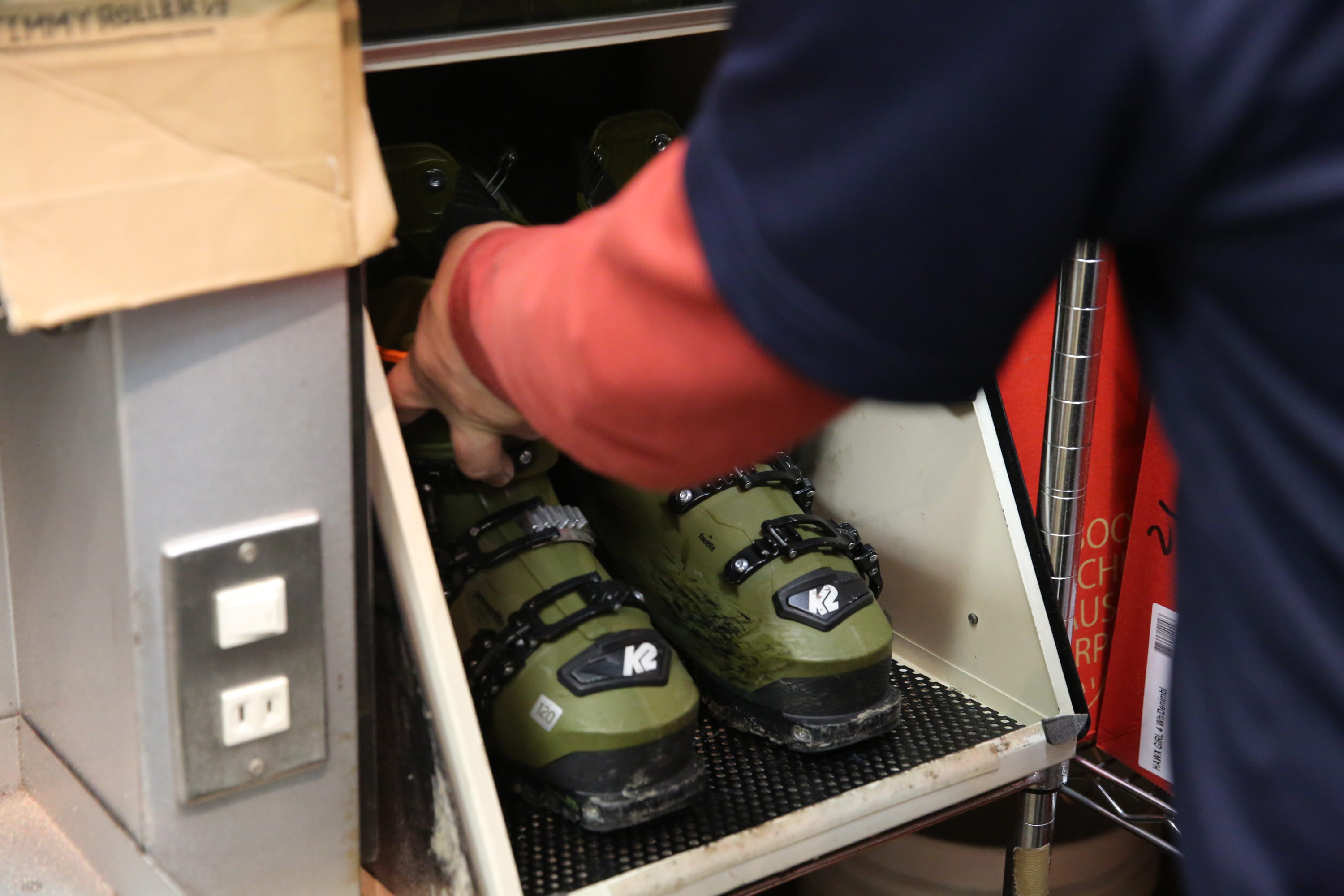
3 Put your feet in and wait
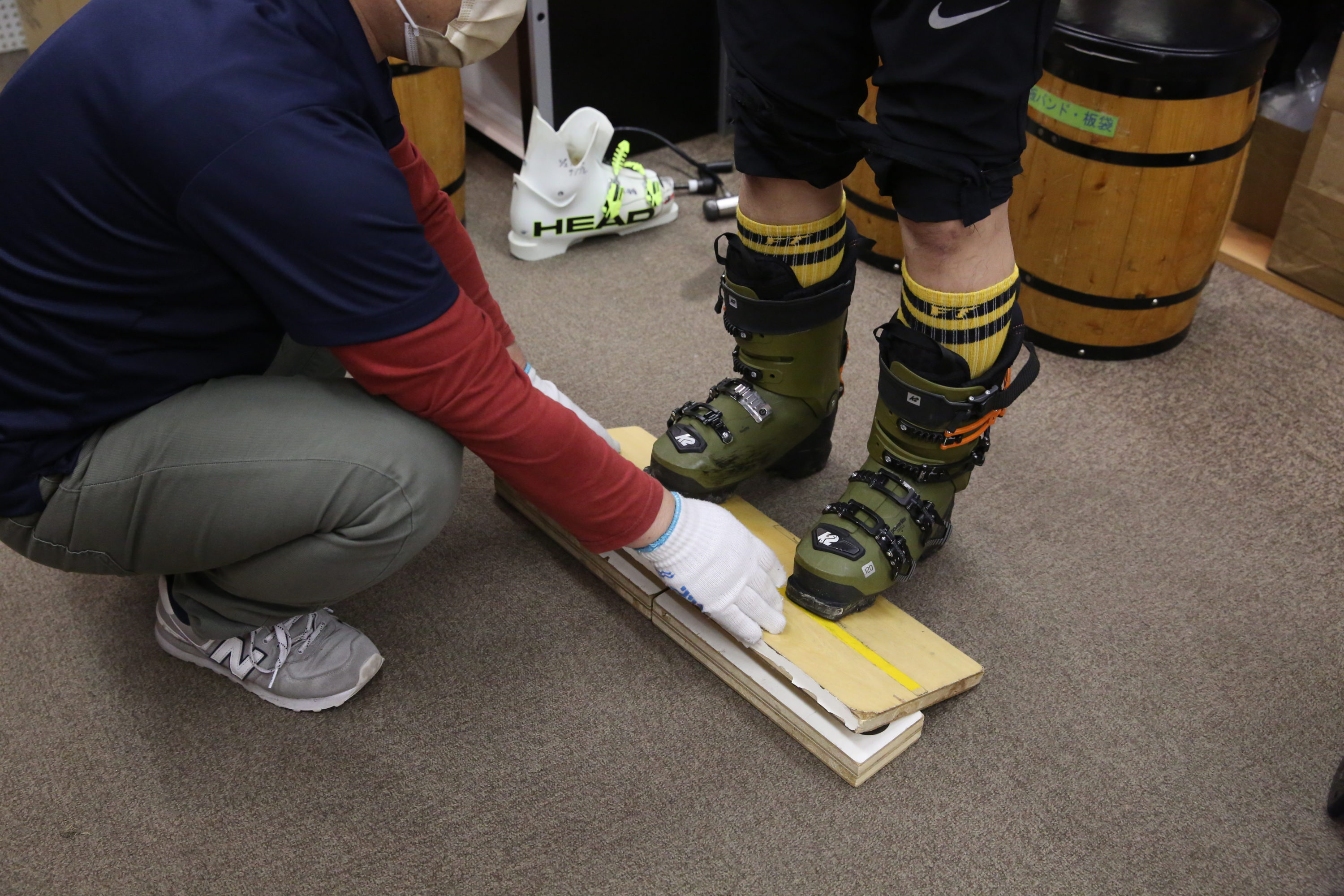
The natural position when you put your foot into a boot is one where your center of gravity is on your heel. By placing a board between your toes, you can keep your foot in a natural position for the boot
3. Wrap the Cool Gaiters you have chilled in the refrigerator around your boots
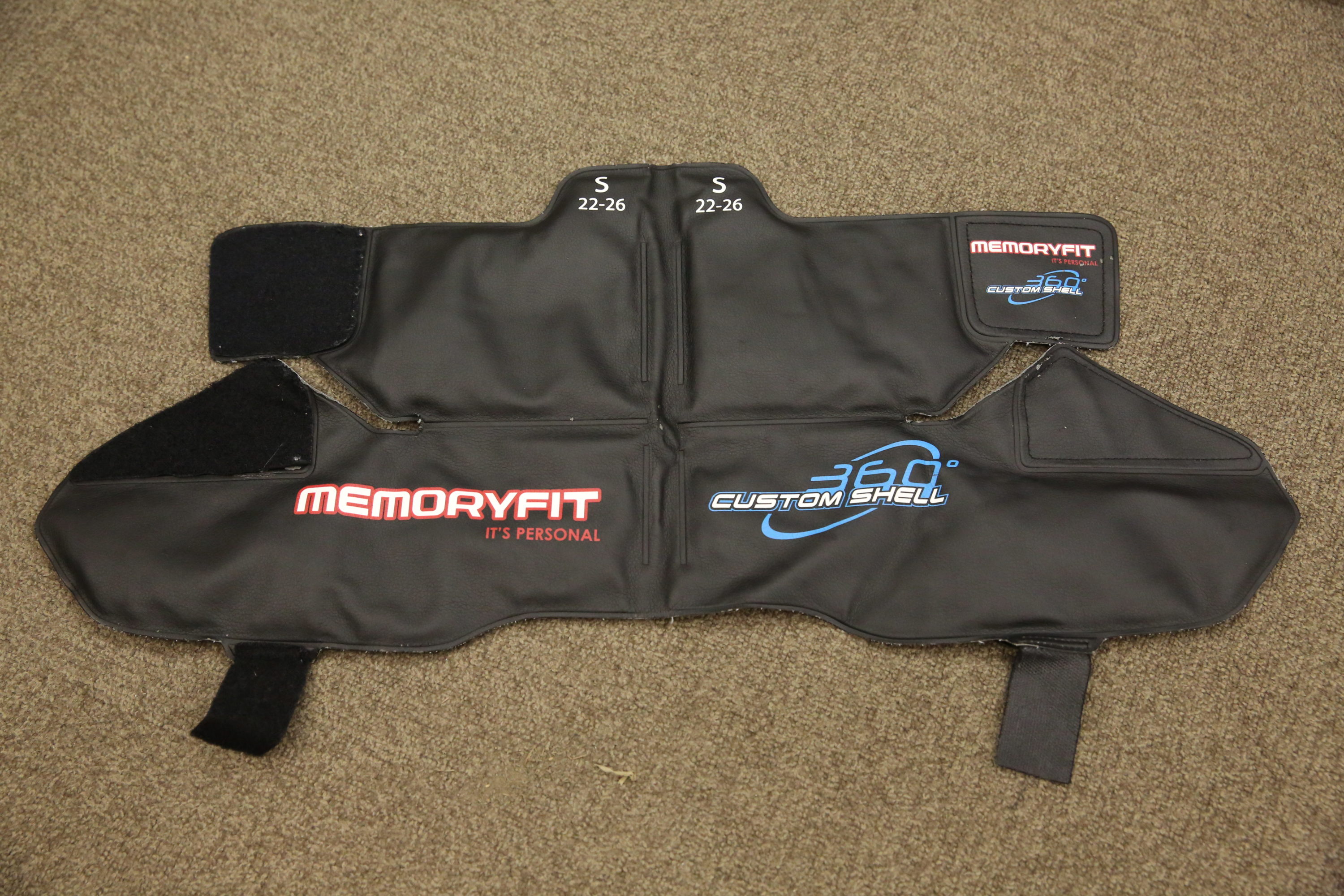
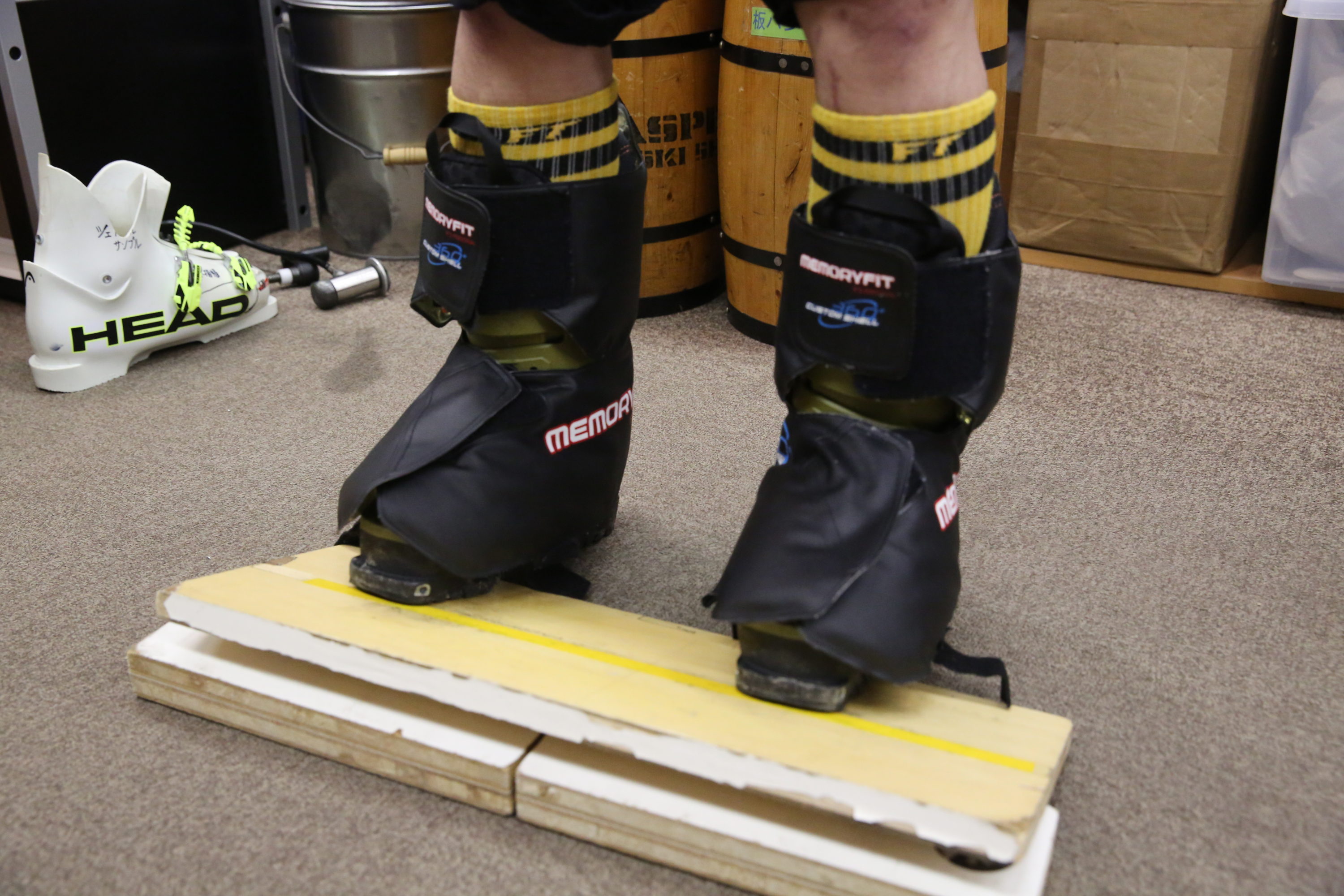
Roll it up and wait for about 10 minutes, and the shell formation is complete
The inner lining and shell molding can be completed in just under an hour. All you need to bring is your boots and ski socks, and you can discuss any concerns you may have with the shop staff on the day, so it's not difficult at all
Our editorial team tried it out and found that just by customizing the inner lining, the fit of the heel improved dramatically, providing a firmer hold
When buying new boots, I highly recommend starting with customizing the inner lining
The store where I had my fitting
-
address
- 3-6 Kanda Ogawamachi, Chiyoda-ku, Tokyo 101-0052
-
telephone number
- 03-3233-1607
-
Business days
- Closed on Wednesdays and irregular holidays from April to July
The person who taught me
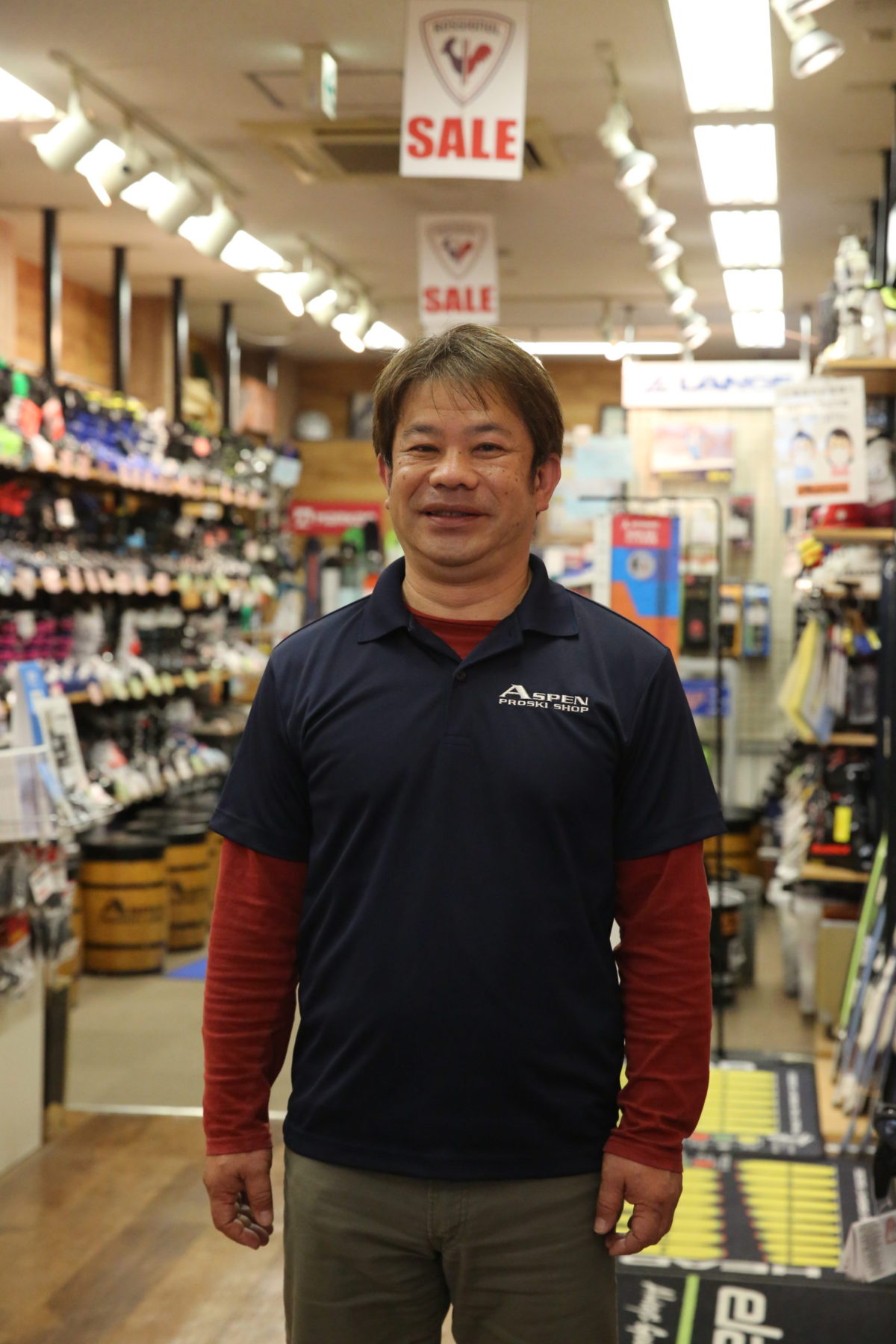
Maruyama-san
They have been selling ski equipment for 25 years and are veterans. You can trust their experienced staff to assist you