

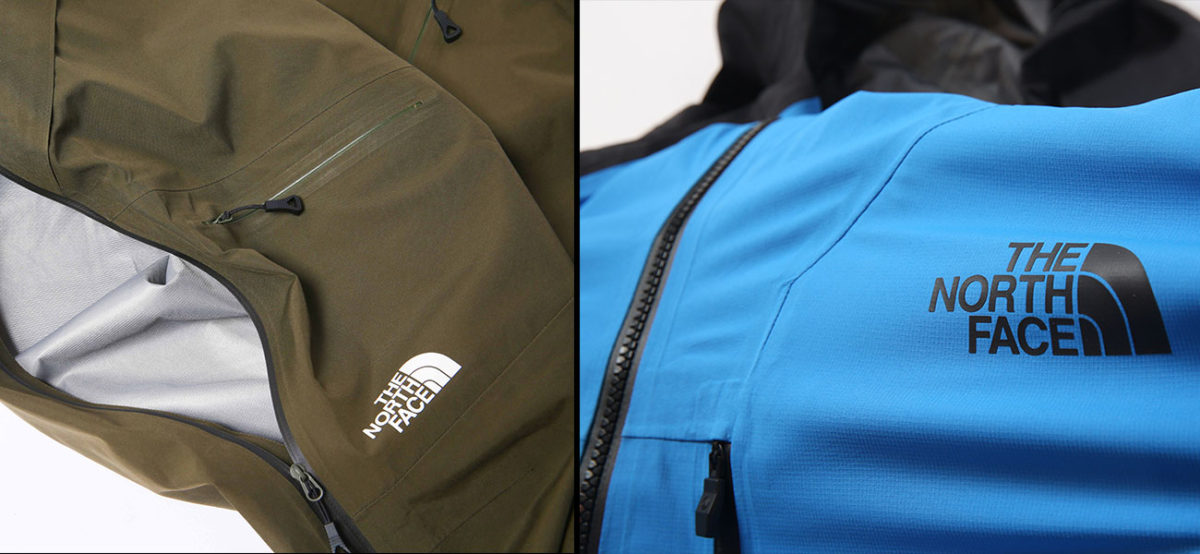
Modern snow wear achieves high-quality comfort and performance through various technologies. Understanding the essence of these technologies will change how you read catalogs now that many of the '22-23 season models have been released. So, let's review some of the fundamentals that will help you understand the latest features
Required functions for snowwear
It's more than just cold weather gear. That's the depth and difficulty of snowwear. If all you want is to keep out the cold, you can just throw on some thick, padded clothing and you're done. But skiing is an activity. Moving your body raises your body temperature and can even make you sweat. And if you hike up in the backcountry, your physical activity is sure to skyrocket
Not only do weather conditions and temperature change dynamically, but even the physical condition of the skier changes. And because it's an activity, skiwear must not restrict movement, so there are a wide range of requirements it must fulfill. It's a delicate balance that covers all of these, satisfying both these and these
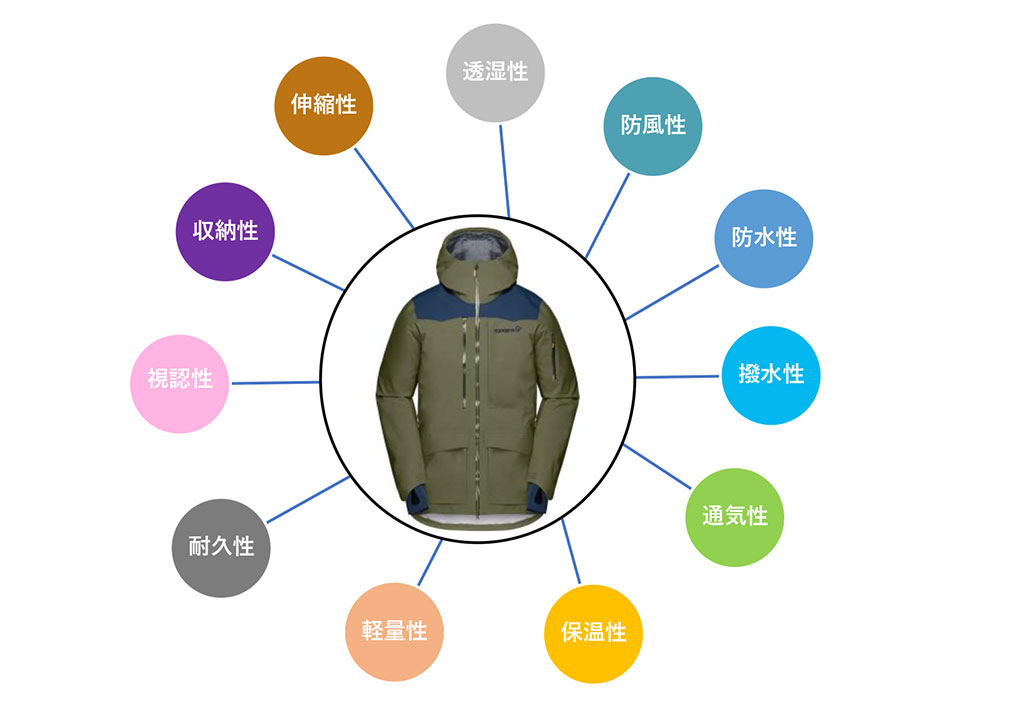
When you think about the elements you want in snowwear, many things come to mind. Setting aside fashion elements such as color and style, this time we will focus on functionality
●Features that make it easy to use for activities in snowy mountains such as riding and hiking
●Fabric performance inherent in the garment's fabric
So let's take a look at each of them
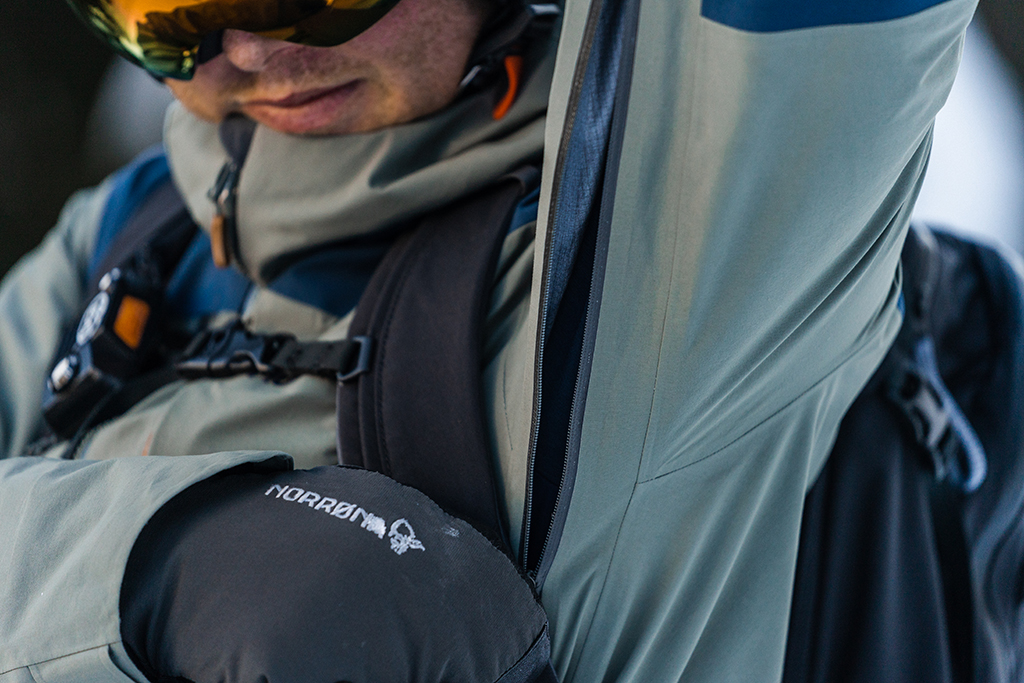
Easy-to-use functions and specifications for activities on snowy mountains
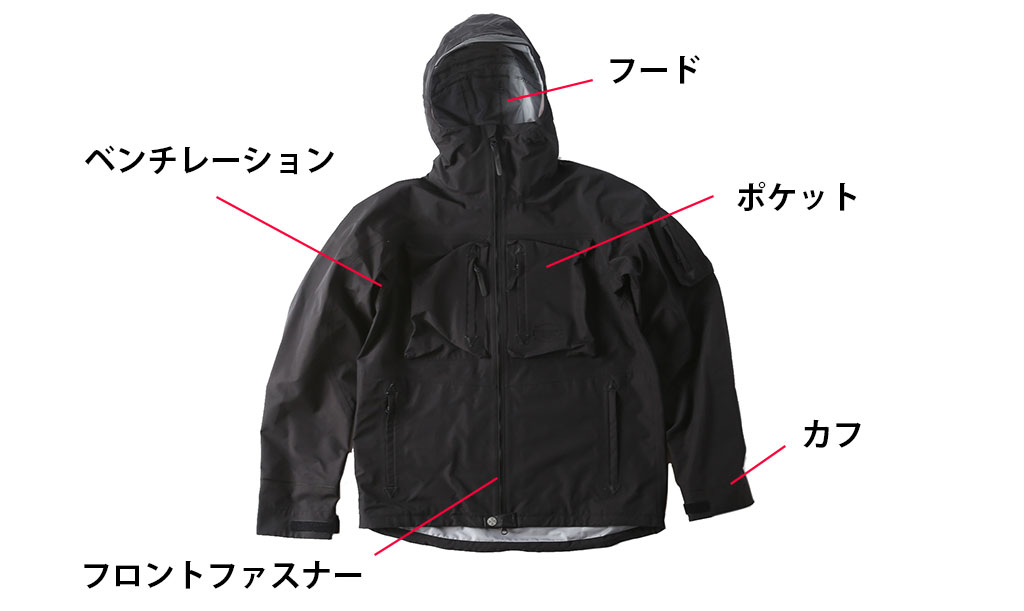
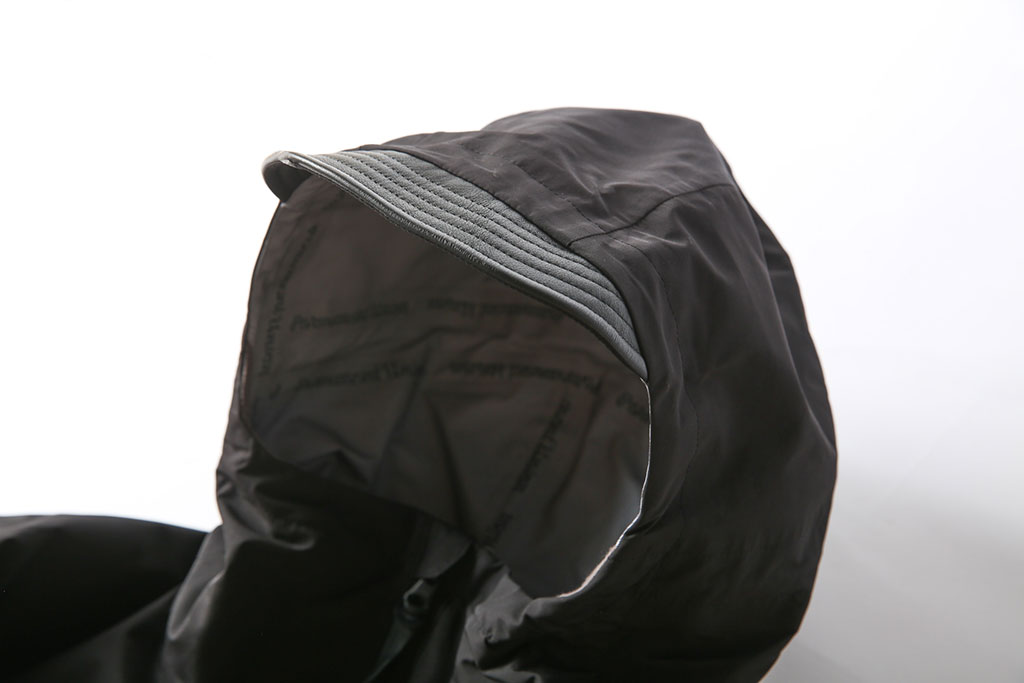
The hood
provides insulation by blocking snow and wind. In that sense, it is a prime example of a mechanism that allows you to adjust the level of insulation according to the situation. Recently, large-capacity models that can be used even while wearing a helmet have also appeared.
zipper
is convenient for regulating body temperature, as it allows you to easily take off and put on your clothing. It offers both the sturdiness to block wind and snow from the front and the flexibility to follow body movements, and lightweight, rust-resistant resin is now the mainstream material.
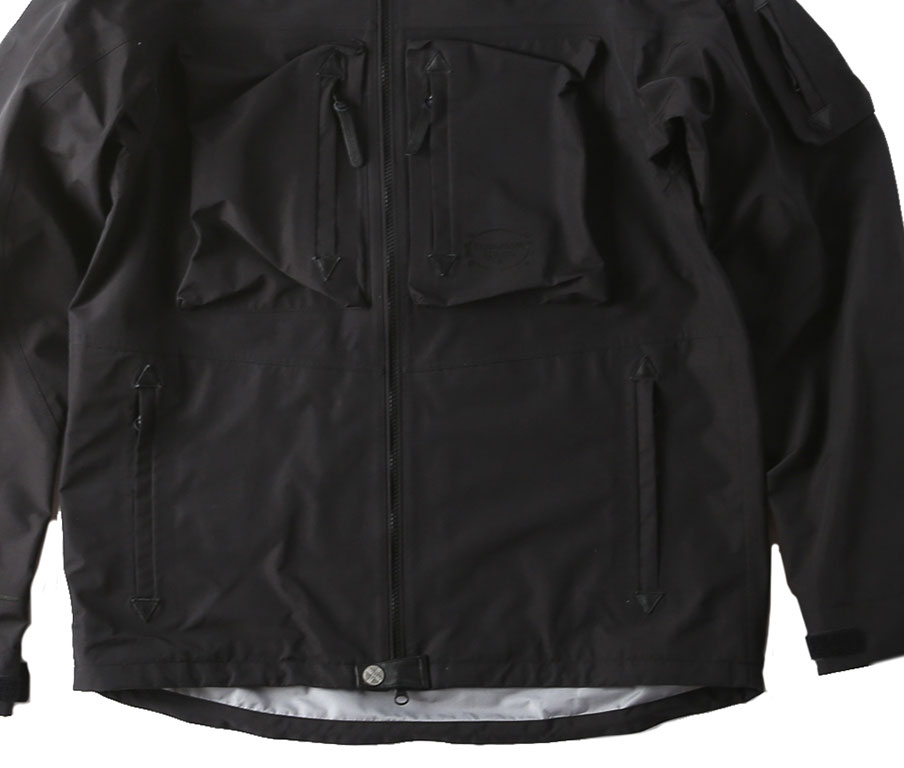
front
pocket to keep your hands warm, and the chest pocket to store small items. The zippers on pockets for small items are often designed to open from top to bottom, a design choice to prevent items from falling out even if the zipper isn't completely closed.
Ventilation
acts as a window to take in outside air for body temperature regulation. It is often placed under the armpits because heat tends to accumulate there, but also because it is shaded by the arm and therefore less exposed to snow and rain.
The cuff
is set slightly longer to prevent it from feeling restrictive while skiing. The cuff is often wider so that it can be worn over the sleeve of a glove, and it has a wide range of adjustment to flexibly accommodate various gloves.
Other features commonly found on jackets
include powder skirts and wrist gaiters to prevent snow from entering the hem and cuffs, cords to adjust the hood, and drawcords to tighten the hem. Some garments designed for backcountry use also have built-in RECCO reflectors.
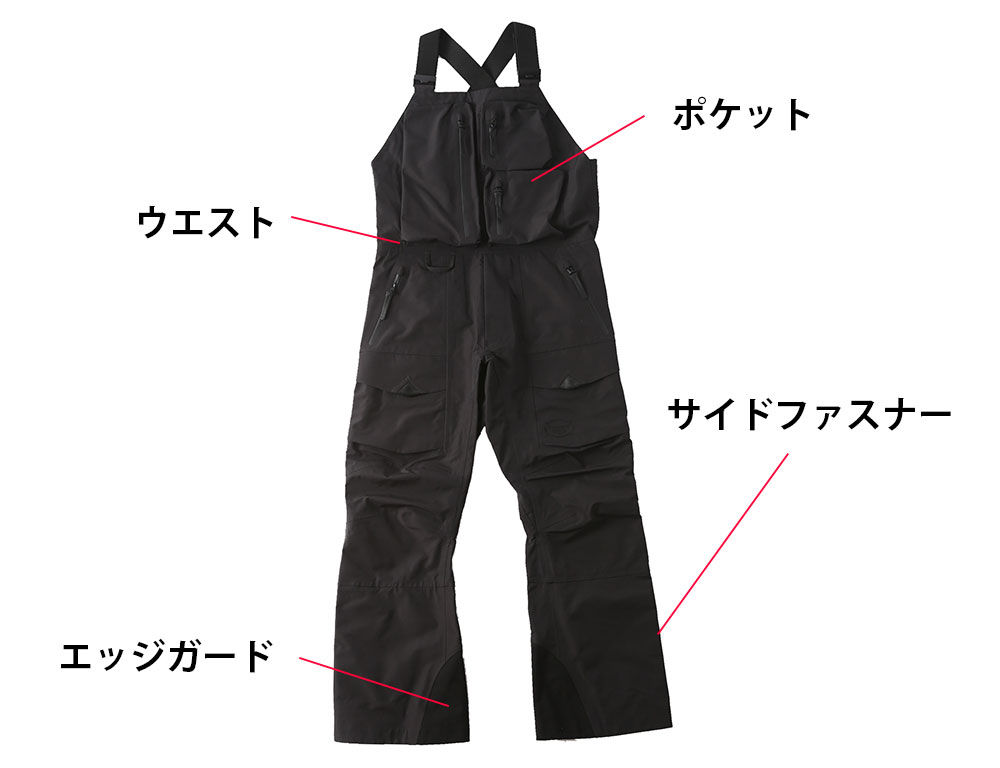
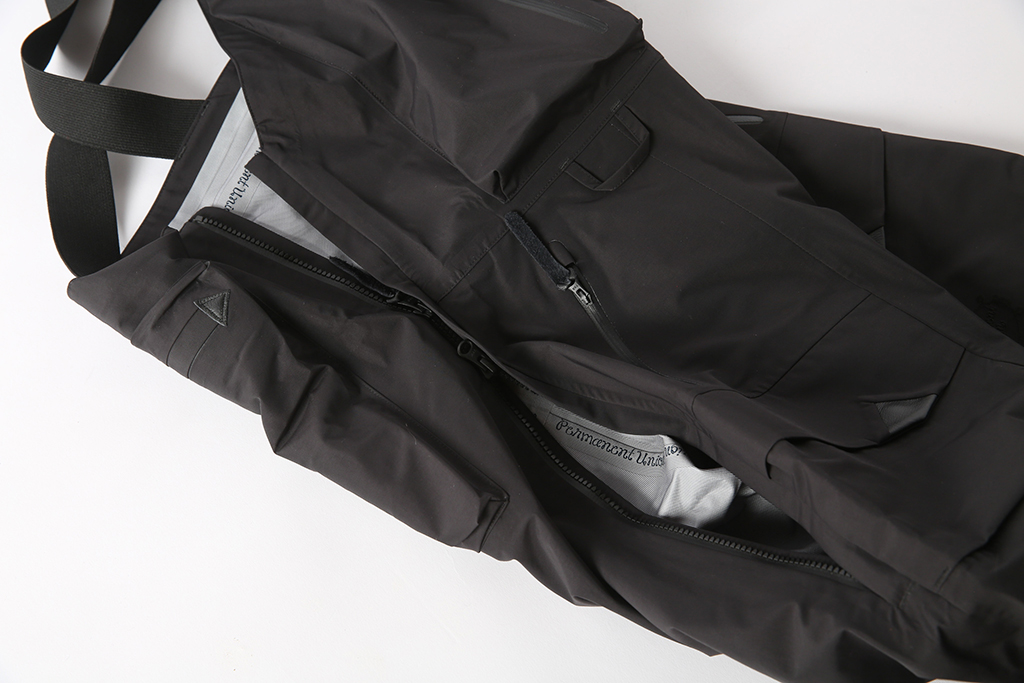
Pants
often feature large zippers on the sides of the thighs for ventilation. While most are located on the outside of the thigh, some products have zippers on the inside, or even on both sides.
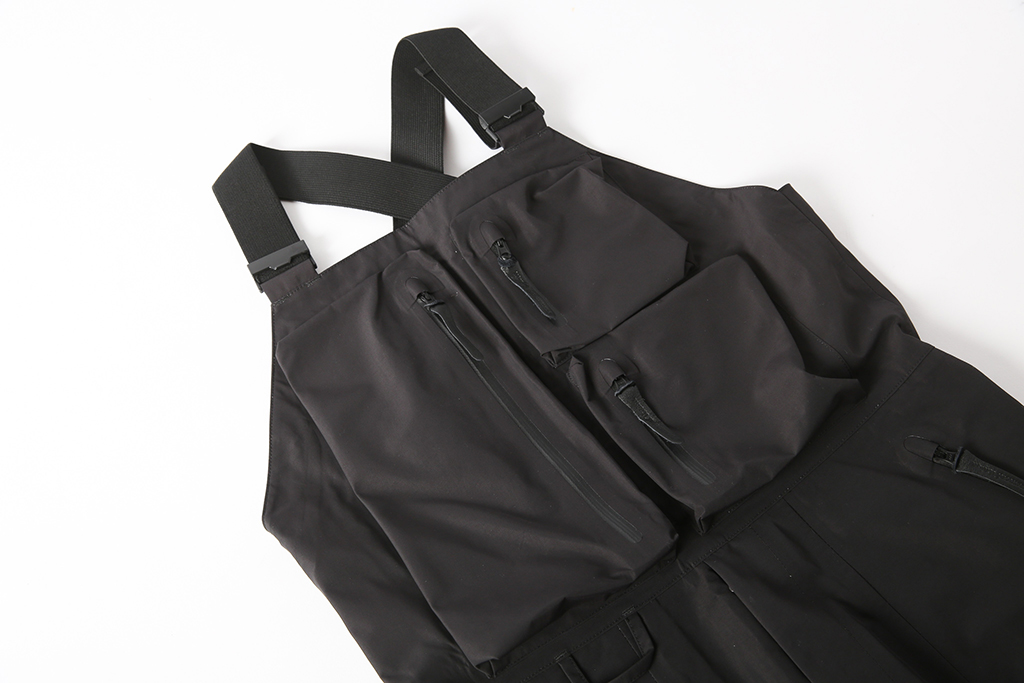
the waist
, stomach, and lower back warm, and to prevent snow from getting in if you fall. The waist size is also adjustable with Velcro fasteners, so a belt isn't necessary to maintain a good fit.
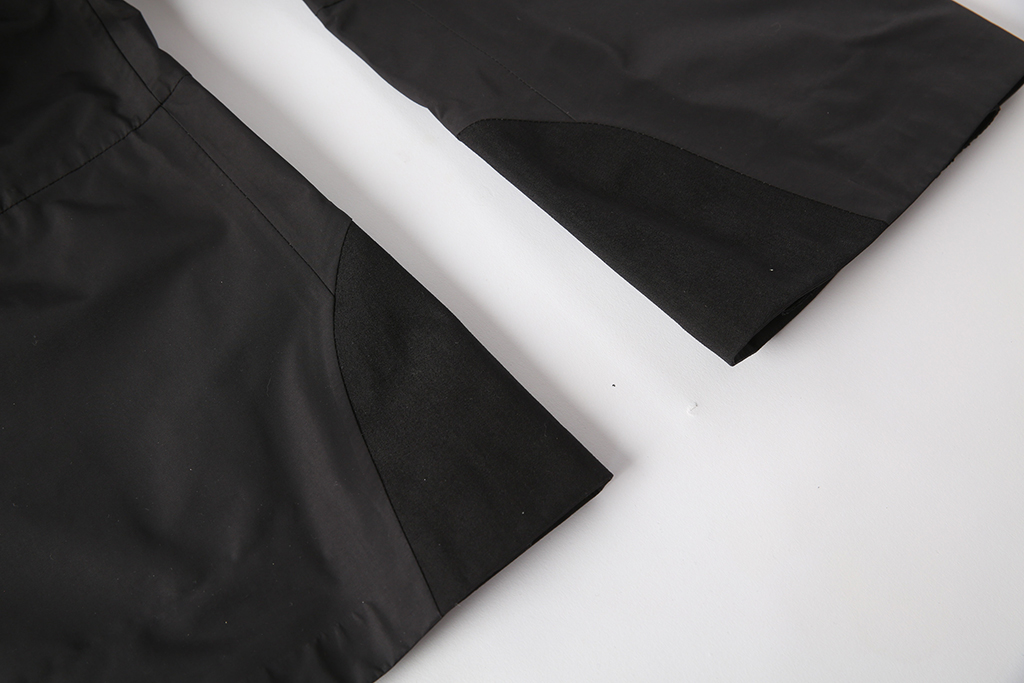
The inside of the hem is protected with a durable material such as Kevlar to prevent it from being cut by
the edge guard. It is designed to be durable without compromising flexibility, so it does not affect leg movement
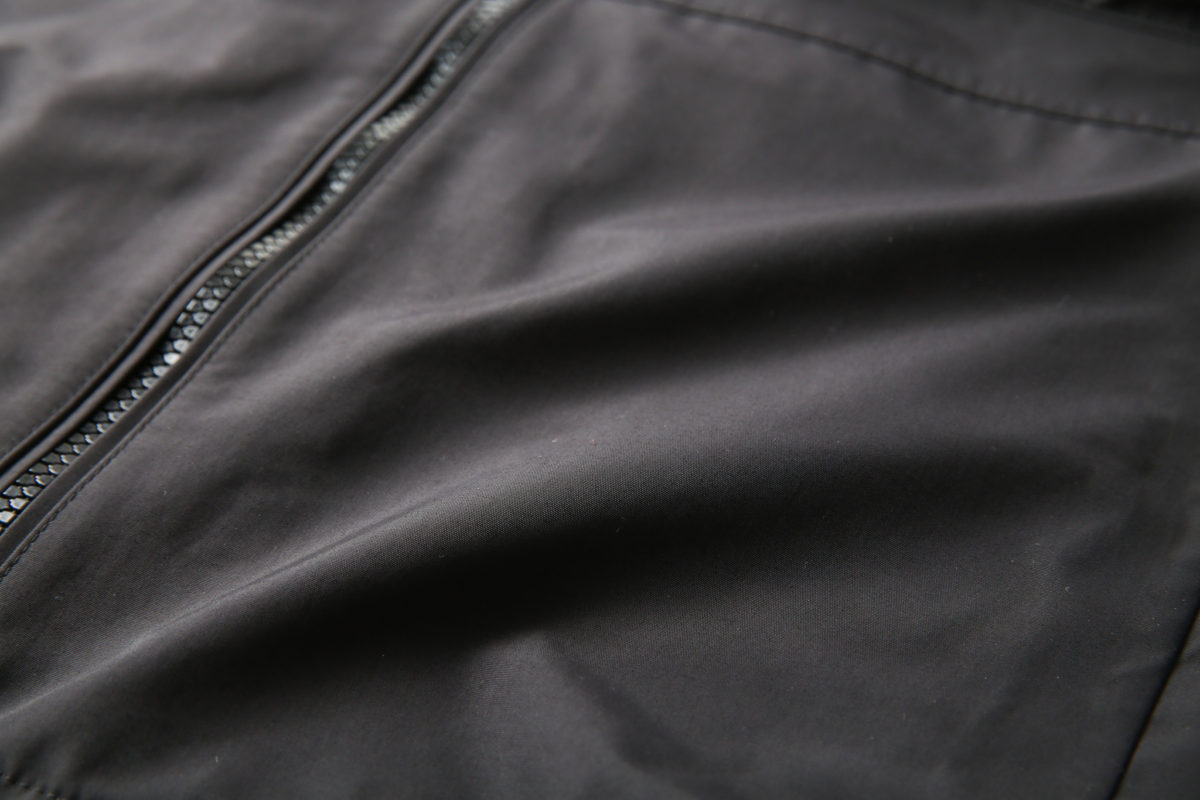
Fabric structure and functional role
A three-layer jacket has a membrane sandwiched between the outer and inner layers (outer, membrane, and lining), while a two-layer jacket has no lining and is made up of only the outer layer and membrane (outer and membrane)
3-layer jackets have a lining that protects the membrane, improving durability and providing a comfortable fit thanks to the smoothness of the lining. 2-layer jackets have no lining, making them more breathable and reducing the weight of the product. They also offer a supple feel. Utilizing these features, a structure in line with the product concept has been adopted
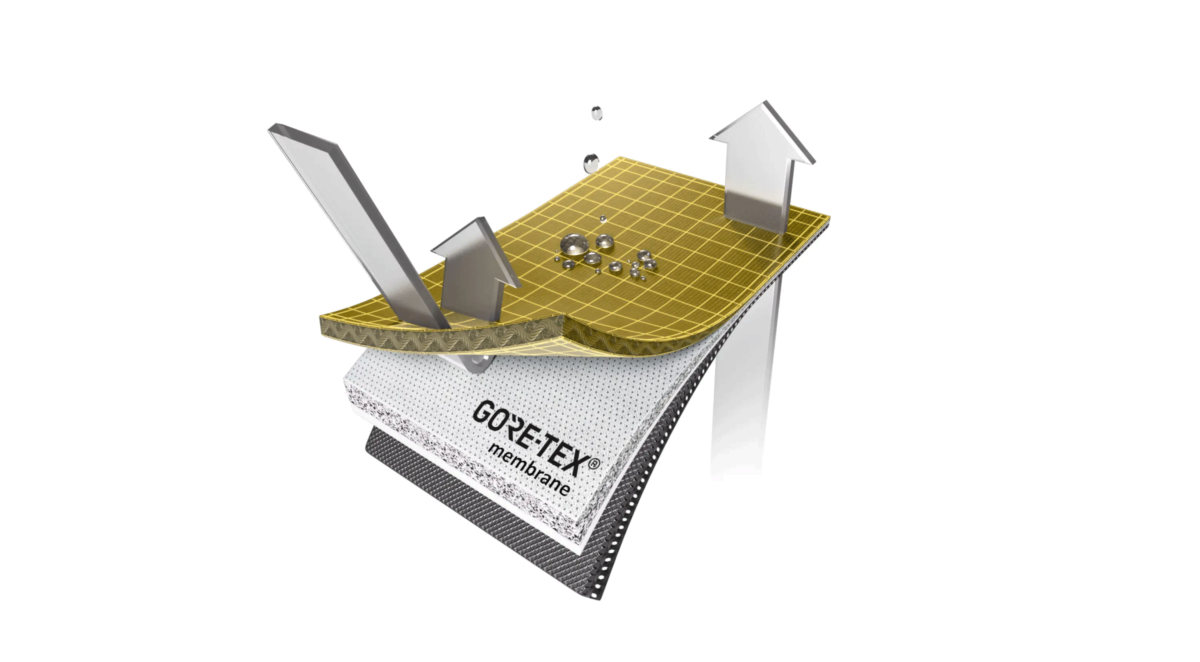
provided by Gore Japan LLC).
Functional role of the outer fabric
This part can be considered the skeleton of the wear, and it repels snow and rain, maintains its strength, and determines the shape and color of the wear. It is mostly made from synthetic fibers, and nylon is often used because nylon's abrasion resistance, elasticity, and flexibility make it perfect for ski wear
The functional role of the lining
In addition to ensuring ease of movement by allowing the items worn underneath to slide smoothly, they also absorb sweat, improving comfort and ease of wear. Some products also use a lining with thermal insulation to improve cold protection
Some have padding
Some ski wear is filled with padding to increase its warmth. Most uses synthetic fiber padding that is resistant to moisture to protect against snow and sweat. Some ski wear also adjusts its warmth according to the distribution of body temperature, such as by placing padding more in the front of the body, which is more likely to get cold from the wind while skiing
Functional role of waterproof and breathable materials (membranes)
Most modern ski wear incorporates a waterproof and breathable membrane between the outer and inner layers. Think of it like a sandwich: the outer and inner layers are the bread, and the membrane is the ham inside. This membrane has over 1.4 billion pores per cubic centimeter, and this microscopic pore structure provides waterproofing, breathability, and windproofing. Waterproofing and windproofing are
self-explanatory, but breathability refers to the ability to allow moisture from inside the garment to escape. It shuts out external moisture from rain and snow in snowy mountains, but allows moisture from sweat vaporized inside the garment to escape, preventing stuffiness. Specifically, it's expressed numerically as the number of grams of vaporized moisture (not condensed into water droplets) released from the garment in 24 hours. Of course, a higher value indicates higher breathability.
The ability to maintain comfortable conditions through breathability has a major impact on climbing and skiing performance on snowy mountains. This is why membranes are so important in snowwear. Understanding the characteristics of membranes will help you better understand the intended use of that snowwear
There are many different types of membranes, each with its own characteristics. Well-known examples include GORE-TEX, NeoShell, and eVent, which are often used in shells and gloves
The membrane is for "layering"
The items in the photo below are products for what is known as "layering." Layering means wearing multiple layers of clothing. In order to comfortably and fully enjoy active activities, it is necessary to be able to flexibly respond to changes in body temperature that are constantly changing due to natural conditions and movement. "Layering" is what leads to performance and comfort in snowy mountains.
The basic principle of layering is to wear three layers, starting from the skin: a "base layer," a "middle layer," and an "outer layer." There are two main points at the heart of layering:
- Prevent sweat-soaked clothing from touching the skin
- Allow sweat-soaked clothing to dry quickly
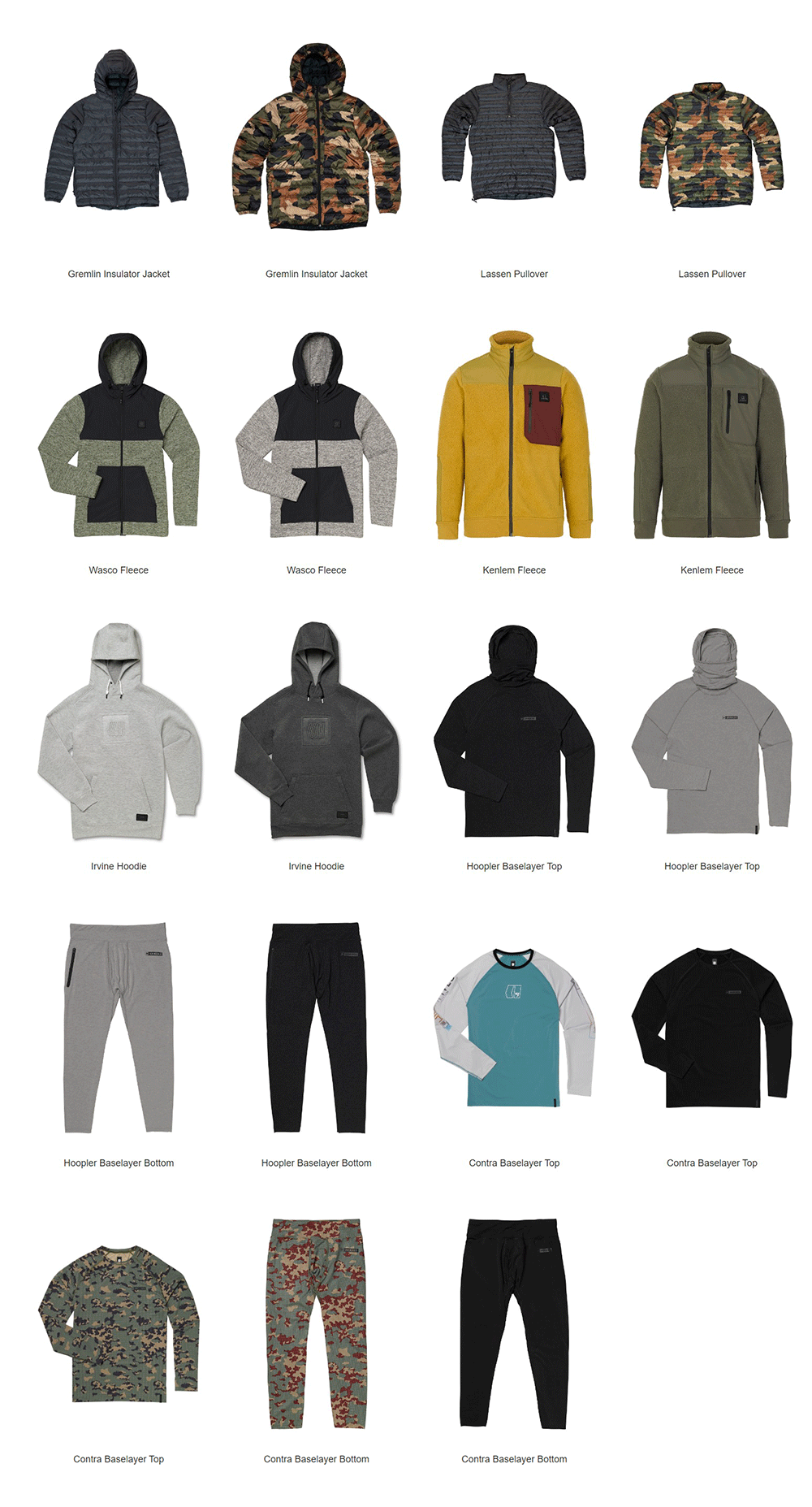
Layering is not simply about wearing multiple layers of clothing, but about selecting materials and structures that reflect the characteristics each layer should exhibit. The first layer, which is closest to the body, should be made of a material that keeps sweat away from the skin, while the second layer should be made of a material that absorbs sweat, disperses it, and evaporates it
The role of the second layer (outer jacket) is to release the sweat that has turned into vapor into the outside air. In the case of skiing, this is the role of the shell jacket. However, while sweat should be released, snow and rain should be blocked. Achieving these conflicting functions is "waterproof and breathable," which allows moisture to pass through but not water
. In other words, "waterproof and breathable" is an extension of the concept of layering. Layering is essential to fully utilize waterproof and breathable properties, and simply wearing waterproof and breathable clothing does not solve everything. That's why this performance is necessary.
Plus, what you need to know
What is water resistance?
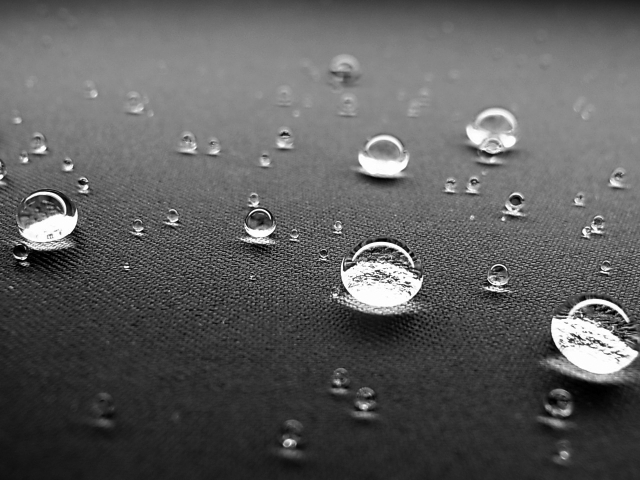
In the natural conditions of snowy mountains, there is a high possibility of being exposed to blizzards and rain. For safety reasons, it is important to avoid getting wet and cold from snow and rain. Waterproofing is essential for snow wear. You can think of water pressure resistance as a numerical way of expressing this. In other words, water pressure resistance is a numerical value that shows the ability to suppress the force of water trying to soak into the fabric. The
water pressure resistance value tells you "how much water pressure the waterproofing can withstand." Naturally, the higher the value, the better the waterproofing. The
water pressure resistance of a typical nylon umbrella is about 200-500 mm, and a sturdy raincoat has a water pressure resistance of about 5,000 mm. Considering that snow wear is exposed to rain and snow for long periods of time, it would be reassuring to have a water pressure resistance of at least 10,000 mm or more.
When choosing clothing, you can't decide whether to buy it or not until you've actually tried on a sample on a snowy mountain, so the water resistance number is important information that can guarantee waterproofness
What is denier, an indicator of fabric hardness?
Some clothing feels stiff and rough, while others are very supple. This difference is determined by factors such as the thickness of the outer fabric and the material of the lining. The "
D" after the number in the catalog is an abbreviation for denier. Denier represents the weight of the yarn used in the fabric, expressed as grams per 9000 meters. In catalogs, this indirectly indicates the thickness of the fabric. While most clothing is between 70 and 150 denier, it's important to know that the stiffness and comfort of the fabric cannot be judged solely by the denier number.
How to give fabric stretch
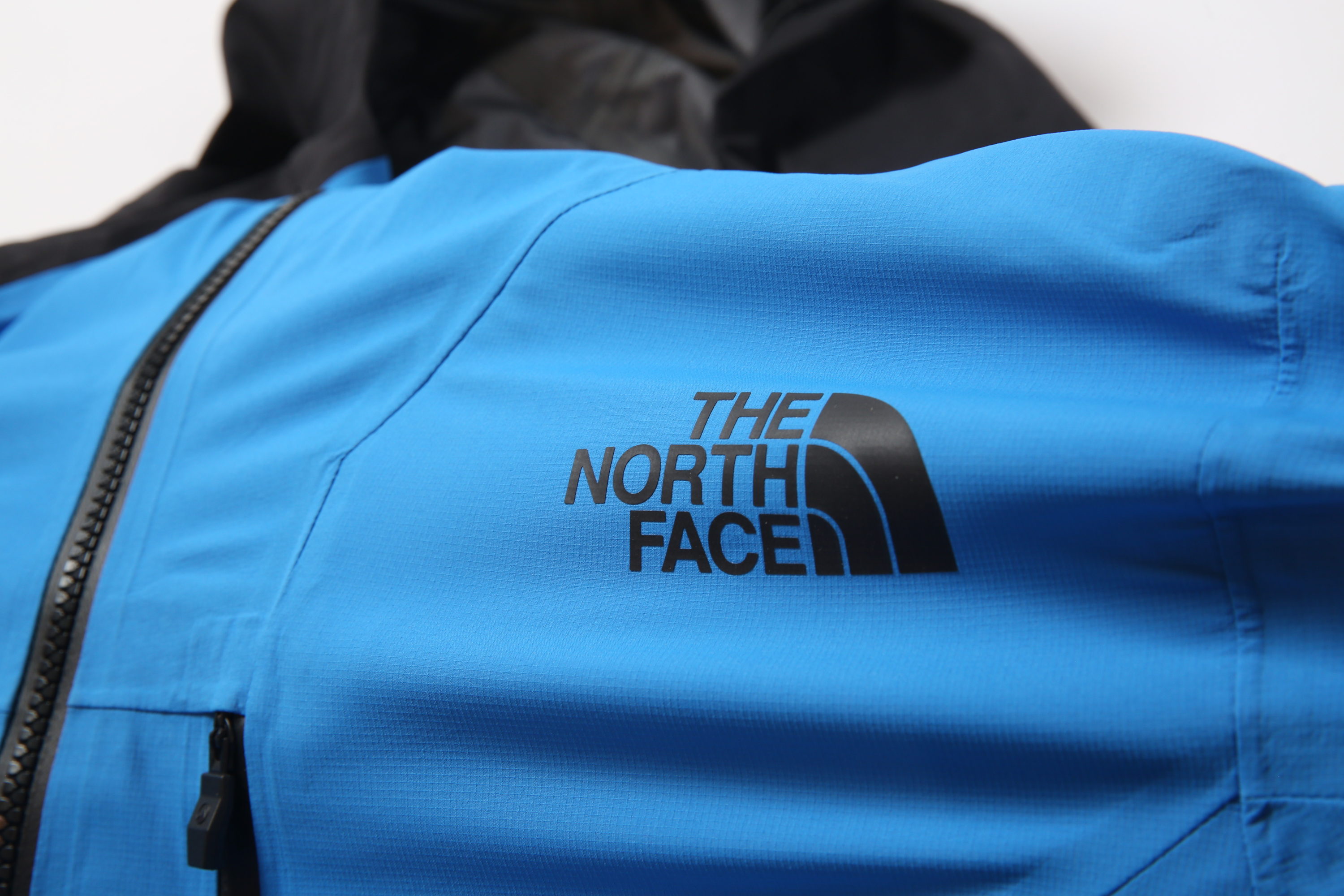
Naturally, stretchy fabric makes it easier to move around. To make fabric stretchy, either the threads that make up the fabric must be made elastic, or the fabric itself must be made stretchy through the weaving method. In either case, if you combine it with the membrane mentioned above, the membrane itself must also be stretchy. Making waterproof, breathable clothing stretchy actually requires a very high level of skill
Cutting of clothing
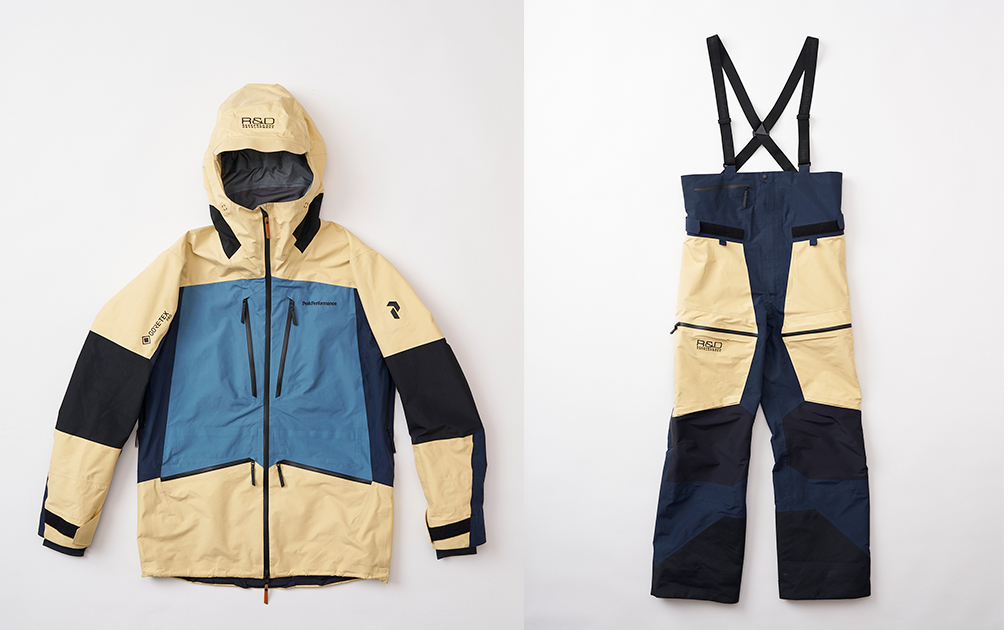
It's not enough to just use high-performance fabrics. It's also important that the design is designed to fully utilize the fabric's capabilities. Clothing with cutting that takes into account the body movements when sliding and climbing on snowy mountains offers high mobility. For example, by using three-dimensional cutting in areas where there is a lot of movement, such as the knees and elbows, and highly stretchable fabric on the back, movement is not restricted and stress-free. It's also a good idea to pay attention to the cutting
I've learned how to read a catalog and what to look for when choosing clothing
Once you understand the functional roles of clothing parts and fabrics in this way, you will be able to better understand the meaning and importance of the information published in clothing catalogs. Give it a try. Let's pick out some product information from the NORRONA online store. I've written the functional aspects of the clothing in red text
NORRONA
tamok Gore-Tex Pro Jacket
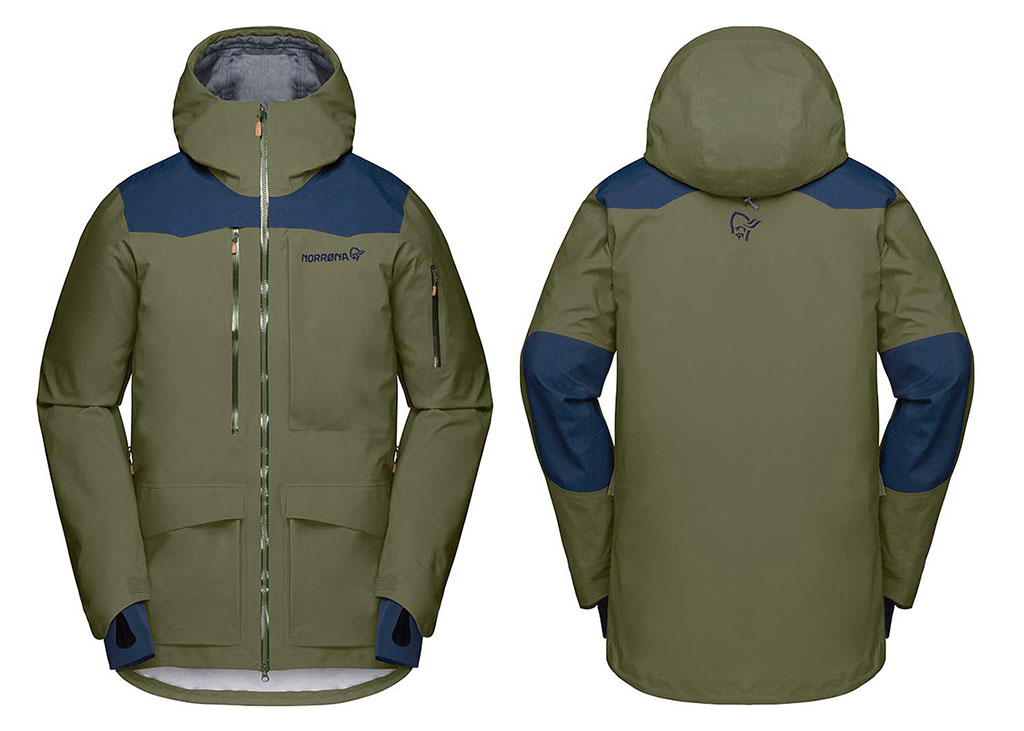
The outer shell is based on GORE-TEX® Pro's Most Breathable technology, using 70-denier recycled nylon. The shoulder and elbow areas, which are prone to abrasion and wear, are reinforced with 160-denier GORE-TEX® Pro's Most Rugged technology.
new GORE-TEX® Pro materials are strategically placed to achieve high levels of waterproofing, breathability, windproofing, and durability . It is equipped with user-friendly riding functions such as a helmet-compatible hood, front vents, and cuffs with built-in hand gaiters . The longer length and relaxed fit create a distinctive look, and while it is a technical product that excels in the backcountry, it also has a design that looks natural on groomed slopes.
summary
Modern snowwear incorporates a variety of functions and distinctive materials. Waterproof and breathable materials are now commonly used in many types of snowwear. However, unless you properly understand the meaning and function of these materials, you won't be able to utilize their full potential. Understanding these features will help you make more efficient use of the functions your snowwear offers
What materials are used in the clothing, and what are they for? How will you spend your time in the mountains? By looking at clothing from a functional perspective, you will be able to see what kind of clothing you need. If you choose a piece of clothing with this in mind, your snowboarding in the new season is sure to be more comfortable and enjoyable
text/Takuro Hayashi + STEEP