


Waterproof and breathable, durable, breathable, stretchy, and environmentally friendly—the latest snowwear offers so much innovation and variety in materials and construction that it can be difficult to choose. So, let's take a look at the basics of choosing snowwear, including the latest technology and the meanings of technical terms found in brand catalogs. With many of this season's models now out, the way you read catalogs is sure to change
Required features of snowwear
Snowwear is more than just cold weather clothing. Skiing, climbing in the backcountry, and other physical activities can raise body temperature and cause sweating, even in winter. Controlling body temperature and sweating is important to stay safe and comfortable on snowy mountains. What's more, weather conditions are constantly changing on snowy mountains. In these environments, there are many requirements and performance requirements for snowwear

Snowwear achieves an excellent balance by effectively covering these elements. This balance is achieved through the fabric structure and detailed design of each part
Details you'll want for comfortable movement in snowy mountains
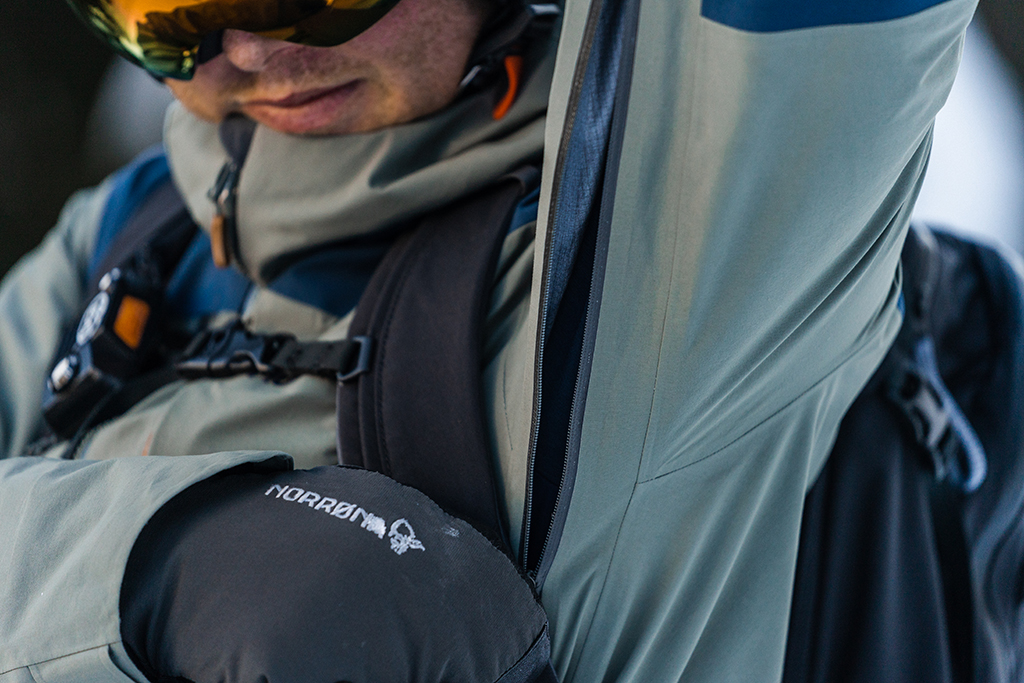
Jacket details
The details of the design support activities on snowy mountains. Various functions and ingenuity are used to effectively regulate the temperature inside the clothing and allow active movement even in harsh natural conditions. These functional details reduce stress on snowy mountains and are a major factor in determining safety and comfort

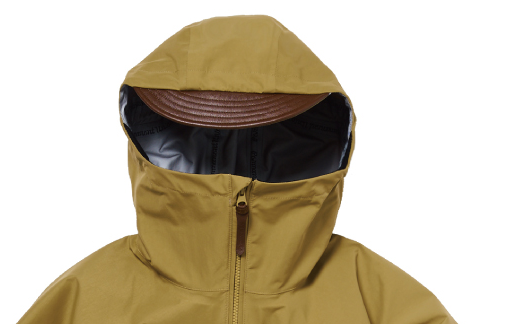
When choosing a jacket,the hood(❶) is essential for keeping warm and protecting against snow and wind. Recently, large hoods that can be worn over a helmet have become the mainstream.
The high collar, which reaches down to the bottom of the goggles, is also a great feature during blizzards
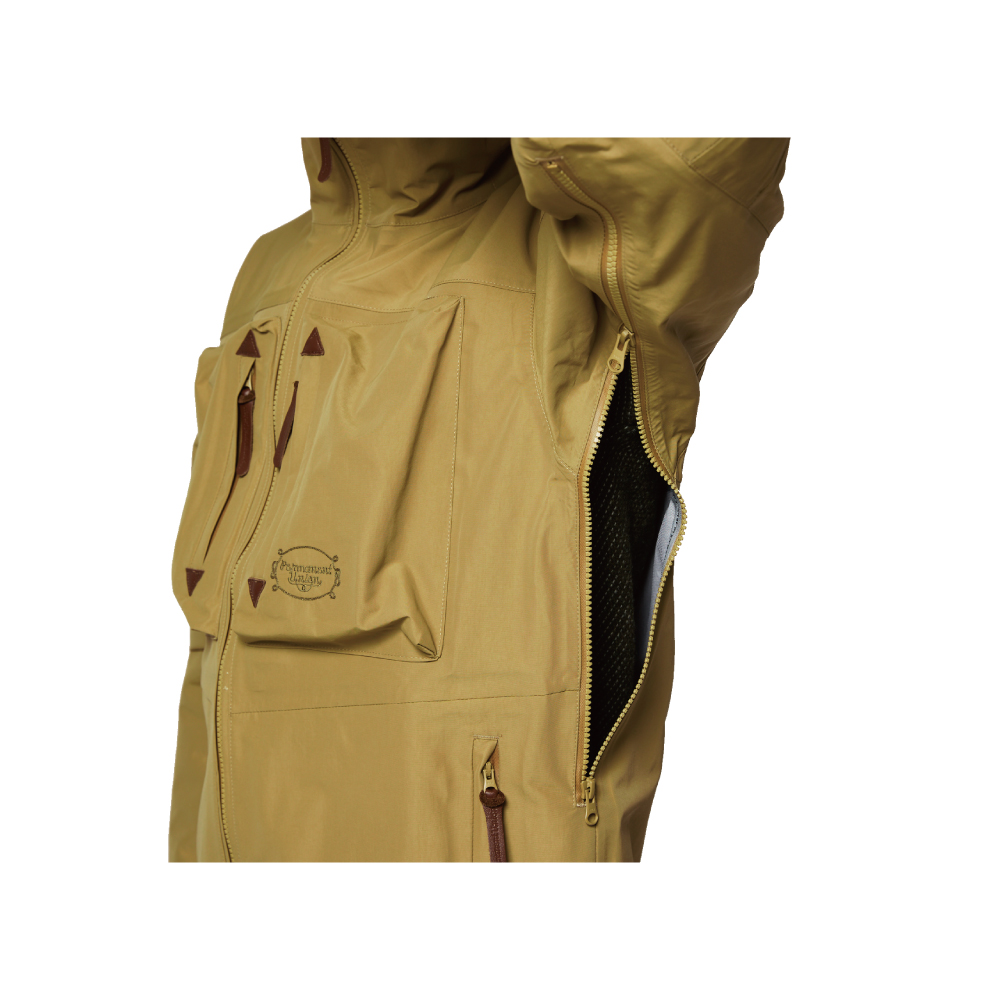
Furthermore, ventilation (❷), which functions to regulate the temperature inside the clothing , is an essential detail, especially for backcountry use involving repeated hikes and ascents.
Many are placed in areas where heat tends to build up, such as under the arms, and opening the zipper allows outside air to efficiently let in and regulate body temperature. Some are also designed in a way that does not interfere with the shoulder straps of a backpack

Jackets are equipped with various pockets (3). Many models have multiple pockets of various sizes on the surface and inside the garment for storage, warmth, and sometimes design purposes
The easy-to-reach pocket on the stomach area is convenient for keeping your hands warm, while the mesh pockets on the chest, arms, and inside are easy to use for storing small items such as goggles, spare gloves, and cell phones

The cuff (❹)prevents snow from entering. The sleeves are often roomy and the cuffs are wide so that the sleeves can be worn over gloves. A wide range of adjustment is also provided to flexibly accommodate various gloves.
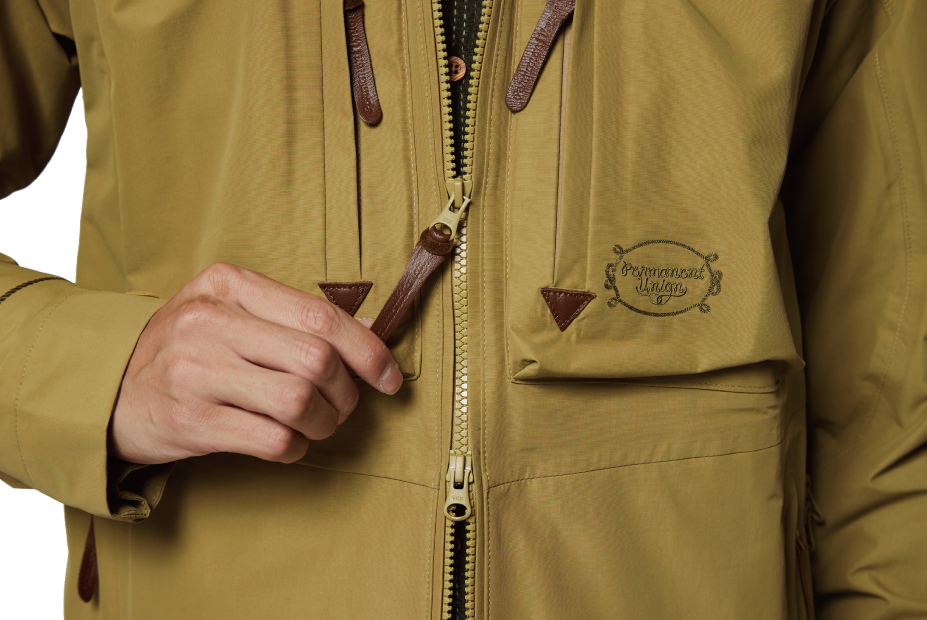
The zippers(❺) are also functional. They are mostly made of lightweight, rust-resistant resin and are completely waterproof. Zippers that open in both directions, making them convenient for use in the mountains, are also frequently used.
Other common features found on jackets include powder skirts and wrist gaiters to prevent snow from getting inside the hem and at the cuffs, drawcords for adjusting the hood and tightening the hem, and some backcountry-specific clothing even has built-in RECCO reflectors
Pants details
Pants can be broadly divided into bib pants with a chest pad and regular style pants. Bib pants are by far the most popular style among backcountry riders. They offer excellent warmth and storage, and in early spring they are versatile enough to be worn on the snow alone
One of the concerns often raised about bib pants is that they can be inconvenient when going to the toilet because you have to take off your jacket every time, but recently there have been models that address this issue, with the butt area fully zipped open while still wearing the jacket

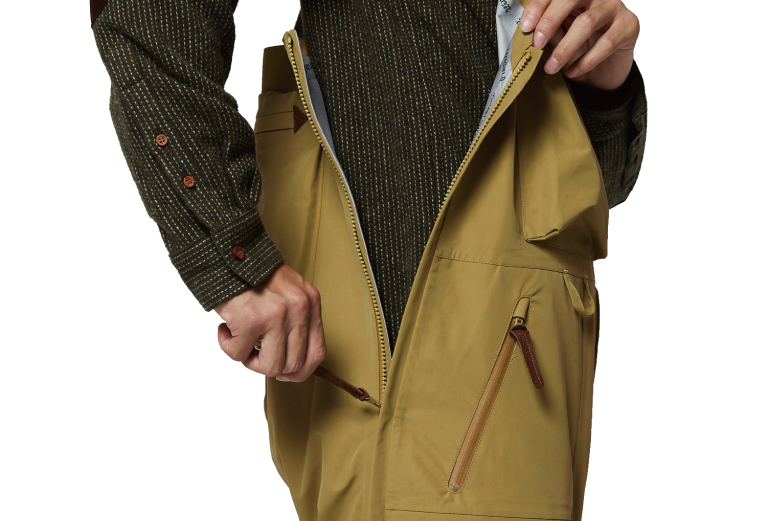
A prime example of this detail isventilation(❶). It is applied to the outside of the legs in full length, with some models fully opening, others partially opening on the side of the thigh, some on the inside, and some models with ventilation on both the inside and outside.
The zipper can be opened from top to bottom, bottom to top, or fully open in both directions
Even with pants,pockets(❷) are an important detail. While their size and placement vary, they are designed to avoid hindering vigorous leg movement.

The design of the knee area of the pants is a detail not to be overlooked. The three-dimensionalcut(❸), which takes body movements into consideration, does not restrict leg movement and follows even vigorous movements, greatly affecting ease of movement and comfort.
Edge guards(❹) protect the pant hems from ski edges. The inside of the hems is guarded with durable materials such as Kevlar. They are designed to be durable without compromising flexibility, so they do not affect leg movement. Some models also have built-in RECCO reflectors.
Understanding Fabric Construction: The Difference Between 3-Layer (3L) and 2-Layer (2L)
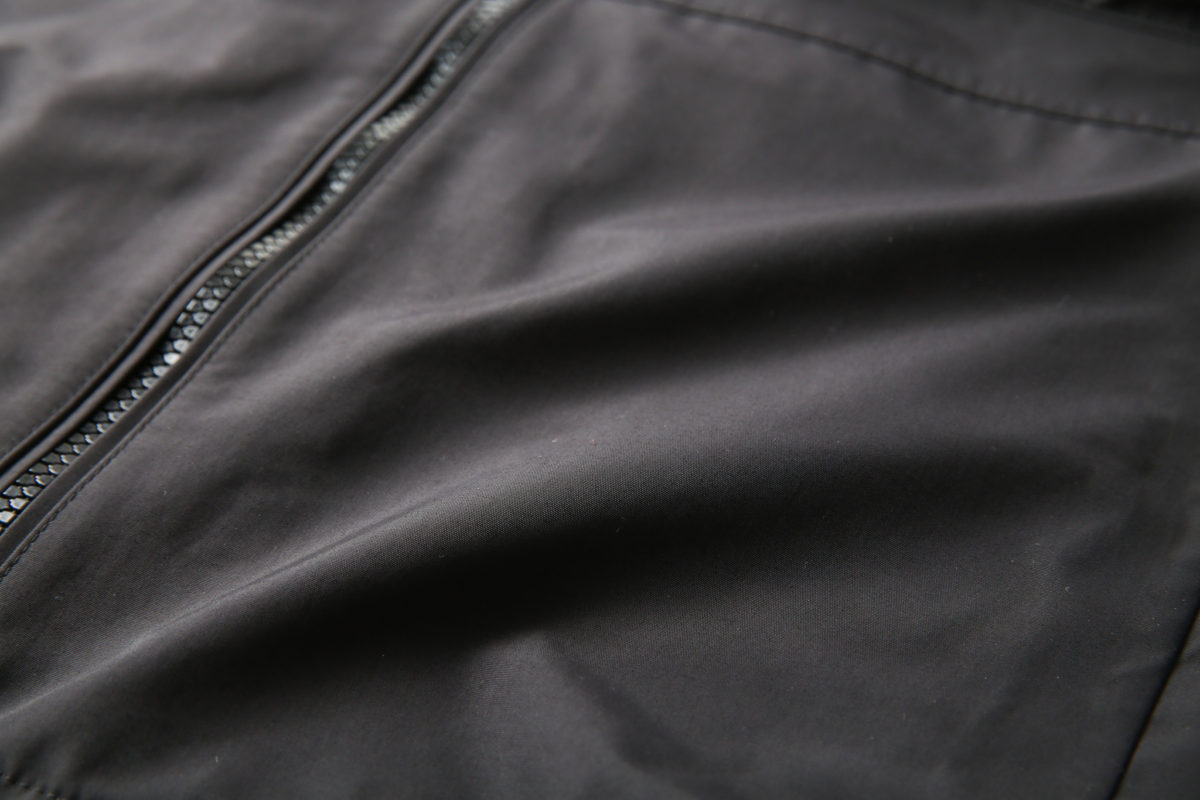
Fabric structure and waterproof/breathable membranes are also extremely important factors in determining the individuality, characteristics, and performance of snowwear
A three-layer construction with a membrane sandwiched between the outer and inner lining is called a "3-layer." You'll often see models with the term "3L" in the product name. 3-layer construction is highly durable because the inner lining protects the membrane, making it more suitable for backcountry skiing in harsh natural conditions
The "2-layer" design has no lining and is made up of only the outer fabric and membrane, making it lightweight, flexible, and highly breathable
3-layer jackets have a lining that protects the membrane, improving durability and providing a comfortable fit thanks to the smoothness of the lining. 2-layer jackets have no lining, making them more breathable, flexible, and lightweight. Taking advantage of these features, a structure based on the concept has been adopted
Functional role of the outer fabric
This is the skeleton of the garment, and it repels snow and rain, maintains its strength, and maintains the shape and color of the garment. It is mostly made from synthetic fibers, with nylon being the most commonly used material. Nylon's abrasion resistance, elasticity, and flexibility make it ideal for skiwear
The functional role of the lining
In addition to ensuring ease of movement by allowing the items worn underneath to slide smoothly, they also absorb sweat to improve comfort and ease of wear. Some products also use a lining with thermal insulation to improve cold protection
Some have padding
Some ski wear is filled with padding to increase its warmth. Most uses moisture-resistant synthetic fiber padding to protect against snow and sweat. Some ski wear also adjusts its warmth according to the distribution of body temperature, such as by placing padding more in the front of the body, which is more likely to get cold from the wind while skiing
Waterproof and breathable membrane functions
A membrane is a "waterproof and breathable film" sandwiched between the outer and inner layers of fabric. It has over a billion micropores per square centimeter, preventing water droplets from passing through while allowing water vapor to escape. This microscopic pore structure creates high waterproofness, breathability, and windproofness. Most modern snow wear incorporates a membrane.
Breathability refers to the ability to release moisture from inside the garment to the outside. Specifically, it's the ability to release water vapor. It shuts out moisture from the outside, such as rain and snow in snowy mountains, but allows moisture that has turned into vapor from sweat inside the garment to escape, keeping the inside dry and preventing stuffiness. In other words, it is expressed numerically as how many grams of vaporized moisture (not water droplets) are released from inside the garment in 24 hours. Of course, the higher the value, the higher the breathability.
The ability to maintain comfortable conditions through breathability has a major impact on climbing and skiing performance on snowy mountains. This is why membranes are so important in snowwear. Understanding the characteristics of membranes will help you better understand the intended use of that snowwear
There are many different types of membranes, each with its own unique characteristics. The most well-known is probably GORE-TEX. It is the most trusted waterproof and breathable material for snowwear, and its special membrane structure with tiny pores keeps out water such as rain and snow, while allowing only sweat vapor to escape. This makes it both moisture-wicking and less likely to get stuffy
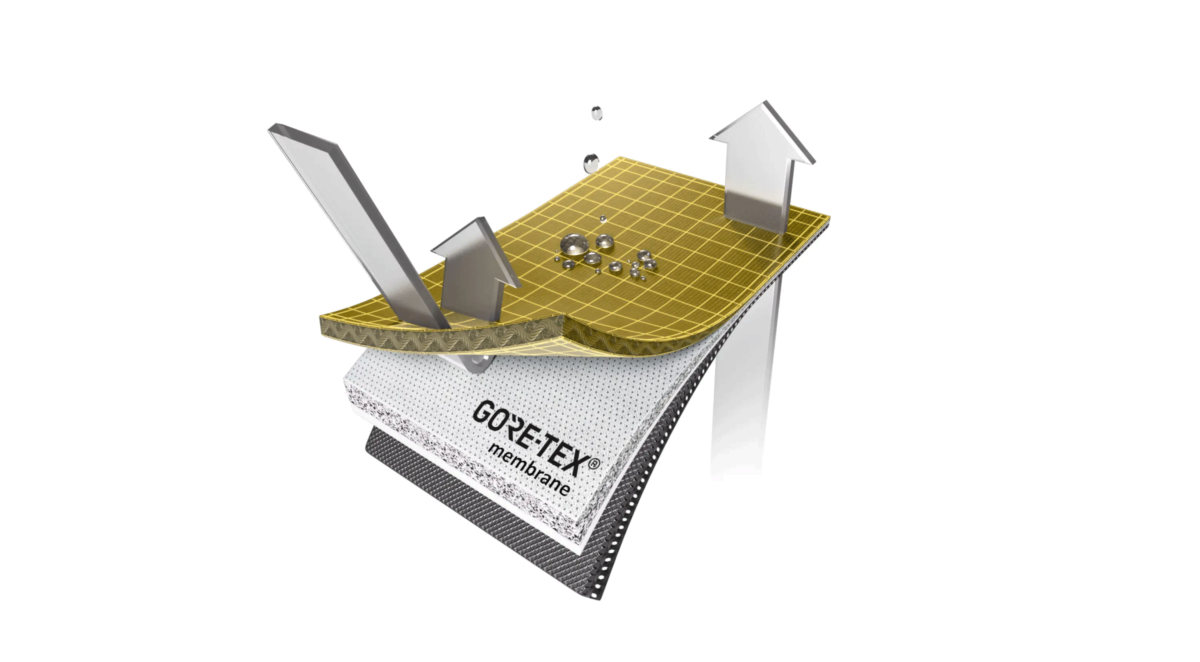
Among them, the high-end "GORE-TEX PRO" has been popular for many years among professional guides and backcountry enthusiasts because it combines high durability and breathability, keeping the body comfortable even in harsh snowy mountain environments
Other well-known brands include NeoShell and eVent. In Japan, Teton Bros.'s "Täsmä" is a unique membrane that has earned it worldwide acclaim
Introducing GORE-TEX ePE
One of the biggest talking points for snow wear this season is the introduction of GORE-TEX's new generation membrane, "ePE (expanded polyethylene)"Replacing the conventional ePTFE, which is not easily biodegradable and has been a source of environmental concern, ePE has evolved into an environmentally friendly material that does not use perfluorocarbons (PFCs).
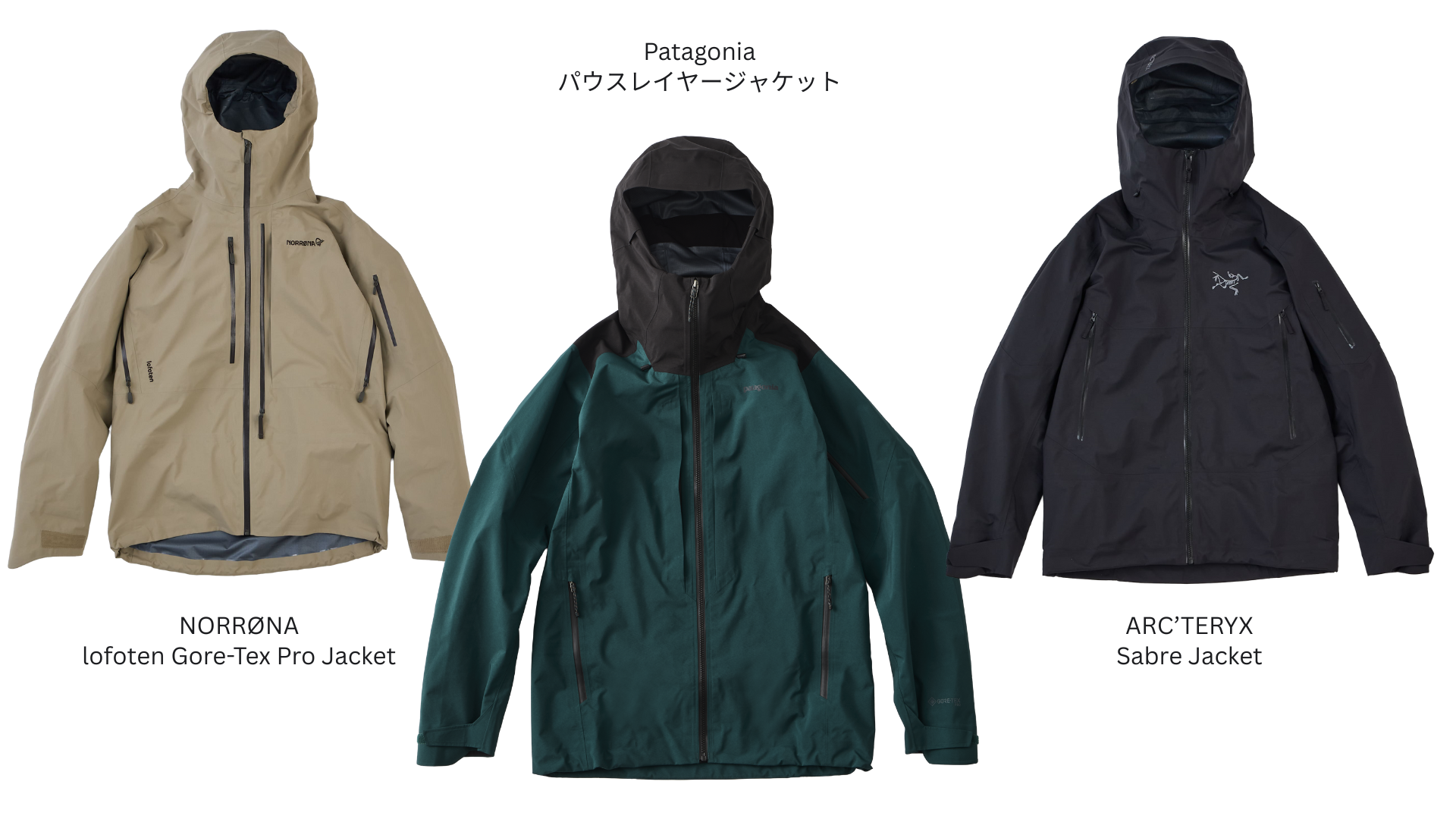
The major features of ePE are that it is lightweight and flexible, yet maintains the same waterproof and breathable performance as conventional materials, and NORRØNA, Patagonia, ARC'TERYX, and others have already adopted it in their models. Selecting materials that are not only functional but also "environmentally responsible" is becoming a new trend in clothing development
The idea of layering
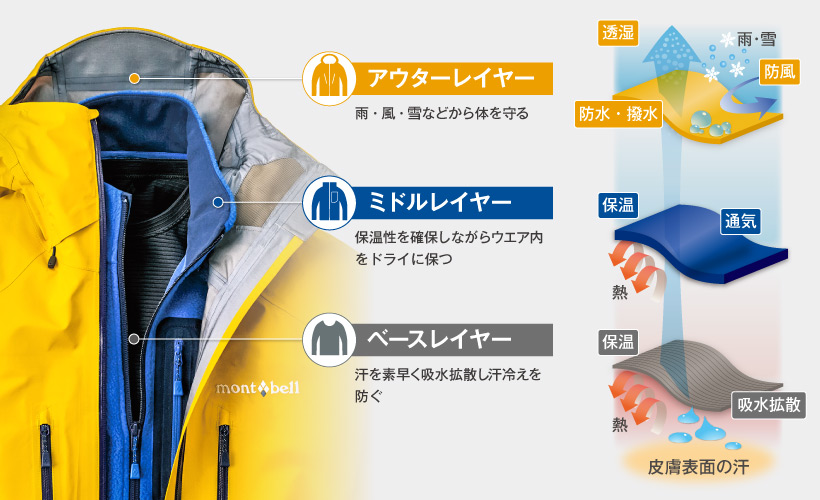
The concept of layering is essential when talking about the comfort of snowwear. The basic principle of layering is to wear three layers of clothing: a base layer, a middle layer, and an outer layer, starting from the layer closest to the skin
- a base layer(underwear) to wick sweat away from your skin.
- The middle layerprovides insulation and moisture-wicking properties.
- The outer layer(shell) protects against external snow and wind.
This is a three-layer structure. To make the most of a waterproof and breathable shell, it is essential to combine it with a moisture-wicking and quick-drying layer on the inside. If the layering doesn't work properly, no matter how expensive the shell, it will not be able to perform at its best. In other words, "waterproof and breathable" is not a standalone property, but can only show its true potential when it is part of a layering system
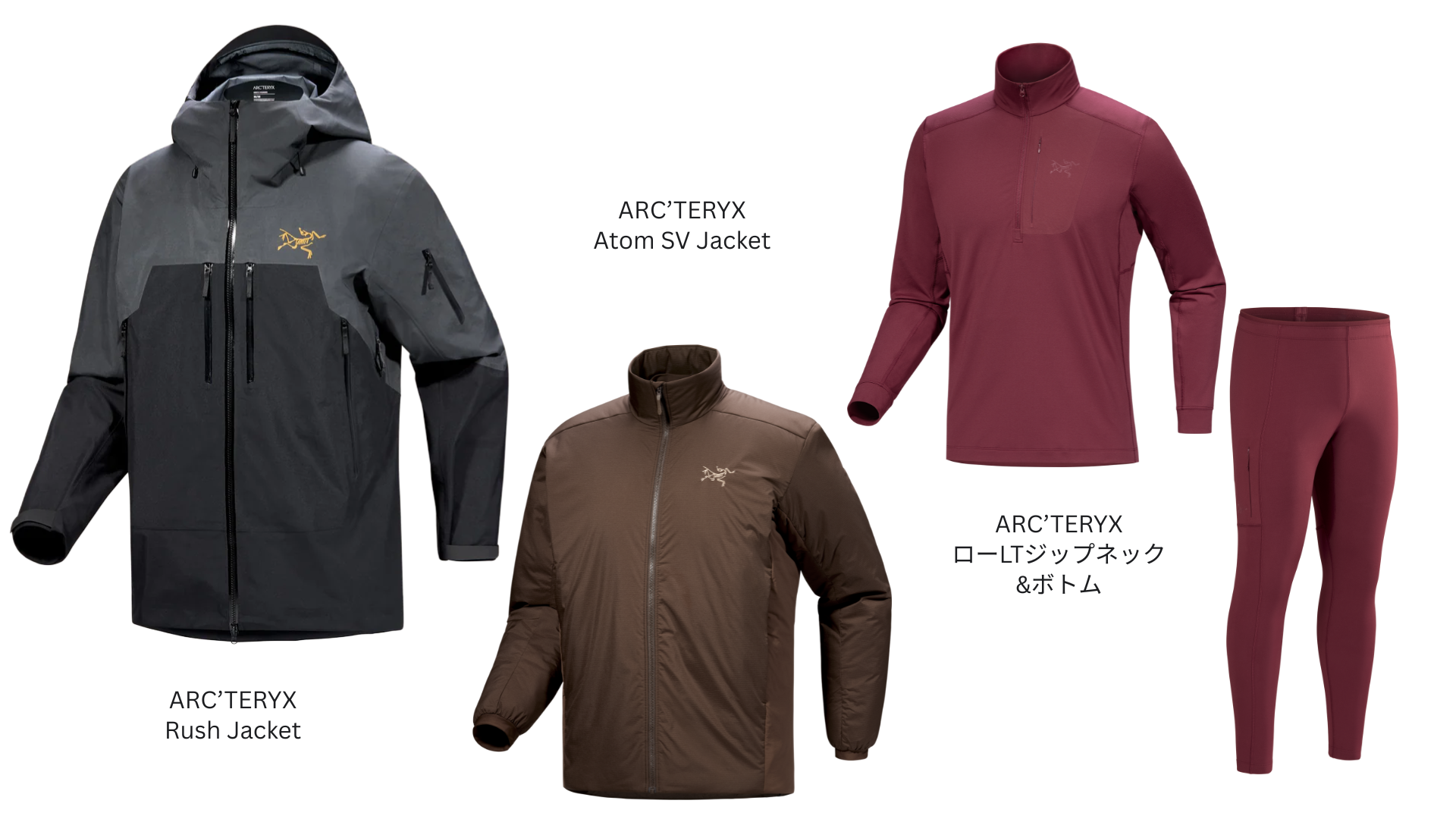
Layering is not simply about wearing multiple layers of clothing, but is achieved by selecting materials and structures that take into account the characteristics that each layer should exhibit
The first layer, closest to the body, should be made of a material that doesn't retain sweat on the skin. The second layer, the outer jacket, is responsible for releasing the sweat that has turned into vapor into the outside air. In the case of skiing, this is where the shell jacket comes in. However, while sweat should be released, snow and rain should be blocked. Achieving these seemingly contradictory functions is "waterproof and breathable," which allows moisture to pass through but not water.
In other words, "waterproof and breathable" is an extension of the concept of layering. Layering is essential to fully utilize waterproof and breathable properties, and simply wearing waterproof and breathable clothing won't solve everything. That's why this performance is necessary.
Plus, what you need to know
Water pressure resistance indicates waterproofness
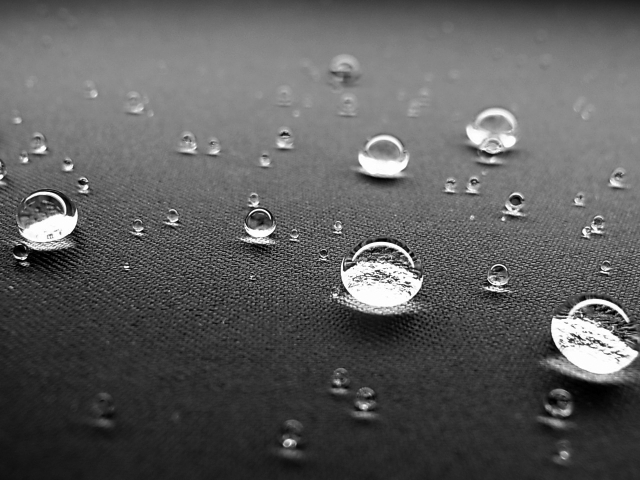
Waterproofing, an essential feature for snowwear, is expressed numerically in terms of water pressure. In other words, water pressure is a number that indicates the ability of the fabric to resist the force of water trying to penetrate it
The water pressure resistance rating tells you "how much water pressure the garment can withstand." Naturally, a higher value indicates better waterproofing. A
typical nylon umbrella has a water pressure resistance of around 200-500mm, while a sturdy raincoat can withstand around 5,000mm. Considering that snow wear is exposed to rain and snow for extended periods, you'd probably feel uneasy without a water pressure resistance of at least 10,000mm. When choosing snow wear, where you can't decide whether to buy it after trying on a sample in the mountains, the water pressure resistance rating is important information that guarantees waterproofing.
Denier is an indicator of fabric hardness
Denier indicates the weight of the thread used in the fabric, and is expressed as the number per 9,000 meters. In catalogs, this indirectly indicates the thickness of the fabric
Most common clothing is made from 70 to 150 denier, but it's important to know that the stiffness and comfort of the fabric cannot be determined solely by the denier number
Cutting of clothing
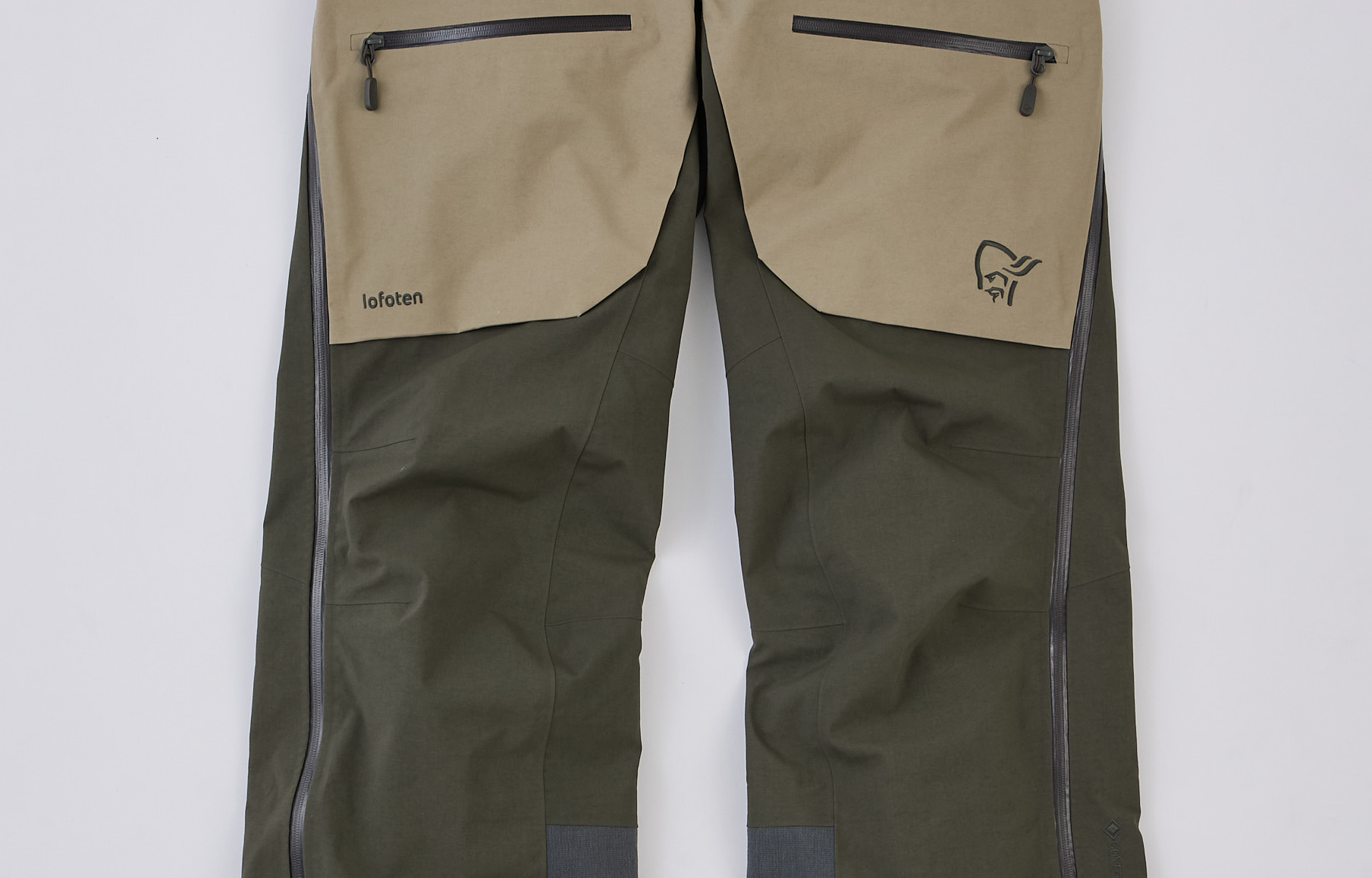
No matter how high-performance the material, if it's poorly cut, its potential is halved. The key is to design it so that it doesn't restrict movement, such as by using 3D cutting on the elbows and knees and using highly stretchable materials on the back and sides. These innovations that pursue ease of movement directly lead to greater freedom of skating and reduced fatigue
Key points for reading the catalog
Once you understand the functional roles of clothing parts and fabrics in this way, you will be able to better understand the meaning and importance of the information listed in the clothing catalog, and it will be easier to imagine clothing that suits your skiing environment based on the specifications. Let's take a look at some product information from NORRØNA's online store. The functional aspects of the clothing are written in red
NORRØNA
tamok Gore-Tex Performance Shell Jacket

MATERIAL
Gore-Tex® 3-layer (ePE), 70D X 160D recycled nylon
Material 2nd:Gore-Tex® 3-layer (ePE), 200D recycled nylon
The flagship jacket of the tamok series, which focuses on backcountry and powder riding, has been reborn with a completely changed material while retaining its original design. The new material is aGORE-TEX® ePE membrane.
For the first time in GORE-TEX® 's long history, the membrane itself has been completely redesigned. This remarkable material maintains its renowned waterproof, breathable , windproof, and highly durable properties while reducing its environmental impact
The 3-layer outer fabric is made of tough 70x160 denier 100% recycled nylon, suitable for backcountry use , and is reinforced with even more durable 200 denier recycled nylon at the shoulders and elbows.
The lining is made of supple C-KNIT™ nylon backer. As a result of the membrane change, the fabric is slightly thinner and lighter, improving comfort. The longer length creates a distinctive silhouette while keeping the waist warm in cold weather. The arms arecutin a three-dimensional style so as not to restrict movement.
Understanding the functions will help you find your ideal outfit
Looking at it this way, we can see that the terms in snowwear specification sheets and catalogs are not just numbers and text, but express the "philosophy" of the wear. What kind of environment do you want to ski in, and what style is ideal? Once you've made that clear, the materials, structure, and functionality you need will naturally become clear
With the rise of brands promoting cutting-edge materials like GORE-TEX PRO ePE and environmental friendliness, it's time to take an interest in the story behind the specs. A jacket that you understand and sympathize with will not just be a piece of equipment, but a reliable companion on the snowy mountains