
8.
Even without a wall to land on,
you can adjust your speed by plunging

Point
No. 7, but in this case, the skis are turned almost 90 degrees to the side upon landing to reduce speed and create a spray of ski spray.
"There's no suitable wall in the landing area, so after the jump I crash into the fresh snow on top of the wall to brake and adjust my speed, then return to the hard slope on the detour. I adjust the angle of my board when landing depending on the distance, speed and terrain I'll be flying over. It feels great when I can connect the speed to the next jump without killing it too much."
Riding tips!
Turn your skis sideways in mid-air
while flying towards fresh snow.
| Frequency of occurrence ★★ |
| Difficulty ★★★★ |
9.
On forest road walls, jumping is good, but
scraping them by sliding sideways is also a viable option.
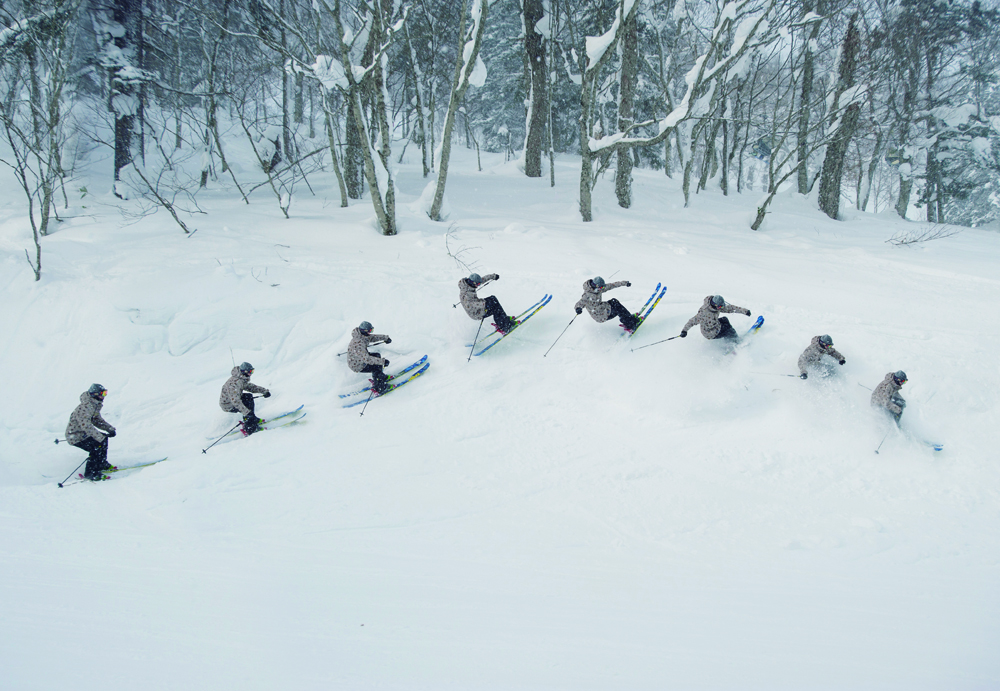
Point:
On the side of the wooded course, skiers are carving the edge of the wall with a side-slipping technique.
"We're carving the lip of the wall, where the slope changes at the top, with a side-slipping technique. The key is to maintain a certain amount of entry speed. Also, don't swing your skis up too high. If you
make your skis too vertical to match the angle of the wall, you'll lose control of the pressure on the wall and won't be able to return to the regular position at the end.
In the photo, I'm applying pressure to the tails to slide. By twisting my upper body and facing the direction of travel, I can make the final return."
Riding tips:
Once you get used to it, increase your entry speed and
keep twisting your upper body while sliding.
| Frequency of occurrence ★★★★ |
| Difficulty ★★★★ |
10.
The gaps along the forest road
have just the right drop
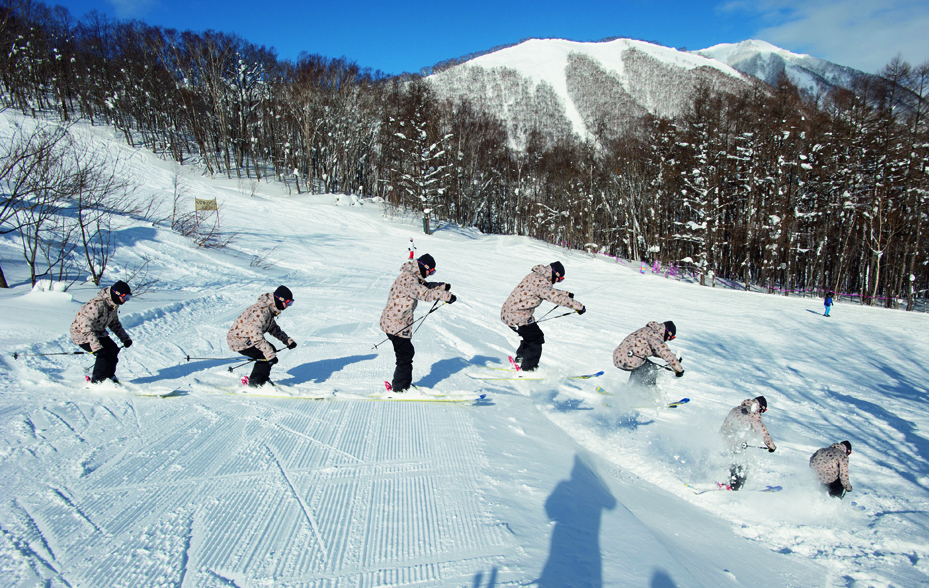
Point:
Jumps that utilize drops are common at the exits and entrances to the course from forest roads. An example of a jump that crosses the course sideways. When there isn't much of a drop, jumping sideways like this allows you to gain a slightly larger drop.
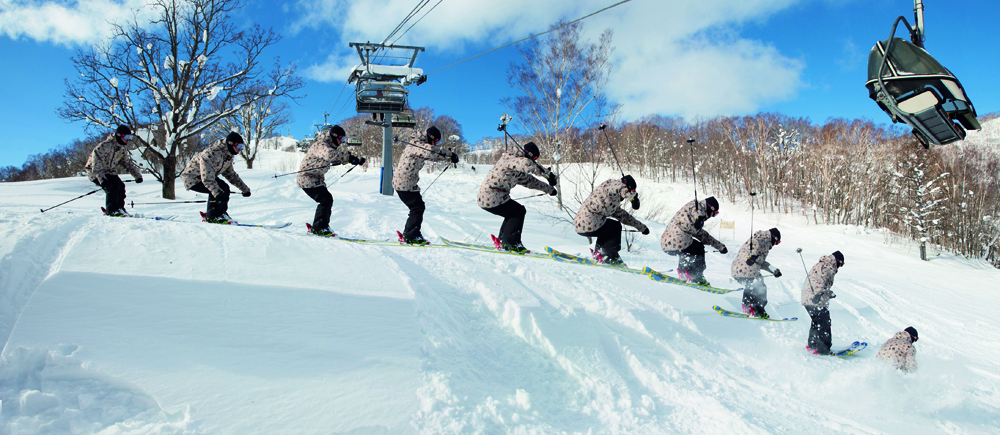
This pattern involves approaching along the
attention course and launching diagonally. It's a good idea to get a feel for it like this before attempting things like drop-ins from fallen trees. "Jumping with your upper body facing the direction of travel makes it easier to maintain balance in the air."
Riding tips:
Find a ledge you think you can jump over,
twist your upper body in the direction you're going.
| Frequency of occurrence ★★★★★ |
| Difficulty ★ |
11.
The classic way to play on the walls beside the course:
Find your favorite shape!
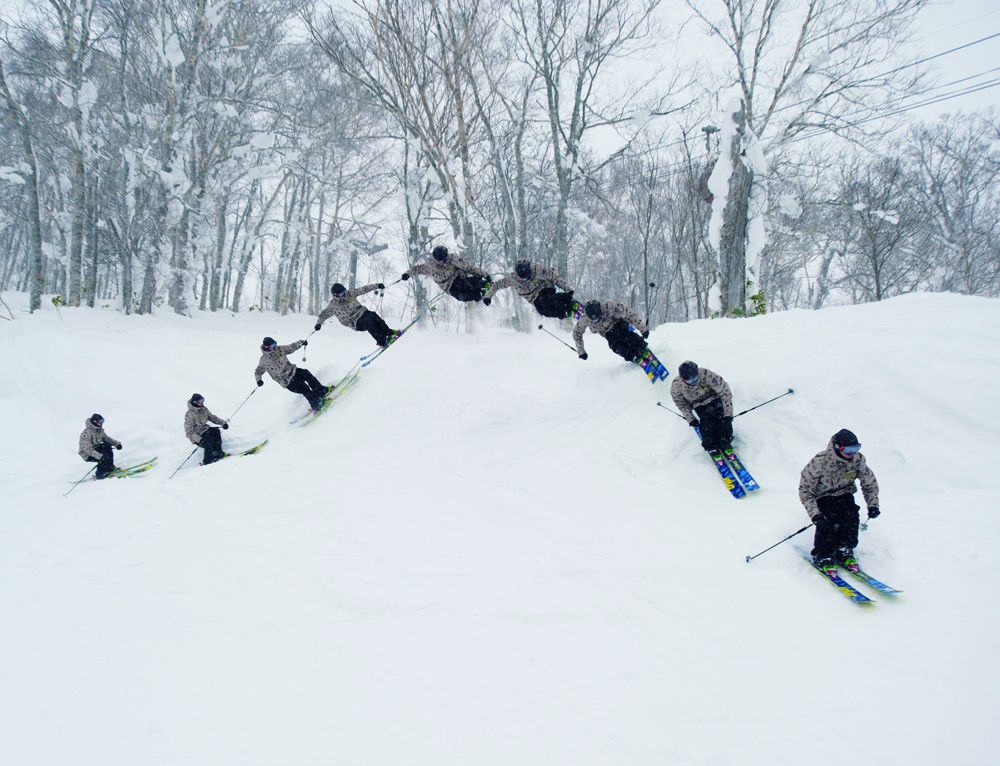
Point:
Detours and terrain often found along the course. It's easier to jump when there's already a line someone else has taken.
"First, the entry. Among the many lines, find one that suits your image. As you approach, determine the landing point and adjust your final speed.
When landing, you can choose your spot a little by stretching and contracting your body to land at a point that matches the angle of your body as much as possible. It's an extension of playing around with the terrain along the course."
Riding tips:
Find a line that's easy to take off from.
Aim for a place that's easy to land and take off from there.
12.
Mash is a kicker with a unique
personality, created by nature itself.
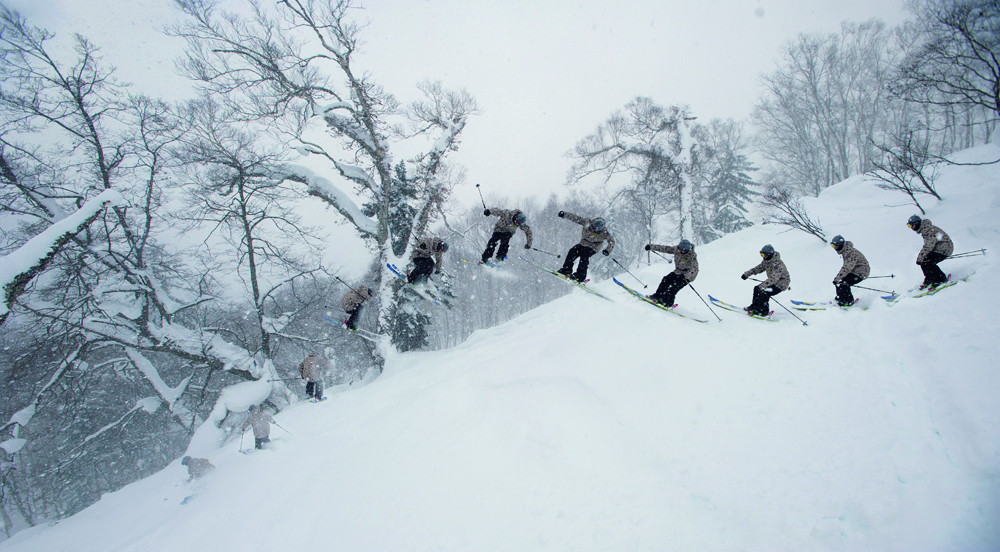
Point
: A snow-covered mash is a kicker created by nature. However, the slope usually changes drastically from the base, making takeoffs often difficult.
"The takeoff radius is steep, so if you try to take off by pushing off yourself, you're likely to fail. For a 360, you take off without pushing off, keeping your upper body facing the direction of rotation and engaging your edge. If you're turning left, you'll engage the left edge on both sides. This naturally makes it easier to create a cork axis."
Riding tips:
Keep your feet on the ground to make jumping easier.
Take off without fully pushing off.
| Frequency of occurrence ★★ |
| Difficulty ★★★★★ |
13.
Becoming proficient at intricate approaches
will open up more items to play with.
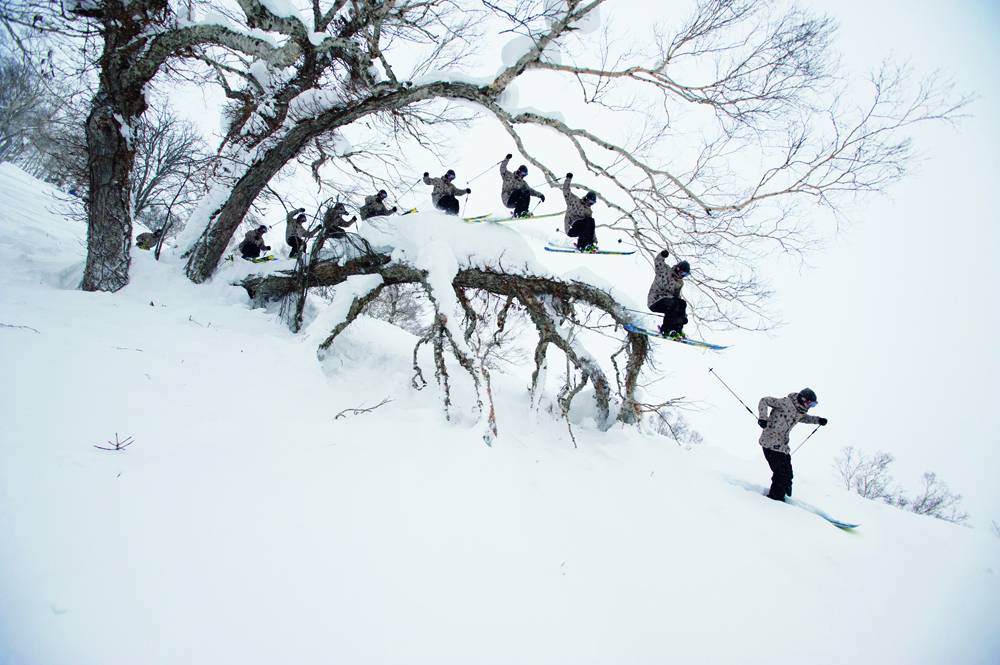
Point:
The jump comes after navigating a narrow approach using a tree trunk. Mastering these narrow spots with precision greatly expands the range of terrain you can play on.
"When climbing narrow sections, the key is to keep your weight on the tail. Control your direction with the sole of your board, without sliding or using edges. Crouching down and making your body smaller will further increase stability. Once you've reached the top, shift your position from the tail back to neutral before taking off and jumping."
Riding tips: Crouch
down and press your tail when going uphill, and
go into neutral when you're about to jump off.
| Frequency of occurrence ★ |
| Difficulty ★★★★★ |
❖ Riders who taught me how to play
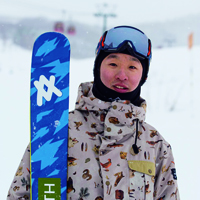
Hirofumi Ishikawa .
rose to prominence in big air after competing in moguls, and later moved on to backcountry skiing
Hidemitsu Okada
is a regular top finisher in park-style contests. He combines these skills with his exceptional freeriding technique.
*Source: Re-edited from BRAVOSKI vol.2 2017.
Photo/Takahiro Nakanishi
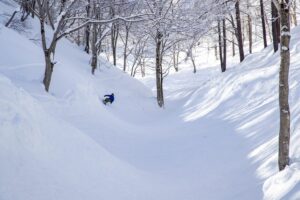
❖ The playground is here!
*Check it out too!