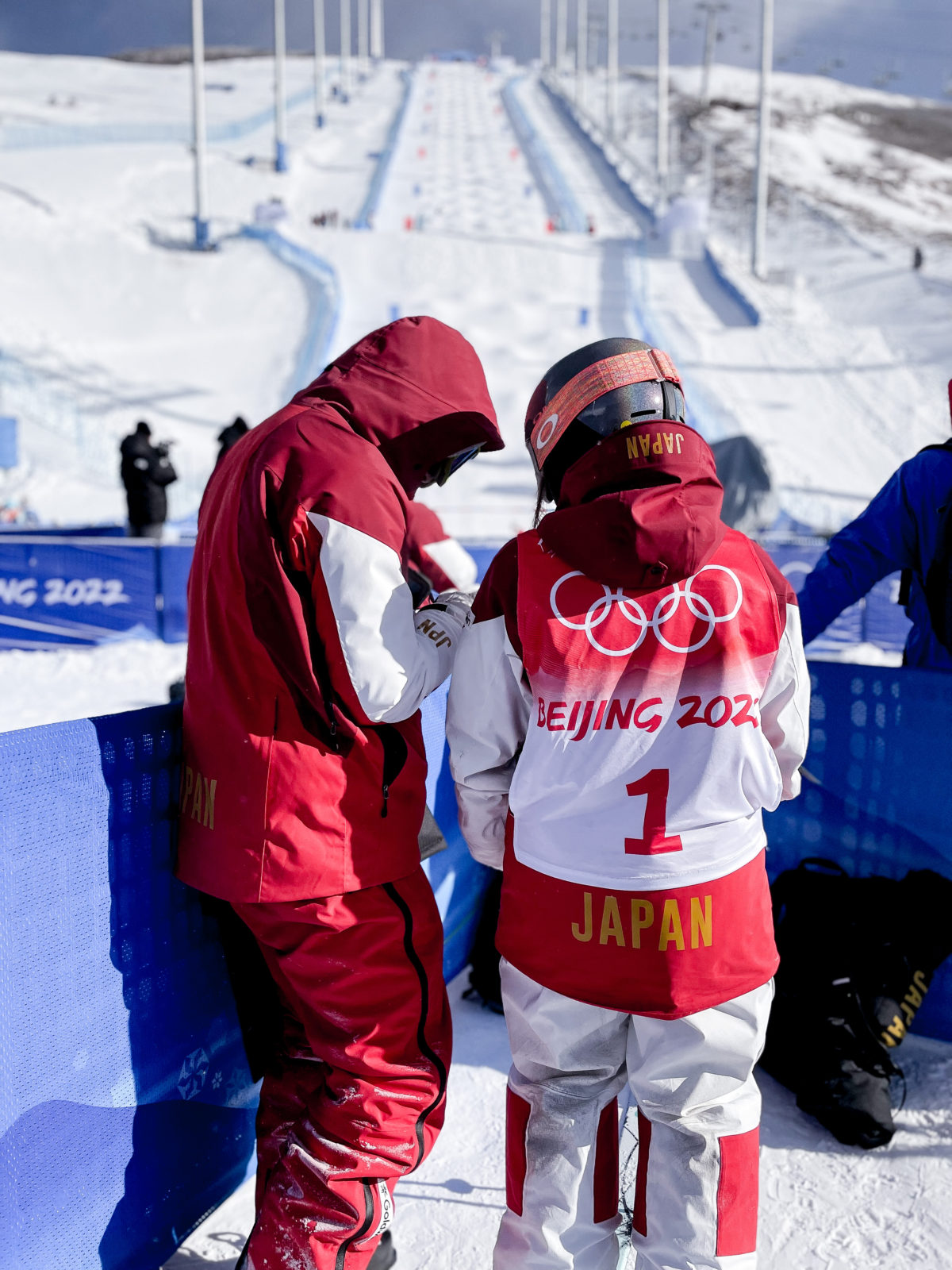

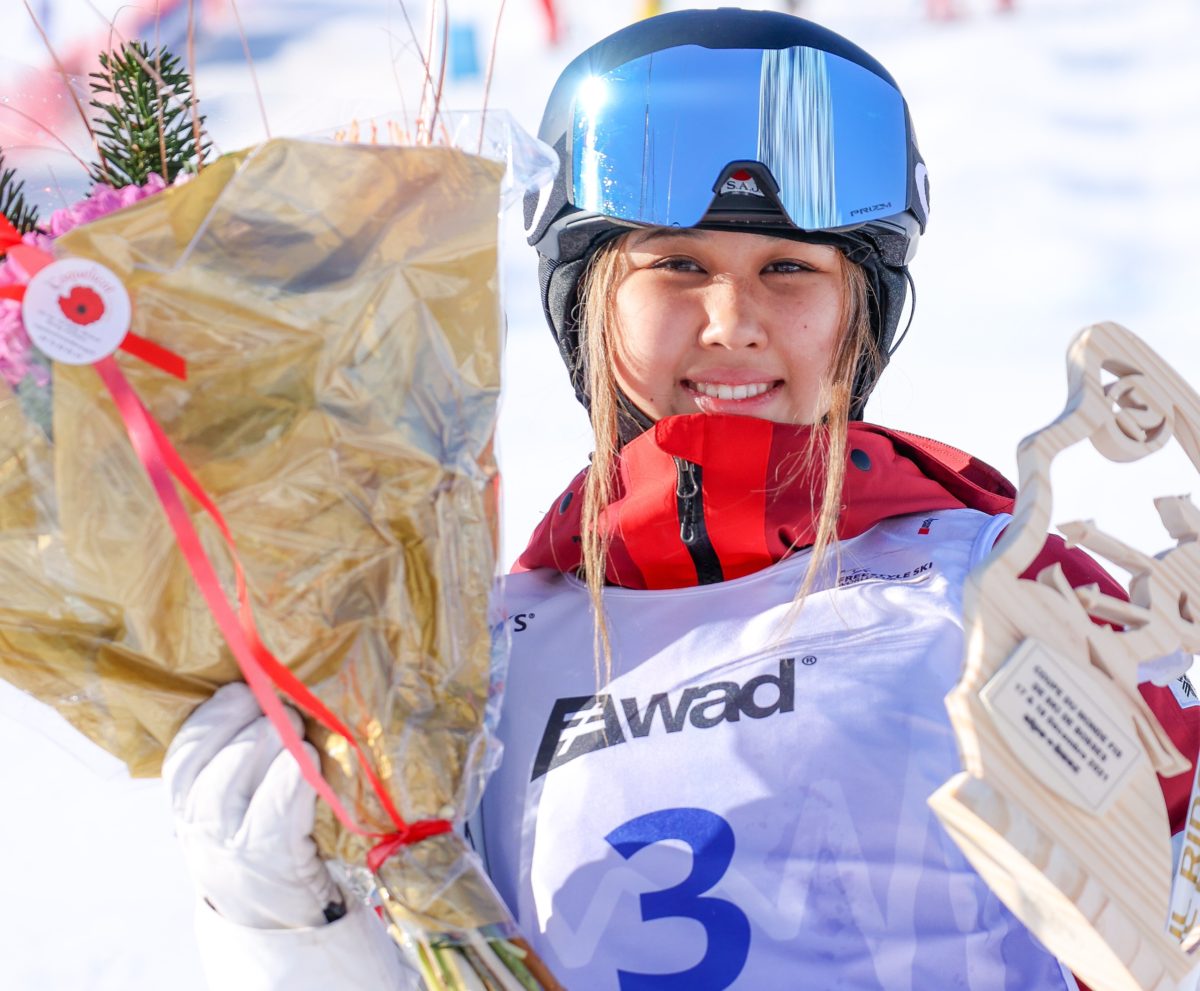
In the 2022 season, which saw the Beijing Olympics, Kawamura Anri achieved the rare feat of seven World Cup podium finishes and three wins, but narrowly missed out on the overall title. Although she did not win the medal that was expected of her at the Beijing Olympics, her ability and presence are becoming overwhelming. What is the source of her strength? We looked back at her skiing history to uncover the secret. Although the season is in full swing, we would like to share with you what we heard during the off-season
Photo/Sho Endo
From brushing your teeth to "fun challenges"
--When did you start skiing?
I started skiing when I was three years old and moguls when I was four
-What made you start?
My grandparents loved skiing and owned an apartment in Yuzawa Town. I would go skiing there with my parents as a leisure activity, and it just became fun from there
-Do you remember the feeling you had the first time you skied, and how fun it was?
I honestly don't remember (laughs).
I really just found myself doing moguls without even realizing it. Back then, skiing was such a normal part of my life, it was like brushing my teeth, rather than feeling that skiing was fun. I
don't really remember when or what made me think that skiing was fun. But I think I remember feeling really happy when I kept challenging myself on difficult courses that I couldn't ski well, and then when I finally managed to ski them successfully.
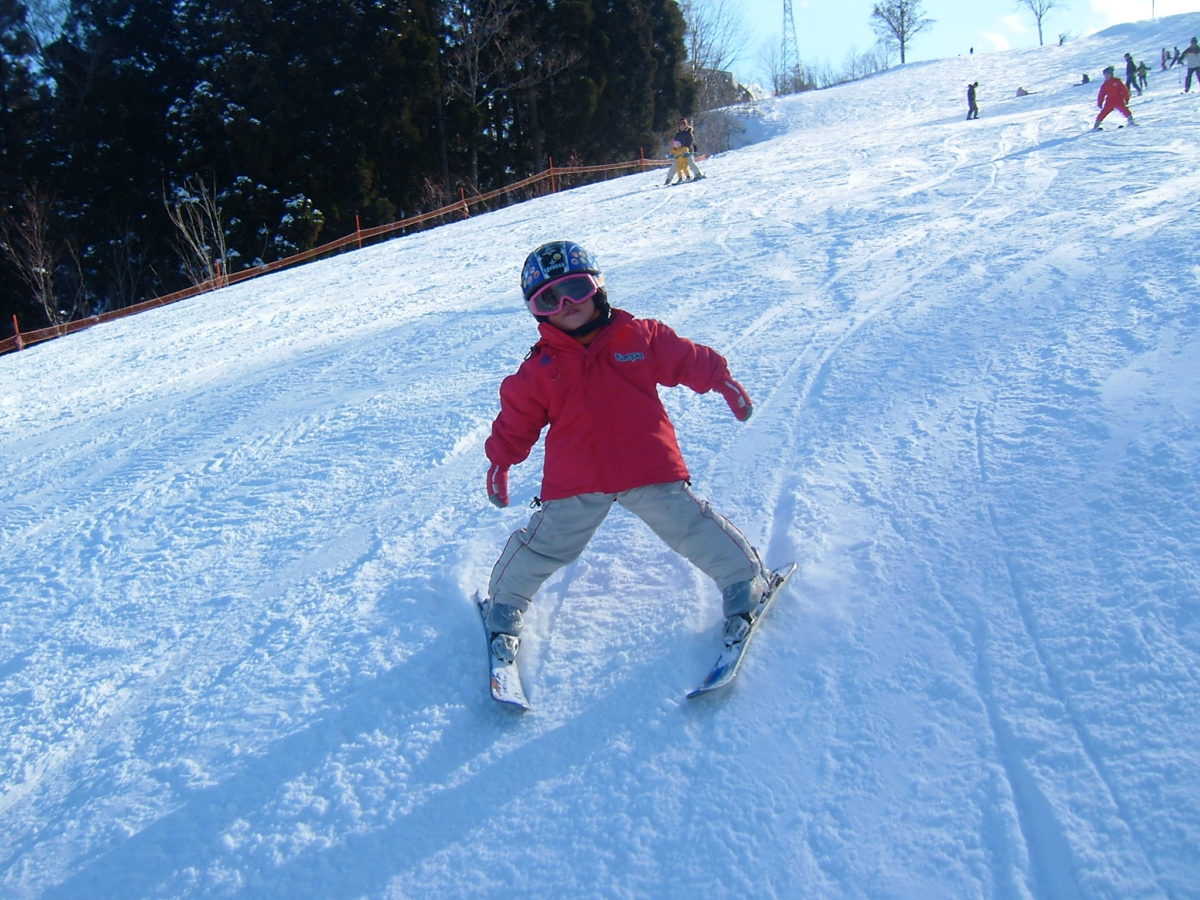
Anri Kawamura was based in Yuzawa during her childhood. Photo taken at Kagura Ski Resort. Photo/Provided by her family
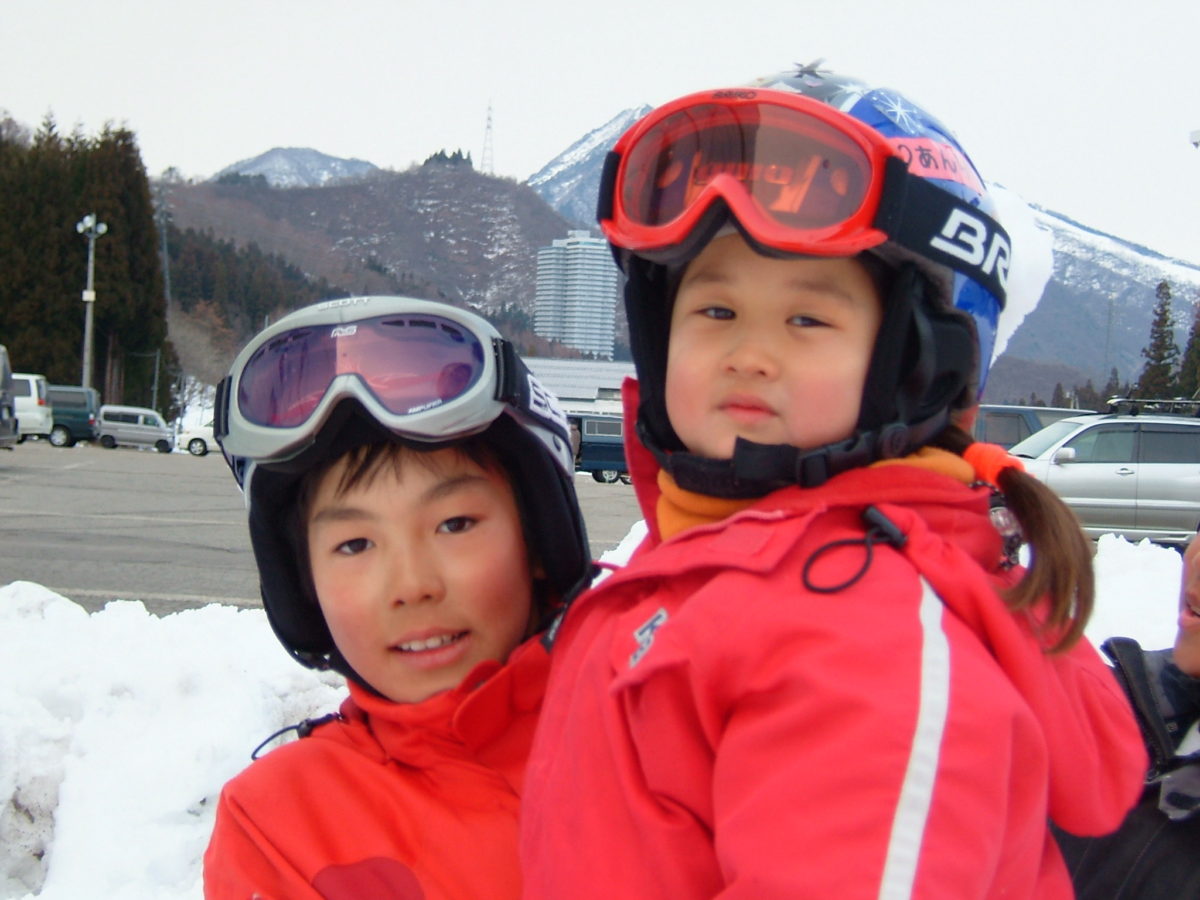
The boy on the left is Daichi Hara. At the time, it would have been impossible to imagine that these two would compete in the Olympics together. Photo/Provided by the family
-How old were you when you remembered this?
I've had that feeling ever since I started skiing. I remember having that feeling since I was 6 or 7 years old, or in elementary school
--Did you like to take on difficult challenges? Are you competitive?
I think that's pretty much true. I joined the national team at the same time as Daichi (Hara Daichi), and when Daichi started doing backflips, I said, "I definitely want to do that too! I want to do it with him!" I
always had this feeling that I didn't want to lose to Daichi or the other male skaters. I think I've been competitive since I was little.
-Was that also your motivation for skiing?
That's right. After all, if you don't keep challenging yourself, it's not fun.
For me, challenging myself is what makes skiing fun. I feel a great sense of enjoyment in challenging myself and growing.
When I first started skiing, I was always working hard and challenging myself, but after I started competing in competitions and my goals became clear, I had to do things to reach those goals, so I think my challenge now is to do those things properly
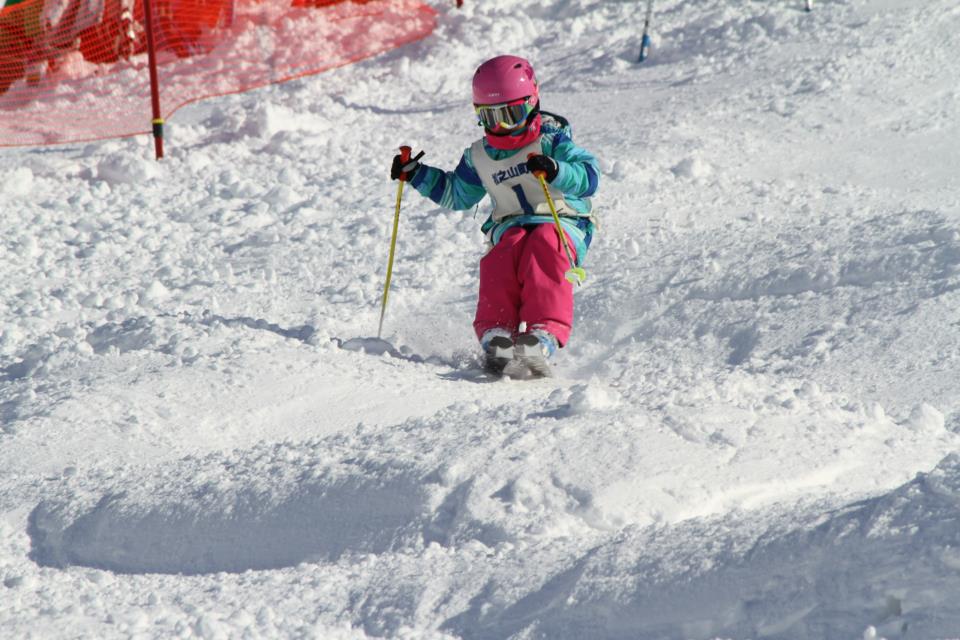
--When you take on a challenge, there are quite a few difficult times and times when you feel like you're about to give up, right?
That's right. I'm the type of person who finds jumping quite scary, so I find it really frightening to try jumping off a new ramp or to start learning new tricks. But even though I could give up and stick to the tricks I can do now, I don't want to stay there. I try to believe that there's definitely something to be gained by taking on challenges, and that's why I keep trying.
But still, scary things are scary (laughs).
-Is there any kind of spell you can use to shake off fear?
No, I don't have any particular routine. I just believe that there is something there at the end of the challenge, and that I have no choice but to do it. I think that's my own trick to shaking off fear
--It's normal to want to run away when you hit a difficult wall, but you know the joy of overcoming it. Do you remember the first time you competed in a tournament overseas (when Luka came second in the 2020 World Cup)?
Yes. It was my first time to go on an overseas trip, so I was really nervous, but I think I was able to skate pretty well as usual
Be myself
--After reading many of your articles, I was particularly impressed by the phrase "being myself." What does it mean to skate in your own way and enjoy it?
That's right, I don't want to ski in a way that focuses on the results and scores, but rather in a way that truly reflects what I'm aiming for, a way that proves what I've been working on. In competitions, I want
to ski in a way that showcases everything I've built up until now. There are times when I do get caught up in the results and worry about the scores, but when that happens, I feel like I can't really go all out, and it doesn't feel like I'm myself.
But when I decide to go all out and just continue doing what I've always done in competitions, when I watch my skiing afterward, I think, "That was good," and "This is the kind of skiing I want to do." I
'm very conscious of not worrying about the results and just skiing as I am, giving it my all, and that's what makes me unique.
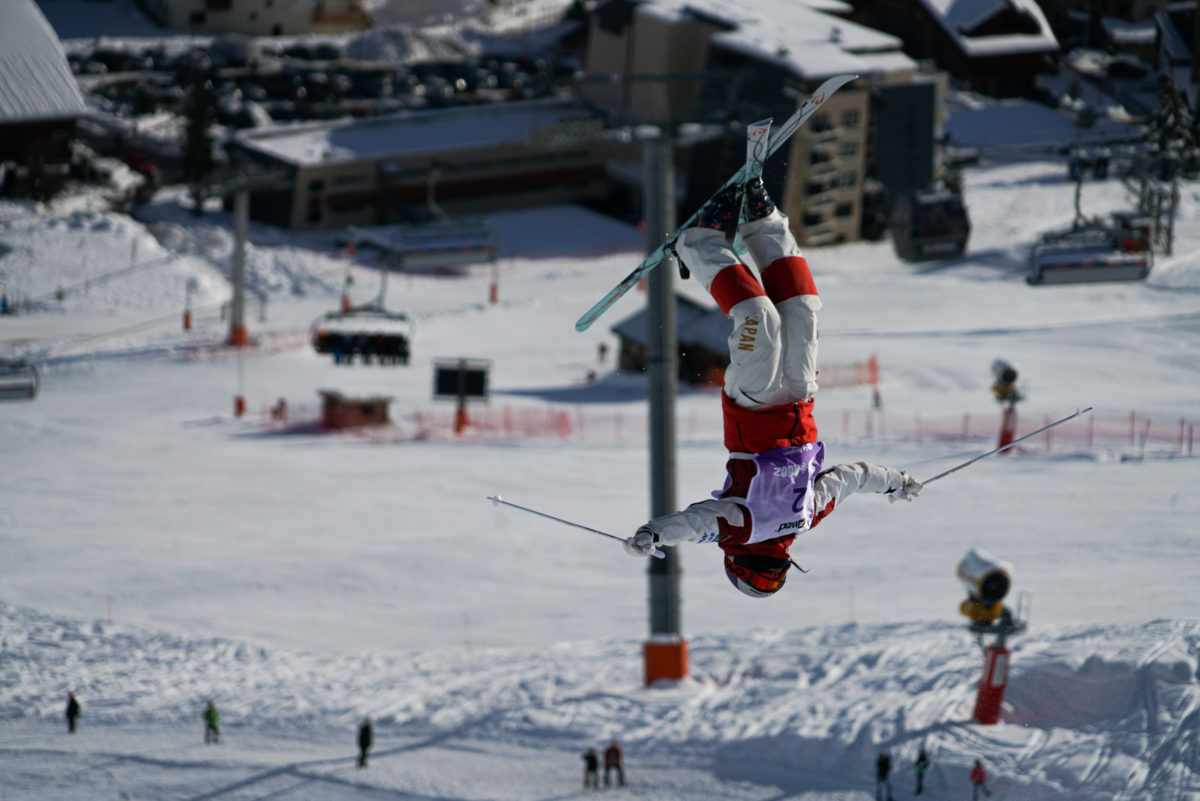
--And that's what's resulting in the results
Of course, I want to win and stand on the podium, but more than that, I want to focus on showing everything I've got and doing the best I can
-Do you have any tips for staying true to yourself?
Before, I used to compare myself to others, thinking I was inferior in this area, completely useless, and belittling myself.
But now, instead of comparing myself to others, I compare myself to my past self. I'm working on new things every day to evolve from my past skiing and jumping techniques, so I'm sure I'm changing. If I can see that change myself and feel that I've grown, then I realize that it's okay to be myself.
I feel a sense of self, so I make a conscious effort to observe my own growth.
--By continuing to challenge yourself, you surpass yourself. You're such a strong person, Anri. Have you ever thought about quitting moguls?
When I was in elementary and middle school, while my friends were playing after school, I had to practice skiing every day. I did it because I wanted to, but there were times when I wanted to play with my friends, or when I felt like I wasn't getting any better at skiing... There were times when I wanted to quit.
But if you asked me if I really wanted to quit, the answer was no.
I enjoyed skiing, and it had become such a part of my life that I don't know how I would live without it. It felt so natural.
There are times when I think, "I can't take this anymore!" (laughs), but I've never seriously thought about quitting.
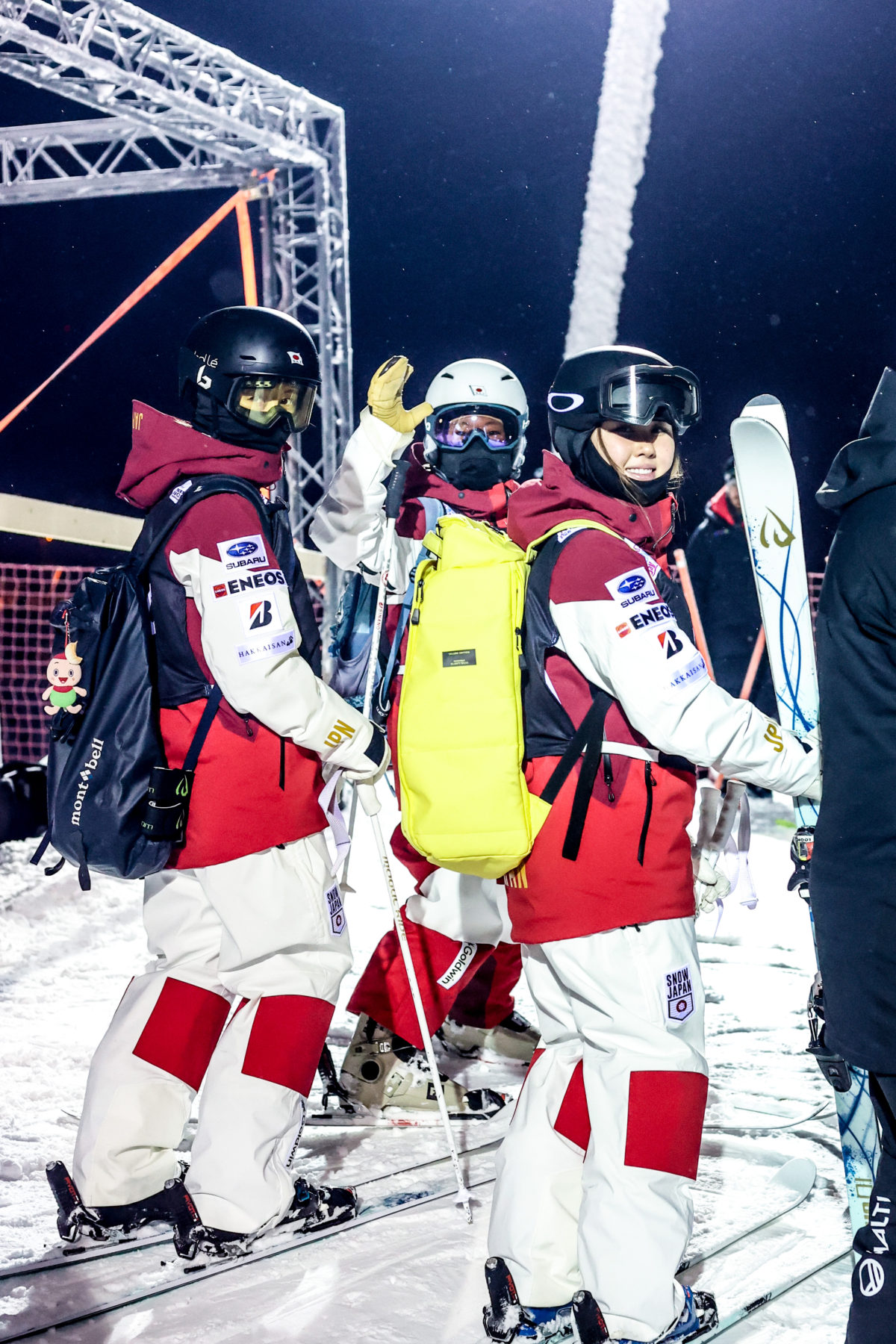
Although moguls is an individual event, the expedition is conducted as a team. Good teamwork has led to the good results of the Japanese team. From left: Yanagimoto Rino, Tomitaka Hinako, Kawamura Anri. Photo/Sho Endo
-- When I read your interviews, I think they're generally very positive, with a lot of forward-thinking stories. I find them very uplifting and encouraging to read
The Beijing Olympics made dreams come true
--The Beijing Olympics. I read that it had been a dream of yours since you were a child, but how did you feel when you found out you were going to Beijing?
I was really happy. I was just so happy
--What were you imagining at that time?
I wanted to skate in my own style on the stage I had always dreamed of. I wanted to be my true self and enjoy the moment
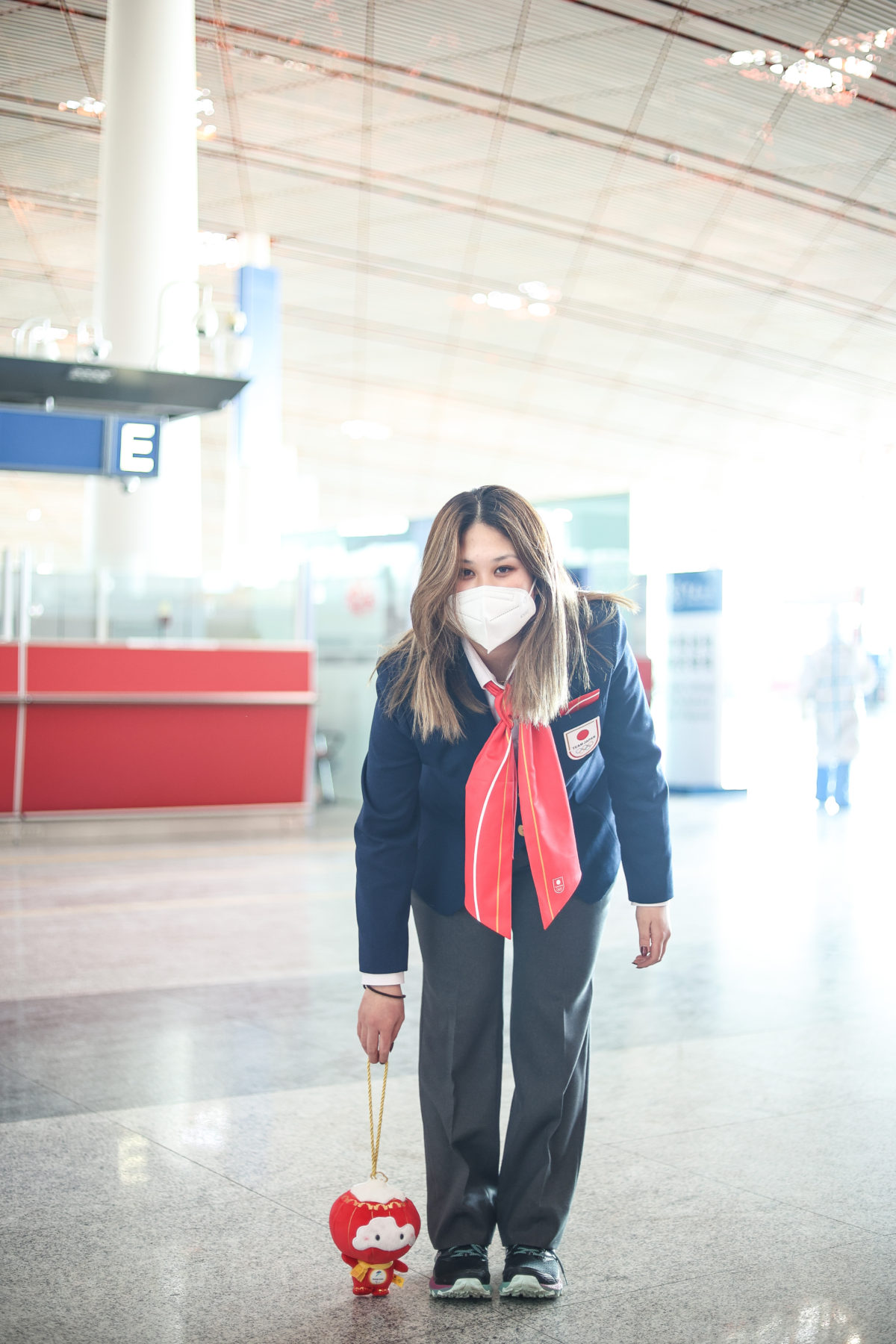
-Did you go into the competition thinking that you might have fun, rather than thinking about winning or losing?
There were times when I found myself comparing myself to other athletes, but no matter what others were doing, what I had built up, the path I had forged through my challenges, was something that no one else could possibly do, so I decided to just believe in myself.
I went into the Olympics with that mindset the whole time.
-What did you think of the skating?
Yes, that run itself was really good. In competitions where I'm obsessed with winning, I tend to start the race very conscious of the result, but at the Olympics I really focused on what I was doing in that run, and started with the feeling that it was a battle with myself, and within that I did what I had to do and made it to the bottom, so it was a very memorable run. I think it was a run that really showed my true self
--You ended up in 5th place, just a little short of a medal. I can imagine that was very frustrating, but was there anything that helped you get into the mindset you just described?
Last season, I was very focused on the results. But in the opening race in Luca, I finished 9th, and I accepted that result. I thought carefully about what I was lacking and what skills I wanted to improve, and the moment I focused on myself, I realized what it meant to ski for myself. I
thought a lot about what I really wanted to do.
Since then, I think I've been able to approach competitions with the mindset of skiing for myself and doing the kind of skiing I want to do.
-By the way, when you came in 9th in the opening race, was there anything specific that you decided you needed to change?
That's right. I think the biggest problem was the mental aspect of being too focused on the results. Luca's preparation from official training to the competition was insufficient, but he seemed a bit overconfident, thinking he could win. I decided to change that
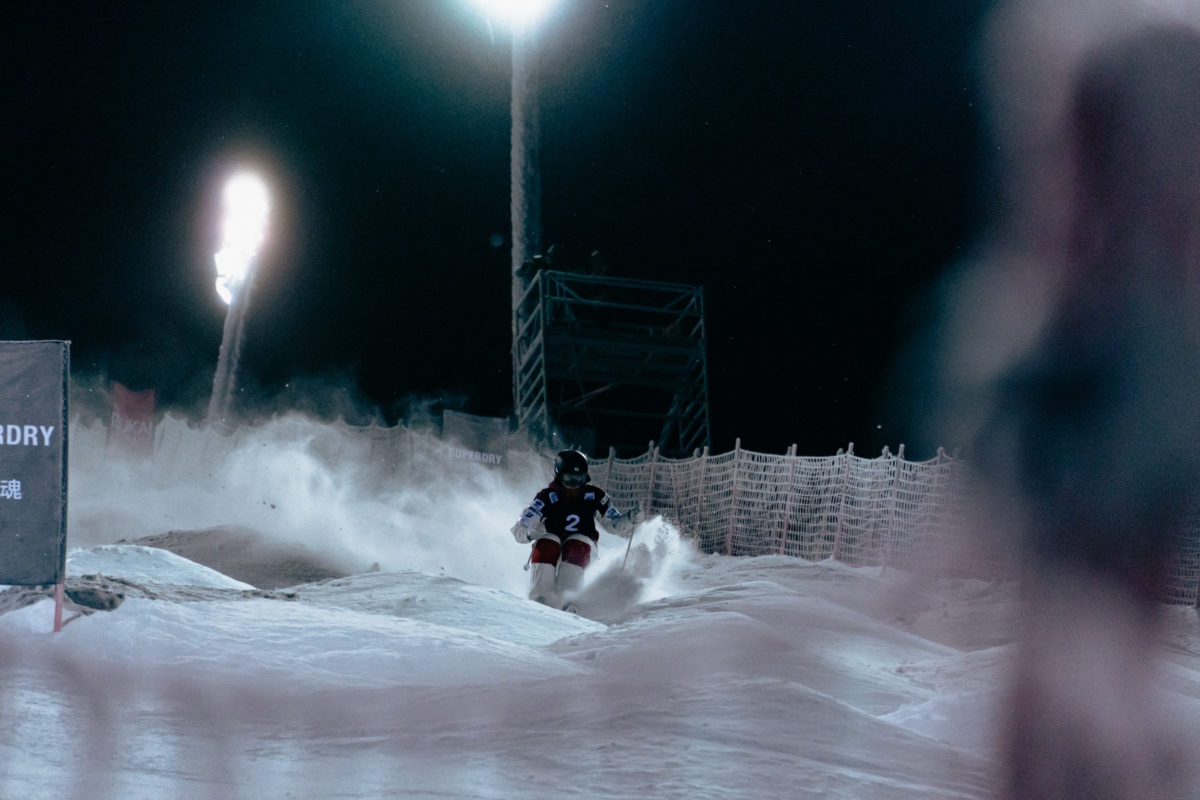
- Was the fact that it was an Olympic year a big influence on your focus on results from the very first race?
Yes, I wasn't really thinking about it, but as I was heading towards the Olympics, I think it was very much on my mind
--You say that taking on challenges is what makes skiing fun, but is there anything else about skiing that you find enjoyable?
I love the moment when I'm on skis. I really love the moment when I'm gliding across the snow. But what I like most about skiing is that I can challenge myself in so many different ways
--It's not that I'm stoic, but I'm always putting pressure on myself..
Yes, I grew up in that kind of environment, so it's become normal for me.
But of course, setting my own goals and the journey to get there is very tough, but that's what makes it fun. I think that's the essence of why I enjoy skiing.
That's why I don't quit, and even though it's tough, I can still enjoy it, which I think is a good thing.
--You seem to have a very philosophical outlook. What position does the tournament hold?
I think my feelings when I stand on the starting line are unique. I want to show my best run to my coach who is watching from below. I really want to show him how much I've been able to do, all the time that I've worked hard with him and how much he's taught me.
Of course, I also want to show a good run to my family and friends who are watching through the media, and I want to run well for my rivals, and I think the most important thing is to show them how much I've grown, but among all of that, what I feel most strongly when I stand on the starting line is that I want to show my best run to my coach who is watching from below.
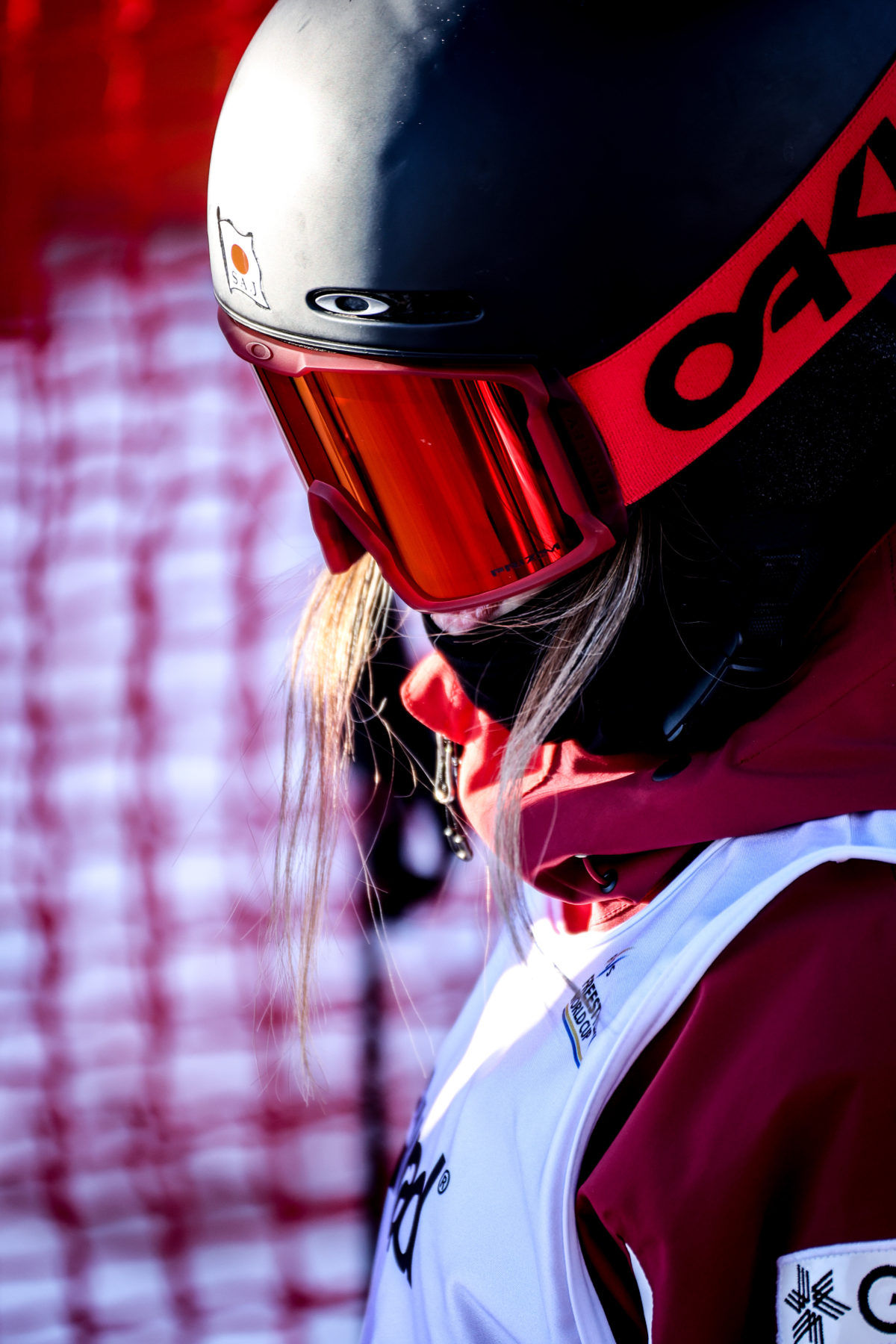
--Why is that?
I am who I am today because my coach has seen everything, both the parts I struggled with and the parts I did well at. So I want to show my coach, "Okay! I've done my best this time too, and I've become this good at skating." I want everyone around me to know that I have a coach who has helped me get to where I am today, and that's what I'm always thinking when I stand on the starting block
- Wow (surprised and impressed). By the way, has that been a habit you've had since you started competing in tournaments?
I don't think so. That feeling started to grow stronger towards the end of the 2021 season. During the Olympic season, I skated in competitions with the mentality of "I want to show my coach, I want to show my coach."
--Do you feel a sense of gratitude towards someone who has always watched over you, warmly supported you when times were tough, and overcome things together with you?
Yes, in an interview right after the Beijing competition, I said, "I'm so sorry." But I received a lot of messages from people around me saying, "You don't need to feel so sorry," which I was very grateful for, but those were words that just came out of my heart uncontrollably. They were words that came
out unconsciously to all the people who have supported me and allowed me to continue this sport of moguls, which isn't that well-known, for so long...
I felt so sorry to everyone who had supported me up to this point because I couldn't win a medal and couldn't live up to their expectations. Looking back on it now, I realize that they weren't just supporting me because they expected me to win a medal, but because they wanted to see me compete on the world stage, so I know that's not the point. I
was overwhelmed with gratitude and didn't know how to express it, so I just naturally ended up saying I was sorry.
-That's a really wonderful story