

Everything you've done is worth it
-What is the secret to being yourself, not just in skiing?
I believe that everything I've done, everything I've built up, no matter how small or negative, has value in the process I've gone through, and that it's important to believe in that path.
The path I've taken, building up things that have value, is something that only I can have, so I think believing in that is the key to being most true to myself.
Everything I've done has value, absolutely.
I've fallen at the World Cup, gotten injured in practice, and had a lot of negative experiences, but all of those have value, because without them I wouldn't be who I am today. I'm just satisfied, or rather, grateful, for the experiences I've had.
-Do you think that change in your mindset has had any effect on your skating?
When I ski with a negative mindset, worrying about the results and thinking it might be a failure, that feeling completely shows on my face. I often end up skiing passively or making mistakes I wouldn't normally make.
However, when I ski with a positive mindset, confident in myself and believing in myself, I feel like I can ski with confidence and perform in a way that I can show to others.
After all, moguls is an individual performance sport, so I think whether you're in a positive or negative mindset is very important.
--So it seems like you've been getting results as a result?
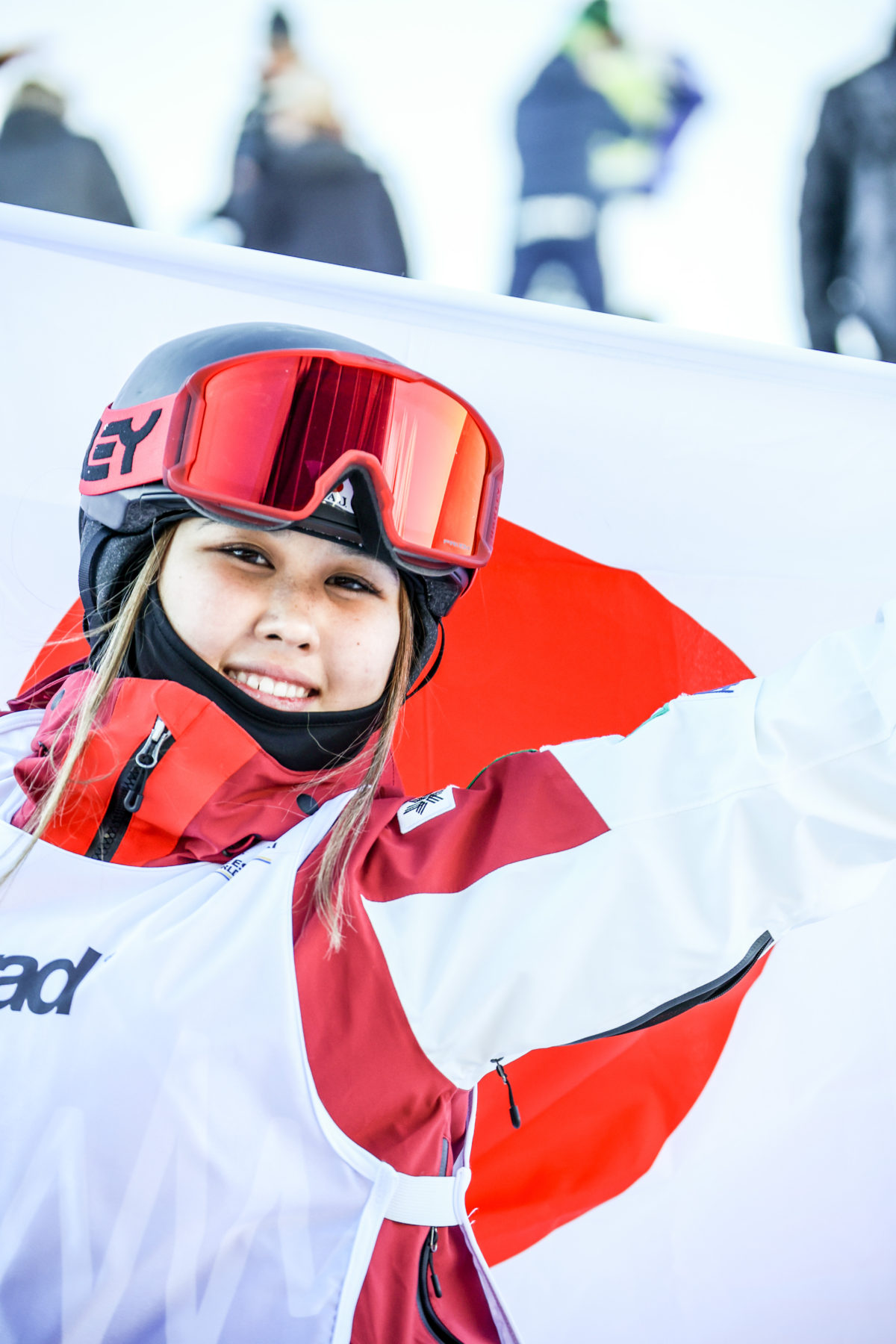
That's right. In Idre and the four World Cup races before the Olympics, I was really only thinking about showing my coach what I could do, and I didn't think about the results at all. I just skied with the mindset of doing the kind of skiing I love, and the results followed.
Of course, before going to the Super Final, the results like where I was placed came out, and that would flash through my mind, or if I was still in first place, I'd think it would be better if it just ended there. But when I think, "I have one more chance to improve my skiing," I can concentrate on my own skiing.
Trust with the coach
--I've heard stories from many skaters, but where does that mindset come from? I think it's also connected to the idea of "I want to show my coach, I want him to know how amazing my coach is, who helped me become able to skate like this." By the way, could you tell me about your coaching history?
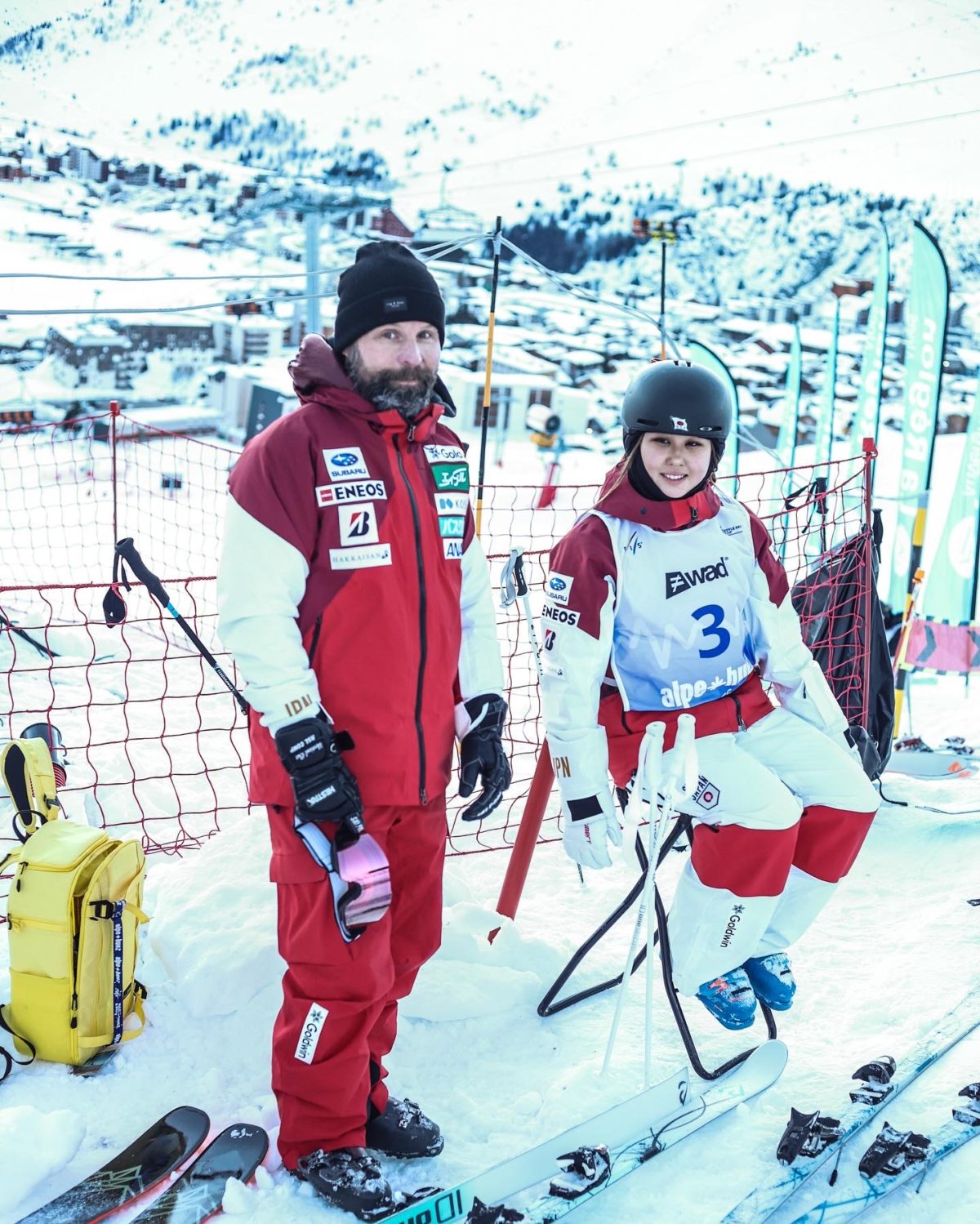
I've been taught by various coaches since I was little. The first team I joined was called Amusement, based in Chiba, and everyone practiced in Yuzawa. Until I was in second or third grade of elementary school, I was taught by a man named Narasaki. From there until I was in first year of junior high school, I was taught by Atsuki Shiratori's father, who took me on trips to official competitions and took good care of me.
After that, I belonged to JOCKS, so I also received advice from Mr. Ohno (Yoshiyuki Ohno: owner of the freestyle ski pro shop "JOCKS" in Tokorozawa City, Saitama Prefecture and Kawaba Ski Resort). After joining the national team, I was taught by Takashi Endo, Coach Yuta Jo, and also Janne (Lahtera).
-Have you basically always been skiing moguls with your coach?
Because we always had a close relationship with our coaches, with one coach for every two players, I think we had a strong sense of building things together. I only now realize how much we trusted each other and how good our relationship was, but I didn't realize it at all until I was in junior high school.
However, after joining the national team and experiencing the World Cup and the Olympics with the whole team, I came to truly appreciate the closeness and good relationship we had with our coaches.
-Currently on the national team, what kind of relationship do you have with each of them, Shiro, Endo Hisashi, and Janne, and what kind of coaching do you receive from them?
The first year I joined the national team was the year after Pyeongchang, and that's when Nao-san started coaching, so I was her first skater. From there, she basically looked at my aerials. In the following seasons, she looked at my turns and everything else.
Then I started competing in the World Cup, and Shiro-san started looking at my aerials and turns, and the following year it changed to Janne. Then Nao-san came back to the national team, and now Janne looks at my turns, Nao-san looks at my aerials and overall turns, and Shiro-san is there for me mentally, when I'm in trouble or feeling a little anxious. I think Shiro-san is a great support for the whole team. I'm really
close to Nao-san, and we talk like we're fellow skaters. If she says, "If it were me, I'd skate it like this," I'll say, "But I can't do that" (laughs).
We can say whatever we want to each other. She trusts me and is strict with me, so I think we have a really good relationship.
Janne really dotes on me like I'm his own child. He's not soft on me at all, though (laughs). My relationship with each of the coaches is excellent, and the coaches get along very well with each other. I think it's a really great team with amazing teamwork.
The Japan team in the 2022 season was really strong, and I think that was largely due to the good relationships between the coaches. Every other player I've asked has said the same thing.
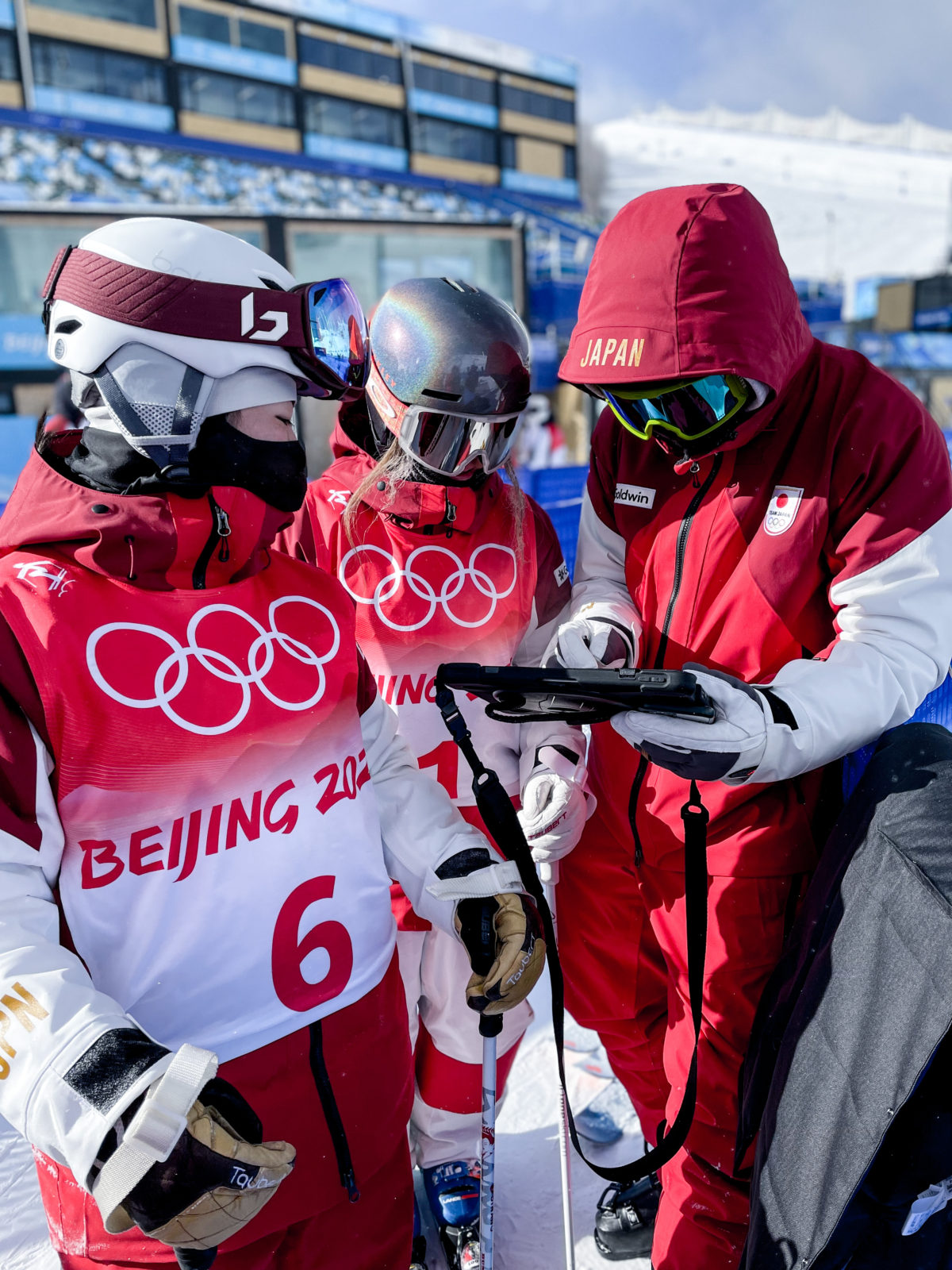
She immediately records her skating on a tablet and objectively reviews the footage to identify areas for improvement. On the left is Hinako Tomitaka, and in the middle is Anri Kawamura. A scene from the Beijing Olympics. Photo/Janne Lahtela
Self-analysis of skiing
--Let me change the question. If you were to rate the three elements of air, turns, and speed, what would you give them out of 100?
My air score is 50 points. I'm not good at speed, so I'd give it about 30 points. I'd give my self-evaluation of my turns a high score of about 80 points
-Your speed and air ratings are low
It's because I still lack the technical skill to execute the same tricks consistently on any course. Perrine and Janica can perform the same tricks with the same quality on any course, so I feel like I'm still far behind.
In singles competitions, I can get reasonably fast times because I've built up my turning technique, but in duals, I'm completely hopeless (laughs). I need to do something about that.
--When you were in elementary school, junior high school, and now, did you have a favorite skier or athlete you admired?
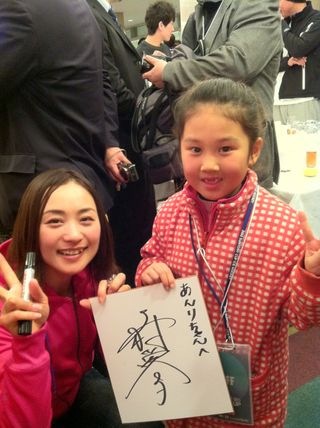
I think it was 2010, when I was in elementary school, that the World Cup was held in Naeba, and I went to the venue. I've known Aiko since I started skiing and she's been my idol, and I remember taking a picture with her in Naeba. I
've always liked Justin too.
Mick, the male skier, was the undisputed champion for a long time, so I really looked up to him. I think these three have been very important to me.
-Are there any similarities to your own skating?
Yes, more in terms of turns than air
--From a technical point of view, what does the skating you want to do look like?
I want to ski like Janne.
Last season, I thought Ikuma (Horishima)'s skiing was cool, and I wanted to ski like that too. Ikuma is aiming to be like Janne... After that, when I saw Janne's skiing, I knew I absolutely had to do it, and I really want to be able to do it before I quit skiing.
Right now, I'm skiing with the sole desire to ski like Janne (laughs).
We use different types of skis, but I really want Janne's turning and carving techniques, and Mick's perfect control that keeps him winning. So I'm thinking of taking the best parts from both of them (laughs).
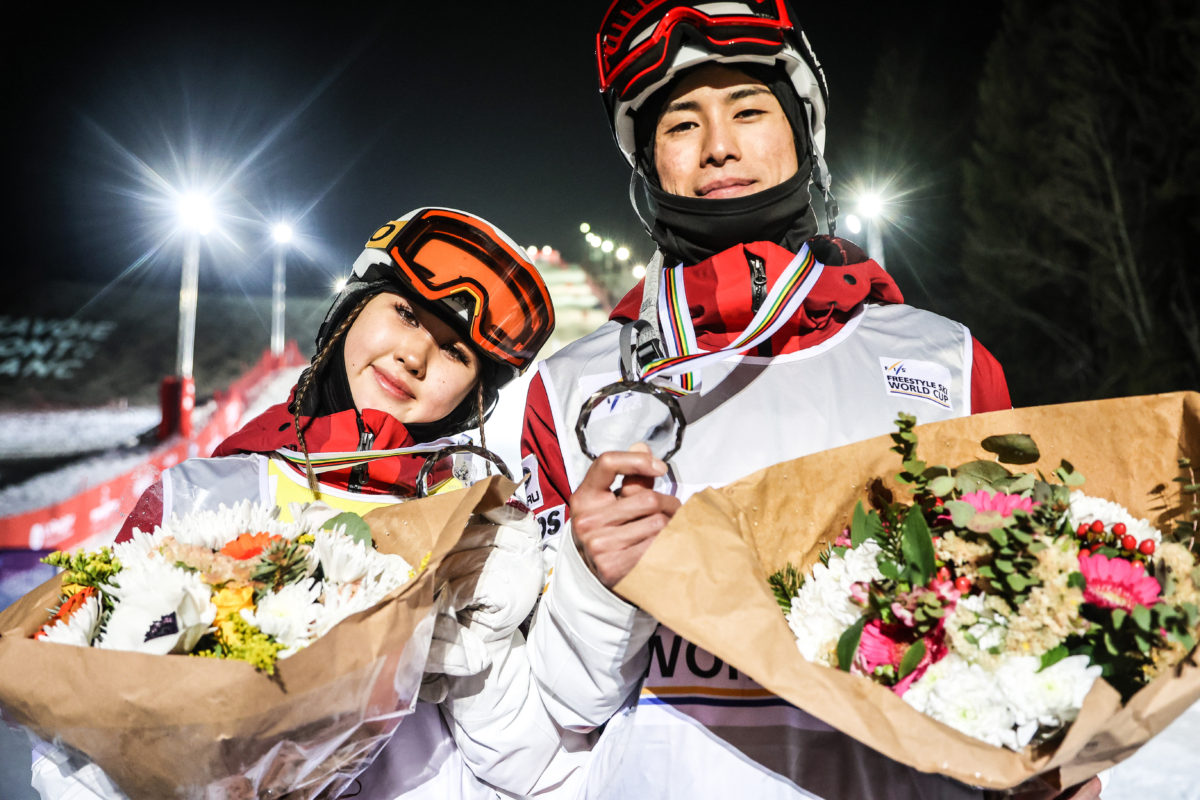
In the 2022 season, both finished as runners-up. Anri Kawamura was just one point behind, while Yukima Horishima was 32 points short.
Photo/Sho Endo
--It must be really fortunate to be in an environment where you are surrounded by people you admire and want to incorporate into your own life
Yes, I truly feel that I am in a truly blessed environment, being surrounded by people who do what I love most: skiing
-Can you tell us your future goals?
For the 2023 season, I want to aim for the overall World Cup title and the moguls title at the World Championships.
In the 2022 season, I missed out on the overall World Cup title by just one point, and something that was definitely within my grasp slipped away at the very end, so I'm determined to get it next time.
To win the overall title, I think I need to increase the number of wins and podium finishes, so I think winning the overall title is my biggest goal, taking all of that into account.
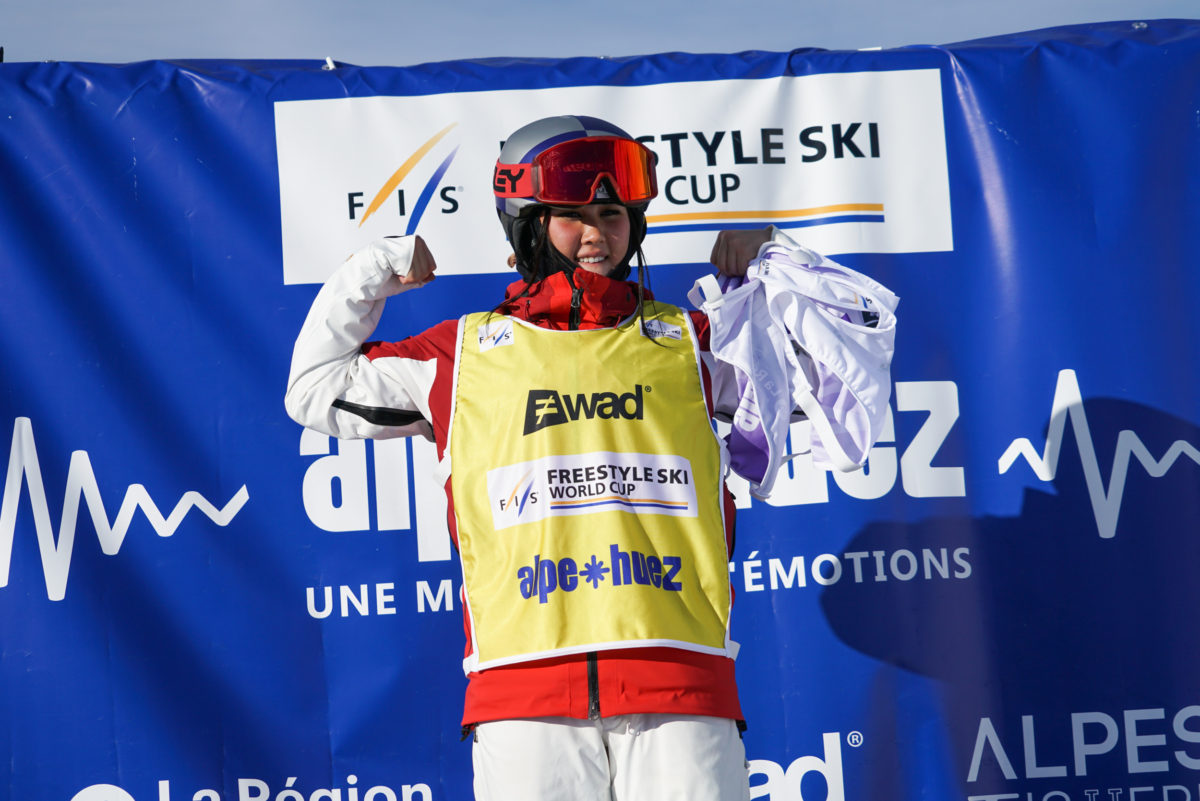
I hope that he will continue to wear the yellow bibs that only the top skiers can wear in the final round of the 2023 season. The photo was taken at the end of the European round, which was held until the end of the year. Photo/Mateusz Kielpinski / FIS Freestyle
Anri Kawamura
In the 2020 season, at the age of 15, he made a sensational world debut by securing a second-place podium finish in the opening round of the World Cup. In the 2022 season, he achieved seven podium finishes and three victories in the World Cup, and finished second overall in the Major Opening. Although he fell short of the podium at the Beijing Olympics, where he was expected to win a medal, his strength is undeniable. In the 2023 season, he also performed well in the European round held in December, opening the way for an overall victory. He has mastered English and has excellent communication skills, including with his coach Janne and with athletes from other countries.
Sponsors: Strauman Japan, Japan Ski Resort Development, RED BULL, OAKLEY
Born October 15, 2004, graduate of Nippon Sport Science University Ouka High School.
Instagram:@anrikawamura