

Training camp held in Tsugaike
Fifteen of Japan's top athletes, both male and female, gathered for the training camp. Many of them train their bodies during the summer with sports such as skyrunning and mountain biking. However, some athletes still lacked skill in skiing and the transition techniques unique to Skimo. Therefore, this training camp focused on refining their basic skills.
The location was Tsugaike in Nagano Prefecture, which is rich in snow. The ski resort is at an altitude of approximately 1700m at its top, making it suitable for high-altitude training. In addition, the low risk of avalanches allows for safe practice.
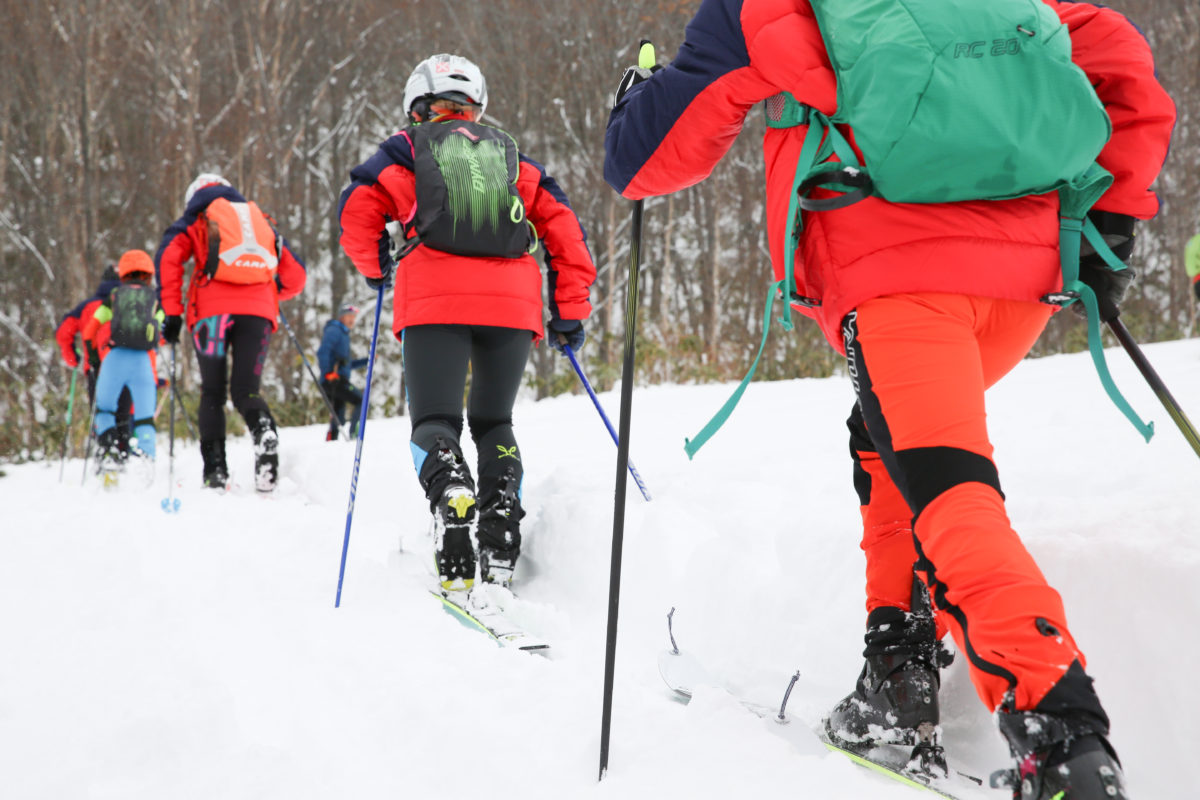
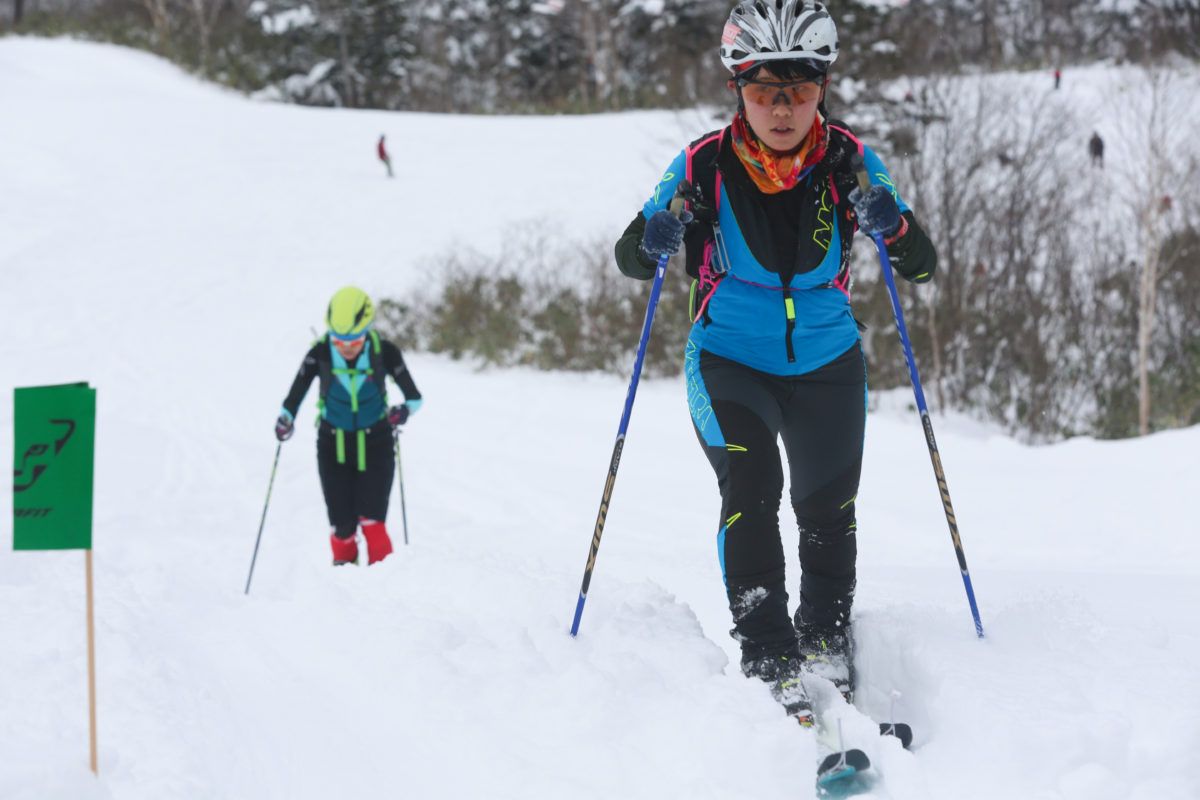
I was surprised when practice started at 9 a.m. The athletes had to walk 750m in elevation from their lodgings at the foot of the mountain to the practice area at the summit. And apparently this was just a "good warm-up." For a beginner backcountry skiing tour, this would be equivalent to two days' worth of elevation gain. Not wanting to be a burden, we saw the athletes off and then took the gondola up. As soon as we arrived at the summit station, Coach Hirata began setting up the course with gates on the left side of the Tsuga-no-mori ski slope, which was the practice area. It seemed that Tsugaike had received several tens of centimeters of snowfall the day before, so it was powder snow. Competitions held in Europe are held on hard-packed slopes. Japan is one of the few places where you can practice Skimo in powder.
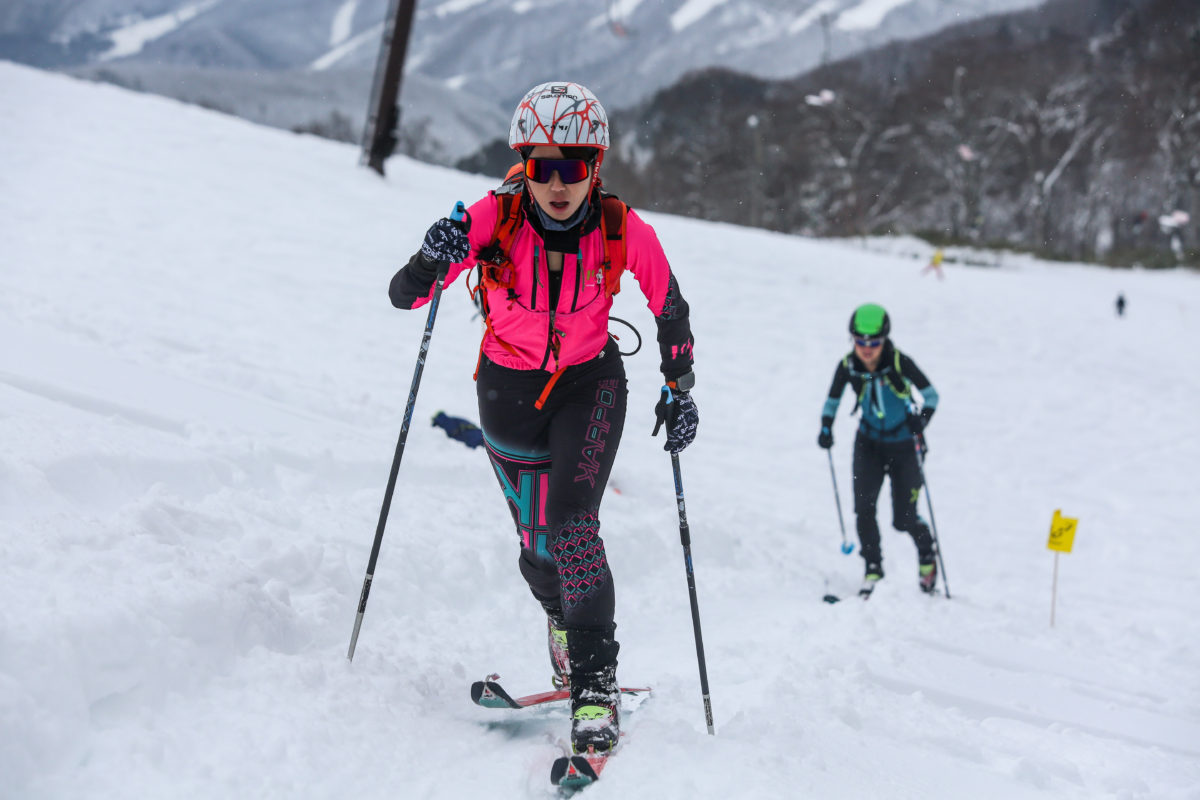
Hirata repeatedly stepped on the course for the athletes coming up, making it easier for them to skin their way up. Soon after, we could see the athletes coming up from the bottom of the slope.
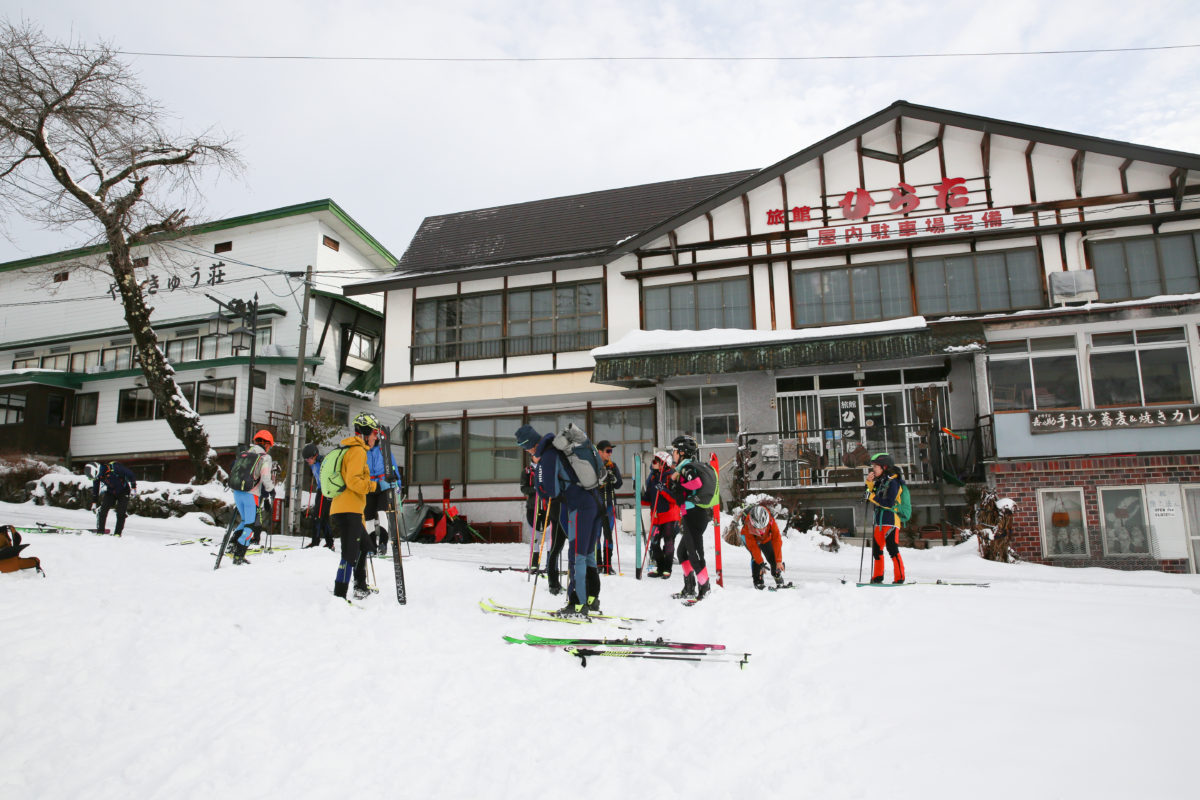
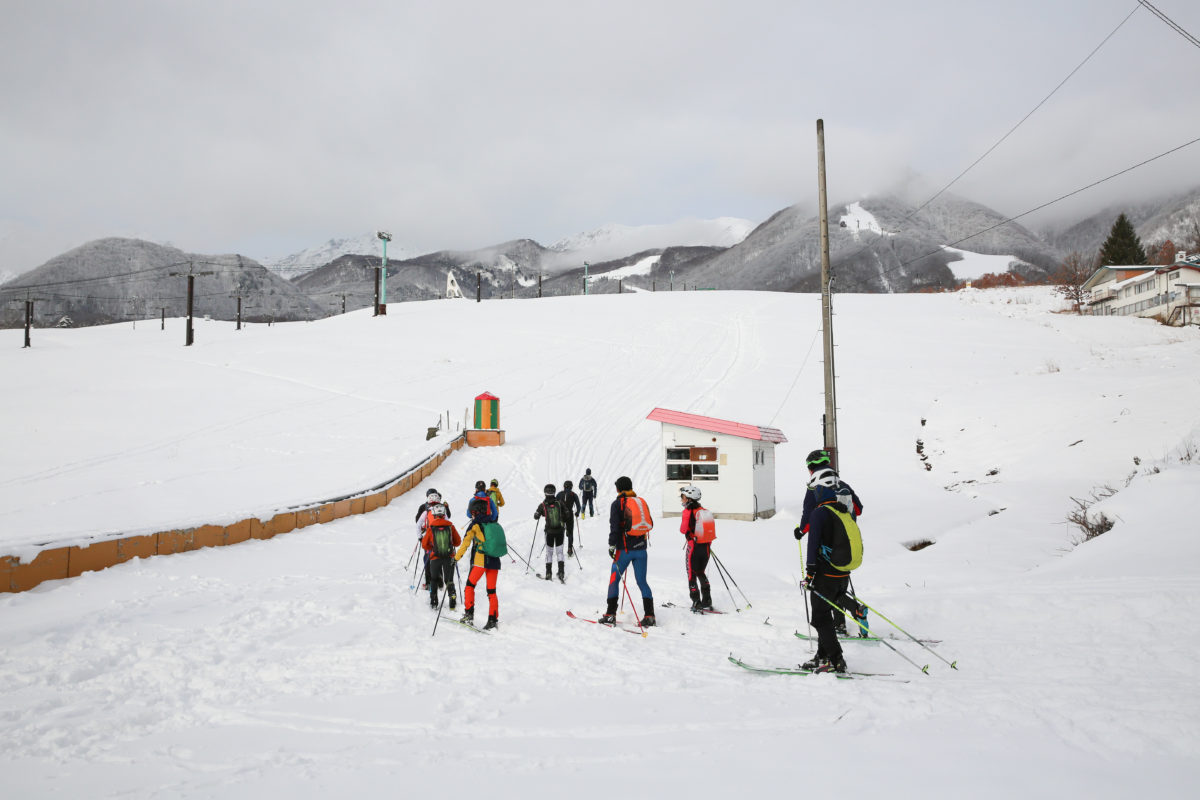
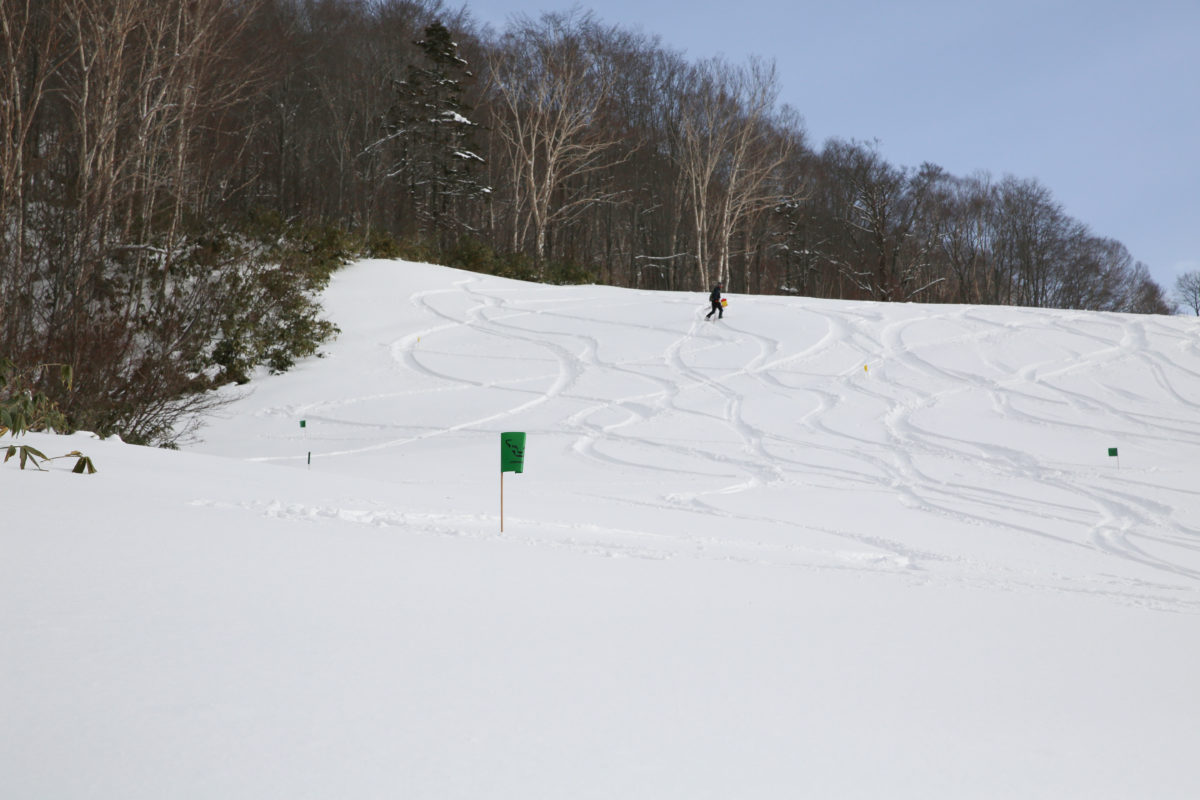
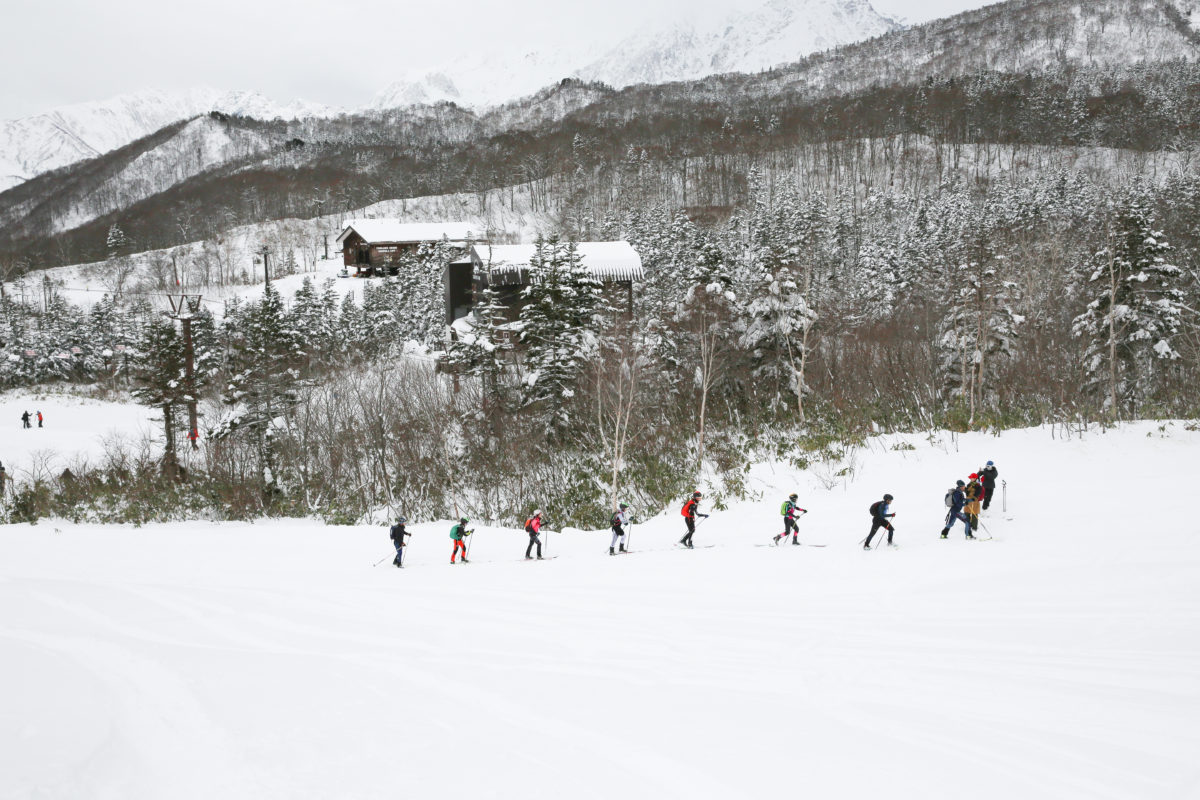
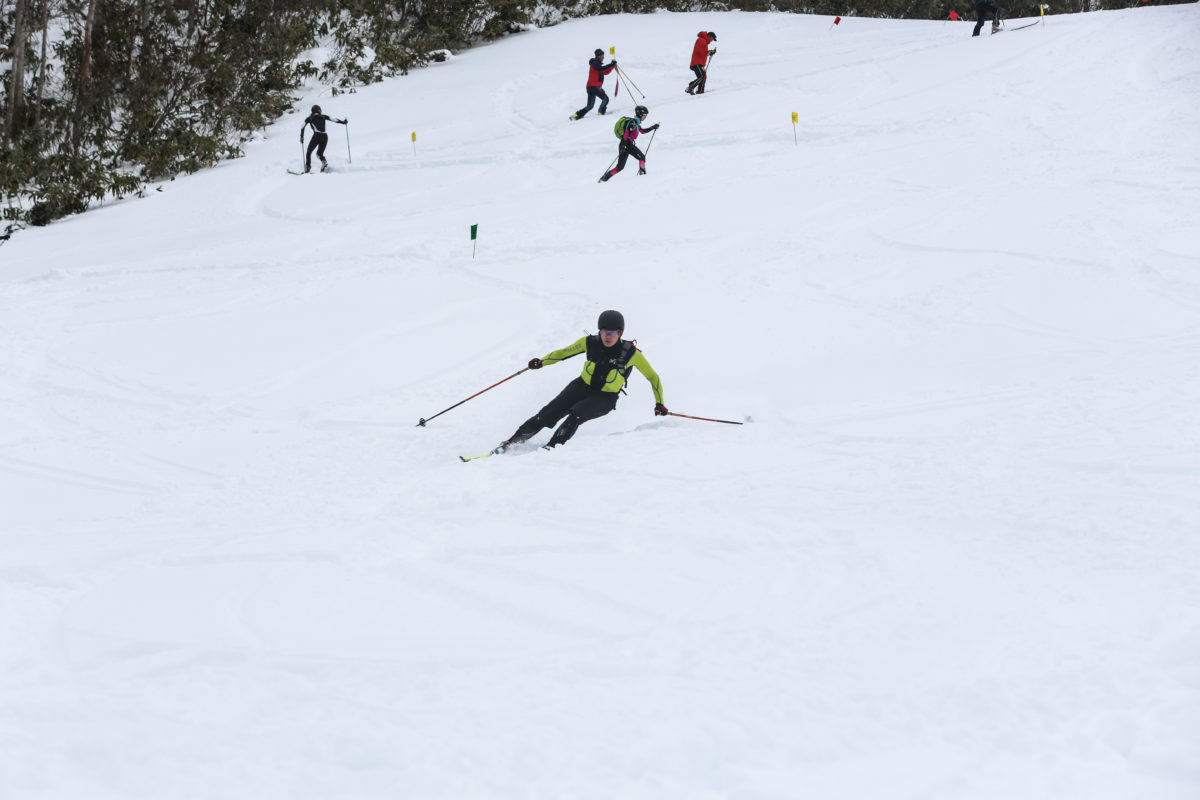
After a short break and some snacks, the athletes resumed their training without showing any signs of fatigue. They repeatedly climbed and skied down a slope of about 100m. They had just climbed 750m non-stop, and now they were pushing themselves even harder to train, showing their physical strength is beyond that of ordinary people. In addition to Hirata, the coaches were Matsuzawa Yukiyasu and Hoshino Kazuaki. All three are veterans who have led the way in Skimo in Japan. They still compete in domestic competitions as athletes, and also serve as coaches for the Japanese national team. Matsuzawa, a former demonstrator, gave precise instructions on skiing technique
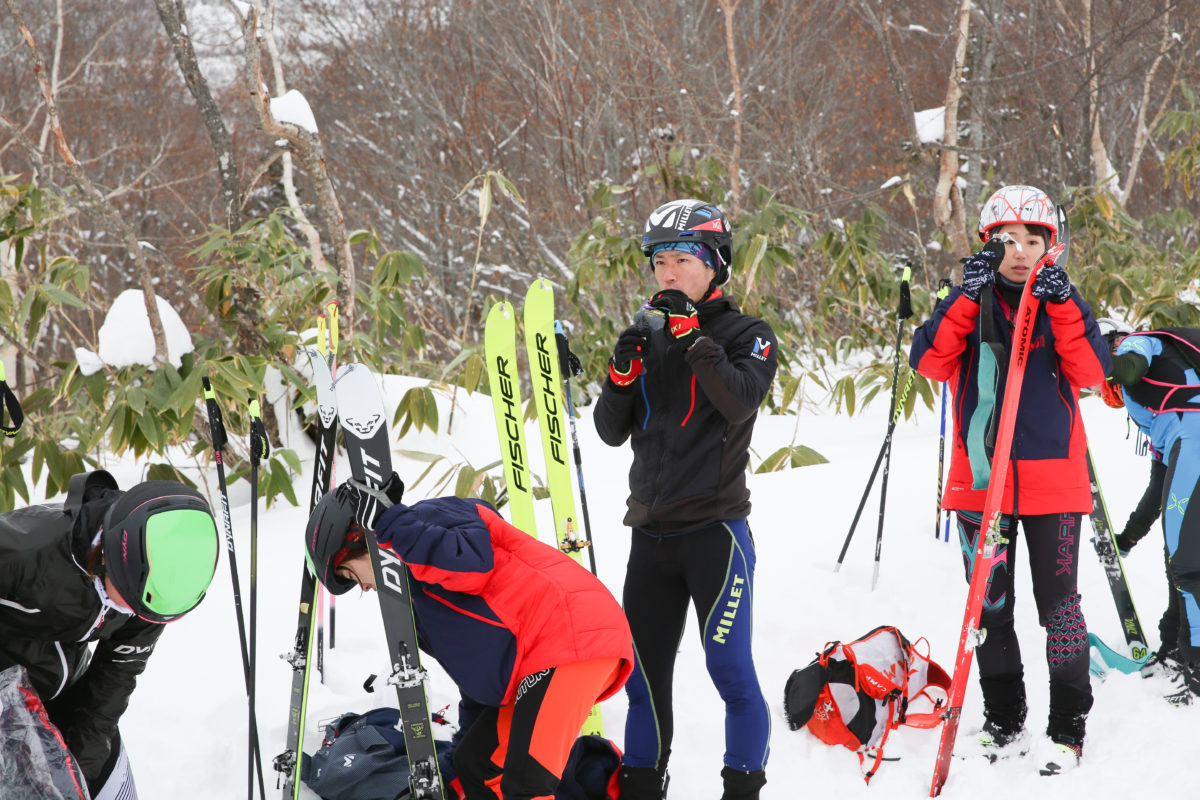
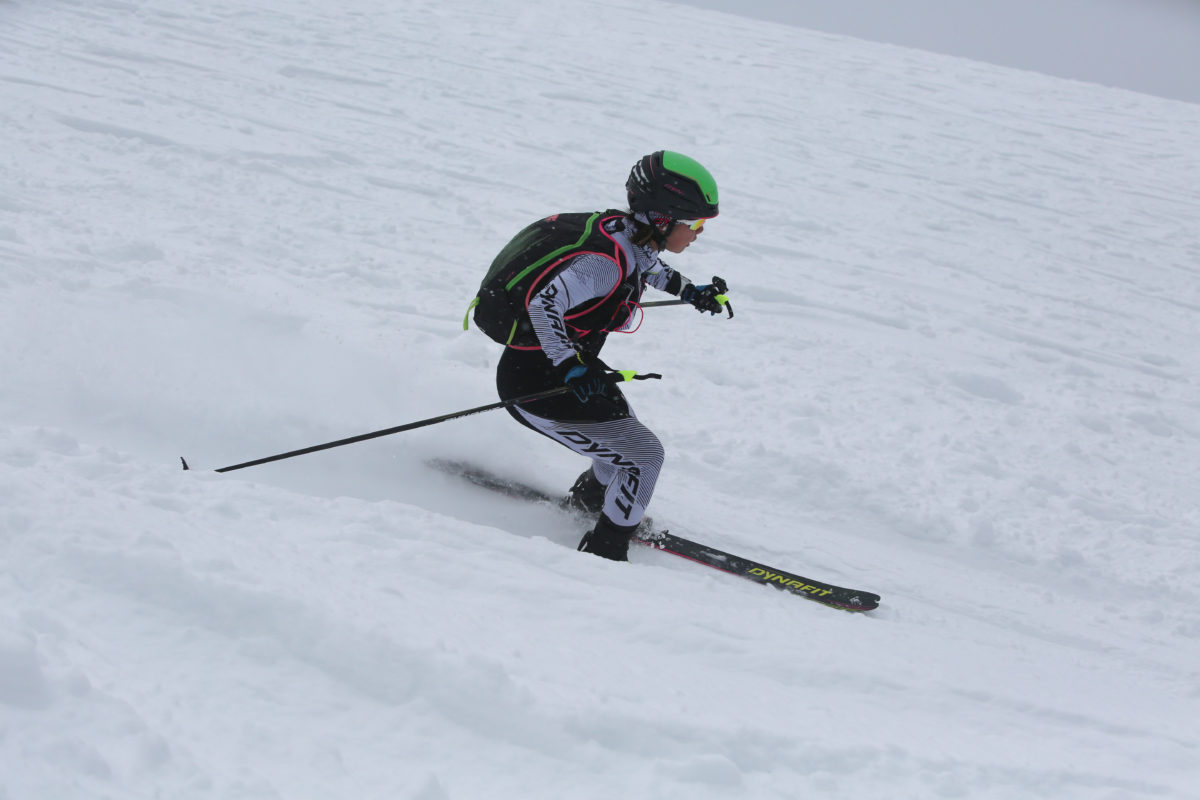
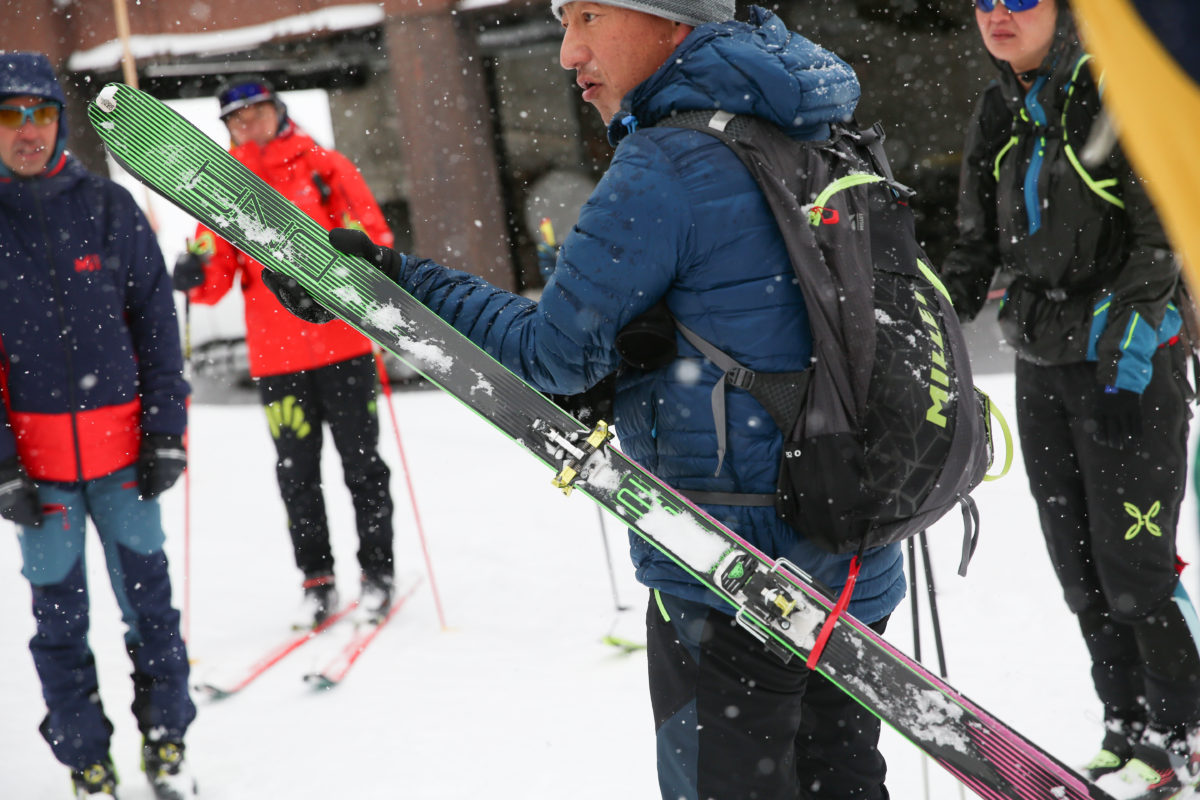
After practicing climbing and skiing for around two hours, with breaks in between, the next step was transition practice. They carefully checked how to put on and take off their skis, how to carry them on their backs, and how to remove their skins, which were all issues that needed to be addressed in order to improve their times
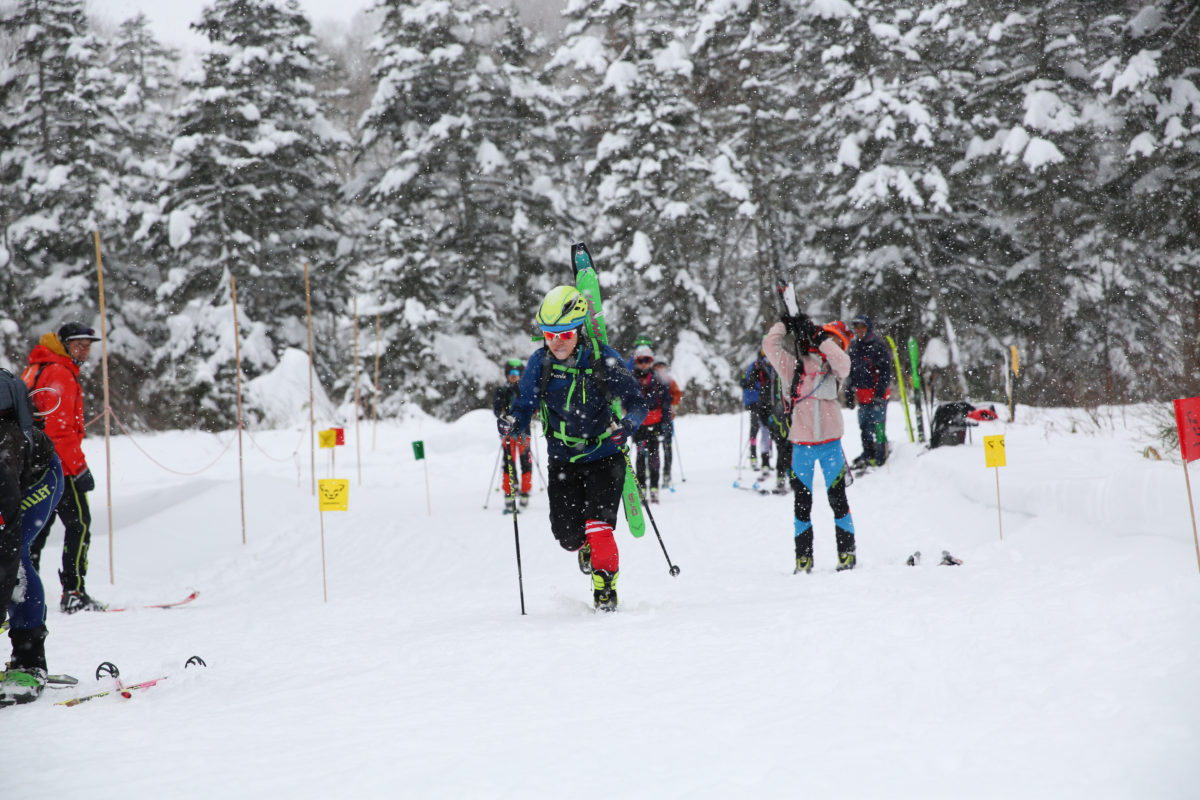
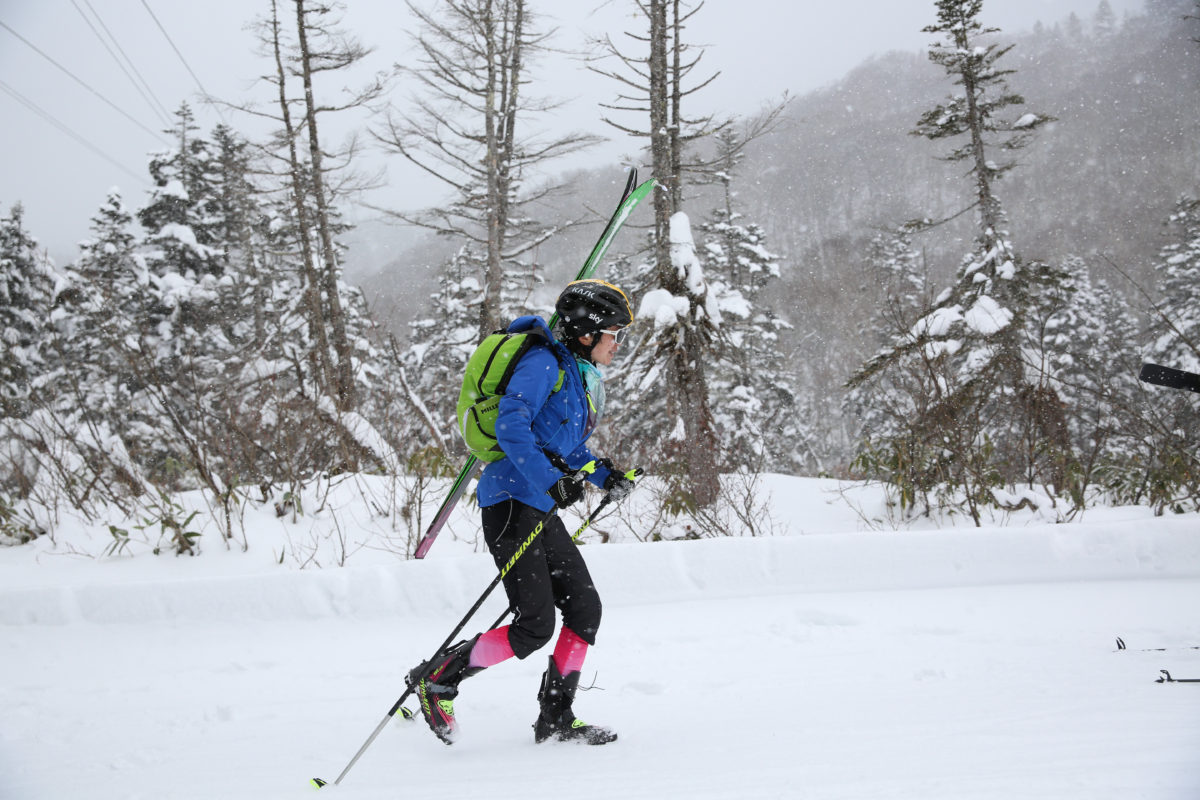
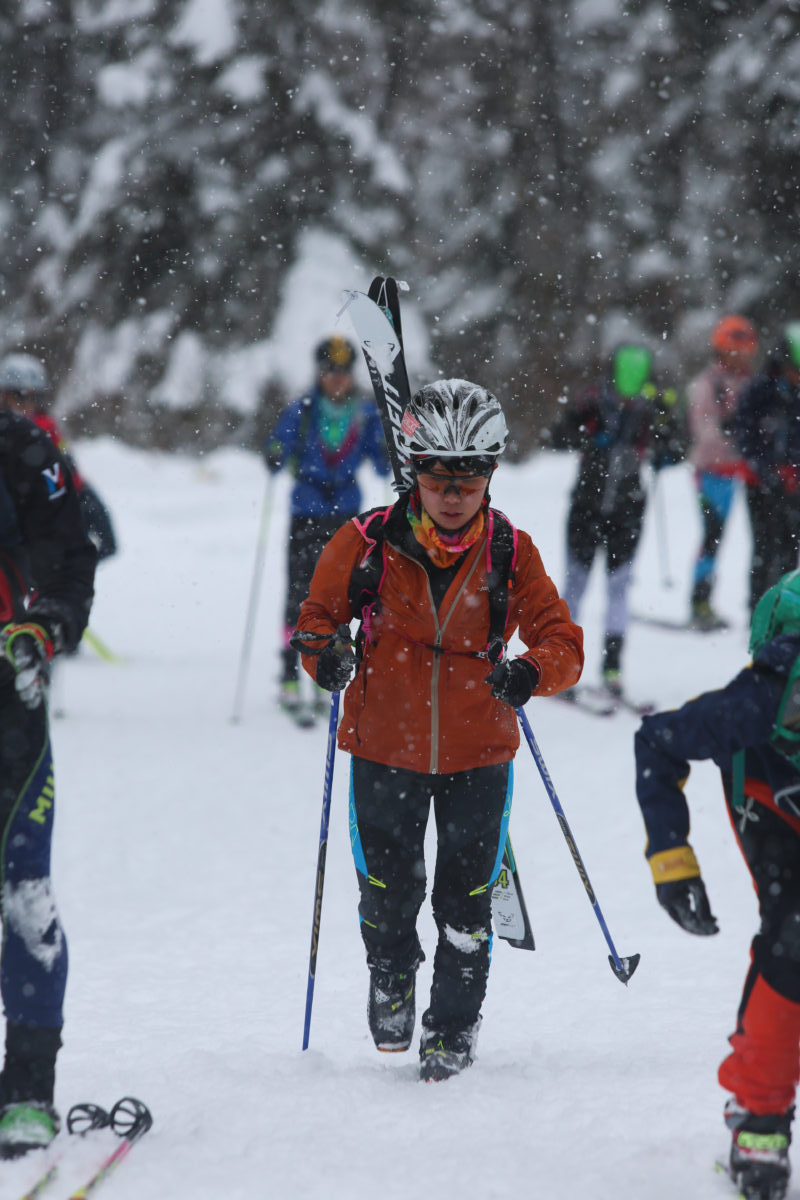
We practiced transitions for about an hour, and then finished the day. Finally, we skied top to bottom at Tsugaike before heading back to the hotel
What is the appeal of Skimo?
Looking back, they walked the distance that would normally be covered by gondola from the bottom to the top of the ski resort, and then repeatedly practiced by climbing and running up slopes—an amount of exercise unimaginable to the average person.
The athletes seemed relaxed and even smiled at times, so we asked them what they found appealing about Skimo.
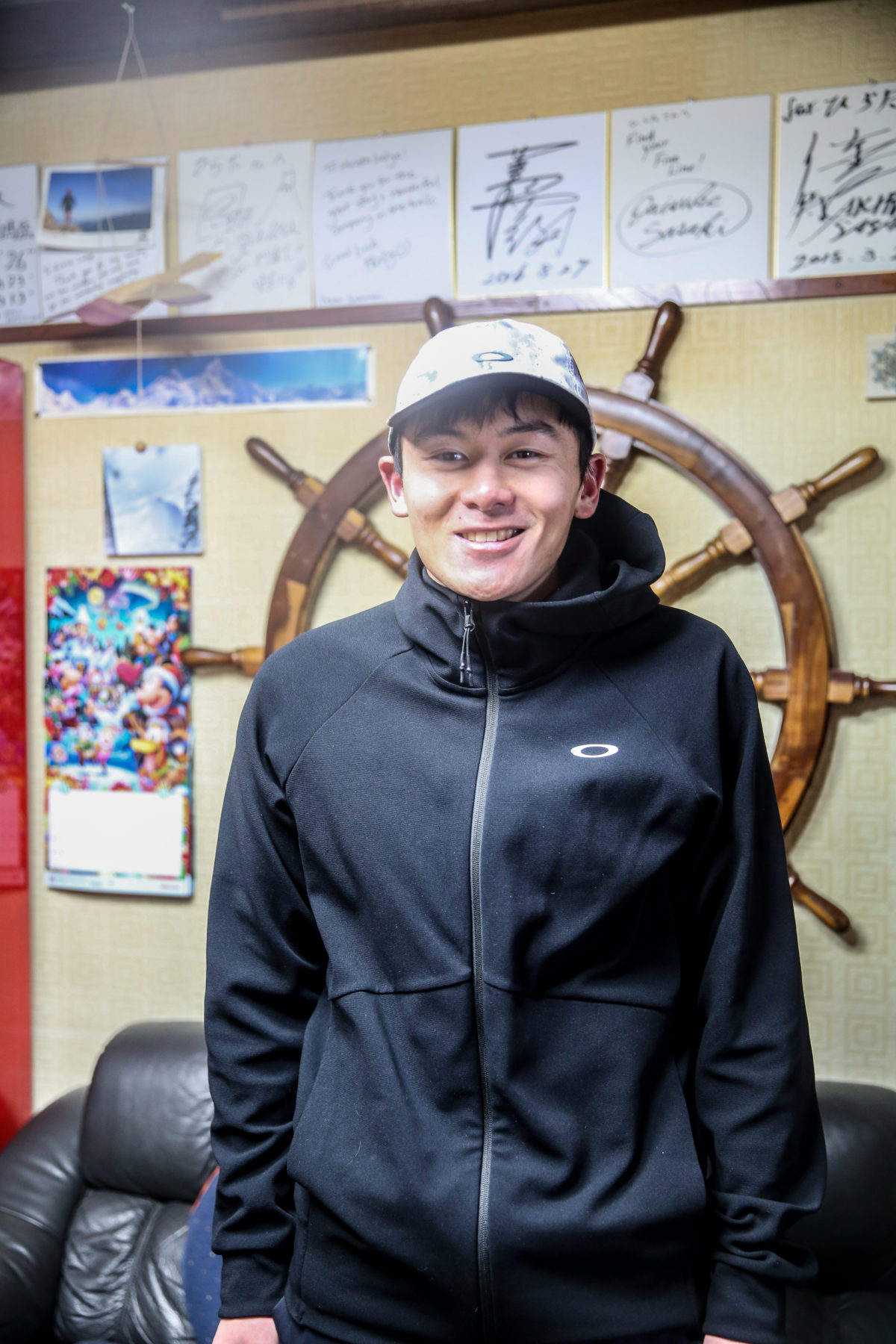
Ari Hirabayashi, who
competes as a mountain biker in the summer, was looking for a winter training method. After starting Skimo, she noticed an improvement in her physical condition and decided to take it seriously. She also used to do alpine skiing, but unlike alpine skiing, Skimo gear can break if you push yourself too hard, so it's not just about being fast. The challenge of skiing fast while pushing the gear to its limits is what makes Skimo so appealing.
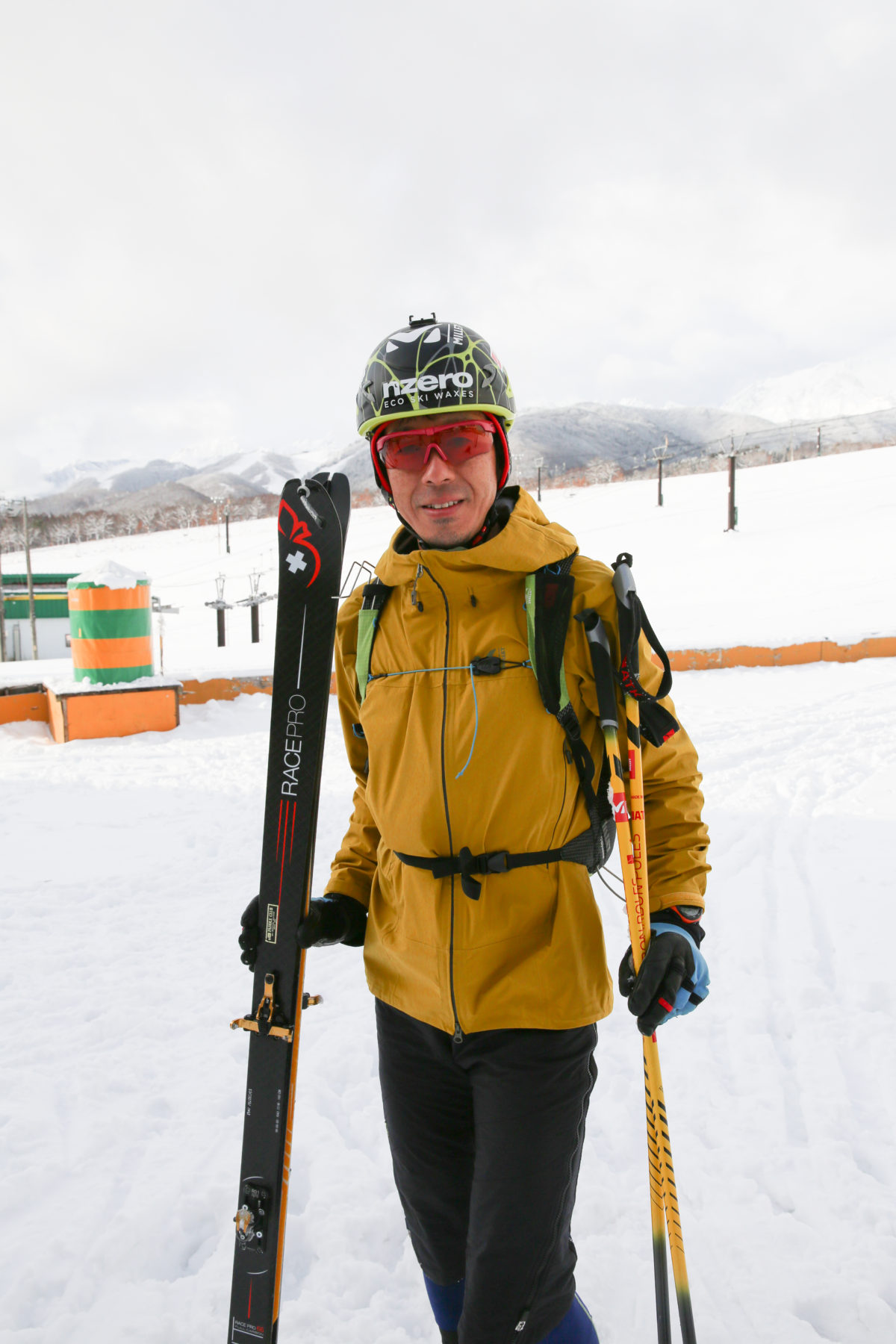
Norio Kodera
Skimo is still a relatively minor sport in Japan, but in Europe, it's a popular everyday activity, used for things like walking the dog or running. The best thing about it is that you can easily climb up and ski down, even without lifts or ski resorts, making it accessible to everyone.
I also use it to refresh myself daily, often walking along forest trails when I'm not competing.
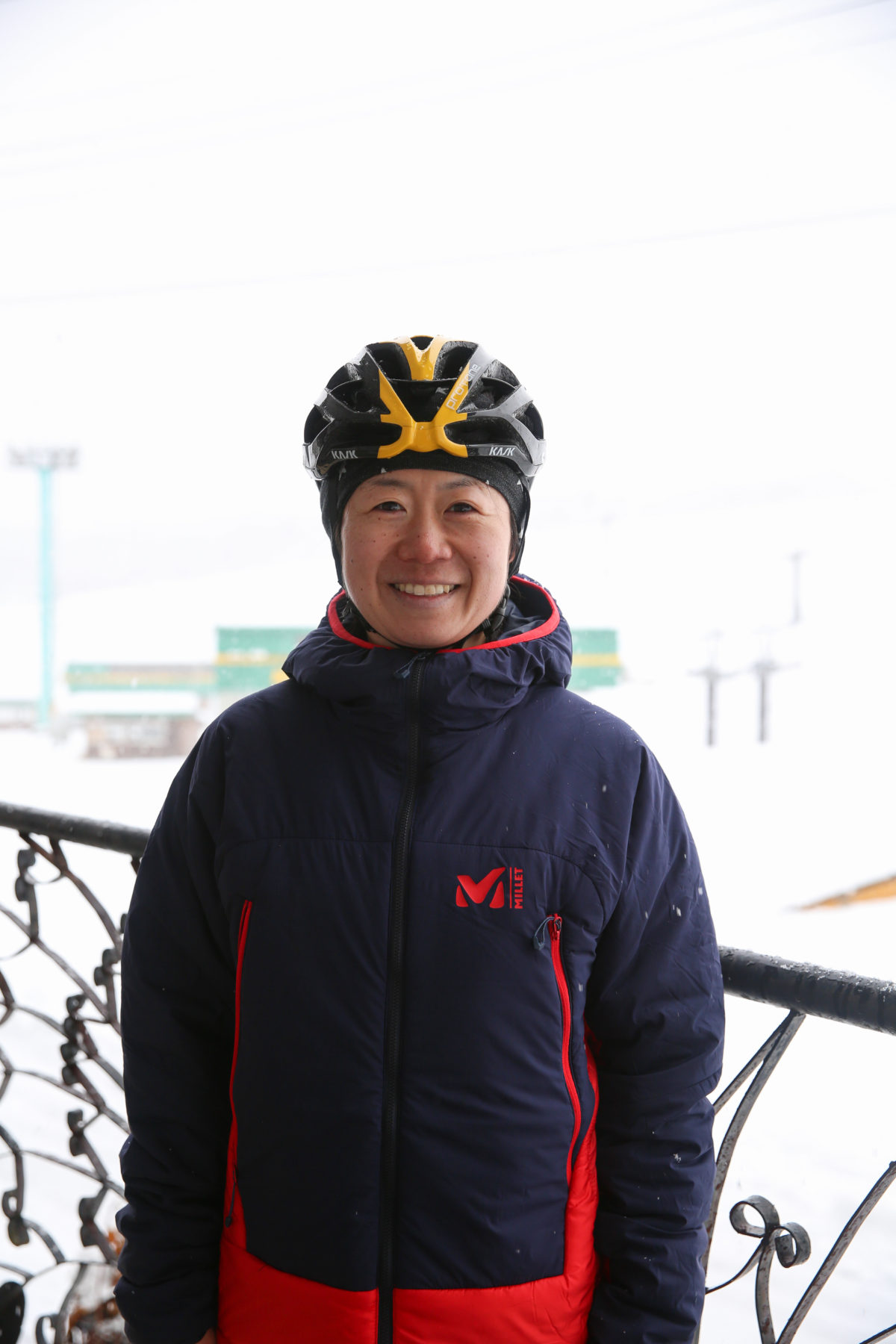
Yurie Tanaka
The appeal of Skimo is the exhilaration you feel when climbing a mountain and the sense of accomplishment you get afterwards. It's not just about climbing; there are also technical parts where you ski, so it's packed with a variety of elements. I was originally a biathlete, and I find that the way the skins work is different to cross-country skiing, and the skis are thinner and lighter than alpine skis, making them more difficult to ski. It's interesting to see how even the same skis are slightly different
This time we focused on the content of Skimo competitions, the training camp, and some of the appeal that athletes feel. Let's keep an eye on Skimo, which is getting more and more popular as we approach the 2026 Olympics
Try Skimo!
Skimo is still relatively uncommon in Japan, but anyone can start if they have the right gear and snow. In Europe, it's a popular everyday sport, enjoyed as an alternative to walking or winter running. While some ski resorts in Japan restrict walking with skins attached, you can enjoy it at the following facilities:
●Sapporo Bankei
●Tsugaike Mountain Resort (north side of the Bell-Ringing Hill slope)
●Miyagi Zao Sumikawa Snow Park (Zao Echo Line)
If you'd like to see the equipment in person, the best place to start is a store. For reference, you can check out the gear at the following stores:
●Trail Run Test Center (Yamanashi Prefecture)
●Yama no Dougu Rappy (Nagano Prefecture)
●Paddle Club Nagoya (Aichi Prefecture)
Interview cooperation: JMCA SKIMO Committee, Tsugaike Mountain Resort;
Interview/writing: Daigo Onozuka