

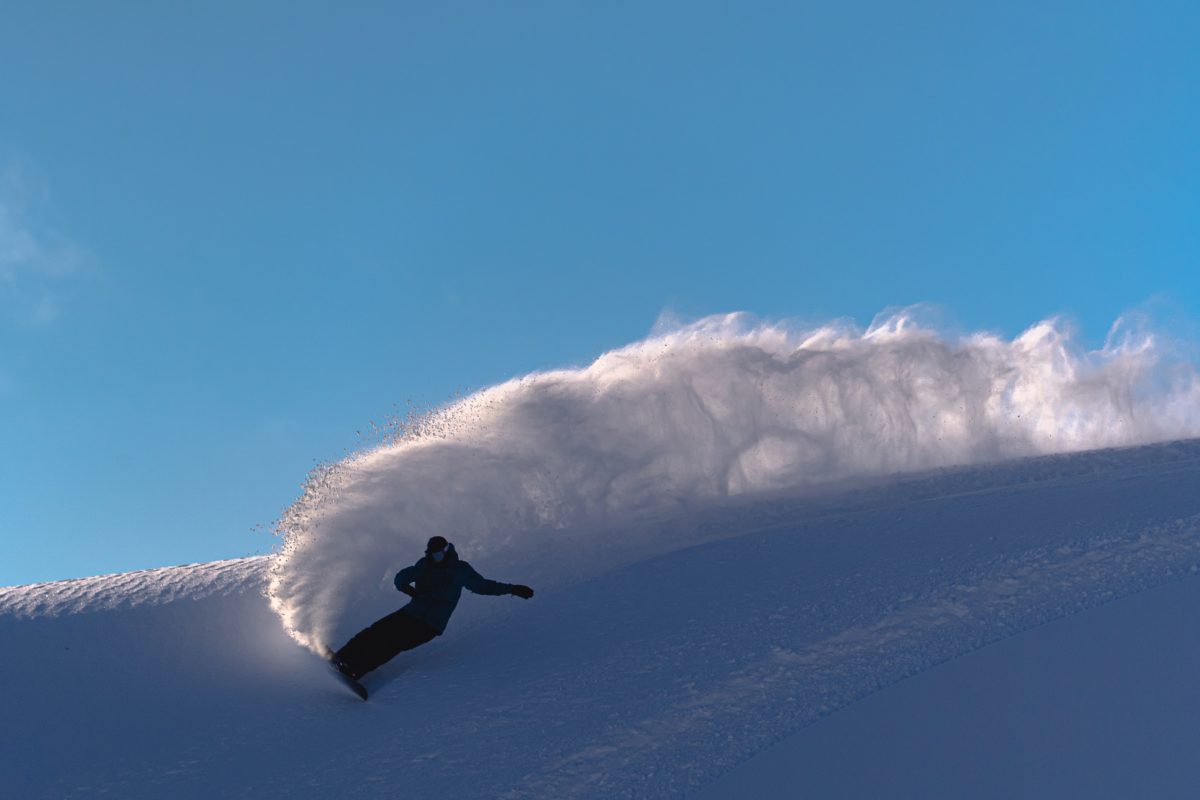
Hakuba Norikura Onsen Ski Resort is located in Otari Village, in the northern part of the HAKUBA VALLEY. While the individual courses of this ski resort, which stretches north and south, aren't particularly long, there's a reason why it continues to attract dedicated skiers. We spoke with Takuma Oike and Arata Suzumura, who regularly ski here, about the resort's appeal and they guided us through their favorite courses. This time, it's snowboarder Arata Suzumura's turn. Click
here for the previous installment featuring Takuma Oike
Photo/Go Ito
What kind of place is Hakuba Norikura Onsen Ski Resort?
Hakuba Norikura Onsen Ski Resort (hereafter referred to as Hakunori) is located in the northern part of HAKUBA VALLEY in northwestern Nagano Prefecture. As the name suggests, Wakaguri Onsen is located at the foot of the ski resort, and the hot, brown water soothes the body after skiing
Otari Village receives particularly heavy snowfall within HAKUBA VALLEY, with an average annual cumulative snowfall exceeding 6 meters, and it is a region known for its heavy snowfall, with snowfall of over 50 cm in a single day. During the season, cold air frequently flows in from the Sea of Japan, crossing the Northern Alps and frequently dumping snow on Otari Village, the northernmost village in the area. Located about 20 km north of the Sea of Japan, Otari Village is similar to Myoko, a region with heavy snowfall and roughly the same distance from the Sea of Japan. As a result, the area often receives 10 to 20 cm more snow than other ski resorts in HAKUBA VALLEY
How Arata Suzumura, who continues to ski in the Hakuba area, chose Hakunori
Shin Suzumura has been skiing in the Hakuba area for over 20 years. Before basing himself in Hakunori, he was based at Happo-one, skiing in both the ski resorts and backcountry areas. It was during this time that he met and became mentored by Tomohiro Shakawa, who was developing the entire Hakuba area, and began working as a guide at Color Sports Club. However, at some point, he left guiding to focus on his riding activities.
At that time, he followed a routine of skiing at Happo in the morning and then at the Otari ski resort in the afternoon. Gradually, he began to worry about the snow conditions in the Otari area, where he would ski in the afternoon.
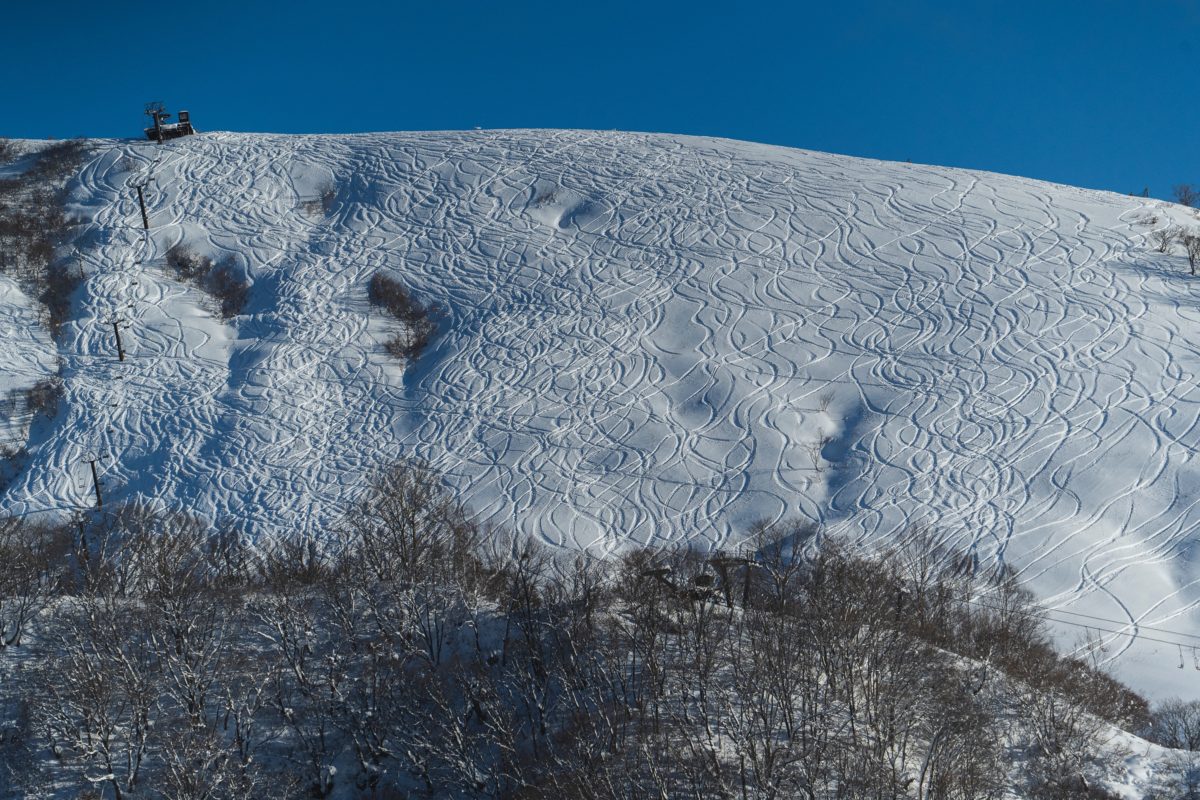
Not only does Otani have more snow than Hakuba, but there are also fewer skiers, so good snow tends to remain relatively well. Sensing that "this is a little different from Hakuba," he began to observe the region.
Happo is at a high altitude, so you can access the alpine area by lift and it's on a large scale. However, it is heavily affected by the wind and the snow often packs up. But, Otani, being on the leeward slopes, seems to accumulate snow more easily than Hakuba. Because it is closer to the Sea of Japan, he has the image that if even a little cold air comes in, clouds will accumulate from around the large landslide on Hiedayama to Yamanokami and Wakakuri, and he analyzes that this may be one of the reasons why it snows so much at Hakunori. Suzumura Shin, who had come to these conclusions while visiting Otani, looked for a place to live and made it his base.
From here, we asked Arata Suzumura about Hakunori's appeal in a Q&A format. Please enjoy the image footage that focuses on him
Three Hakunori courses that Arata Suzumura likes to ski
Q. Please tell us in your own words what makes Hakunori unique。
A. Actually, a long time ago, there was a boardercross course on the 5th lift in Hakunori, and I started skiing there and became a pro. This was the first place in the area to open up to snowboarding, and there were multiple half-pipes. There were also big competitions, and it was a lively place. At the time, famous people would come out of the forest with big grins on their faces and say, "The terrain here is great."
The ski resort isn't long vertically, but it's wide and compact. It's a lot of fun when you can find a good line. It may be hard to notice when you're just skiing down the course, but once you understand the small swells and the lines that connect the terrain, the ways you can enjoy it become more diverse. Also, there's a wide, gentle slope at the base of the ski resort, so even when friends come with their kids, it's not too crowded and they can ski safely
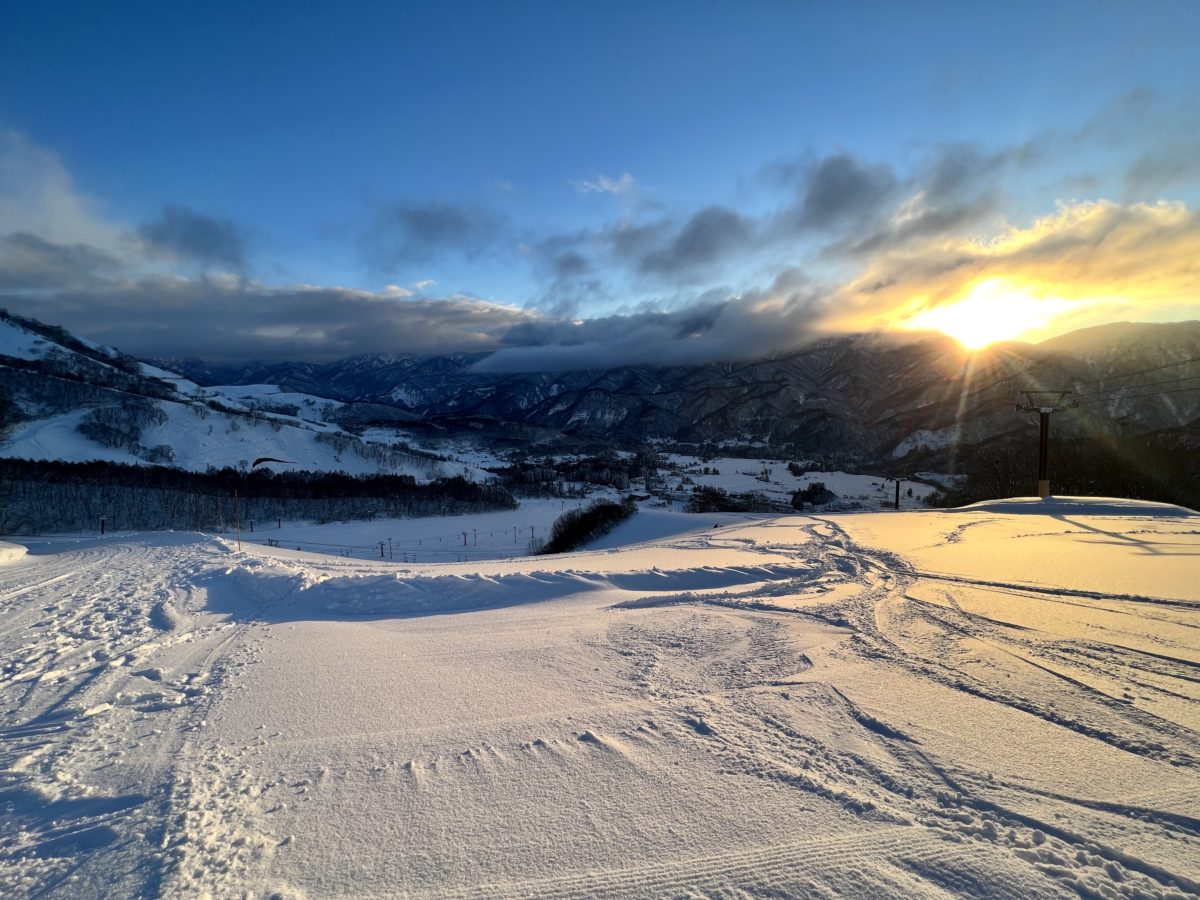
And then there are the hot springs. There's the Alps Hotel, Wakaguri Onsen, and Shimorose Onsen (Sante Inn Otari) down the road. It's the only ski resort in HAKUBA VALLEY that has "hot spring" in its name. One of the best things about it is being able to soak in the baths after a day of skiing
Q. Can you name your three favorite courses?
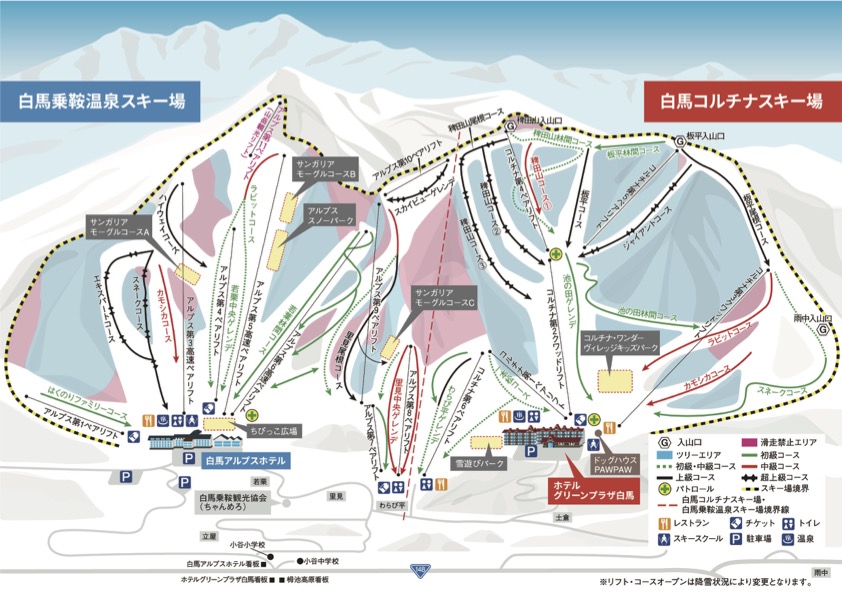
A. First up is the "Wakakuri Forest Course." The pair lift that goes over this course is surrounded by coniferous trees on both sides, making the ride itself a pleasant experience.
The slope is truly beginner-friendly. There's also a detour course that winds through the forest, with small banks in places, so you can have fun even without going fast. The forest between these detours has a slope gentle enough for children to enjoy, allowing for tree runs, and even beginners can experience the joy of sliding through the trees.
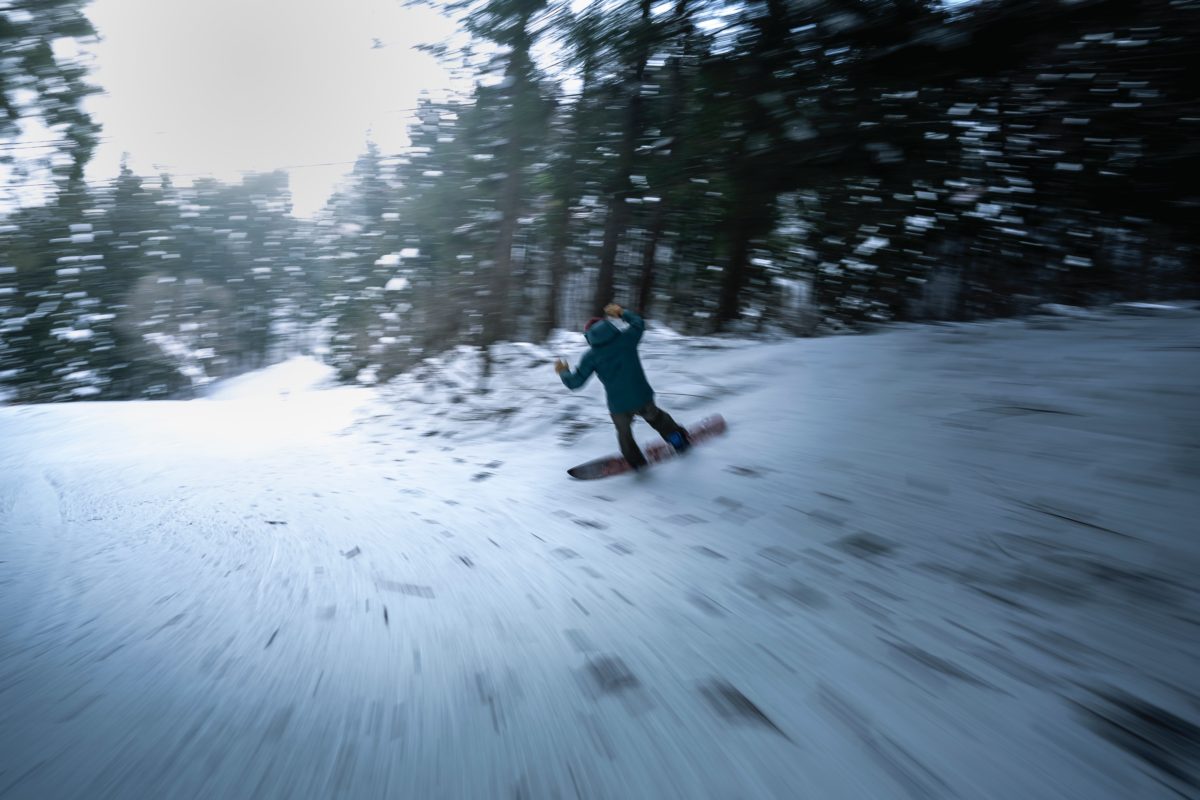
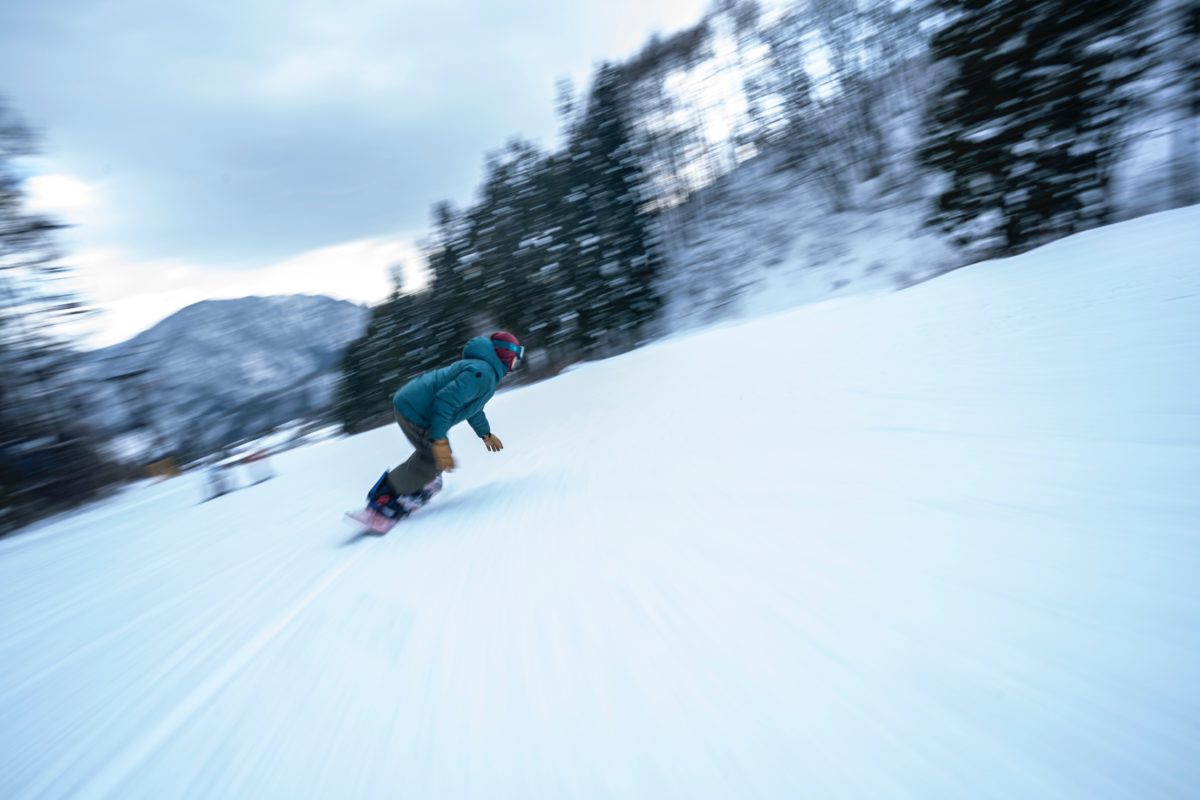
The idea that gentle slopes are boring is a misconception, and I always keep in mind how to enjoy them. If you look closely, even these mellow slopes have subtle undulations. Pay attention to the small banks, the slopes near the rider's right of the course, and the terrain leading to the lift pillars. You can also try things like making lots of turns with short skis or skis with strong turns, and if you get creative with how you play, even gentle slopes that you might have overlooked before will start to look like pretty good courses. The
entire course is in a valley that protects you from the wind, so it's not a problem even when conditions are tough.
The second is the "Highway Course." From the top, you can see the Northern Alps, including the Hakuba Sanzan, Karamatsu-dake, and Goryu-dake, stretching out before you, and it's a viewpoint where you can see Happo and Goryu connected to those mountains.
The first slope from the lift disembarking point is pleasant to ski on first thing in the morning, but it can get hard quickly, so ski with caution. When it gets rough, it becomes quite a challenging slope.
My favorite part is when the course wraps around to the left after the first slope. There's a big regular bank here, and I really love making turns onto it
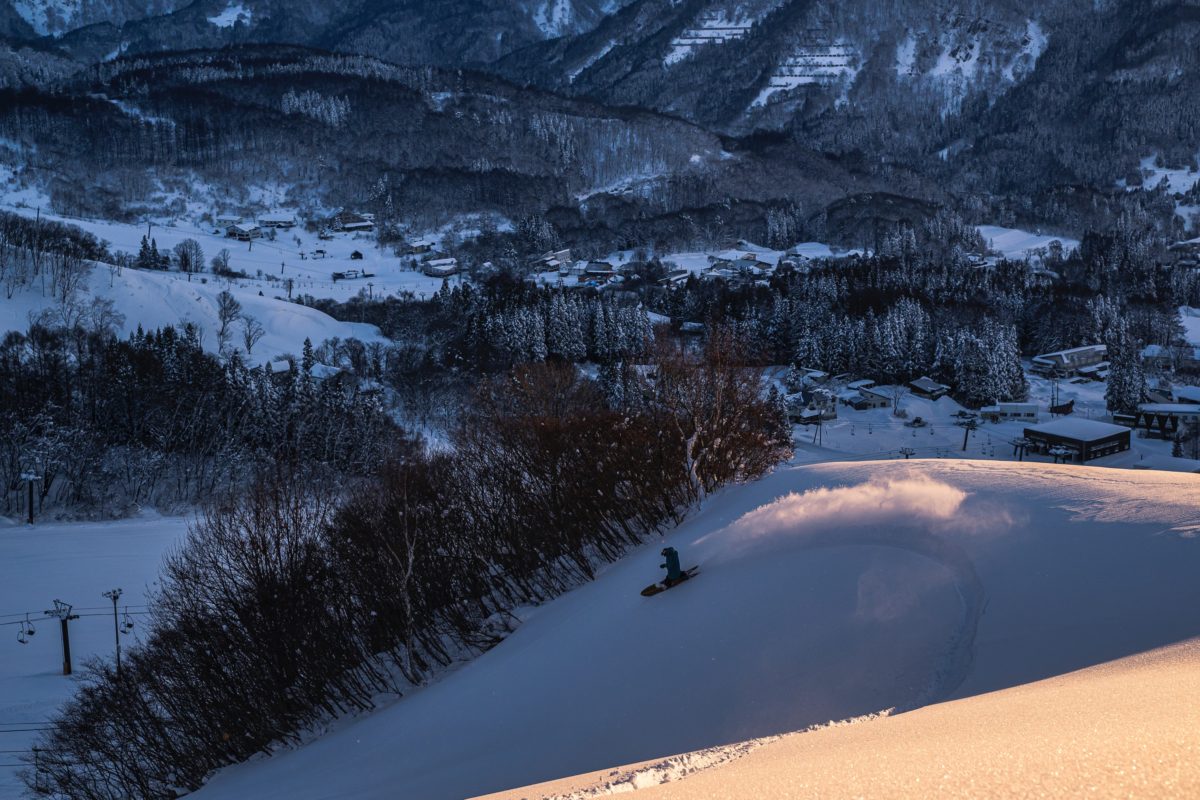
The regular side is a wall-like terrain, so you can slide down to the bottom by hitting it like you're surfing. The slope is a gentle stream with a moderate one-sided slope, and the packed snow is nicely formed, so the toe edge easily bites in, allowing you to maintain the speed to easily hit the next wall and smoothly connect turns. Also, the face, starting with the first large bank, faces north, so it's great because you can trust the snow quality and go all out
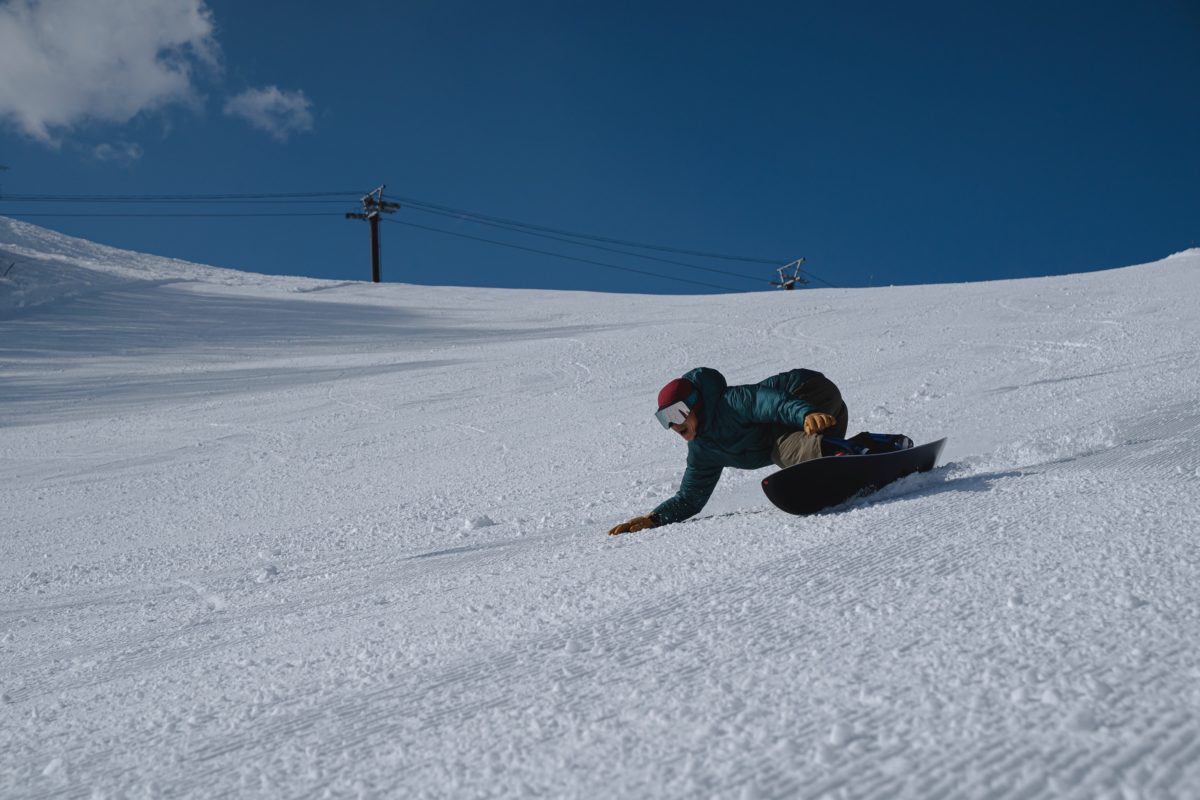
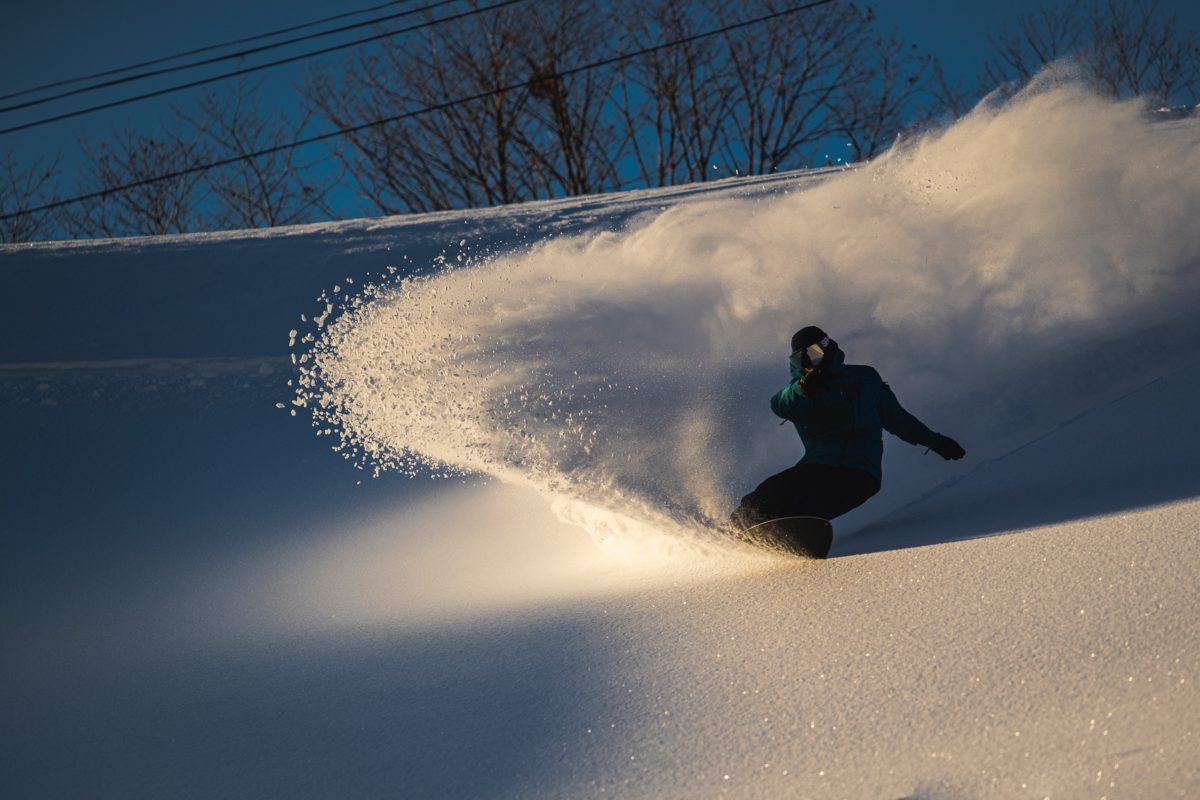
The last course is the "Kamoshika Course." This course runs straight up the ridge from the middle of the highway course, separate from the valley terrain. You can build up speed from the upper part of the highway course, and it's the perfect place for those who enjoy carving on groomed slopes. The narrow course on the ridge widens as you go down, so it's fun to change the arc of your turns as you ski. It's also popular with skiers who like to drop vertically
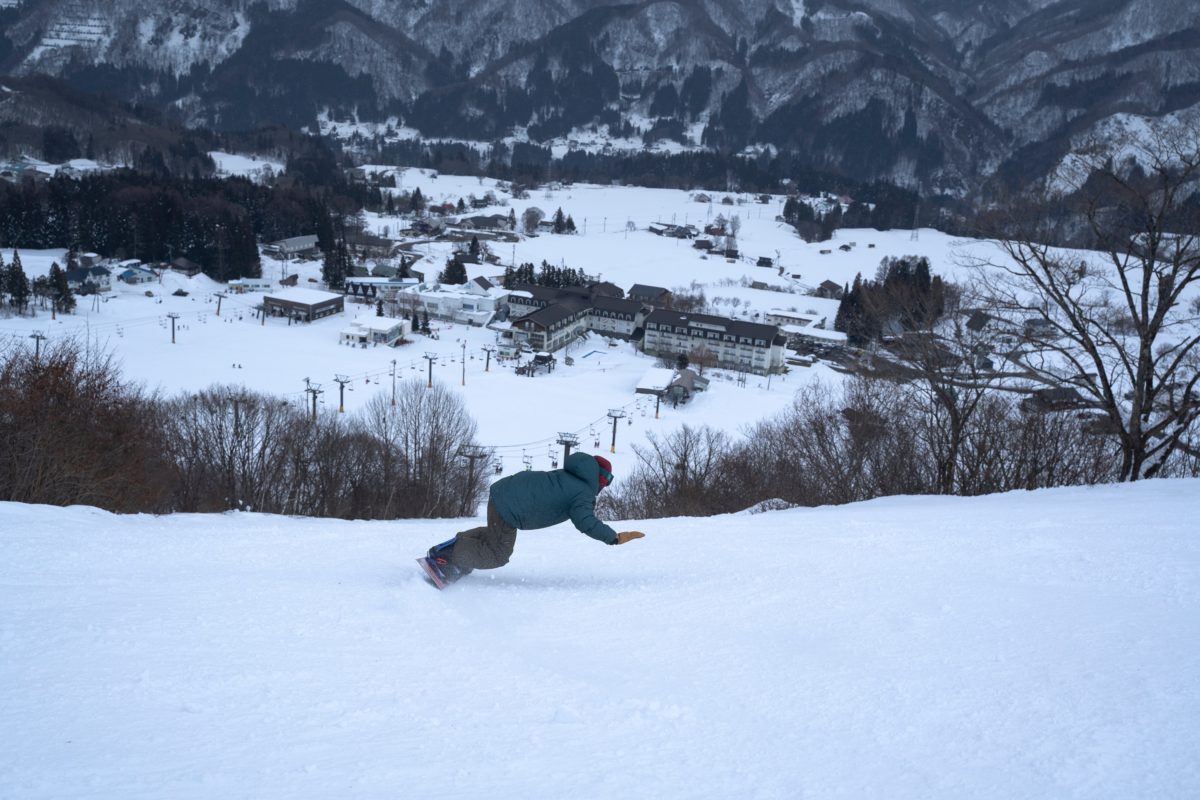
Q. Tell us about the newly installed 11-line lift。
about using the A.11 linewhat Takuma explained last time. The steepest slope is right after you get off the lift. It's definitely a very difficult area. On the north slope facing Cortina, the furthest point is steepest and gradually becomes mellower, but you need to be very careful at the top.
The terrain is prone to avalanches due to the northerly winds that can create wind slabs. The snow is often unstable, so extreme caution is required. If you're at the top, take care not to cause an avalanche, and if you're at the bottom, keep an eye out for avalanches from above
There is a route that leads to Oyasawa on the Tsugaike side, but it involves a lot of lateral movement, so you could get stuck if the snow is too deep. Don't go in alone; accompany a skier or be sure to bring poles
The area accessed by lift 11 is an unmanaged mountain area. To be frank, it is a place only accessible to those with serious backcountry experience. If you think you'll be fine because you're wearing a helmet and carrying avalanche gear, you should practice using your gear before skiing here and learn how to deal with accidents before heading out
Please be aware that this is a lift in a mountainous area
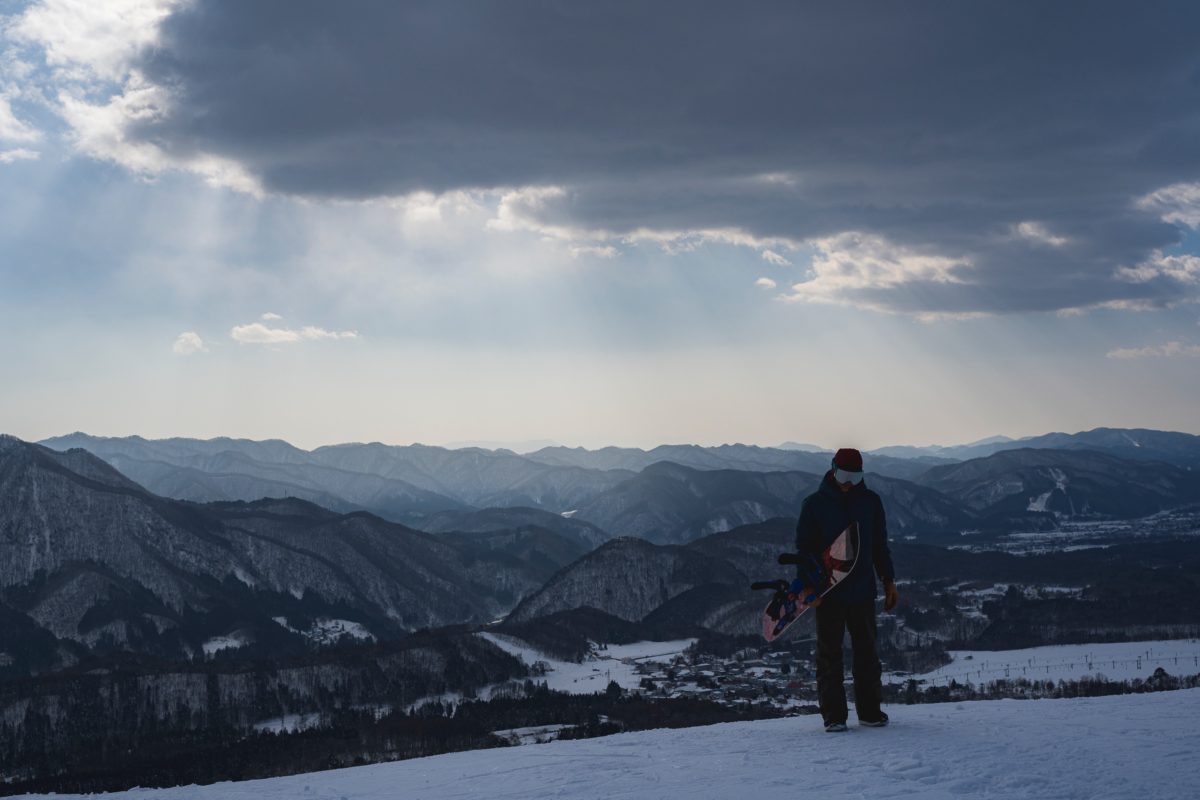
<Person who taught me>
Arata Suzumura
Since the 1990s, he has lived a snowy mountain bum life in North America, seeking waves in Southeast Asia and Sri Lanka when there is no snow. In Japan, he has focused on the Hakuba area, aiming for big slopes. In 2019, he moved to Otari Village and runs the guesthouse "Oyado WOOD," pursuing the mountains and sea with the changing seasons
Born in 1977, from Aichi Prefecture / Currently residing in Otani Village.
Instagram:aratasuzumura
Related articles

■Information
Hakuba Norikura Onsen Ski Resort
399-9422 Nagano Prefecture, Kitaazumi District, Otari Village, Hakuba Norikura Plateau
Official Website:https://www.hakunori.com/
Official Social Media:Instagram|Facebook|YouTube