

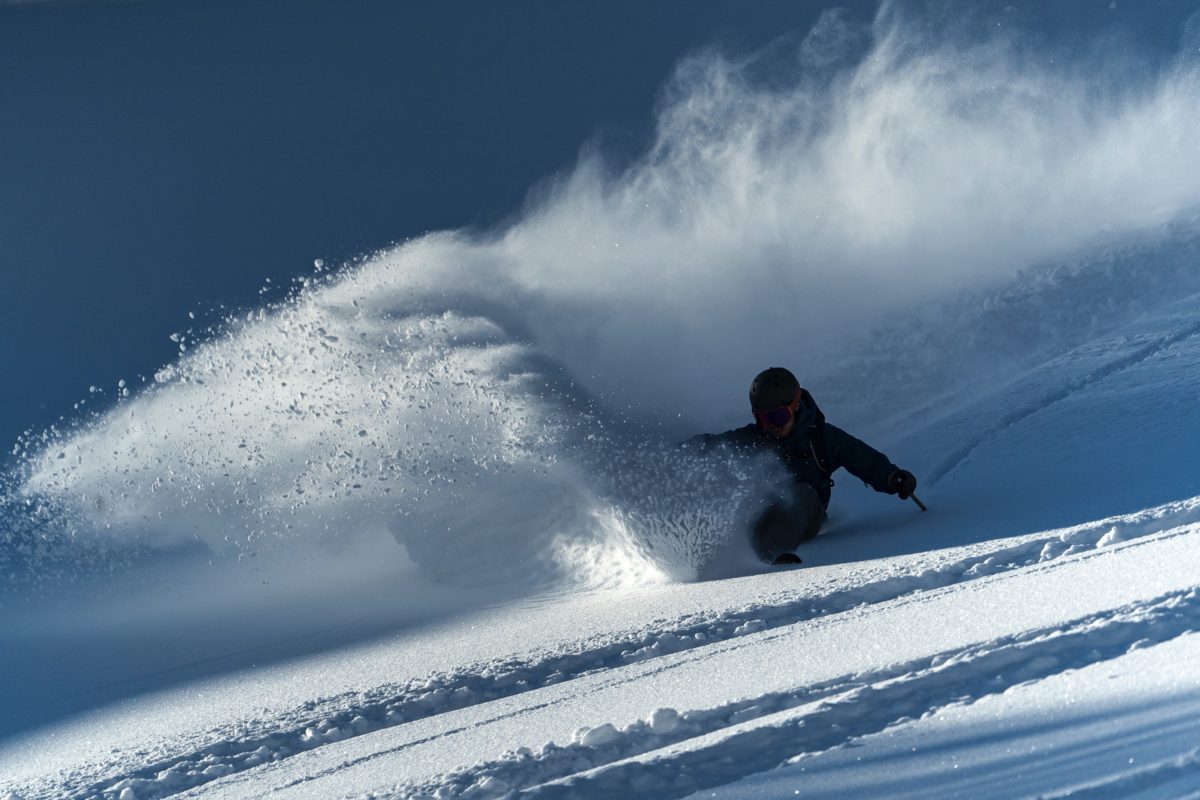
Hakuba Norikura Onsen Ski Resort is located in Otari Village in the northern part of HAKUBA VALLEY. Stretching from north to south, the ski resort's individual runs aren't long, but there's a reason it continues to attract dedicated skiers. Oike Takuma and Suzumura Arata, who continue to ski here, talk about the appeal of the ski resort and show us their favorite runs
Photo/ Go Ito
What kind of place is Hakuba Norikura Onsen Ski Resort?
Hakuba Norikura Onsen Ski Resort (hereafter referred to as Hakunori) is located in the northern part of HAKUBA VALLEY in northwestern Nagano Prefecture. As its name suggests, Wakaguri Onsen is located just at the foot of the ski resort, and its hot, brown-red waters are perfect for soothing your body after skiing
Otari Village has a particularly high amount of snowfall even within HAKUBA VALLEY, with an average annual cumulative snowfall exceeding 6m, and it is a heavy snowfall area where it can fall more than 50cm in a day. The cold air that often flows from the Sea of Japan during the season crosses over the Northern Alps, and in this area, the northernmost village of Otari is often the first place to drop snow. This location, with the Sea of Japan about 20km north, is similar to Myoko, a region of heavy snowfall, which is about the same distance to the Sea of Japan. As a result, snowfall often increases by 10 to 20 cm compared to other ski resorts in HAKUBA VALLEY.
The Otari Village section begins around 3:00. Enjoy the abundant snow
This makes it extremely popular with powder-loving skiers. Connected to the north by the Hakuba Cortina Ski Resort, the area that combines both resorts is one of the largest in Japan. Before COVID-19, Kai Peterson used Hakunori as a base for filming for the Canadian movie production MSP, and this season the Jones snowboarding team plans to use it as a base for filming, attracting enthusiasts from both Japan and overseas
Takuma Oike, who continues to ski at Hakuba Norikura, will guide you through the ski resort
Oike Takuma and Suzumura Arata are two people who were attracted to this area and ski resort, and moved to the foothills from other areas to continue skiing. Both have skied mountains both in Japan and abroad, and continue to express their skiing through their work in the form of photography and video. There must be a good reason why they chose Hakunori as their base rather than other areas in HAKUBA VALLEY. We asked them to talk about the ski resort from their own perspectives. First up is the first part, featuring skier Oike Takuma. Check it out along with an image video focusing on the two of them
It depicts people sliding down Hakunori using all kinds of equipment for sliding on snow, including skis, snowboards, snowboards, and snow skates
Q. Please tell us the characteristics of Hakunori in your own words
A. The entire ski resort is wide, with slopes to the north and south of three ridges that extend eastward, centered around an east-facing slope. This means you can choose a slope depending on the conditions. If it's a hard day, choosing the south-facing slope will make it looser and easier to ski on, and on cold days, the north-facing slopes tend to have good snow conditions even if it hasn't snowed
This ski resort is just the right size for a full day of skiing. It's not too big or too small, so you won't get tired easily. At larger ski resorts, the runs are quite long, so your legs might get sore after skiing, but at Hakunori, the runs are quite short, so you can get on the lift and take a break before your legs get tired. The tempo is just right, so you can enjoy every part of the mountain evenly
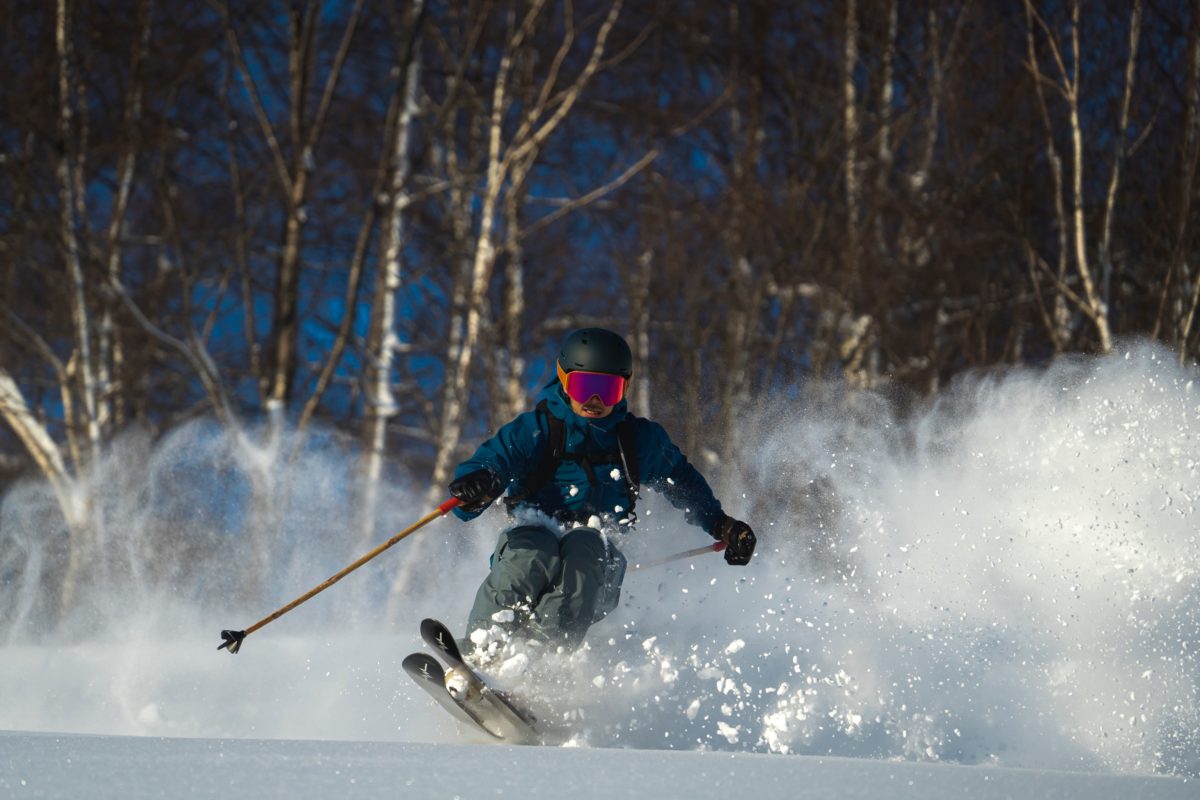
What's more, the terrain has been carved away from each course, leaving few flat, single runs and undulating terrain in various places. Even on gentle slopes, there are subtle undulations all over the place, making it fun to ski while picking out these features. I don't think there are many courses with such exposed terrain on medium to gentle slopes
Even if you don't really understand the fun of skiing, if you let someone ski behind you, they will learn how to find the terrain and how to ski, and they will start to realize how fun it is.This will lead them to visit the ski resort again and again
Q.What is the weather, snowfall, and snow quality like?
A. Sometimes the snowdrifts can pile up to nearly 1 meter in one night. I think the snow quality here is the best in HAKUBA VALLEY. The forest on the north slope, accessible from the newly installed Lift 11, is particularly shaded by the trees, making it easier to preserve good snow conditions. This location also sees heavy snowfall, as snow clouds tend to accumulate. Another benefit is that the elevation is around 1,200 meters, meaning less wind impacts and fewer lift closures. Like other areas, the peak powder season is January and February. In March, there are typically three or four significant snowfalls. Even in April, there are one or two. In the latter half of the season, the snow quality is maintained only in the mornings, so the shelf life is short, but you can enjoy powder for a longer period
Q. What are your three favorite courses?
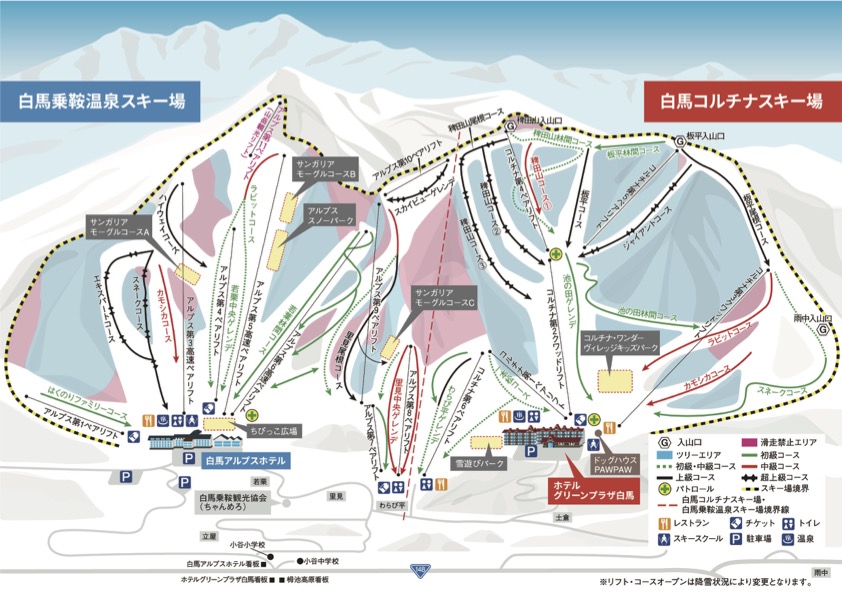
The blue part is the tree area course. You will notice that there are actually a lot of places where you can slide down
A. One is Satomi Chuo Slope. It's right in front of my house, haha. The slope is very gentle and is suitable for beginners and families. However, the slope just bordering Cortina is trackless from the time you get off the lift until you get on. This lift allows snowboards, so I always use them. In addition, the topography of the former pipe remains intact, so it's great fun to ski on a snowboard, snowboard, or snow skates as you can pick up small features with great sensitivity
What's interesting about this run is that, even though it's a gentle slope, the ungroomed snow is wider than the groomed slopes. Isn't that unusual? Especially this winter, you'll often see powder beginners on thick skis getting on this lift and practicing
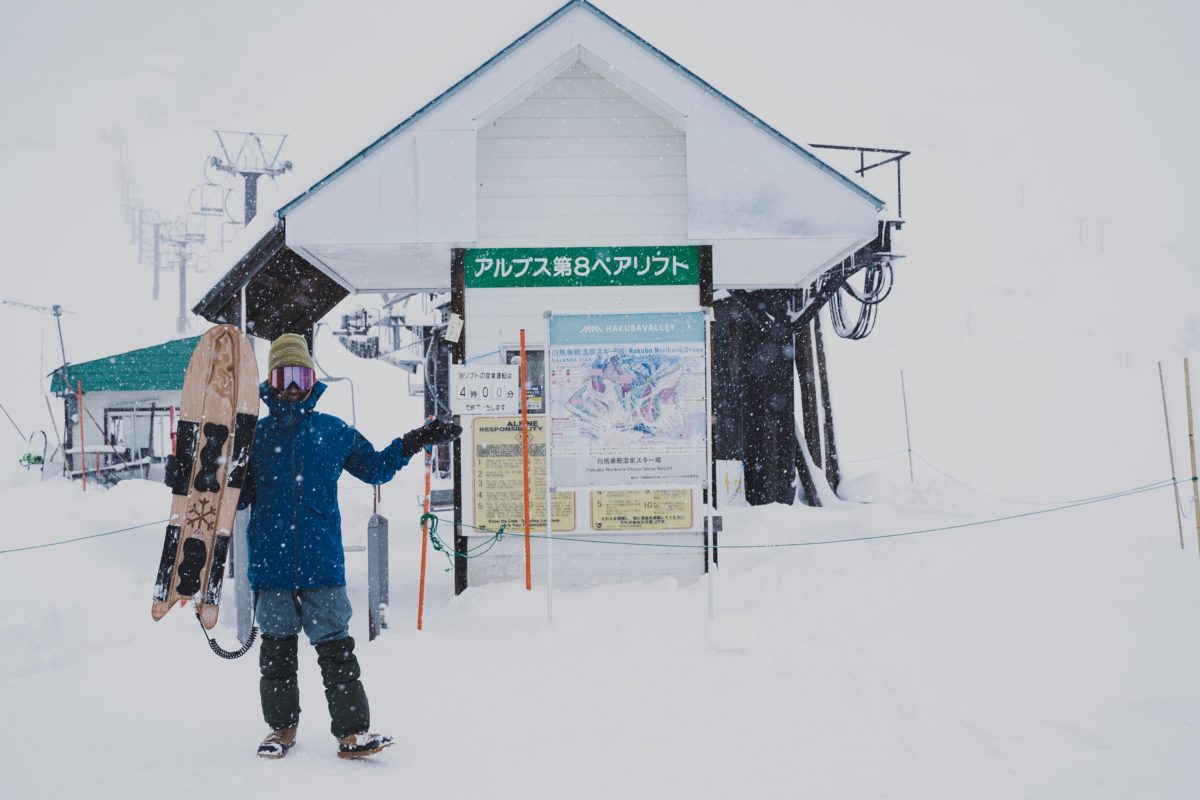
Right in front of the inn we operate. Enjoy snowboarding on the gentle slopes
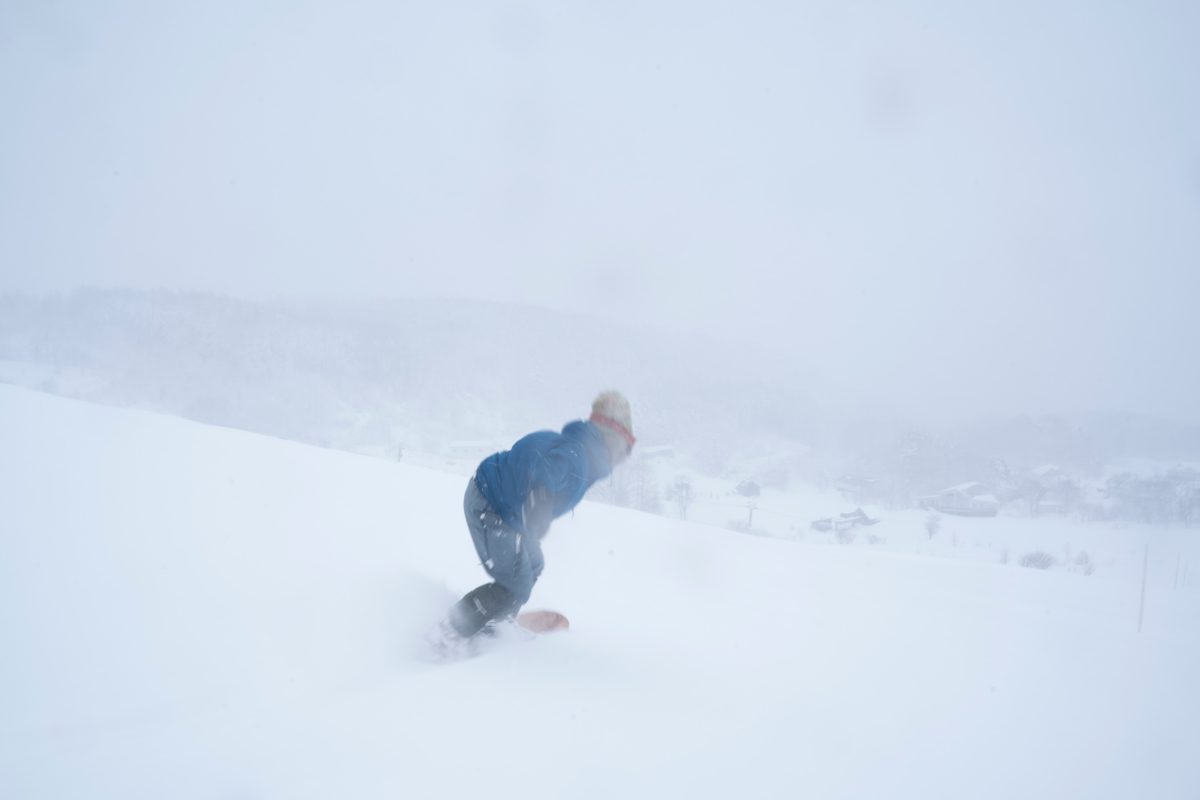
The course has gentle slopes and small undulations, making it enjoyable even at low speeds
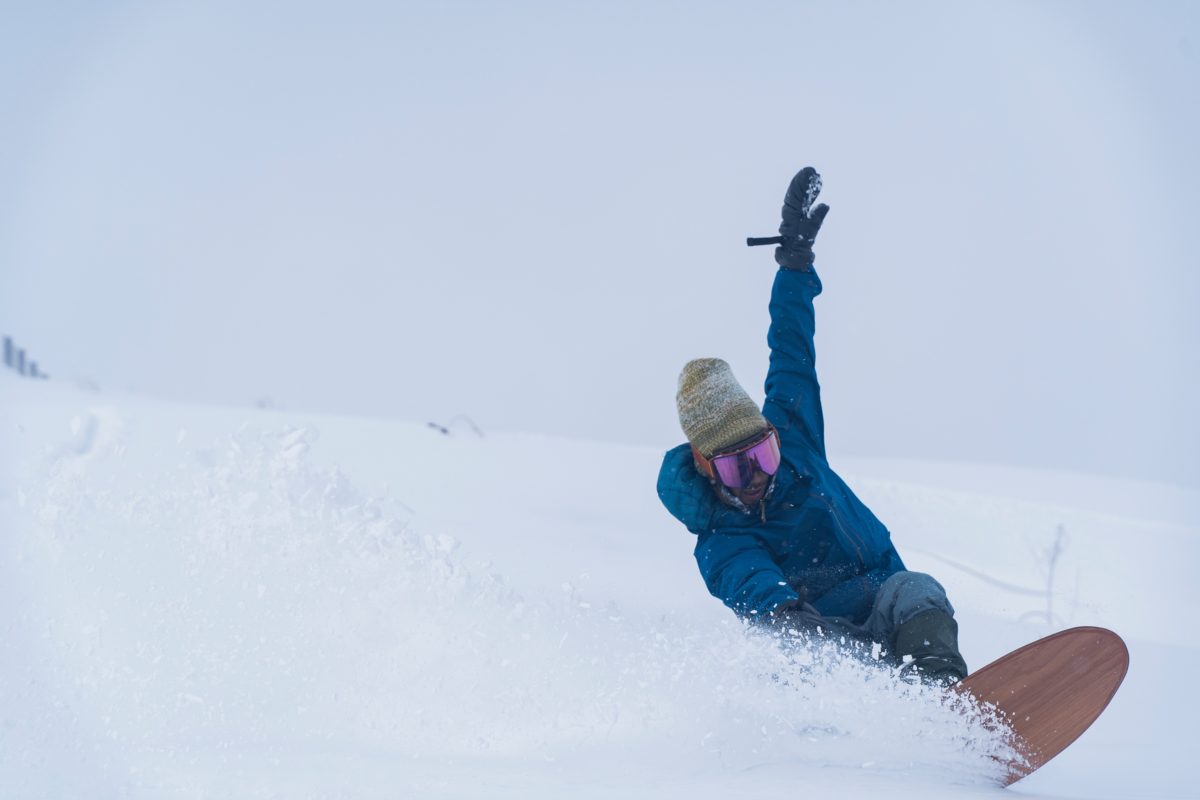
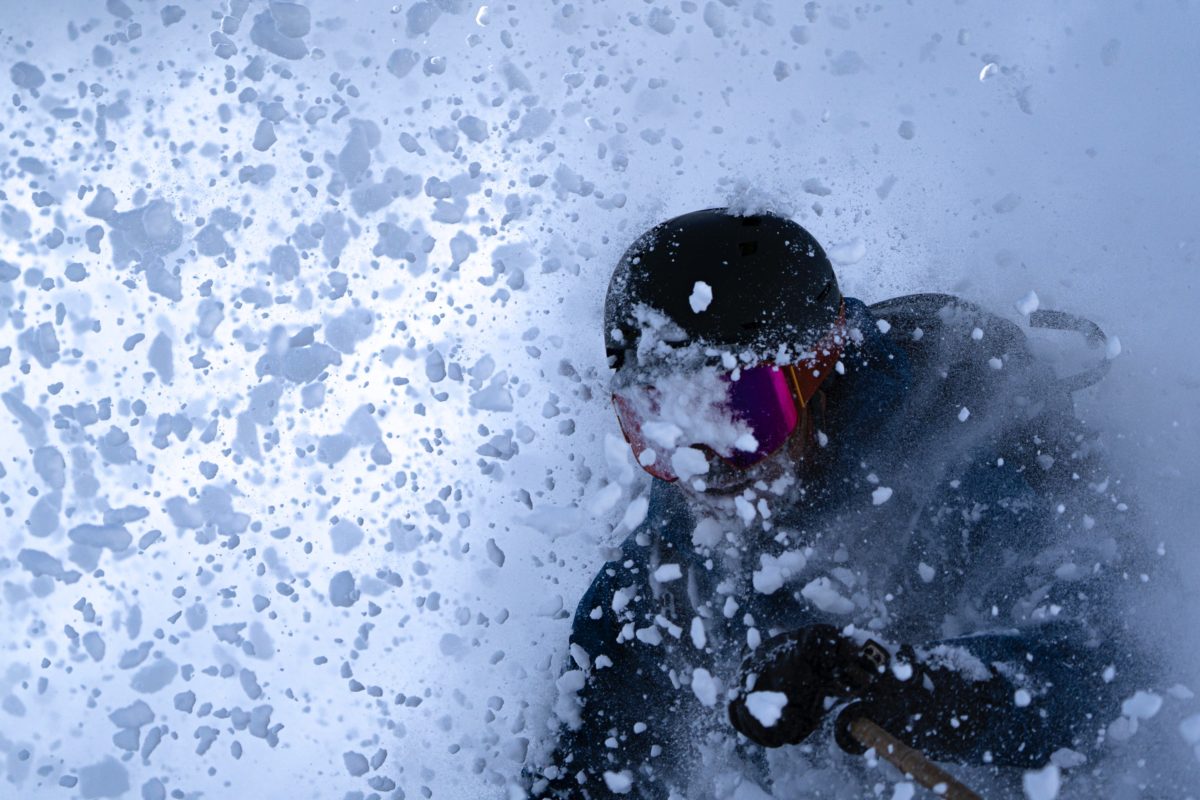
Even though it's a gentle slope, if you can find a good spot and hit the ground, you can enjoy powder snow like the one shown here
The second area is commonly known as "Omusubi." This refers to the area where you can ski down to Wakaguri Central Slope from a detour off the highway course. This layout allows you to fly from a step over a small hill-like terrain and land on the north slope. Even days after the snowfall, the snow is soft because it faces north. You can push yourself a little, so it's perfect for practice. Another plus is that it's natural terrain, not an artificially constructed kicker. The slanted exit makes it quite challenging, and there are various large and small bumps just before it, so it's not an easy ride. However, there aren't many places where you can fly over such natural terrain, so this is a rare find. You can jump from anywhere on the detour, so it's fun to try out different jumps
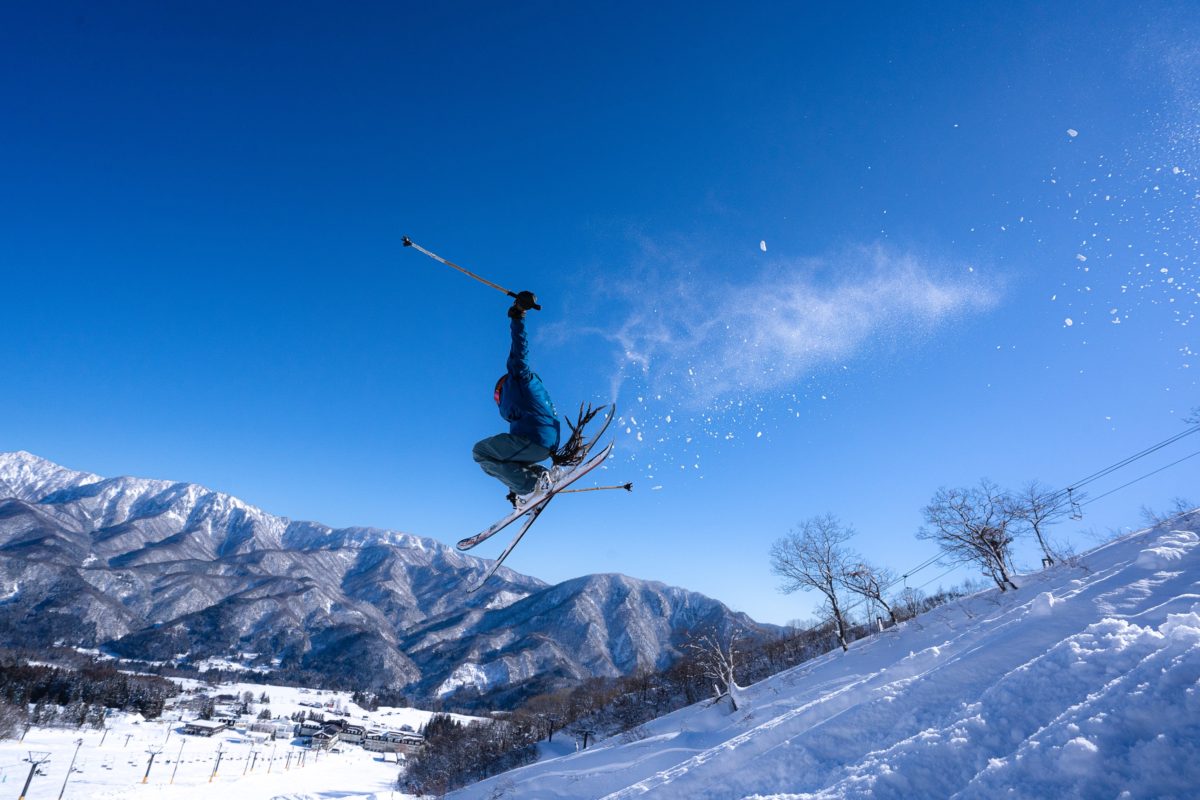
The scenery is beautiful, so it feels good to fly
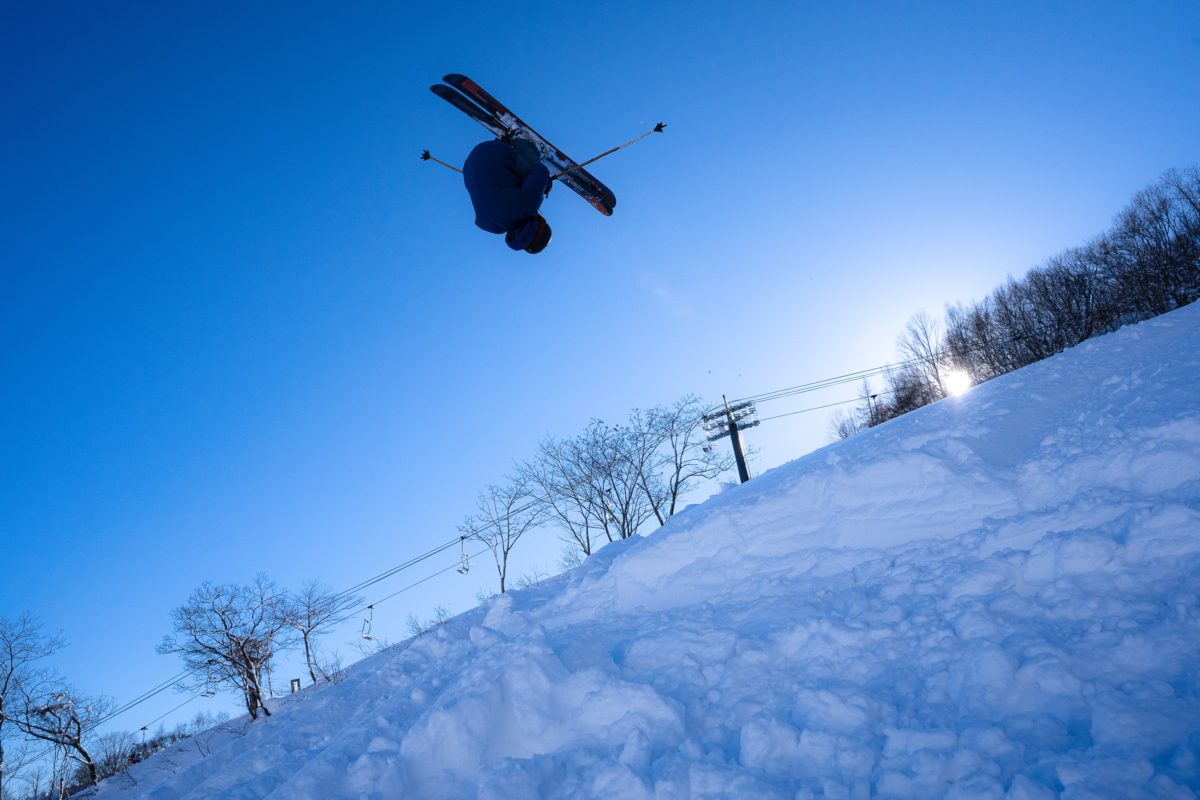
The soft snow puts less strain on the body, making it easy to try new tricks
The third area is commonly known as "Ginga." It's a tree area to the right after getting off the Alps No. 3 High-Speed Pair Lift. This is within the ski resort, but it's not a managed area. Remember that this is the same as backcountry, so be sure to bring avalanche gear with you. It's also important to train in how to use the gear and self-rescue in case of an emergency
This place is on a steep north-facing slope. The trees are spaced just right and there are mash scattered around. My favorite spot is the big mash in the middle of the middle section, where I can practice jumping
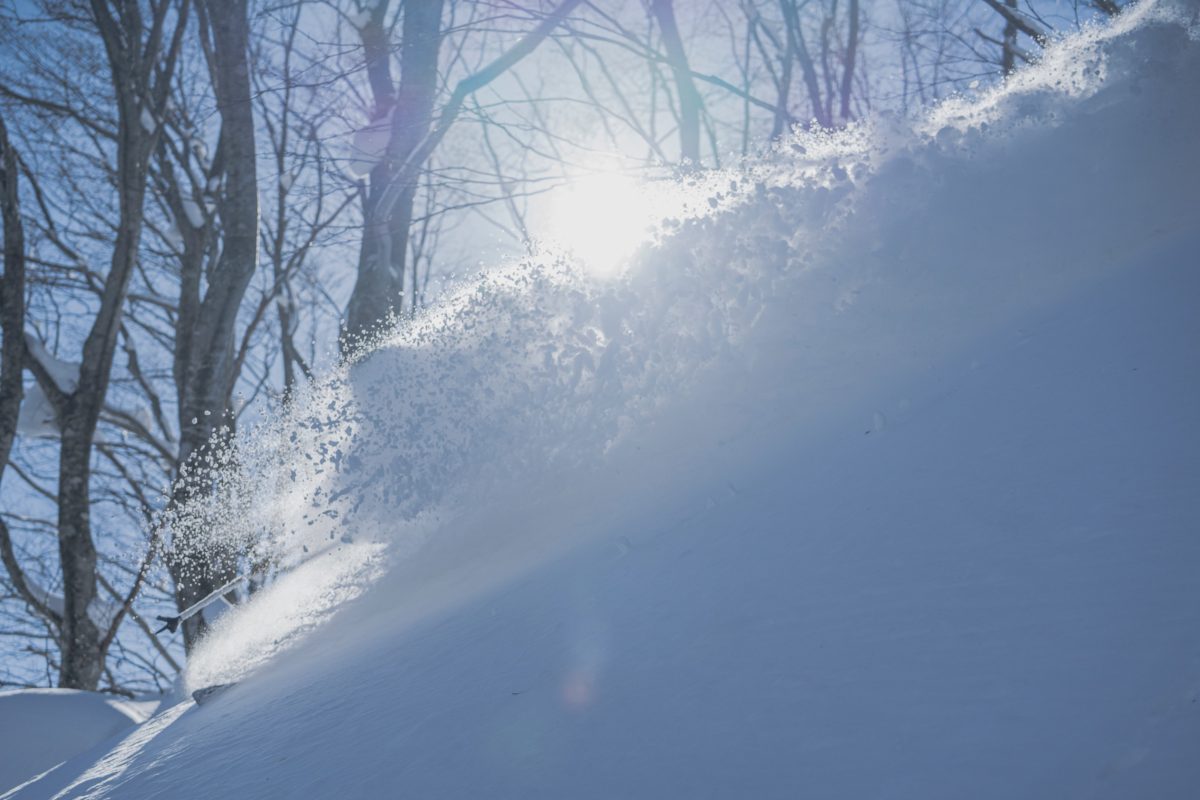
The low temperatures tend to preserve the quality of the snow, so in some places you may find yourself covered in fresh snow
Q. Please tell us about the newly installed 11-line lift
A. Because it is a mountain tourism lift, there are several steps to take before you can board. You must submit a climbing plan (or sign a waiver of liability for the 11th Pair Lift), carry avalanche gear, wear an armband while skiing, and return it after skiing. This means that you will be skiing in a completely backcountry area
There are many risks involved in skiing. Avalanches are a given, but if you take the wrong route you could get lost and stranded. There's also the risk of hitting trees or rocks, falling through the snow into a stream, or being unable to move due to a sudden change in weather. Even though you can access the area by lift, it's important to be fully aware that there are many such risks
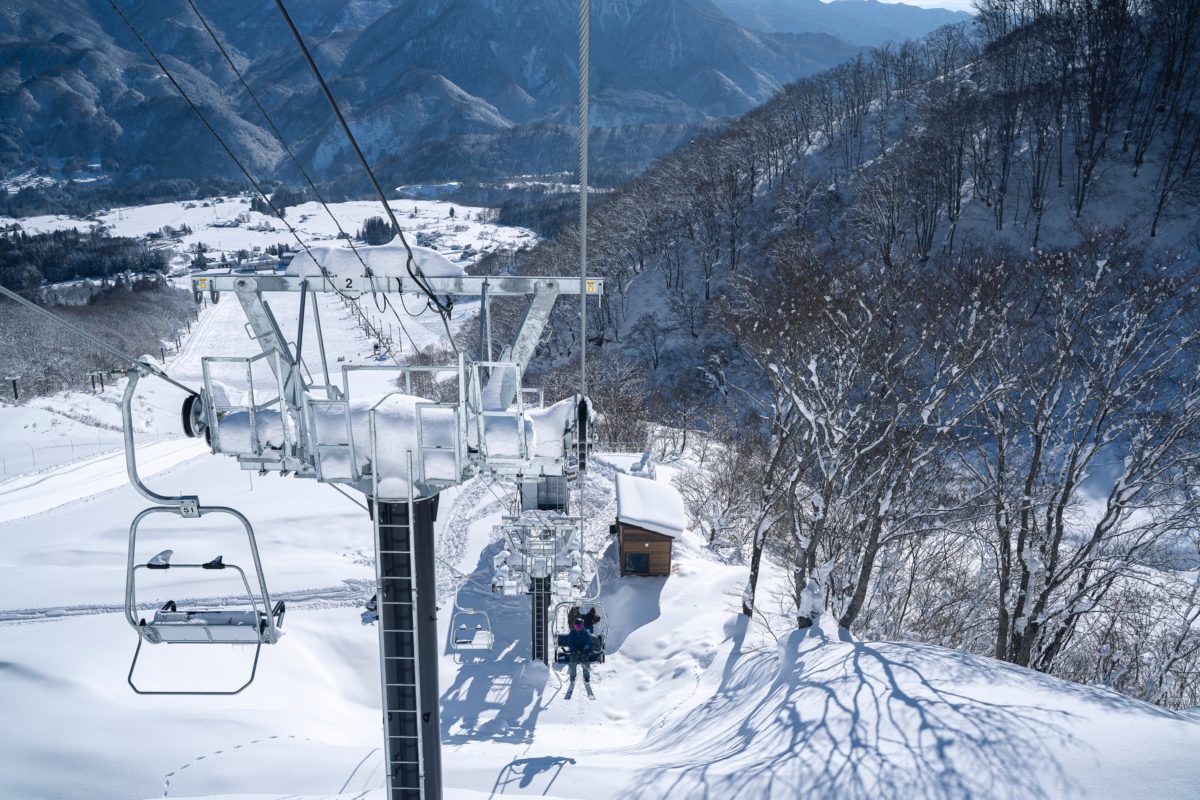
The 11th Pair Lift is located just off the 5th High-Speed Pair Lift. It ascends in altitude along the mountain range
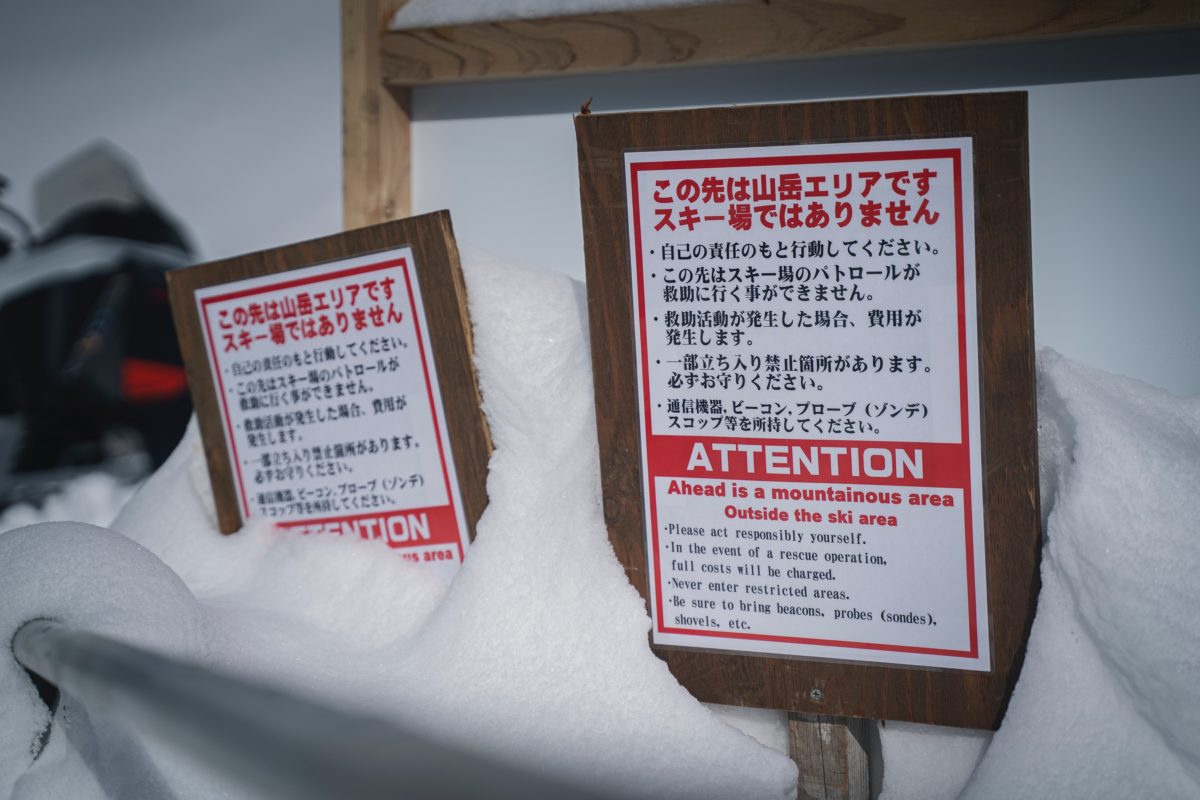
There are many warning signs at the lift station. If you don't have any equipment or a permit, you can ride without skiing gear
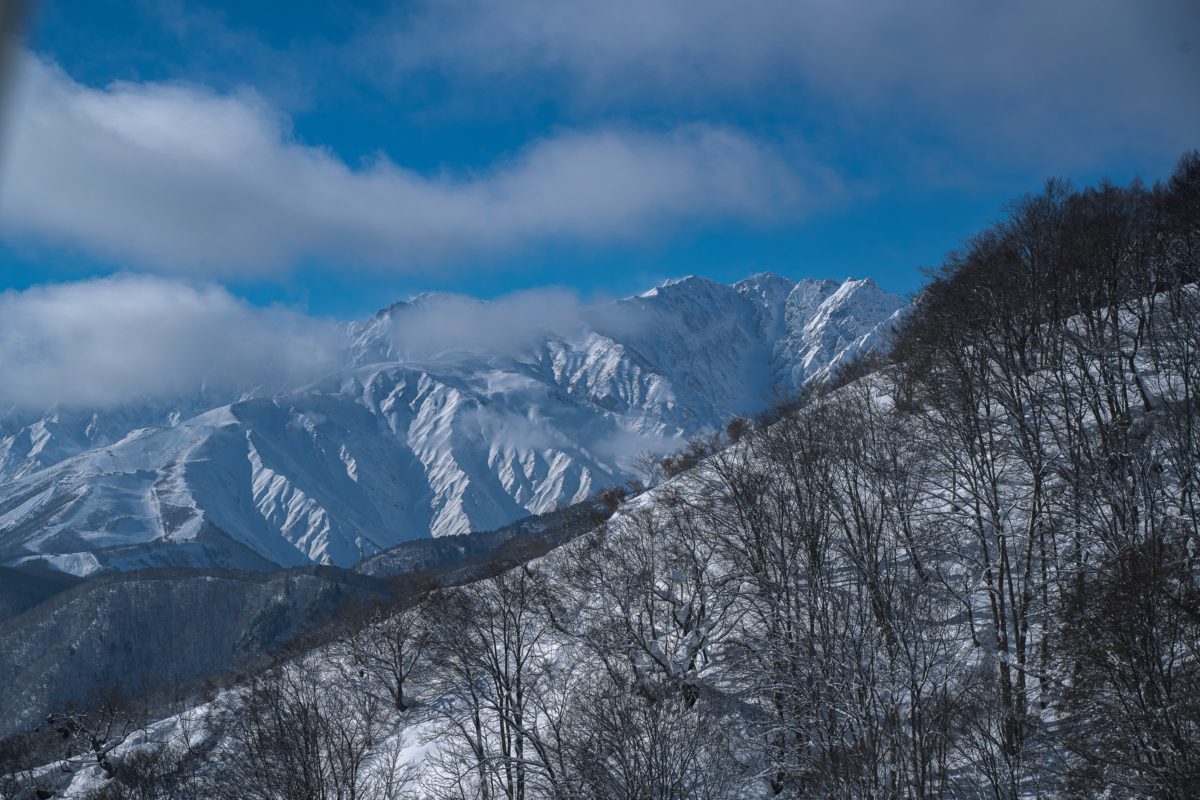
From the top of the lift you can see the entire Northern Alps, and on clear days you can enjoy a spectacular view
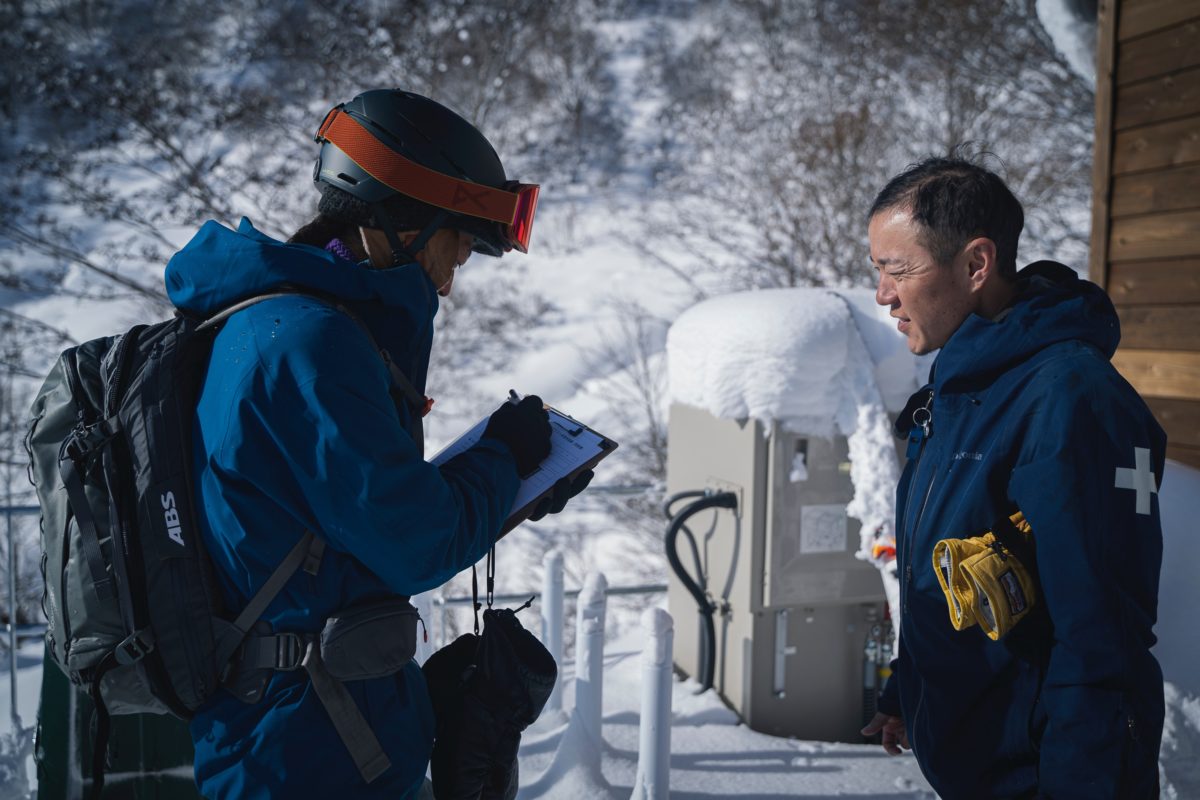
The consent form can also be filled out at the lift station
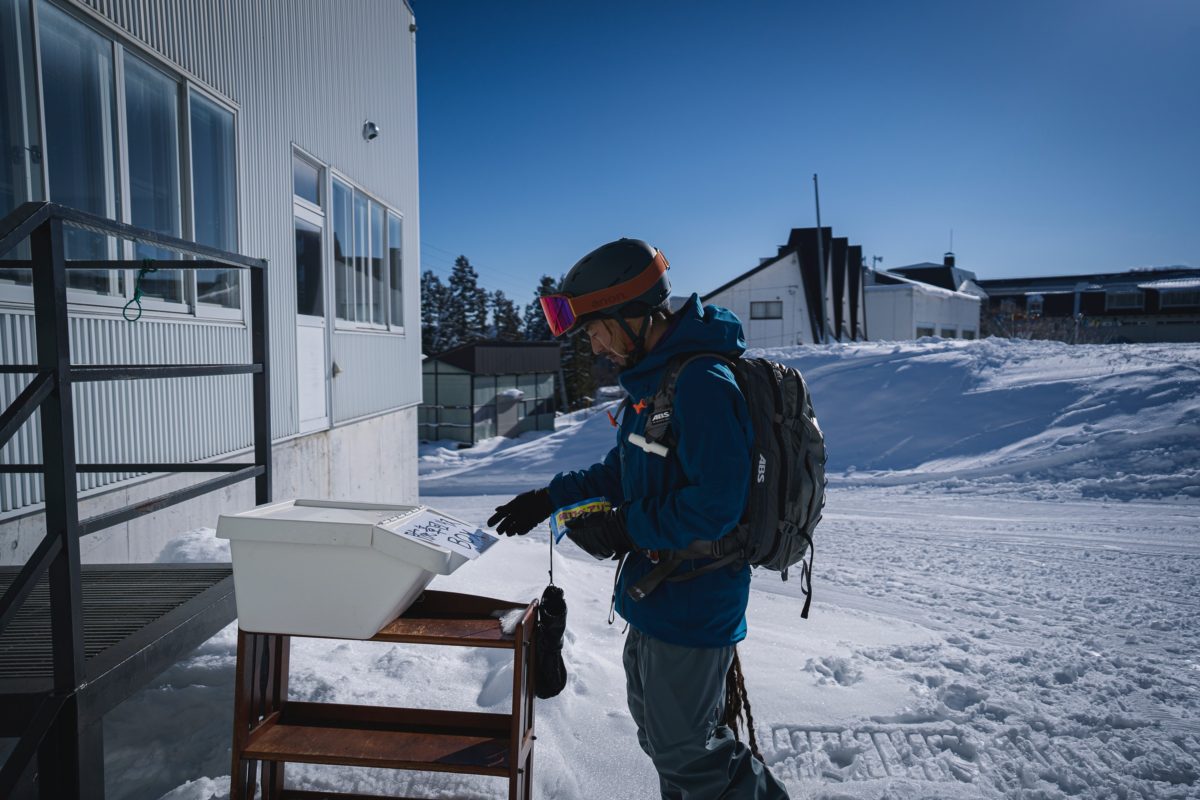
After skiing, please return the armband that shows you have permission to ski to the return box next to the patrol hut
The slope we skied on was a north-facing slope with a continuous ridge and valley, and there was a forest on it. The slope was a stream all the way down, with very few flat areas. The further down we went, the more the ridges branched out, making the stream more complex, and there were waterfalls and the streams got deeper. So even if we weren't skiing, if an avalanche occurred at the top, the snow would be sucked down to the bottom, leaving no place to escape. The stream was so deep at the bottom that we couldn't see the ridge even when looking up from below, so we needed to be particularly careful when passing through
The steep valley terrain is lined with giant trees, which means that the area is less exposed to sunlight and the snow quality does not change much. This is one reason why the snow is of high quality, but it is important to remember that this also means that avalanche conditions are less likely to improve
The "Ura Col" backcountry area in Cortina, which serves as a comparison, is a southern slope with a gentle ridge-like terrain covered with trees. Although it shares the commonality of being a tree run, it is completely different from the slope accessed from the 11th line
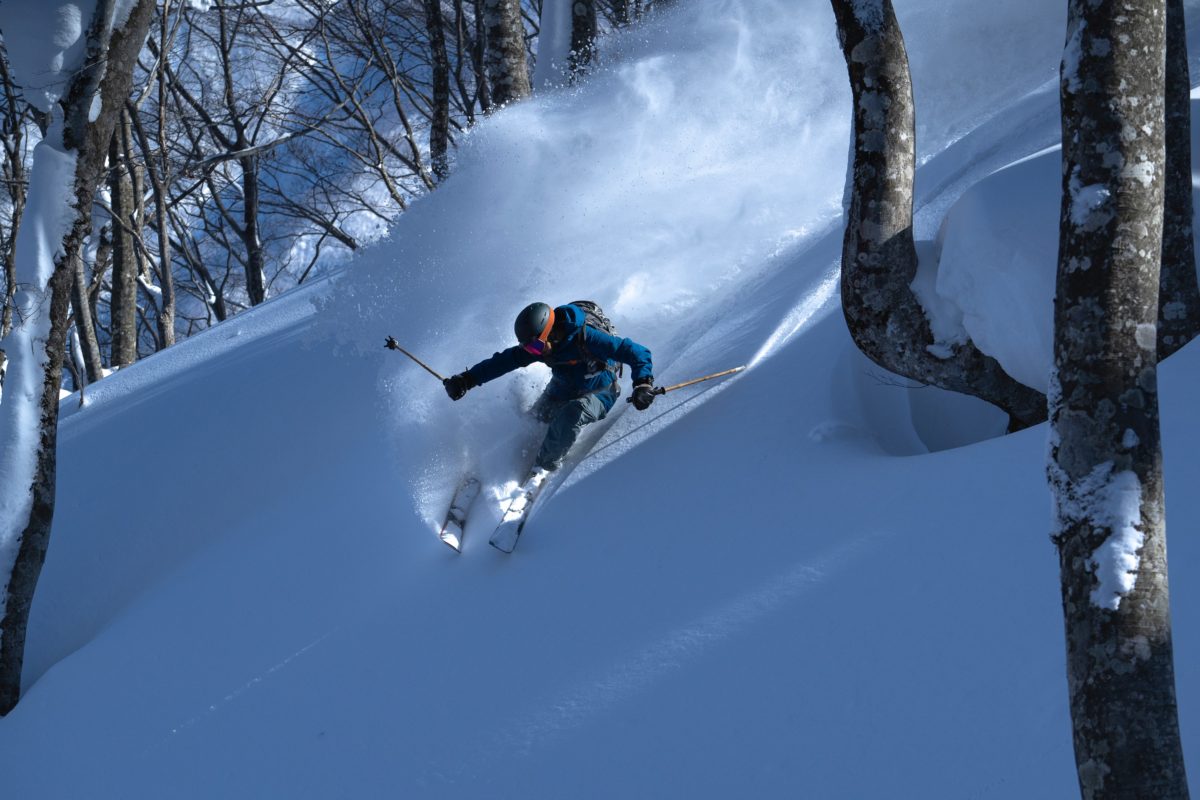
Located in the forest on the north slope, accessible from the 11th lift. Please be aware that this is a backcountry area and be prepared before you enjoy it
If you're riding the 11th line and skiing here for the first time, I highly recommend going with a guide, as they can suggest interesting spots based on your level and help reduce the risk of avalanches and other dangerous situations
<The person who taught me>
Takuma Oike
Having experienced various ski scenes, from basic skiing to mogul skiing and freeride, he now spends his days skiing in the mountains of Hakuba. Based in Otari Village, he runs Lodge Chamingo at the foot of Hakuba Norikura Ski Resort, while also devoting himself to photography. At the same time, he hosts freeride competitions, spreading the joy of skiing and nurturing the community of skiers that has been born there
Born in 1984 in Hokkaido/Currently living in Otari Village
Instagram: takuma84.ooike
Related articles are here

Hakuba Norikura Onsen Ski Resort
〒399-9422 Hakuba Norikura Highlands, Otari Village, Kitaazumi-gun, Nagano Prefecture
Official Website: https://www.hakunori.com/
Official SNS: Instagram | Facebook | YouTube