

The Japan mogul team, which is said to be "the strongest in history", is challenging the Beijing Olympics. What kind of slip will you show on the stage of the Olympics? Let's take a look at the Japanese men's and women's moguls who are highly promising gold medalists. Check out the 2021-2022 World Cup competition video that predicts the fate of the Olympics!
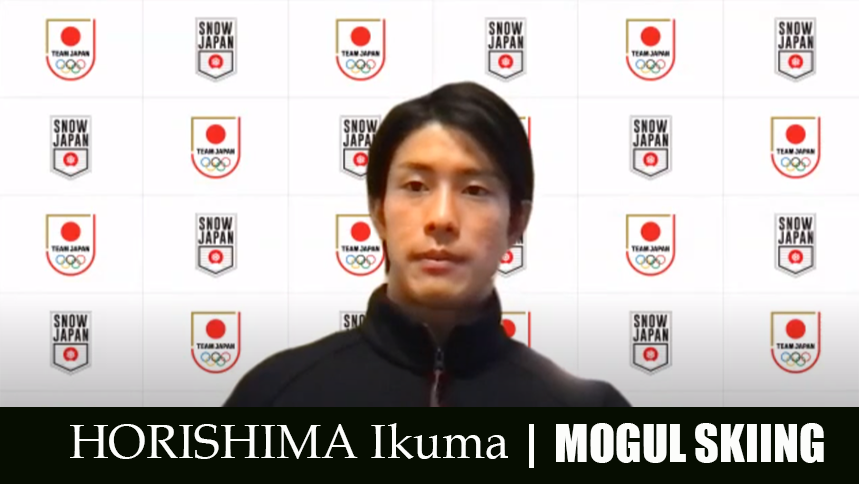
HORISHIMA
Ikuma
Although he was highly expected to win a medal at the PyeongChang Olympics, he ended up in disappointing 11th place after an unexpected fall. He is eager to get revenge and is currently performing well in the 2021-22 Olympic year. He has won three of the seven World Cup races. He has consistently shown consistent skating, always standing on the podium, and even won the World Cup just before the Olympics. With his outstanding presence, he leads the Japan Mogul Team as the ace, and is considered a strong contender for a gold medal at the Beijing Olympics
☟By the way, this is Horishima Yukima's Instagram. He has a winning smile even at the competition just before the Beijing Olympics. He's in top form heading into the Olympics.
@ikuma1211
■ Profile
| Date of birth | Born December 11, 1997 |
| where one is from | Ikeda Town, Gifu Prefecture |
| Affiliation | Toyota Motor Ski Club |
| Major history in recent years | '21-22 World Cup Tremblant Tournament Moguls 3rd place / Alpe d'Huez Tournament Moguls 1st place / Idre Tournament Dual Moguls 2nd place / Luca Tournament Moguls 1st place '21 World Championship Dual Moguls 3rd place '20 World Cup Ka Tournament Moguls 1st place '18 Pyeongchang Olympics Participation |
| used gear | Skis : ID one |
| @ikuma1211 |
■ Horishima Yukimasa - Skating video
Yukimasa Horishima, who never stepped down from the podium from the first World Cup race of the season to the tournament before the Olympics, won the moguls at the Deer Valley Championships just before the Beijing Olympics
This season, Horishima Yukimasa is in a fierce battle with M. Kingsbury, the gold medalist at the Pyeongchang Olympics and known as the absolute champion, without giving an inch. It is almost certain that the gold medal battle at the Beijing Olympics will be between these two. Let's take a look at the skating of these two world-class skiers in this season's dual moguls competition!
■ Comment on the “online press conference to decide representatives” just before the Beijing Olympics
With the Beijing Olympics just around the corner, the All Japan Ski Association held an online press conference to determine the Japanese representatives. We present an excerpt from the video of athlete Yukimasa Horishima's comments. "Q" is a question from a journalist
January 23 (Sun) 19: 00-19: 30 Representative decision online press conference
Q. This is your second Olympics, and you've achieved your best results in the World Cup. How do you feel now?
- There were seven mogul events in the World Cup before the Olympics, and I managed to reach the podium in every one of them. My bare minimum goal for this Olympics was to win a medal, so I feel like I've made a solid preparation for that.
Q. I think there are many reasons for your excellent results this time, but I have the impression that the stability of your turns has improved considerably since four years ago. Is there anything you are particular about when it comes to turns?
- My particular focus is on carving turns, and it's only in the last two or three years that this technique has been recognized by the world and the judges. I've improved a lot, so I want to confidently show off the parts that have earned me recognition.
Q. I imagine your family won't be able to come from Japan to support you this time. How do you feel about that?
- Looking back, there were 20 or 30 people who came to cheer you on in PyeongChang, so thinking about it now, I feel a bit lonely without that. Even though there will be no support in person, people still send me messages of support on TV, even in this situation, and messages of support from across the screen are very encouraging.
Q. What are your goals for the Beijing Olympics
? It's not about results, but at the PyeongChang Olympics we weren't able to take a group photo, but in Beijing I hope we can all take a photo in front of the emblem.
Q. I think Kingsbury will be your biggest rival in competition, but what kind of person is he to you?
- Kingsbury was already world champion when I started competing in the World Cup, and we started competing together from there, and he went on to win a gold medal in PyeongChang. He's a little ahead of me, but now we're competing on the same stage, and he's a huge inspiration to me, and he's a player who's always been winning, so just being able to beat him is worth it, and he's an athlete who's achieved things that no one has ever done before, so he makes me feel like "there's still more to come," and he feels the same way, so I think we inspire each other and improve each other.
Q. What do you think will be the key to success at the Beijing Olympics?
- On the Olympic stage, everyone is looking for the world's best skating, the world's best technique, the world's most beautiful performance, and so when comparing the two of us, I think the question of who is more deserving of the title of world's best comes down to the beauty and power of their performance, so it's all about how to present the world's best skating, taking into account the venue, atmosphere, and judges. I think what I'm lacking is beauty, so if I can express that, I think I can win.
Q. What does "good skating" mean to you? If you had to give it a name, what would it be?
-- That's quite difficult to answer (laughs). For example, I think that perfect performance, like gymnast Uchimura's perfect landing, or the Kobachi trick on the high horizontal bar, where the feet are perfectly stretched out, is what we performers need, so I think that kind of perfect skating is what I consider to be "good skating."
Q. Uchimura is often referred to as "the skate of a champion" or "the skate of a king," but is that what you imagine?
- It's a result, and the moment you skate perfectly, if you win, I think that becomes the skate of a champion, so if you skate perfectly, you can see the king, and I think that's how you'll be named.
Q. At the PyeongChang Olympics, I believe you used a double full for your first air, and I think you have the ability to perform well with a double full and a cork 1080, but this season you're doing a full twist for your first air. Please tell us why you're reducing the difficulty of the move while still prioritizing perfection, and what areas have you improved since PyeongChang
? Due to the nature of our sport, if you're in the top 10 after one qualifying run, there are three runs left for the final, but when you get to the final, you go through official training, which narrows it down from 20 to 10, and then you do another run to narrow it down to six, and then you skate one last run, and the result is decided by that run, and the field is narrowed down like a deathmatch, so one of the characteristics of our sport is that you can't make a single mistake.
In this situation, the chances of successfully completing three jumps in a row become lower, so I feel frustrated that I can't attempt any big tricks under these rules. However, I think that the athletes who win in mogul skiing do so consistently without taking too many risks, so if I can improve my level of consistency, that will lead to winning, so I'm practicing that
Q. You said that at the Pyeongchang Olympics, you gave up your days off and pushed yourself mentally and physically in pursuit of the gold medal, but this time you said you wouldn't give it your all until the Olympics. How is your current training volume compared to four years ago? How do you plan to step up your game after the World Cup? Before
the start of this season, my goal was to have a body that doesn't tire, or rather, to reduce the amount of training I did in the first place. There were times during official training where I didn't skate a single run, and even during competitions, I limited myself to one run instead of the usual two. I've made the minimum adjustments I could to get to this point. Thinking back to the Pyeongchang Olympics, I think I'll be able to enter Beijing in a very recovered state. I won't be competing in a fatigued state, so I plan to give 100% of my effort to each of the four or five runs in the competition.
Q. What are the final adjustments you need to make to become Olympic champion?
- With three wins out of seven races this season, I'm in sight of a gold medal if the Olympics were held, and I'm very satisfied with my performance at this point, so what I'll be working on in the remaining time is to further refine my full twist, and to improve my second air, the cork 720, which I use in the qualifying rounds, so that I can improve my ranking in the qualifying rounds and manage the match better. If I can be even a little more conscious of the small details, I think I'll be able to take on the Olympics with a new mindset, and I think my chances of winning will increase again.