

This series will provide detailed and enthusiastic commentary on Japan's ski resorts from various perspectives. This time, we will focus on snowmobiles in the second part. In the first part, we gave a general overview of the basics of snowmobiles, but in the second part, we will introduce some trivia
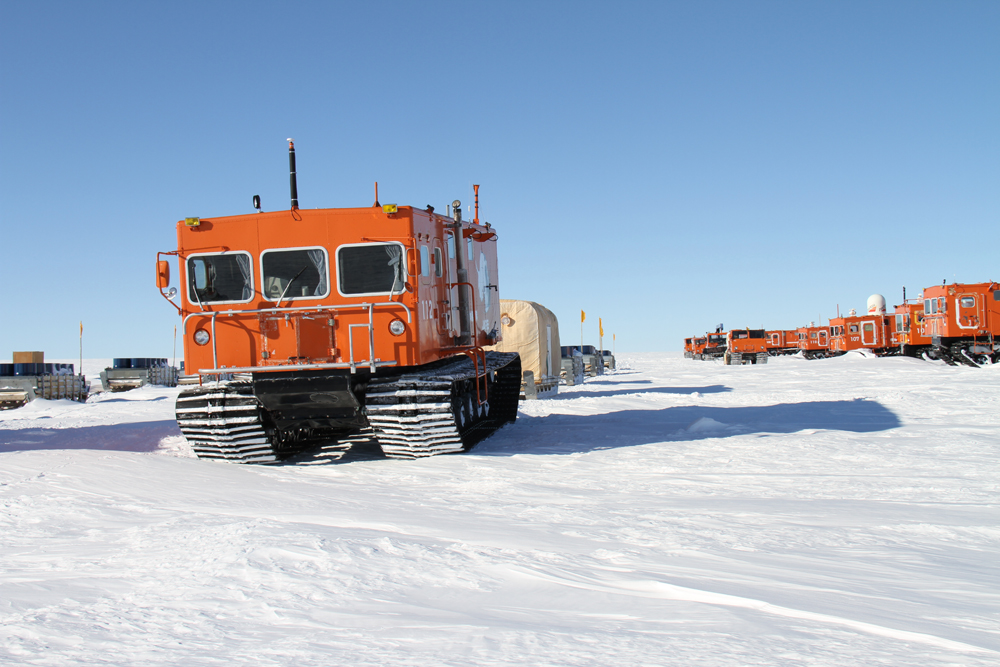
1. Snowmobiles can even travel to the ends of the earth
Developed Japan's first snow vehicle
Ohara Iron Works is a long-established manufacturer (hereinafter referred to as Ohara) with its headquarters and factory in Nagaoka City, Niigata Prefecture, a region known for its heavy snowfall. The company engages in a wide range of manufacturing businesses, including recycling plant equipment, biogas power generation equipment, and sewage treatment equipment, but it also has a long history in the manufacture of snow vehicles.
In particular, in the field of snow vehicles, it is known as a pioneer that successfully developed the first snow vehicle in Japan, and its vehicles have been adopted by the Japanese Antarctic Research Expedition.
It all began in 1951, shortly after the end of the war, when the then Governor of Niigata Prefecture asked us to develop a snowmobile to help stabilize the lives of people in areas with heavy snowfall. At the time, the snow removal system in Niigata Prefecture was not yet in place
At the time, Ohara had no know-how in vehicle manufacturing. In other words, they had to start from scratch. Snowmobiles that run on soft snow need to be lightweight, but also sturdy enough to withstand harsh natural conditions. Groping their way around, the first thing the employees at the time looked to for inspiration was the amphibious vehicles of the US military
After repeated trial and error, the first prototype, "Fubuki-go," was completed just four months into development. However, difficulties continued to arise from there. The biggest obstacle was the damp snow that is unique to Japan. Snow would inevitably stick to the drivetrain and tracks, causing them to freeze
After nearly four years of battling this problem, they finally managed to put it to practical use. They made repeated improvements, such as using resin and rubber instead of metal for the suspension to reduce weight, improving durability, and preventing snow from sticking. Ohara's challenge bore fruit, and the car was finally on track
To Antarctica
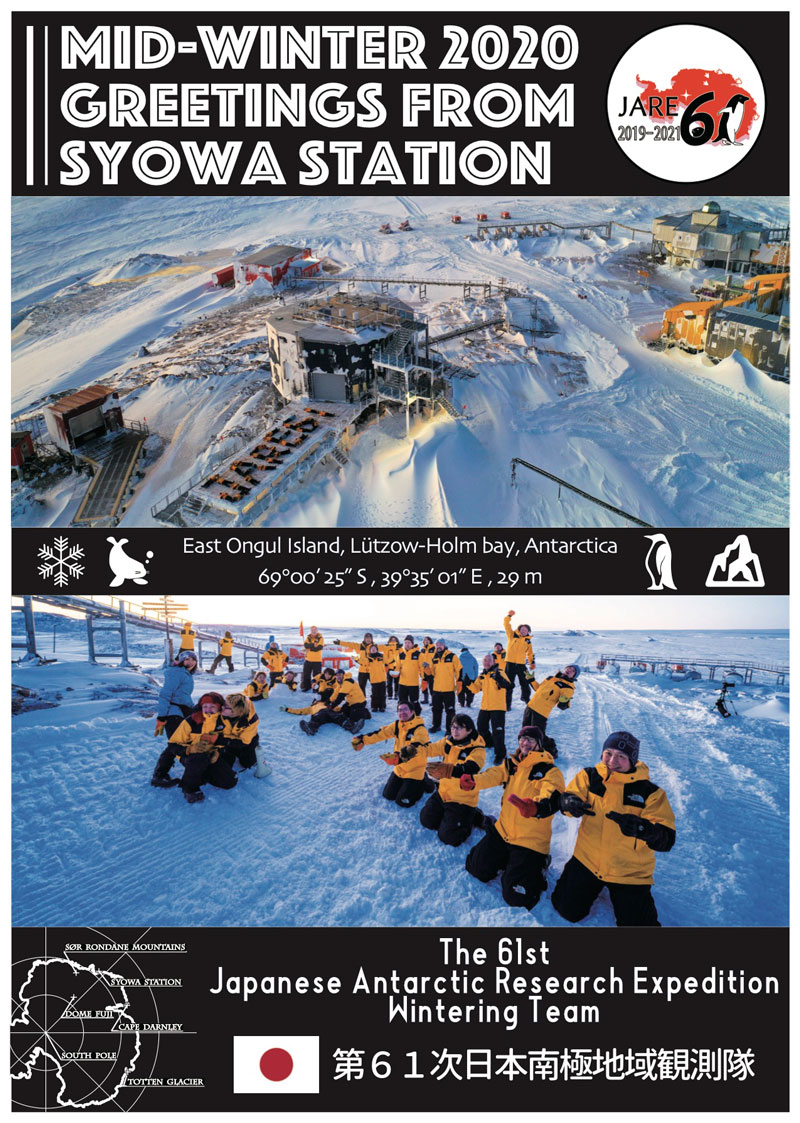
A new turning point came in 1967, when a small snow vehicle jointly developed with related companies was adopted by the Antarctic Research Expedition. This was done without any data on the harsh weather or snowfall in Antarctica
So, what is particularly important when building a vehicle for Antarctica?
The first priority is that it must be unbreakable. Also, even if something breaks, it must be possible to move it to some extent, and it must be possible to repair it with simple tools. In other words, it needs to be as simple as possible. For nearly half a century since its first adoption, Ohara's snowmobiles have continued to function as the means of transportation for Antarctic research teams
At the same time, Ohara also dispatches a maintenance staff member to Antarctica each time. To be precise, he seconded them to the National Institute of Polar Research, where they become part of the expedition team as staff members
If selected, candidates will begin by undergoing training at the National Institute of Polar Research to build up their physical strength. Once there, they will be working in a harsh natural environment. They may have to drive all day in a blizzard across endless snowy fields
To the ski resort
Ohara began producing slope maintenance vehicles in the 1960s. Today, they hold nearly half of the domestic market share. The strength of a domestic manufacturer is their ability to develop products that are adapted to the Japanese environment. As they are based in the snowy country of Niigata, they not only know Japan's snow inside and out, but also have a comprehensive support system
A recent topic of interest is the evolution of functions used for park construction. Around 2000, it was simply a matter of carving snow to match the features, but now, by increasing the range of motion of the blade, it's possible to perform more detailed work
Through trial and error and repeated ingenuity, they develop products that are highly reliable and address customer needs. Here again, they demonstrate the typical Japanese manufacturing style
2. Behind the Scenes of the Artistic Grooming Barn at Appi Kogen
Appi's corduroy is now at the level of art
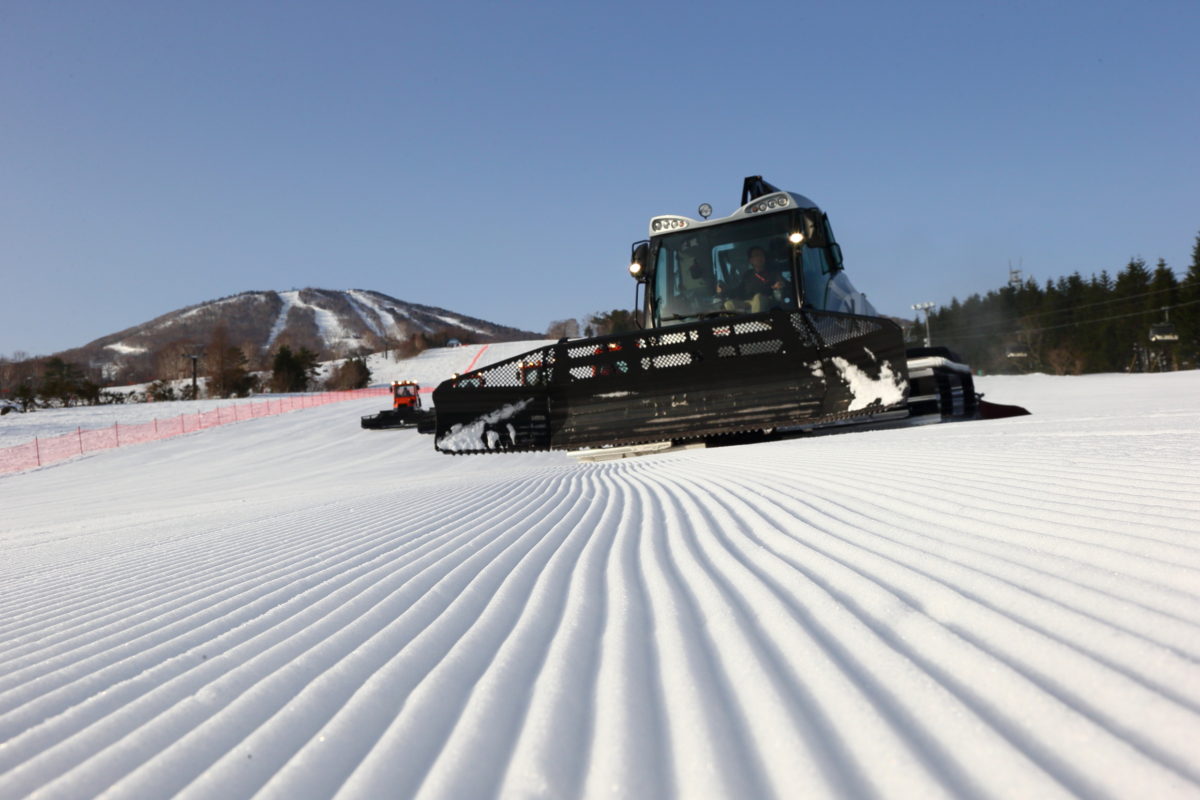
Appi Kogen, Tohoku's premier ski resort, is renowned for the exceptional quality of its groomed slopes. Its courses are remarkably long and narrow, some reaching up to 5km in length. When these long courses are perfectly groomed, the "Corduroy of Appi" is a work of art.
This work is, of course, carried out by snow groomers. Nine machines, including the high-performance "BYSON" model from Prinnote, are in full operation. Not only are the latest models used, but some have been carefully maintained and used for many years.
Considering the vast size of Appi's slopes, nine machines are not particularly many, but a small, elite team (usually 13 people) works day and night with their highly refined skills to achieve this level of groomed running.
Craftsmen pass on traditional techniques
Work begins at 10 PM. From there, they work for an average of 8 to 9 hours, essentially working through the night. The snow grooming staff at Appi are a true group of professionals, always striving to improve quality. They pay attention to every single groove in the snow.
Simply being able to operate the machinery is not enough to be entrusted with snow grooming. Only operators who have undergone rigorous training and been approved by their instructors are allowed to participate in actual field work. Therefore, training new recruits is also a crucial issue.
To become a snowmobile operator, you first have to go through a safety course at the beginning of the season and receive repeated lectures on how to operate the vehicle while riding with a senior. Once you have reached a certain level, the senior decides to let you ride alone. After that, you continue to receive thorough training, with instructions over the radio and vehicles with veterans riding in front and behind you providing support
Behind the scenes, this magnificent grooming barn is also where such talent development takes place
3. The clever naming of snowmobiles
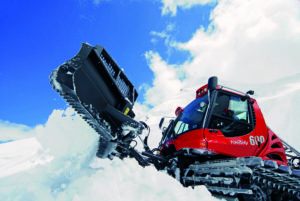
The bright red snowmobile we often see, the "Pistenbuuri" from the German company Kessler, which holds a large market share in the industry, gets its name from "buuri," meaning "to torment" or "to abuse," signifying "a machine that works so hard it abuses the mountains." Not
to be outdone by the Pistenbuuri's market share, the Italian company Prinot, which is pursuing a stylish approach, also has a sophisticated way of naming its snowmobiles. The names are perfectly chosen to match the characteristics and performance level of each machine.
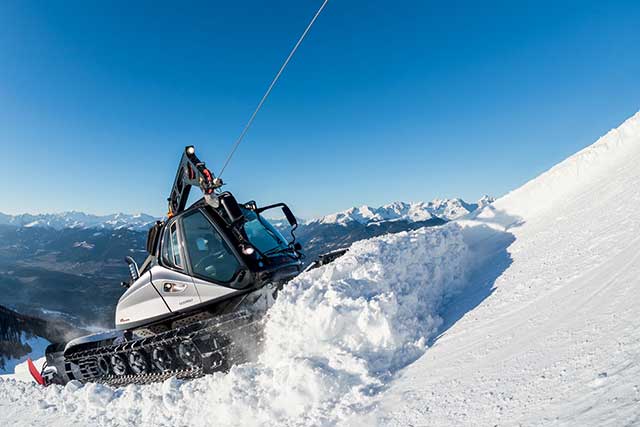
LEITWOLF / LEITWOLF X
Equipped with advanced technology, this large snow groomer boasts a maximum working width of 5.05m.
Working width: 5.05m
Overall length: 9.1954m Overall height: 3.63m
"LEITWOLF " means a lone wolf that rules the snowfields. With a working width of 5.05m, it's a fitting name for a model that boasts the highest specifications among Prinnote's snowmobiles. Watching this video, you can understand the origin of the name. The level of detail they put into this promotional video is truly impressive.
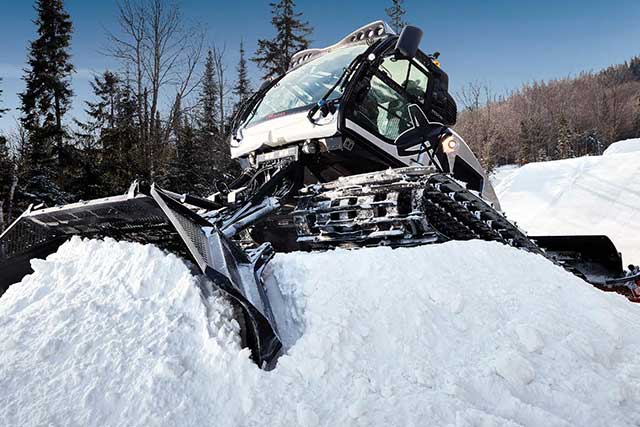
BYSON/BYSON-X
A snow groomer boasting a maximum working width of 4.25m. Ideal for setting up halfpipes and maintaining slopes.
Working width: 4.25m,
Overall length: 8.848m, Overall height: 3.554m
The BYSON Bison is a wild buffalo, which evokes images of toughness, power, and passion. By the way, wild buffalo seems to be popular among Europeans, and even Red Bull uses a buffalo as its character. The BYSON is also used by many ski resorts in Japan. It is a highly maneuverable medium-sized ski lift that can be used for a wide range of tasks, from pipe construction to slope maintenance, which is probably why it has earned such high praise
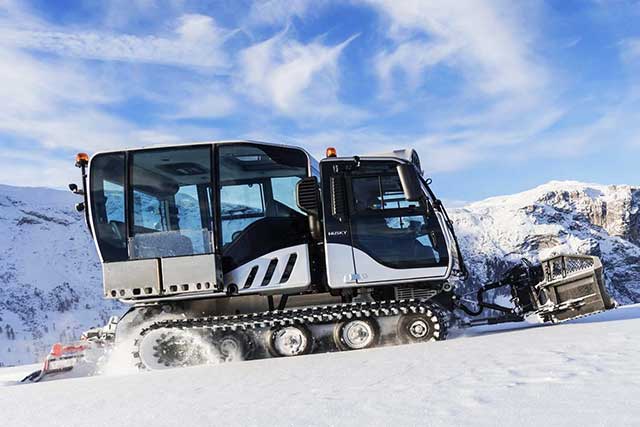
HUSKY / HUSKY X / HUSKY T5
Suitable for all needs including slope maintenance and personnel transport.
Working width: 2.5/2.8/3.1m
Overall length: 8.59m Overall height: 2.77m
The name "HUSKY" comes from the Husky dog. Just like the Husky dog, it powerfully rakes through the snow, pulls a sled, runs lightly, and is maneuverable, making it a versatile model that can also be used to transport people and perform a variety of tasks. By adding a compartment, it can also be used for CAT skis. Be sure to check out the video
Other names that convey their performance, role, and presence include "BEAST," "EVEREST," and "TROOPER." If you can immediately remember the names of these machines just by seeing them on the slopes, you're probably a serious snowmobile enthusiast
4. Snowmobile night work
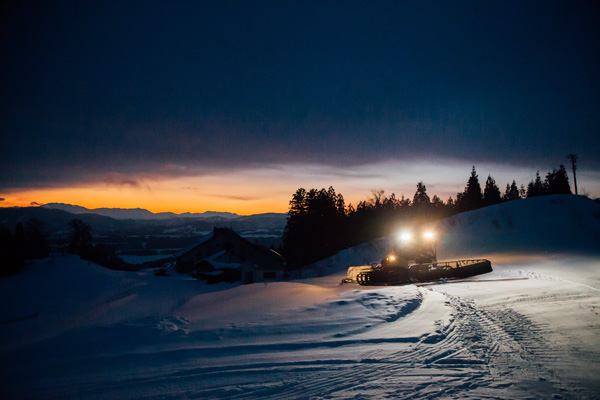
Work through the night
As the story of Appi Ski Resort illustrates, staff often have to work through the night to ensure the resort is open from early in the morning. Operators need to be able to handle the night.
This is a video of the venue being set up for the slopestyle event at the famous ESPN Winter X-Games. The athletes then deliver messages of gratitude.
To produce the best performance, the best conditions are created on the stage. The athletes' ability to push their limits and compete is in fact the result of snowmobiles and the late-night work of staff. Knowing this behind-the-scenes information makes watching the competition even more interesting
5. Snowmobile wins Good Design Award

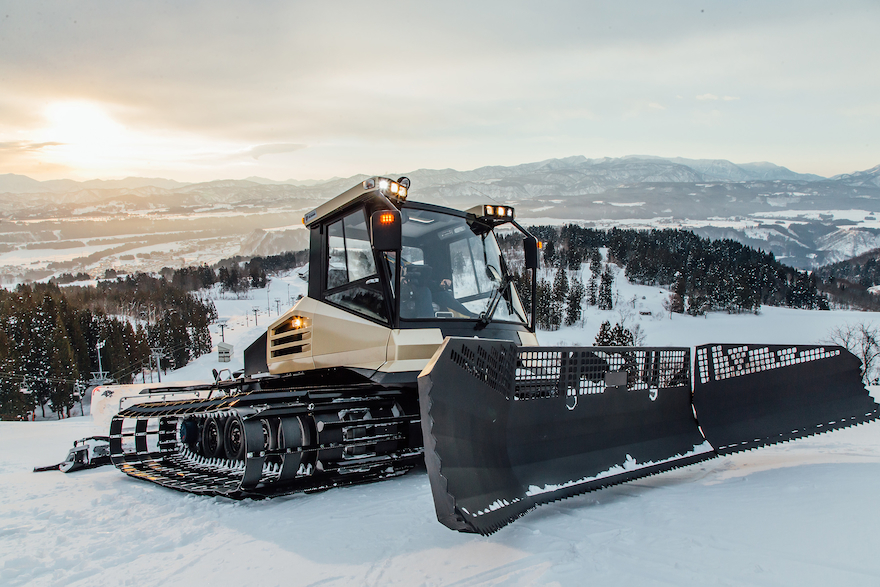
Many people know this mark. There is also a snowmobile that has won the Good Design Award. Ohara Iron Works' strongest model is called "RAIZIN." It won the GOOD DESIGN AWARD in 2017
 https://www.g-mark.org/award/describe/45406
It certainly looks cool. The advanced cockpit design, offering excellent operability, and the large glass area for easy monitoring of work conditions, have earned it high praise for both its interior and exterior design.
Of course, functionality was also a key factor in its evaluation. Beyond its high engine performance, including fuel efficiency and high output, it boasts environmental performance compliant with the 2014 emissions regulations, and its climbing ability and other performance aspects are the most powerful in the company's mid-size model history. Its overwhelming high performance completely surpasses other current models.
The name RAIZIN comes from the fact that it is a medium-sized machine with excellent maneuverability. The "thunder" ("thunder") symbolizes the way the vehicle moves briskly around the slopes like lightning, and the "blade" ("razor") symbolizes the way it neatly carves the slopes with a well-maintained finish
Following the RAIZIN, a new model called the FUZIN will debut next season. We can't wait to see what kind of machine it will be
6. There's another category of snow vehicles
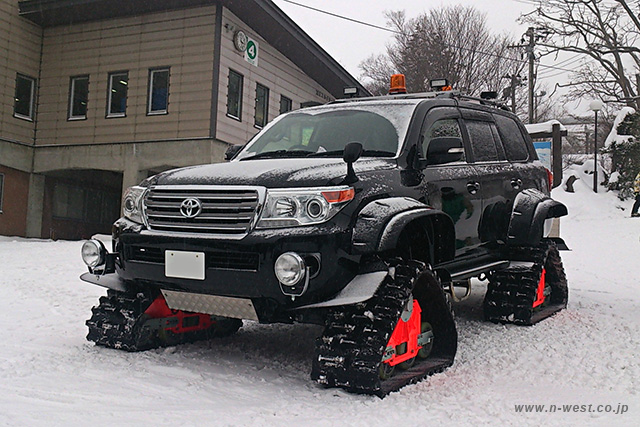
A modified snow vehicle with crawlers
In the first part, we mentioned that there are two main types of snow vehicles, but there is actually what could be called a "third category." This is a vehicle that has detachable "crawlers" attached instead of tires like a regular vehicle. It is a modified snow vehicle, so to speak
This type of vehicle is basically no different from a regular car, except for the undercarriage. It runs on a gasoline engine, and the driving method is exactly the same. The cost of modifying it is far cheaper than buying an existing snow vehicle. In other words, both technically and financially, it is realistically possible for individuals to own one.
There are off-road vehicle enthusiasts out there, and some upload videos of them driving on video-sharing sites. Also, because of its ease of use, it is highly valued by delivery companies and accommodations located on ski slopes.
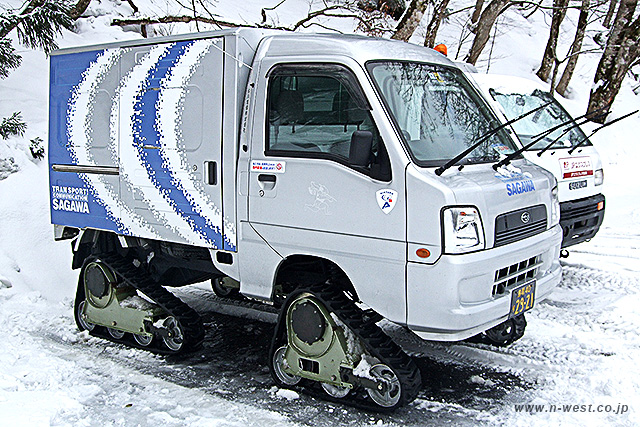
Hyper Delta can also be equipped individually
Northwest, a company based in Nagano Prefecture, specializes in detachable crawlers, and also manufactures and sells a wide range of off-road vehicles, including amphibious vehicles and off-road wheelchairs
Northwest's detachable crawler brand, Hyper Delta, is a groundbreaking product that can be driven with a standard driver's license. Its capabilities are not limited to snow, but also demonstrate its capabilities on a variety of uneven terrain, including sand, farmland, and slopes. The unit is sold as a set with both winter and summer specifications, and can be modified for use on public roads
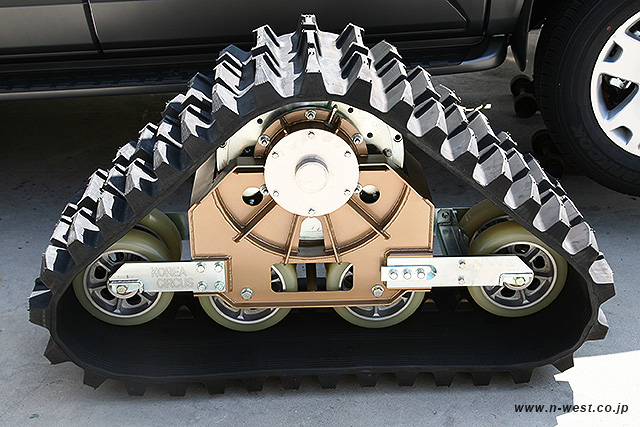
To install the Hyper Delta, some modifications and processing of the vehicle itself is required. Due to its structure, some models are more compatible than others. For example, the "Hyper Delta V3" is suitable for Toyota Hiace, Mitsubishi Pajero, Caravan, Land Cruiser, 2-ton class trucks, microbuses, and imported 4WDs. However, if you put in the effort, it can basically be installed on most cars
Now that we have learned a little more about snowmobiles, which are "working vehicles" on snow, let's take a look at what kind of snowmobiles are in use at ski resorts this season
Part 1 is here
<取材・写真協力>
Ohara Iron Works Co., Ltd.,Snow Systems Co., Ltd.,Northwest Co., Ltd.(in alphabetical order)