
When purchasing ski poles, many skiers probably choose them without much thought and use them casually on the snow. However, it turns out that ski poles are actually one of the most important items for improving the quality of your skiing and level. We asked some top basic skiers who are very particular about their ski poles why this is the case
Seven top athletes spoke to us
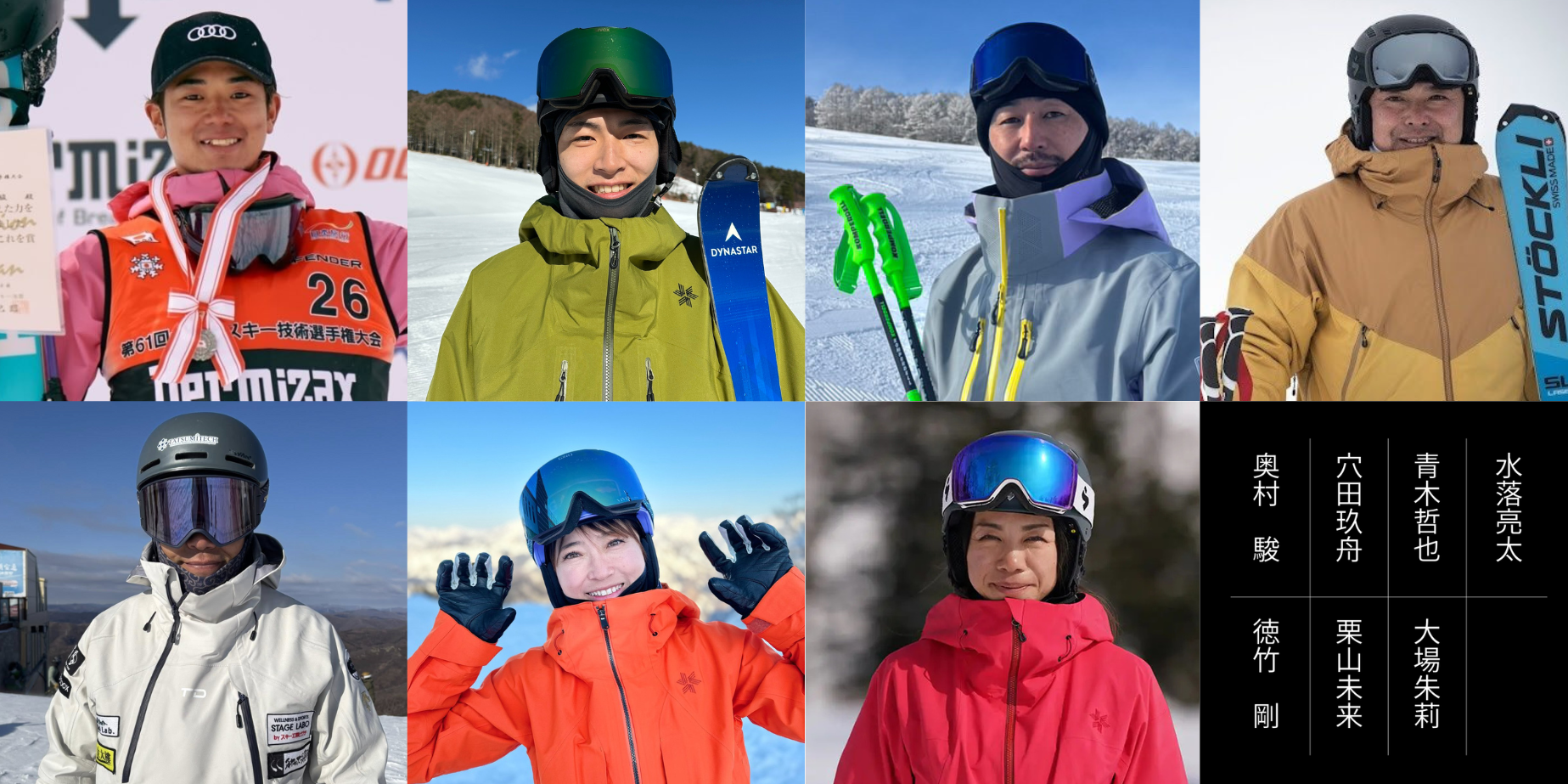
| Skier | Combat history | Pole used |
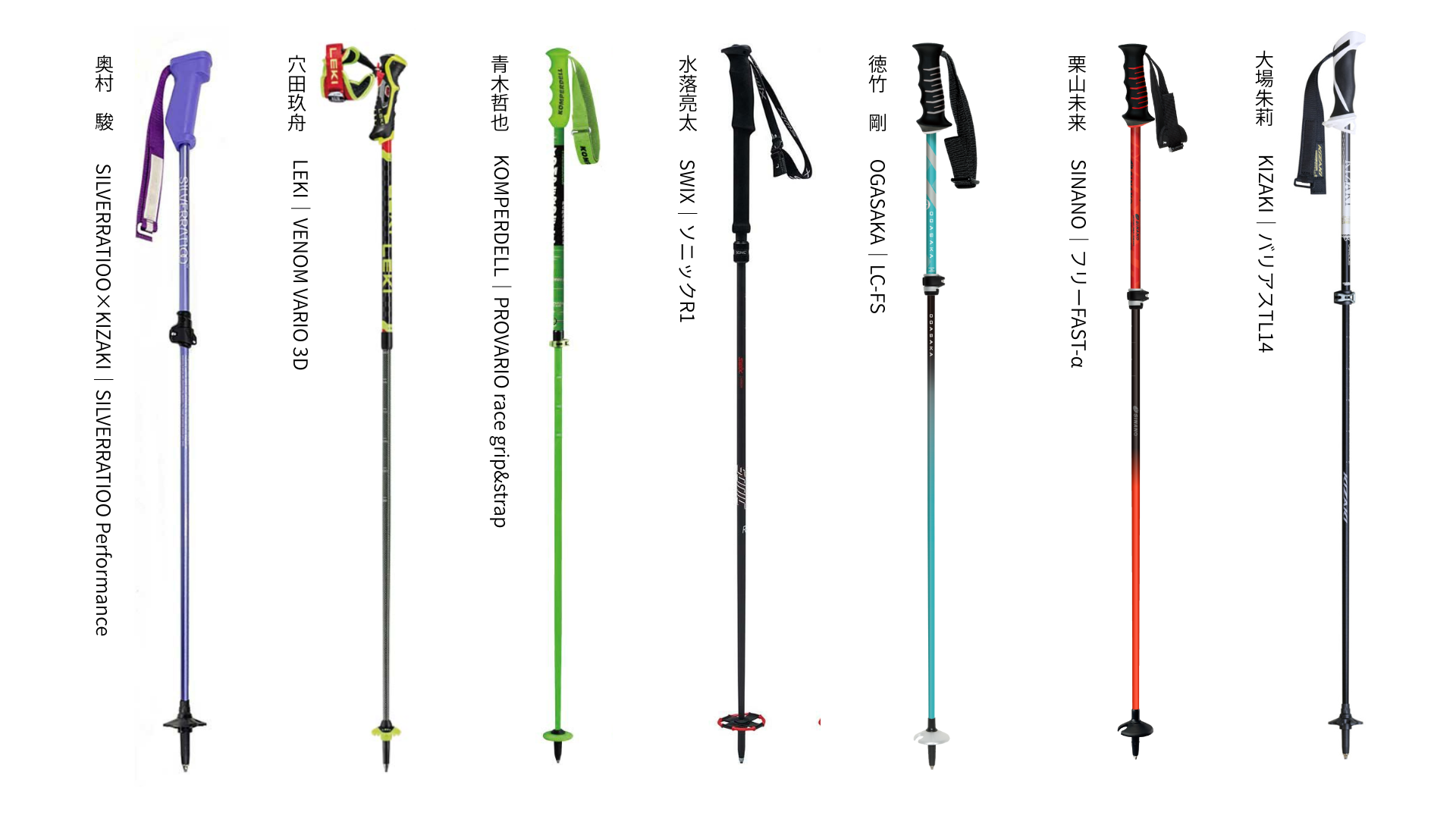
Shun Okumura | SAJ National Demonstrator/2nd place overall in the 60th to 62nd Technical Competitions | SILVERRATIOO×KIZAKI/S1LVERRAT1OO Performance |
Anada Kishu | SAJ National Demonstrator/62nd Technical Selection 7th place overall | LEKI/VENOM VARIO 3D |
| Tetsuya Aoki | 14th place overall in the 62nd Technical Selection | KOMPERDELL/PROVARIO race grip&strap |
| Ryota Mizuochi | 5th place overall in the 60th Technical Selection | SWIX/Sonic R1 |
Go Tokutake | 10th place overall in the 43rd Technical Selection | OGASAKA/LC-FS |
Miku Kuriyama | Overall winners of the 54th to 56th tournaments | SINANO/Free FAST-α |
| Akari Ooba | 2nd place overall in the 55th tournament | KIZAKI/Varius TL14 |
Length, weight, and balance. The basics and key points when choosing a pole
If you want to improve your skiing, you should pay attention not only to the skis and ski boots, but also to the choice of poles. Poles can be selected in length, weight, and balance, and these differences directly affect the stability and rhythm of your skiing. Especially on uneven (mogul) slopes, which are unique to basic skiing, a difference of a few centimeters or a few grams can affect the precision of your movements
Many top players prioritize ease of swing when choosing a club. "If it's heavy, you can't swing it quickly, so I choose something light," says Tokutake. He likes the OGASAKA grip he uses, which is non-slip and has excellent operability. Lightness and ease of grip are important points that directly relate to ease of use
On the other hand, there are also those who want a heavier feel. Anada believes that a heavier handle makes for better stability, and he favors the LEKI Venom Vario 3D, made of carbon Kevlar material. If the pole is too light, it will bend the moment you thrust it, so he prioritizes good response and strength through stiffness
The length adjustment changes minutely depending on the skiing situation. Oba uses 100cm poles on flat ground and 95cm poles on rough terrain, and when skiing on steep slopes where he wants to put his hands on the inside, he chooses shorter poles to lower his center of gravity.
Okumura does the same, adjusting his poles in increments of a few centimeters for each event, using 95-100cm poles for moguls and 108-110cm poles for long turns. "The length changes not only your movement but also the way your skiing looks, so it's very important in the technical competition," he says.
Each skier has their own preferences when it comes to adjusting the length of their poles.
Balance and grip are also important considerations. Aoki and Mizuochi use carbon fiber retractable poles, both of which prioritize swing balance when selecting them.
Kuriyama, who is small in stature, selected poles with smooth finger grips because his hands are small. Choosing poles that suit your build is also an essential consideration.
When choosing a pole, you should consider the length, weight, and swing balance. By choosing a telescopic pole, you can choose the size that best suits the situation, but weight and swing balance vary depending on the manufacturer and model, so you should actually hold the pole in your hand and consider how comfortable it is to grip
Is there a difference in sliding? The effect of ski poles on sliding
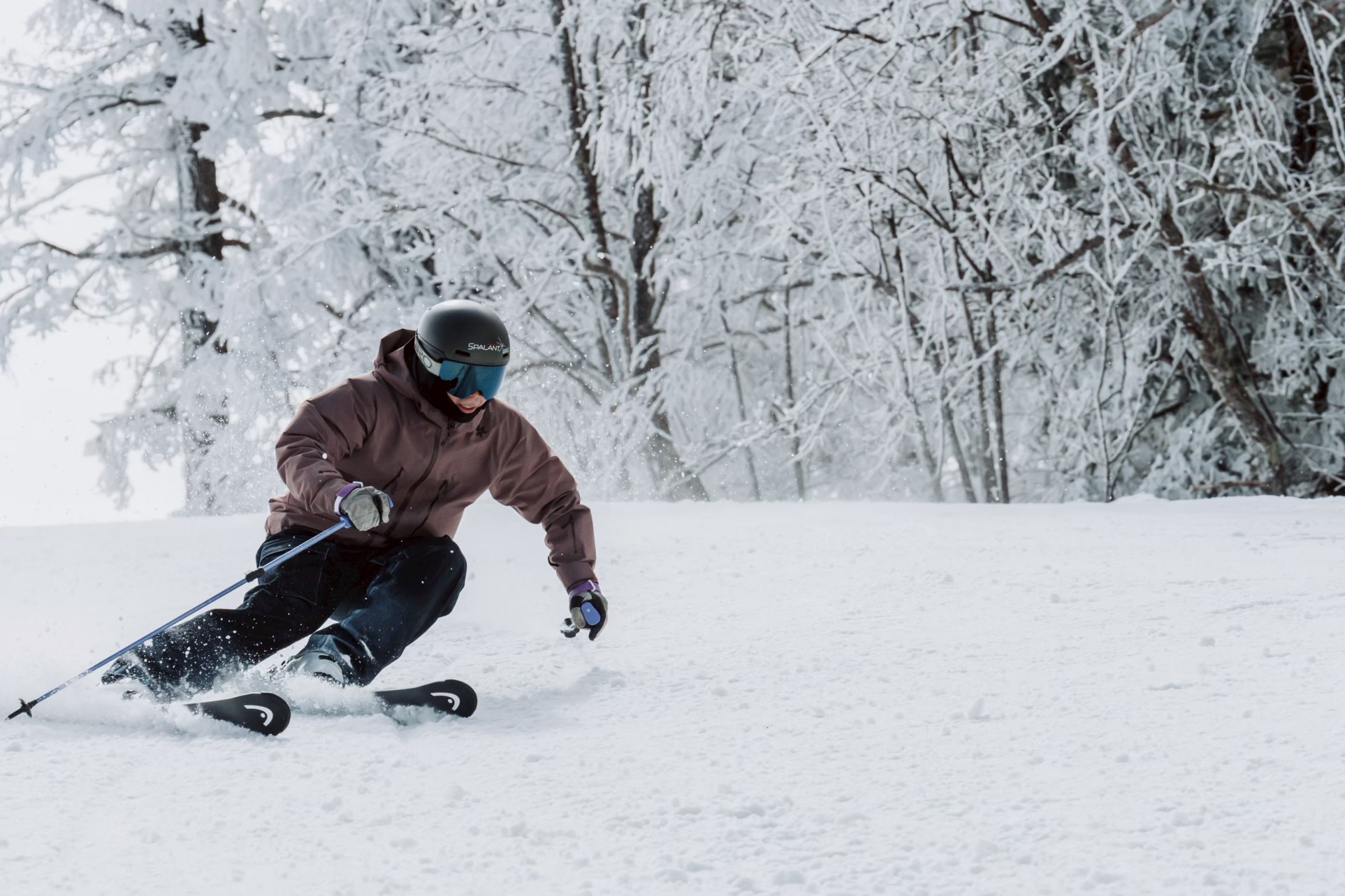
Stock work is closely related to the tempo of your skiing and the flow of your center of gravity. Even slight changes in the position, angle, and timing of your thrust can change the flow of your turns and the balance of your upper body. How you use your stocks can change the very impression of your skiing
The role of poles in setting rhythm is most evident in tight turns and over moguls. Tokutake says, "In wide turns, it doesn't have much of an effect, but in tight turns and over moguls, quick movements back and forth affect the rhythm." Whether or not you can thrust your poles at a consistent tempo determines the stability of your turns, and having a consistent rhythm also helps reduce upper body shaking
Okumura is conscious of bringing the rings forward from the second half of a turn to the first half of the next, and uses his poles to help create the flow of his turns. He seems to keep his upper body moving smoothly by using his wrists flexibly. On moguls, the tempo changes dramatically depending on whether you bring the rings out straight or with a slight turn, so it's important to use them appropriately depending on the situation. The sense of creating the tempo of your skiing creates a sense of stability
Oba focuses on the coordination between the upper and lower body. He believes that "elbow movement is linked to the knee, and wrist movement is linked to the ankle," and points out that the position changes depending on how you hold the pole. Gripping the pole too tightly restricts movement and slows down the body's natural reactions, so thrusting at the required speed when necessary leads to the ideal form
Kuriyama adjusts the size of the rings and the shape of the grip depending on the snow quality and speed. If the thrust position is off, the body will float and lean backward during the turn, so it is essential to set them to suit your turning rhythm. Accurate pole work improves the precision of turn control
It turns out that changing the movement of your poles affects the rhythm of your turn, how you move your center of gravity, and your form. The speed and angle of your thrust, as well as how you release the force, all seem to affect your gliding. The key to improving your level is not the technique of thrusting your poles precisely like a machine, but being able to use them naturally in the flow
When to push? Top skiers think about the best pole work

The timing of your pole thrust determines the tempo of your skiing and the movement of your center of gravity. How you thrust at the moment of edging or switching will affect the quality and stability of your turn. If your timing is off, the flow of the turn will be interrupted. So, when is the correct timing?
Oba's style is to "not grip the poles tightly, but to grip them lightly at the moment of loading." His ideal is to have the ring appear as an extension of the top of the ski. The poles that move forward naturally with the movement of the wrist create the flow of the turn. He values "pushing the poles in the moment when you think 'I can move now' on moving skis." It is also important to go with the flow of the movement, rather than thrusting consciously
How you use your poles when switching is also an important point. Mizuochi says, "Before switching, use your wrist to bring the ring forward and then thrust with your pole." By imagining a gentle vertical swing rather than thrusting with force, your center of gravity will shift smoothly without stopping your movement during the turn
Aoki focuses on how to use his fingers. "Gripping with your index finger makes it easier to maintain a forward lean, while gripping with your little finger makes it easier to lean backward," he says, changing the way he holds his poles and changing his position depending on the turn size and the skiing situation.
For beginners who don't know when to thrust their poles, he offers the following advice: "If you're unsure of the timing, don't force your poles, but instead, once the turn has stabilized, thrust them lightly when it's time to switch."
Additionally, as a way to get a feel for the timing of thrusting your poles, Kuriyama recommends "practicing by clapping your hands when switching positions to learn the rhythm." By replacing the clapping rhythm with pole work, switching positions becomes more natural and any awkwardness in your skating disappears. This helps you to be conscious of using your poles in a way that is in line with your body movements in order to maintain a smooth overall skating experience
On the other hand, Anada imagines deliberately thrusting his poles at unstable moments. His goal is to widen the support base of his center of gravity (the area surrounded by the part of his body that is in contact with the floor to support it), and he imagines thrusting while rotating the ring just before switching from his outside foot to his inside foot, stabilizing his upper body and then entering the next turn. "If you are conscious of the tip of the ring, it's easier to get the timing right, and the sense of the timing of the thrust is also important," he says
When you thrust your poles, you might imagine your movement stopping, but by mastering the correct pole technique, you can stabilize your skiing and make continuous, smooth turns. In order to thrust your poles in the current as you shift your center of gravity at the right time to switch, it's important to be aware of the tip of your pole and use your arms and fingers
Tips for stocking up on mogul slopes
Many skiers struggle with stocking up on mogul slopes. The key is to smoothly thrust your stockings through the succession of moguls without slowing down. Here we ask top skiers for their tips on stocking up on mogul slopes
1. Maintain your balance without changing your stance
The position of your poles is an important factor that affects the stability of your skiing. Try to keep your fists in the same position so that you don't thrust them in all different positions. This will stabilize your pole work, and ultimately lead to a more stable upper body. The key is to keep your arms relaxed and your elbows slightly bent
2. Change your thrusting style depending on the size and speed of the bump
It's also effective to change the direction you thrust your poles depending on the size of the moguls and your speed. If you want to increase your speed, thrust your poles as if you're gently dropping them slightly toward the valley, which will create a flow in your skiing. Conversely, if you want to slow down, thrust your poles in a position that keeps your body on the mountain side, which will allow you to do stock work without interrupting your flow. Adjusting your thrusting style depending on the moguls' conditions will also give you flexibility in your line-taking
3. Pay attention to the length of the stock
One thing that many skiers have in common is that they choose shorter poles on moguls than on flat terrain. Aoki's guideline is around 60% of his height. If the poles are too long, the moment you push them down, your upper body will inevitably be raised, causing you to lag behind. On mogul slopes, where shifting your center of gravity from front to back is important, being strict about the length of your poles is the shortcut to improvement
4. Stock work that doesn't disrupt the rhythm of skating
On mogul slopes, fear and tension can lead to a tendency to push your poles hard, but rhythm is key. Pushing your poles with an even rhythm over successive moguls will result in a stable slide. Don't focus too much on the exact moment you push your poles, but instead use them naturally in the flow of the turn, and you'll be able to keep in mind that this will help to eliminate strain on your movements
When skiing on moguls, if you focus on "regulating the rhythm of your skiing" rather than "thrusting" your poles, your upper body movements will be more stable and your skiing will be less likely to be affected. Top skiers tend to relax unnecessary tension on mogul slopes and use their wrists effectively to perform accurate pole work. The key to improvement is flexible pole work that does not interrupt the flow of your skiing, rather than thinking about thrusting
The essential role of ski poles when skiing
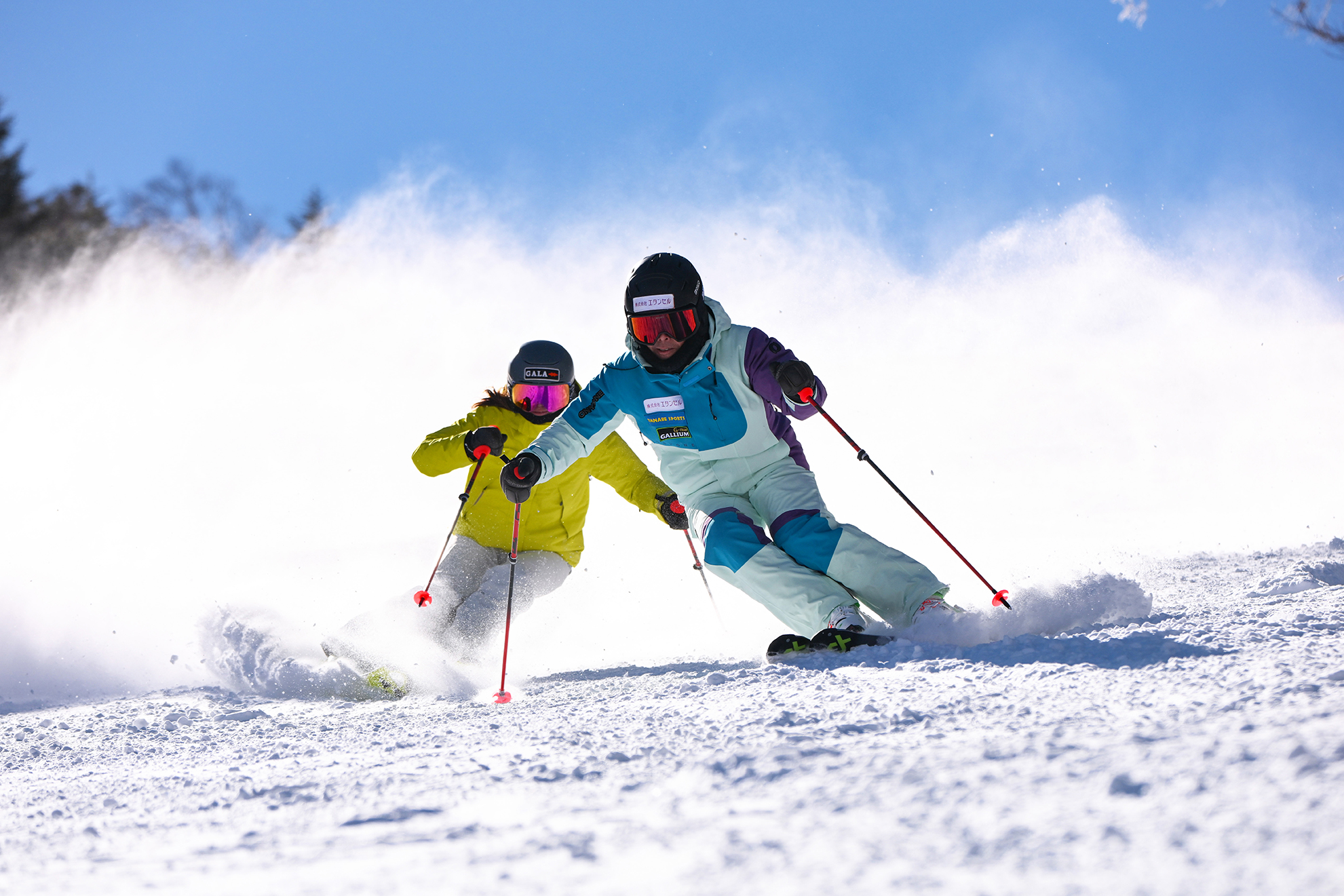
In skiing, poles are not just tools, but function as "partners that help with balance, rhythm, and timing." Many skiers commonly mention two roles: maintaining balance and adjusting the timing of movements
In terms of balance and stability support, holding poles makes it easier to maintain your balance and less likely to lose it during turns. Particularly when dealing with speed or changes in slope, poles can act as a "third fulcrum" and help stabilize your body. However, relying on them too much can interfere with the proper shifting of your center of gravity and control of your body axis, so it's important to remember to use them only as a supplement
Ski poles are also important in creating rhythm and timing. By using your hands to sense the trigger for a turn and the timing of changes, not only does a natural flow emerge in the movement of your entire body, but as Aoki says, "When I skate without ski poles, I can really feel the difference," ski poles can be said to be an essential tool for developing a sense of motor rhythm. Furthermore, because it's easy to be aware of hand movements, ski poles also play an important role as feedback items for improving your skiing technique
summary
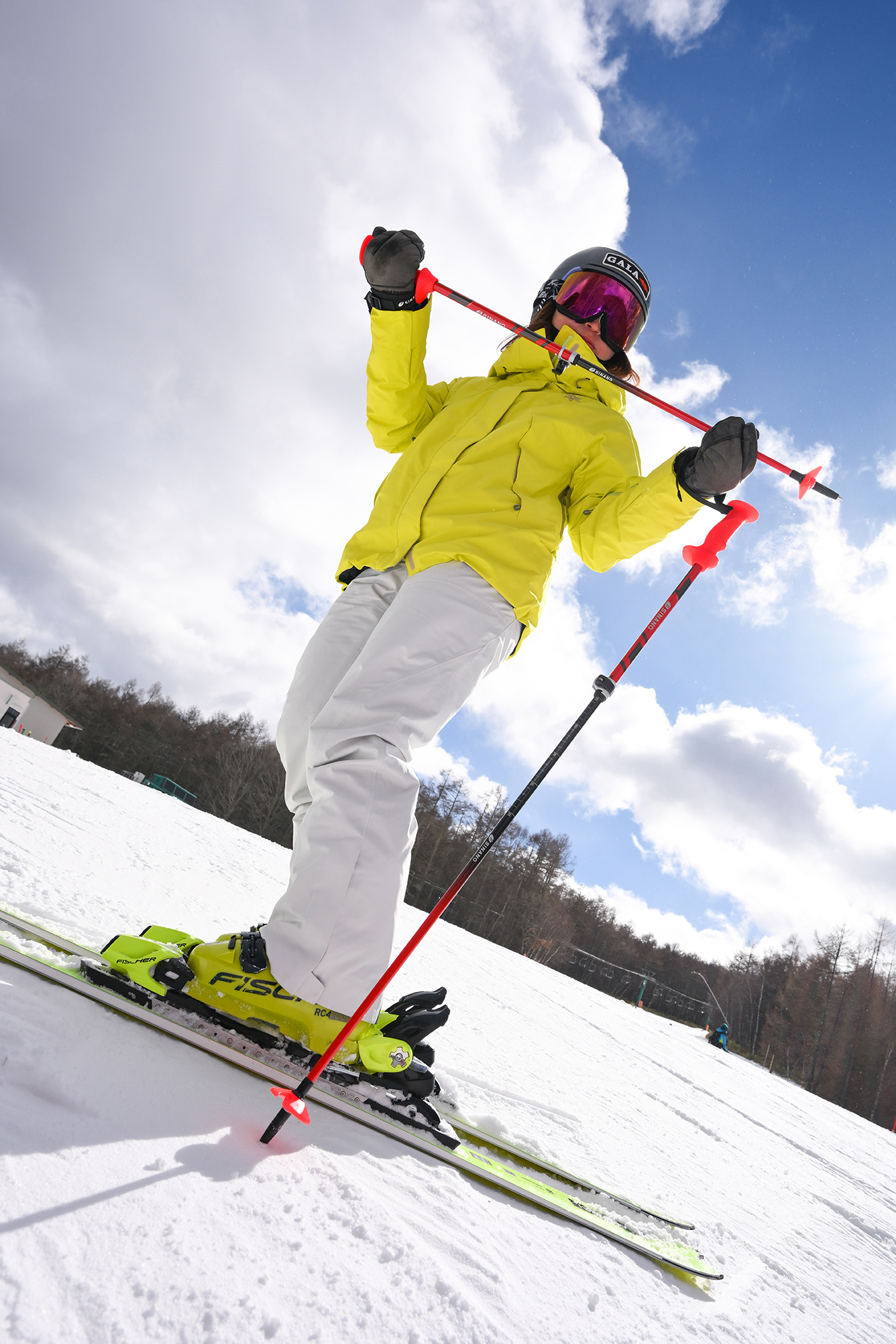
How poles change your skiing - Seven top skiers talk about their preferences and how to use them
To improve the precision of your skiing, it's not just the skis and ski boots that are important, but also the length, weight, balance, and skill with which you use your poles. What emerged from the opinions of seven top skiers who are leaders in the world of basic skiing was the perspective of "a partner that supports your skiing."
They change the length of their poles by a few centimeters depending on the situation, and select the material and grip shape to suit their style of skiing. They also use their poles not just to "push" but also to adjust their timing and rhythm. Especially on mogul slopes, the way they use their poles has an impact on the flow of their skiing
The role of poles is not just to provide support, but to maintain balance, adjust timing, and set rhythm. To take your skiing to the next level, why not start by taking a look at the pole you pick up?
Profile
Okumura Shun Biography
: Born in Kyoto Prefecture. Went to Hokkaido to study skiing when he entered junior high school and devoted himself to alpine skiing until university. He played for the national junior team and switched to basic skiing after graduating from university. He has placed second overall in three consecutive competitions since the 60th Technical Championships. SAJ National Demonstrator.
Instagram: @okushun_ski
Poles used: SILVERRATIOO x KIZAKI | SILVERRATIOO Performance
Anada Kishu :
Born in Hokkaido. Started skiing at the age of three. From the third grade of elementary school, he started mountain biking and telemark skiing in parallel with skiing, and is a unique skier with the ability to compete on the world stage in both. Placed 7th overall in the 62nd Technical Championships. SAJ National Demonstrator.
Instagram: @kishu_ski.
Poles used: LEKI | VENOM VARIO 3D
Aoki Tetsuya (Aoki Tetsuya)
Profile: Born in Niigata Prefecture. Dedicated to alpine skiing from a young age, he switched to basic skiing upon graduating from high school. An all-rounder who has consistently ranked highly since making it into the top ten in 2011. Placed 14th overall in the 62nd Technical Championships.
Instagram: @aokioski_yuko_tetsuya
. Poles used: KOMPERDELL | PROVARIO race grip & strap.
Mizuochi Ryota Biography
: Born in Niigata Prefecture. Active as an alpine skier until university, he competed in the technical competitions after graduation. In 2023, he achieved his best result of 5th place overall, making him a top skier. He has served as an SAJ demonstrator for seven terms, and is currently actively giving lessons alongside his competitive activities.
Pole length: 115cm for long turns, 110cm for short turns, 100cm for rough terrain
Instagram: @ryota_mizuochi
Poles used: SWIX | Sonic R1
Tokutake Gou Biography
: Born in Nagano Prefecture. He started skiing at a young age and competed in FIS races. After graduating from university, he moved to the technical competitions, coming in 10th overall at the 43rd competition, becoming the first SAJ demonstrator to be certified. He currently runs "ITM Ski Lab." and provides lessons all year round.
Instagram: @gotokutake
Poles used: OGASAKA | LC-FS
Miku Kuriyama
Biography: Born in Toyama Prefecture. Devoted herself to alpine skiing during her student days, and after graduating from high school, she competed in the Technical Championships. She won three consecutive championships from the 54th to 56th tournaments. She has served as a SAJ National Demonstrator for six consecutive terms, and will represent Japan in the Interski Championships in 2023.
Instagram: @kuriyamamiku
Poles used: SINANO | Free FAST-α
Oba Akari
Biography: Born in Miyagi Prefecture. Dedicated to alpine skiing from a young age, she made her first appearance in the technical competition in 2009 as part of the university federation. She then distinguished herself with her high technical ability, coming in second overall at the 55th competition. While continuing her racing career, she currently runs "Akari Racing," based at a ski resort in Tohoku.
Instagram: @akaririri317
Poles used: KIZAKI | Varius TL14