

■LINE's first PV video that doesn't float in the air
LINE has been making unconventional skis for over 20 years, and now they've released another unique ski: the BLADE
Let's start by looking at the video
The first video is a promotional video for "BLADE." The remaining two videos show Mikiya Tanno, who became addicted to this board during the season
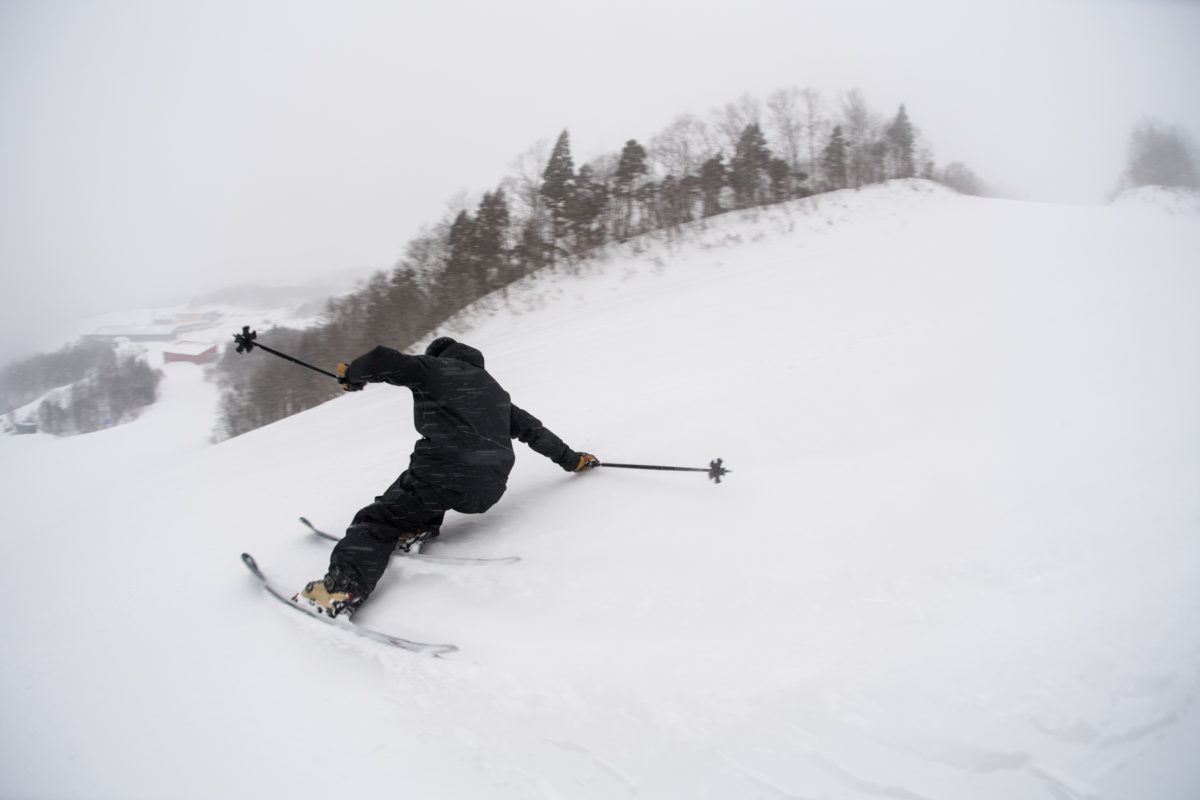
The "BLADE" skis bring out the fun of turning at high speeds, with deep carving turns, billowing snow clouds, and edge-to-edge transitions
■What kind of board is a blade?




The "SAKANA," a highly versatile board with a 105mm waist width, was released by LINE in 2018. Its distinctive swallowtail shape allows for smooth turns on both long and short boards, and its ability to float in powder has made it very popular. The
"Blade" was created with the "SAKANA" design as a reference, but with even greater all-mountain performance and versatility in mind. It comes in two models with different waist widths: 95mm and 92mm.
In a nutshell, these skis allow for stable turns at high speeds
The Blade's shape is quite tapered, measuring 154-95-124 from the top. Although the waist width is 10mm narrower than the Sakana, the top is 4mm wider. The tail is 14mm narrower to allow for smooth turns. The rocker at the top is low and the effective edge is long, providing grip and stability
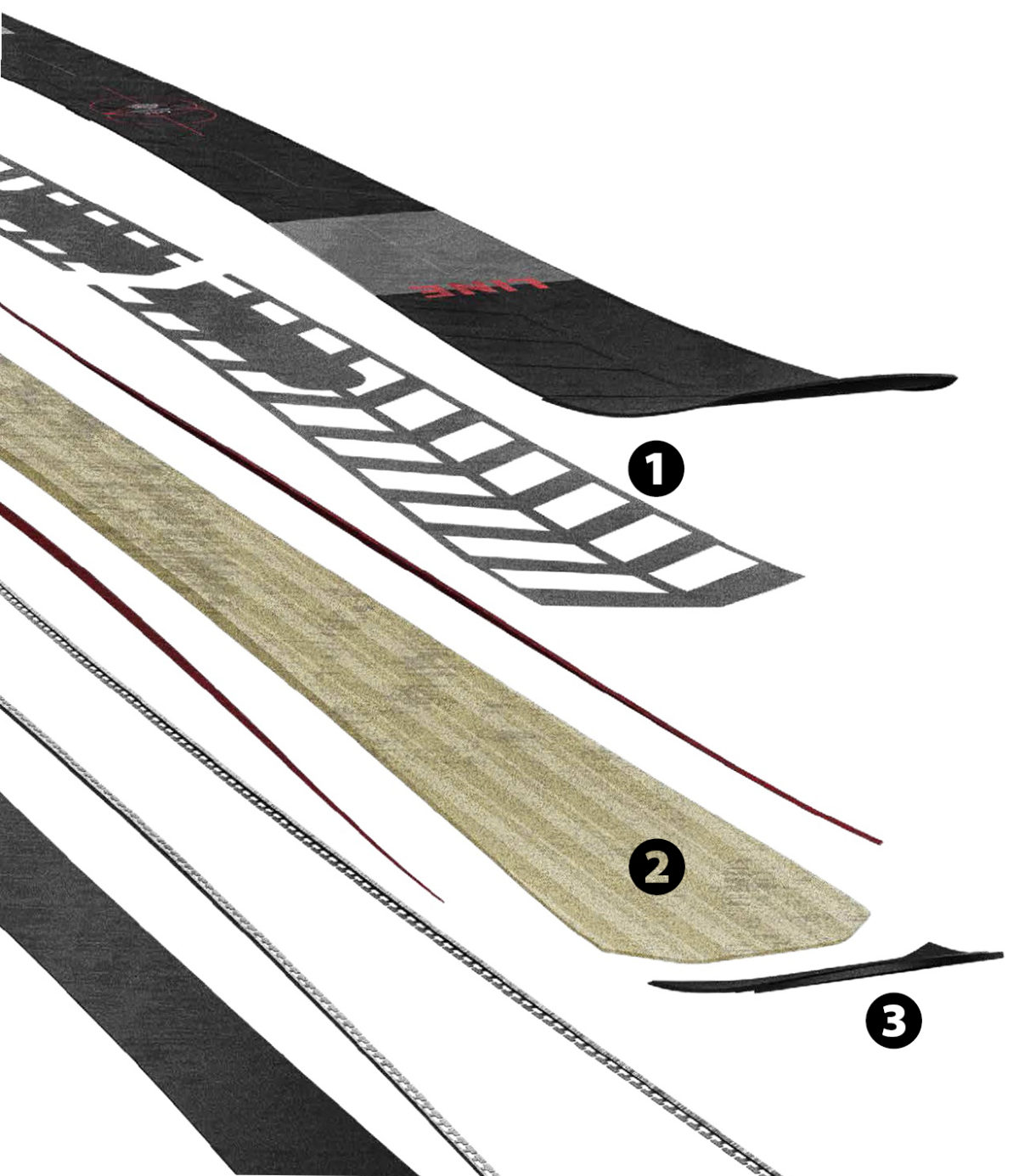
The core material is made of 100% aspen (❷), providing lightness and stable gliding.
Two independent titanium metals (❸) are incorporated at the nose and tail tips, transferring power to the ski without loss during turn entry and exit.
A distinctive feature is the hollow, fishbone-shaped titanium metal "GAS PEDAL METAL" (❶) that covers the entire ski. This enhances edge grip and torsional stability while utilizing the properties of the core material.
Click here for the latest review article of the 21-22 season
・A Q&A and review from Mikiya Tanno, the ski expert in Japan
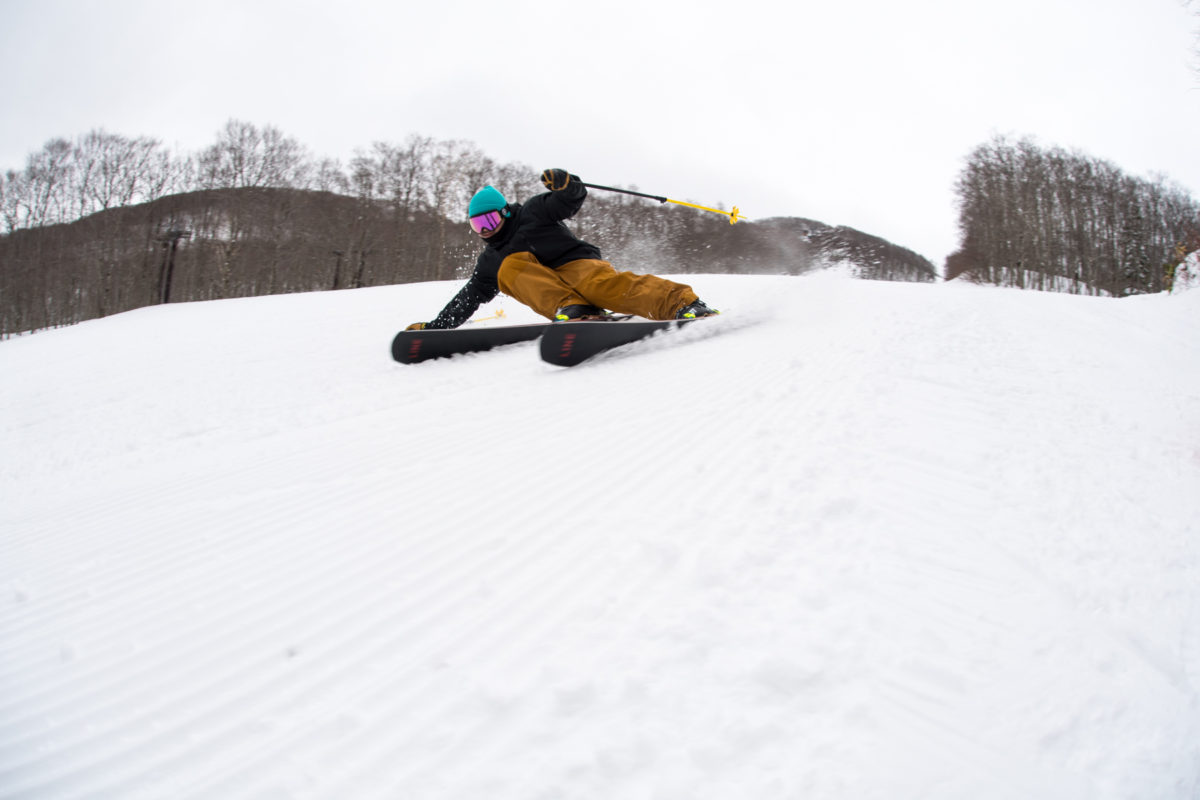
--Now, let's hear the impressions of this ski from LINE's sponsored rider, Mikiya Tanno.
He is active in slopestyle and halfpipe competitions both domestically and internationally, and currently runs the ski shop"TRANKBASE"while also engaging in various activities in the backcountry and at ski resorts.
Editorial Department (hereinafter referred to as "eds"): What was your first impression?
Mikiya Tanno (hereinafter Tanno): At first, I had the preconceived notion that because it's a metal-reinforced ski, it would be stiff and mainly for hardpack. I imagined picking up speed, using force to suppress the ski's rebound, and dropping the ski into the fall line.
But when I actually rode it, it wasn't as stiff as I thought. Personally, for a metal-reinforced ski, it wasn't too stiff and flexed quite well.
Editor: Even though it contains metal, it flexes well and bends well at high speeds?
Tani: That's right. It turns really well. When I first looked at the catalog, the radius was listed as "Tight," so
I thought, "What's this?" and actually measured the turn radius. I tried drawing a semicircle on the edge to see how far it would go (Editor's note: The above video shows a reference turn). It's not precise, but it was roughly 13 meters.
So, since the skis I've ridden up until now were mogul skis, twin-tip skis, and fat skis, this ski gives me the impression of being a very turning ski.
Editor: How did you enjoy these skis?
Tani: I don't often ride this type of ski on my own, so it was a very refreshing experience.
There wasn't much snow last season, so I think it was just right for skiing on the courses. The bindings weren't mounted too far towards the tail, so I was surprised at how well I could do switch riding, and I enjoyed carving in that position. I also went into the park. I did some carving jumps off the kickers and skied over obstacles like waves.
My impression after riding them is that they're very sharp skis, but they're also wide. The nose shape is over 150mm. Compared to skis with a narrower shape, the edge grip might feel a bit looser.
However, they offer more stability, and you can easily ski through powder at the resort.
I think they could offer a new way to play for people like us who do freeskiing or moguls. You often see skis that are narrow and have a small radius, but these are wide, paddle-shaped skis with bindings positioned closer to the center, and you can ski them in any style, whether switch or carving.
I think that's very much in line with the "LINE" brand.
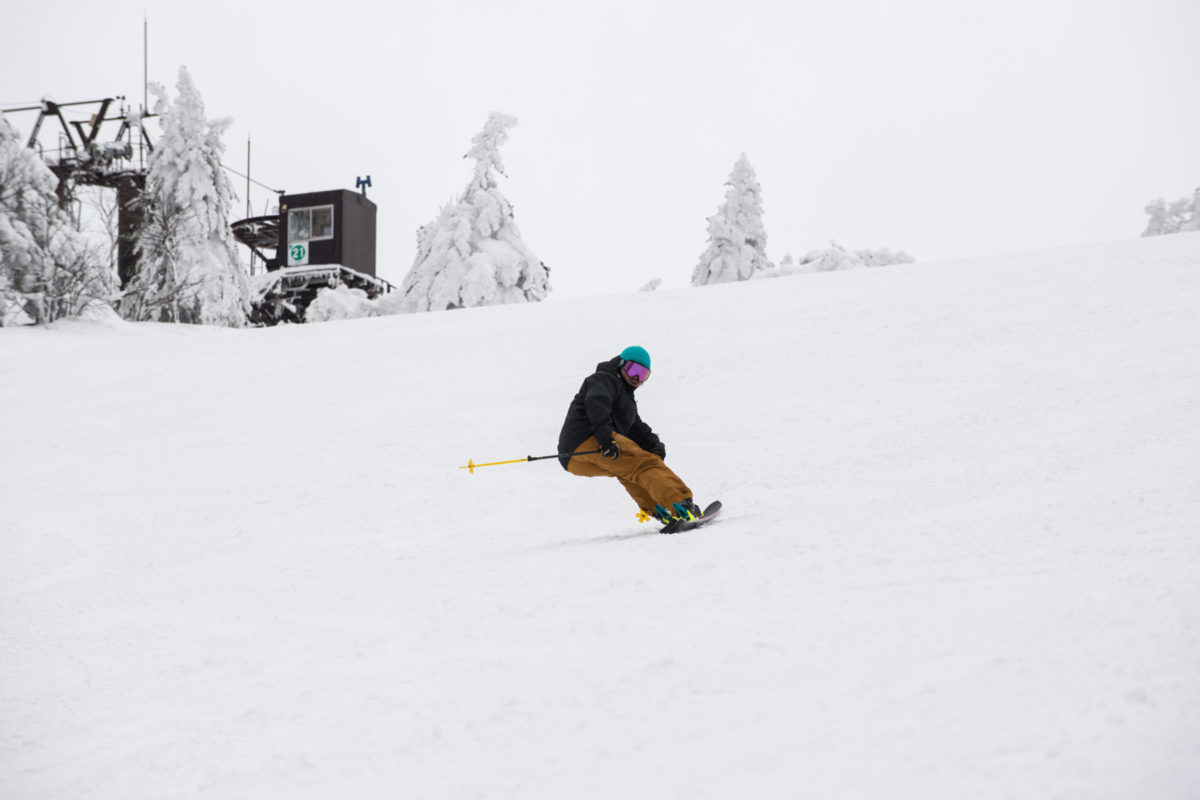
Editor: There are skis like the "PESCADO" and "Sakana" that have a similar shape to the "BLADE," but are these skis an extension of those?
Tan: Although each ski has different characteristics, I feel that Blade and Sakana are connected
The Sakana is really great in powder thanks to the differences in shape, such as the waist width (105mm), the nose rocker, and the swallowtail. You can also enjoy powder with the Blade, but the Sakana has the advantage in terms of narrower waist width and, above all, the ability to get the turns out. I think the swallowtail is what makes it so effective
However, in terms of flat burn, it has something in common with the "Sakana." The "Sakana" bends easily, but the "Blade" is better in terms of sharpness

Editor: How do you adapt your skiing to the terrain? Hitting the wall, banking, etc
Dan: You can have fun on the bank. However, to be honest, it's not that easy to move off the bank or make a slash-like move. It's possible, but it's more fun to cut the bank, maintain speed, and connect turns rather than moving off the bank
The edges grip so well that it's actually harder to slide. Once the edges are engaged, it feels like you're riding on rails.
However, it's not about forcing the skis to move. You just need to maintain a central position so your body doesn't lag behind the skis, and as you press down on them, you'll accelerate. That's the general idea.
Editor: This is a completely new axis for LINE
Tan: That's right. If you want to make quick turns, narrow skis are good because they respond well
With the "Blade," there's a slight time lag before the edge really bites in. It's like there's some play in it. There's a brief moment when you're on flat ground during the transition between turns, and then you enter the turn. At that moment, the edge doesn't suddenly bite deeply, but rather it gradually bites in deeper from a shallow bite.
In large turns, if you keep your skis on the edge, the skis won't point towards the fall line, and you can keep the turn extended sideways indefinitely, eventually even going uphill.
Editor: It seems like you can have fun with a variety of turning arcs depending on the slope conditions. Lastly, what kind of skier is it suitable for?
Tani: If you can control your turns and ski on moderate slopes, most people will enjoy it.
Also, since it's a twin tip, you can play in the park, but that depends on your skill level. It's heavier than park skis, so it's not for beginners. If you're an experienced skier, you'll be able to see the features lined up in a different light and discover new movements and lines.
Also, if you mainly ski on groomed slopes and ski in the backcountry a few times a year, having both the "Blade" and "Sakana" will allow you to choose the right skis for the conditions throughout the season, and I think you'll be able to ski the resort courses in a lot more fun.
Editor: Thank you very much
Please see the following website for the complete LINE lineup
: https://lineskis.com/en-jp