


What kind of equipment do you need for a one-day backcountry trip, and what will it look like when you put it all in a backpack? By checking and comparing storage capacity, functionality, fit when wearing it, and balance when moving, we hope you will get the hang of choosing a backpack
What gear and backpack do I need for backcountry?
In the backcountry, you need to carry a variety of equipment, including safety gear. Naturally, you'll need to ski, hike, and move around in various ways while wearing a backpack. So, what kind of backpack is best? Choosing a backpack can be surprisingly difficult, especially for inexperienced beginners. In that case, it's best to ask an experienced expert for advice
The instructor for this tour was Amari Yuki from Ishii Sports, a mountain professional who is currently training to become a professional guide, specializing in climbing and mountain skiing
One-day backcountry gear [for experienced people]
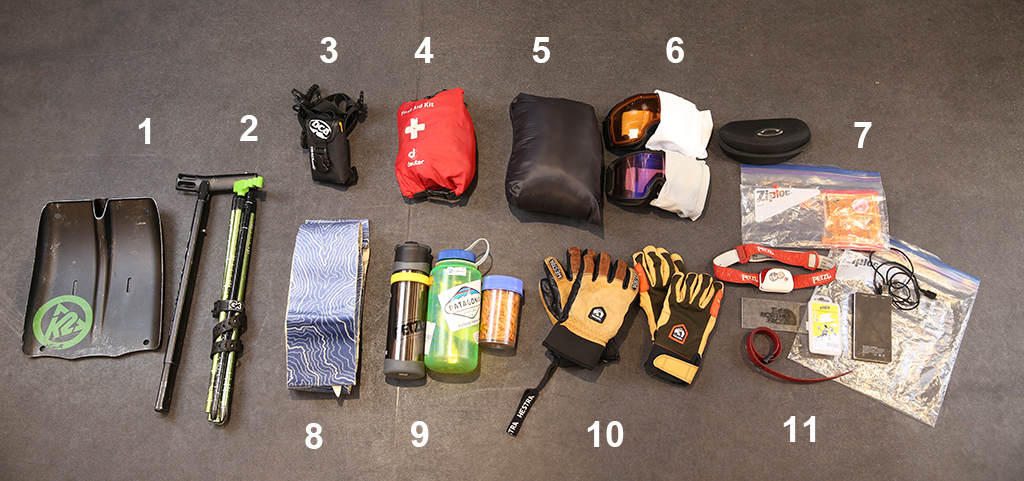
This is the complete set of equipment that Amari normally takes on a one-day backcountry ski trip as of 2024. As he gains experience and goes deeper and higher, his alpine level increases, and his equipment becomes more technical. Let's take a look at the photos and list to see what he takes with him. (The item numbers in the photo correspond to the numbers on the table.)

| Item Name | brand | Product name | Reasons for selecting and using | |
| 1 | Cold weather jacket | Patagonia | DAS Hoodie DAS Light Hoodie | I chose a synthetic type that is resistant to getting wet. I use either the Dus Parka or the Dus Light Parka depending on the outside temperature, wind speed, etc |
| 2 | scoop | G3 | Abbey Shovel | I chose a D-shaped handle for mobility. I also use a shovel because the back of the shovel has fewer bumps, which helps to smooth out the snow |
| 3 | probe | BCA | STEALTH300 carbon | It has a smart structure that prevents the wires inside the probe from being exposed. During the snowy season, I carry more than 300 cm of it |
| 4 | Map and compass | SUNTO Geospatial Information Authority of Japan | 1/25000 map | A classic map |
| 5 | goggles | sweetprotection | CONNOR | I like the wide field of view that comes with the frameless design. I use the RIG light amethyst lenses. I generally choose brighter lenses, and I select them based on the premise that I can see in all weather conditions |
| 6 | sunglasses | sweetprotection | Sinobi photochrim | These half-frame sunglasses are exceptionally sturdy and feature photochromic lenses to adapt to any environment |
| 7 | helmet | sweetprotection | igniter 2vi mips | I chose this helmet because of its cool appearance. I also like that the ear pads are removable |
| 8 | ファースト First aid kit | Montbell | First Aid Bag S | I don't think there are many first aid bags that have this much storage capacity yet are easy to use. It's large enough to fit bivouac gear, a headlamp, and other items in addition to first aid |
| 9 | Tent | Arai Tent | Super Light Tent 2 Long | We use different sizes depending on the mountain trip and the number of people in the party |
| 10 | beacon | MAMMUT | Barry Box S | The latest type of triple antenna |
| 11 | radio | Yaesu Radio | Class 4 amateur radio is used. Some members use commercial radio | |
| 12 | Weather and snow observation kit | Carried with the device to conduct field weather observations and snowfall observations at any time | ||
| 13 | 8mm x 30m rope | Edelrid | Guide Assist Pro Dry | Ski cuts, carry them in case of an unexpected situation |
| 14 | climbing skins | KOHLA | Peak Line Mix | I chose this sticker because it has a moderate adhesive strength and is portable |
| 15 | drink | THERMOS STANLEY | THERMOS Mountain Bottle 750ml / Go Vacuum Bottle 0.37L | I use different sizes of Yamasen Bottle depending on the mountain I'm hiking. I also carry the Go Vacuum Bottle because I want to drink hot coffee in the mountains. It's the perfect size to hold convenience store coffee when I'm short on time and can't brew it at home. I really like it |
| 16 | Snacks | Granite Gear | Air Zip Zack XXS 5L | I adjust the amount of food I bring depending on the duration and intensity of the hike. I choose foods that don't freeze easily and that contain little animal fat |
| 17 | Gloves | SCCOT Hestra Nitrile | SCOTT: Ultimate Primaloft Mittens HESTRA: LeatherWOOL | |
| 18 | Climbing gear | Used in situations where a guide rope is required |
One-day backcountry gear [beginner/general]
So, for beginners and those with little experience, this equipment will be more than enough. Compared to the previous [For experienced climbers], it does not include ropes or climbing gear

Three selected popular backpacks and their features
This time, Amari picked out the following three bags to compare in terms of storage and comfort. All of them are popular models from major brands. Considering a one-day tour, he said that a capacity of 30 to 35 liters is appropriate. A quick look at them tells you a lot
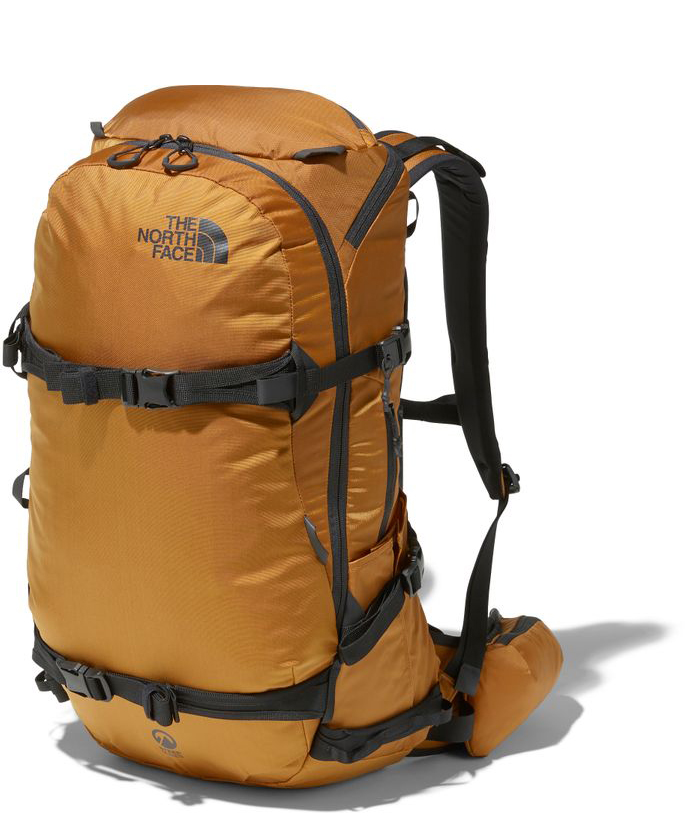
THE NORTH FACE
Chugach 35
Capacity: 35ℓ
Size: S/M/L (Height x Width x Depth) S/M 57 / 30 / 14cm
Weight: S/M: 1,580g, L: 1,655g
¥36,300

[Chugach's 35points of expertise]
First of all, its biggest feature is its unusual two-compartment structure. You can store stickers and cameras that you don't want to get wet in the upper compartment, or stickers that have gotten wet, or clothes that you want to have quick access to, making it extremely useful. Its greatest appeal is its thinness. It is made from high-strength fabric and has an aluminum frame, so it is slightly heavier than other backpacks, but its thinness is amazing. The closer the backpack fits to your body, the easier it is to slide. This point is extremely important, especially when freeriding, where you are speeding, flying, and turning
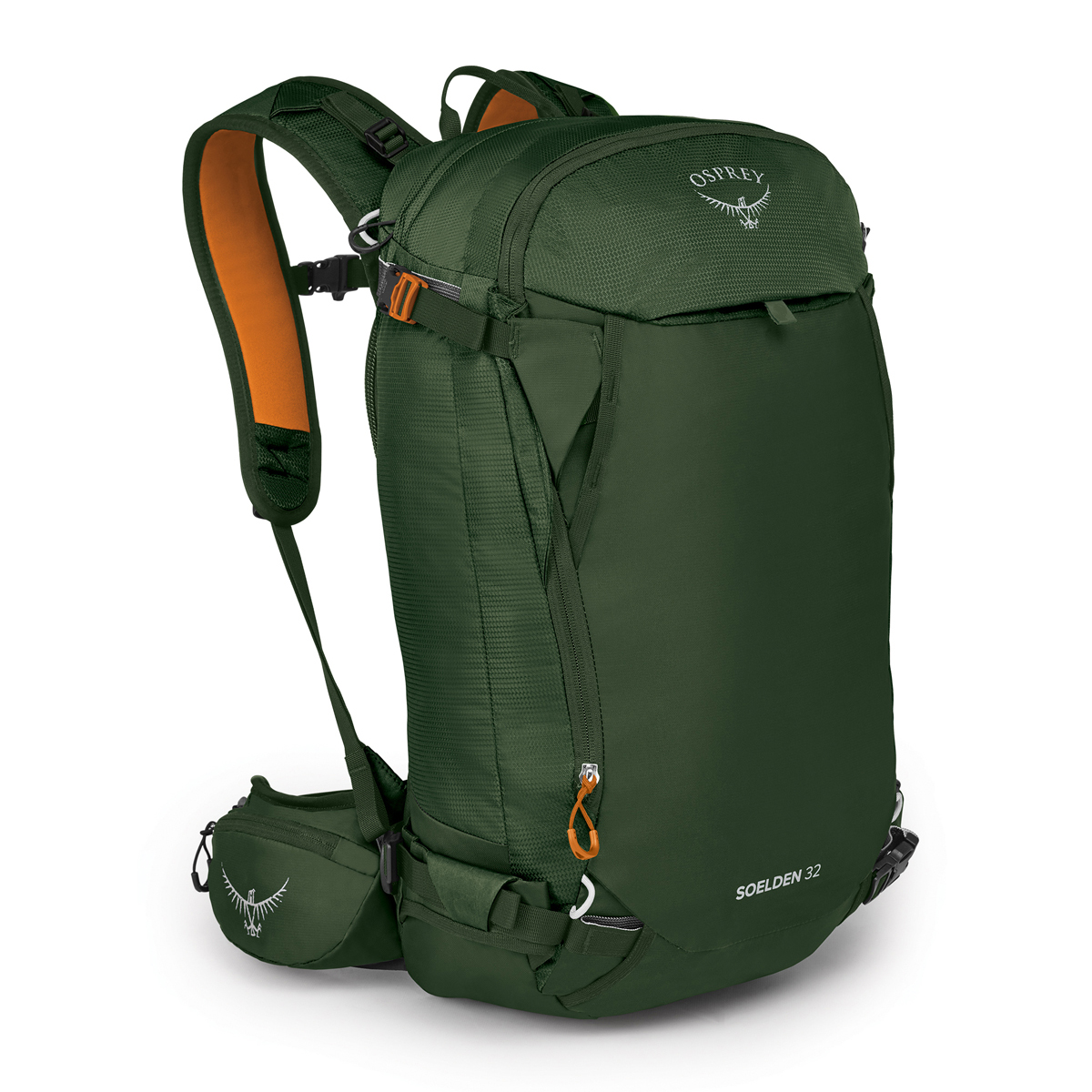
OSPREY
Solden 32
Capacity: 32L
Size (Height x Width x Depth): 54 / 31 / 28cm
Weight: 1,150g
¥26,400

[Solden 32points for discerning quality]
The Ospray was a pioneer in back-opening backpacks. It has three particularly attractive features. First, it's incredibly light. At just 1,150g, it's incredibly light. Second, it has a helmet holder integrated into the backpack, meaning it's virtually impossible for it to be blown away by the wind. Third, it's packed with all the essential features. For beginners or those who just want a simple backpack, a backpack with the bare minimum of features is an excellent choice
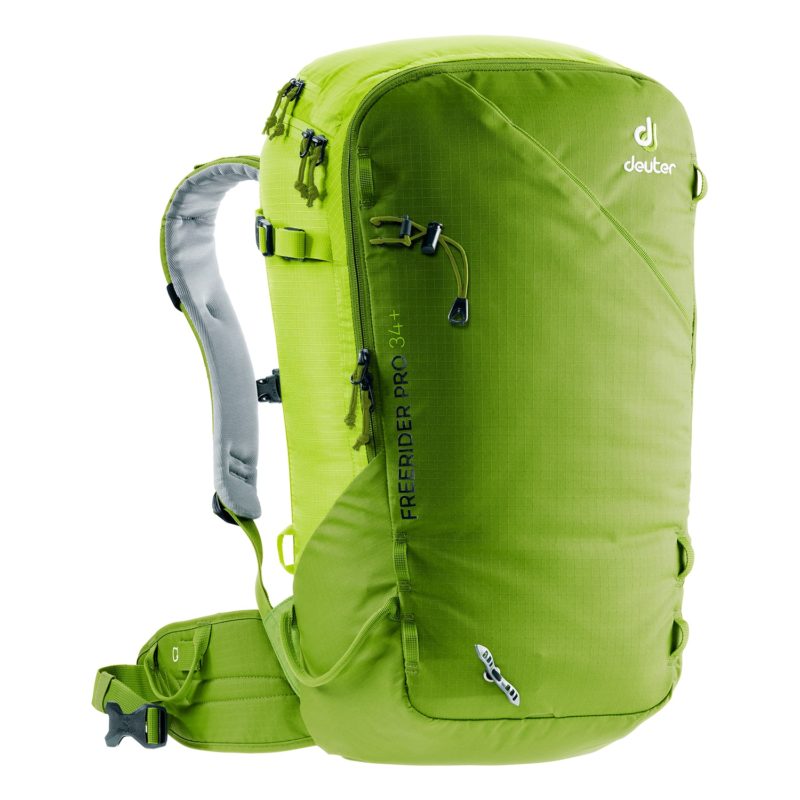
Deuter
FREERIDER PRO34+
Capacity: 34L
Size (Height x Width x Depth): 58 / 35 / 18cm
Weight: 1,280g
¥33,000

[ Focus on the FREERIDER PRO34 +]
In contrast to a simple backpack, this one is packed with features. When you open it, there are lots of storage pockets. There is also a roll-down extension on the top, which is very convenient. There is also a strap coming out from the top to tie up ropes, which is a great feature for people who do mountain tours
I packed my gear into my backpack
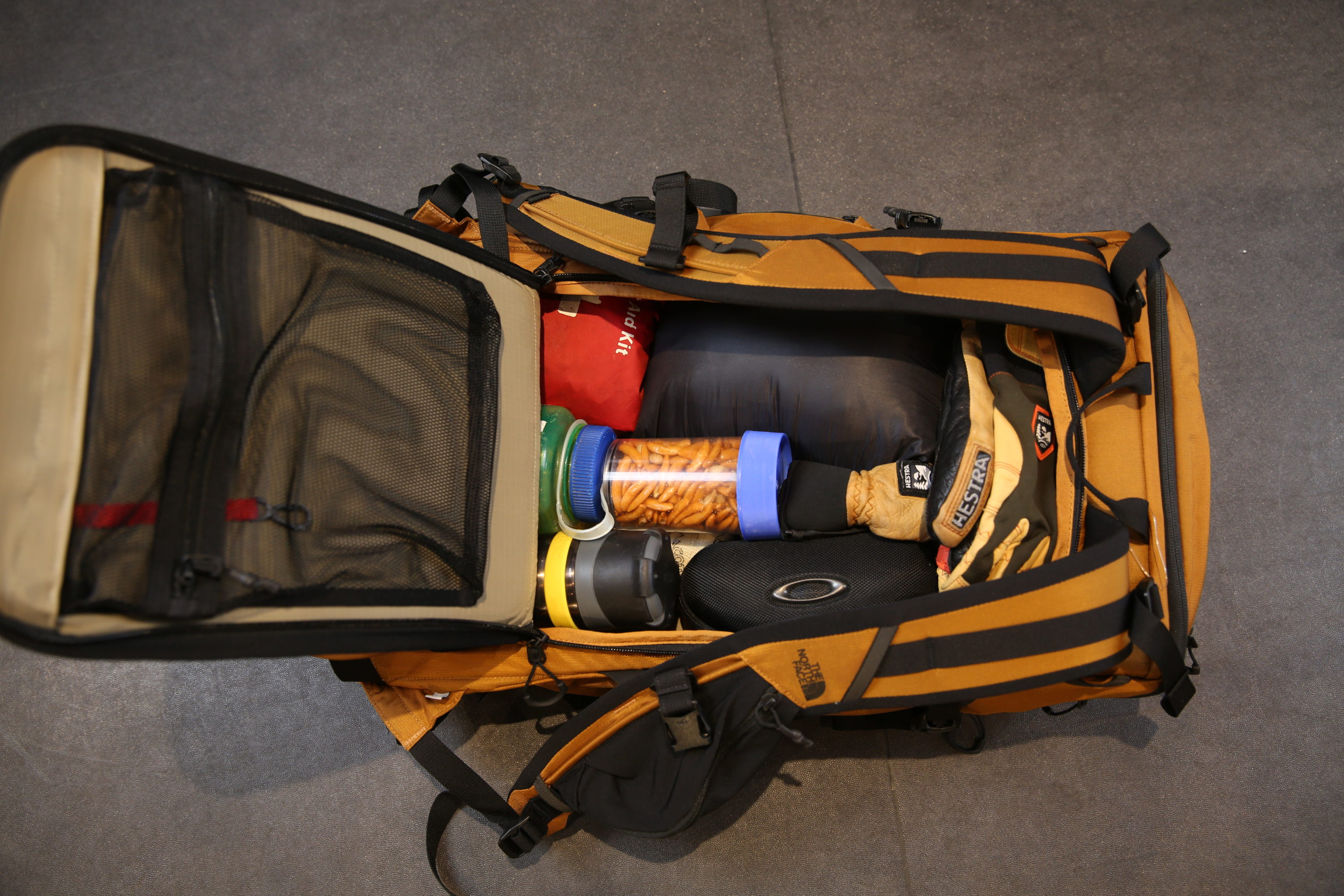
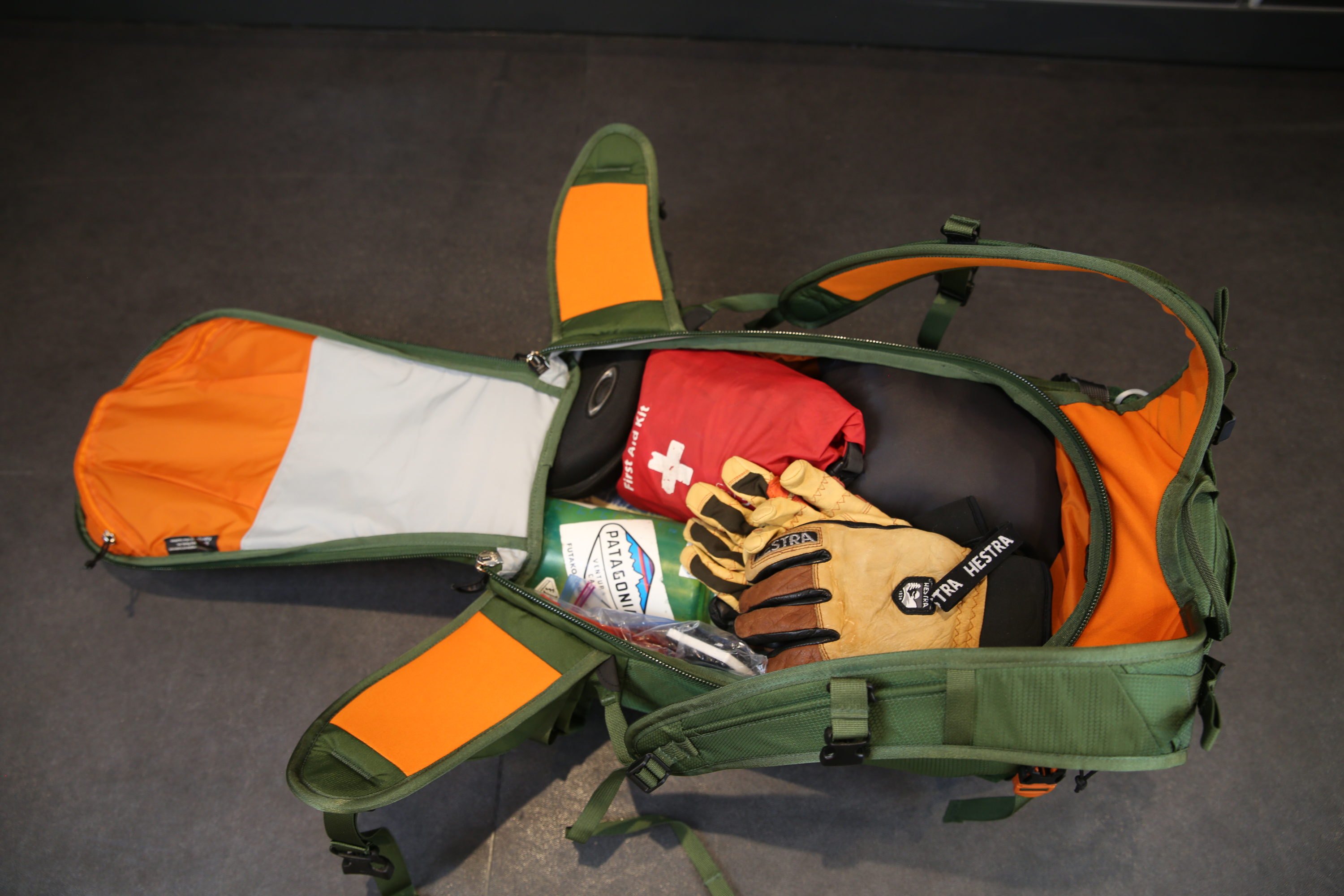
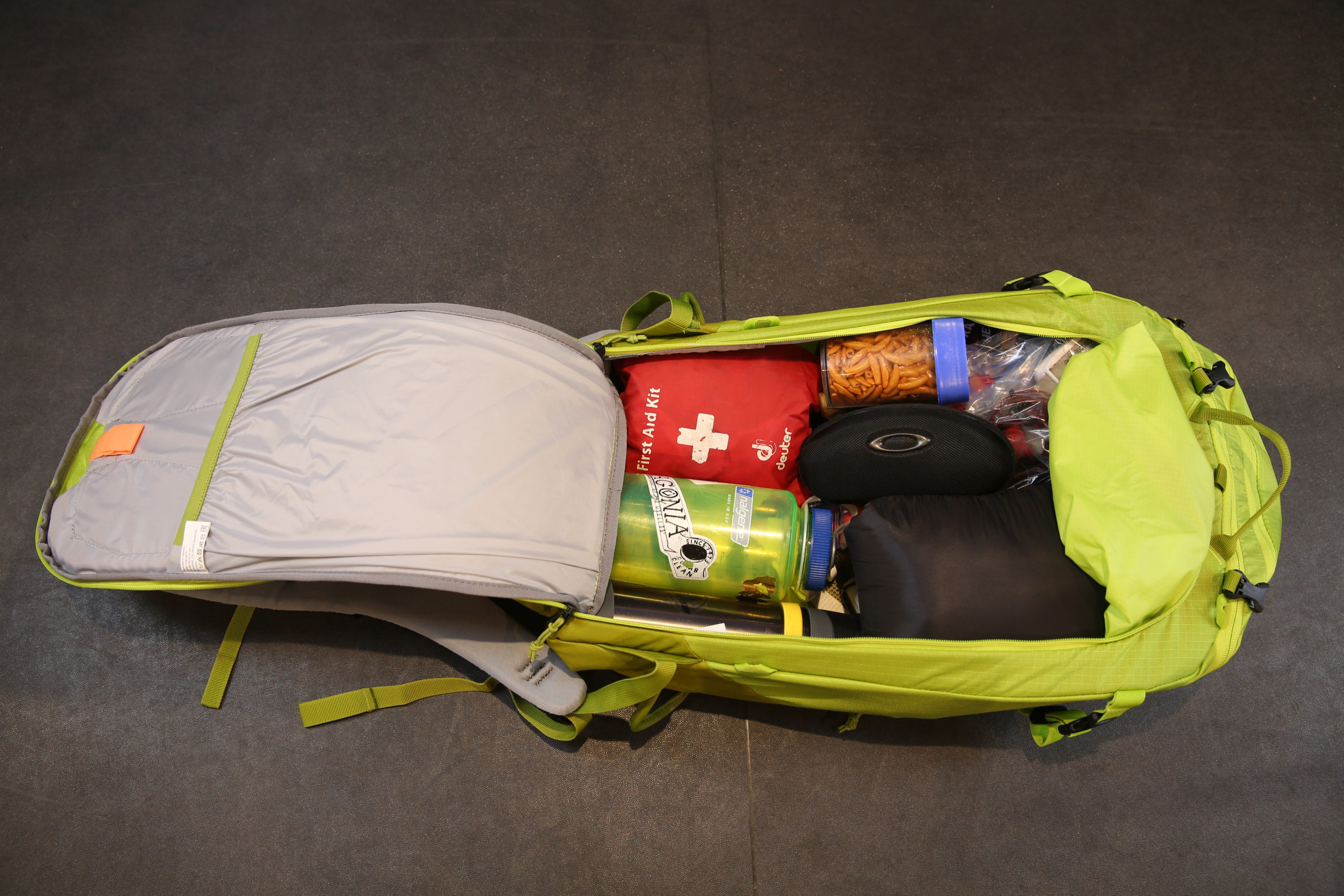
After learning about the advantages and functionality of the three backpacks, we packed the necessary equipment for a one-day backcountry tour in order. So, how did it turn out? This time, the equipment packed in the backpack was these 11 items. (The one Amari used in the 2022-2023 season)
These photos show all three backpacks packed with the above equipment
THE NORTH FACE Chugach 35
OSPREY Solden 32
Deuter FREERIDER PRO34+
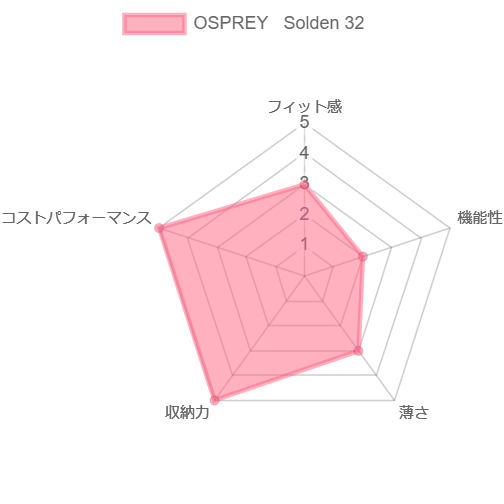
We checked three backpacks based on their key features
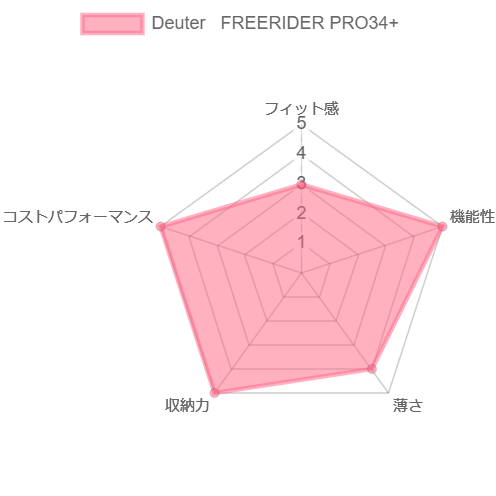
We checked the three backpacks we selected this time based on the important points to consider when choosing a backpack for one-day backcountry adventures: fit, versatility, thinness, storage capacity, and cost performance

Check out the video to see the three backpacks and how they're packed!
In this video, Amari explains the features and usability of the three backpacks, and then actually packs the necessary equipment for a one-day backcountry adventure (all of which is Amari's personal belongings). You can clearly see how Amari packs his equipment, including where he packs each item, how it feels to wear the backpack, and how it behaves when he jumps around or moves around
Summary of
key points for choosing a backpack
According to Amari,
"The most important thing is how it fits when you wear it. That's the basic requirement. On top of that, the 'thinness' of the backpack is also important. The thinner it is, the more it feels like an extension of your body.
What I personally care about is the thinness of the backpack and the fact that it doesn't have too many unnecessary features. That's because I believe 'simple is the best.' Also, whether it has a smart design that fits within the width of your body. If it's baggy to the sides, it will slide around and the backpack will wobble, hindering stable skiing."
People who are about to buy a backpack should keep these points in mind. If you have no idea what kind to choose, or if there is a backpack that interests you but you want to hear more details about its functions and usability, it would be a good idea to visit a pro shop.
Profile

Yuki Amari
A staff member at ICI Ishii Sports Kofu store. He is a mountain specialist who is active in the mountains year-round, pursuing climbing from spring to autumn and mountain skiing from winter to spring. In winter, he often goes backcountry skiing in Gunma, Niigata, and Nagano. His favorite mountains are Mt. Amakazari and Mt. Yatsugatake. His life goal is to one day visit LILA PEAK in Pakistan
Interview cooperation: Ishii Sports
❖ Check it out!
STEEP Pro Shop Guide
https://steep.jp/category/spot/shop/
Ishii Sports Ski & Snow Equipment Online Store
https://www.yodobashi.com/