

Gloves are an essential part of skiing and snowboarding. They may not be as noticeable as the hard gear like skis and boots, but they are incredibly important. Cold hands mean half the fun. If you haven't paid much attention to choosing gloves up until now, you may have been missing out a bit. Let's take a closer look at gloves to enjoy skiing more comfortably and make the most of your time on the snowy mountains
Why wear gloves in the first place?
Why do you wear gloves when skiing or snowboarding? The answer is exactly this
1. Keeping hands warm
2. Protecting hands
Keeping your hands warm is, of course, to protect them from the cold on snowy mountains. If your hands get too cold, you won't be able to move them, which not only makes it difficult to operate poles, buckle boots, operate zippers, and put on goggles, but can also lead to frostbite in harsh conditions. It's important to keep your hands warm enough so you can move them smoothly.
There are also many situations on snowy mountains where your hands can be injured. Sliding through the trees and hitting a tree, falling off your snowboard and scraping your hands on granular snow, cutting your hands while putting on or taking off bindings, etc. Hand protection is essential to prevent injuries.
Elements needed for a snow globe
To keep your hands warm and protected on snowy mountains, gloves must meet the following requirements. To protect your hands, they must be strong against external impacts, meaning the outer material must be durable. To keep your hands warm, the glove's structure must be such that it retains warmth, the padding itself must have high thermal insulation properties, and it is preferable that it also contains a water-resistant material that prevents wet water from penetrating in from the outside
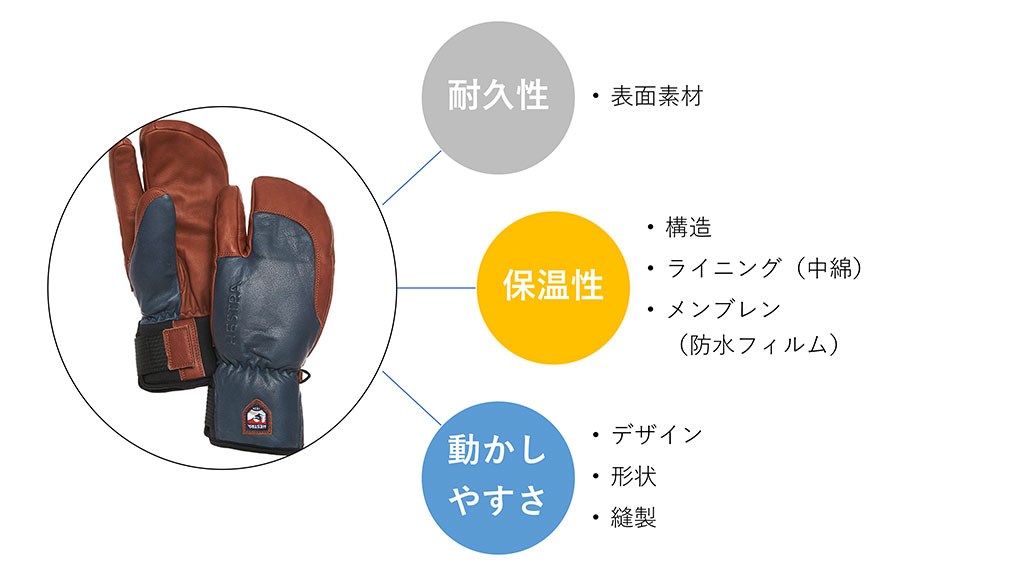
And we mustn't forget about "ease of movement." The cutting and stitching of the glove's parts play a major role in determining whether or not your fingers can move as easily as you want. Depending on how the parts fit together, the texture can become stiff and rough, making it difficult to move your fingers, or the unevenness of the seams can cause stress when performing fine motor movements
How to make gloves
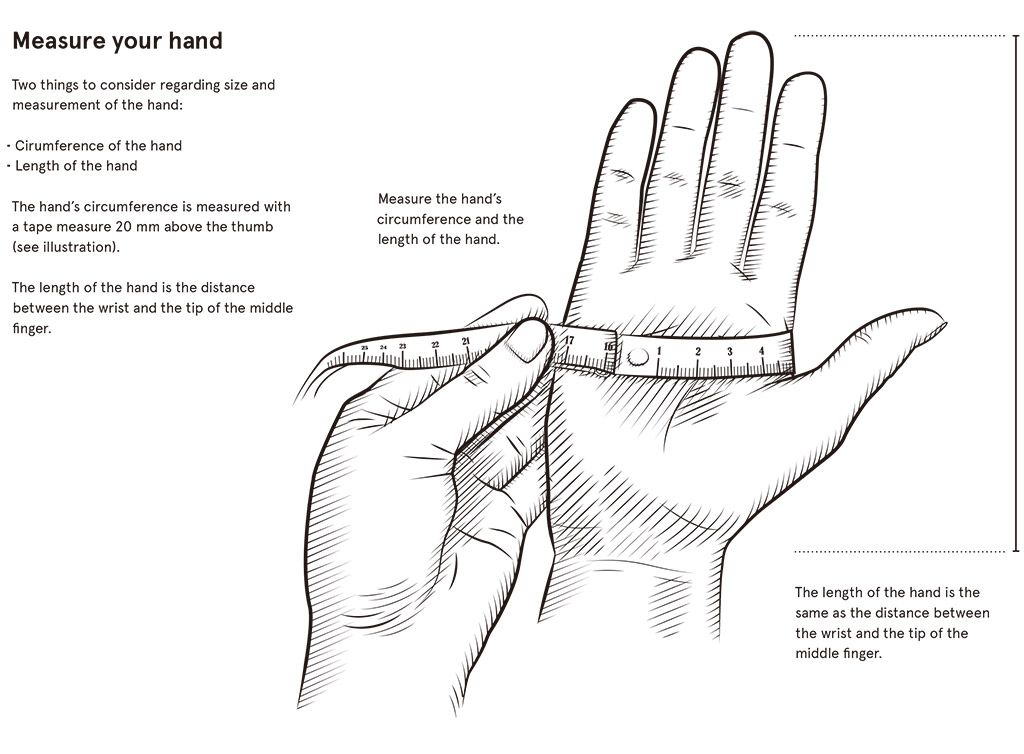
The glove-making process begins with measuring the size of the hand.
Below is how HESTRA measures hands: they measure the width of the palm. In HESTRA's country of origin, Sweden, and other European countries, glove size is measured by width, but in Japanese companies that manufacture motorcycle gloves and other items, the standard is to measure from the top of the middle finger to the wrist. The differences between Japan, which is generally vertical in terms of language and human relationships, and the horizontal culture of the West may be reflected in unexpected places as well.
The origins of the globe
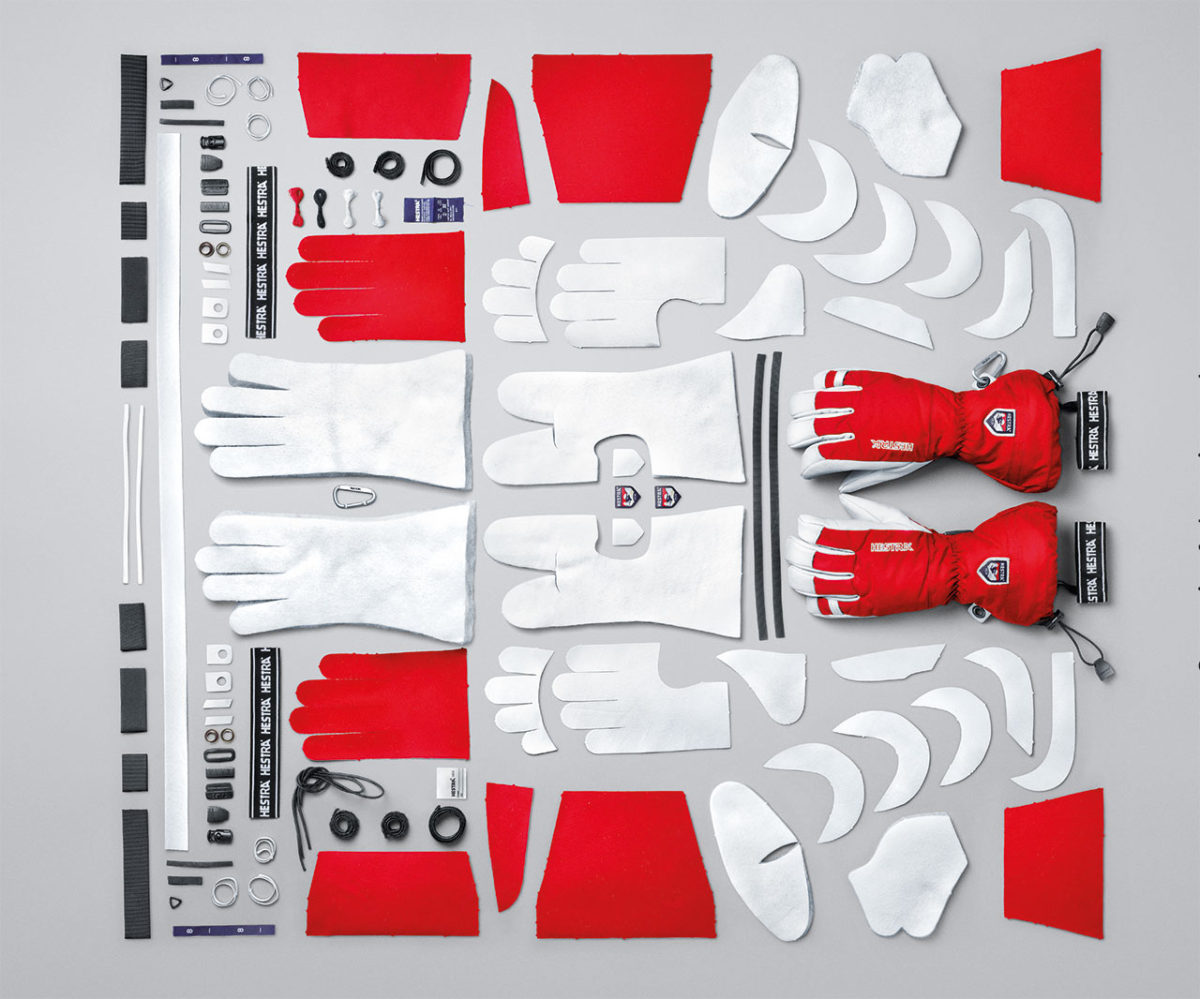
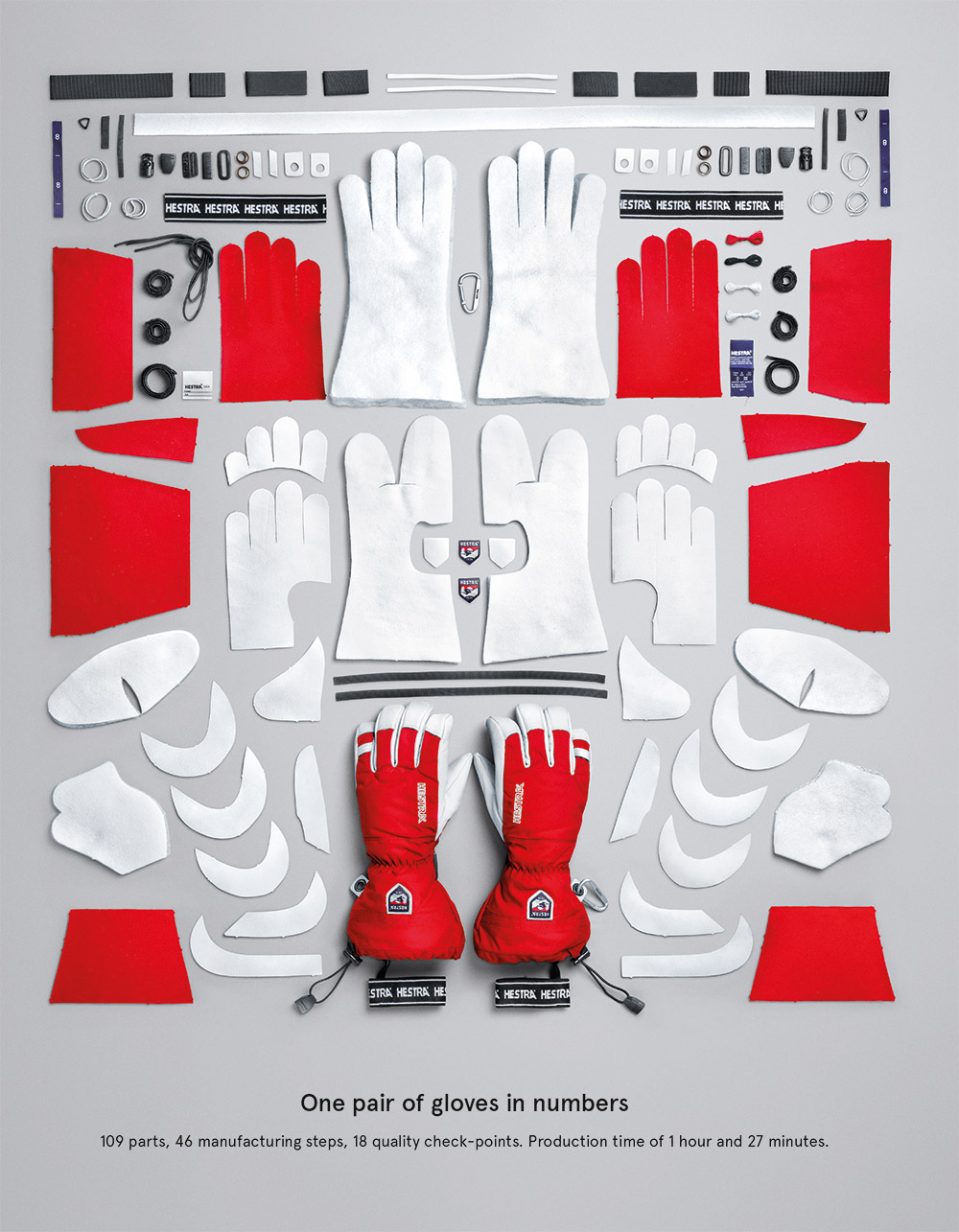
It takes 109 parts, 46 processes, and 18 inspections to make one pair of gloves!
These are the "components of a glove." In the case of HESTRA gloves, one pair is actually made up of this many parts. A whopping 109! The process of sewing the fabric together and attaching the small parts requires 46 actions. In addition, they must pass 18 different quality checks. It takes 1 hour and 27 minutes to complete one glove. That's a lot of work!
Glove construction
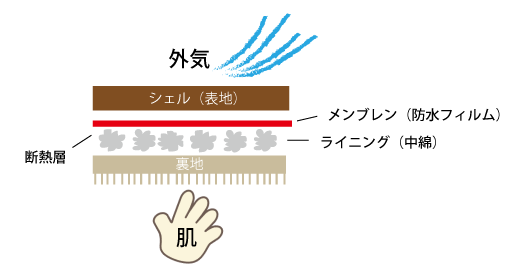
When the disassembled parts of the glove above are combined into a glove, the so-called glove structure looks like this (see image below).
From the outside, there is a shell (outer material), a membrane (waterproof film), a lining (padding), and an inner lining, with the most common being a four-layer structure. There are also gloves with a three-layer structure that do not include a membrane, and thin gloves with no lining.
■ The most common structure is four layers
Lining (padding)
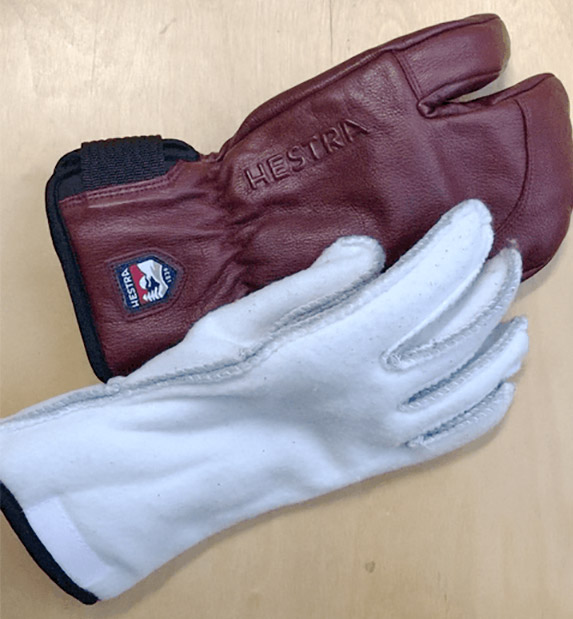
The idea behind maintaining warmth is the same as with layering clothing. Just as you can adjust your warmth by wearing a down mid-layer or a cotton sweatshirt, with gloves you can adjust it by the thickness and material of the lining (padding). There are also gloves with removable linings, as shown in the photo below
The padding is made of fleece material made from polyester, and some gloves are made of wool. The advantage of wool is that it retains its warmth even when it absorbs a little moisture. Even if snow gets inside the gloves and they get a little wet, you won't get cold
Shell (outer)
The materials used for the shell of gloves, or the outer layer, can be broadly divided into two: nylon and leather. Nylon comes in a variety of thicknesses and properties, and its advantages include waterproofness, windproofness, water resistance, breathability, durability, and lightness. Polyester and synthetic rubber materials are also used
The advantages of leather are its overwhelming durability and softness. Leather becomes softer with use, and becomes more flexible and adapts to the movements of the hand. There are also leathers that are highly breathable. Anyone who tries them out will appreciate their comfort. HESTRA, an icon of leather snow gloves, has been consistently making gloves using leather since its founding in 1936. The reason behind this is that the high functionality of natural materials and the tasteful texture that blends in with nature continue to attract users
■ Types of animal leather
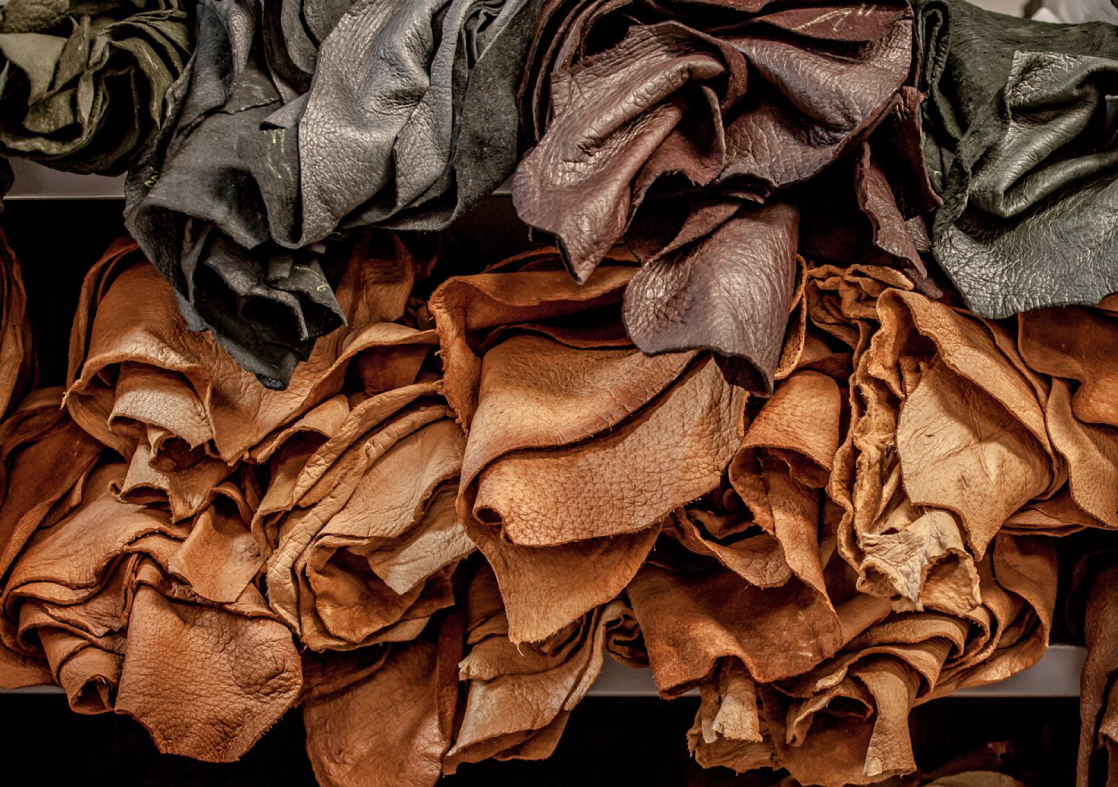
Our daily lives are filled with leather products, such as leather shoes, leather bags and wallets, leather jackets, and leather sofas. Although we generally refer to it as leather, there are actually many different types, and each animal leather has its own unique characteristics
Cow, sheep, goat, horse, and crocodile are popular and easy to imagine, but there are also buffalo, deer, pig, wild boar, etc. The world of leather is truly fascinating when you hear that buffalo leather is used for high-quality leather jackets, that the chamois leather used to care for glasses is made from deerskin tanned with oil, that horsehide cordovan is said to be the world's finest for its beautiful luster, elegance, and durability, and that wild boar leather is high-quality and difficult to obtain

■ The snow globe mainly features goats, cows, and deer, but also kangaroos!
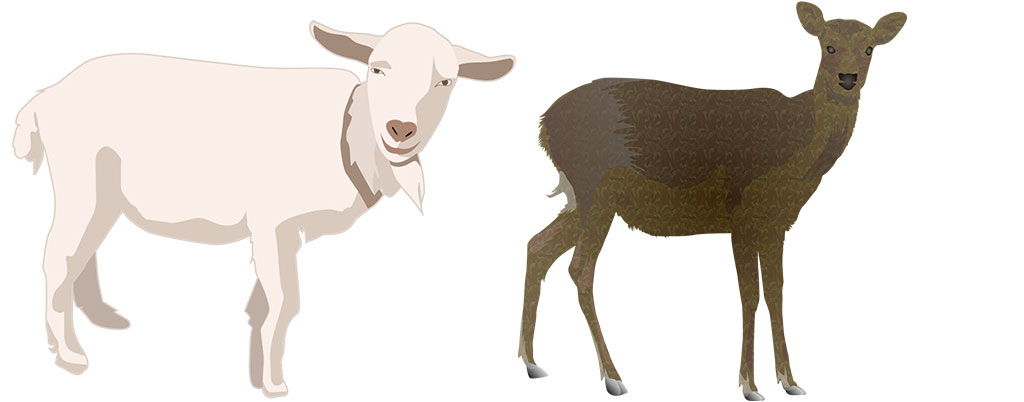
Due to their flexibility and water resistance, goat leather and cowhide are the most commonly used materials for snow gloves. Deerskin is also sometimes used. Goat leather is strong and durable, with a distinctive grain (a three-dimensional wrinkle pattern on the surface of the leather) that changes over time, allowing for enjoyment. Kid skin is particularly softer and more beautiful than adult skin (goatskin), and is popular for shoes and gloves

The palm is made of durable and strong goat leather, and the outer side is made of nylon fabric mixed with a waterproof and breathable membrane.
As you know, cowhide is a material with a wide variety of surface treatments, and is used in all kinds of leather products, including bags, shoes, and gloves. Cowhide leather is resistant to abrasions and has excellent breathability, making it a perfect match for gloves. HESTRA's Omni uses Cowhide

Made with impregnated cowhide, this supple leather becomes more comfortable to the touch the more you use it.
Deerskin's ability to stretch and return to its original shape makes it an excellent material for gloves. "Elkskin" is made from elk raised in Sweden and Finland, while "Deerskin" is made from the leather of white-tailed deer in North America. Both are incredibly soft and have excellent heat retention. Although more expensive than goat or cowhide, their quality is appealing

Made with soft, warm, and scratch-resistant deerskin. Versatile trigger gloves that combine warmth and operability.
For the 2024-2025 season, SWANY will be releasing gloves made from kangaroo leather. Kangaroo leather is characterized by its thinness, lightness, and durability. Its thinness is far superior to other ski gloves, and when you grip something, it feels almost like your bare hands. Kangaroo?! Many people will be surprised to hear that

SWANY
SX-501 Duetipo
Material: Goat Leather, Kangaroo Leather, GORE-TEX
¥20,900
The back of the hand is made of goat leather and the palm is made of kangaroo leather, which makes the palm side, which is the most stressed, more durable and allows for long-lasting use
When you learn these trivia about leather, don't you feel like you'll develop a different kind of attachment to your gloves?
Membrane (waterproof film)
There are various membrane materials that work to keep snow gloves dry, but the most well-known is probably " GORE-TEX® ." It is a waterproof and breathable material that functions like human skin, releasing heat and moisture from inside the glove to the outside. It prevents water from getting in and keeps your hands dry and comfortable even in the snow. It also keeps out the wind, keeping your hands warm and comfortable.

On the other hand, it is undeniable that adding GORE-TEX® CZone® "
This has the advantage of allowing the gloves to be cut to suit the needs without compromising the fit. In this way, membranes are used to suit different needs.
Glove Design
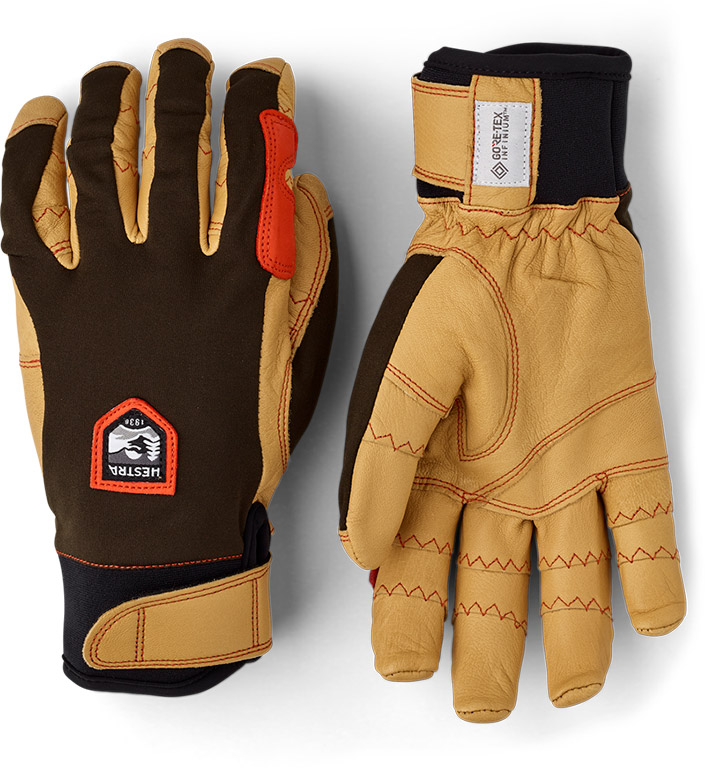
Slim design makes it easy to do any job. Features an Ergo Grip that is pre-cut and sewn into a 3D shape that is bent inward.
Snow globes are designed for use in the harsh natural conditions of snow, so most are designed with functionality rather than aesthetics in mind. What kind of design should be required to be functional? This involves not only the material and structure, but also ingenuity in the design, which stems from the need to cover the hand and move the fingers
shape
Opening and closing a zipper on a snowy mountain with numb, cold hands can be surprisingly stressful. It's best to have as much freedom of movement as possible when gripping poles, adjusting bindings, or putting on goggles. The shape of your gloves directly affects how you move your hands
■ Five-finger, three-finger, and mittens
Snow globes can be roughly divided into these types:

\23,100


\22,000
| merit | assignment | |
| Five-finger gloves | Excellent fit and allows for fine finger movement | Fingertips get cold easily, are hard to dry, and (depending on the material) tend to become stiff |
| Three-finger gloves | The thumb and index finger are separate, so they are sufficient for grasping objects, and the parts that are together are warm | The fit varies greatly from person to person, and you need to get used to the three-arm movement |
| Mitten Gloves | The fingers are kept together, which keeps them warm. The pole is relatively easy to grip. It is less likely to wrinkle or crease, so it is less likely to get damaged | The fit is poor. You can't make fine movements. Jumping and grabbing tricks are quite difficult |
The industry's first quad (four-finger) glove will be released in the 2024-2025 season

HIMARAK
BRANDY
Material: deer
¥22,000
Work on snow quickly and precisely, while keeping your ring and little fingers warm. Made from soft, heat-retaining deerskin that's also scratch-resistant. Suitable for temperatures from -15°C to 3°C
HIMARAK has released the first four-finger model in Japan! "BRANDY" is made with Japanese deer leather. It's just as easy to work with as a five-finger glove, and it's also great for keeping your ring finger and little finger warm, which tend to get cold. It's a fusion model that perfectly solves the issues of three-finger and five-finger glove designs. The supple, soft texture of deer leather makes it incredibly comfortable to wear. It's suitable for temperatures from -15°C to 3°C
■ Ergo Grip
HESTRA also uses a technology called "ErgoGrip" in its design, which is "ergonomically designed with a curved shape that fits the fingers when they are in their most relaxed, natural position." Developed by Matsuoka Gloves, a Japanese glove manufacturer famous for its motorcycle and golf gloves, the technology won the Technology Award, the grand prize in the processing technology category, at a global competition for leather products' materials and processing techniques in 2009, and also holds a patent
ErgoGrip was developed by studying the curves and movements down to the millimeter to achieve a natural fit for the human hand. The parts are cut and sewn to match the shape and movement of the fingers, minimizing energy loss when moving your fingers. By conforming to the shape of your hand, the surface is less likely to wrinkle or crease, making it easier and more comfortable to grip poles. The ease of movement of your fingertips when handling tools means no stress. This means you won't get tired even when wearing them for long periods on snowy mountains
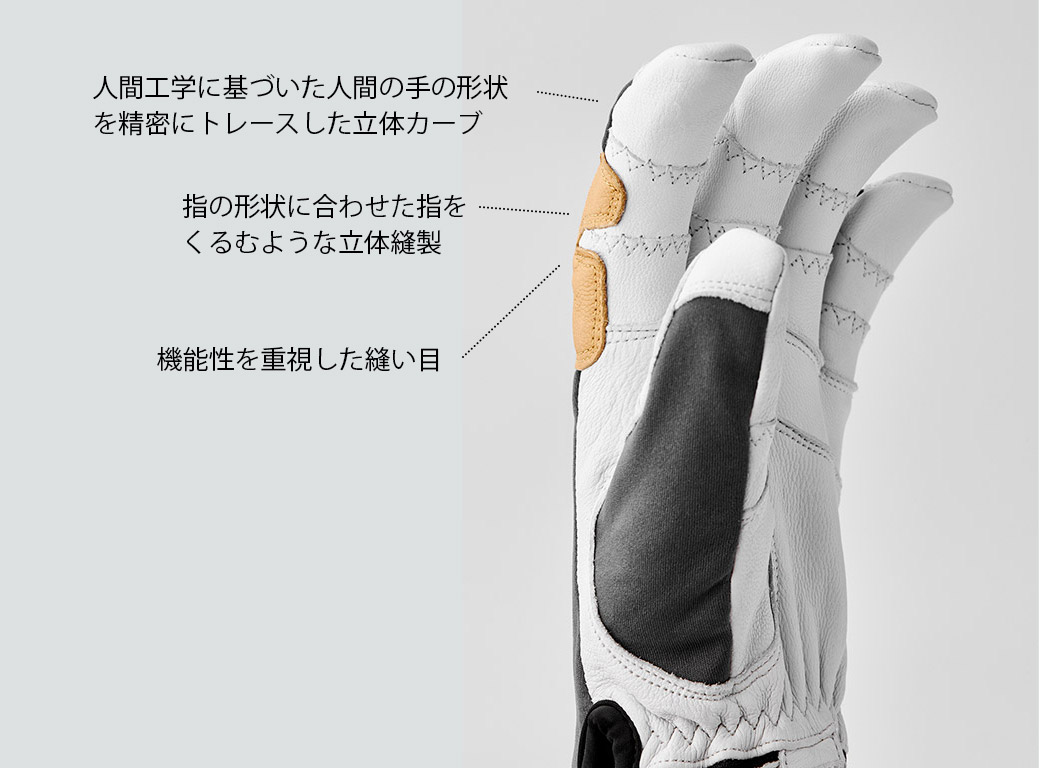


Sewing
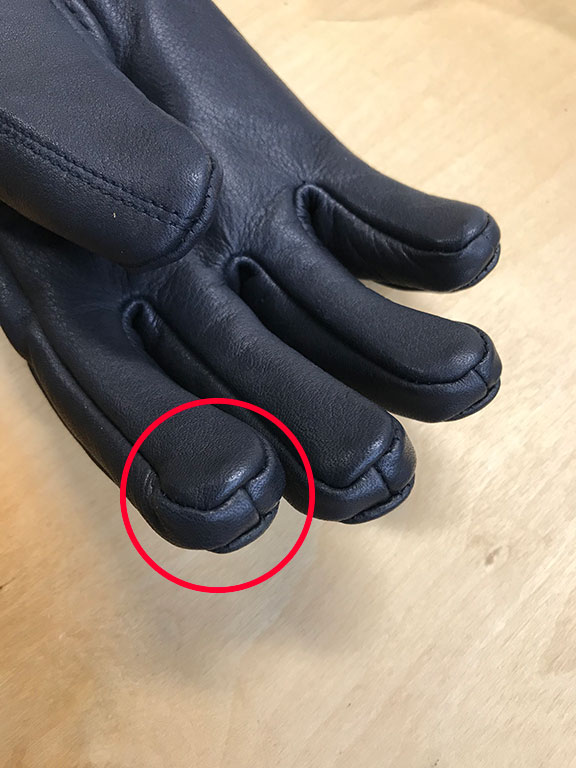
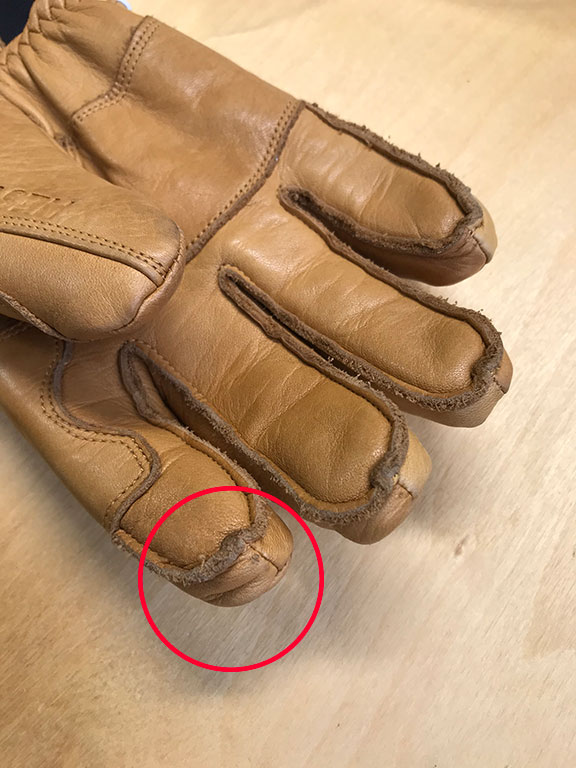
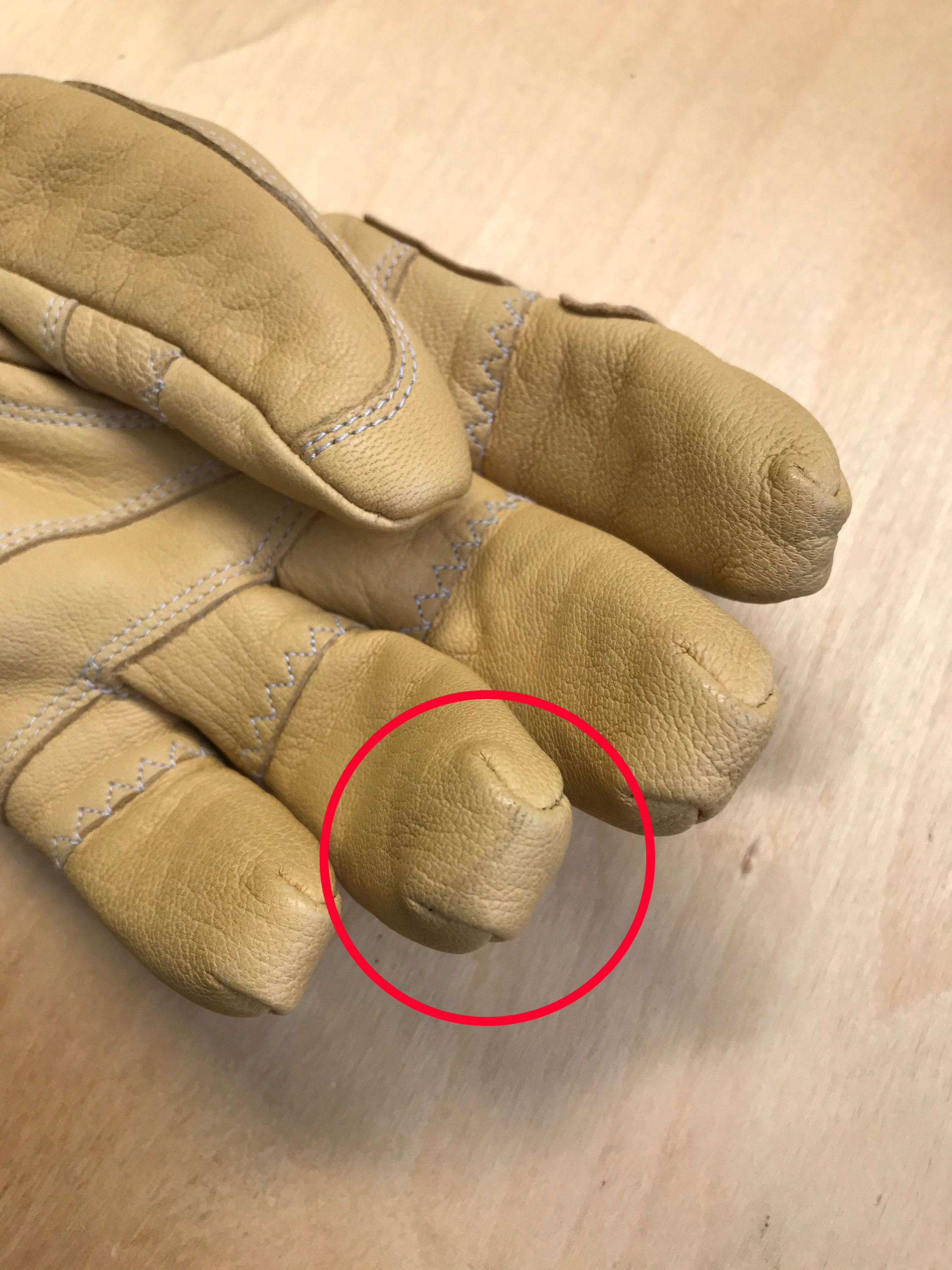
Gloves are made up of many different parts, and the way they are sewn together affects the fit and comfort. In particular, if the seams rub against the fingertips when making delicate movements, it can feel uncomfortable and make it difficult to move accurately. Stitching is also an important point that directly affects the ease of finger movement and comfort
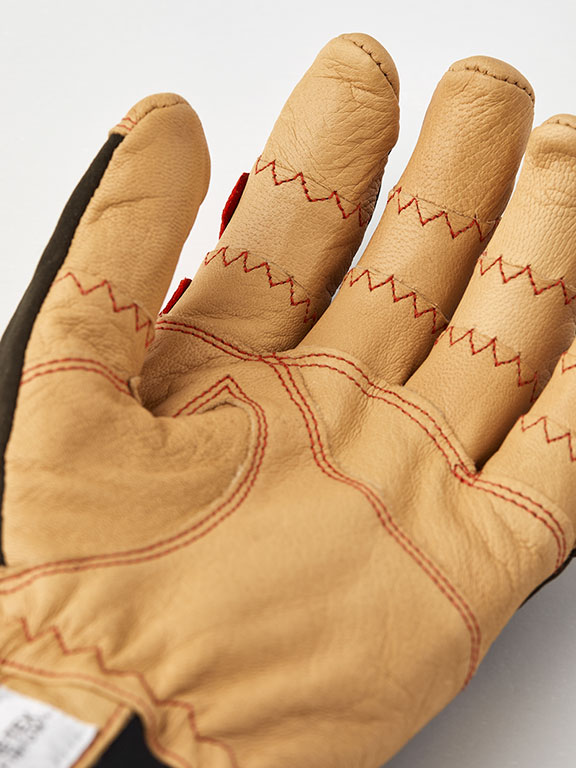
Functional seams
The joints on the palm side of the fingers are cut into individual pieces, and the seams are designed to fit between the fingers. By sewing the fingers three-dimensionally with a bent shape, a high level of fit and smooth use are achieved
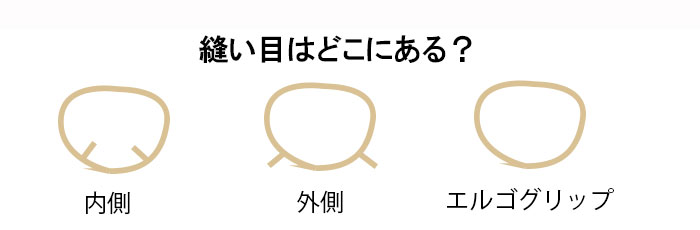
Improvements to the usability of gloves
Gloves are used in a variety of ways depending on the user. There are mittens for warmth, five-finger gloves for ease of movement, and three-finger gloves that combine the best of both worlds, but recently, even more interesting designs have appeared. A prime example is this:
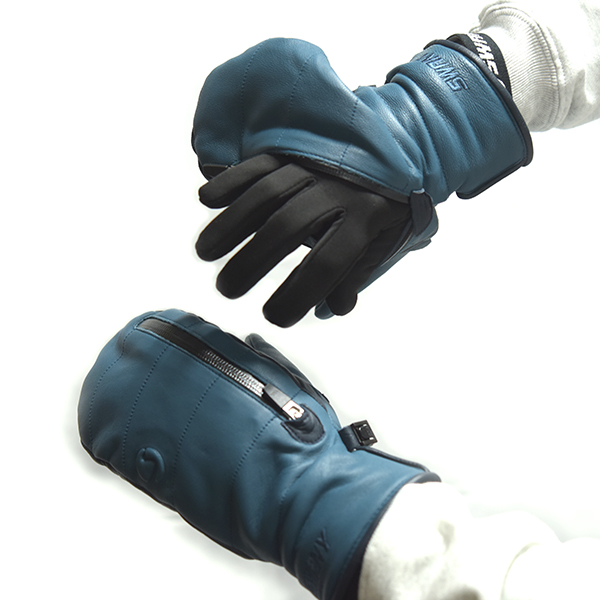
SWANY's "Bocco," designed for freeriding, has a thin inner glove inside a leather mitten, and when you open the zipper, the five fingers pop out and function as a regular five-finger glove.
Genuine leather mittens with excellent heat retention and waterproofing keep you warm while skiing. And when you need to move your hands around on the snow, like unzipping your shell, changing goggle lenses, or using your smartphone, you can unzip them and use the five-finger inner mittens. Since your fingers aren't exposed to the outside temperature, they stay warm—what a blessing!
Glove handling
Once you get your favorite gloves, you want to take good care of them and use them for as long as possible. To that end, we'll tell you some things to be careful of when handling your gloves
Drying
Of course, if your gloves get wet, you'll need to dry them, but it's important not to let them dry too quickly after they get wet. For example, placing them in front of the stove in the drying room of your accommodation, or hanging them directly over the stove at a rest house during a break in the mountains, is actually not a good idea. This is because the rapid exposure to heat will damage the material. Ideally, you should dry them at room temperature. It's not surprising that you might think, "Wait! That won't dry overnight!" But why not bring another pair with you for that purpose?
Applying oil
Leather gloves should be soaked in oil before use. Just like human skin, they become rough and flaky when they dry out, making them more susceptible to damage. How often should you apply oil? It depends on the situation, but a good guideline is once every four or five ski trips.
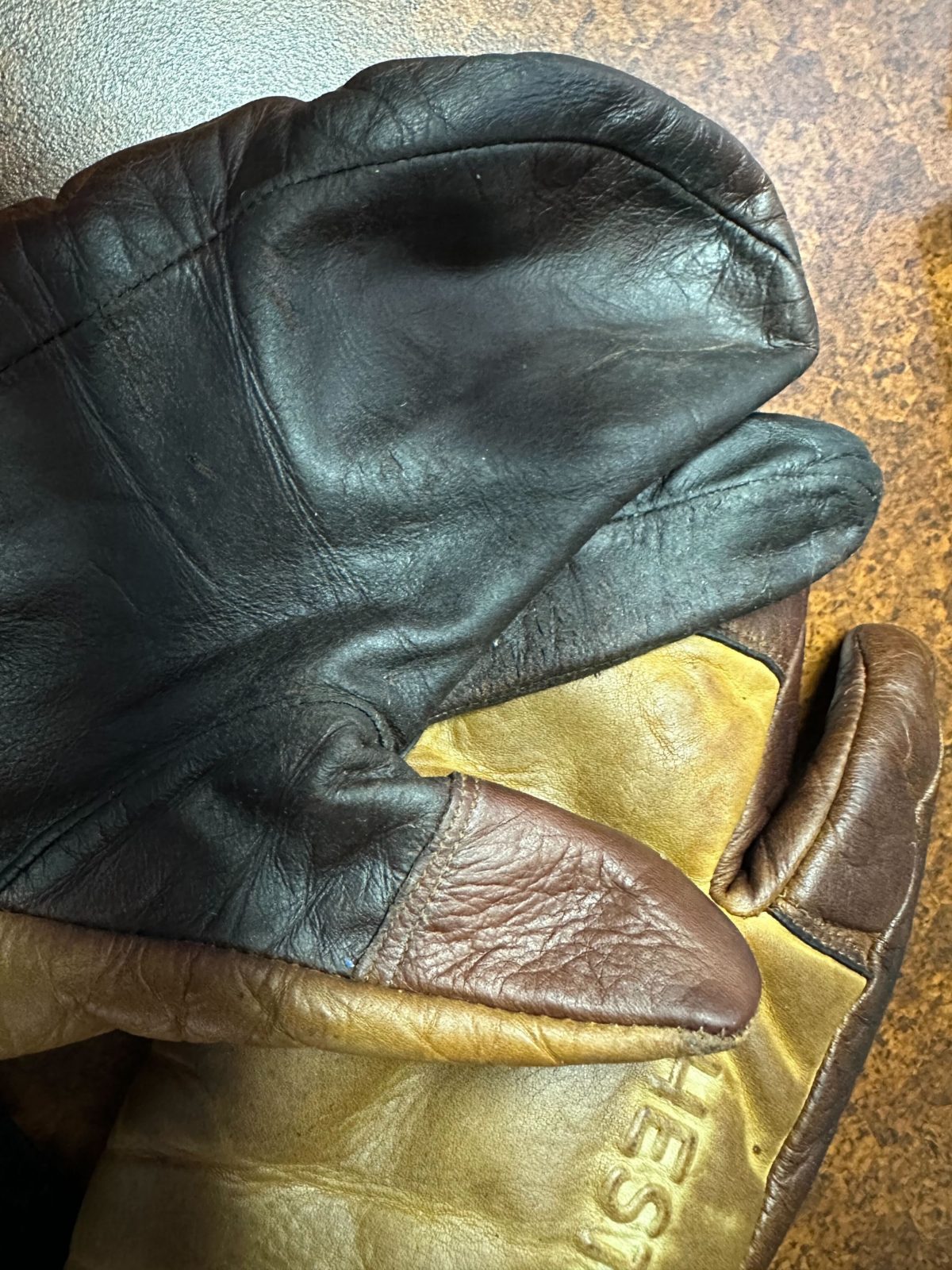
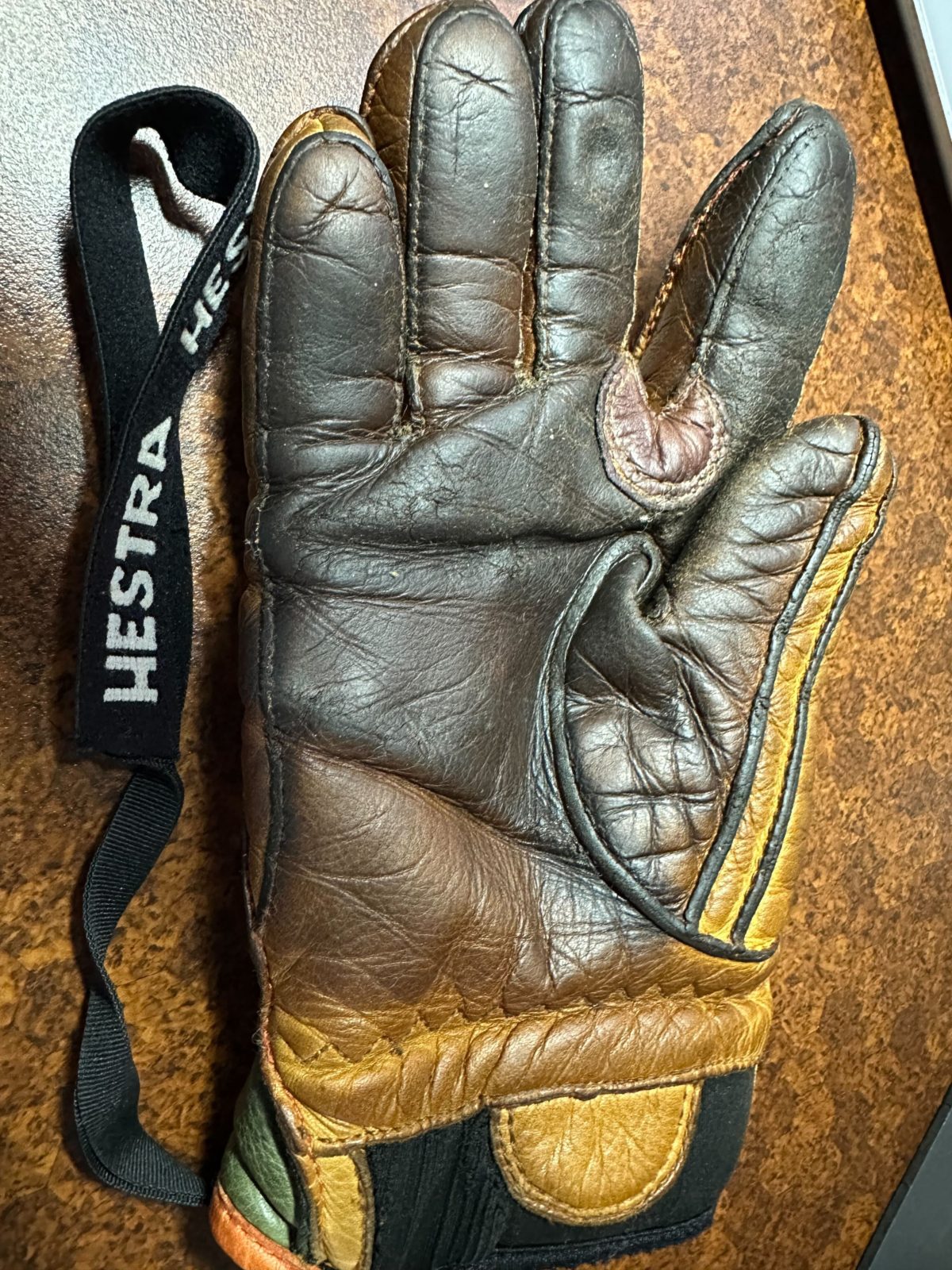
Repairing gloves
I often see people using packing tape or duct tape to patch up worn, torn, or damaged parts of their gloves, but I don't recommend it. If you try to repair them properly, the sticky tape will make it impossible to insert a needle. If you intend to repair them, you should take them to a retailer from the start. Some manufacturers offer free repairs for one year after purchase, so it's a good idea to check when you buy
<Example of glove repair>
lastly
Gloves are essential for enjoying the snowy mountains. In fact, they are made through an elaborate process like this, incorporating the ingenuity and attention to detail of the maker. We hope that by taking a fresh look at gloves, you will find a new attachment to the gloves you have used up until now, or even find your next partner
Interview cooperation: Fullmarks Ltd. Matsuoka Gloves Co., Ltd.
Supervision: Amano Yoshio (Fullmarks/HESTRA)
*This is a partial remake of the article released in the 2024-2025 season.