

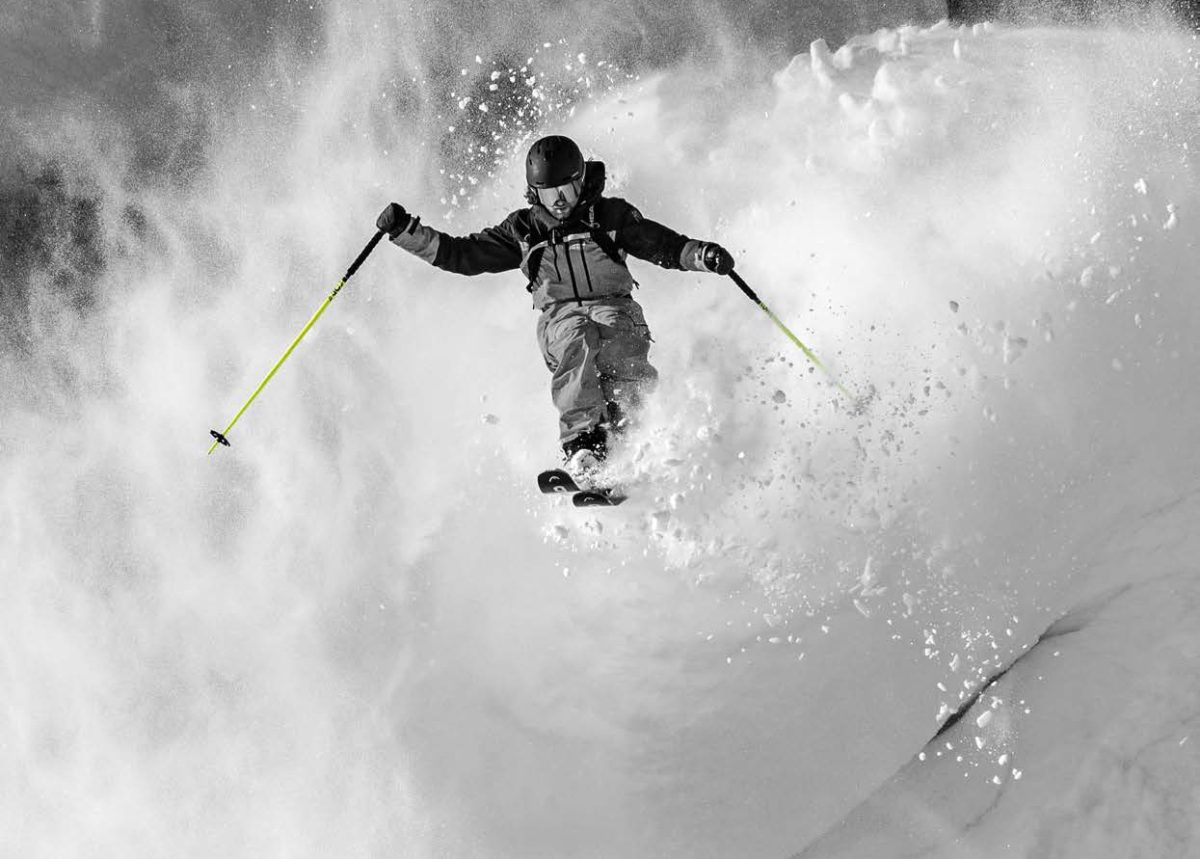
The new material "Graphene" brings
unprecedented lightness
KORE has been part of HEAD's freeski line since the 2018 season. The category has continued to expand year after year, and its comprehensiveness is remarkable even within the brand. For the
2022 season, the lineup will include 10 models in total, six for men and four for women. This is the second-highest number after HEAD's core competition ski line.
The KORE series is popular with everyone from freeride competitors to skiers, thanks to its wide range of models with waist widths ranging from 85 to 117 mm
What is particularly noteworthy is its lightness and strength. When it comes to models suitable for freeriding and carving, it is common to incorporate metal or titanium to make them stronger and more stable, but this increases the weight and reduces ease of handling
Head has made a major change to the structure of skis by using a new material called "Graphene." have many advantages, including increased buoyancy and excellent maneuverability due to their lighter weight . Let's take a look at "Graphene," the material that created skis that are both light and strong.
The "KORE" series combines lightness and strength = Carruba core + Graphene + Carbon
What kind of material is graphene, the material that dramatically lightens skis?
Graphene is a new material discovered in 2004. It is thin, strong, and heat-resistant. For example, it is said to be 300 times stronger than steel.
This material is an extremely thin flat sheet, only one atom thick. It's a little hard to imagine, but it would take three million sheets stacked together to make a thickness of 1 mm.
Incidentally, the scientists who discovered this new material were awarded the Nobel Prize in Physics in 2010, and it has attracted much attention from various fields as an innovative material
Head was the first to adopt this technology in the ski industry
By using this new material in the "KORE" skis, we have succeeded in significantly reducing the mass, thickness, and type of material compared to previous skis. In fact, the skis are about 550g lighter than previous skis
Multi-layer carbon sandwich cap construction
❶Polyester fleece ❷Glass fiber ❸Glass fiber black ❹Graphene ❺Karuba poplar wood core ❻Sidewall ❼Dampening layer ❽Edge ❾Carbon ❿Base
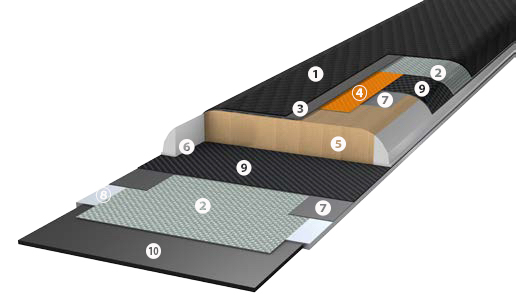
All models in the KORE series have the structure shown above. A soft and light Karuba wood core is used for the core, and it is made as thin as possible. Making the core softer and thinner makes the ski lighter, but it also weakens the ski itself. However, by placing a graphene-processed carbon layer on the front and rear surfaces of the binding, the ski is more than capable of absorbing all of the skier's power and resistance from the snow surface
Graphene brought about unexpected changes to ski construction. Normal skis are typically thin at the tip and tail and thick in the center. Graphene skis, on the other hand, are nearly uniformly thick from tip to tail. This makes it easier to apply force evenly to the ski. Furthermore, the improved weight balance creates more lift in soft snow, resulting in superior maneuverability
In addition to the Graphene, the skis feature a triaxial carbon structure, which is made up of three layers of woven carbon sheets, giving the skis more flexibility and improving edge grip
Since James Heim became involved,
the lineup has been expanding year by year.
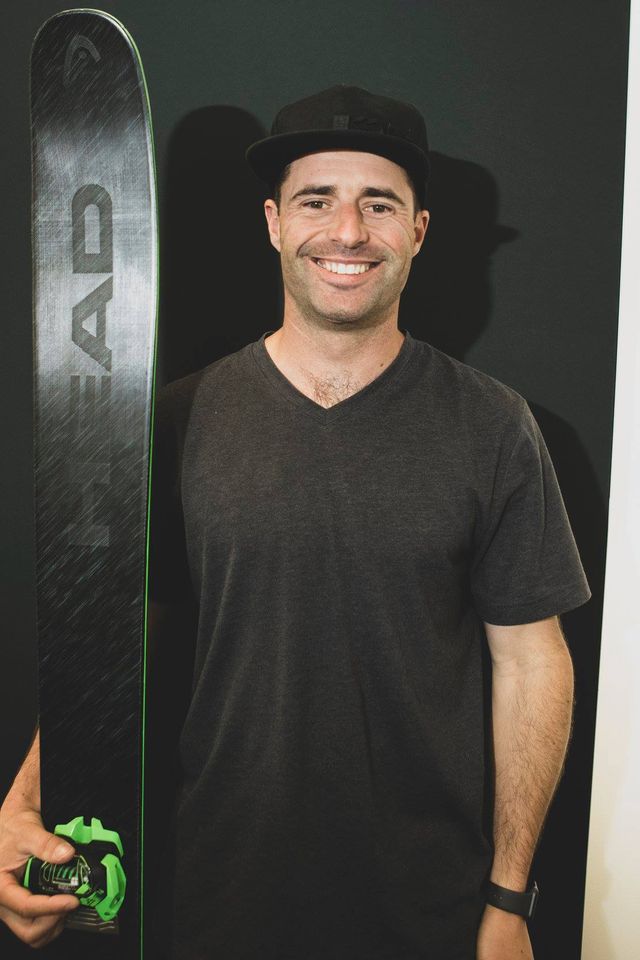
The introduction of the "KORE" series in 2018 brought about a major change in the Head freeski segment, and at the heart of this is James Heim, a rider who has risen from a simple ski bum to a movie star, appearing in movies such as MSP as the face of Head Freeride
In May 2018, he was appointed Global Freeride Team Manager for Head and began actively promoting the brand in North America. While the team had been sending scouts to various locations, the addition of a movie star led to a younger generation responding to KORE, helping the brand expand its market share
The [KORE] series has expanded its lineup year by year. Below is a look at the changes that have taken place
| Total | Model name | |||||||||||
| '18 season | 3 | 117 | 105 | 93 | ||||||||
| '19 season | 5 | 117 | 105 | 99 | 93 | 87 | ||||||
| '20 season | 6 | 117 | 105 | 99 | 99W | 93 | 93W | 87 | ||||
| '21 season | 8 | 117 | 105 | 99 | 99W | 93 | 93W | 87 | 87W | |||
| '22 season | 10 | 117 | 111 | 105 | 103W | 99 | 99W | 93 | 91W | 87 | 87W |
Here we introduce all the models for the 2022 season
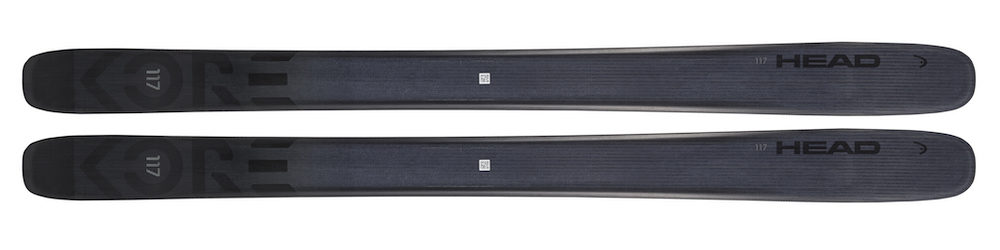
99,000 yen L=177, 184cm | D=145-117-129mm (184cm) | R=24.6m (184cm)
- The top model in the series. Ideal for attacking big lines on big mountains.
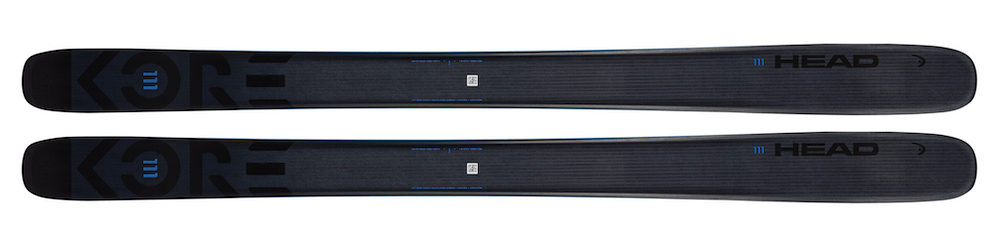
Core 111
99,000 yen L = 177, 184cm | D = 140-111-127mm (184cm) | R = 21.1m (184cm)
- Ideal for freeride scenes. Agility, buoyancy, and versatility trusted by professional riders.
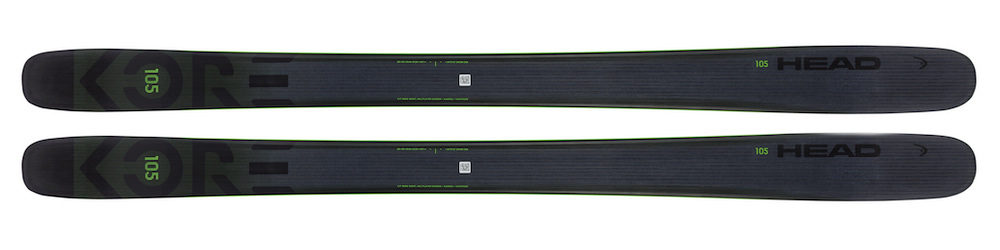
Core 105 93,500 yen L = 170, 177, 184cm | D = 135-105-125mm (184cm) | R = 17.8m (184cm)
The most balanced model in any situation on any slope. An all-around ski in the backcountry where conditions are difficult to predict.
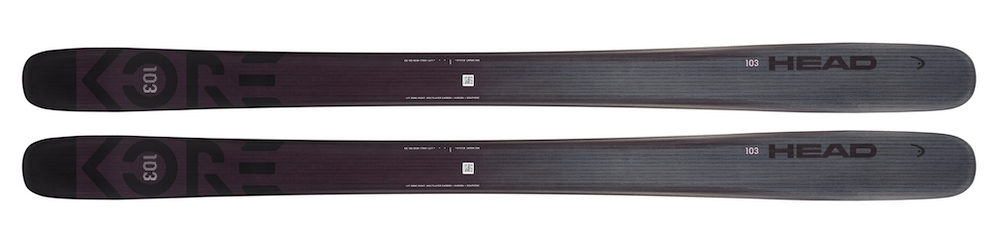
94,600 yen L=170cm | D=130-101-120mm (170cm) | R=15.2m (170cm)
・The rocker is steeper than the KORE 93 and 97, making it easier to pivot on fresh snow.
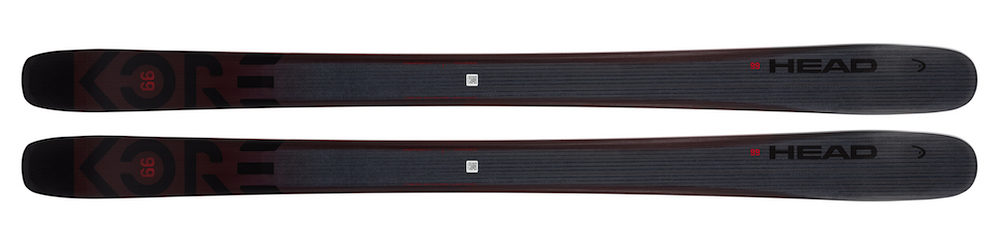
Core 99 93,500 yen L = 170, 177, 184cm | D = 134-99-120mm (177cm) | R = 17m (177cm)
- All-around performance that can be used in deep powder and on icy surfaces
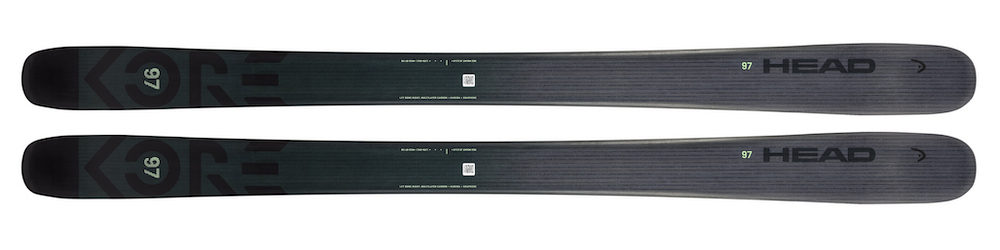
93,500 yen L = 163, 170cm | D = 131-97-118mm (170cm) | R = 15.3m (170cm)
- A size that performs well in various conditions. All-day, all-mountain model
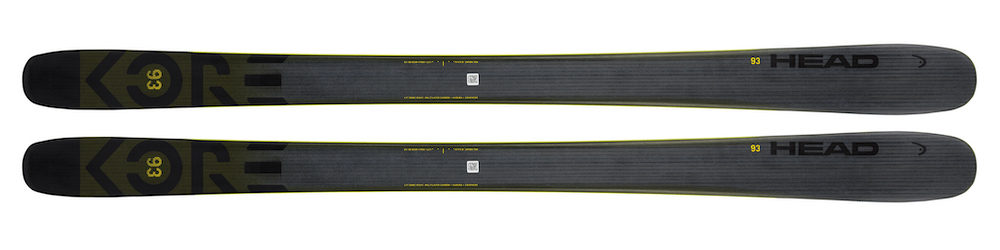
Core 93 88,000 yen L = 163, 170, 177cm | D = 133-93-115mm (177cm) | R = 16.4m (177cm)
- Perfect for fresh snow skiing, carving, and drawing lines with control over turns of any size.
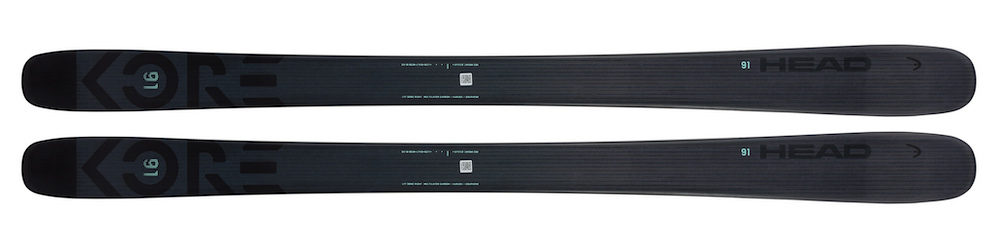
W 88,000 yen L=163, 170cm | D=130-91-113mm (170cm) | R=14.7m (170cm)
- The length is also easy for women to handle. It provides buoyancy and excellent performance on groomed slopes.
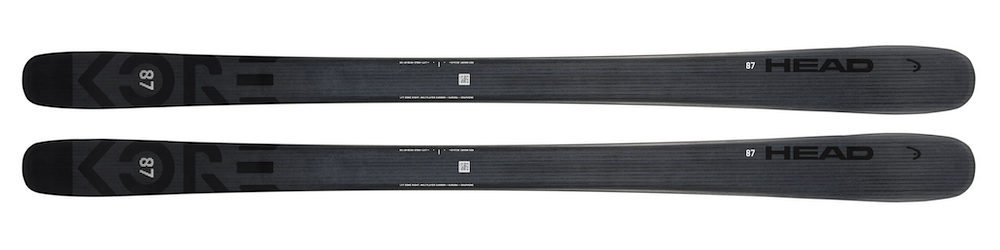
Core 87 88,000 yen L = 156, 163, 170cm | D = 125-85-108mm (170cm) | R = 14.8m (170cm)
Recommended for skiers who want to enjoy powder and groomed snow at the ski resort.
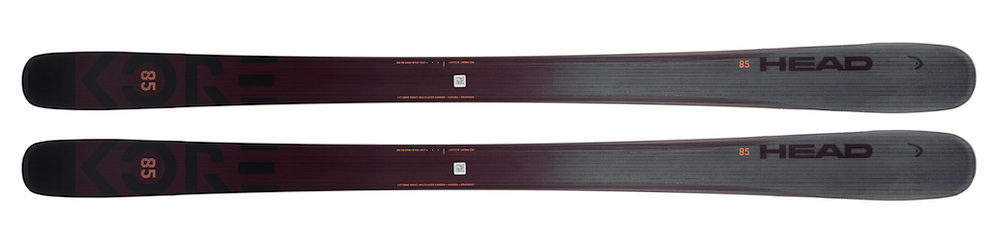
88,000 yen L = 156, 163, 170cm | D = 127-85-108mm (170cm) | R = 14.8m (170cm)
- Versatile enough for all-mountain riding. Lightweight, making it ideal for touring.
All models are constructed using graphene and carbon. Another distinctive feature is that the "KORE" series does not use a topsheet. By using polyester fleece instead of a topsheet, the weight is further reduced. Because of the topless tech construction, the HEAD logo is embossed rather than printed or graphic
Additionally, the length range for each model has been changed from 9cm intervals to 7cm intervals. The narrower width makes it easier to choose the size that best suits your body type, technique, and riding style
Riders' impressions of the "KORE"
Finally, which models are the riders using? Let's take a look at the impressions of three support riders, Endo Natsuki, Sato Ai, and Ohno Yui, and get some ideas
Impression Review 1 Natsuki Endo
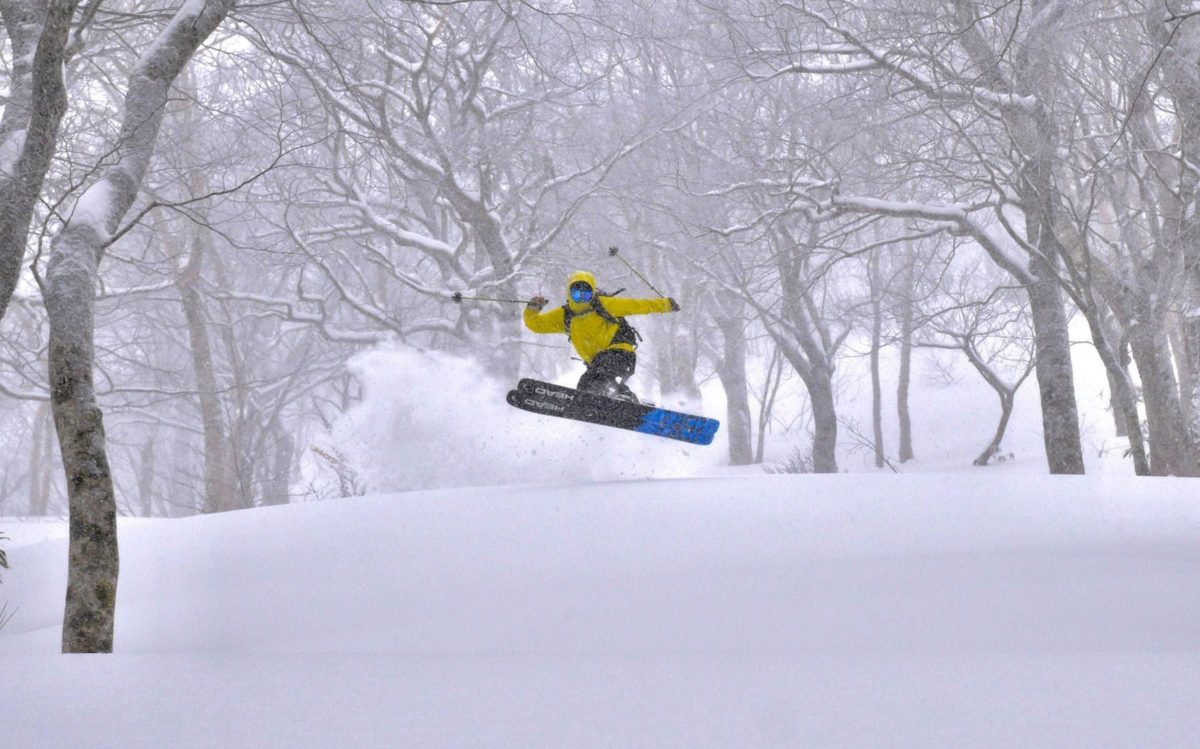
Using the techniques he has cultivated in mogul skiing, he mainly teaches freeskiing at Hoshino Resort Alts Bandai and Hoshino Resort Nekoma Ski Resort. Whenever he has time, he ventures into the mountains around the Inawashiro area, exploring exciting new slopes while exploring the terrain and snow quality
Instagram: @n.endo1986
Web: http://freeskilesson-n.com/
Height: 169cm, Weight: 71kg
Model:
Hardness impression (1 = soft ←→ 5 = hard)
Nose: 4/5
Center: 4/5
Tail: 4/5
Recommendations for each situation
: POWDER: 5
, GLOOM: 4
, HARD PACK: 4
, PARK: 3
, BUMPS: 2
, TOURING: 5
This is my go-to model throughout the season. With just this one ski, I can ski the way I want in any field, whether at the ski resort or in the backcountry. They're so light you won't even notice their length, but they have a firm stiffness, so I can ski with complete confidence.
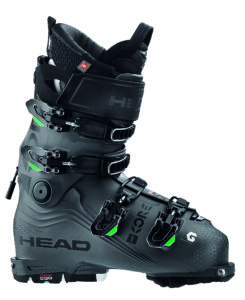
My boots are also from the KORE series. They're incredibly light and well-made, making them a reliable item I can't live without. The GripWalk sole significantly reduces the strain on my feet when moving, allowing me to concentrate on skiing.
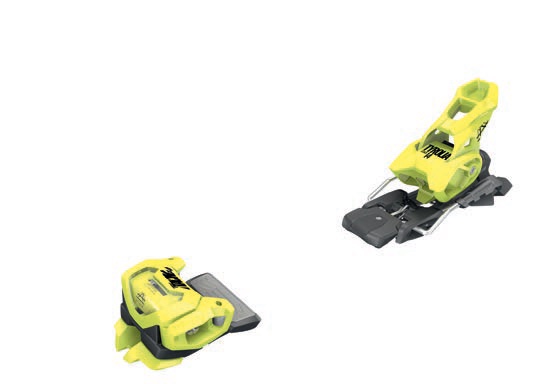
The bindings I'm using now are lightweight and reliable. I feel so confident in these bindings that I wouldn't want to ski with anything else. I've been using Tyrolia Attack bindings for many years, and they release properly when I fall and there's no mis-release, and they release properly when I'm in danger.
Impression Review 2 Ai Sato
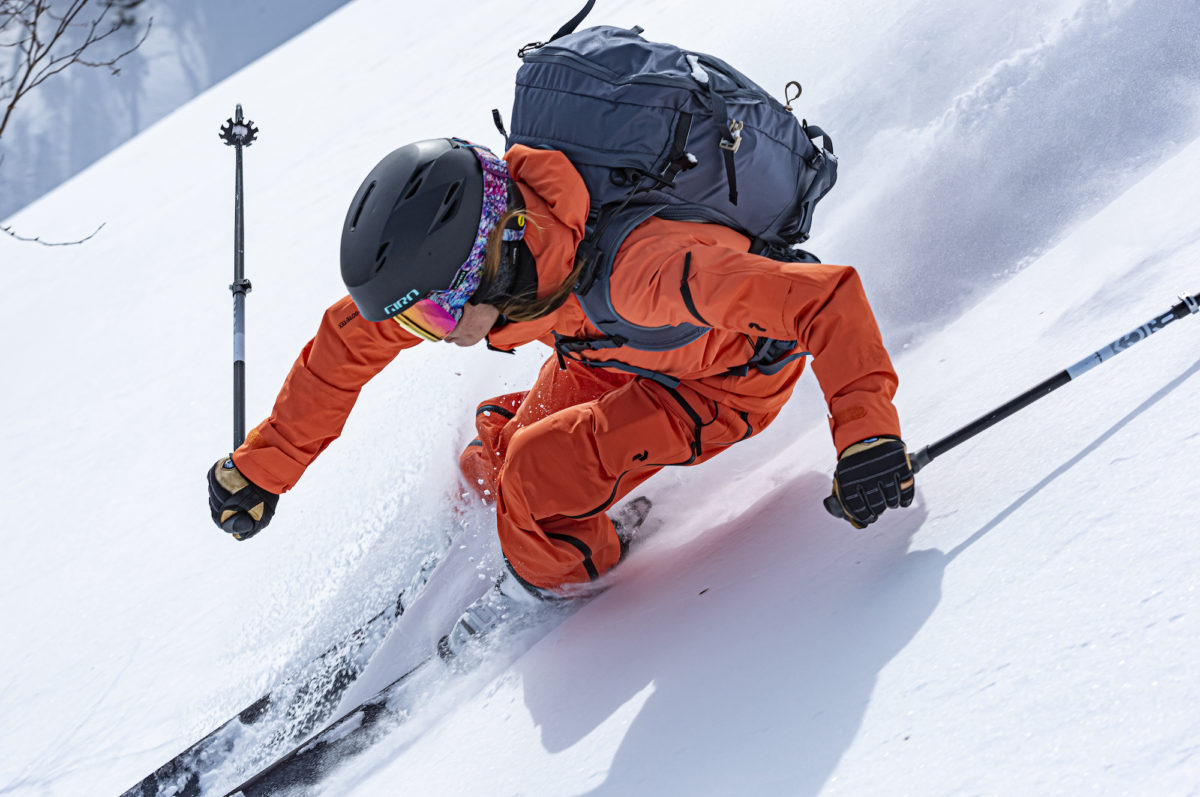
She grew up at the foot of Kagura Ski Resort in Niigata Prefecture, and skiing has been one of her pastimes since she was a child. During her student days, she devoted herself to alpine racing. Based in Kagura, she uses it as a training ground and travels to the Tanigawa and Hakuba areas, as well as overseas. In order to hone her sensibilities and experience as a female rider, she formed the women's ski team "Mountain Girls Club" with Fukushima Noriko and Oike Tomomi. In order to expand the space for sharing "fun," she organizes events and tours throughout the four seasons, not just in the snowy mountain scene. She is also the owner of "Kiyotsu Lakeside Lodge."
Instagram: @ aisato75
Height: 157cm, Weight: 45kg
Model:
Hardness impression
: Nose: 3/5
, Center: 3/5
, Tail: 3/5
Recommendations for each situation
: POWDER: 5
, GLOOM: 4
, HARD PACK: 4
, PARK: 4
, BUMPS: 3
, TOURING: 4
These skis are significantly lighter than the 2021 KORE series. Yet, the torsion from the top is stronger than the 2021 model, giving them a more firm feel overall. I believe the true joy of backcountry skiing is creating large arcs on steep slopes, so the increased stiffness allows me to lower the skis vertically, which is a welcome improvement. It's a bit strange to enjoy such a light yet solid underfoot feel. Their all-around capabilities make them a perfect first pair of skis for backcountry skiing. I
use the KORE2 W boots, regardless of conditions, from the start of the season through the remaining snow. The walk mode function feels a bit limited in range. However, it makes it easier to maintain position when hiking, and the underfoot is solid. They are characterized by their light weight and snug fit. The form-fit allows for a more customizable fit, improving maneuverability. I recommend them for skiers with slender feet. The ROPTOR110 is a pure alpine boot, so when you're treading ice, complex terrain, or needing more action, you'll want a reliable alpine boot.
I've been using the AMBITION10 MN for a long time. They're light and provide excellent support. I've never had any issues with them in any snowy mountain scene. The ability to use poles while standing after putting on the boots and the high heel support are great features for climbing.
If you've been skiing at a ski resort and are starting to explore backcountry skiing, I can confidently recommend these boots. They're especially recommended for older people, those with limited leg strength, and women. The biggest benefit is being able to use your familiar alpine boots. Inserting boots into the TEC pins can be quite a hassle if you're not used to it. Frame tour bindings allow you to smoothly switch to hike mode and operate them without any complicated steps.
Impression Review_3 Yui Ohno
Born in Hakuba, he is a local freeride skier. He enjoys everything from ski resorts to backcountry skiing, and enjoys climbing and mountain biking in the summer. He placed 2nd in the 2021 FWQ HAKUBA
Instagram: @yuipuep :
160cm / Weight: 48kg
Model: ■SKI_KORE 103 W (177cm), ■BINDING_ST ROTATION 10 (DYNAFIT), ■BOOTS_HOJI FREE 110 (DYNAFIT)
Hardness
: Nose: 3.5/5
, Center: 3.5/5
, Tail: 3.5/5
Recommendations for each situation
: POWDER: 5
GLOOM: 5
HARD PACK: 4
PARK: 4
BUMPS: 3
TOURING: 5
I use these skis for all seasons, all mountain skiing, and all conditions. The width and length of the skis are just right for me. The '22 model is even lighter than previous KORE series models, and offers even better maneuverability. The ride is lighter, but the overall feel is firm and taut. They don't bounce around much even on hard runs, making them very easy to ride