

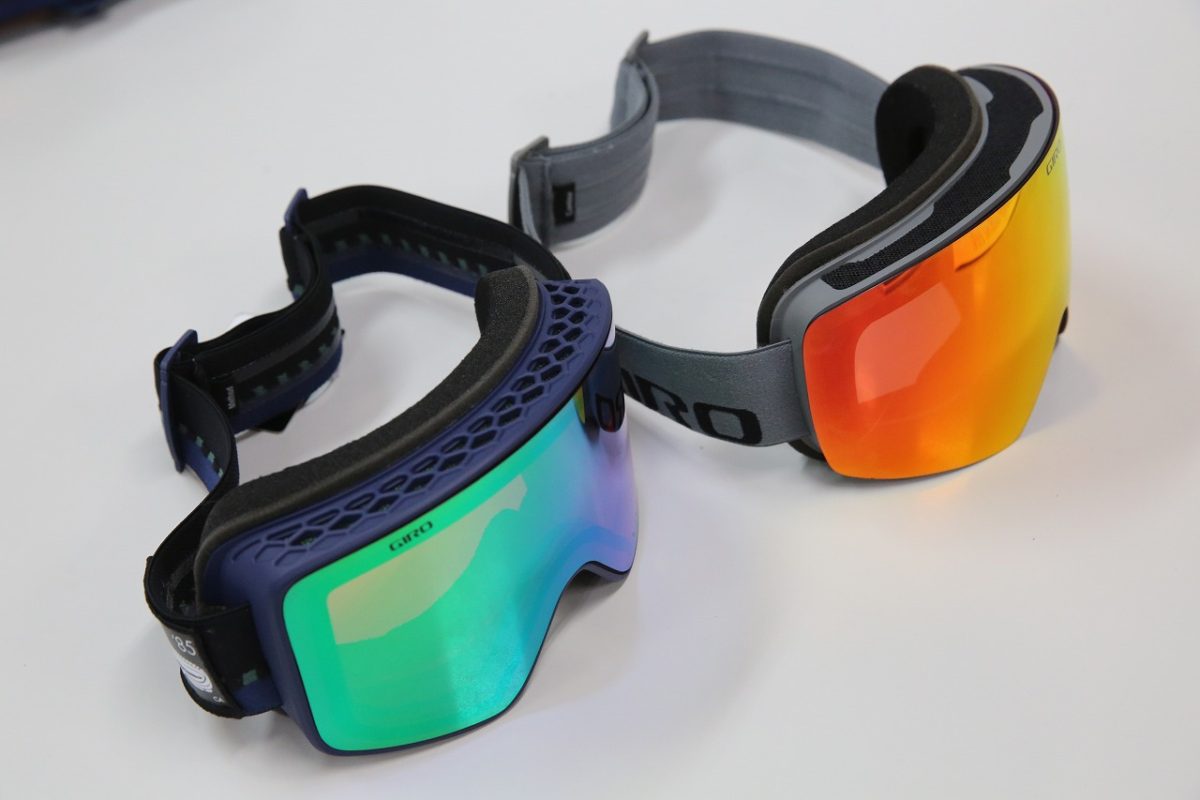
When skiing or snowboarding, goggles ensure visibility on snowy mountains and protect your eyes from UV rays. They're also an important item for personal safety, preventing you from getting lost due to poor visibility and preventing you from colliding with other people or trees. That's why it's important to take a look at the basics: frame shape, fit, ventilation and anti-fog technology, and lens technology. In addition to the things you should check when choosing goggles, we'll introduce the lens technology that manufacturers are fiercely competing to develop. Use this as a reference when choosing your next pair of goggles
Functions of each part of the goggles
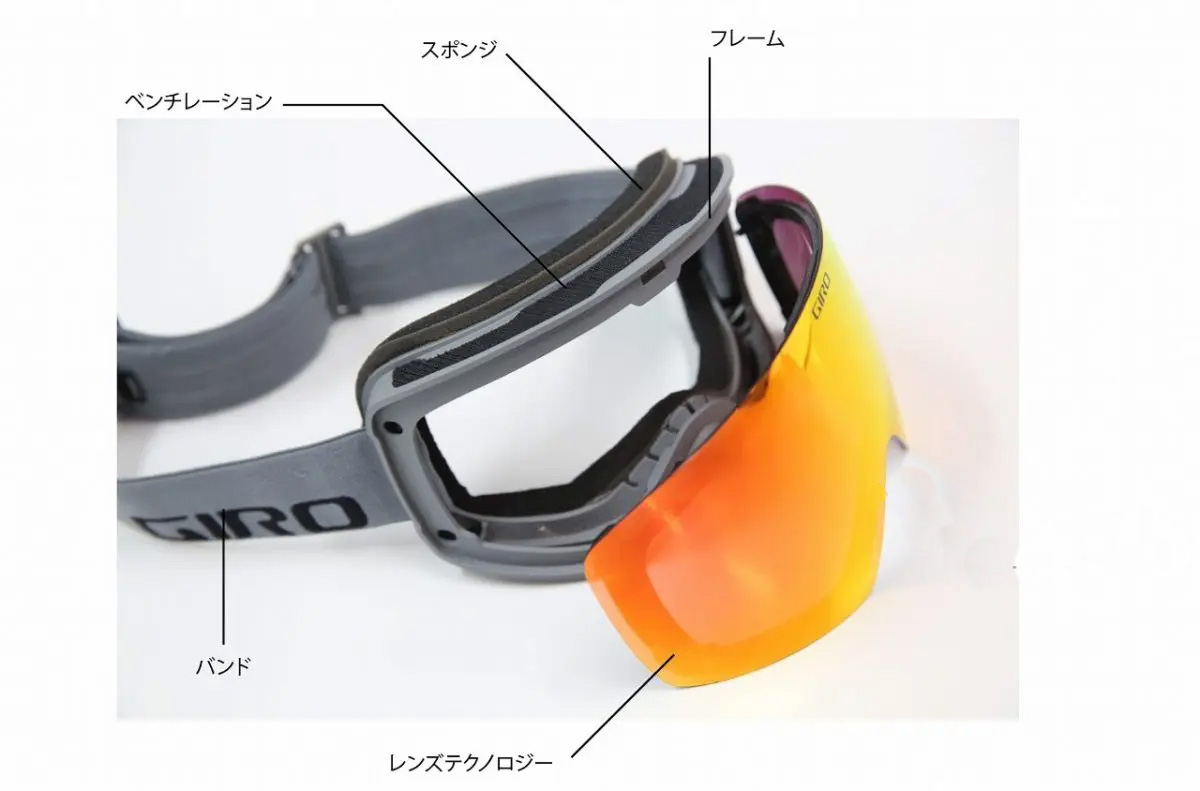
frame
The frame determines the contours of the goggles and protects the face. For this reason, the main material used is TPU (thermoplastic polyurethane), which is easy to process, durable, and lightweight. Some brands also use carbon or plant-based plastics. This is used to further increase strength and protect the face, and to create products that are environmentally friendly
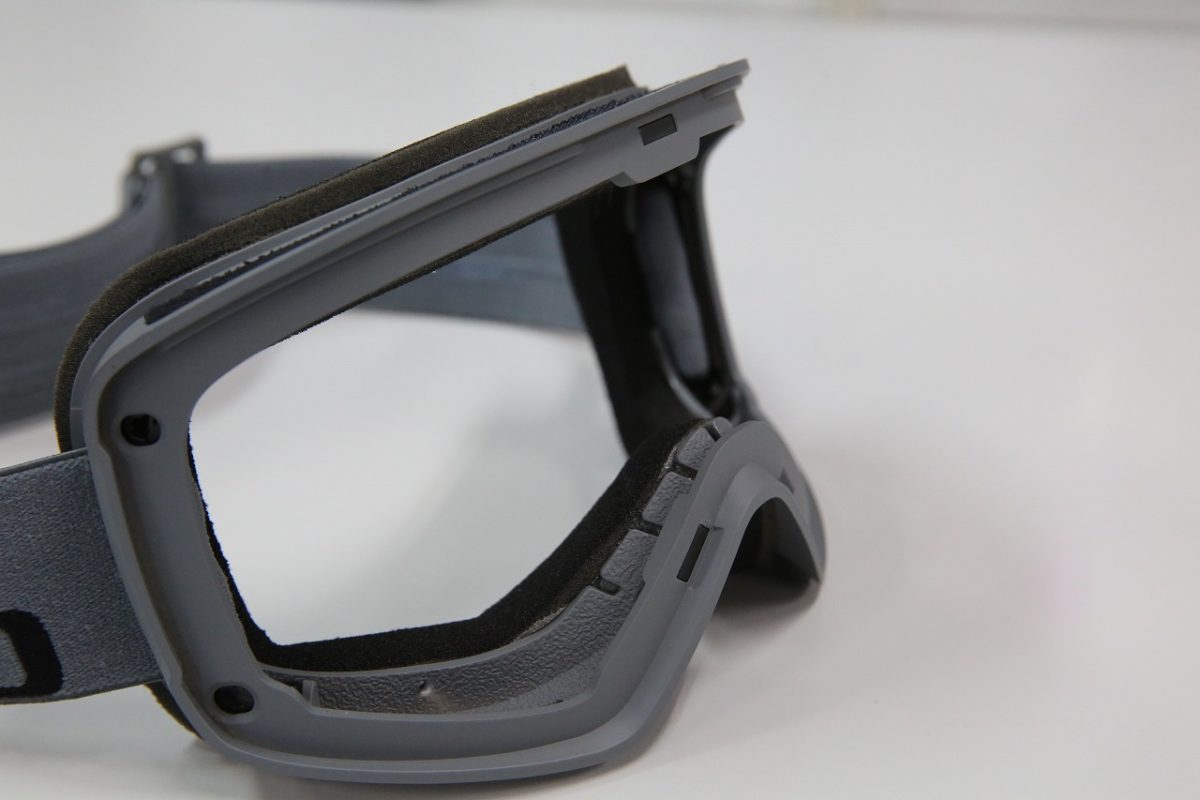
Japan Fit
Many goggle brands originated overseas. As a result, they are made to fit Western face shapes, and the roundness of the forehead and the height of the nose do not suit Japanese people. If you use a goggle that does not fit your face, snow and wind can get in through the gap between the goggles and your face, causing the lenses to fog up. Asian fit and Japan fit models solve this problem. The height of the forehead and nose is adjusted by the amount of sponge used to fit Japanese faces
Of course, there are goggles that suit Japanese people even if they are not Japan Fit, and since everyone's face shape is different, I would like to add that not all Japan Fit goggles will suit all Japanese people. When considering purchasing goggles, there are many things you won't know until you actually try them on
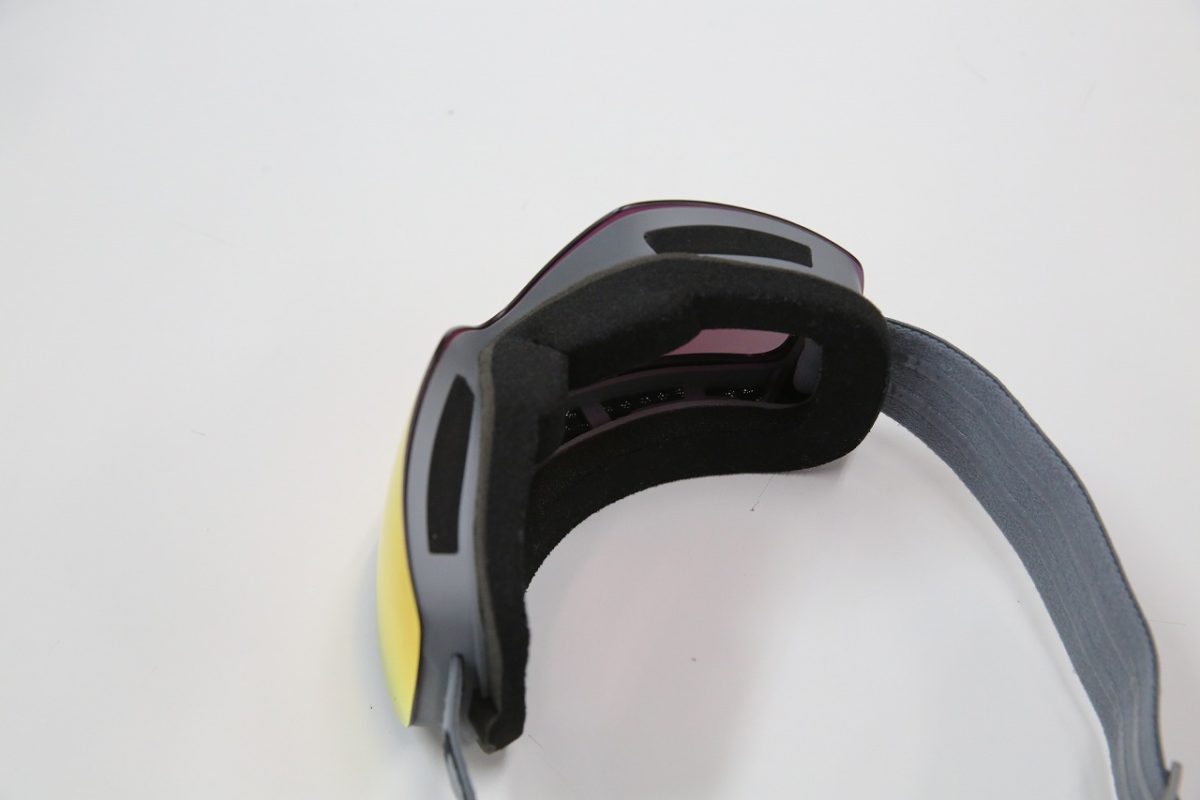
Ventilation
Ventilation refers to the ventilation system. When lenses fog up, visibility deteriorates, making it difficult to ski safely. This not only diminishes the enjoyment of skiing but also poses danger. Many goggles have vents at the bottom and top of the lens to promote air circulation. Some of these vents are simply covered with sponge, while others are covered with high-strength materials. From the shape of the vents to the cover material, each manufacturer employs various technologies and developments.
In addition to ventilation, there are other technologies to prevent lenses from fogging up. Some lenses absorb moisture to prevent saturation of water vapor inside the goggles, and some lenses and frames can be detached with a single touch for direct ventilation. Manufacturers are fiercely competing to completely eliminate lens fogging, the nemesis of skiers and snowboarders.
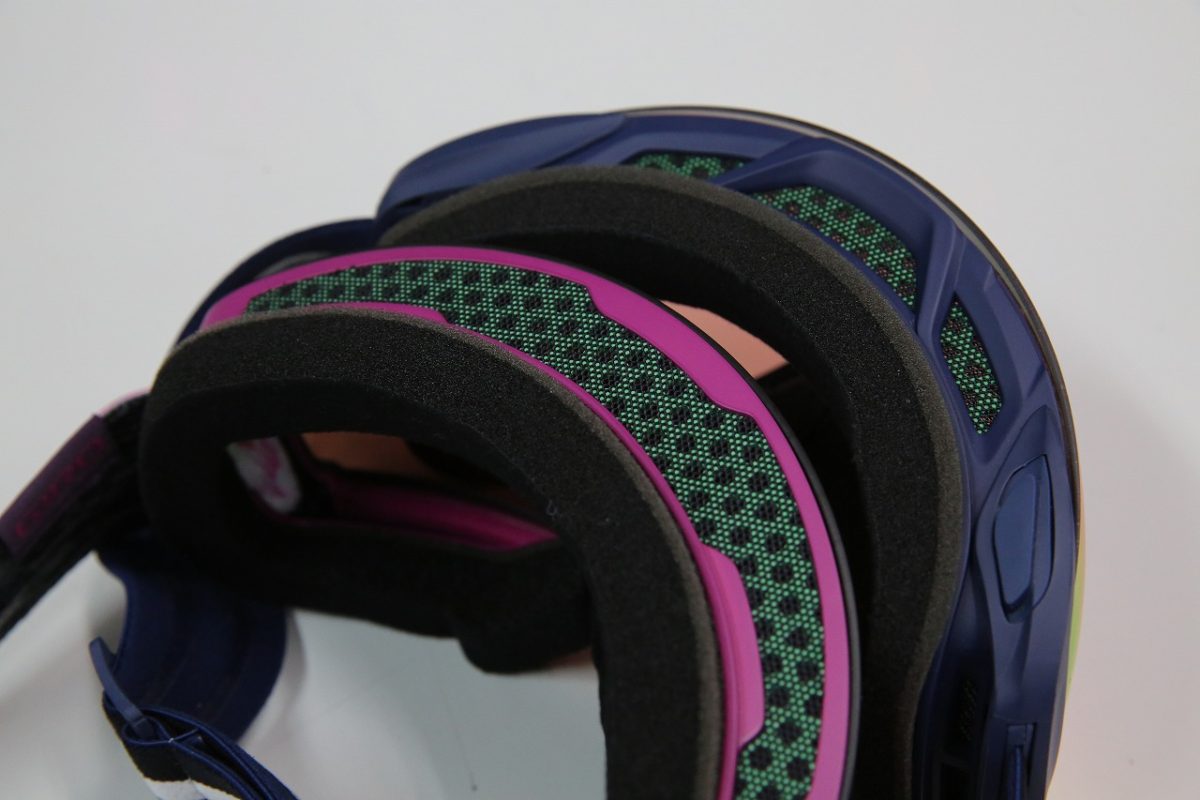
sponge
Sponge that provides extra cushioning to the face. Different types of sponge are used, and most have a two- or three-layer structure. The sponge closest to the frame is hard and strong, while the sponge that touches the face is soft and has good shock absorption
Lens shape
Lenses can be broadly divided into two types: flat lenses and spherical lenses

Flat lenses have less distortion during lens processing, allowing for clear vision. On the other hand, spherical lenses have the advantage of providing a more realistic field of vision in any direction because the curve of the lens is closer to the roundness of the eyeball, and the space between the lens and the face is less likely to fog up. However, as mentioned in the section on ventilation, most people believe that there is not much difference between the two due to recent improvements in anti-fog technology
band
This band is used to keep goggles securely attached to the head and prevent them from slipping. Most are made of rubber. In recent years, many models have adopted larger frames to widen the field of view, and as the frames get larger, they become heavier, so the bands are also made thicker to accommodate them. Some models have anti-slip silicone on the inside for a more stable fit, and some even have silicone bands

Lens technology
About double lenses
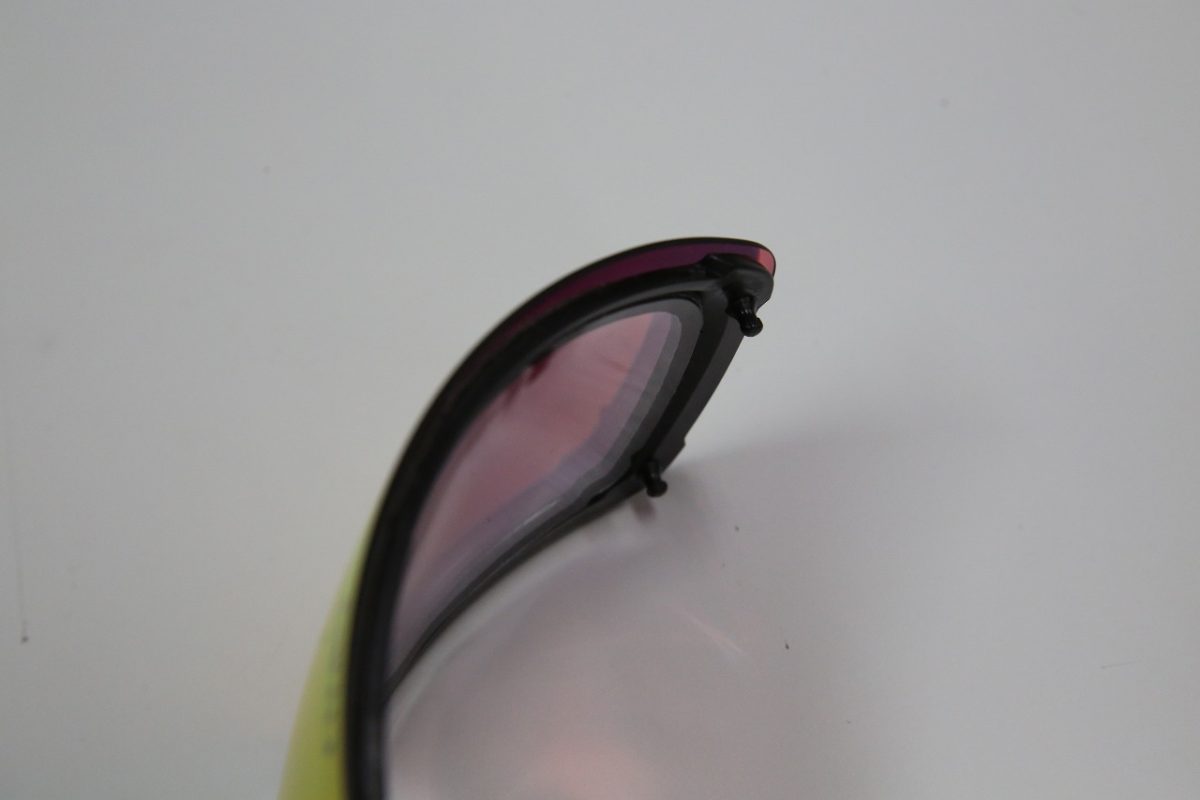
Many people are aware that most goggles use a double-lens system. If there were only one lens, the inside of the lens would be warmed by body heat, while the outside would be exposed to the outside air. This would cause water vapor to saturate the area near the lens inside the goggles, resulting in tiny water droplets that stick to the inner lens. This is the same principle as when a car's windshield fogs up in winter.
The reason for bonding two lenses together is to reduce the temperature difference between the outside and inside air, preventing fogging. The outer lens is made of polycarbonate, which has excellent thermoplastic properties and is easy to apply mirror coatings to. Many brands use a material called Lexan Beautrate for the inner lens. This is because it is easy to apply anti-fog coatings to it.
Differences in vision depending on lens color
Different color coatings can improve visibility by using them according to the weather. They also enhance the visibility of uneven surfaces and contrast on slopes. The main uses of lens colors are as follows:
[Orange]
Easy to see in a wide range of conditions, from sunny to cloudy.
Yellow
Ideal for snowfall and cloudy days
[Blue]
Easy to see in sunny to cloudy conditions. Clearly shows the unevenness of the snow surface.
[Pink]
Easy to use from slightly sunny to cloudy days.
[Black or Gray]
Easy to see on sunny days and shows natural colors as they are.
[Clear]
For situations with little light, such as night skiing.
The "visible light transmittance" that determines the brightness of the goggles」
Snowy mountains are exposed to strong sunlight due to their high altitudes. The glare reflected from the snow surface is also strong. Snow reflects 80% of UV rays, compared to 10% for asphalt. Not only is it dazzling, it also has an adverse effect on the eyes. For this reason, lenses also function like sunglasses, adjusting the amount of light
When adjusting the amount of light that reaches the eyes with lenses, the "visible light transmittance" is used as a guideline. This value is adjusted by applying a color coating or mirror coating to the lens. With 100% being the naked eye, 0% is when no light passes through at all. On sunny days, glare is strong, so 10% to 20% is recommended. On snowy days, lenses with 20% to 40% transmittance are more comfortable. For night games, lenses with around 60% transmittance are recommended
What is a high-contrast lens?
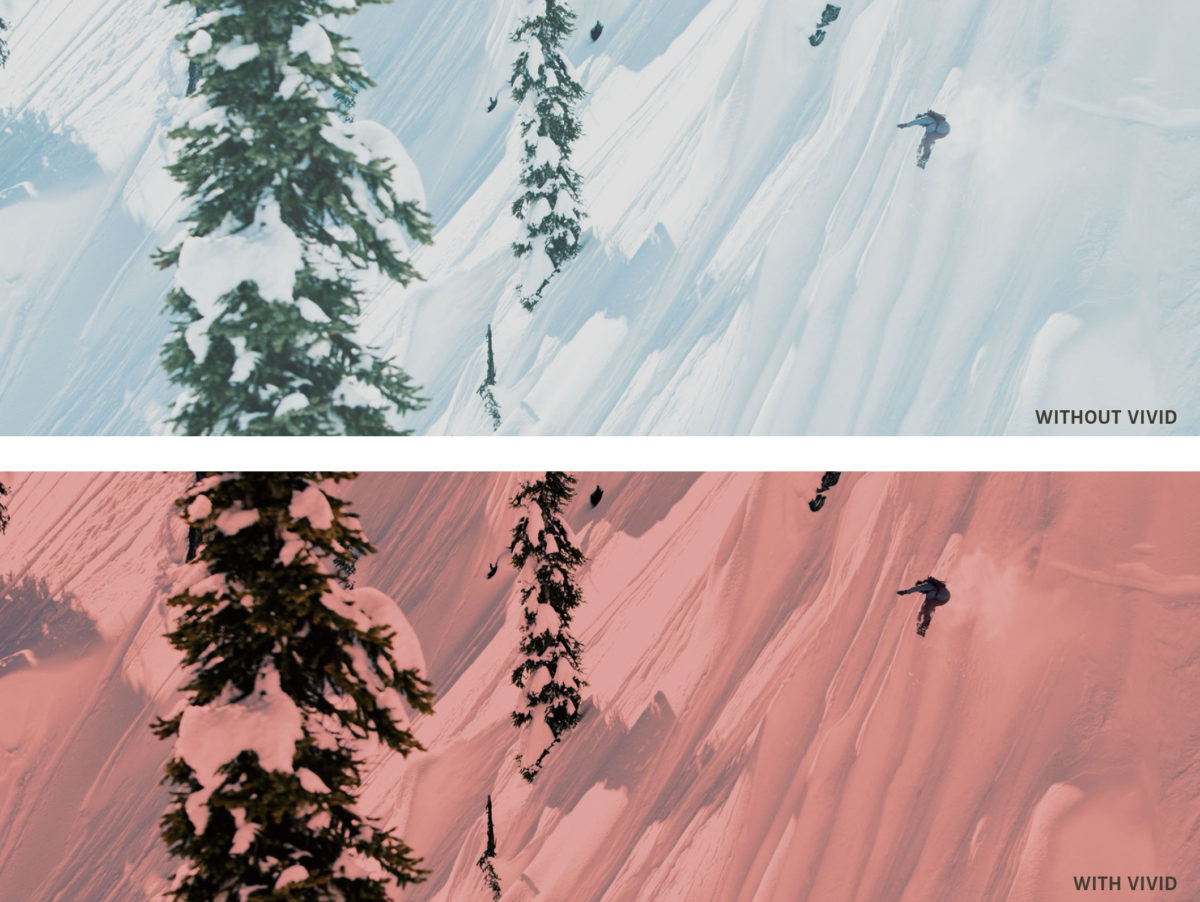
©Lotus International CO.,Ltd.
In recent years, manufacturers have been focusing on developing "high contrast lenses." This new technology has become standard in a certain level of goggles from each brand. This technology emphasizes the unevenness and shadows on the snow surface by enhancing or reducing specific colored light rays that enter through the lens, or by intensifying shadows. This means that even on cloudy days or snowy days with low light, the unevenness of the slope can be seen more clearly, making it easier to ski
For example, the human eye works better with red and green light than with blue light to see the shape and depth of objects. So, by cutting out blue light and amplifying red and green light, you can see the unevenness of the snow surface and the terrain more clearly. Different manufacturers have different methods for adjusting which color light rays and how. Even though they are all called high-contrast lenses, there are many different processing methods
What are photochromic lenses?
Photochromic lenses are lenses that change color in response to the amount of UV rays and visible light. They are characterized by their ability to darken when exposed to strong light or UV rays, and lighten when indoors. The lenses are coated with a photochromic film or a photosensitive substance that changes color when exposed to UV rays or when the temperature rises. Therefore, when looking at the bright snow surface in the sun, the color darkens, making it easier to see the unevenness of the slope, and when it gets cloudy and the amount of light decreases, the color lightens. This is convenient as you don't have to change goggles or lenses depending on the brightness
What are polarized lenses?
Polarized lenses are lenses that cut out diffused reflections of light and eliminate glare. A film called a polarizing membrane sandwiched inside the lens cuts out only the reflected light, improving visibility. On snowy surfaces, the reflected light can be very dazzling on sunny days. Photochromic lenses do not have the function to reduce diffused reflections, so this is the main difference between photochromic lenses and polarized lenses
Lens technology boasted by a goggle manufacturer
The lens is the deciding factor in determining the quality of goggles. Lens technology continues to evolve as manufacturers compete fiercely to develop new lens technologies. Let's take a look at some of the lens technologies that manufacturers boast about

GIRO|VIVID Lens
Developed in collaboration with ZEISS, a global authority in the field of optics
The VIVID Lens was developed jointly by GIRO and ZEISS, a world authority in the optical field. It is an outstanding lens that effectively controls blue light, which is generally said to make things difficult to see, and enhances contrast. "Clever control" refers to the lens' ability to effectively manipulate blue light by letting in blue light, which enhances contrast, and blocking harmful UV rays
VIVID lenses also eliminate blurred vision and reduce eye fatigue. They provide accurate vision without color saturation, making your vision clearer and allowing you to see your line more clearly for a more comfortable ride
▼Explanatory video of VIVID lens technology
Model equipped with VIVID lens | COMP

The COMP, a high-end model that brings together GIRO goggle technology, features VIVID lenses. EXV+ technology provides a wide field of view comparable to the naked eye. It comes with two VIVID Infrared lenses: one for sunny days and one for cloudy days. Carry a spare lens with you and you can instantly switch lenses to suit any weather
◆Official Website:http://giro-japan.com/

SMITH | Chromapop Lens
Increased color contrast makes colors more vivid and clear
Smith is proud of its "ChromaPop Lens Technology." This technology controls the crossover points of the wavelengths of the three primary colors of light (red, green, and blue) and expresses vivid colors, making objects appear clearer. By increasing color contrast and making colors clearer, objects appear clearer and more prominent. The difference between the normal state and the state seen through the ChromaPop lens is clear
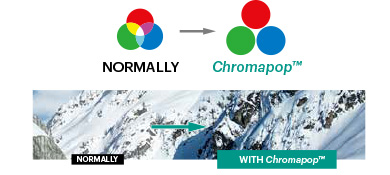
Another advantage is that they have a wider range of compatibility than regular lenses. When the weather suddenly changes in the mountains, or when you spend long periods of time from morning to evening, the tone of the light is constantly changing depending on the position of the sun. Being able to maintain good visibility over a wide range is both easy to use and gives you peace of mind
▼Explanatory video about ChromaPop lens technology (you can understand it better by watching with the subtitles set to "Japanese" from about the 1-minute mark)
ChromaPop lens model | Squad MAG™

The Squad XL features a large, flat lens that offers a particularly wide field of view, both vertically and horizontally. The Squad is simple and compact, making it especially popular with younger generations. It features SMITH's proprietary "ChomaPop" technology, which controls the overlapping wavelengths of the three primary colors of light (red, green, and blue) to produce vivid colors and clearly show objects. Its quality is also impeccable, making it suitable for all weather conditions. Two ChromaPop lenses are included as standard
◆Official Website:https://smithjapan.co.jp/

Sweet Protection | RIG® Lens Technology
Innovative lenses that reduce eye strain
RIG lenses enhance contrast for easier viewing and reduce eye fatigue by blocking harmful rays. They are all made with the same transmittance and curve, but are optimized for different light conditions, from extremely flat light to extremely sunny skies
▼Explanatory video of RIG lens technology
RIG lens model | Connor RIG

This new model of frameless freeride goggle features RIG™ technology. The frameless design with CNC-machined edges maximizes field of view. It features a 2.8mm thick, toric-sculpted spherical lens for superior impact resistance. The Japanese model features a low-bridge fit with additional foam padding on the nose bridge for a more secure fit
◆Official Website:https://sweetprotection.jp/

OUT OF | "THE ONE" LENS
Innovative photochromic and polarized super lenses
OUT OF has attracted worldwide attention with its world-first high-tech "instant photochromic" technology. The lens of "THE ONE," which can be said to be OUT OF's iconic model, is a super lens that boasts revolutionary technology, being the first in the world to incorporate polarized and photochromic lens functions into the outer lens
The lenses lighten in weak light and darken in bright sunlight. Advanced photochromic technology adapts to any weather and brightness, ensuring comfortable vision at all times. In bad weather, the yellow light filtered through the polarized filter and high transmittance improve contrast and prevent whiteout
THE ONE equipped model | VOID

Equipped with the versatile "THE ONE" lens, which combines polarization and photochromic properties, these sunglasses can be used in a variety of situations. They are a popular model representing OUT OF. As expected from an Italian brand, they are incredibly stylish. With a stylish form and a band featuring graphics that resemble works of art, they possess a unique worldview that fuses functionality and fashion

POC | Clarity LENS
Outstanding visibility that makes it easy to distinguish the terrain and undulations of the snow surface
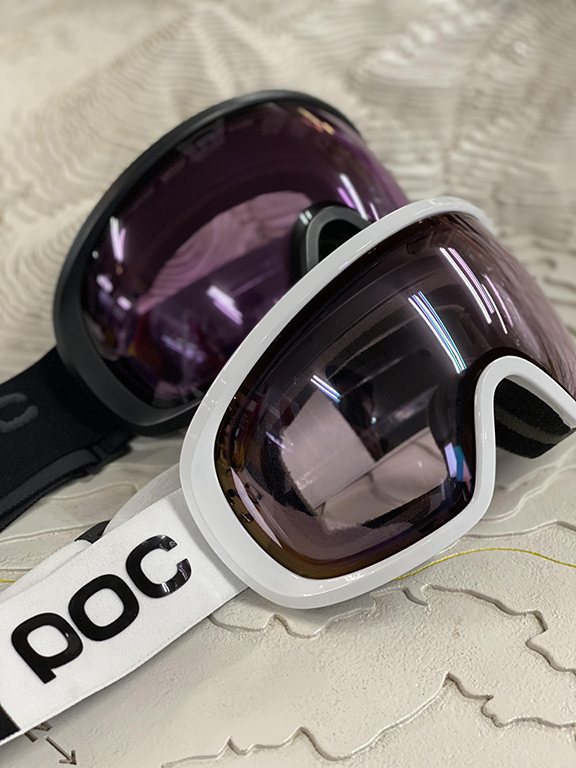
POC's Clarity Lens is a high-precision lens developed in collaboration with ZEISS, a global optical manufacturer, to dramatically improve the visibility of snow goggles. It controls wavelengths to highlight the shadows on the snow surface and the unevenness of the terrain, providing a clear view that allows you to accurately read the terrain even under flat light. Furthermore, the Spektris specification, which combines optimal tint and mirror coating depending on the lighting conditions, makes it suitable for a wide range of conditions, from sunny to cloudy
Equipped with features such as scratch resistance, anti-fog treatment, and UV400 protection, they maintain stable, clear vision even during long ski runs. Combining precise contrast with natural color reproduction, they provide ideal visibility for all skiers, from racing to backcountry skiing. This popular lens (brand) is loved by athletes and professional guides across a wide range of disciplines
Clarity Lens equipped model | Nexal Wide Fit

Apatite Navy/Clarity Highly Intense-Partly Sunny Blue,
Apricot Sunstone/Partly Sunny Ivory|\39,600
*This is a partial remake of an article released in 2024