

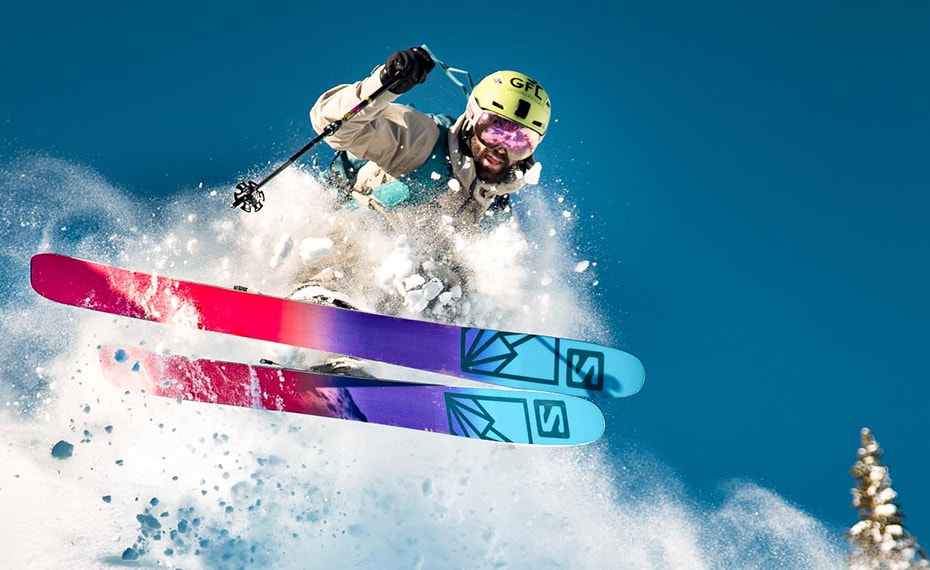
The new QST is the third generation since its launch in 2016
Salomon's QST series has long been popular as an all-mountain model that can handle any situation. In the freeride scene in particular, the QST series boasts a high level of perfection thanks to the development team's close relationships with riders like Chris Ruben, Alexis Godbout, Stan Ray, and Cody Townsend
Click here for the latest articles on the '22-23 season
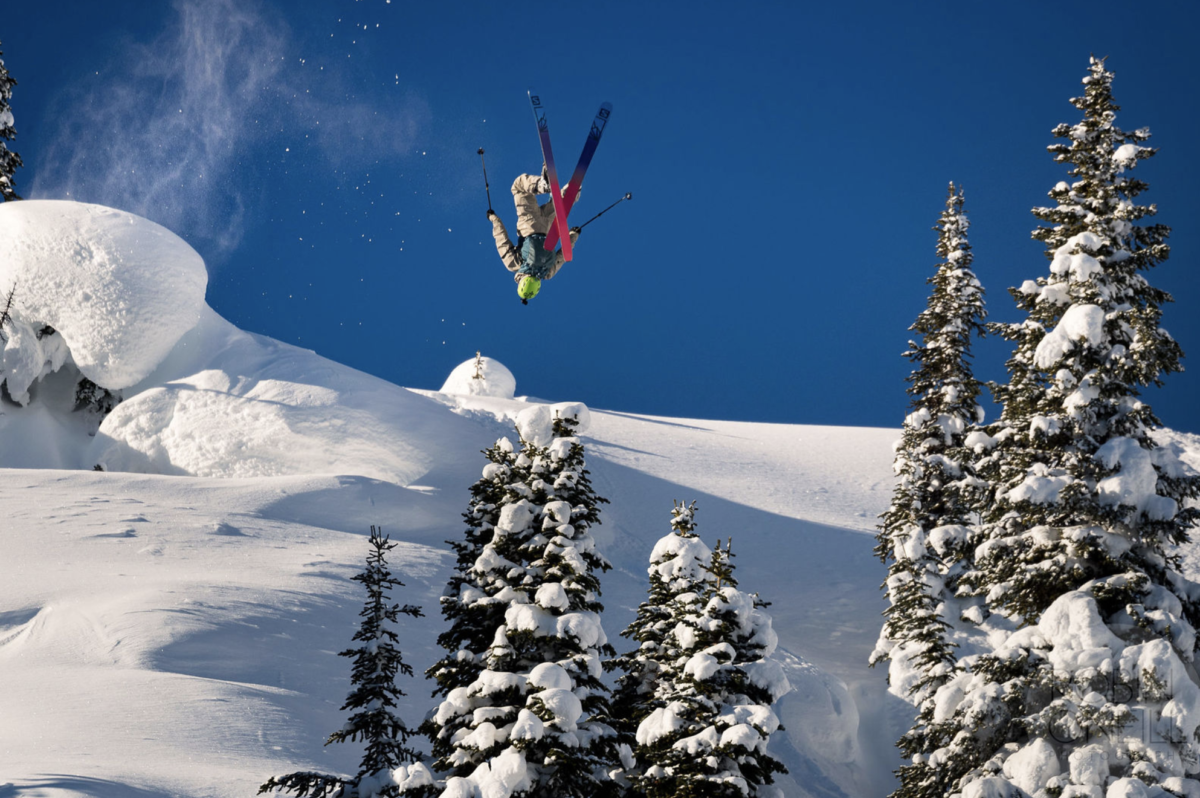
The QST series is Salomon's flagship model. It is available in a wide range of waist widths and each model is available in a wide range of sizes, making it a favorite among many people since its introduction in 2017
What the lineup has in common is that they use the ``SpaceFrame3.0'' as their basic system, an evolution of the ``SpaceFrame'' that Salomon has developed over many years, which makes the tip and tail thin and light and the center part made of a solid wood core
This allows for quicker turn transitions and a steady transfer of power even on hard-packed snow, making these skis capable of performing in a variety of conditions and adapting to any field or skiing situation
The company offers five models with waist widths ranging from 85mm to 118mm, and the 90mm range in particular is popular as a ski that can do anything on the slopes, and is easy to handle even for skiers who are not primarily interested in freeriding or backcountry skiing
The highlight is the "QST BLANK" with a waist width of 112mm
The QST series has been updated twice since its introduction in 2016. For 2022, the design has been revised and the lineup will be completely revamped as the third generation. In particular, the freeride concept has been completely rethought, exploring new possibilities for skis with waists of 100mm or more. The highlight of this is the QST BLANK, with a waist width of 112mm
Salomon riders were at the heart of the development of this new ski
BLANK Collective Films is an athlete-led film production company whose members include Alexis Godbout and Stan Ray. Directed by filmmaker Jeff Thomas (who has worked on many projects including Salomon SKITV), they release original freeride videos every year, creating buzz around the world
This film features many Salomon riders and is set in the majestic Canadian countryside, showcasing freeriding, a mix of skiing styles, including trick-laced lines, big lines and powder so thick you're completely covered in powder
The Salomon riders featured in this video have always been concerned about the big gap between the 118, which performs well in deep snow, and the versatile 106. This is no coincidence that Salomon has made major changes to its bindings over the past three seasons
The STH is a separate type that maximizes ski performance, the SHIFT has a TEC mechanism for climbing and an alpine binding for skiing, and the MTN is ultra-lightweight and perfect for climbing and riding. I felt that using only two skis, 118 and 106, to match these bindings was somewhat lacking in versatility
To fill this gap, the riders and development team came up with the QST BLANK, which has a waist width of 112mm. The name "BLANK" was chosen because it incorporates the freeride perspective and concepts of the riders in the "BLANK Collective Films" into the ski. It is truly positioned as a signature ski for "BLANK Collective."
Functionality of "QST BLANK"
The basic specifications of the "QST BLANK" are as follows:
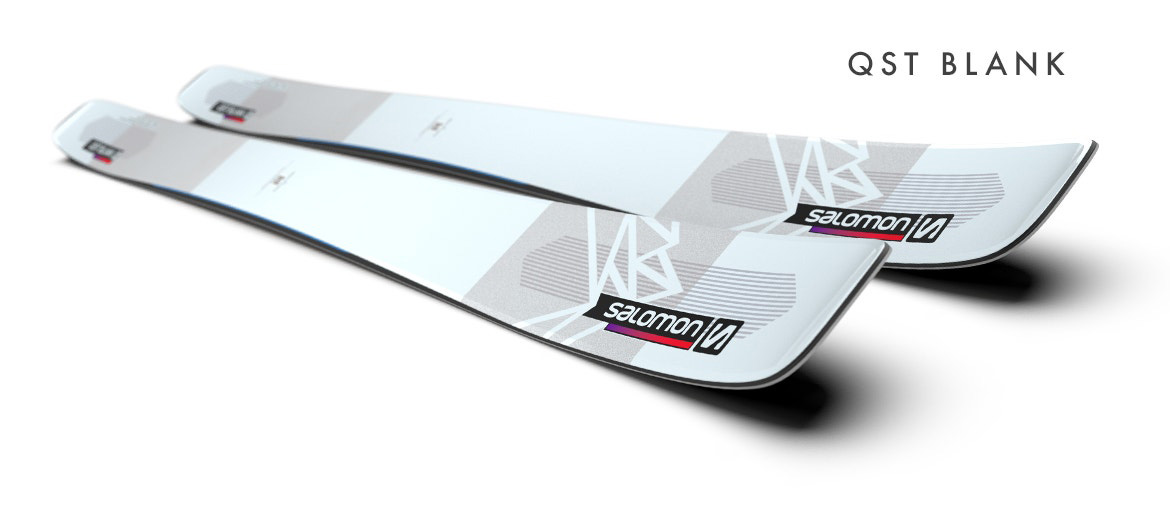
QST Blank
104,500 yen
L = 178, 186, 194
D = 137-112-126 mm (178 cm), 138-112-127 (186 cm), 139-112-128 (194 cm)
R = 15 m (178 cm), 17 m (186 cm), 18 m (194 cm)
This 112mm waist width is what Salomon considers to be the optimal spec for a freeride ski. There are two key points about this ski
-Outline design for agile movement
-Power transfer to the skis
The first is the shape. In the QST series, only the BLNAK and PARK have a twin rocker design, with the tip and tail curved upward. By moving the wide points of the tip and tail closer to the center, pivoting movements are easier, allowing for more agile ski control. Looking at the figures, the turning radius is 15m for a 178cm skier, and the ease of handling is immediately apparent.
Additionally, cork is placed on the tip and tail, reducing weight while also providing vibration absorption. This is another factor in the ease of pivoting movements.
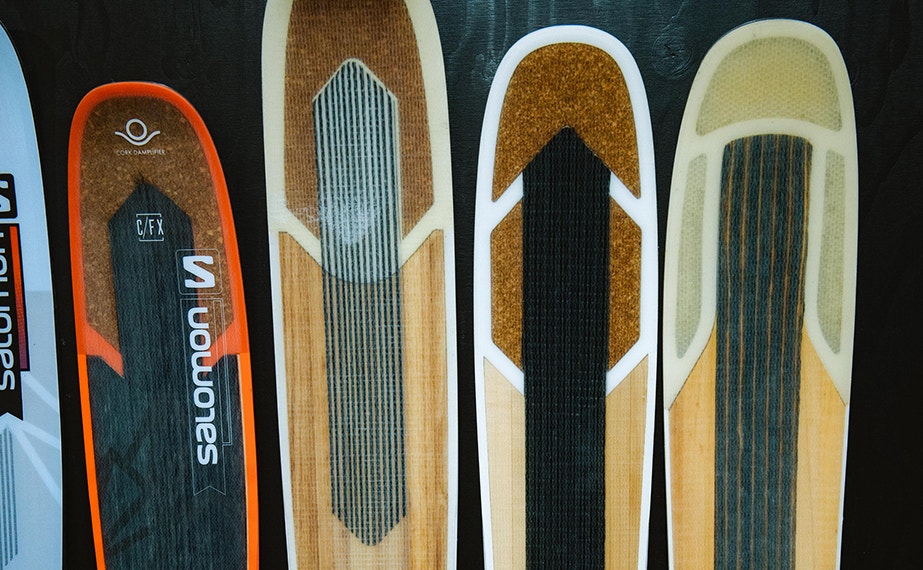
The second is power transmission. A high-density injection of impact-resistant ABS material underfoot, combined with the traditional sidewalls, provides greater grip than ever before. A unique reinforcement layer made from a blend of carbon and hemp is also incorporated from top to tail. This is a Salomon original material that combines the lightness, strength, and stability of carbon fiber with the vibration absorption properties of hemp
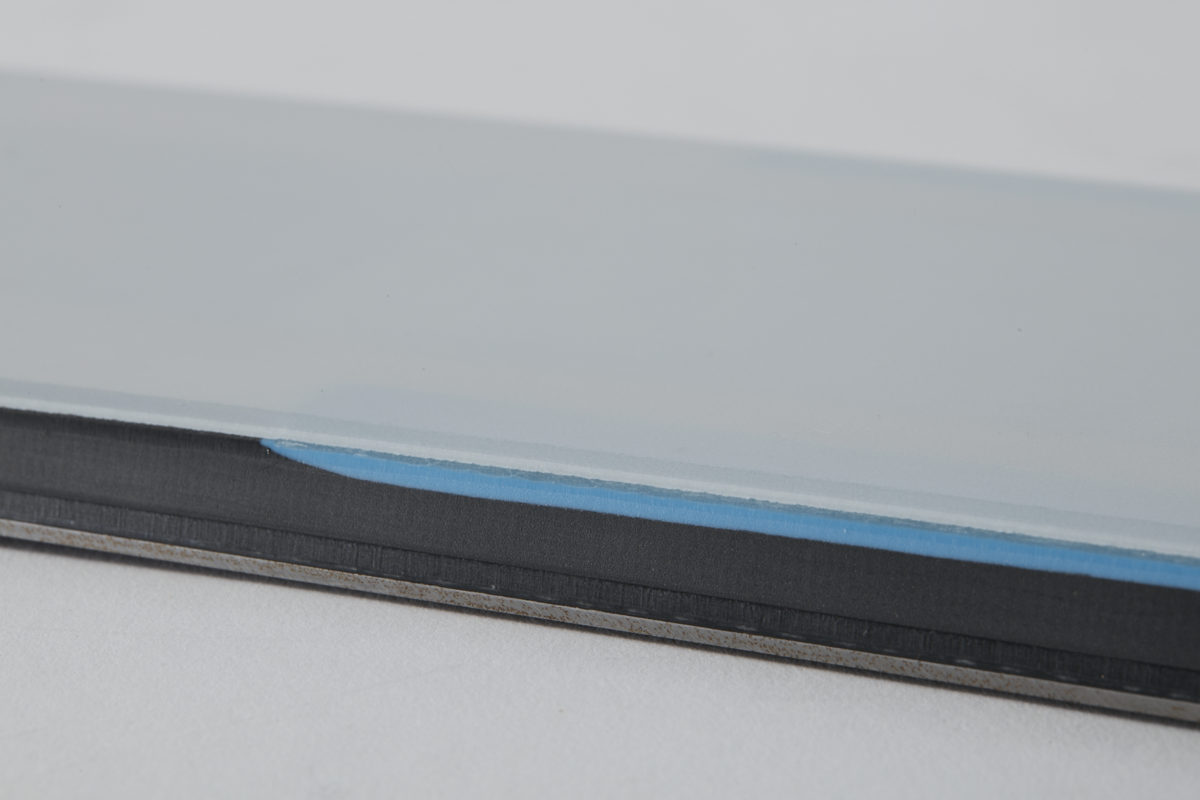
The QST BLANK combines these features with the versatility of the previous QST series. The 112mm waist width delivers
performance in all snowy conditions, from powder to packed snow to undulating natural terrain. The QST BLANK
can also be enjoyed in a variety of situations, depending on the bindings you choose. Cody Townsend uses the MTN bindings, which complement his climbing and riding style. Alexis Godbout, who mixes tricks into his lines in the backcountry, uses the SHIFT bindings. Stan Ray, who descends steep slopes at high speed and launches big jumps, uses the STH bindings. The QST BLANK can be tailored to suit each ski's unique style, depending on the bindings you choose.
So, what kind of settings do Akira Sasaki and Tenran Katsuno, who use them in domestic fields, use, and what is the feeling when using them?
Akira Sasaki and Tenran Katsuno's impressions
Akira Sasaki
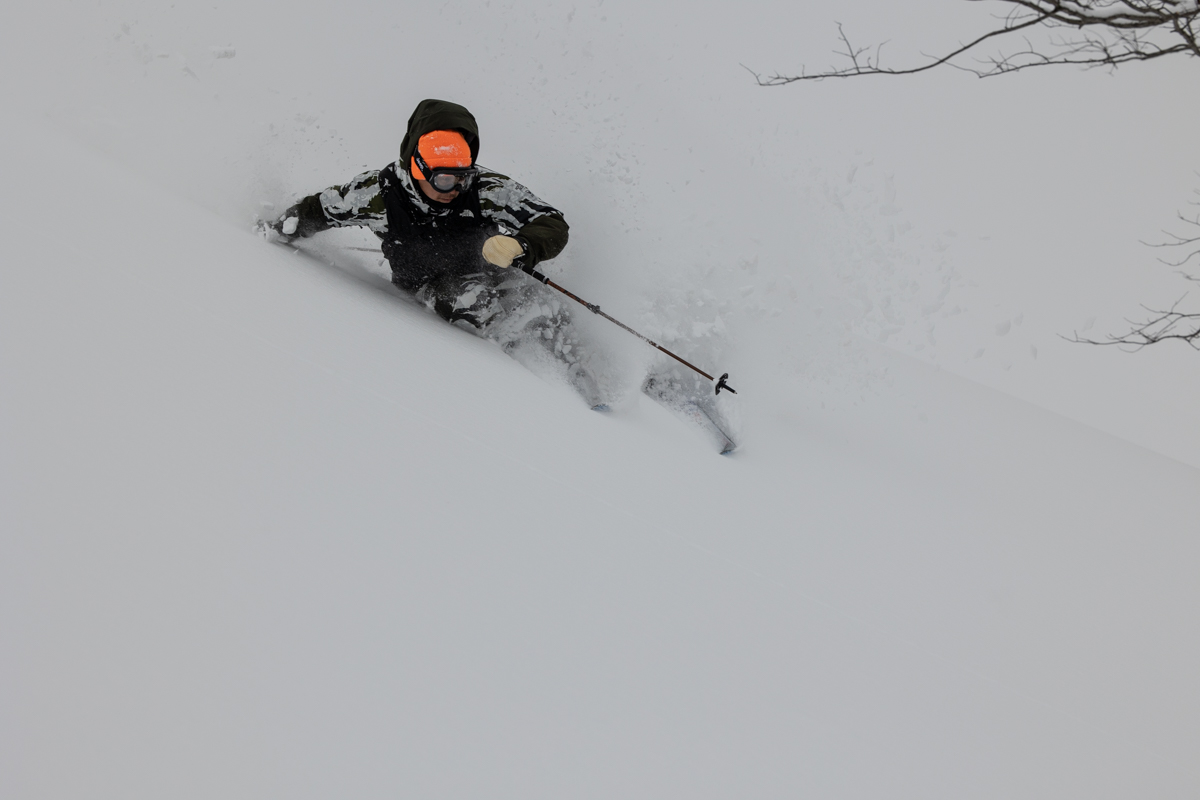
He has stood on the podium three times in the Alpine World Cup, the most ever by a Japanese skier, and has competed in four consecutive Olympic Games. He is currently pursuing the broader perspective of all-mountain freeriding. His self-produced video work, "TWIN PEAKS," has also been well-received
Height: 182cm / Weight: 86kg Model: SKI: QST BLANK (194cm) Binding: S/LAB SHIFT MNC 13 Boots: S/MAX 130 CARBON
■FLEX & TORSION
・Nose: 4/5
・Center: 5/5
・Tail: 4/5
Recommendations for each situation:
POWDER 5,
GLOOM 5,
HARD PACK 5,
PARK 2,
BUMPS 1,
TOURING 3
The entire ski is built hard, with strength approaching that of a race-spec ski.
Since getting the completely redesigned QST BLANK, I've found its high carving performance, despite being a fat ski, to be incredibly reliable, even in hard conditions previously thought unattainable for fat skis. It provides maximum support for speedy skiing in debris zones, ice, and other conditions.
To enable a fat ski with a strong rocker to bite into the tip and initiate a turn, the wide point at the top is lower than the previous QST and the wide point at the tail is pulled closer to the center, creating a carving-like grip without being affected by the rocker point. While this will be a great asset for skilled skiers, it will likely be difficult for skiers lacking leg strength to bend the board. While Salomon has always made skis aimed at the average skier, it seems to have shifted to skis designed for big-mountain competition. However, since I'm 194cm tall, I think advanced skiers will be able to fully enjoy these skis by dropping down a size. The boots feature a lightweight carbon shell. Above all, carbon has strong rebound, providing maximum support for aggressive skiing.
Katsuno Tenran
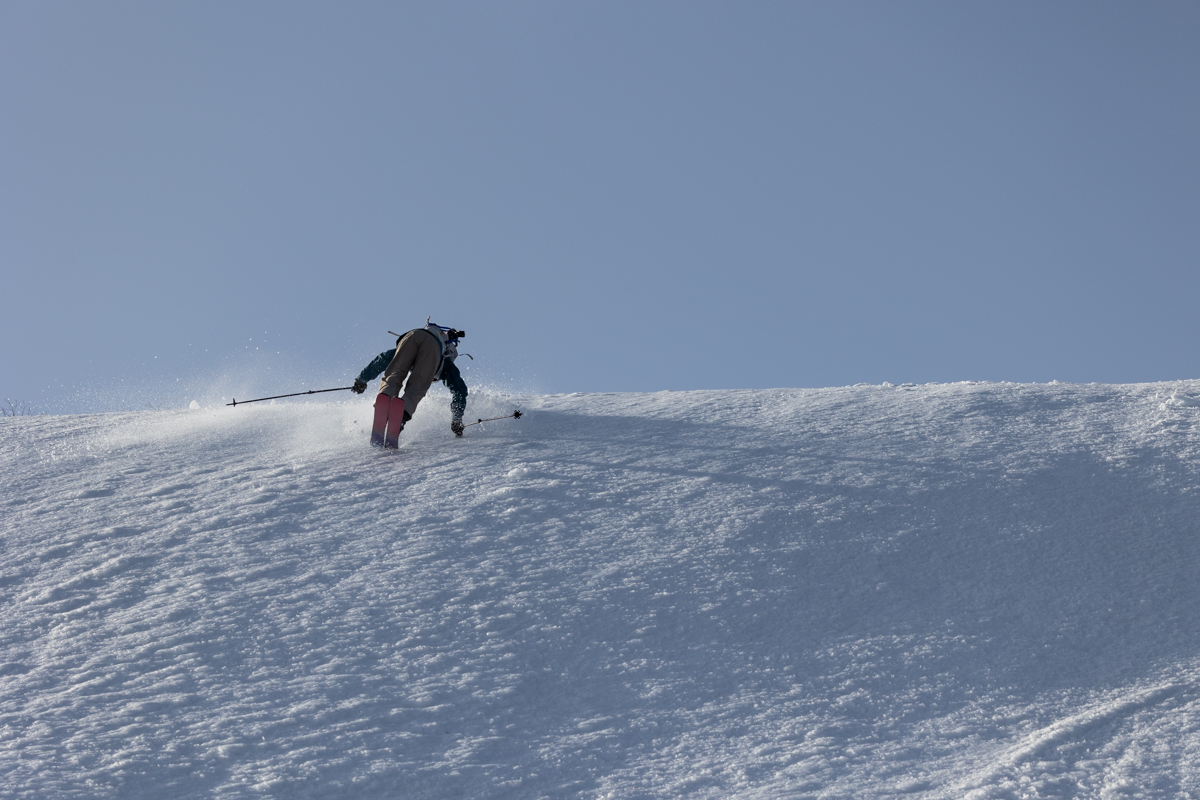
He has been involved in skiing since he was a child through mogul and freestyle skiing in the Niseko area, and has used the skills he acquired there to compete in freeride competitions both in Japan and overseas. He is currently working to solve issues surrounding athlete activities (the economic aspects of young people and second careers for athletes) while also building a career as an engineer
Height 174cm/Weight 74kg Model used: ■SKI: QST BLANK (186cm) ■BINDING: STH2 WTR 16 ■BOOTS: S/MAX 130 CARBON
■FLEX & TORSION
・Nose: 3/5
・Center: 4/5
・Tail: 3/5
Recommendations for each situation:
POWDER 4.5,
GLOOM 4.5,
HARD PACK 5,
PARK 4,
BUMPS 3,
TOURING 4
The newly added double sidewall technology provides the skis with strong grip, keeping your feet stable even at high speeds. The tops of the skis don't flap around as much, even at high speeds. The lack of ski wobble provides a sense of security, even at high speeds. The stability when accelerating after a jump makes them ideal for hard-charging skiing, where you hit multiple items in succession. The
slightly lowered wide point of the nose makes it easier to perform tricks like nose butters.
The skis' image is that the nose and tail smoothly move in the direction of travel, while the technology underfoot provides firm grip. This not only provides high maneuverability, but also allows you to ski extremely hard. These skis are especially recommended for those who want stable turns and glide even on high-speed turns and hard surfaces, or for those who ski slopes with continuous hits, and who require grip in all situations.
The skis' built-in double sidewall technology, combined with the S/Max130 and STH2 WTR 16 skis that keep your feet in place, creates a strong grip, increasing speed, stability, and maneuverability for an aggressive setup.
Click here to see the Hokkaido session with Sasaki and Katsuno