

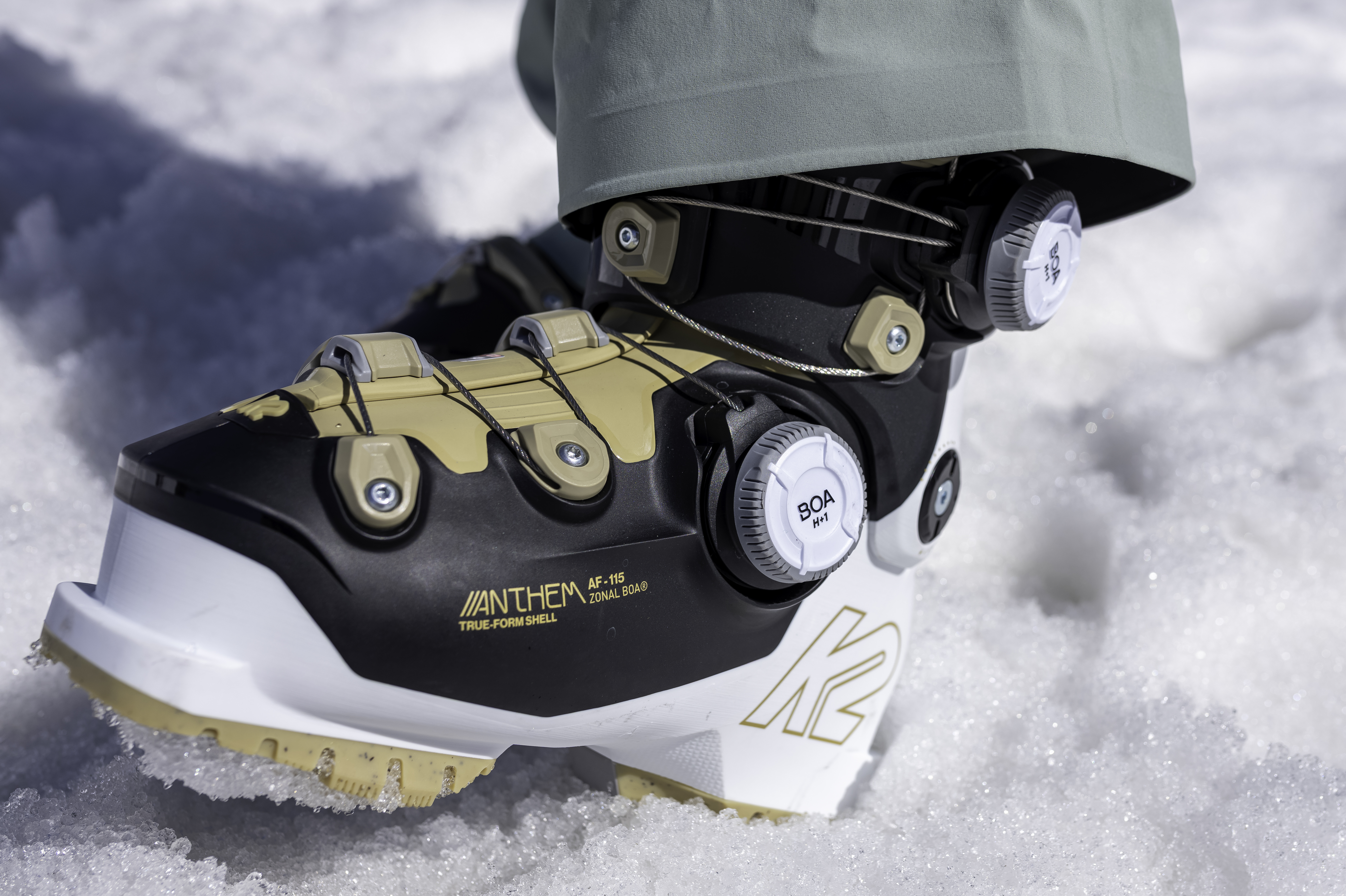
Ski boots are, in a sense, the most important item, connecting your body to your skis. More than the skis themselves, boots determine the feel of your skiing. No matter how high-spec your skis are, if your boots don't fit properly, you won't be able to transfer power to the skis effectively, and you'll lose comfort. Also, since the advent of BOA-equipped boots, the range of choices has expanded considerably. To find the perfect pair for you, let's organize the key points for choosing boots, incorporating the latest trends
POINT 1 | What type of boots best match your skiing style?
Even though we simply call them "ski boots," there is a wide variety of types and designs. From competitive skiing that requires high speed and precise control, to recreational skiing that pursues the quality and technique of skiing, to freeride and mogul skiing that allows you to freely enjoy terrain and powder, and even skiing that allows you to comfortably cruise down the slopes, the performance and feel required of boots differ depending on the skier's preferences
For example, factors like flex, ankle support, fit, comfort, maneuverability, weight, and mobility in the backcountry are all important. When choosing boots, it's crucial to select a model that suits the type of skiing or snowboarding you want to do
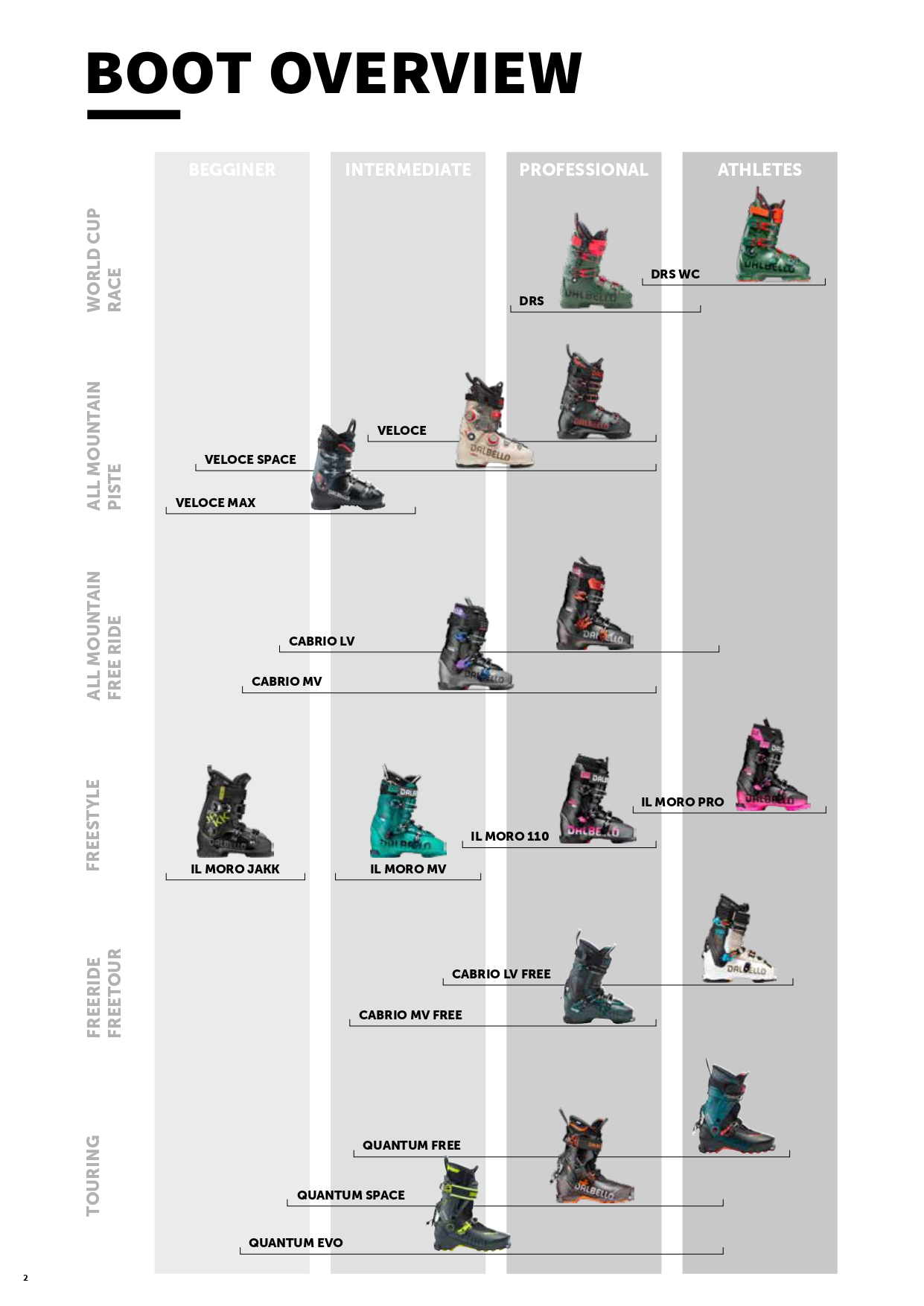
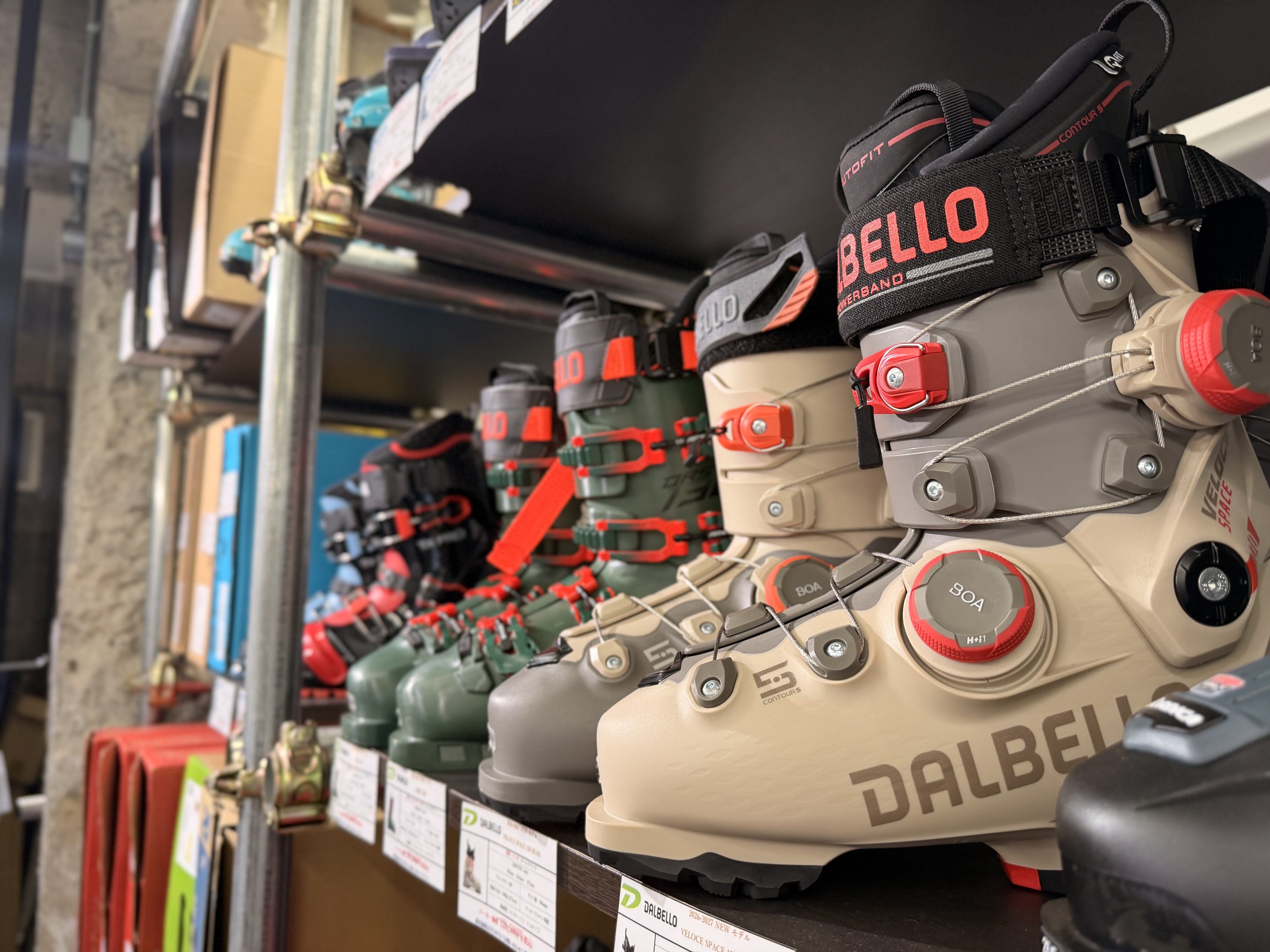
For example, if you look at the catalog of the long-established boot brand DALBELLO, you'll see a diverse range of models to suit different skiing styles
Racing
, All-Mountain, Piste
, All-Mountain, Freeride
, Freestyle
, Freeride, Freetour
, Touring
It is well known that racing boots, designed for high-speed racing on icy, hard surfaces where every tenth of a second counts, require a robust body and a delicate feel. Therefore, they are made with extremely stiff flex ratings of 120-150 and a tight last width of 93-98 mm
On the other hand, for freeride and freestyle riding, the flex is often 80-110 to accommodate the diverse slopes of natural terrain and park riding, and the last width is often wider, at 100-104 mm, to accommodate a variety of movements
Boots suitable for touring in mountainous areas prioritize lightness, resulting in a significantly different shape from the rest of the boot. Because the ankle is used extensively, the flex is generally softer
Many recreational skiers seem to use all-mountain boots, or if they are more competitive, race-oriented boots
Once you've chosen a type that matches your preferred skiing style, the next important checkpoint is, of course, the flex
POINT 2 | Flex - Choose what suits you

Flex indicates the stiffness of a ski boot. It is mainly determined by the shell material, thickness, and reinforcement structure, and is important because it greatly affects the transmission of force to the boot and ski control. Beginners tend to choose soft boots, while advanced skiers tend to choose stiff boots with high flex values, but you shouldn't be misled by your self-proclaimed level
If the board is too soft, your position won't be stable, and if it's too hard, power won't be transferred to the board effectively. Choosing a stiffness that matches your leg strength, weight, and skill level is essential
Furthermore, the flex values listed by each manufacturer are merely comparison figures for use within the same manufacturer and do not apply to boots from all manufacturers. Keep in mind that this does not mean they have the same stiffness
Flex guideline (※Varies by brand)
~90 >>> Beginner/Lower Intermediate
90-110 >>> Intermediate/Upper Intermediate
110 and up >>> Advanced/Athlete
75-115 >>> Ladies
POINT 2 | Last width - Important checkpoint
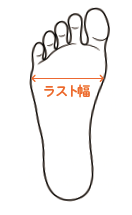
When choosing ski boots, it's not enough to just consider the overall length like with regular shoes; the width of the widest part of your foot—the last—is extremely important. If the width doesn't match the width of your foot, various problems can arise
If the boot is too narrow, it can cause pressure, leading to severe pain and numbness, and the power may not be transferred properly to the skis, resulting in reduced maneuverability. On the other hand, if it's too wide, your foot will move around inside the boot, causing calluses and blisters, making it difficult to maintain balance, and making it harder to press down on the skis
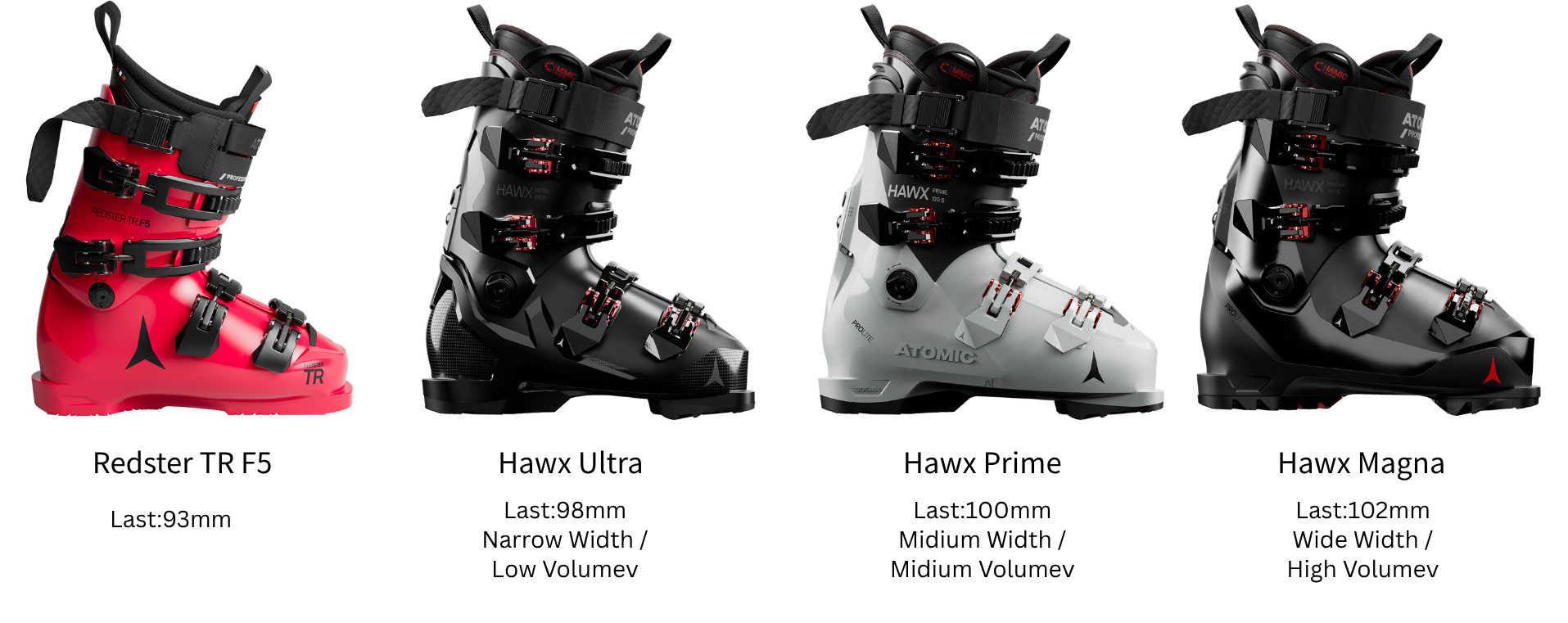
The narrower the last width, the stronger the hold and fit; the wider the last width, the more spacious and comfortable the boot. Race boots typically have last widths in the low 90mm range, while freeride boots are often around 100mm. If you prioritize warmth in backcountry riding, you might choose a wider last width
Last width guide
92-93mm >>> For top racers with extremely tight feet
~ 98mm LV (Low Volume) >>> For people with narrow feet and advanced riders
~ 100mm MV (Medium Volume) >>> For people with standard foot shapes
102mm ~ HV (High Volume) >>> For people with wide feet and high insteps
POINT 3 | Size — "Actual measurements" are fine!
You've probably often heard that the correct ski boot size is "actual foot size + 1 cm"
However, since 70-80% of ski boots currently on the market are heat-moldable, choosing a size larger than your actual foot size can lead to further heat molding, causing your foot to move back and forth and side to side, resulting in a poor fit and potentially causing foot pain
In other words, nowadays, you can simply use your actual foot size when choosing boot sizes. Also, since the shape and size of your feet can change slightly with age, if it's been several years since your last purchase, it's a good idea to have your feet measured at a shop and consult with the staff to choose the right size
POINT 4 | 2-piece or 3-piece – Choose according to your preference
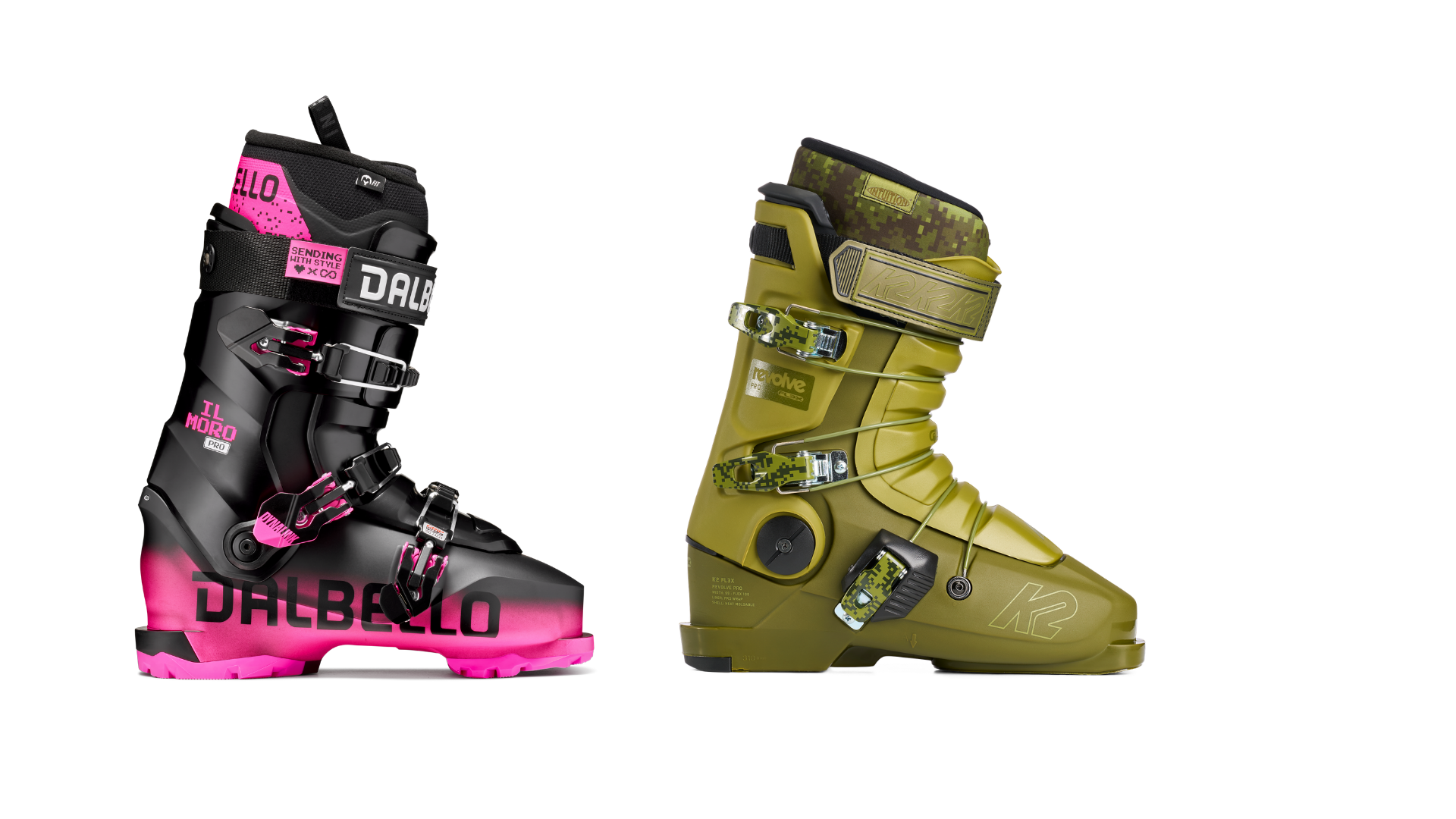
Ski boots can be broadly categorized into two types: those made of two pieces and those made of three pieces. Their performance and feel differ considerably
2-piece shell structure
The two-piece shell offers superior direct power transfer, making it ideal for turn-focused riding. The lower shell provides power transfer and flex, while the upper maintains the leg's forward lean angle, supporting a precise position. For precise turn control and high-speed skiing, there's no better ski boot

3-piece shell structure
The 3-piece construction features a rigid lower shell that transmits power, and an independent tongue that handles flex. The cuff is characterized by its smooth forward and backward movement. The 3-piece shell allows for easy flex adjustment thanks to the independent tongue, and it remains popular among skiers who prioritize ankle movement, especially freestyle and freeride skiers who enjoy tricks and playing on terrain
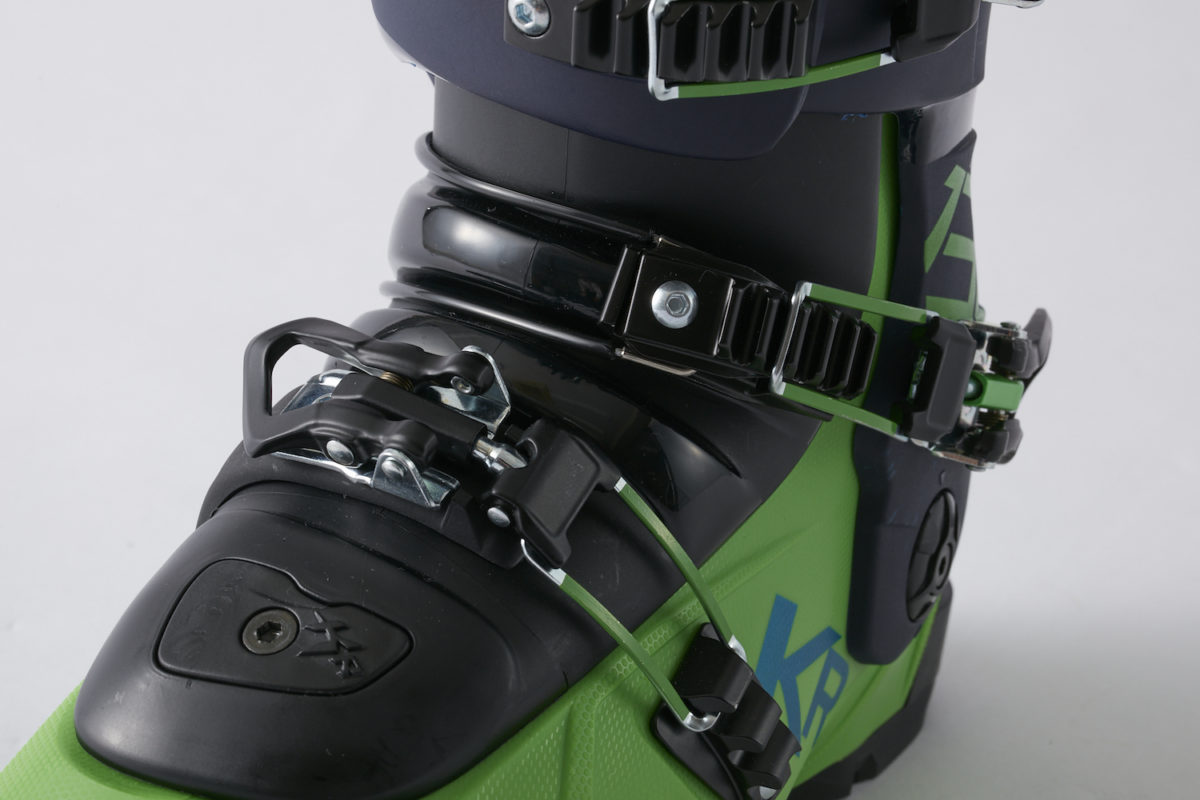
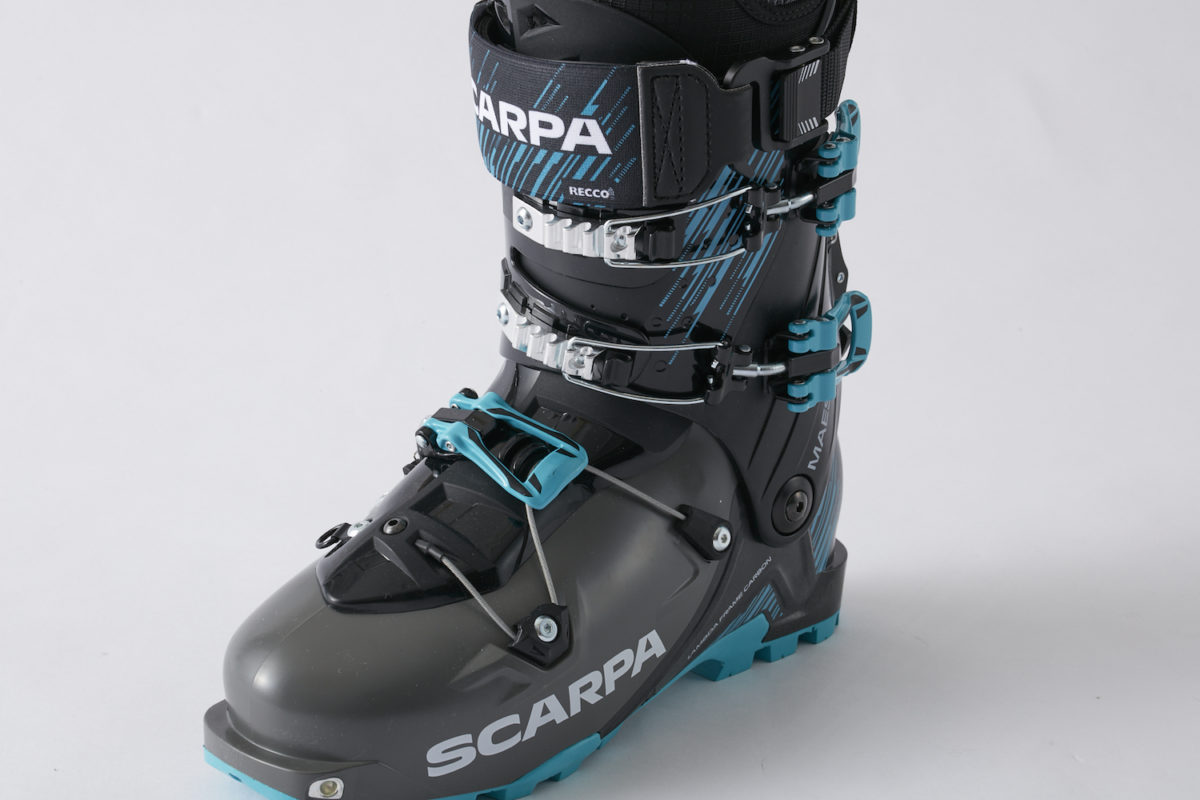
Furthermore, because the structure allows for a large range of motion in the cuff, most touring boots employ this three-piece construction. In addition, the hinge connecting the lower shell and the cuff is located close to the actual ankle bone, which is another hidden factor that does not impede flexible ankle movement
Buckle style
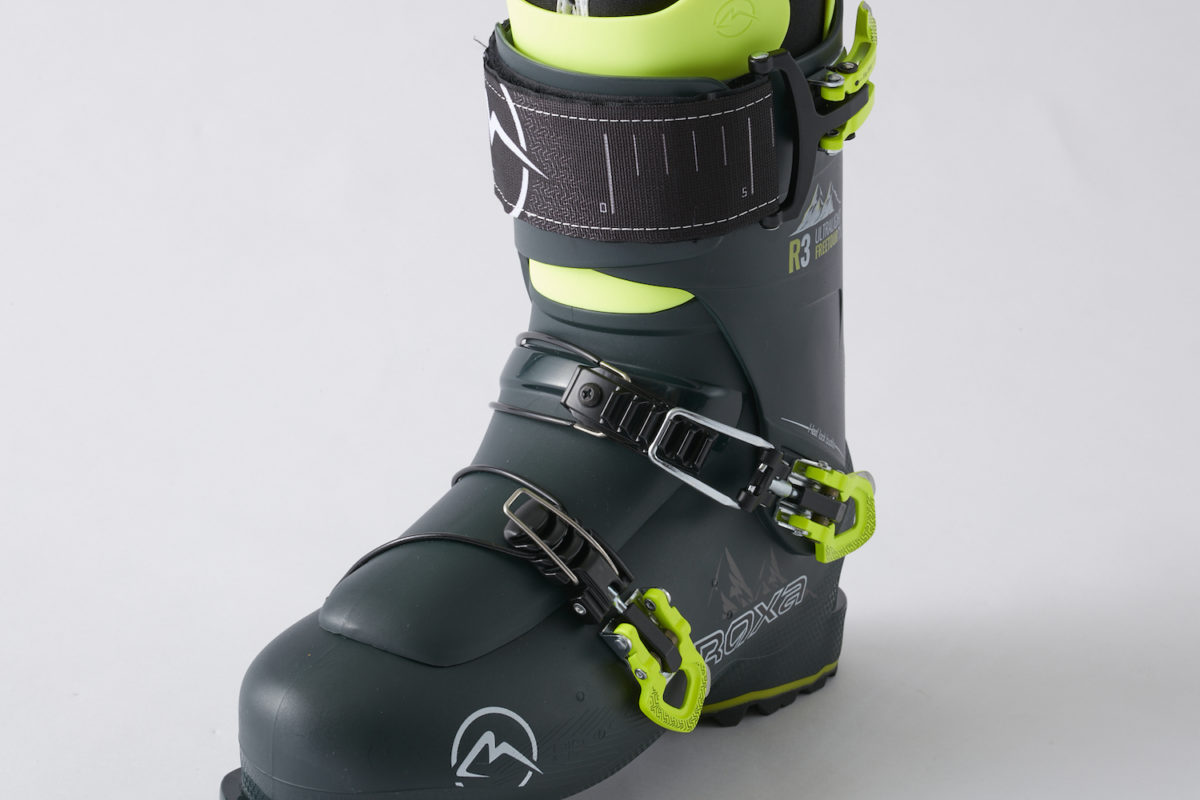
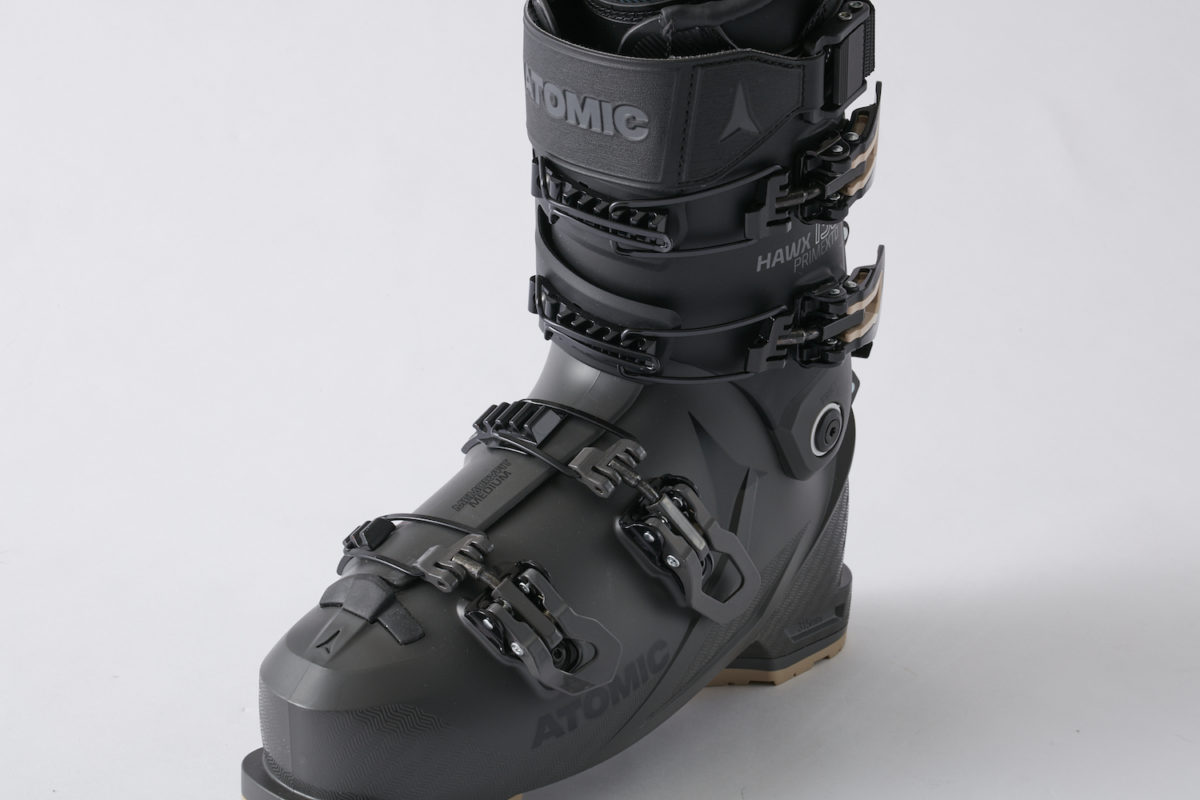
The position and number of buckles also differ significantly between two-piece and three-piece shell boots. Two-piece boots, designed to provide a secure hold all the way to the toes, often have four buckles that fasten from the toes to the ankles
On the other hand, three-piece boots prioritize hold around the heel and arch, while leaving room for the toes. This has the advantage of reducing the risk of toe pain from being cramped during jump landings and preventing excessive coldness in the toes in low temperatures
POINT 5 | Traditional buckle type or BOA?
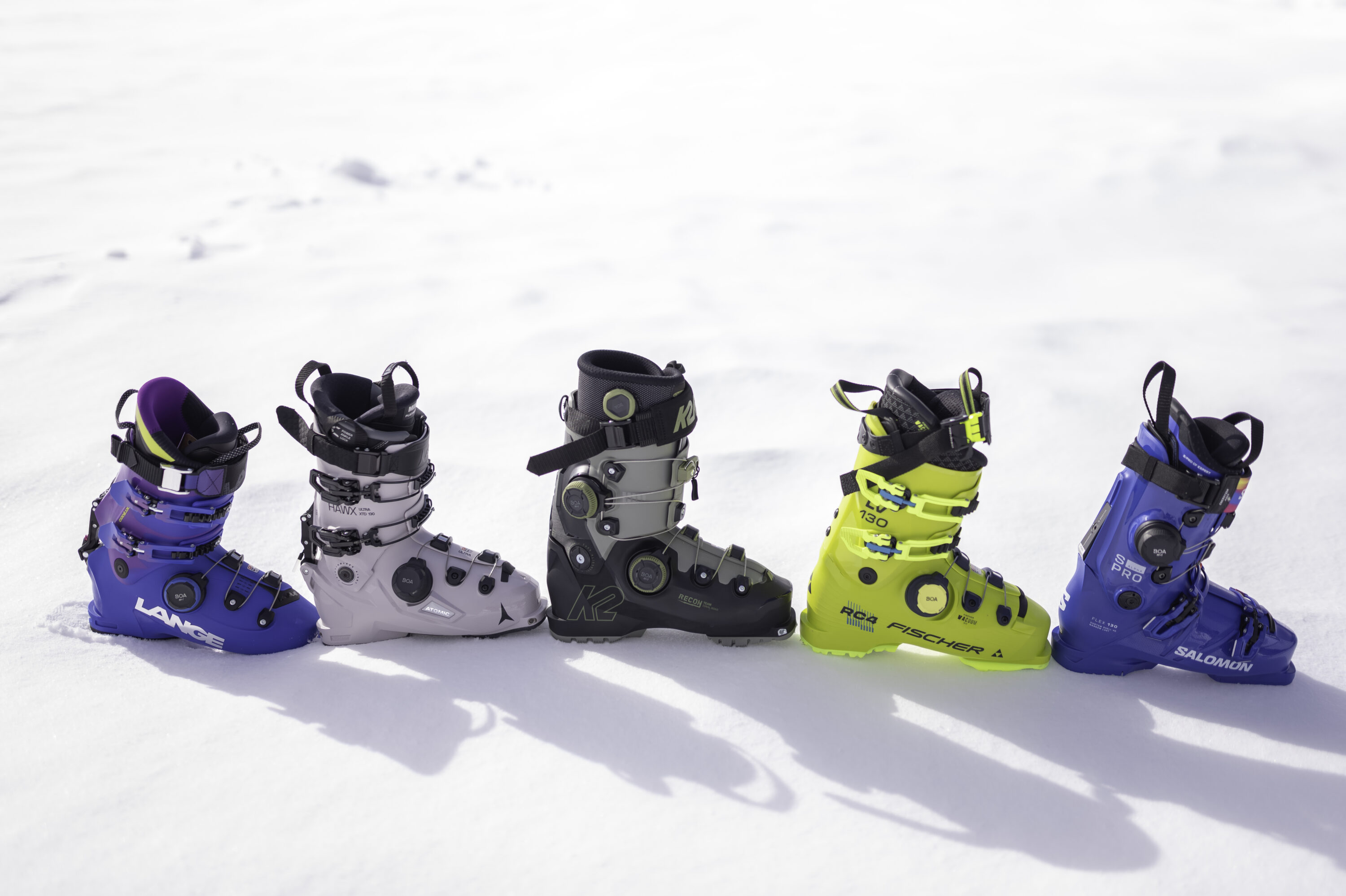
For the 25-26 season, six of the ten brands that use BOA—K2, SALOMON, ATOMIC, NORDICA, HEAD, and DALBELLO—offered dual-dial BOA boots equipped with two BOA dials
Perhaps the first choice when selecting ski boots these days is "traditional buckle style or BOA boots." This shows just how widespread BOA boots have become in the skiing scene. According to pro shops, there has been very little negative feedback or reports of malfunctions from users who have purchased them, and the reviews are overwhelmingly positive
On the other hand, there are still many who are cautious. They feel more secure with traditional buckles
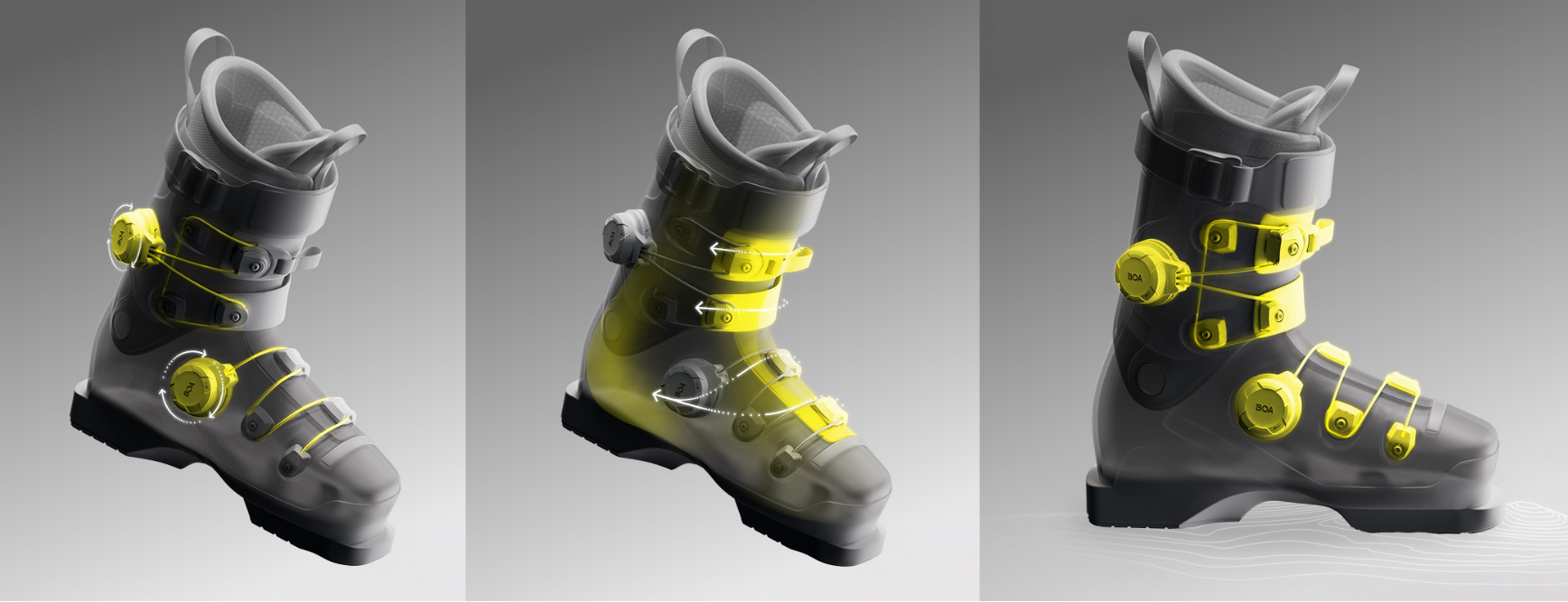
The BOA Fit System was launched in ski boots in 2023-2024, and after approximately five years of development, research has reported that it reduces pressure on the upper part of the foot by 13% compared to existing buckle-type boots, improves the fit through millimeter-level fine adjustment, and increases the power generation rate at the start of turns by 10%
The BOA boots, featuring dual dials, work in conjunction with the shell and upper cuff to provide a finely adjustable, precise fit. They wrap around the foot and shin, reducing pressure points on the instep with a uniform fit, and further secure the heel in a heel pocket to eliminate unwanted movement. This is said to improve power transfer from the boot to the ski by up to 6% and improve stability and control during turns by up to 10%
POINT 6 | Three types of sole shapes
There are three main types of soles. There are two international standards: the Alpine Boot standard (ISO 5355) and the Tour Boot standard (ISO 9523). In addition, the GripWalk sole, which conforms to the Tour Boot standard but is compatible with safety bindings, is becoming increasingly popular
Aside from GripWalk bindings, other bindings that do not conform to their respective standards are not compatible due to differences in sole height and shape. Even if they could be attached, the binding's original holding and releasing functions would not work properly, making it extremely risky and best avoided.
*Please refer to this page for information on binding compatibility.
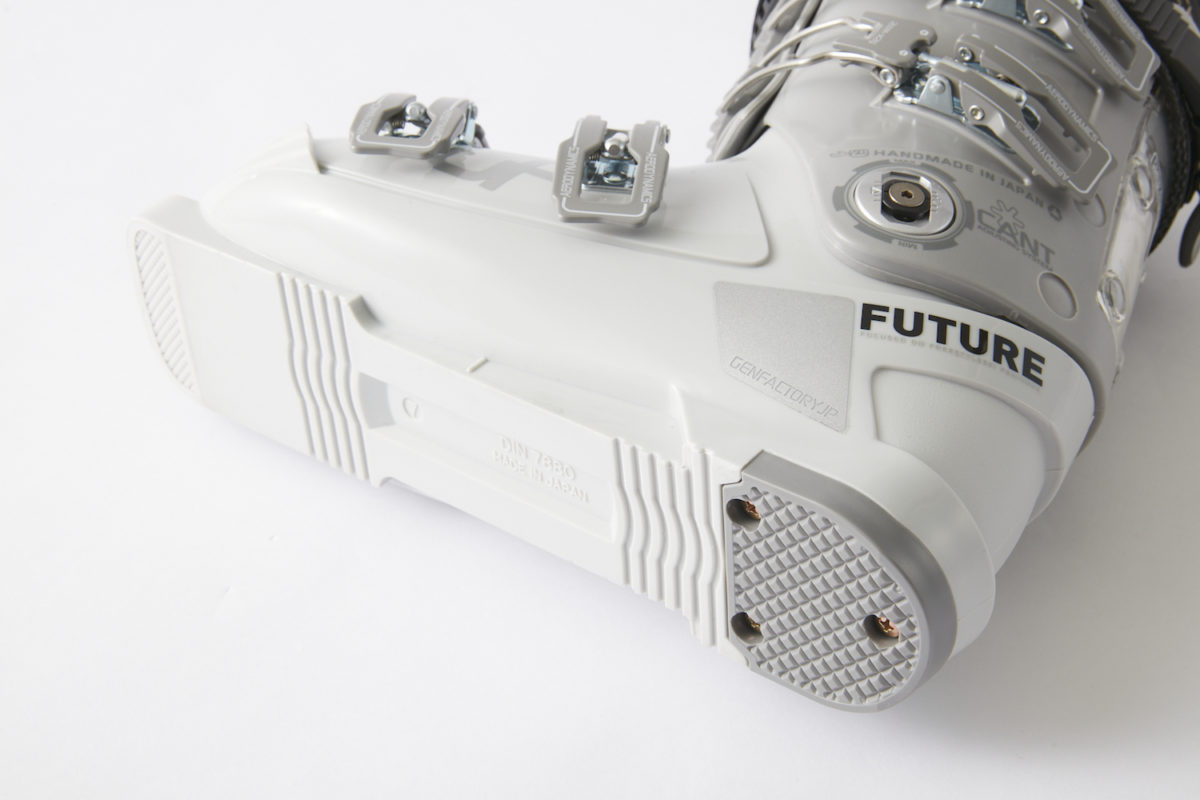
[Alpine Standard Sole (ISO 5355)]
This is the flat sole of a conventional ski boot. It is basically only compatible with alpine standard bindings.
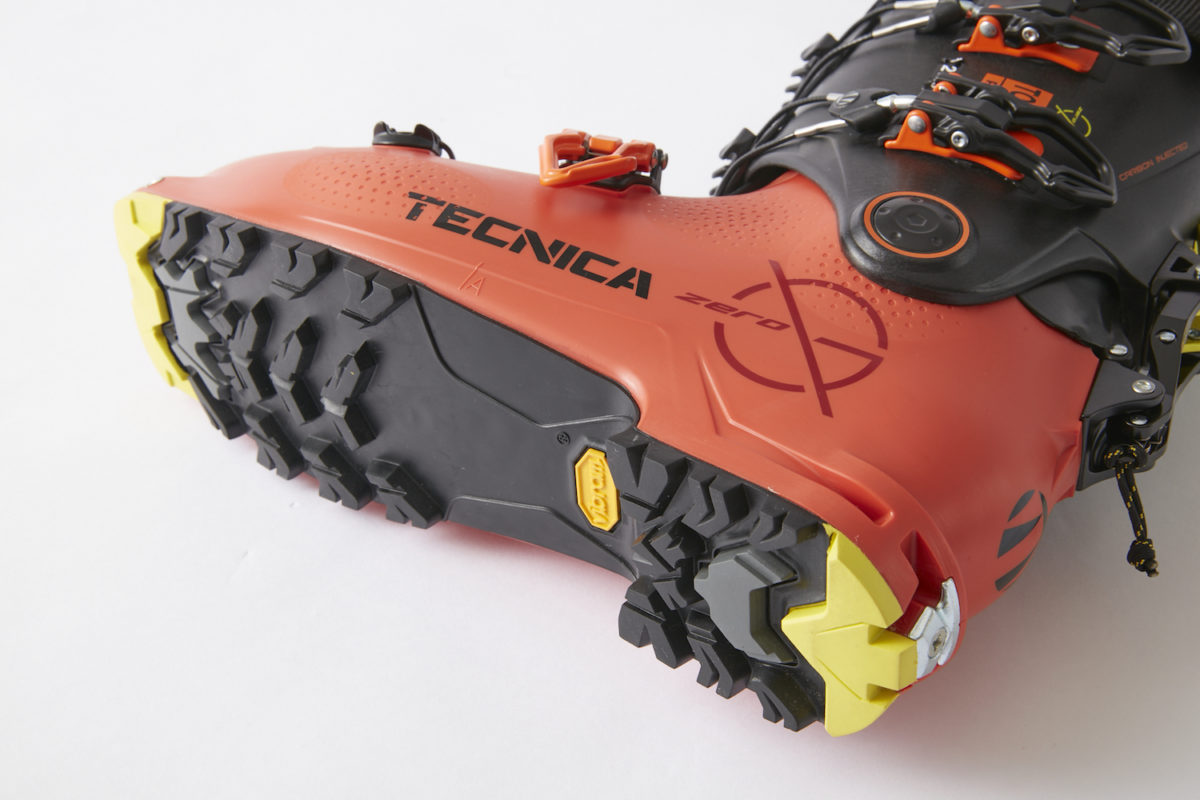
[Tour Standard (ISO 9523)]
Sole equipped with easy-to-walk-in rubber blocks and rocker. The toe welt height is higher than that of alpine standard soles and is not compatible with alpine standard bindings.
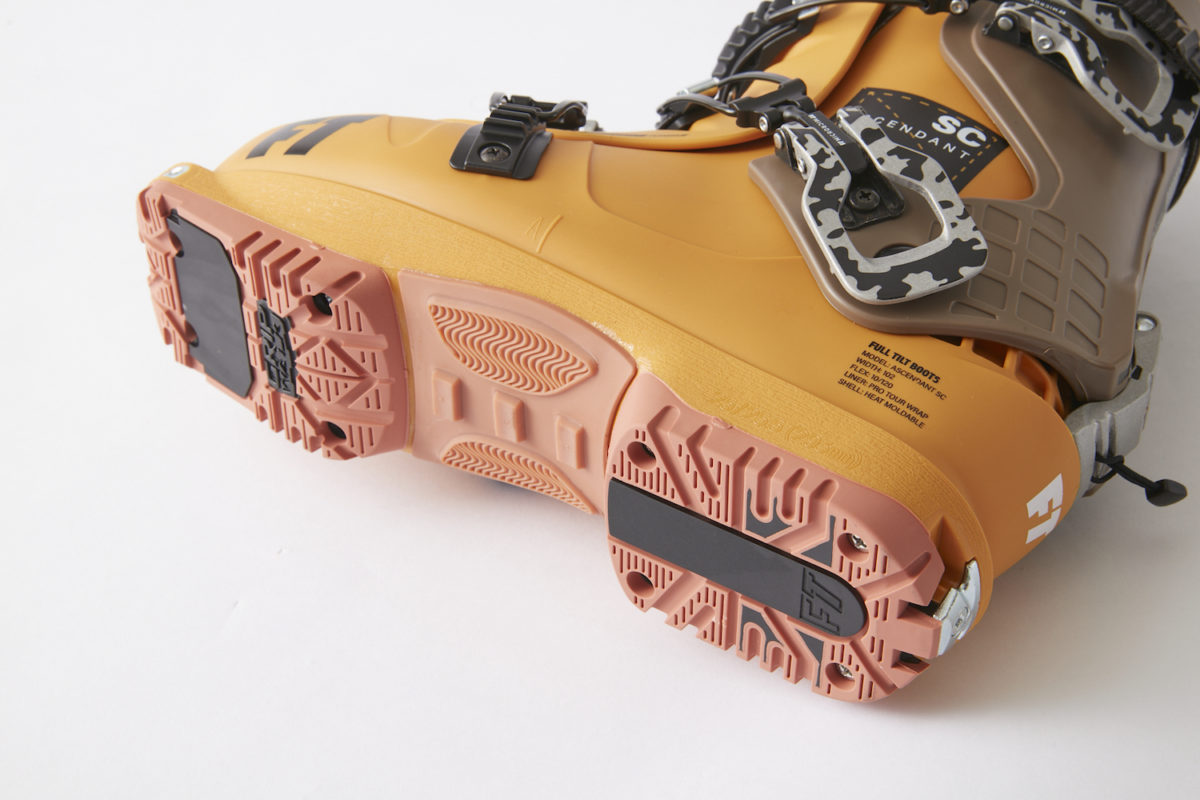
【GripWalk Sole】
A resin plate compatible with the sliding AFD (Automatic Folding Distance) of bindings is placed within the easy-to-walk-in rubber block. Most of these conform to the touring boot standard (ISO 9523).
POINT 7 | Compatibility with tech bindings
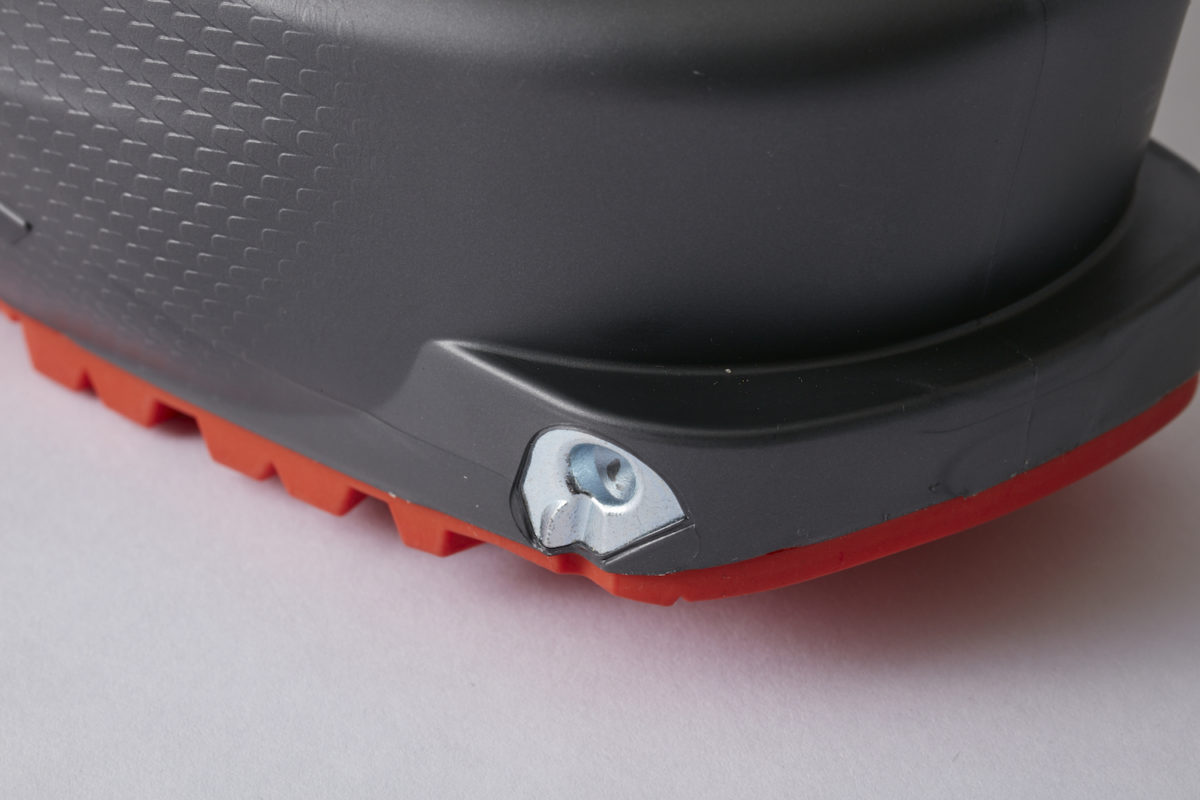
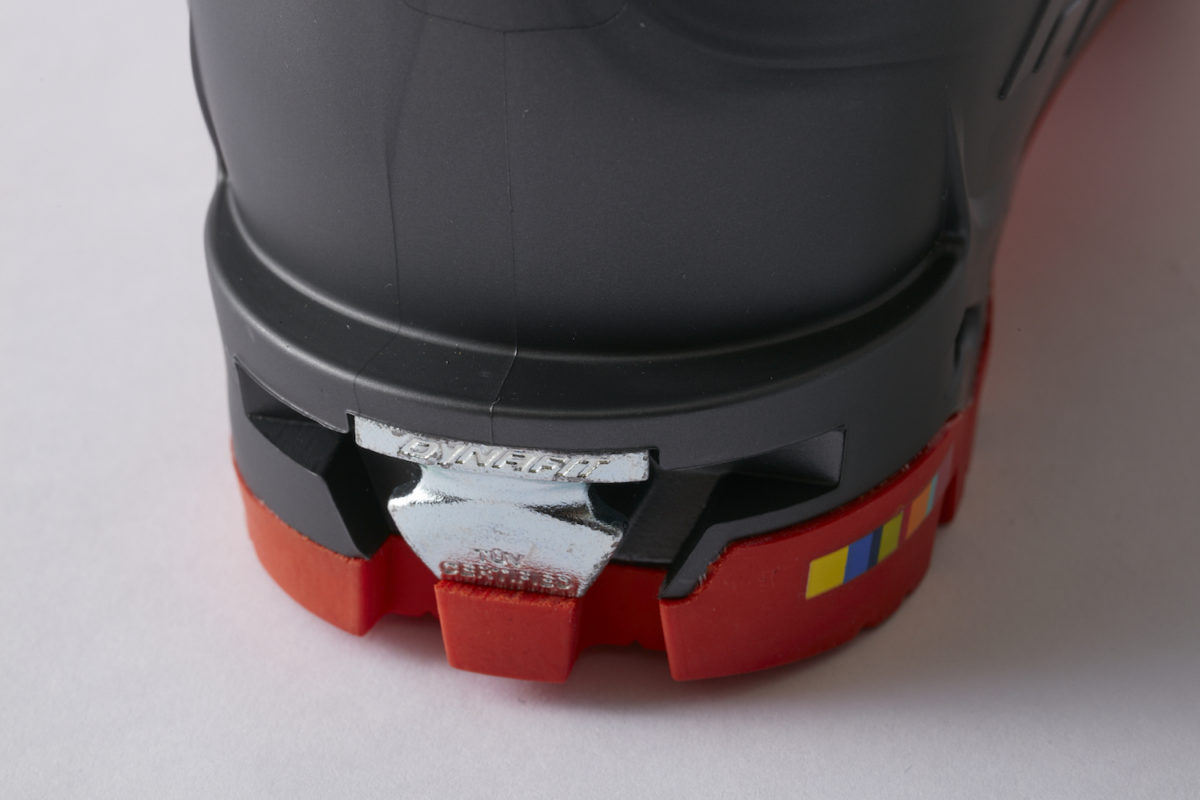
Tech inserts in the toe and heel allow for tech bindings, which many touring boots now offer, including those with GripWalk soles
[Toe]
The toe side uses a system where a tech insert located on the edge is secured by being pinned down.
[Heel]
Hook and hold the two bars on the heel piece of the tech binding.
POINT 8 | Walk Mode Function
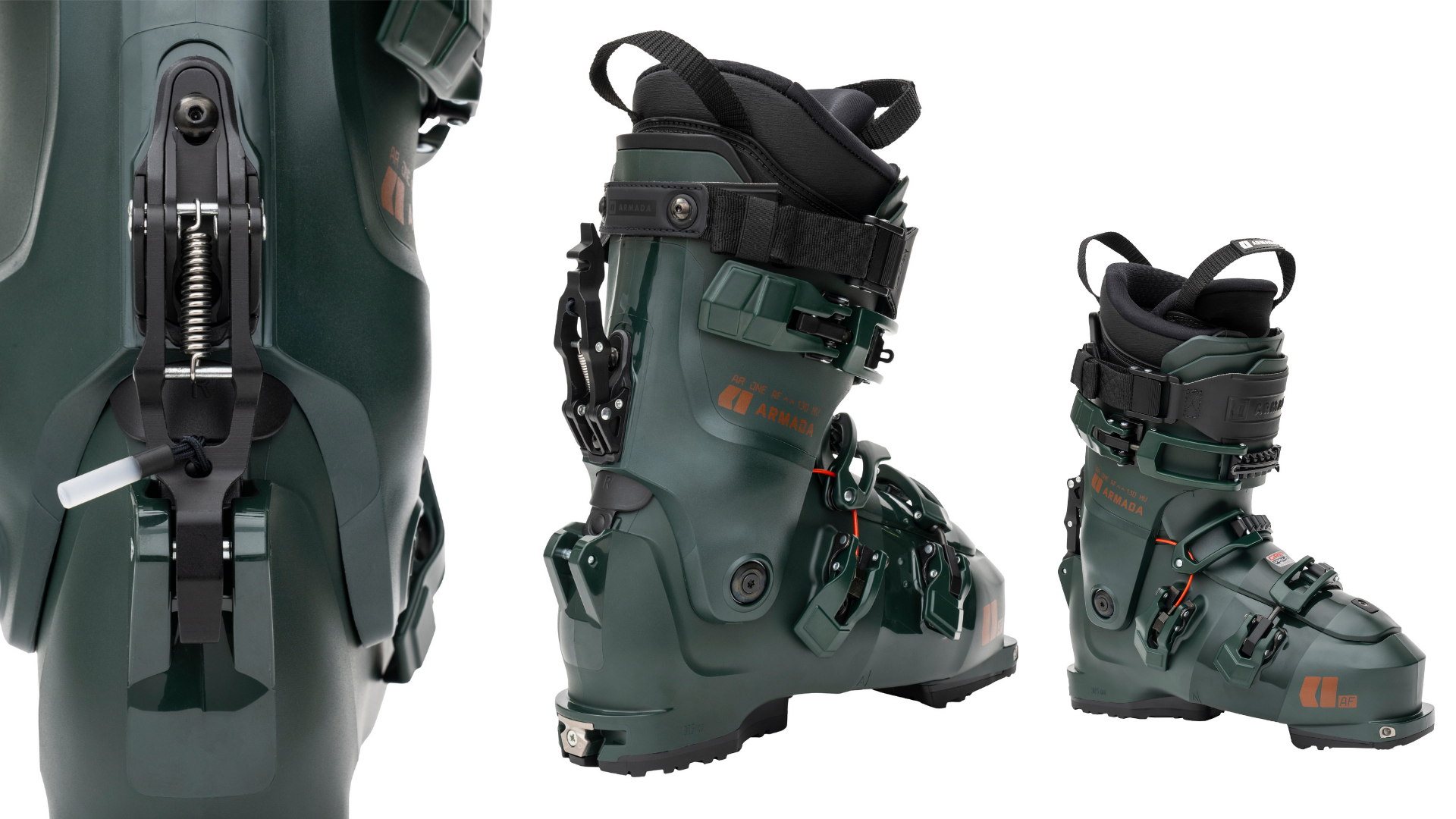
Nowadays, many freeride models, not just touring boots, are equipped with a walk mode. When you switch modes, the lock is released and the cuff can move back and forth. While you may not feel much benefit when climbing steep or short climbs, when walking on gentle slopes or flat ground, a wider range of motion in the cuff allows you to take longer strides, resulting in faster and easier movement
Furthermore, this advantage can be utilized not only in backcountry settings, but also in many other situations, such as moving around in the large parking lots of ski resorts, or while waiting in line or standing during a ride on a ropeway
Using the walk mode is simple. Just switch between skiing mode and hike mode using the mode change lever located on the back of the cuff
POINT 9 | Inner Boots
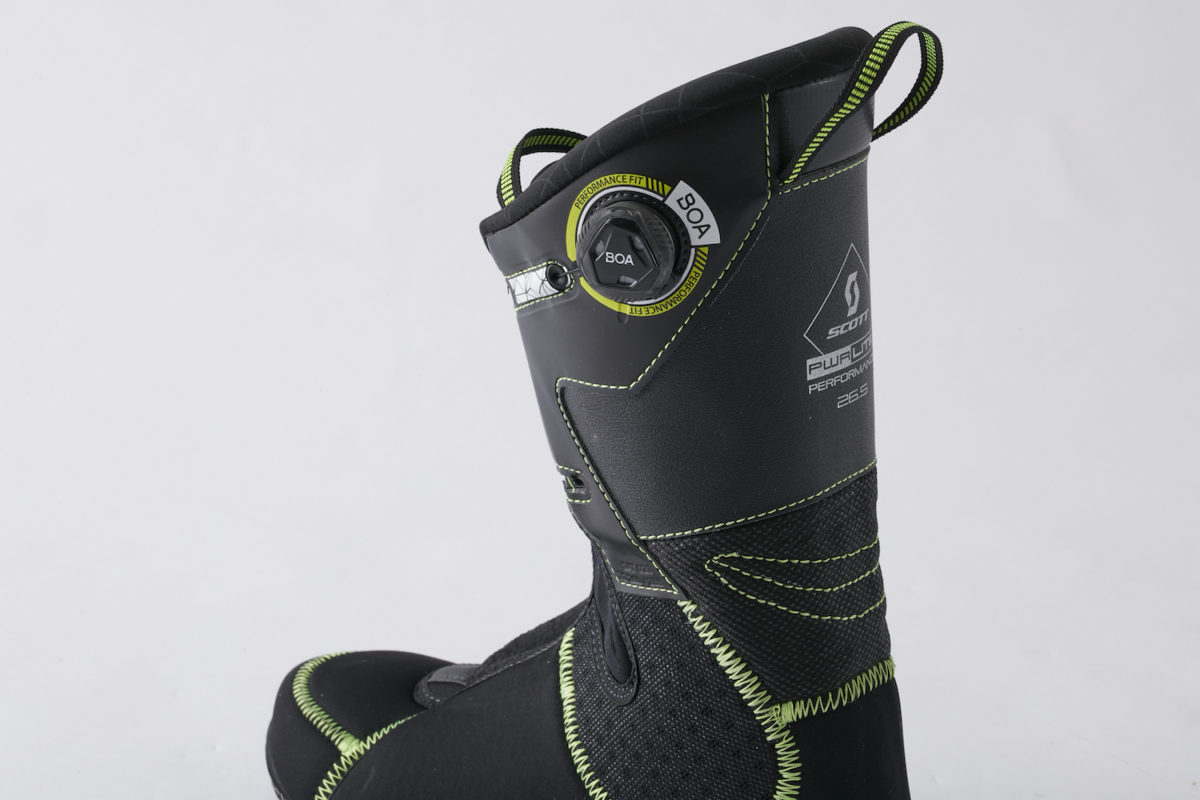
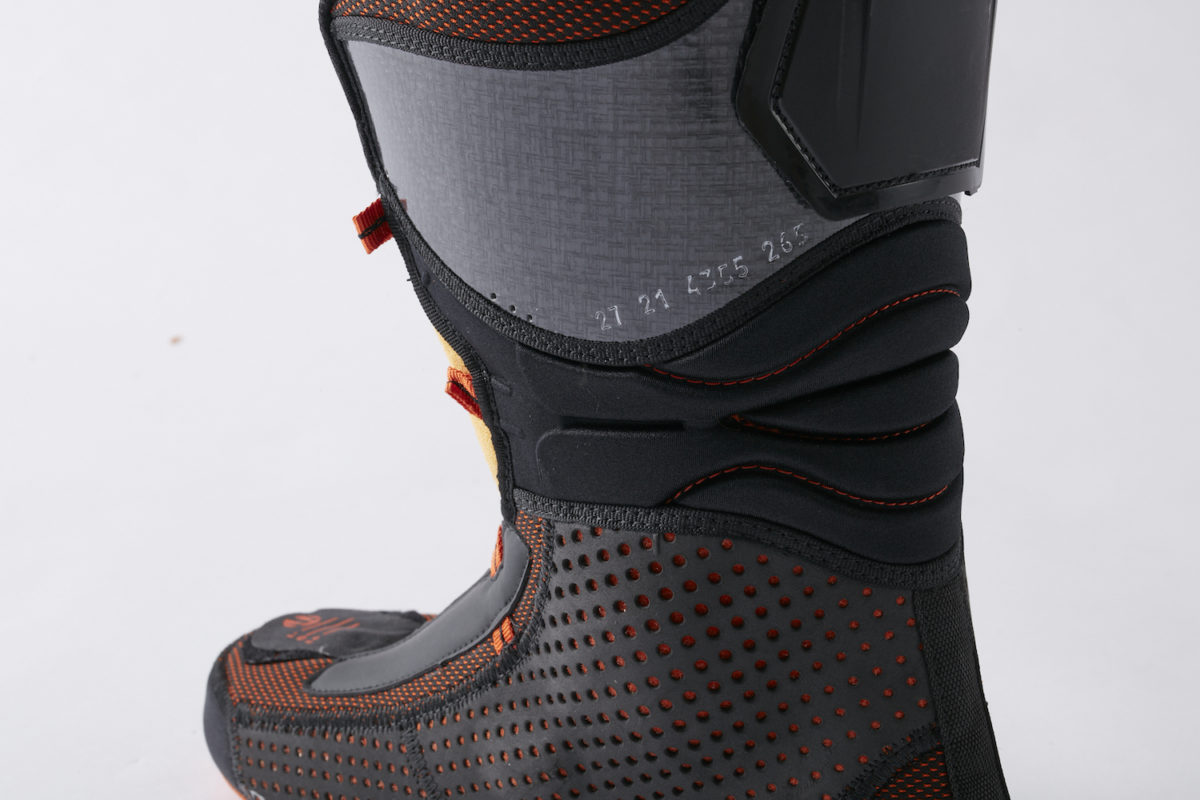
Many boots now use heat-moldable inner liner (liner). Not only does this dramatically improve the fit, but it also fills the gap between the inner liner and the shell, preventing slippage inside the shell and providing a solid, integrated fit from bare feet to the shell. Another major feature is its high thermal insulation. Furthermore, more and more models are available with heat-moldable shells, so be sure to check them out
[Wrap-type]
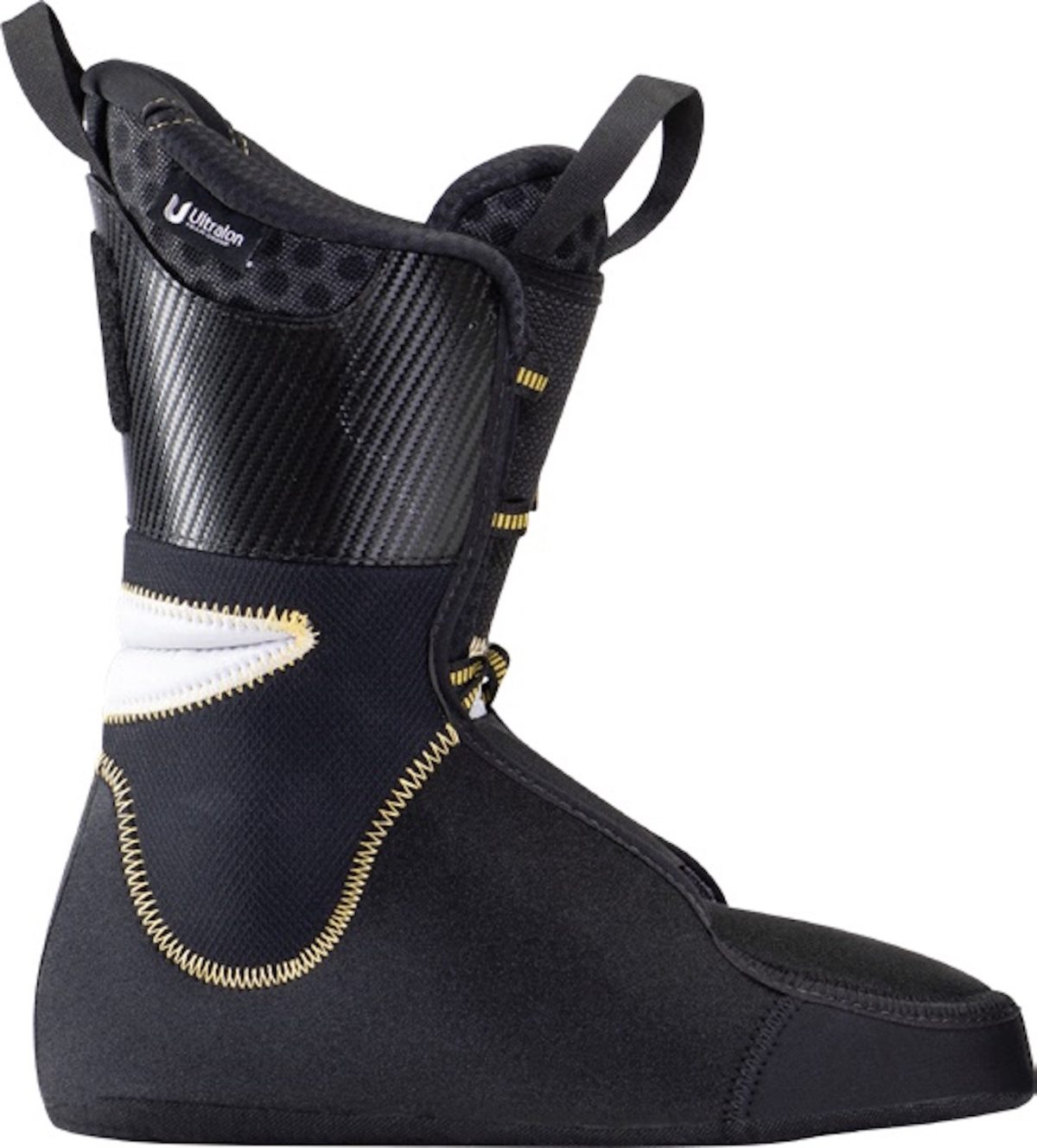
The shape that firmly wraps around the ankle provides a snug fit that holds the ankle in place even without fastening the buckle.
[Tongue Type]
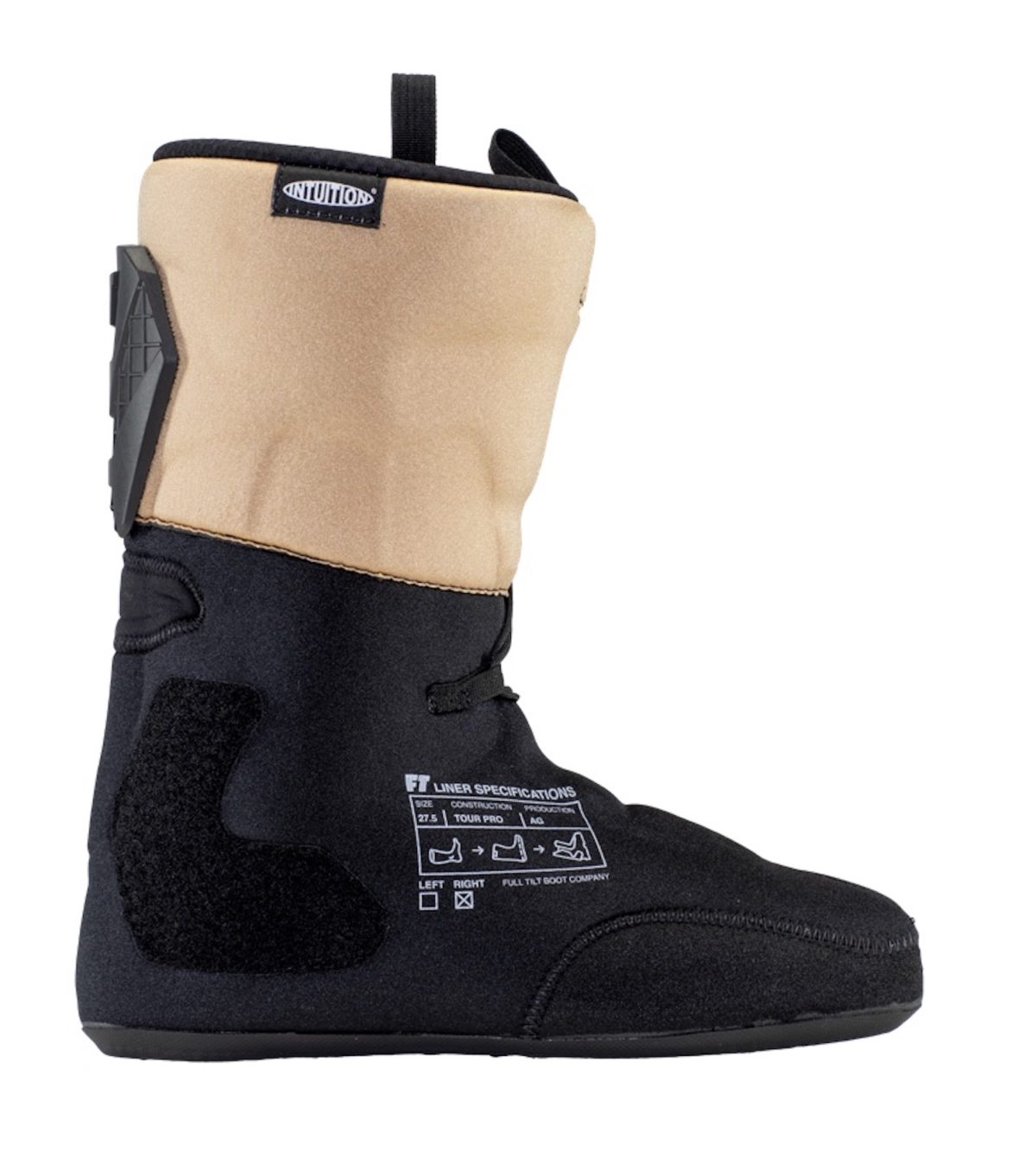
The orthodox inner boot with a separate tongue provides a comfortable fit and follows the ankle movement during turns well.
[Insoles]
Three-dimensional insoles that provide a good heel fit prevent foot slippage and are effective in improving performance. Also, commercially available heat-moldable insoles, sold separately, offer tremendous benefits with minimal investment.