

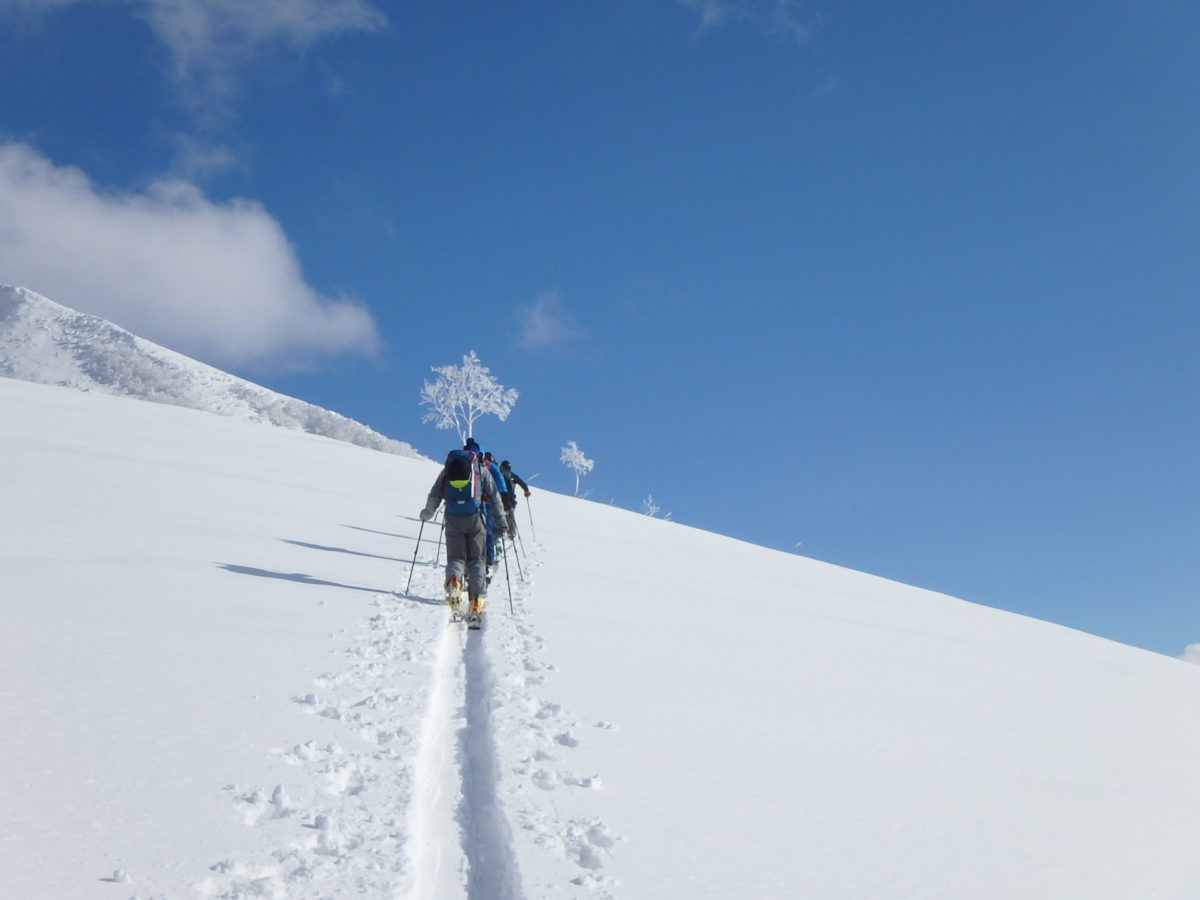
When skiing or snowboarding in the backcountry, you need a variety of equipment not only to enjoy a comfortable ride on the snowy mountains, but also to protect yourself from the dangers that lurk in nature. Here we introduce the gear and equipment that skiers and snowboarders will need if they want to ski in the backcountry this winter
*This article is a remake of the one published in the 2023-2024 season
To enjoy backcountry safely,
start by knowing the necessary equipment.
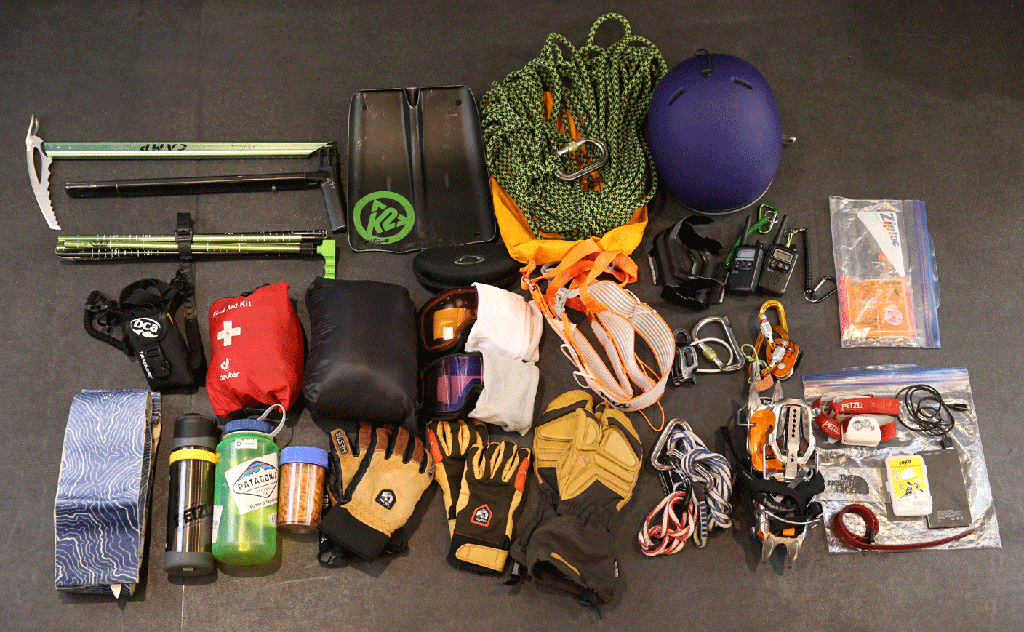
Let's check out the basic equipment needed for backcountry skiing and snowboarding. (An example assuming a one-day backcountry tour)
Basic equipment list (1 day)
| item | item | Must-have level |
| Avalanche Gear | beacon | ◎ |
| probe | ◎ | |
| Excavator | ◎ | |
| Airbags | △ | |
| Skiing and climbing gear | Skiing | ◎ |
| Ski bindings | ◎ | |
| ski boots | ◎ | |
| pole | ◎ | |
| seal | ◎ | |
| Snowboarding | ◎ | |
| Snowboard boots | ◎ | |
| Snowboard bindings | ◎ | |
| Snowshoeing | ◎ | |
| backpack | ◎ | |
| Apparel and accessories | outer shell | ◎ |
| Midlayer | ◎ | |
| Base layer | ◎ | |
| Insulation | 〇 | |
| Gloves (plus spare) | ◎ | |
| hat | ◎ | |
| balaclava | △ | |
| helmet | ◎ | |
| Goggles (plus spare lenses) | ◎ | |
| sunglasses | 〇 | |
| headlights | △ | |
| Spare socks | △ | |
| Behavioral items | beverage | ◎ |
| Water bottles and insulated bottles | ◎ | |
| Snacks | ◎ | |
| clock | ◎ | |
| Maps and compasses | 〇 | |
| GPS | △ | |
| transceiver | △ | |
| mobile phone | ◎ | |
| smoke bomb | △ | |
| wax | 〇 | |
| Other care items | Various medicines | 〇 |
| rope | △ | |
| Carabiner | △ | |
| First Aid Kit | ◎ | |
| sunscreen | 〇 | |
| garbage bags | 〇 | |
| Health insurance card | 〇 | |
| Copy of mountain insurance card | 〇 | |
| scraper | 〇 | |
| Tools (in case of gear failure) | 〇 |
Avalanche Gear

Avalanche Beacon
This is a piece of gear that sends and receives radio waves to find the location of people buried in an avalanche. It can also determine the number of people buried. It is necessary to wear it whether you are searching or being searched for. It is said to be the most important item when going out into the backcountry. There are a wide variety of models, from high-performance multi-function models used by guides to models that are easy to use for average skiers

Shovel
A backcountry essential, used for digging out people buried in an avalanche, checking snow layers, and digging snow caves when bivouac. The shaft (handle) and blade (shovel part) can be separated, and most shovels can be folded compactly and stored in a backpack. Blades come in a variety of sizes and shapes. Weight also varies depending on the material used

Probe
Once the beacon has detected the location of an avalanche burial site, the probe is inserted into the snow to pinpoint the location of the buried person. When folded, it is compact at 20-30cm, but when the cord is pulled, the shaft joins and automatically extends to a length of 2-3m. The shaft is made of lightweight carbon or durable aluminum

Air Bag
This is a rescue item that instantly inflates the airbag built into the backpack when you are in danger of being buried by an avalanche, providing buoyancy in the snow and reducing the depth of burial. It can be inflated electrically or with a compressed air tank. The shapes and sizes of airbags vary depending on the manufacturer. Although the price is a bit high, it is effective in ensuring safety
Skiing and climbing gear

Ski
Backcountry skiing can be broadly defined, but it's actually very diverse. The type of skis that are suitable for you will vary depending on your goals, whether you're mainly looking to ski in powder or if you're looking for a tour that involves long hikes, as well as your own physique, physical strength, skiing skill level, skiing preferences, and backcountry experience. Generally speaking, though, if you're looking for buoyancy, fat skis with a waist width of 100cm are likely to be the choice, while lightweight skis are more suitable for touring

Ski Boots
When considering backcountry skiing and climbing, boots are something you should carefully consider. There are alpine and touring standards depending on the sole shape, and different bindings are compatible. There are a variety of options depending on the style of skiing you're looking for, including tech binding compatibility and walk mode. The fit and weight also vary depending on the shell structure, liner, and materials

Binding
Ski bindings have continued to evolve at a revolutionary pace. There are a wide variety of bindings available, including tech, hybrid tech with alpine models, frame touring bindings, and adjustable toe-piece models. When using them in the backcountry, compatibility with your boots is a given, but the choice also depends on whether you're looking for quality skiing or hiking and mobility. You also need a combination that can bring out the best in your skis

Pole
In the backcountry, poles can be used as probes if necessary, and many are elastic, allowing you to adjust the length to suit the depth of the powder. Powder rings are essential in the harsh winter. The durability, weight, and operability vary depending on the material of the pole. There are also various grip shapes, so it's best to choose one that fits comfortably in your hand

Skin
An essential item for walking and climbing in the backcountry. They are available in two types: glue-like adhesive types that attach to ski soles, and silicone types that adhere via molecular adsorption. The material of the skin's hair (mohair, nylon, mixed, etc.) and its length can greatly affect its performance and the resulting mobility of the skier. There are many factors to consider, including weight

Snowboard
In the backcountry, many users use freeride boards that are directional (designed to move in one direction) and have relatively stiff flex and torsion. The most common boards are those with a tapered shape where the nose is wider than the tail, a rocker-shaped nose that curves up, and an arch (camber) between the feet that improves buoyancy in powder and maneuverability in turns. Normal boards are sometimes called solid boards in contrast to splitboards

Split Snowboard
The snowboard can be split into two pieces down the middle, allowing it to function like skis for climbing. When the pieces are joined together, it can also be used to glide like a regular snowboard. The biggest advantage is that you don't have to carry the board on your back when hiking, so you can conserve your energy. Climbing deep snow or gentle slopes is also easier than with snowshoes. However, there are also disadvantages, such as the effort required to split and join the board. There is a growing trend of manufacturers offering splitboards. Special bindings are required to use them

Snowboard Boots
There are also backcountry boots available that have special soles that provide better grip on the snow, make walking on snow easier, and are highly insulating and waterproof. Basically, regular soft boots can be used with both solid and splitboard bindings

Binding
The bindings that are suitable for a solid board or splitboard vary. Backcountry use requires maneuverability in rough snow conditions such as powder and ungroomed snow. Bindings that are flexible and allow a wide range of ankle movement while still providing good hold are popular. Step-on style bindings without straps are also available

Snow shoes
Snowshoes are essential gear for skiers and snowboarders when climbing in the backcountry. There are two types: for flat terrain and for mountain climbing, with the main difference being buoyancy. There are also points to consider when choosing snowshoes for backcountry use, such as storage and weight when skiing, and the type of slopes and distance you will be traveling

Backpack
There are many items you need to carry when heading out into the backcountry. Efficient storage and a comfortable fit when climbing or skiing are important considerations. Each manufacturer offers a wide variety of backpacks, each with their own unique design. There are many points to consider when selecting a backpack, such as the size, functionality, and feel that suit you best
Apparel and accessories
Layering is essential when dressing for the backcountry. Layering (outer shell, mid-layer, and base layer) is essential for regulating body temperature and ensuring breathability when hiking up and down the slopes. Accessories that protect the body in harsh natural conditions are also important

Outer shell
Outerwear is the outermost layer of clothing. There are soft shells and hard shells. Hard shells are made of a hard, crisp material and are water-repellent, waterproof, and windproof. Soft shells are made of a soft material, allowing for easy movement and breathability. When these shells are worn as the outermost layer, they are considered outer shells

Mid layer
The middle layer is the layer between the base layer and the outer layer. It creates a layer of air between the body and the cold air outside, acting as an insulator. Its breathability is also important, allowing moisture (water vapor) released from the base layer to pass through. It is broadly divided into fleece and down, but there are many different types of materials and their features

Insulation
A mid-layer worn between a padded base layer and an outer shell. It has high thermal insulation properties, and down and fleece are the standard. Recently, synthetic fiber insulation has become popular. There are windproof and waterproof types suitable for outerwear, and breathable types that can be worn as activewear

Base layer
This layer comes into direct contact with your skin. When hiking in the backcountry, it needs to be moisture-wicking, so that sweat doesn't remain on your skin, and quick-drying, so that it dries quickly even if it gets wet. There are many different materials available, so it's important to carefully consider your options

Helmets
A helmet is one of the most important items for protecting your head from impacts in the backcountry, where various dangers lurk. If your head hits the wrong spot, it can lead to serious consequences. To minimize such risks, you should always wear a helmet. Choose one that not only fits well, but is also comfortable to wear for long periods of time

Goggles
Goggles ensure visibility on snowy mountains and protect your eyes from UV rays. They are an important item for preventing distress due to poor visibility, preventing collisions with trees, and ensuring personal safety. There are many things to check, such as the frame shape, fit, ventilation, and anti-fog coating

Gloves
Hand protection and warmth are essential. On snowy mountains, there are various situations that can damage your hands. Also, if your hands get too cold, not only can you not move your fingers freely, which is inconvenient, but in the harsh natural conditions of the backcountry, you can also get frostbite. You want to choose something that is easy to use and has high functionality

Hat / Beanie・Cap・Hat
Like helmets, hats protect your head from impacts and keep you warm on snowy mountains. There are many different types, including knit hats, caps, and hats. You can choose the style and material based on your design preferences, the season, the mountain climate, and the purpose

Balaclava
Balaclavas, which cover most of your face, are incredibly warm. Even in mountains or seasons where there isn't much snow, you may be hit by a sudden snowstorm. Carrying one with you is convenient and reassuring in case of an emergency
Behavioral items

Water Bottle
Carrying water with you is essential on backcountry tours. Water bottles come in a variety of styles, including mug-type and cup-type, and are designed for different purposes, such as keeping things cold, keeping things warm, or both. Sometimes people bring hot water to drink coffee or instant ramen to keep themselves warm on snowy mountains. The ability to retain heat is a key consideration

Head Lamp
This is an essential item for ensuring safety at night or in dark environments. It not only ensures visibility during dark hours, but also helps clarify the direction and route you should take when visibility is poor during the day due to cloudy, foggy, or snowy conditions. Another major advantage is that it is worn on the head, leaving both hands free. Models with flashing and SOS modes can also serve as a visual signal when in distress or seeking rescue

Watch
When skiing in the backcountry, time management is essential for managing your activities and avoiding danger. Checking your route and location, as well as obtaining weather, time, altitude, and location information, can provide clues for your actions. In recent years, many watches have been equipped with GPS functions. Some models can even keep a log (record), allowing you to accumulate data on good skiing spots

Wax
Applying a coat of wax before heading out into the backcountry will greatly improve the glide. Your boards will glide and you'll have more fun. While it's best to apply wax sparingly beforehand so that the stickers don't stick properly, waxing on-site is key. Choose a wax that's easy to carry and adapts to any snow condition

FIRST AID Kit
A first aid kit is essential for emergencies such as injuries and troubles in the mountains. It usually contains only what you need, such as tape, gauze, bandages, scissors, tweezers, medicine, disinfectant, disposable plastic bags, and triangular bandages, but there are also various types of packaged first aid kits available
You can start by taking a guided tour and renting one to try out
If you're new to backcountry skiing, it can be daunting to buy all the gear you need right away. Therefore, it's convenient and safe to start by joining a backcountry guide club tour and renting gear. Many guide clubs offer avalanche gear rental sets
Examples of
" COLOR SPORT CLUB : ・Rental set (beacon, probe, shovel, snowshoes, poles, backpack) - 3,300 yen (1 day)
・Avalanche safety set (beacon, probe, shovel) - 2,200 yen (1 day)
Some places also allow you to rent individual items, including skiing equipment
KAGURA POWDER STATION day tour participants
: Skis: 3,000 yen, poles: 500 yen, seals: 1,000 yen, snowshoes: 2,000 yen,
float bag: 4,000 yen, backpack: 1,000 yen, beacon: 2,000 yen, shovel: 1,000 yen, probe: 1,000 yen
You'll probably only learn things once you've actually used them on the snow.
It might be a good idea to rent some and try them out first, and then choose the gear that's right for you.
*The above rental fees are as of October 2024