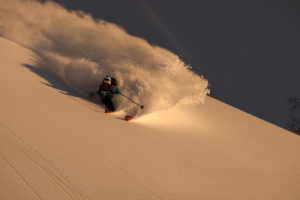


"I want to enjoy powder more, so I want to try backcountry skiing!" "I can ski steep slopes and ungroomed courses on groomed runs without any problems." What kind of gear should such skiers get before heading to the backcountry? The backcountry is a field where danger is always present behind the allure of magnificent nature.
So, let's ask professional skier Takeshi Kodama, who has skied on various mountains around the world and also advises general users on gear selection at camps and exhibitions, to teach us how to choose gear suitable for backcountry beginners.
*This article is a remake of the one published in the 2023-2024 season

Adviser
: Takeshi Kodama
Born in Sapporo in 1974. He joined Yuichiro Miura & Snow Dolphins at the age of 19 and became a professional skier. He has extensive expedition experience, including skiing down from the summit of Denali and to the Northern Kuril Islands and Greenland. He climbed Mount Everest in 2005. He has participated in the "Skiing Around the World" project with photographer Kei Sato 10 times
SKI
When recommending skis to people who want to start backcountry skiing, there are many things to consider, such as skill level, physical strength, gender, and base ski area, but I will first talk about what criteria to use
1. Center width: approx. 100 mm
For those who want to go into the backcountry for the first time, I often recommend fat skis with a top rocker of about 100mm at the center. This is because they are easy to handle in all snow conditions. I believe that a top rocker of about 100mm is the perfect middle ground for a wide range of conditions, from firm, packed runs to very deep powder
Skis thicker than 100mm are good for deep snow, and thinner skis also have a rocker shape that is not designed for powder but is called an all-mountain rocker, meaning that the rocker is not designed to provide buoyancy but to improve maneuverability in a variety of snow conditions
A center width of about 100mm provides a good balance between powder and slopes. As you continue backcountry skiing, you'll likely need two skis to cover the entire area, or even three to cover the entire terrain. Having one slim 90mm ski that can be used in early spring, and another 107mm ski for mainly powder skiing in the peak season, will broaden the range of conditions you can handle. Some people even have three skis, including an extra-thick one for those days when you're hitting the deepest powder. However, you can't try everything at first, so sticking to a center width of 100mm will allow you to ski evenly across the terrain
2. A bag with a locker on top
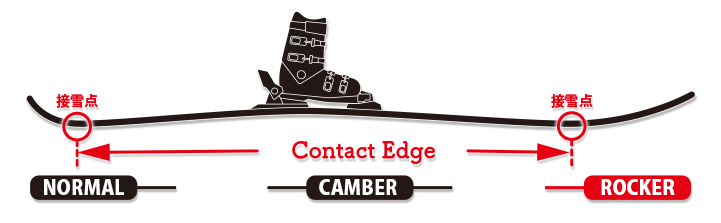
We recommend skis with a center width of approximately 100 mm and top rocker. These provide buoyancy in deep snow, and even in slushy, slippery conditions, the rocker makes it easy to move the top, providing good maneuverability and making for easy skiing. There are also skis with rocker on both the top and tail (twin rocker), but on hard runs, a large tail curvature can slightly reduce control, so in backcountry skiing on a variety of snow types, it's safer to have a more moderate tail rocker. Starting with skis that only have rocker on the top will help you avoid any quirks
[Nose rocker + camber model]
These skis have rocker in the nose, which promotes buoyancy in powder, and a straighter tail that provides stability in the latter stages of a turn
3. What are the core and inner materials?
The feel of skis changes depending on the core material and other reinforcing materials used. While it's a matter of preference, it's best to start with something that isn't too rigid. For example, skis with a thick layer of metal throughout offer stability, but they're not for everyone. So, if there is metal, it should be only in certain parts, or if it's made of lightweight reinforcing materials like carbon, resulting in a relatively lighter ski.
In the past, lighter skis tended to have poorer gliding performance, but nowadays, even light skis can offer good gliding performance. In the backcountry, you'll inevitably be walking a lot, so it's best to start with skis that aren't too heavy.
4. For those who just don't like deep snow!
It's okay to start with skis designed specifically for deep snow, but you should be careful. When rocker skis first appeared, twin rocker skis with a center width of around 115 mm, such as the ARMADA and DPS, were all the rage and gained popularity as skis that allowed anyone to immediately ski powder snow. Some people got their start with these skis and became good at powder skiing, but they also have weaknesses in areas such as stability on hard runs and ski climbing, and long traverses, so I think they are more suited to skiers who ski powder via lift access
5. Something you can ski in any condition
I would like to suggest traditional skis that can be used in a variety of conditions
For example, specifically, ATOMIC's "BACKLAND 102." It has a center width of 100mm, is lightweight, and has a top rocker. It's light and has no quirks, and can be skied in any snow condition. It's the perfect first pair for people who don't know what kind of skis to wear. It's one of my favorite models, and it works great!
Takeshi Kodama's preferred model:
ATOMIC | BACKLAND109 (189cm)


This freeride touring model is packed with technology that delivers high performance in deep powder. The newly developed lightweight HRZN 3D ski features a unique three-dimensional tip shape that significantly improves flotation in deep snow conditions. BACKLAND's lightweight HRZN 3D skis feature thin, perforated materials for a low swing weight. The carbon backbone and Ultra Power Wood Core combine rigidity and lightness, providing excellent glide while also providing effortless climbing, allowing for full performance on both uphill and downhill runs

Models that meet the conditions proposed by Takeshi Kodama
ATOMIC | BACKLAND102


ATOMIC|BENT 100


NORDICA | Enforcer 99

K2 | MINDBENDER 99Ti

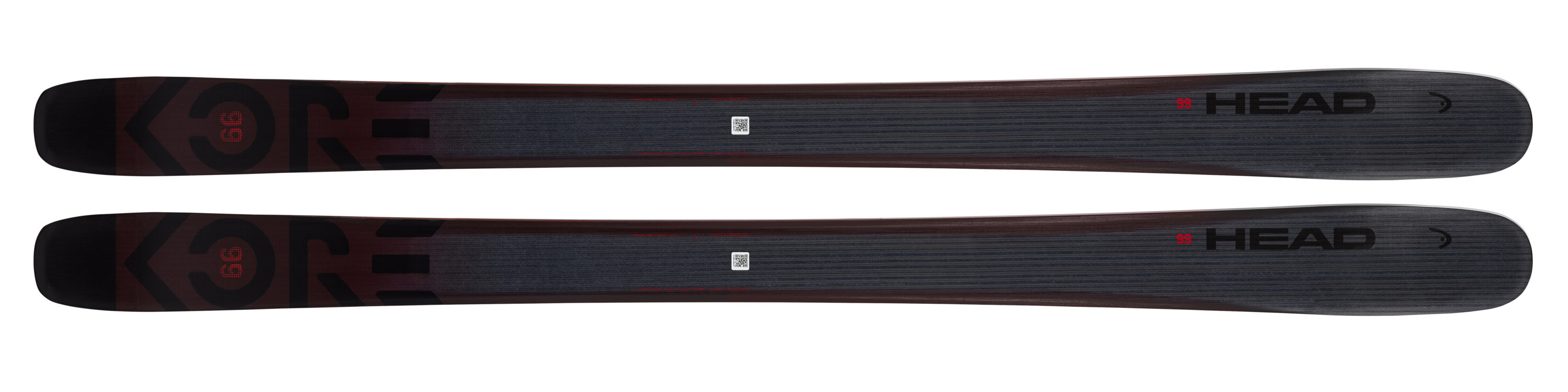
HEAD | KORE 99
ELAN|RIPSTICK 96

FISCHER | RANGER102

BOOTS

Boots have evolved remarkably in recent years. When backcountry skiing first became popular, there were only two choices: climbing or skiing. Lightweight boots were unreliable for skiing, and boots chosen with skiing as the priority were very heavy and lacked the functionality for walking. Recently, boots that provide sufficient skiing performance, are reasonably light, and have proper walking functionality have appeared and are now mainstream
1. Buckle or BOA® Fit System?
In recent years, an increasing number of boots have adopted the "BOA® Fit System," especially those that prioritize skiing performance. While buckles tighten by pressing down on the instep, BOA tightens evenly across the entire foot, which data shows improves fit and performance. There are many other benefits, such as ease of putting on and taking off boots and ease of use, so I think backcountry skiing and BOA are a good match. While preferences for appearance and feel are a factor, when new technology becomes established, there's a high probability that it will be a good choice. I highly recommend considering it as an option
2. 2-piece or 3-piece type
Similar in shape to standard four-buckle ski boots, these boots offer excellent gliding performance and a wide range of motion in walk mode, and many manufacturers offer them. These are known as two-piece boots and are used by brands like SALOMON, ATOMIC, and TECNICA. There are also three-piece boots, such as those from DALBELLO and K2. Each has its own merits and characteristics, and it's hard to say which is better, as it depends on the user's preferences. However, two-piece boots tend to offer a more stable feel as they provide better ankle support and rigidity, while three-piece boots are easier to slip on and offer a smoother flex, making them more flexible and allowing for greater mobility
By the way, I wear two-piece boots. If you've been wearing two-piece boots up until now, I think it would be easier to get used to something with a similar shape rather than changing completely
3. Flex
In the backcountry, I think it's better to be able to use your ankles flexibly to a certain extent. You'll often be skiing on soft snow, and you need to move according to the terrain, so it's easier to ski if you can use your ankles. It might be better to have a slightly lower flex
For expert-level men, the high-end models from each manufacturer are generally Flex 130, and I think many people wear 130, but if you're new to backcountry skiing, I think it's best to start with Flex 120. For women, the top models are Flex 110 or 115, so I think it's fine to go down one size and start with around 100. Expert skiers will inevitably want the same stiffness as alpine skis, but I think it's fine to start with a slightly lower stiffness
4. Walk Mode
Climbing is an important part of backcountry skiing. Naturally, it's better to have a walk mode for climbing, as walk mode significantly reduces fatigue. Some people say they don't mind giving up climbing in exchange for skiing, but I think it's more meaningful to conserve your energy and be able to ski one more run
The range of motion is about 70 degrees at its widest, but I think 50 degrees is more or less than necessary. Most boots have a range of motion of about 50 degrees
5. Boot width
When choosing boots, width (last) is also an important factor. All manufacturers offer boots that are slightly wider than alpine boots. The average width is 100mm, with wider boots being 102mm and narrower boots being 98mm
First of all, it's important that the boots fit your feet, but one thing to be careful of is the toes. In gliding mode, your ankles are fixed, so your foot position doesn't change, but in walk mode, your ankles are free, so your feet move back and forth inside the boots. I think they move about 5mm. This means that the toes of your boots hit the toes while you're walking, and if you walk for a long time like that, your toes will hurt, or your nails will get damaged and turn black. So when choosing boots for heavy snow, it's best to leave about 5mm of room
6. Shell heat molding & inner customization
Nowadays, all boot manufacturers are able to customize the fitting for each individual. ATOMIC and SALOMON allow you to heat-mold the entire shell. Some boots are made with parts that are easy to heat-mold, and customizing the inner boot is also a common method. There are various options, and each has its own advantages, so it's a good idea to check these points before making your selection
I use the ATOMIC HAWX ULTRA XTD130. It has four buckles for a solid, stable ski and weighs approximately 1,600g. It's fairly light for a four-buckle type, but it's still sturdy enough and the inner layer fits snugly. I often recommend a slightly softer version of this model, like the HAWX 120, for men. SALOMON and TECNICA also offer boots with a similar concept, so it might be a good idea to try them on in a store
7. Should I get pin boots that are compatible with tech bindings?
If you're starting backcountry skiing seriously, I think it's better to buy Ping boots that are compatible with tech bindings right from the start. Not only are Ping boots lighter, but they're also much easier to walk in. If you think you can do it later, your options will be limited, and you'll end up having to replace them, which will cost you money
Takeshi Kodama's preferred model:
ATOMIC | HAWX PRIME XTD 130 BOA GW

Size: 24/24.5-30/30.5cm
Weight: 2.017gg (26-26.5cm)
Flex: 130
\125,290
The BOA® Fit System allows for easy and precise fit adjustment. By tightening evenly across the entire foot, it minimizes play within the boot and ensures a stable fit. This not only improves downhill performance, but also allows for quick and comfortable fit adjustments while climbing. The stiffness of the 130 flex maintains solid response even on steep slopes and uneven terrain, and also provides efficient energy transfer. This is an ideal freeride boot, combining stiffness, power transfer, climbing comfort, and lightweight design. The 100mm last width provides a comfortable fit for slightly wider feet
Models that meet the conditions proposed by Takeshi Kodama
[2-piece structure]
ATOMIC|HAWX PRIME 120s BOA GW

Size: 22/22.5–30/30.5cm
Weight: 1.910g (26-26.5cm)
Flex: 120
¥119,790
NORDICA|Unlimited 130 DYN

Size: 22.5–30.5cm
Weight: 1.680g (26-26.5cm)
Flex: 130
¥114,400
[3-piece structure]
K2| Diverge SC

SIZE: 24.5–30.5cm
WEIGHT: 2,115g (26.5cm)
FLEX: 130
PRICE: ¥107,800

BINDINGS
Until now, touring bindings such as Maker's BARON and DUKE, and TYROLIA's ADRENALIN, which are called frame touring bindings and are fitted by stepping in and lifting the plate, have been the mainstream, but the situation has changed considerably. This is because, in pursuit of lightness, tech bindings not only make it lighter, but also make walking easier. Since there is no weight on the heel, the foot is lighter. And since movement is fulcrum on the toes, it is closer to normal walking
Tech bindings are now the norm
Tech bindings are now the mainstream. Of course, there are people who want to continue using the alpine bindings they use on the slopes, but when it comes to ease of walking and lightness, I would recommend Ping bindings
Five years ago, I wouldn't have been able to recommend "Ping is definitely the best," but now I can say that with confidence. Until then, the only options available were the traditional toe-piece and heel-piece pins, which were very lightweight. Although they were light, they were slightly inferior in terms of sliding performance, stability, and strength, so there were some people who could recommend them and some who couldn't
The binding revolution brought about by KINGPIN
That's where Marker's KINGPIN came in. The heel piece presses down on your heel as you step in, providing stability and bringing out the ski's gliding performance. The arrival of the KINGPIN marked the first revolution in bindings
Around the same time, Fritschi released the Tecton, which also had a pin toe but a step-in heel. Like the Kingpin, it was also a revolutionary binding that offered solid climbing and gliding, and even had a safety release mechanism on the toe
Further evolved hybrid
Later, SALMON and ATOMIC jointly developed the SHIFT. At first glance, the toe and heel pieces look like regular alpine bindings, but when you slide with the toe, it acts like a regular binding, and when you climb, you open the lever and the pins come out. This hybrid "combines the best of both worlds" was born. It doesn't sacrifice any sliding quality, and the pins make it light and easy to climb. Marker has also released the new DUKE PT, further evolving the design
So I recommend
Nowadays, there are a wide variety of options to choose from. It's not that the original pin type is bad; it's just that it's light and has great benefits for people who go on long trips. However, for people who want to start backcountry skiing, it's rare to suddenly have to spend four or five hours climbing. Most people want to start out enjoying the side country, and if they get the chance, they want to ski for a one-hour hike, or at most two hours. When you think about it like that, it's clear that skiing performance is extremely important
If you had three weekends to go skiing, I think many people would go backcountry on one of them. After all, when there's plenty of snow, many people want to ride the lifts on the slopes and ski down the powder. With that in mind, rather than simply going for lightness, I think it's best to prioritize skiing performance and choose something with tour features that suit your style, which will be a good start
I think the three bindings - Marker's KINGPIN, FRITSCHI's TECTON, SALOMON, ATOMIC, and ARMADA's SHIFT bindings - are very easy to get into. Even if you're switching from regular alpine bindings, I don't think you'll feel any discomfort or anxiety. With pin bindings, some people worry, "Is this really okay?", but I think these bindings are reassuring. If you try them out first and decide you want to go on longer tours, your choices will probably change when you buy your next binding. I think these three are great first bindings
Takeshi Kodama's preferred model:
ATOMIC | SHIFT2 13 MN

DIN: 6-13
Weight: 920g /per
Color: Black / Green / Bronze
¥104,500
This innovative touring binding combines the advantages of both alpine and tech bindings, thanks to its variable toe piece that quickly transforms between alpine bindings for downhill riding and tech bindings for hiking. It is compatible with two ISO sole standards.
For the '24-25 season, the braking system was also strengthened, improving the possibility of accidental release during ascents. The weight has increased slightly, but it doesn't feel noticeable when wearing them. In fact, the increased hold further improves gliding performance. When climbing, the heel can be raised as a tech binding for easier ascents, and when skiing, you can ski with full power like an alpine binding. Many riders place immense trust in the "SHIFT" for its high-level balance of climbing and skiing performance.
ATOMIC| SHIFT2 10 MN

DIN: 4-10
Weight: 915g /per
Color: Black / Bronze
¥93,500