

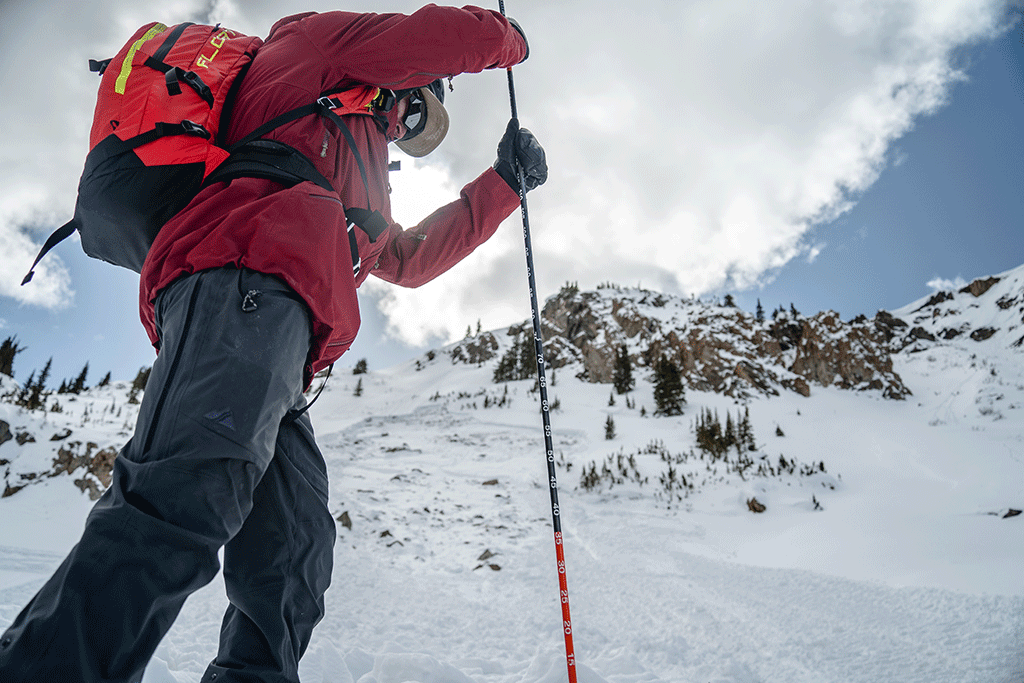
*This article is a partial remake of the article published in the 2023-2024 season
What if you encounter an avalanche in the backcountry (BC) and someone gets buried?
A probe is a piece of gear used to locate the point of burial caused by an avalanche using a beacon, and then to pinpoint the location of the buried person by sticking it into the snow. When folded, it's compact at 20-30 cm, but when you pull the cord, the shaft joints and automatically extends to a length of 2-3 m.
A probe is an essential item for backcountry skiing, and there are various types with differences in length, weight, shaft material, and ease of use. What points should you focus on when choosing one?
The role of the probe
A probe is a rod used to search for a person buried in the snow. It is also called a sonde. Incidentally, probe is English, and sonde is German.
For backcountry skiing, it is considered essential avalanche gear along with a beacon and shovel.
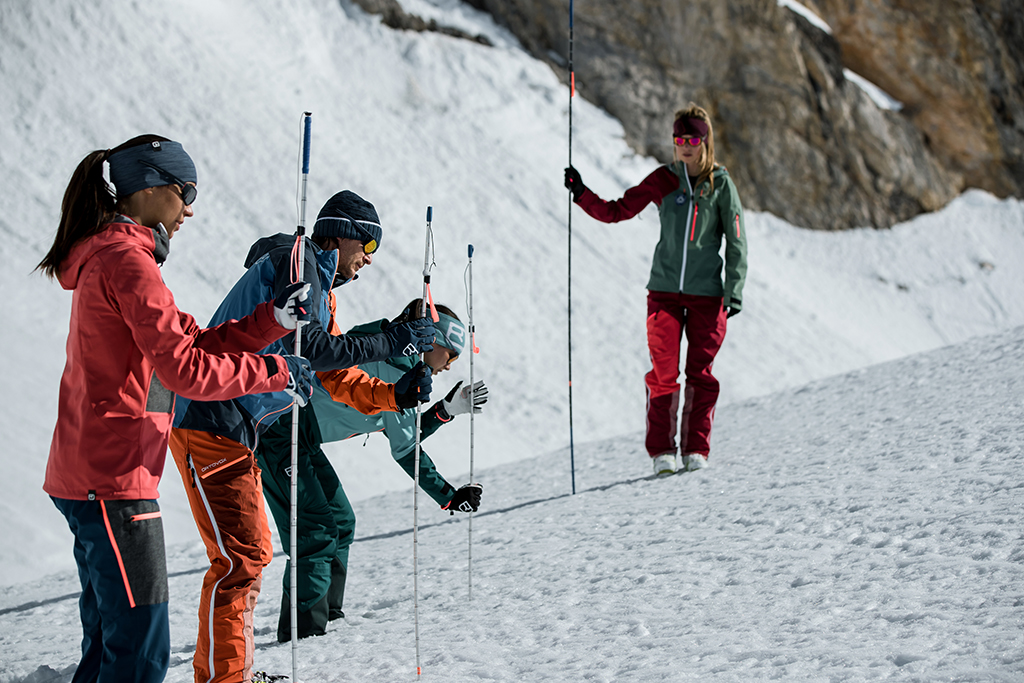
After using a beacon to locate the approximate position of the buried person, a probe is thrust into the snow to more precisely pinpoint the location of the rescuer.
While the beacon can roughly locate the buried person, it still doesn't tell you exactly where to dig in the broad snow surface to hit them. Ultimately, the probe's tactile sense is used to locate them.
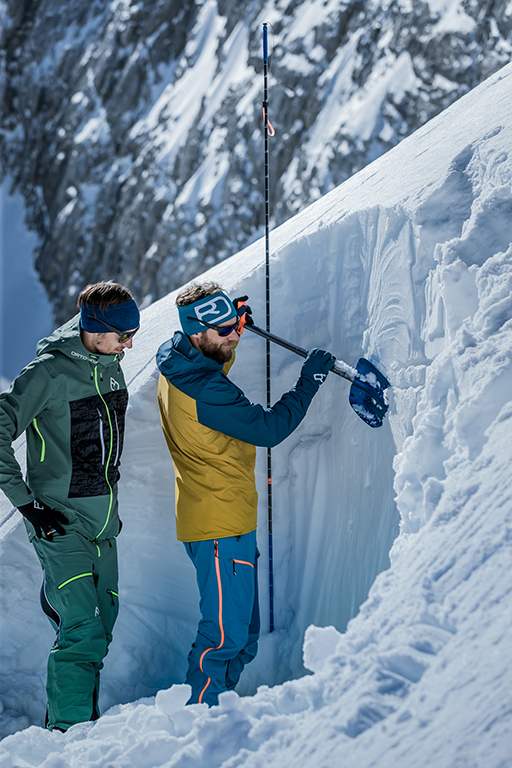
The probe also has a scale that is used not only for avalanche searches, but also for "pit checks" to check the snow depth and snow layers to see if the area you're about to ski is prone to avalanches
How the probe works
The probe is made up of cylindrical rods about 40 to 50 cm long connected by wires running through the inside, which can be quickly assembled into a single long rod when in use. The rod parts are called shafts, and the longer the rods, the more shafts there will be
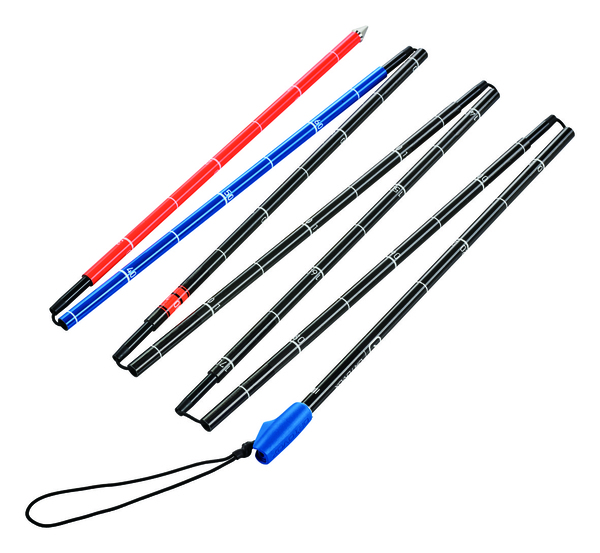
The length varies depending on the application and environment, from just under 2m to over 3m. When not in use, it can be folded up and stored compactly
Tips for choosing
The key points to consider when choosing a probe are the length and thickness, the material, the assembly method, and how easy it is to read the scale
■ Length + Thickness
Naturally, if it's too short, a proper search operation won't be possible. If the burial depth in an avalanche is 2m or less, there's a good chance of rescue with a quick rescue, so you'll want a minimum length of 2m or more. Incidentally, mountain guides and mountain rescue teams use poles that are around 3m long, but for general backcountry users searching for group members, you probably don't need something that long.
As for the thickness, if the diameter of the pole is too small and thin, it won't be strong enough and won't penetrate hard snow easily. It can also bend easily. Longer poles often have a thicker diameter, and thicker poles are less likely to bend or break, so a certain thickness is good. Also, if the length of the single pole to the shaft is too long, the joint tends to become unstable. You should definitely check the connection point as well.
There is a certain degree of correlation between length and price. Considering that balance, it is easy to find a length between 230cm and 280cm. Also, in terms of storage, a foldable sled that is about 50cm long when folded will fit easily in a backpack
■Material
The materials used for probes are most often aluminum or carbon. Carbon is expensive but very light. However, it is more likely to break than aluminum when a certain amount of force is applied. At the same time, aluminum is strong and not easily broken, but it also has the characteristic of being easily bent. If you are looking for lightness, carbon is the choice, but aluminum is the choice for cost performance
■ Other elements
Other things to consider when choosing a probe include the ease of reading the scale and the assembly method. Many probes assemble automatically and quickly by pulling the handle. Some probes are also equipped with the latest technology, such as unique probes that receive beacon signals at the tip of the probe, determine the location of the buried subject, and notify you of a hit with sound and light
How to use the probe
Now that you understand what a probe is, let's look at how it's actually used on snow.
(Video: Japan Avalanche Search and Rescue Association)
Unless you practice using beacons and probes on the snow, it will be difficult to use them quickly and accurately when you actually encounter an avalanche and are forced to use them. Beginners to backcountry skiing should start by taking a course on how to use avalanche gear or joining a tour led by a backcountry guide that includes training, so that they can become familiar with how to use the equipment