

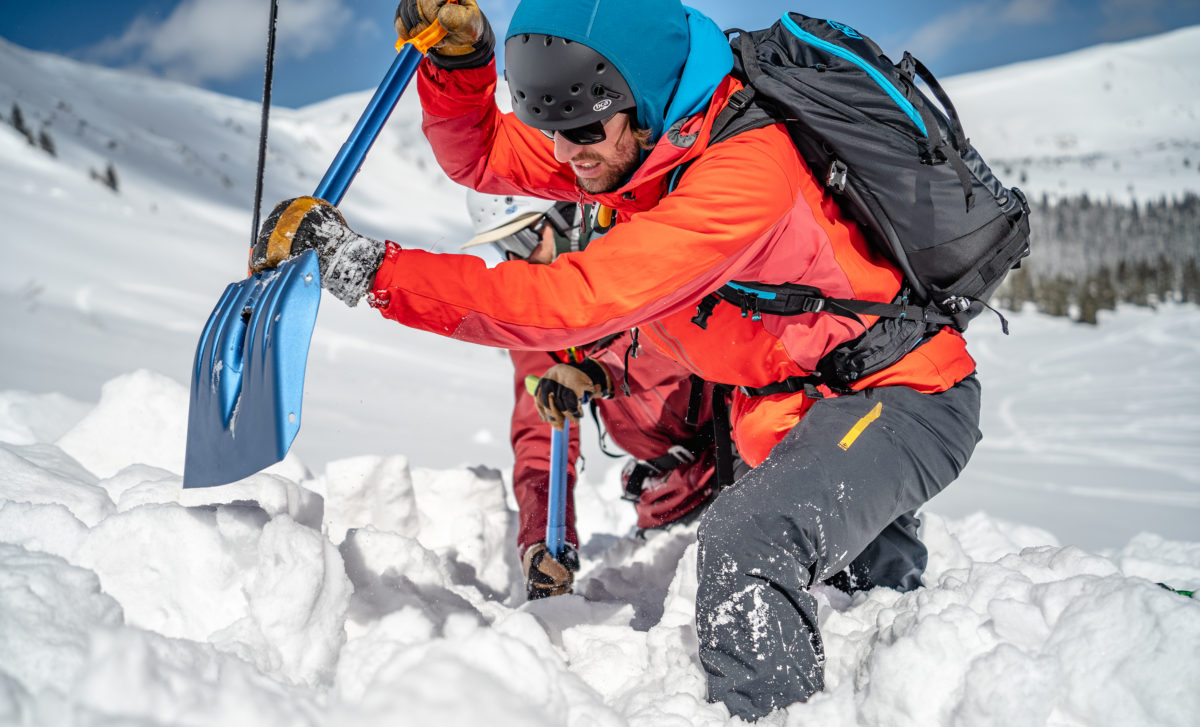
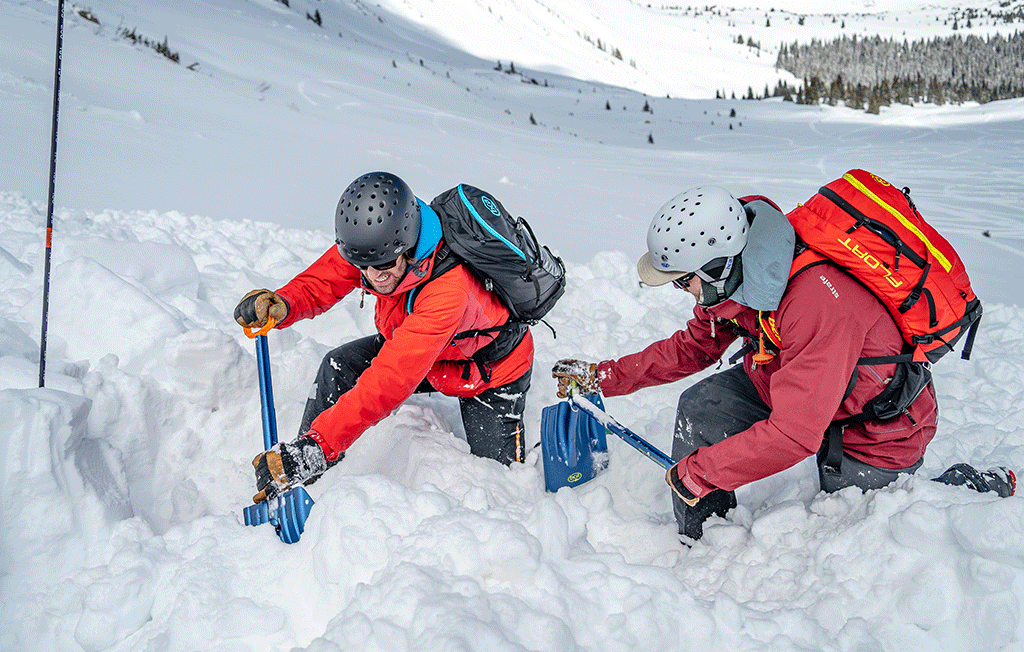
Photo by BCA
A shovel is an essential item for backcountry skiing. Most shovels have a shaft (handle) and blade (scoop part) that can be separated and folded compactly for storage in a backpack, but blades come in a variety of sizes and shapes. The weight and strength vary depending on the material used. When buying your first shovel, or when it's time to upgrade, what should you look for?
The role of the excavator
Shovels are used in a variety of situations in the backcountry (BC).
First and foremost, they function as avalanche gear. Along with beacons and probes, shovels are essential gear for snow rescue, and are essential for rescuing people buried in avalanches. Once the buried person's location is identified using the beacon and probe, they must be excavated immediately with a shovel.
If you are buried by an avalanche, your chances of survival drop to 92% within 15 minutes, and to 30% after 35 minutes. How quickly you can excavate a buried person depends largely on the performance of the shovel, so the role of the shovel is crucial. Shovels are also useful for performing pit checks (avalanche checks) to see if the snow has a weak layer
Another example is when people get stuck in a sudden storm on a snowy mountain, or when they get injured and can't move, and they dig a snow cave to bivouac. Shovels are essential for digging snow and making snow caves. They are also useful in a variety of ways when setting up tents on mountain tours, such as packing down the snow surface, piling up snow to make weights to secure the tent, and creating windbreak walls around the tent with snow blocks
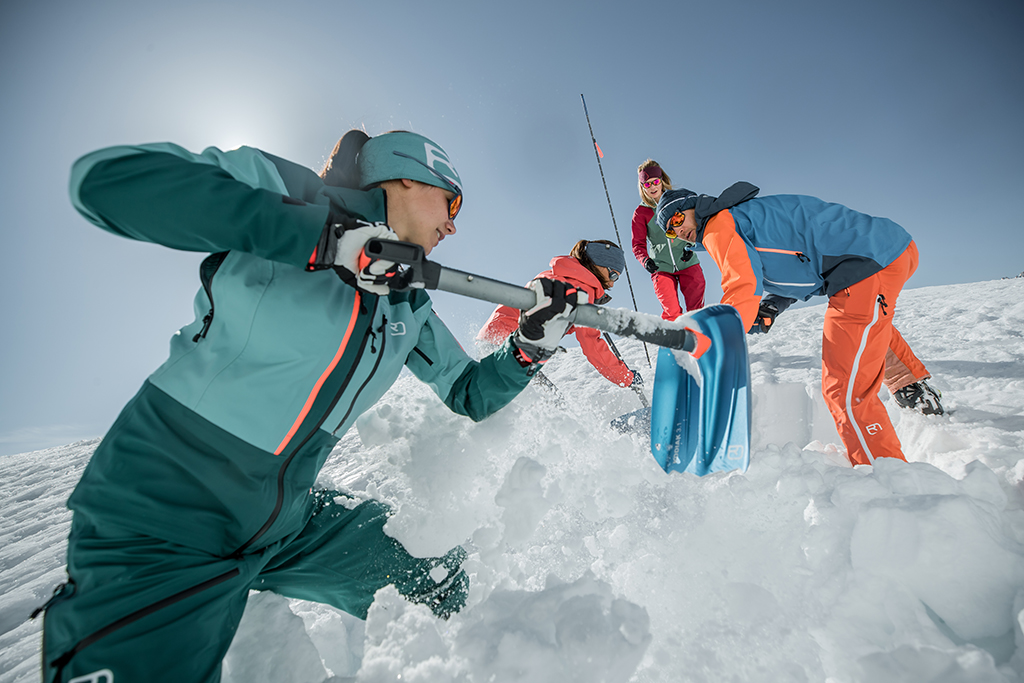
How an excavator works
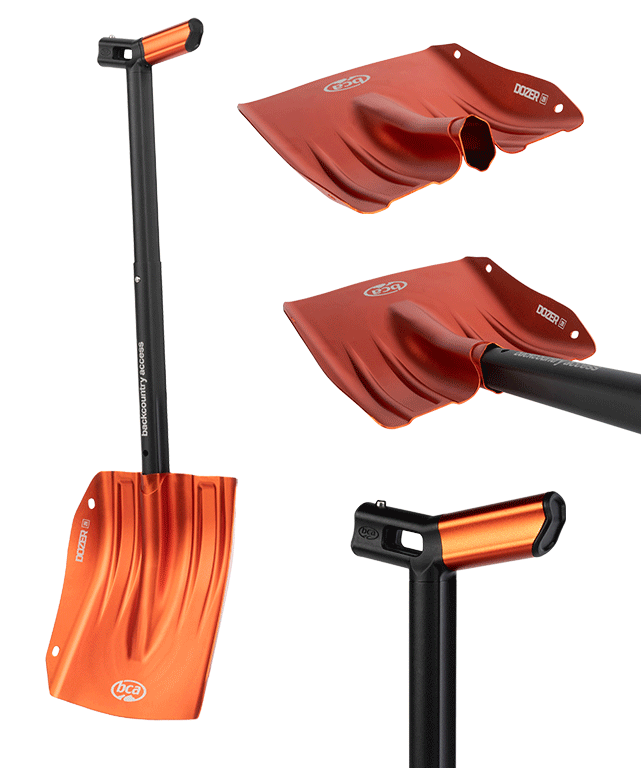
A shovel is roughly divided into a blade and a shaft. The shaft can be adjusted in length or separated from the blade, making it easy to store in a backpack and carry
There are also models with shafts that can be shaped like a hoe, or that can be replaced with ice axes
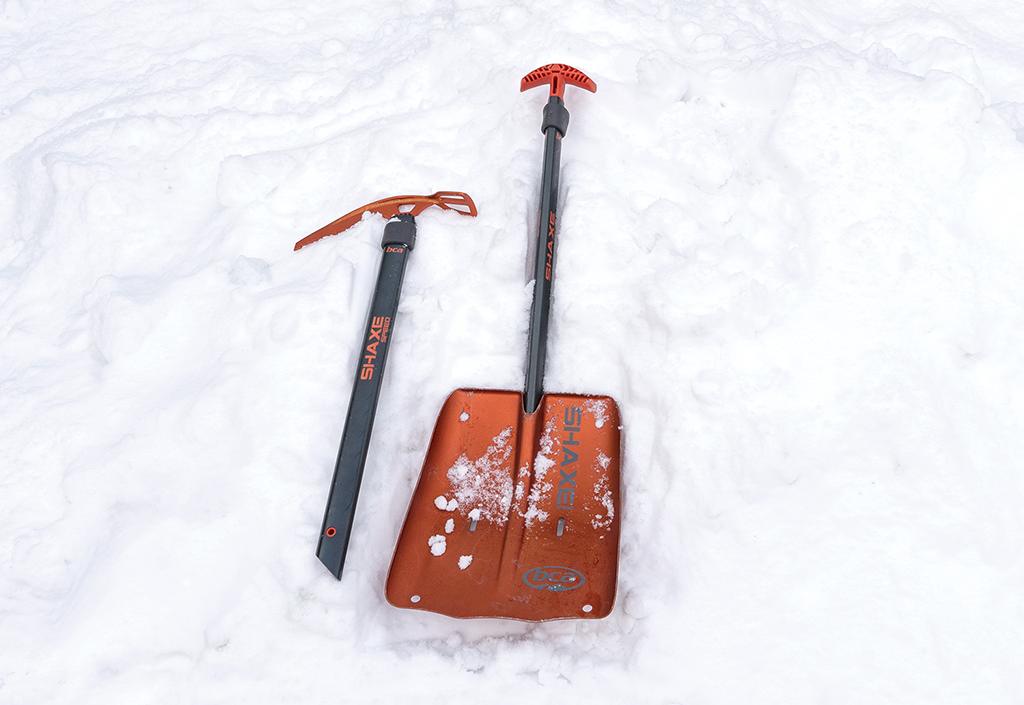
has the advantage of being easy to shovel out snow, and is also useful for clearing snow in tight spaces.
Tips for choosing
There are two main types of shovels: aluminum and plastic. Aluminum shovels are by far stronger. Plastic shovels may not dig well in hard snow and may crack if exposed to low temperatures or impact. On the other hand, plastic shovels are lighter and easier to handle. However, for safety reasons, aluminum shovels are recommended for BC
Furthermore, when choosing a shovel, the key points to consider are the blade shape and size, shaft shape and length, weight, and versatility.
In an avalanche search, a large blade that can clear a lot of snow at once is needed to dig out the buried person as quickly as possible. The blade should be flat and square. If the top is sloping, it is difficult to put your foot on it and apply force to kick into the snow, so a blade with a straight shoulder is better.
The handle part of the shaft should be easy to grip even with gloves on. The T-shaped shaft is sturdy and transmits power well, and since this is a powerful task, it is better to have it as light as possible
Keep these points in mind when choosing a shovel and choose one that matches your BC snow life