

*This article is a remake of the one published in the 2023-2024 season
Skins are essential for moving around with your skis on in backcountry skiing (BC) where there are no lifts. Their performance varies depending on the material used, the combination of materials, and the length of the pile. Skins are also designed to be lightweight to make climbing more comfortable. What should you look for when choosing a skin?
The role of skin
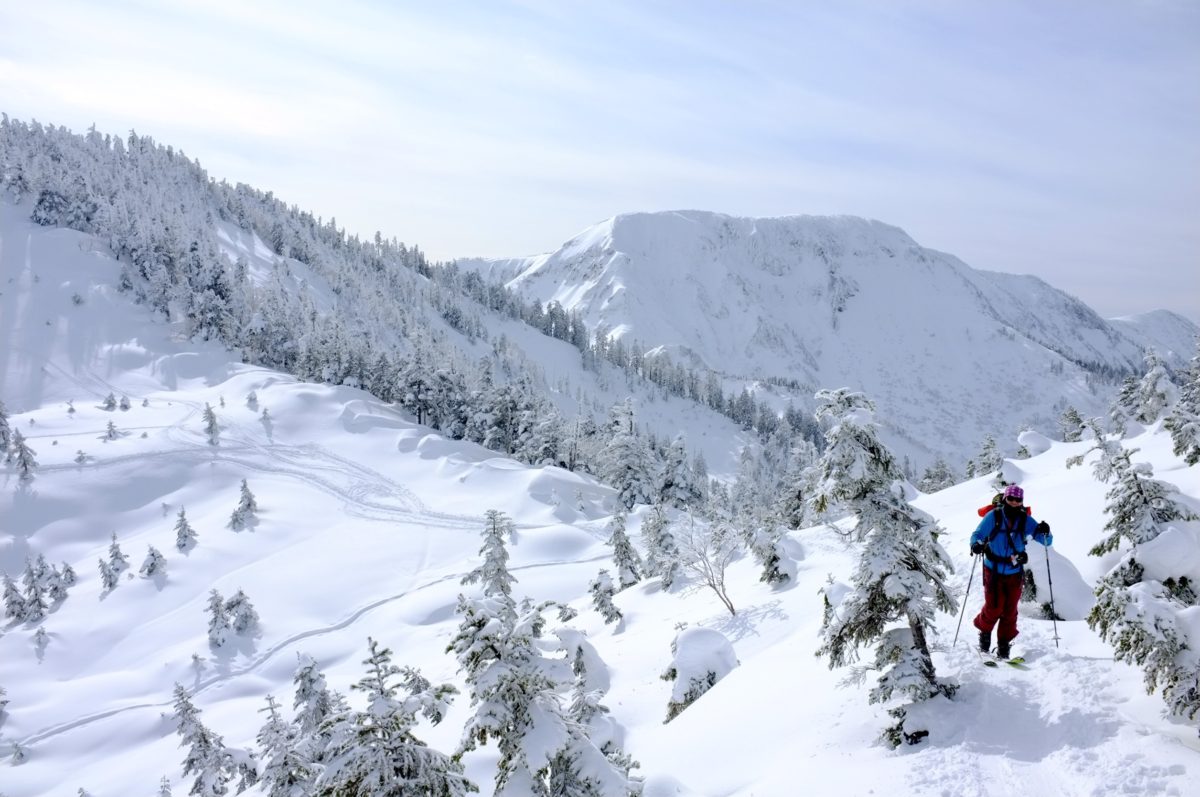
Skins, also known as seals, allow you to climb snowy slopes while still wearing your skis. They are like sheets of fur attached to the soles of your skis, and the friction between the fur and the snow allows you to ascend snowy slopes. Of the various pieces of equipment needed for a BC, many experts say that skins are "second only to skis in importance." This single piece of equipment can make a huge difference in how you do things on the mountain, making them an important piece of gear that could even be life-threatening
How Skin Works
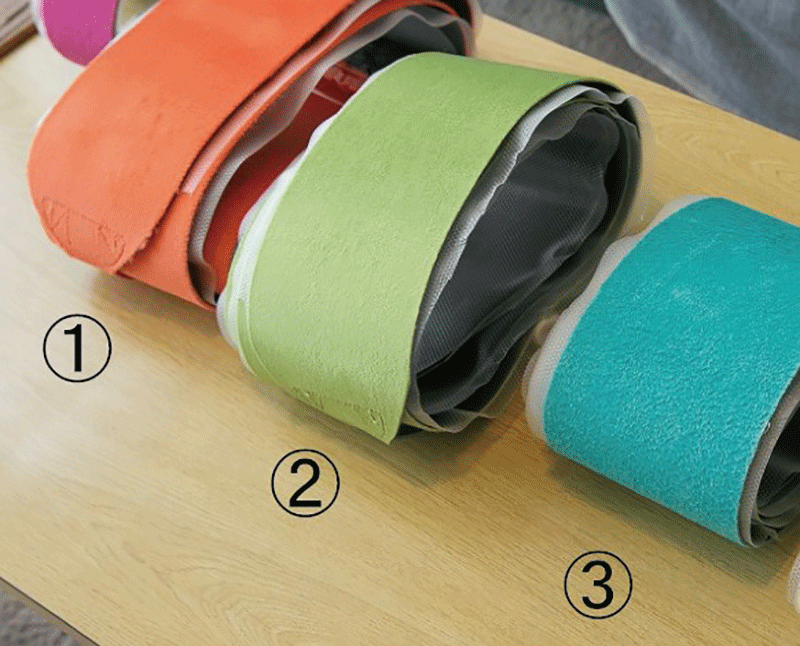
The hair on the side that comes into contact with the snow is made up of two main materials: mohair and nylon. The properties of the skin change depending on the amount of each used (mixing ratio)
① Nylon
They have excellent grip when climbing, firmly gripping the snow surface. They also make walking easier, so if you're not used to hiking or often carry heavy loads, it's a good idea to choose ones that contain a lot of nylon
② Mohair
Mohair, made from the hair of Angora goats, has a soft and smooth pile. This allows for excellent gliding performance when climbing, allowing for smooth foot movement. 100% mohair boots have high propulsion, allowing you to take a longer step and reach your destination faster. At the same time, they also have the advantage of putting less strain on your feet, making them less tiring to wear. Also, on tours, you'll not only be climbing, but you'll also be descending short distances to match the mountainside, making them convenient for slippery terrain. Mohair is also slightly lighter than nylon, making it easier to carry
On the other hand, its grip on the snow surface is inevitably weaker than that of nylon. On steep slopes, experienced backcountry skiers and advanced skiers won't have much of a problem, but beginners may slip and fall. By adding more nylon to the mohair, the grip improves, so mohair and nylon blends are now the norm
③ Mix
By blending mohair and nylon, we sought the ideal combination of grip and glide. The blend ratios vary, from 70% mohair and 30% nylon to 65% mohair and 35% nylon. All offer excellent glide and grip, are lighter and less bulky than 100% nylon, and many are also highly durable, successfully combining the advantages of mohair and nylon. With a wide range of well-balanced and easy-to-use products, they are popular with a wide range of users, from professionals to beginner BC riders
The adhesive type that adheres to the sliding surface is..
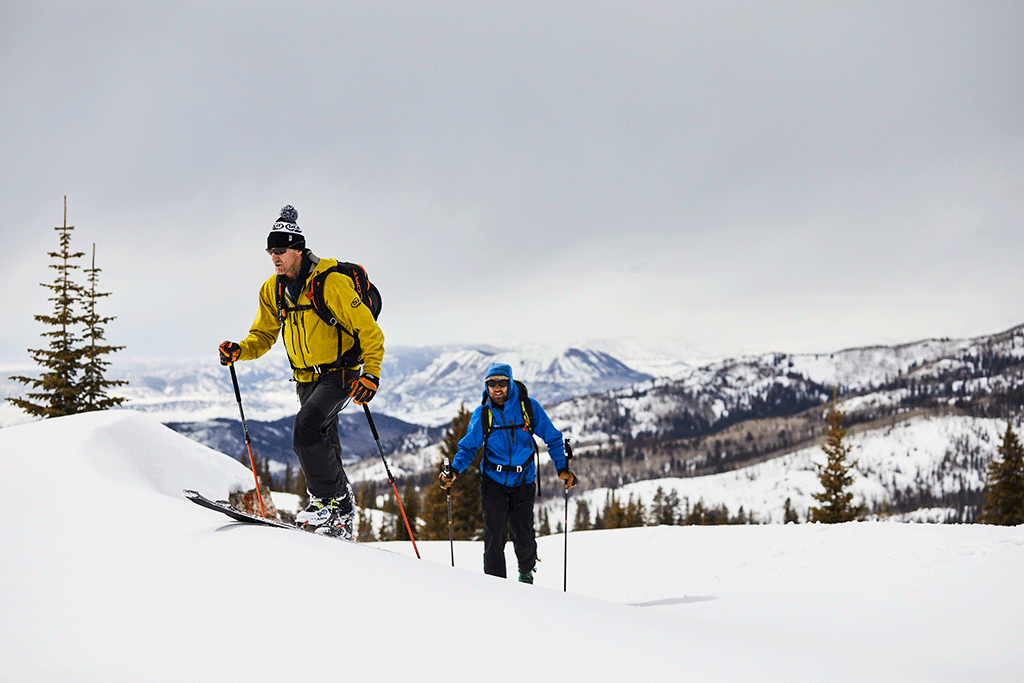
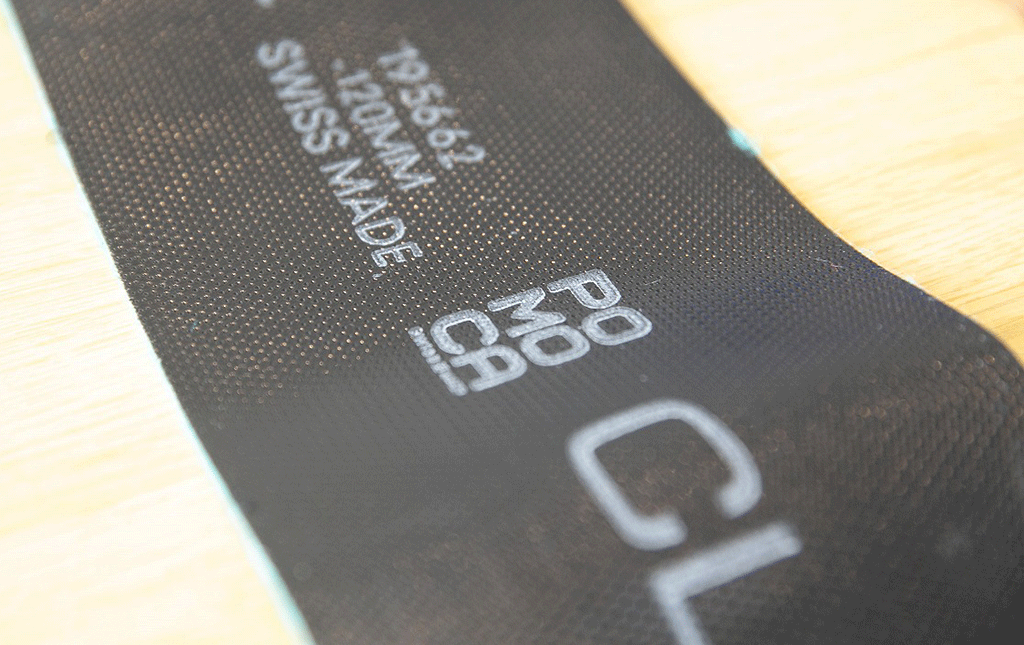
There are two types of adhesives that adhere to the ski base. The glue that has been around for a long time is the type that adheres to the base. The other is the acrylic/silicone-based adhesive. Nowadays, hybrid products that combine glue and silicone are the mainstream
① Glue
The good thing about glue-type skis is that they adhere stably under any conditions. However, you have to be careful when handling them on snow, as the long skins can come into contact with each other and the glue can stick together, forcing you to peel them off. Also, if not properly maintained, dirt can accumulate on the surface and deteriorate. However, if stored properly, they can last a long time, which is an advantage
② Acrylic/silicone base
Unlike glue-type stickers, these can be carried around by simply sticking the adhesive surfaces together, making them very easy to handle and maintain. While the adhesive strength is not as strong as glue, it has the advantage of being less susceptible to deterioration. On the other hand, it has the disadvantage of not being able to be reapplied or topped up like glue
3) Hybrid
With hybrids, even if the adhesive surfaces stick together, it's not difficult to peel them off. However, they stick firmly to the surface, making them easy to handle. However, there are some conditions in which they don't stick well, and they don't stick well when the surface is wet. In that case, make sure to dry them thoroughly with a towel. When there's a snowstorm on the mountain and fine snowflakes are blowing in, they inevitably become less adhesive. The advantage of hybrids is the ease of managing the adhesive surface
Tips for choosing
-For BC beginners
The material of the ski skins—mohair, nylon, or a mix—and if it's a mix, the balance of the materials, the combination of materials, and the length of the fibers will all affect how easy they are to walk in and the overall feel. It's difficult to know which ones are right for you without actually trying them out on the snow.
Many guide clubs offer ski skin rentals on their backcountry tours, so you can try them out. If you're hesitant to buy them right away, it's a good idea to join a tour first and get advice from a guide.
Also, for backcountry beginners, moving across hard-packed slopes in the mountains or being forced to perform kick turns can be quite challenging. Considering this, skins with a certain level of grip are reassuring. Skins made of mohair mixed with about 30% nylon would be easy to move in on snow. You should also consider your level of backcountry experience, ease of handling on snow, and ease of maintenance after use.
Choosing skins can be confusing, so it's a good idea to consult with a ski pro shop.
-For those with BC experience
For experienced backcountry skiers, the key factors in choosing skins are not only the skin's characteristics, but also which mountain they will be going to, what equipment they will be using, and their level of climbing skill.
If you will mostly be walking on flat snow surfaces, mohair skins with superior glide will be easier to walk in. If you want to keep your load light and walk fast, lightweight skins are best. If the total weight of your load, including equipment, will be heavy, skins with long, dense fibers are more suitable.
If you frequently go to backcountry skiing, it may be a good idea to choose a second pair of skins taking into account the snow conditions and the season of your hike. Nylon is suitable for hard-packed slopes and spring granular snow, as it is resistant to frictional heat and does not absorb water easily. For powder, mohair is the best choice. Mohair's soft pile penetrates deep into the snow surface, providing excellent grip on fresh snow
It's best to consult with a pro shop and decide based on your actual skiing level and the type of environment you'll be in. Skins also come in a variety of widths and lengths, so you'll need to choose one that matches the size of your skis
Click here to learn more about skins!