


Backpacks are essential for backcountry skiing (BC). This is because there is a lot of equipment, including safety gear, that is essential for enjoying skiing and snowboarding safely in the pristine snowy mountains. You may be thinking about buying a new backpack, but with so many different backpacks available, what criteria should you use to choose one? To find the backpack that's right for you, start by learning about backpack functions and how to use them
Why do you need a backpack to go to BC?
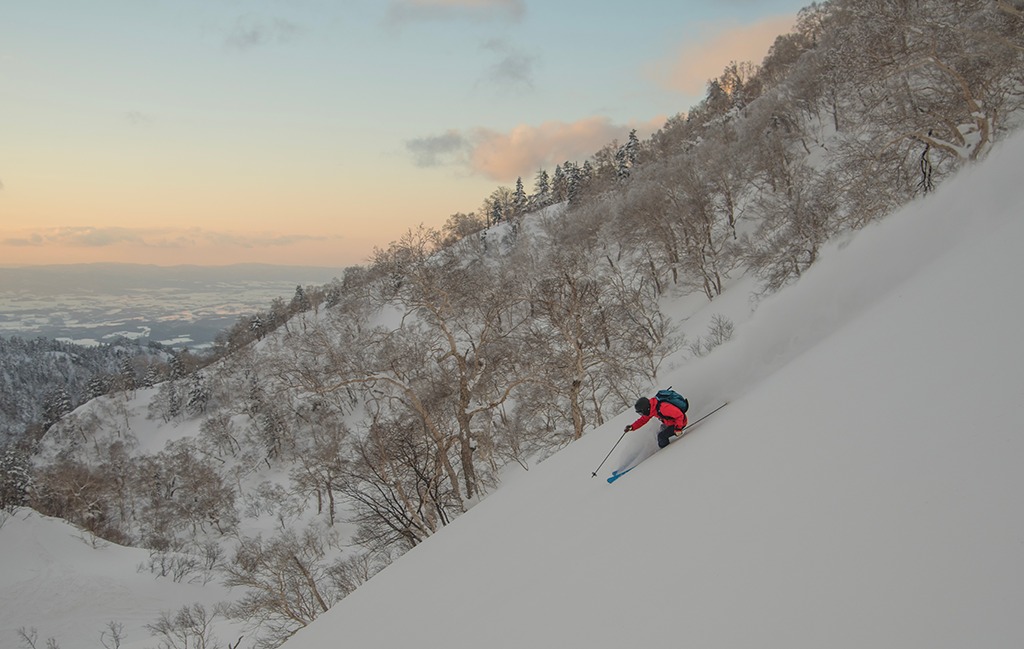
If you want to ski in the backcountry, you need to bring a lot of equipment. First and foremost, to ensure your safety on the snowy mountains, and to enjoy skiing and stay comfortable, there are a huge number of items you need to carry, such as safety gear, skins, water, snacks, and clothing
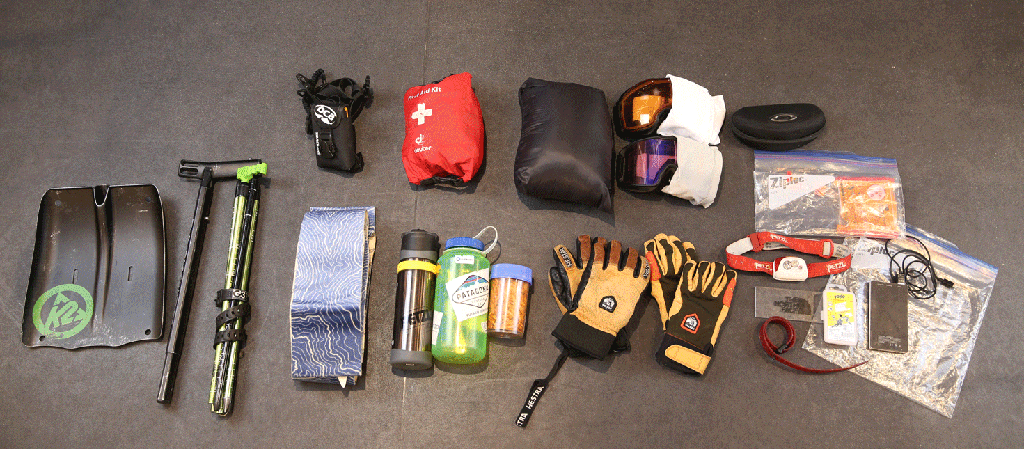
By the way, this is the amount of items you need to carry on a one-day backcountry tour (see photo below). Naturally, pockets on your clothing or a waist pouch aren't enough. You have to store all of these items while hiking or skiing, and do so comfortably. So, of course, a backpack with ample storage space and stability that won't get in the way of your skiing is a must
What is required of a backpack?
On a backcountry tour, you'll be carrying a backpack the whole time, whether you're climbing or skiing. Because a backpack is used in the ever-changing natural conditions of a snowy mountain, the capabilities required are bound to be diverse. While there
are many different opinions, aren't the following capabilities necessary to enjoy safe and comfortable climbing and skiing in the backcountry?

Storage capacity

◆bca official website/ http://www.k2japan.shop/view/category/C
The first and foremost function required of a backpack is its storage capacity, or "capacity," or how much it can hold. Backpacks come in a variety of capacities. The most common are large, around 35-45 liters, medium, around 25-35 liters, small, around 15-25 liters, and even more compact, under 15 liters. The type of BC you'll be skiing with will determine the equipment you need, so the size needed to store it will vary. The following is just a guideline. Naturally, the longer you'll be out and about, the more luggage you'll need
| capacity | BC scenario |
| 15ℓ or less | Lift-accessed backcountry |
| 15 to 25 liters | A short BC tour with a day trip and climbing time of less than 3 hours |
| 25-35 liters | Longer BC tours, such as day trips or climbing trips with activity times of 3 hours or more |
| 35-45 liters | Tours with overnight stays and full-scale mountaineering in the alpine area |
Even when skiing in the backcountry via lift access, the bare minimum of avalanche gear, including a beacon, shovel, and probe, is essential for safety. For a one-day backcountry tour, you should bring climbing gear (skins), insulation clothing, a water bottle, spare goggles and gloves, and a first aid kit.
For longer tours, such as an all-day trip, you'll probably need a backpack of around 30 liters. Furthermore, if you're touring overnight or going deep into the mountains in a serious mountaineering style, you'll need crampons, a harness, ropes, and an ice axe, so you'll want even more capacity.
rigidity
The rigidity of backpacks varies depending on the model. A backpack with high rigidity distributes the load and provides stability, reducing the strain on the body and reducing fatigue when climbing or skiing. However, it also tends to be heavier. In addition to the materials used, it is important to pay attention to whether the structural parts such as the shoulder straps, waist belt, and back panel are sturdy
Fit
Fit is an especially important point. Whether climbing or skiing, it's important to have a tight fit between the backpack and your body. If the backpack swings around on your back too much, it not only makes it difficult to move and lose balance, but also wastes excess energy. The fit depends not only on the back height being right for your body, but also on the specifications of the back and the adjustment functions of the shoulder straps, harness, and waist belt
Thinness
The thickness of a backpack varies depending on the size and shape of the compartment. The thicker the backpack, the more it is pulled backward by the weight, making it more difficult to maintain balance. Naturally, the thinness of the backpack also affects fit and ease of movement. The thinner the backpack, the easier it will fit to your body. Thinness is an important factor to consider, especially if you want to prioritize sliding
waterproof
In snowy mountains, backpacks must be highly waterproof to withstand various weather conditions and keep the inside dry even when spending long periods of time in them. Backpacks that use durable, highly waterproof fabric for the outer surface give a sense of security. Some backpacks also have waterproof zippers on the pockets
durability
Backpacks used in harsh natural conditions also need to be durable. They need to be sturdy enough not to easily tear or get damaged even if they hit trees or are placed on rocky terrain. Also, when attaching skis or snowboards, the edges and bindings inevitably wear out. Some backpacks have panels or other reinforced panels in the areas that come into contact with the bindings
Weight (lightness)
If you want to lighten your load even a little, you should also pay attention to the lightness of the backpack itself. For example, even if the backpack is the same 30 liters, the weight can vary greatly depending on the material used and the features installed
Functionality
Backpacks are equipped with a variety of features to enable safe and comfortable backcountry skiing in harsh natural conditions. For example, let's take a look at the details of the features of the Osprey Solden32, which we will be using as our sample model. You can see just how many different features it has
J-zipper for quick access to avalanche safety gear
; Back panel access to main compartment;
Walkie-talkie/GPS carry
; Side sleeves inside main compartment for small items and water bottles
; A-frame or diagonal ski carry
; Vertical snowboard carry
; Scratch-resistant goggle pocket
; Hip belt with zippered pocket and gear loop
; Threaded carry attachment loop
; Dual-position helmet carry
; Ice tool carry sleeve and attachment points
How the backpack works
If you know about the structure of a backpack, the names of its parts, its functions, and how to use it, it will be easier to compare different models when choosing one. It will also be easier to understand the explanations given by the salesperson when you go to a store to look at one. First, let's understand how a backpack works. The sample model is the Solden 32 from OSPREY.
As mentioned above, it is surprisingly light while being fully equipped with features specialized for backcountry skiing. It is a long-selling OSPREY model that is thin, has an excellent fit, and has been highly popular with skiers who seek high skiing performance.
OSPREY|Solden 32

Capacity: 32 liters
Dimensions (H x W x D): 54 / 31 / 28 cm
Weight: 1,150 g
Main: bluesign® certified 210D high-strength nylon shadow box with PFAS-free DWR Accents: bluesign® certified recycled 210D nylon dobby with PFAS-free DWR Bottom: bluesign® certified recycled 210D nylon dobby with PFAS-free DWR
Color: Black/Artisan Yellow (2 colors available)
¥26,400
◆OSPREY official website /https://www.lostarrow.co.jp/store/e/eLP-2406C/
Main compartment
*The explanation will be based on the 2023-2024 model.
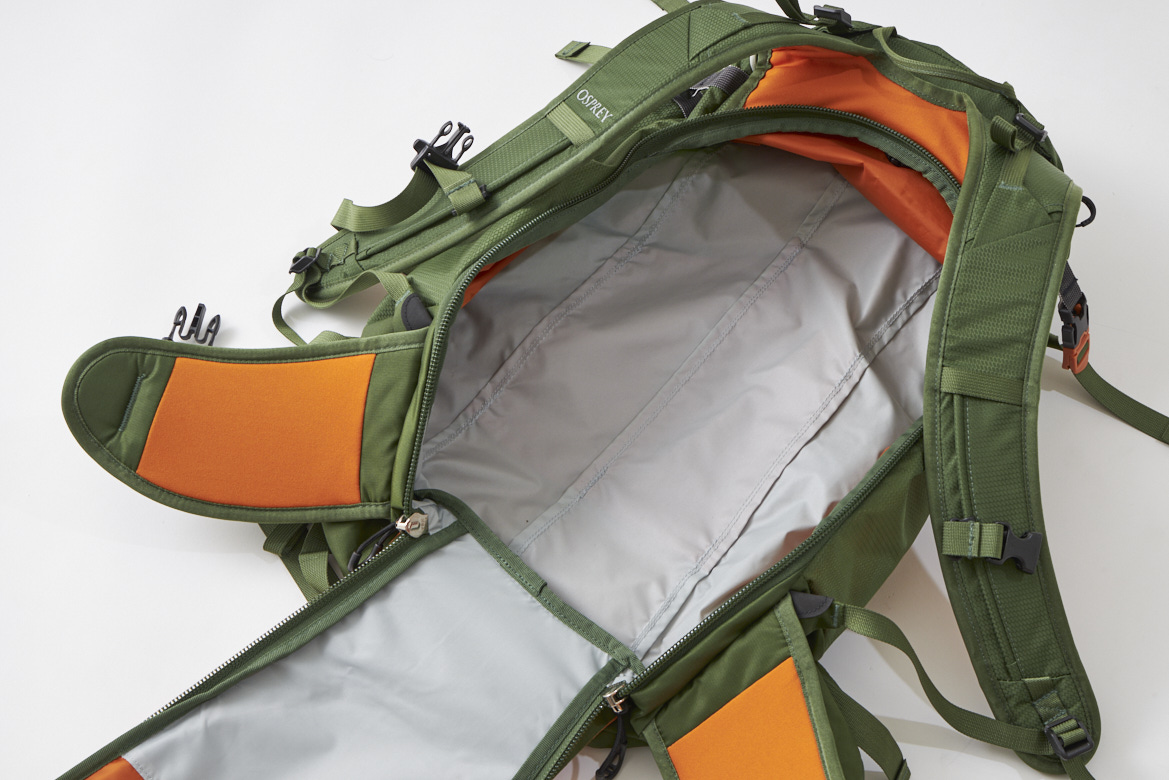
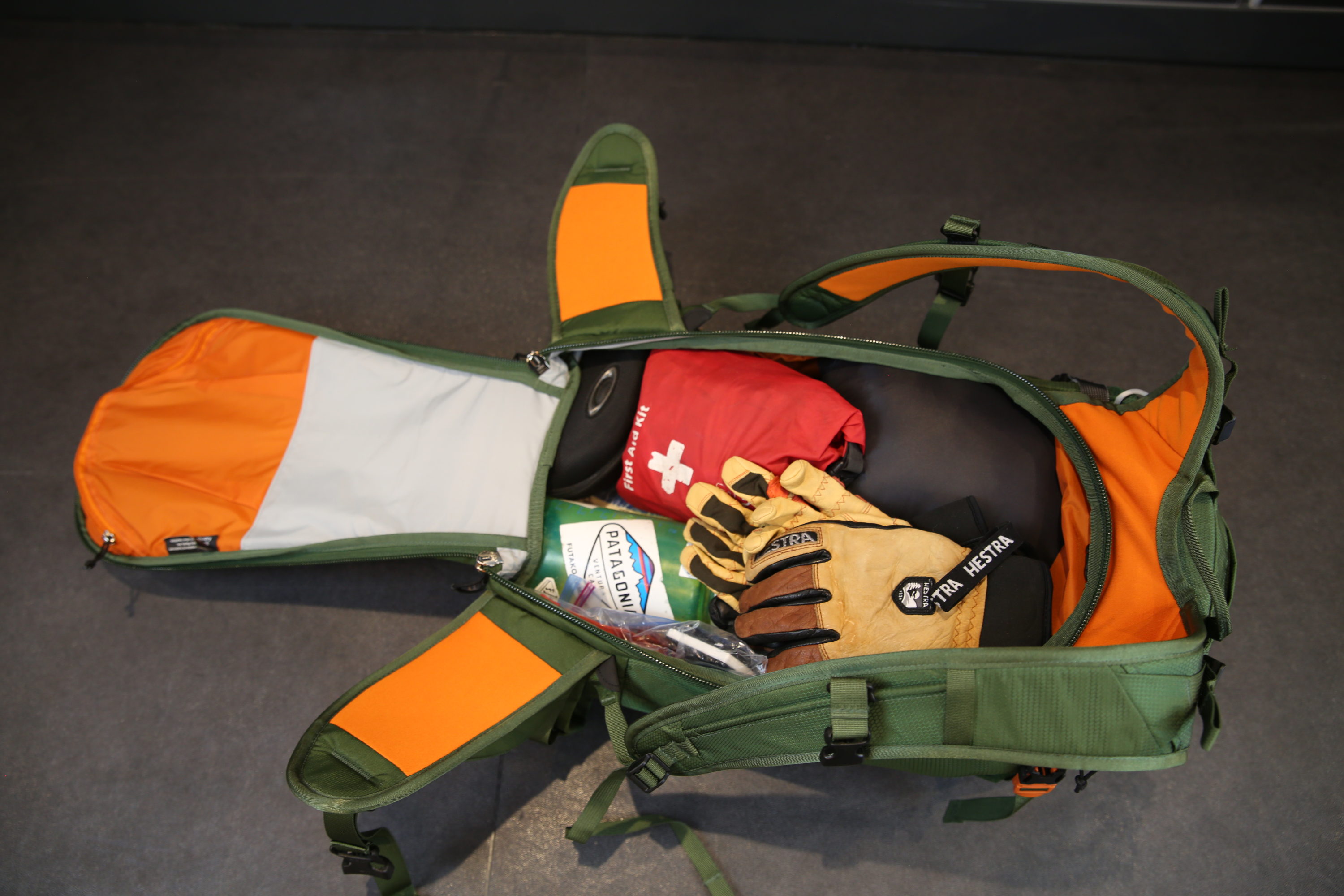
This is the main space for storing luggage. It is also called the cargo compartment or air chamber. The key point is to be able to store all the necessary equipment neatly and easily without it getting all mixed up. For BC use, a two-compartment structure is convenient as it allows you to store things like snow-covered stickers and wet gloves in a separate place from the main body. Many larger capacity packs have an internal divider that can be arranged to create a two-compartment structure with a bottom compartment
By the way, this is what it looks like when you pack all the gear you need for a one-day tour. 32 liters seems like the perfect capacity for a one-day tour
Back panel
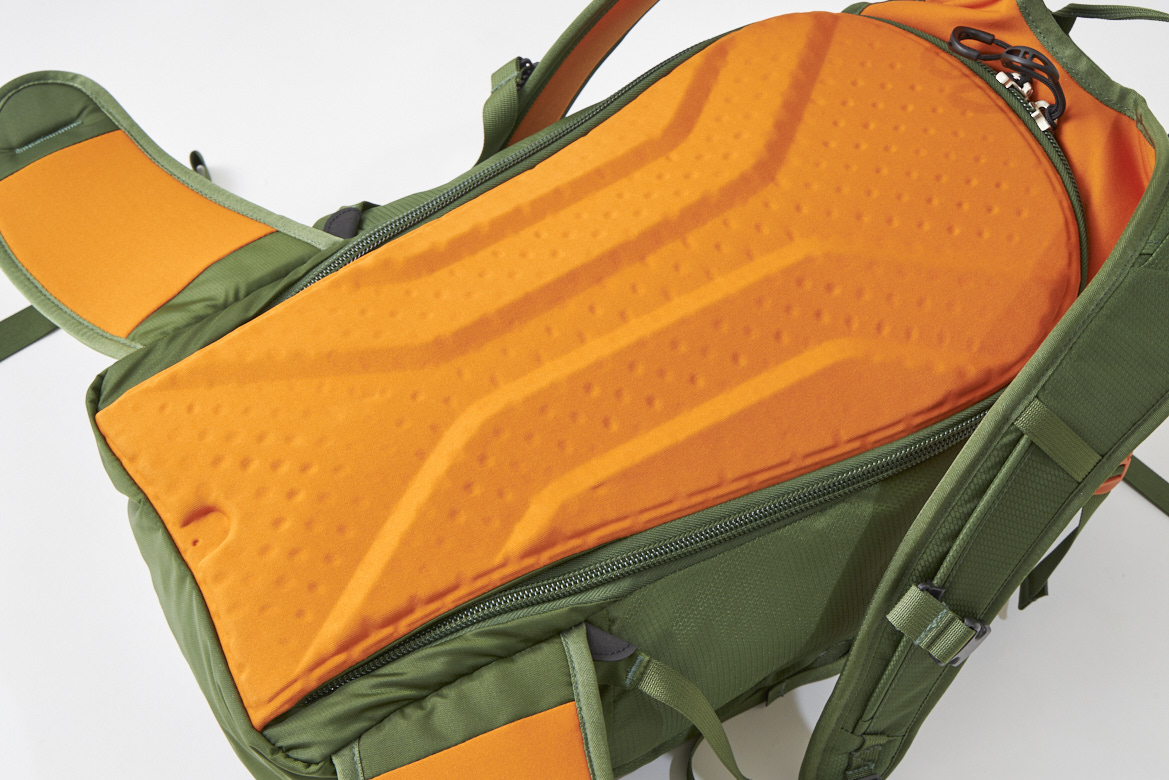
The back panel is the surface that comes into contact with your back when you wear the backpack. The back panel plays a very important role in a backpack, as it affects the distribution and balance of the load depending on the type of back panel. Depending on the material and construction, the hardness, lightness, breathability, cushioning, etc. vary, and the feeling when wearing it also changes. The Solden32 uses EVA foam, a material that conforms to the body and is resistant to snow and ice.
Considering that you will be active in the mountains for long periods of time, it is necessary that the backpack is comfortable and does not tire you out even when you are carrying it. You want a backpack that is stable and well-balanced by effectively distributing the load, and that is comfortable with good breathability and cushioning
Also, with BCs, those with a zipper on the back panel, as shown in the photo above, that allow access to the main compartment from the back, are overwhelmingly more convenient in that they allow you to quickly take out your luggage
Front panel + front pocket
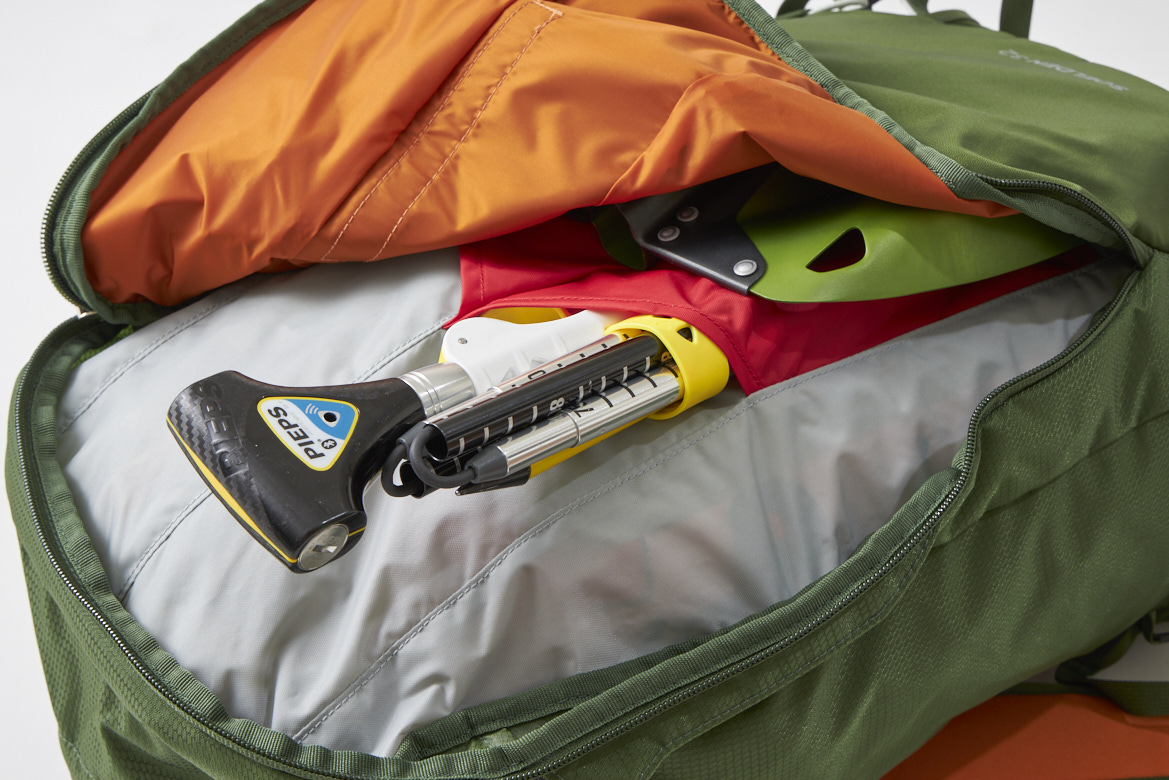
The front panel is the front part of the backpack. Many backpacks have a large front pocket. Backpacks designed for use in snowy mountains often have a dedicated pocket on the front for storing avalanche gear such as a shovel or probe. The Solden32 has a "J-Zip Front Panel," which allows quick access to the avalanche pocket via a J-shaped zipper.
Rain cover (top lid)
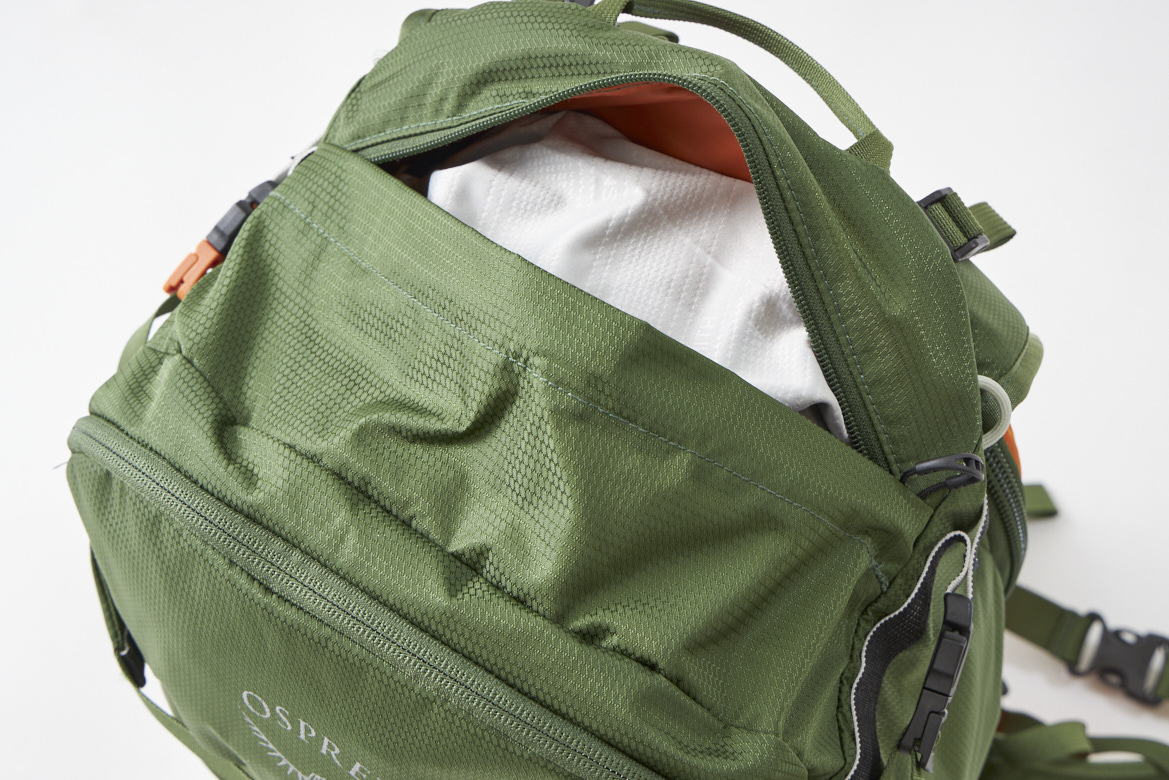
This is a cover that protects the opening and closing of the main compartment from wind and rain. Many packs also have storage space and pockets. The pocket on the rain cover is convenient for storing small items that you want to access quickly while on the move. On snowy mountains, many people will use this top pocket to store goggles, sunglasses, spare gloves, towels, etc. It is best to use one that is as large as possible and has a wide zipper at the entrance
Waist belt pocket
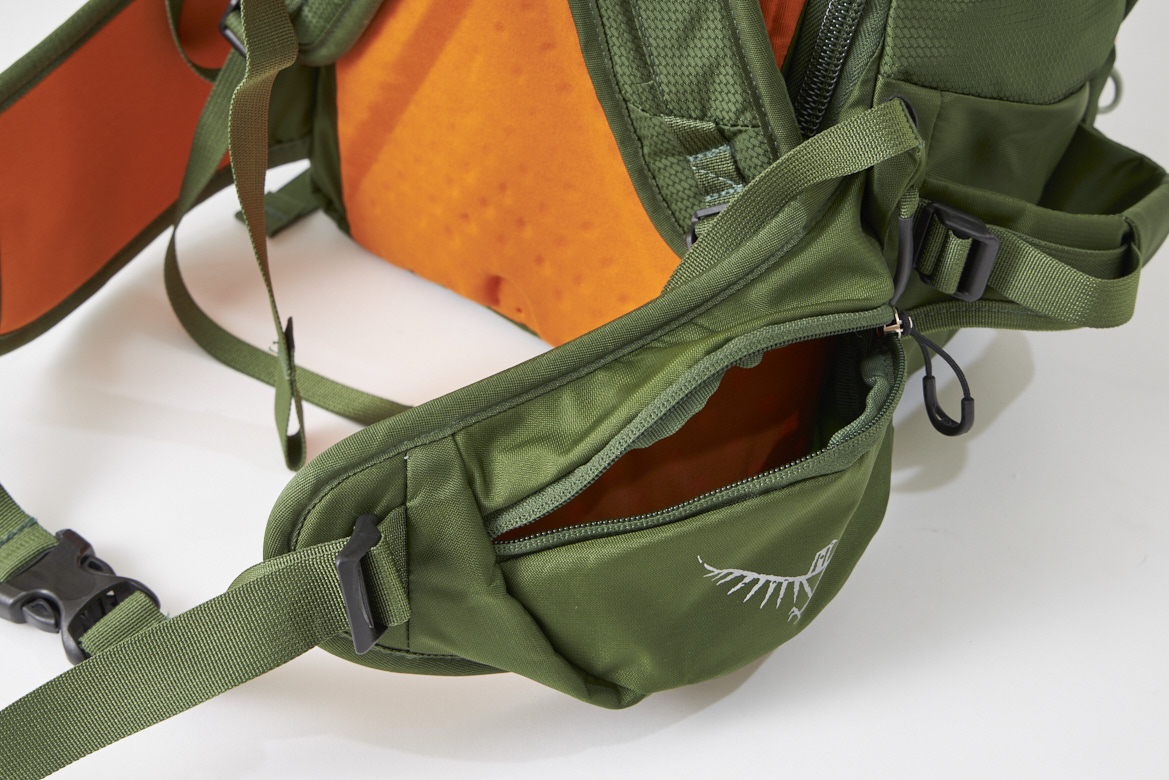
Many backpacks have pockets on the waist belt. The advantage of these small pockets is that you can quickly access items by unzipping them, without having to take off the backpack or stop. They're ideal for storing items you're likely to need to access quickly, such as your cell phone, GPS, camera, sunscreen, lip balm, or a little snack
Waist belt + gear loop
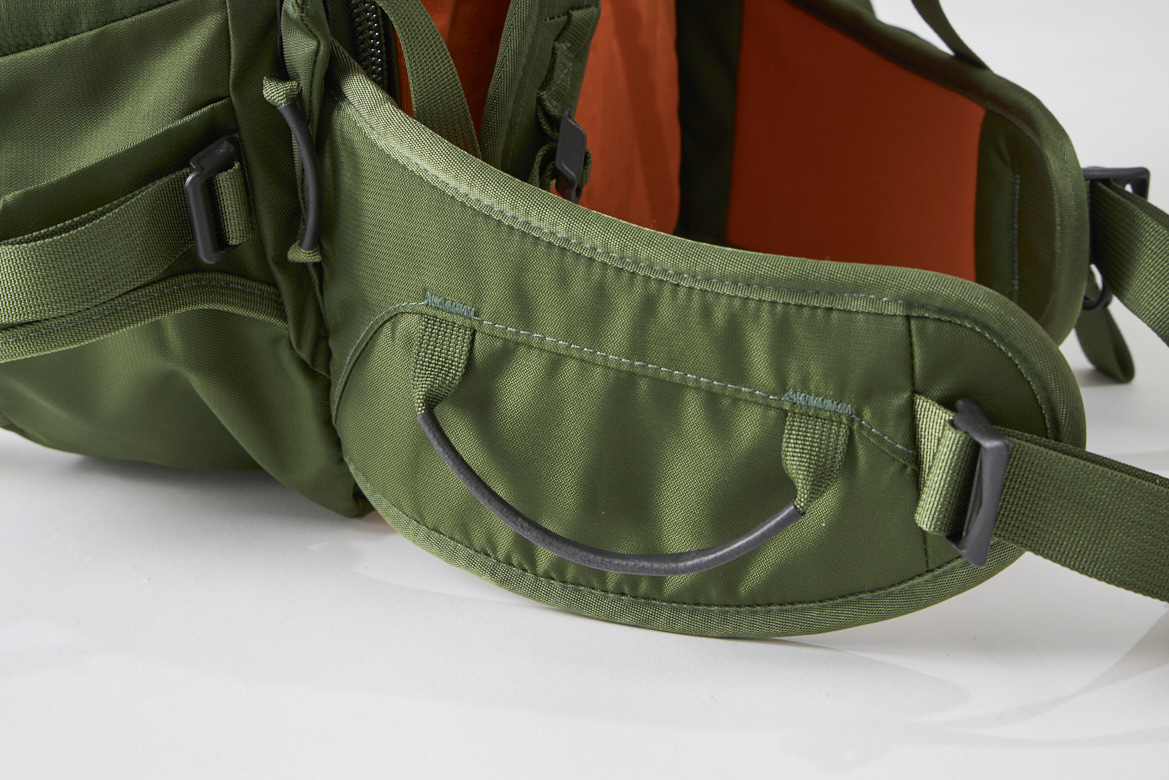
the Solden32 has a gear loop on one side of the waist belt, where you can attach a carabiner, compass, or watch.
Shoulder harness and chest strap
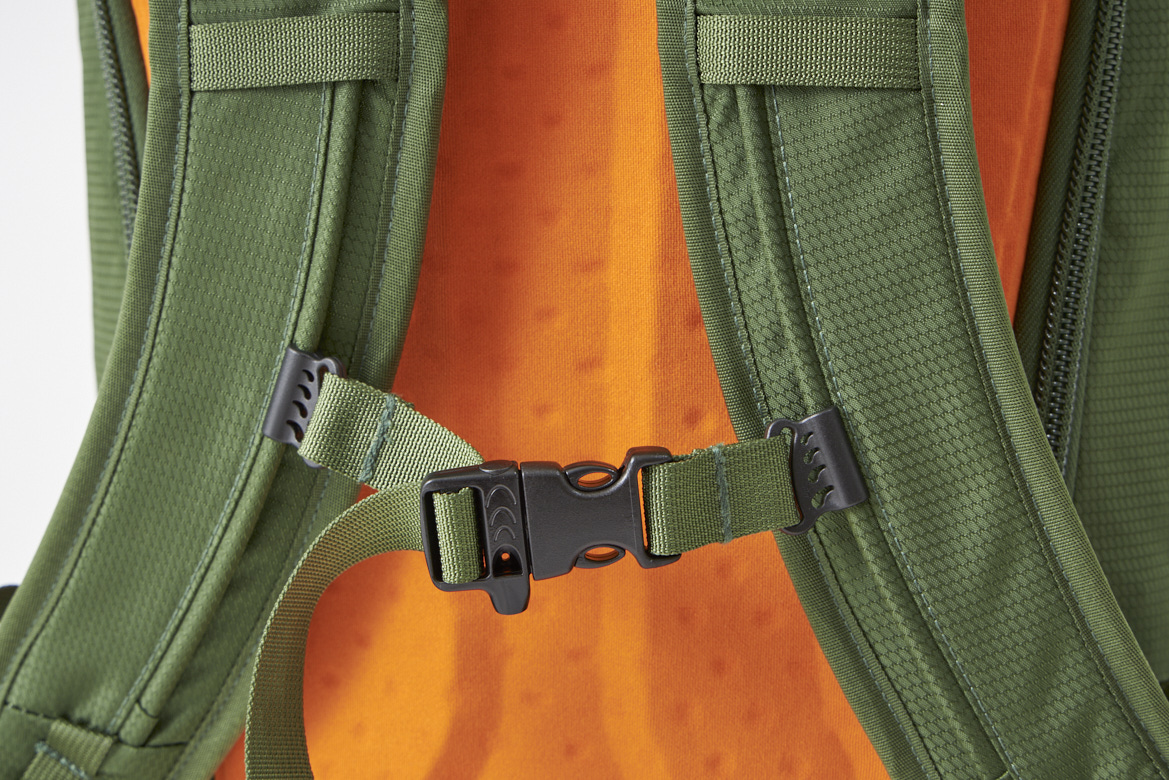
The shoulder straps used to carry a backpack are called shoulder harnesses. They stabilize the entire backpack from the shoulders to the back. The belt used to adjust the width of the shoulder harnesses is called the chest strap. They prevent the shoulder harness from opening outwards due to the weight of the backpack, and help ensure a good fit between the backpack and the body. When skiing, the chest strap's position can affect your sense of stability, so its role is particularly important
Axe Holder
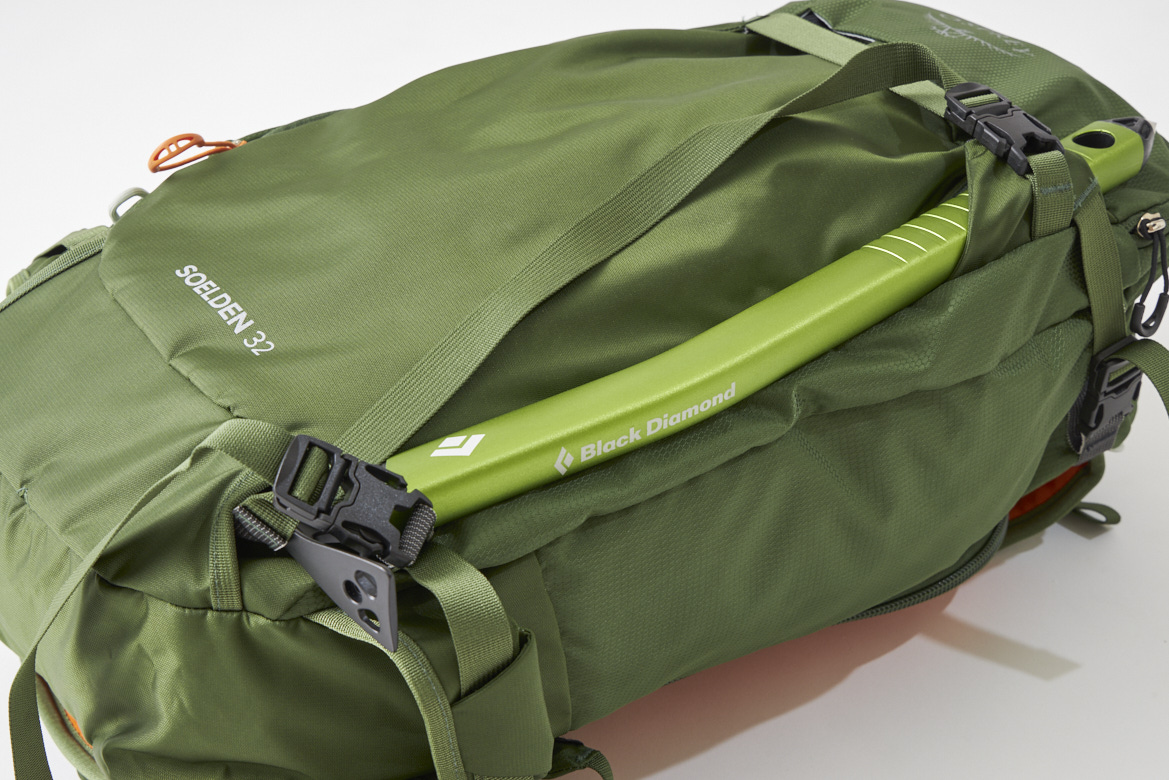
It has a holder for attaching an axe, and you can secure it even more securely by attaching the side compression straps over it
Inner pocket
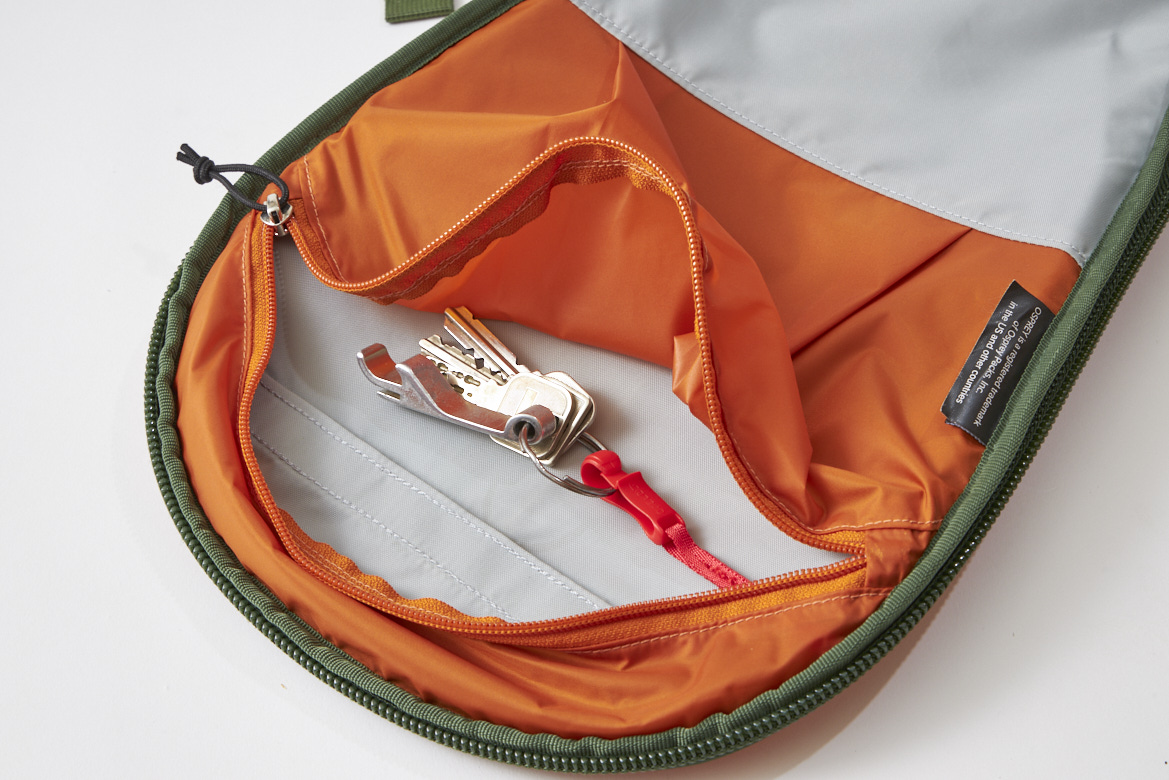
The inside of the backpack is also fitted with numerous pockets and attachments for ease of use in the mountains. The pocket on the back of the back panel has a built-in strap for attaching a keychain or other item
Internal Pocket
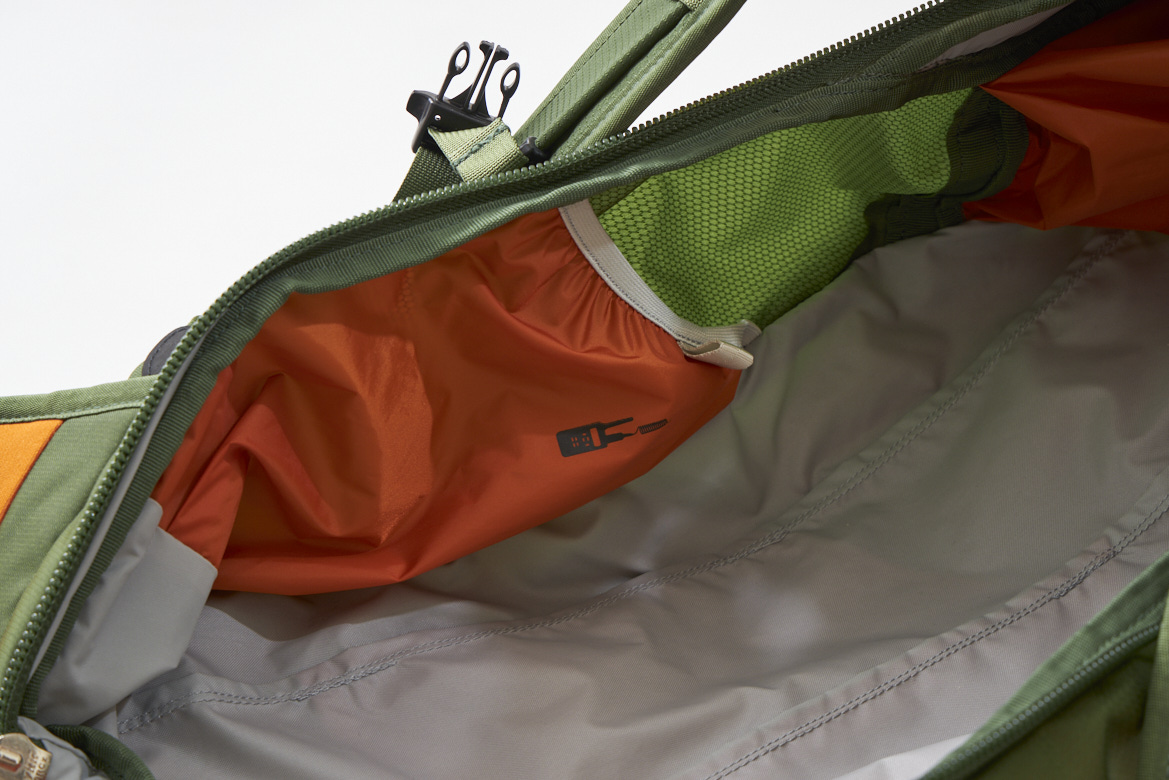
There is a pocket for a walkie-talkie on the side of the main compartment. It is conveniently located so that you can easily access it by opening the zipper. You can even access it while wearing gloves
helmet holder
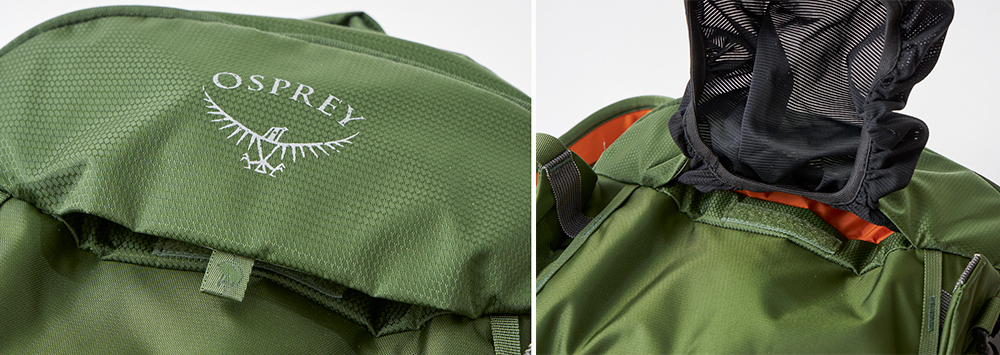
The helmet, an essential item for backcountry skiing, is stored in a mesh holder built into the top front (photo left). Simply remove the holder (photo right) and place your helmet inside, which can be placed on top of the backpack, or attached to the front panel. This can be used depending on whether you're skiing or snowboarding
Ski & Snowboard Carry System
The way skis and snowboards are attached to backpacks also varies depending on the backpack. There are two patterns: "diagonal" and "A-frame." To see how to attach them to the Solden32, check out this instruction video
Tips for choosing a backpack
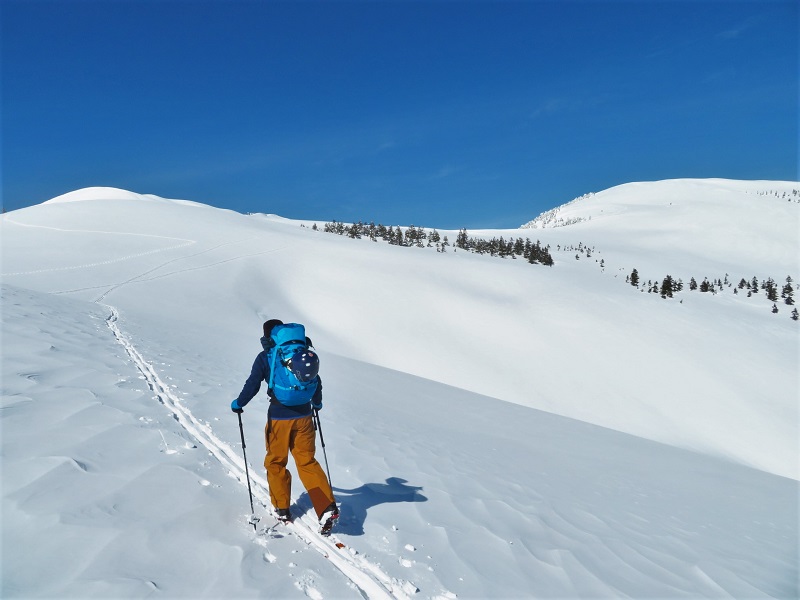
Consider the important points to consider when choosing a backpack
1. Choose the type of BC tour that best suits your purpose
What kind of backcountry tour do you want to do? Is it a tour with limited hiking to access the slopes? How long will it take? How much climbing will be involved? Is it a one-day tour, a long tour with overnight stays, or a full-scale alpine tour including climbing? Depending on this, the equipment you need will differ, and you will be able to see how much space you can store it in
❷What elements do you want to focus on?
After capacity, what else do you look for in a backpack? Maybe you want a comfortable fit because you want to ski well, or maybe you want a backpack that's as light as possible because you're going on a long climb. It's a good idea to clarify what you're looking for
❸What functions and features are necessary? Are there any that are unnecessary?
There are various features that make a backpack easy to use, but it can be frustrating if it lacks the features you want, but it can also be annoying if it has too many features you don't need. Make sure that the backpack has the features and performance that match your needs. Some points that are often mentioned are as follows:
- Is the main compartment easily accessible, making it easy to take out the contents
? - Does it have a two-chamber structure with a main compartment and a separate compartment to prevent wet items from getting mixed in?
- Is the avalanche gear easily accessible? -
What kind of attachment functions are there for skis and snowboards (diagonal or A-frame)
? - Is there a back height adjustment function to ensure a good fit?
- Are the adjustment functions of the shoulder straps, waist belt and harness reliable?
- Are the zippers and buckles easy to use even with gloves on?
- Are there enough pockets for goggles, tools, small items, etc.?
- Will the helmet holder be a nuisance when climbing?
- Is it made of sturdy, durable materials that will last a long time? -
Is the waterproofing reliable even when exposed to blizzards or rain for long periods of time?
❹ Choose the size that fits your body
When choosing a backpack that's right for you, the most important thing is whether it fits your body properly. Make full use of the back height adjustment, shoulder harness, waist belt, and other adjustment features, and when you wear it, do you feel a sense of comfort and unity with the bag?
Climbing and skiing on snowy mountains for hours puts more strain on the body than you might imagine. If you're carrying an ill-fitting backpack, you'll end up with pain and fatigue in your shoulders, lower back, and lower body. This will prevent you from fully enjoying your skiing experience
The best way to find out if a backpack fits your body is to actually try it on at a shop. Professional ski and mountaineering shops have staff with extensive knowledge and experience of BCs. It's a good idea to try out various backpacks with their advice
Photo courtesy of Lost Arrow Co., Ltd.
*Re-edited from an article released in 2023