

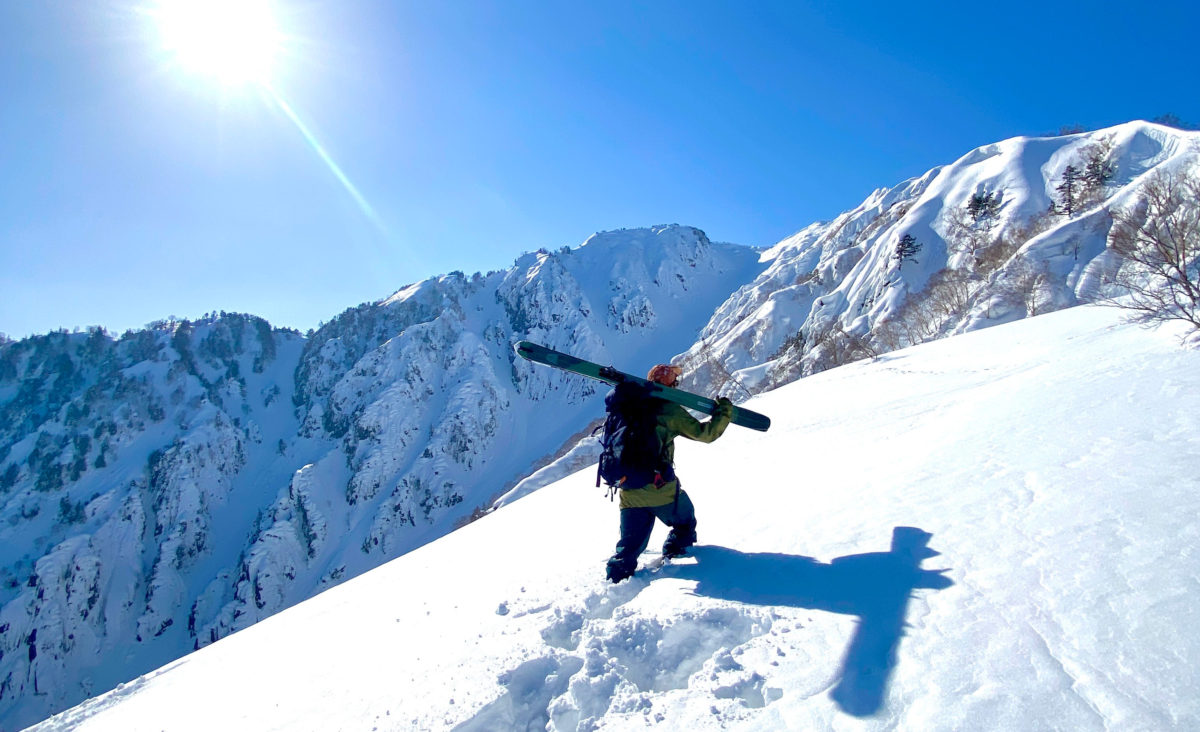
Skis are becoming lighter and lighter to allow for deeper mountain exploration. However, the lighter they are, the more performance they inevitably have to sacrifice. This is because using lighter materials and making the skis thinner reduces rebound and shock absorption. But the LOCATOR, from ARMADA, a ski brand that prioritizes skiing performance, is a surprising ski that is light yet doesn't compromise on gliding ability.
Furthermore, it incorporates features designed for long-distance hiking, allowing you to conserve energy and hike more easily than ever before.
Let's take a look at how it works.
The reason for its light weight is the core material, Carbacore
The LOCATOR is the successor to the Tracer & Trace, which was the brand's popular backcountry ski until the 2022 season. It will be released in the 2022-2023 season with a full model change
The greatest feature of the LOCATOR is its lightness. Even for a 178cm person with a 96mm waist, it weighs just 1,350g. Even when paired with the N TRASER TOUR tech bindings that the brand recommends as a set, it weighs just 1,740g. When you hold it, even with the bindings attached, it's noticeably lighter than regular skis without bindings
This overwhelming lightness is achieved by the material used in the core, "Carbacore." The characteristics of Carbacore are that it is light, strong, and highly resilient. It is equipped with a technology called "carbon reinforcement," which layers linear carbon on top of the core, increasing rigidity and torsional strength. This is the same carbon technology that is also used in the brand's popular lightweight model, the "JJ," but the linear carbon sheets used in the Locator are thicker than those in the JJ. Since the core is thinner, the carbon is thicker, achieving both lightness and strength
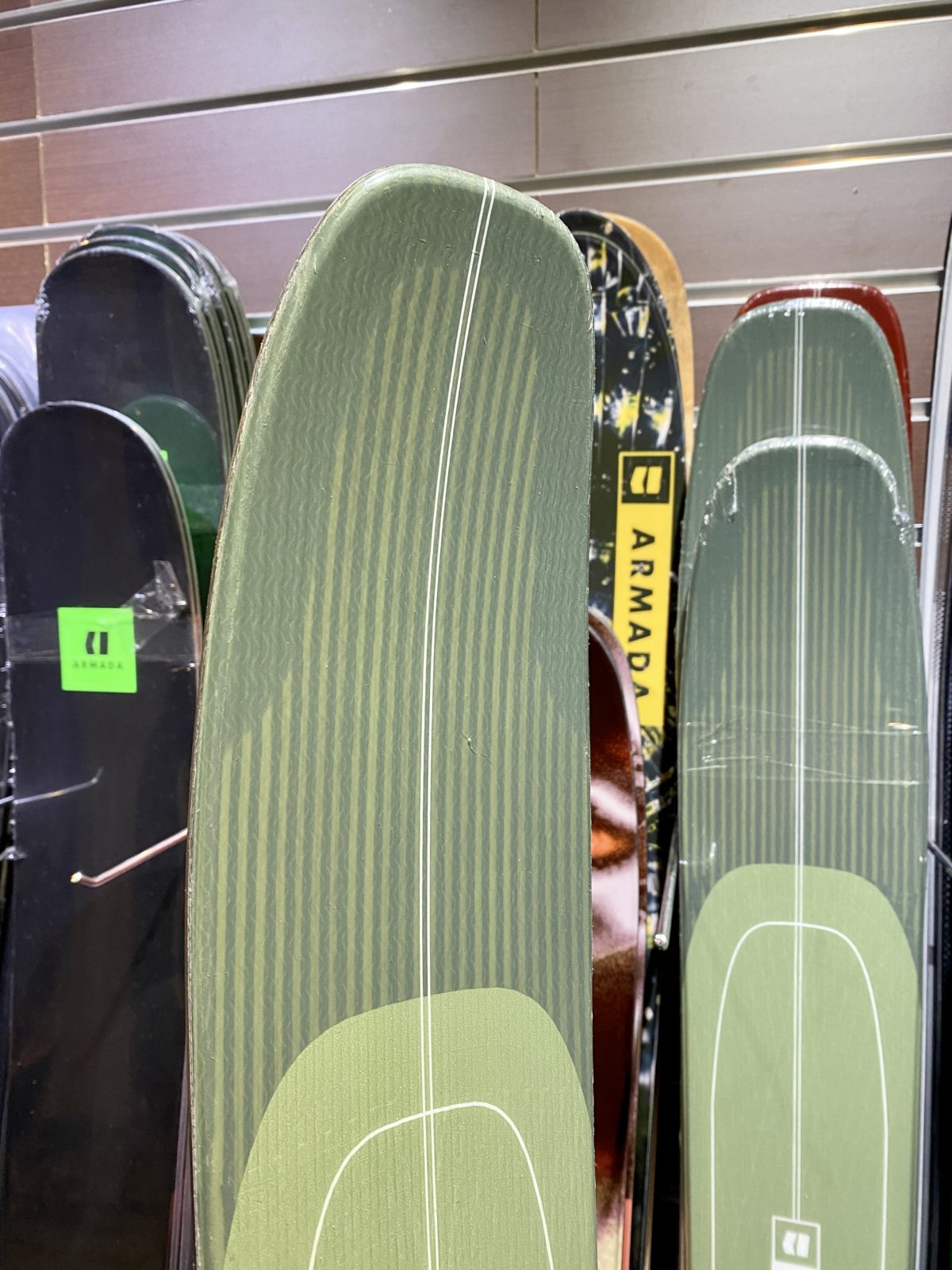
The core material and the shape and arrangement of the carbon fiber make for a ski that is lightweight overall, yet maintains a flex that doesn't impair gliding performance, and doesn't sacrifice glide. The LOCATOR is a highly maneuverable ski that can handle deep powder as well as hard slopes in remote areas
Furthermore, the soles are made from the same material as the Comp series soles used in racing skis. Using high-quality materials for backcountry skis is something only ARMADA, which is particular about gliding performance, can do
LOCATOR with excellent walking performance
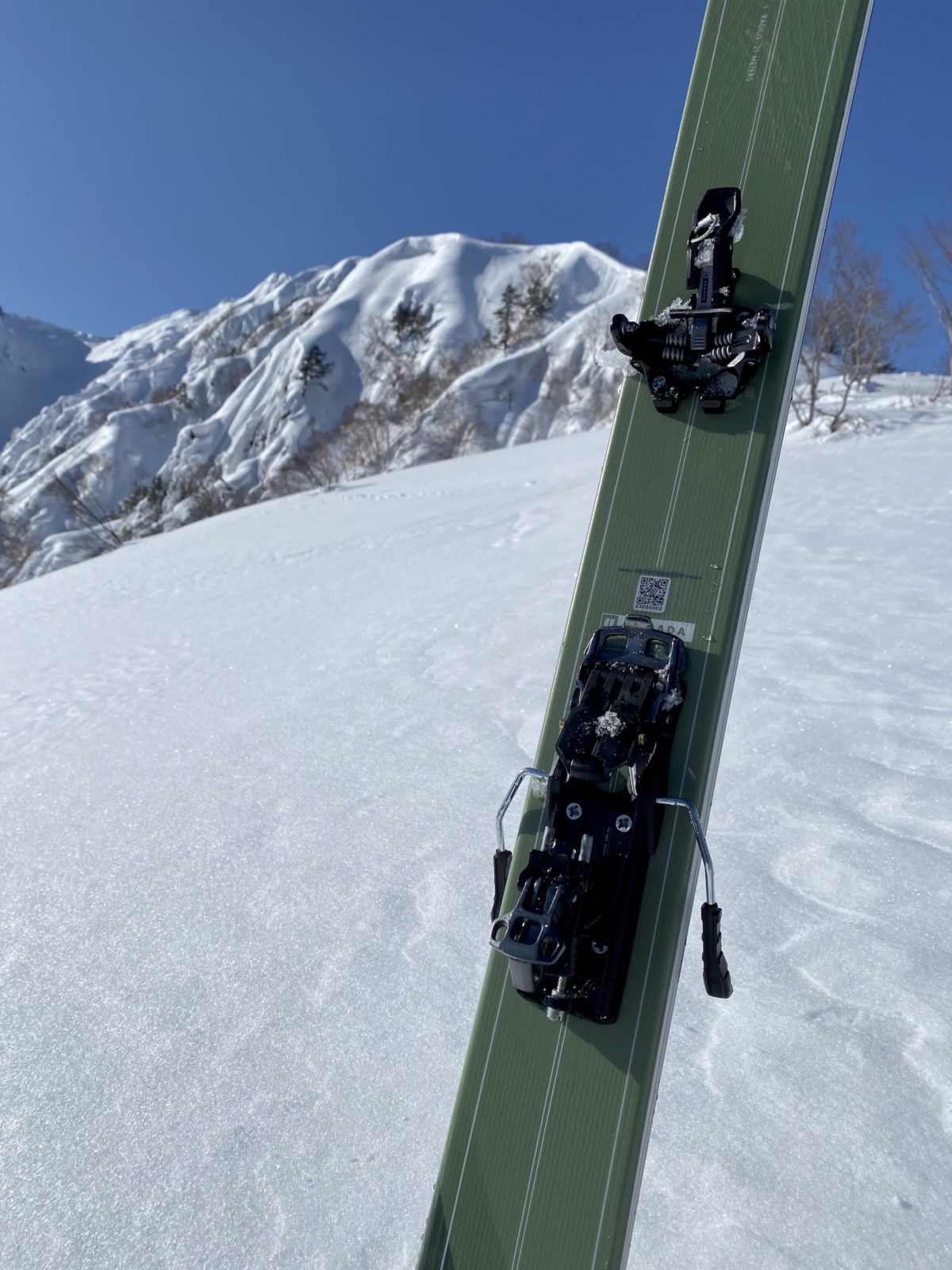
The Locator skis incorporate several features to make hiking easier.
First, there's the different rocker lengths for each model. Narrower skis have shorter rockers, while wider skis have longer rockers. This is due to the larger surface area in contact with the snow. If the waist width is wide, even with a longer rocker, the wider ski allows the skins to make contact with the snow more effectively and grip firmly. If the waist width is narrow, the rocker is designed to be as short as possible to maximize the contact surface between the skins and the snow.
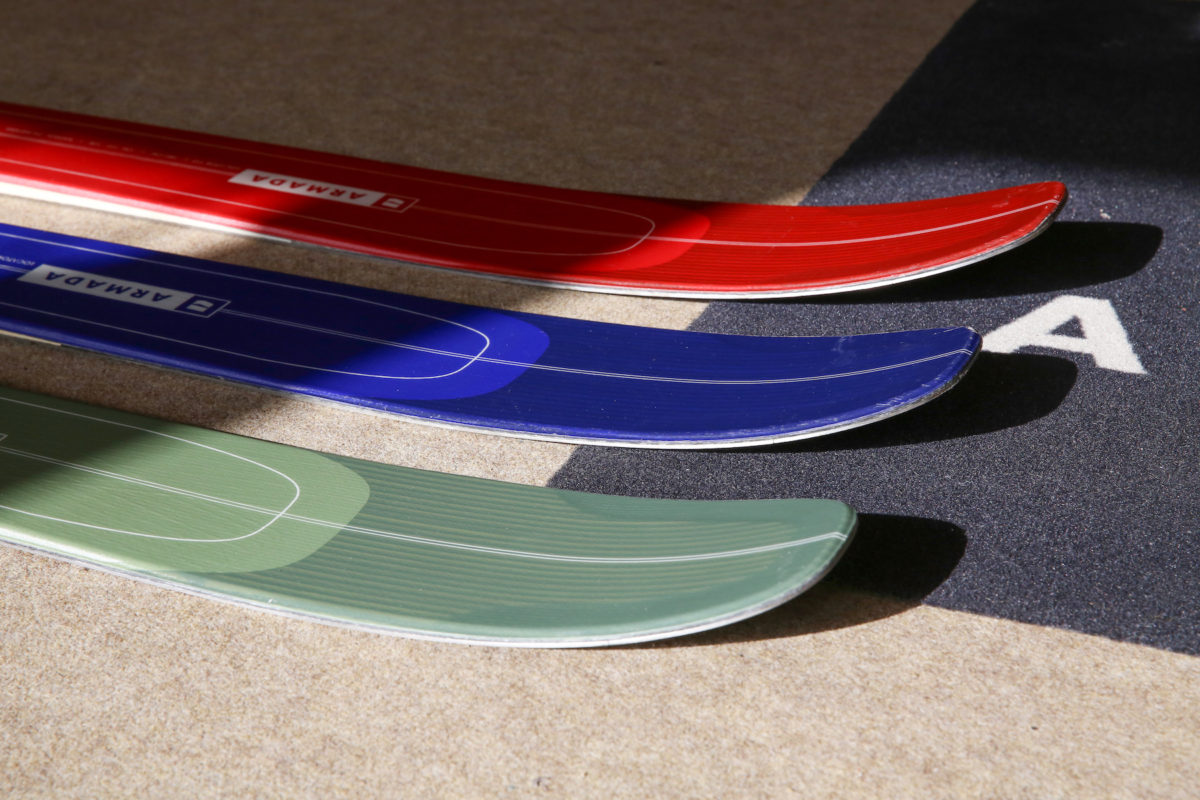
Furthermore, this design makes sense even when considering the various skiing situations. The length of the rocker is designed primarily to maximize buoyancy in powder, so wider skis have longer rockers. Conversely, skis with a narrow waist are not often taken out in heavy snow, so a shorter rocker is not a problem. The
tail end has a rounded, slightly concave shape with a bad tail design. The skin clips are automatically centered, allowing for quick attachment and detachment of the skins. With a twin-tip shape, the skins tended to slip and come off during hikes, but now they are fixed in place, allowing for stress-free hiking.
This can be rephrased as a feature that allows you to go further and faster, but also a feature that allows you to conserve energy and concentrate on skiing without worrying about unnecessary things.
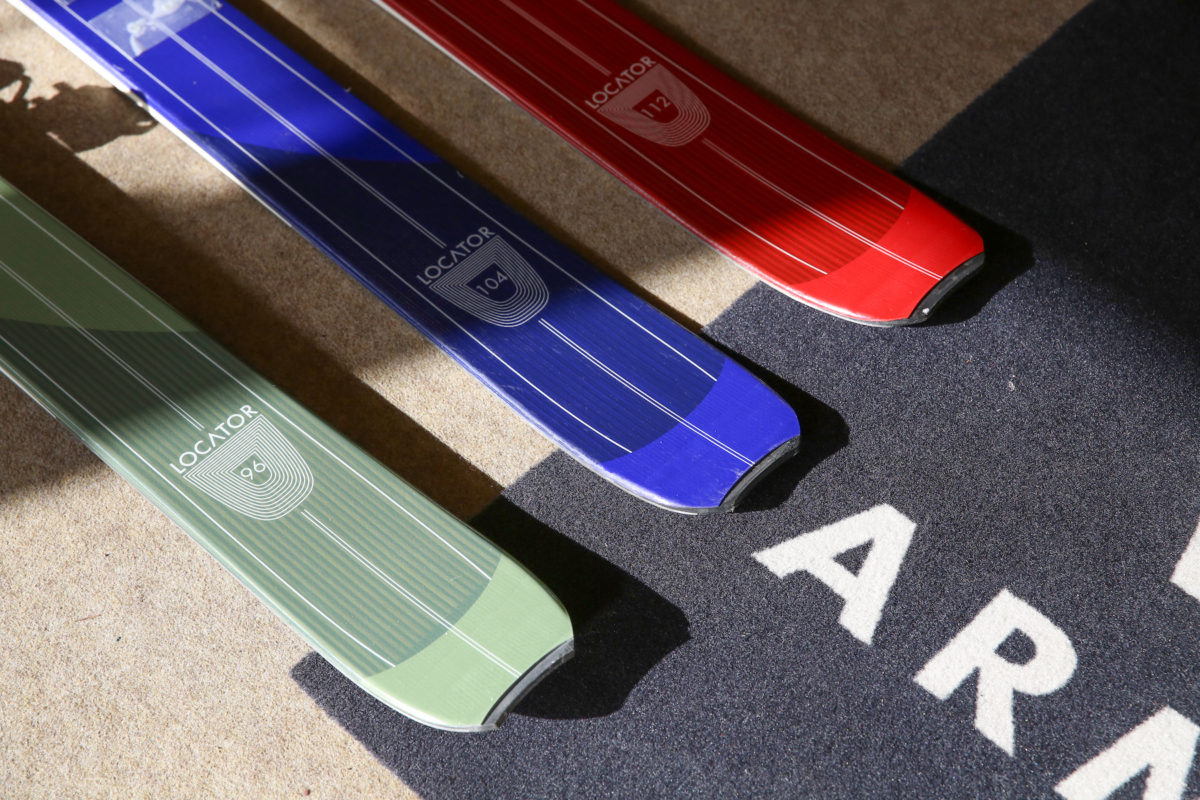
LOCATOR lineup
LOCATOR comes in four models with different waist widths
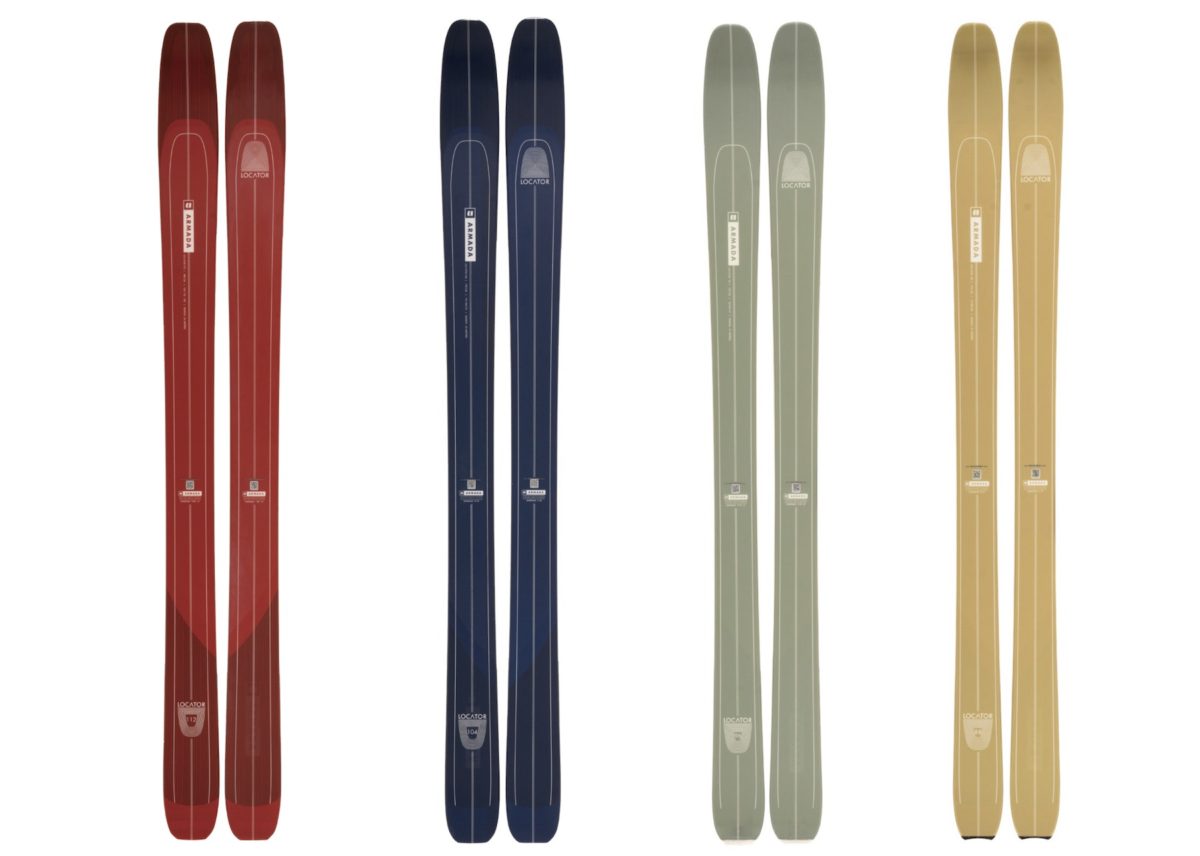
From the right:
■LOCATOR 88
Developed to guide riders faster and further. Developed as an ultra-lightweight long-touring ski, it boasts the highest maneuverability in the series.
L = 152, 162, 172,
182cm D = 116-88-109 (172cm)
R = 20.5m (172cm)
88,000 yen
■LOCATOR 96:
Well-balanced overall, this board best embodies the hike-and-ride style. Recommended for those who prioritize smooth skiing but frequently find themselves in situations involving long hikes.
Length: 157, 164, 171, 178, 185cm
; Depth: 127-96-117 (178cm)
; Radius: 21m (178cm)
; Price: ¥93,000
■LOCATOR 104:
Delivers high performance in all conditions. This ski handles both powder and packed snow in backcountry areas where soft and hard snow conditions coexist.
Length: 162, 170, 178, 186cm
; Depth: 131-104-122mm (178cm)
; Radius: 22m (178cm)
; Price: ¥99,000
■LOCATOR 112:
The 112 was born to hunt for deep powder. While featuring a wide top that generates buoyancy, its low camber arch allows it to maintain high speed even in deep powder.
L=166, 173, 180, 187cm
D=136-112-128mm (180cm)
R=24m (180cm)
¥104,500
These skis are ultra-lightweight, making climbing stress-free and comfortable, and because the brand prioritizes downhill performance, it's clear that they don't neglect downhill capabilities either.
So, we asked TKY Takaya Kawaguchi, a rider who has actually used these skis from last season up to Tateyama this autumn, about how he enjoys them and his impressions.
ARMADA rider Kawaguchi TKY Takaya's impressions
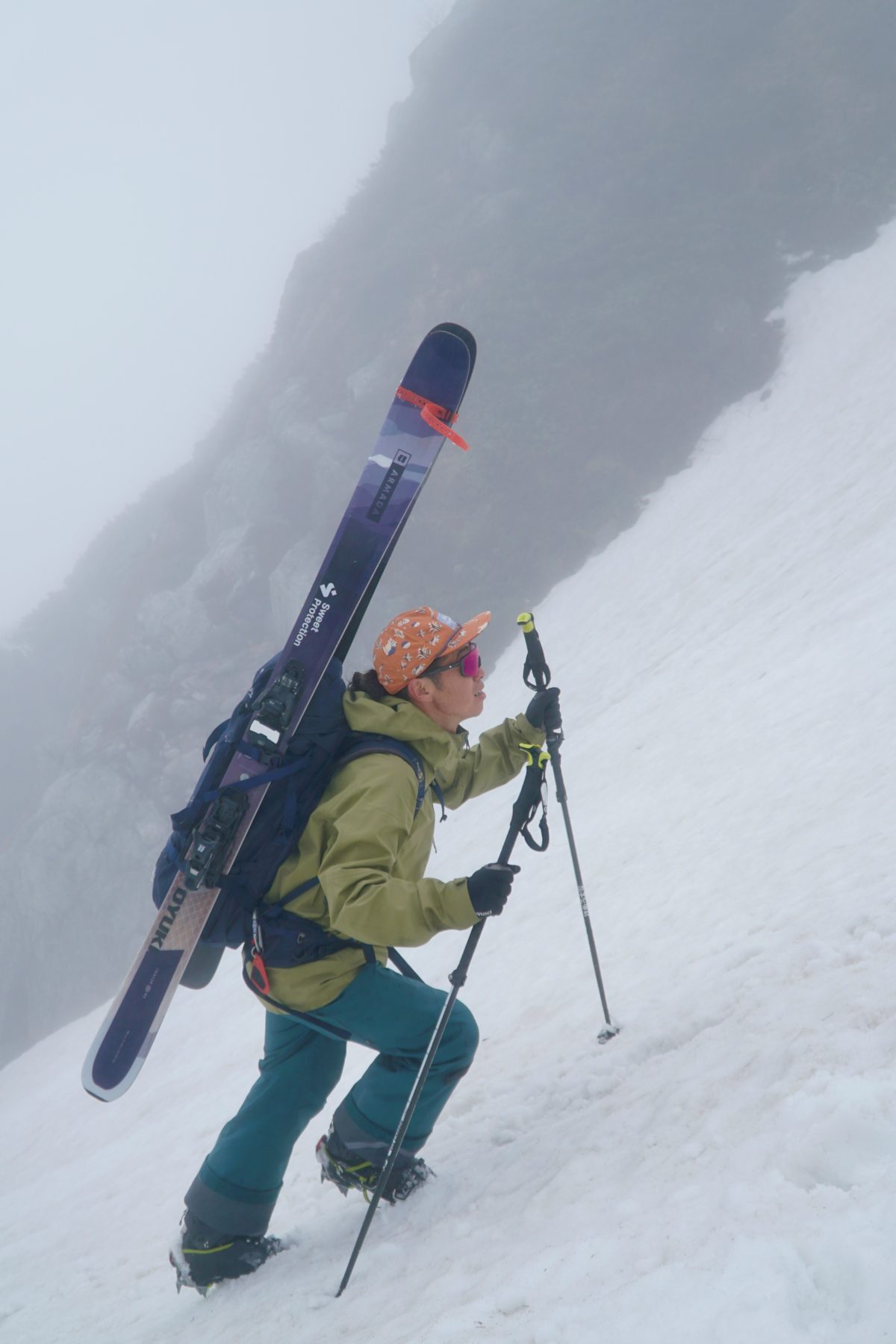
I started using them in February 2022, and I've used them in places like Nozawa Onsen (my base), Shirakawa-go in Gifu, and Mt. Myoko and Mt. Fuji in Niigata. I also used them in Tateyama this November.
Locator skis are incredibly lightweight. The skis I use have a waist width of 96mm and a length of 178cm, and each ski weighs only 1350g. I can reach my destination faster and feel less tired, which makes the tours more enjoyable.
The river mouth looks comfortable and you can make shifting turns even in powder
I'd like you to pay particular attention to the side curve. Recently, there has been a trend towards skis with a side curve so that you can enjoy all-around skiing from backcountry to the slopes, but the skis I use are 96mm wide with a radius of 21m
Carving requires a big turn, but these skis are ideal for adjusting the turn arc while shifting the tail. Carving too tightly with a sharp side curve can lock the skis, and in the backcountry, where a variety of snow conditions are expected, there is a risk of not being able to quickly maneuver around rocks, snow clumps, or cliffs that protrude from the snow surface. However, being able to shift allows you to freely control the skis, avoiding danger. What's more, the tapered nose shape reduces the swing weight, and combined with the overall lightness, these skis are easy to control
This gentle side curve really comes into its own when climbing. When zigzagging up a steep slope, you hike by biting the edges, so only the sides of the skis are in contact with the snow. If the side curve is too steep, the area in contact with the snow is small and it's difficult to transfer force to the snow, which increases the risk of slipping and makes you tired from using extra force to prevent slipping. However, if the side curve is gentler, the area in contact with the snow is wider, even on steep slopes, making it easier to walk, and the edges under your feet grip better because the nose and tail don't get in the way. The result is greater stability and less fatigue
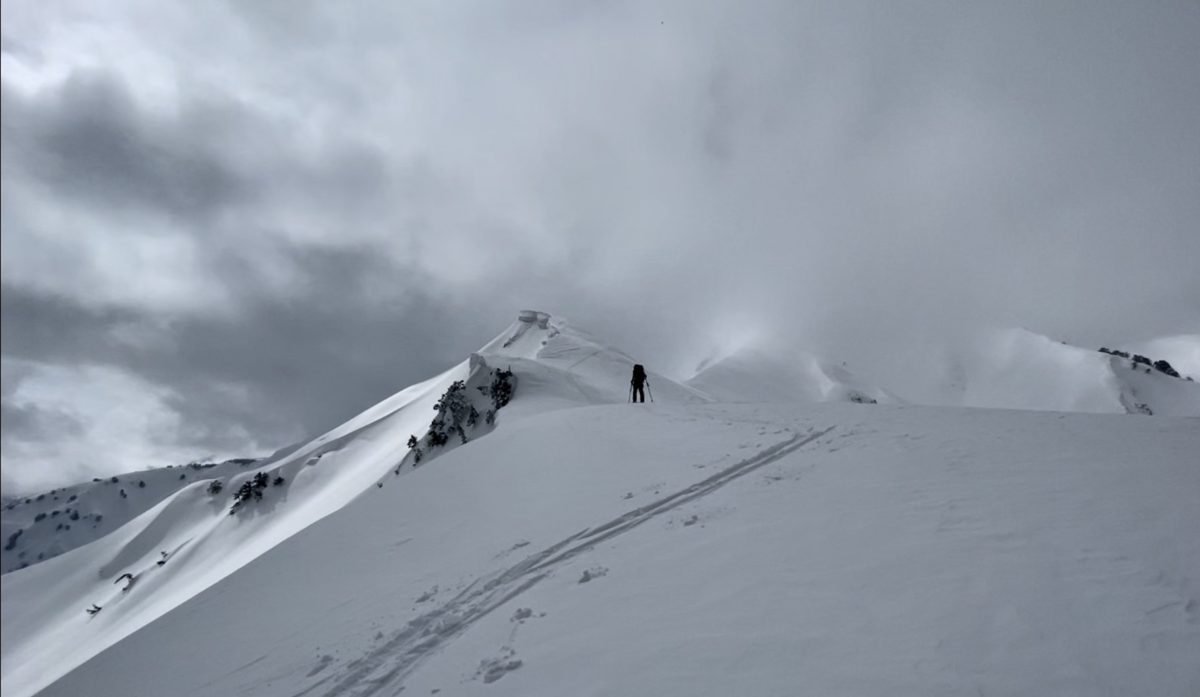
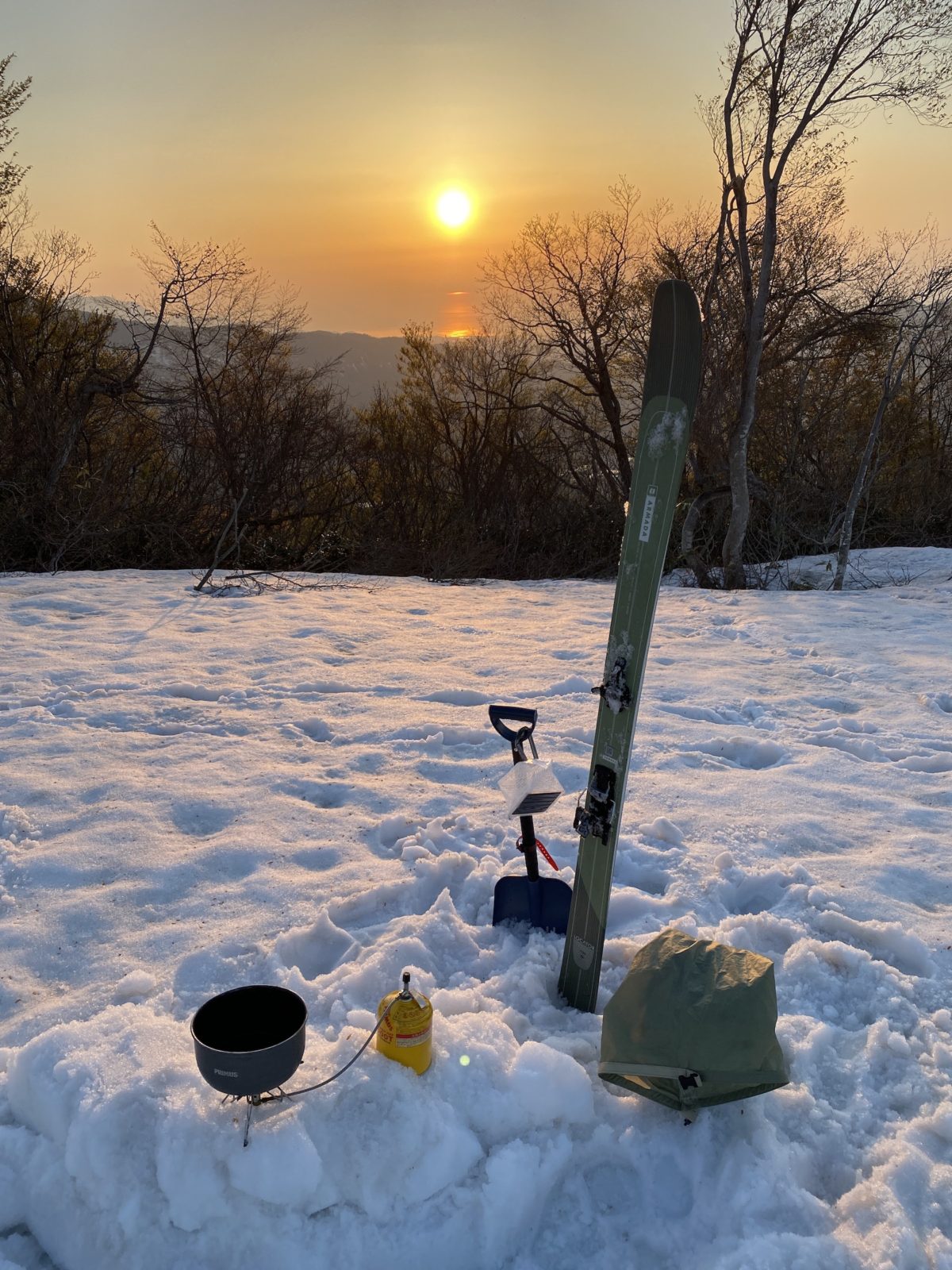
The LOCATOR is a ski I would especially recommend to anyone who enjoys backcountry skiing and hiking uphill. It can be used as your main backcountry ski, but it's also great as a second ski to use with the 104 or 96, which best embody the hike-and-ride style, from February onwards when there isn't much powder
The best way to experience the lightness and performance of the LOCATOR is to actually pick it up and try it on.
COMPASS HOUSE, based in Nozawa Onsen, plans to hold demo tours during the season where you can ride LOCATOR demo models in backcountry areas. Come and try them out and see how they feel.
Details will be updated regularly on the ARMADA website, so be sure to check it out.
The person who taught me
Kawaguchi TKY Takaya
He took a leave of absence from university to train in freestyle skiing, experiencing the world level through bum life in Whistler and Banff, Canada. After a solo ski trip to the Yukon and Alaska that spring, his values changed, and he began to focus on ski travel rather than park riding. To date, he has visited more than 50 countries with skis and a surfboard in hand, including a round-the-world road trip. He continues to travel to remote areas and meet indigenous peoples, following his curiosity. He
also organizes BC tours and events in Japan to convey the joy of skiing and travel. He is the founder of the travel planning project ShareTavi. He is the main guide at Nozawa Onsen COMPASS HOUSE. He is a JMGA certified BC ski guide. (National English interpreter guide qualification. Comprehensive travel business manager qualification. Comprehensive tour manager qualification. Rishiri Fuji Ambassador)
Instagram:@tky_travel_skier
Interview cooperation: TKY Takaya Kawaguchi,COMPASS HOUSE