

Article writer: During his student days, he was a basic skier who trained diligently with the goal of competing in Iwatake and technical selections. He is now an apprentice freeskier who aims to be able to ski freely on fresh snow. He is also a new member of the STEEP editorial team
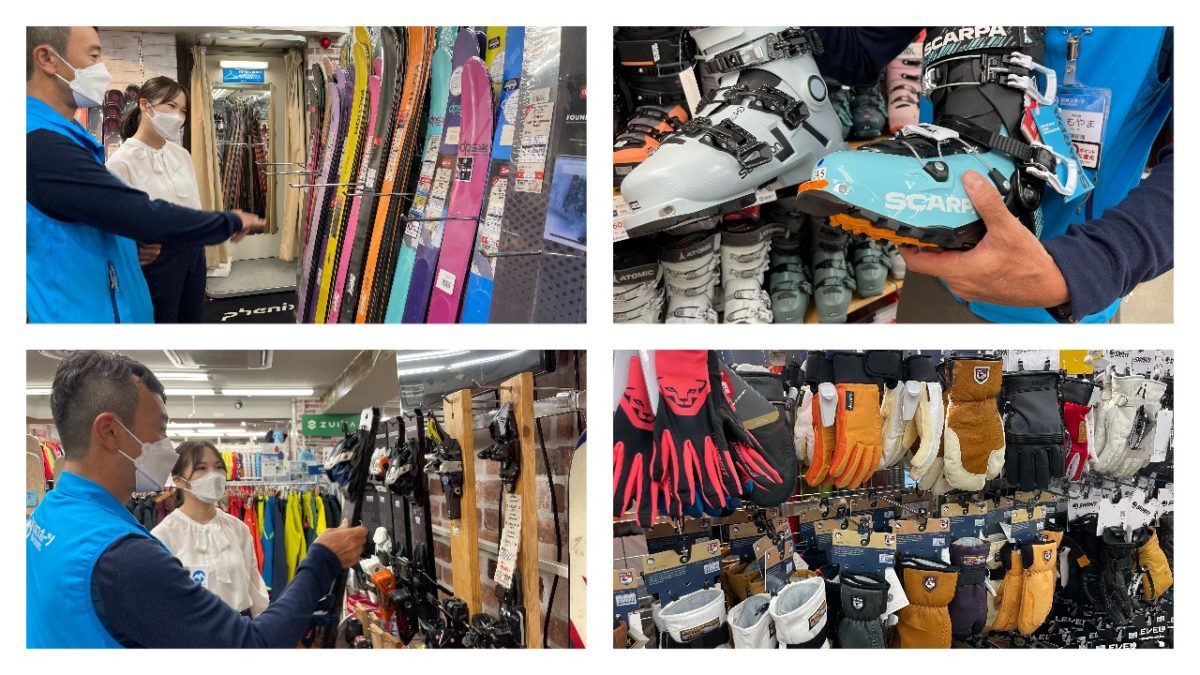
"What gear should someone who has been practicing basic skiing choose to try freeskiing?" "What kind of boards will allow them to ski comfortably in powder?" "What kind of gear suits the background of a basic skier?" We posed these questions to Shimoyama of Ishii Sports Kanda Main Building
▼The story unfolds with answers to Shimoyama's questions
What should you pay attention to when choosing gear?
Before choosing your gear, it's important to visualize the kind of skiing you want to do. Try to visualize as much as possible whether you want to ski in powder, enjoy jibs and jumps on rails and boxes in the park, or go backcountry skiing and jump off the slopes and hike. Once you've clearly defined the kind of skiing you want to do, you can choose your gear
What is "freeskiing" anyway?
Freeskiing is a category that allows you to ski freely and coolly in your own style, and is a skiing style that is also connected to culture
"Freeskiing" is a term used to refer to the style of skiing on ungroomed snow, rough terrain, powder, and off-piste natural areas, as well as the style of expressing yourself through parks, jumps, and tricks.
Incidentally, the FIS collectively refers to these as freestyle skiing competitions, and also includes moguls and aerials.
The recent boom in backcountry skiing is also called freeskiing, and the style of freely skiing through the great outdoors is not only enjoyed by individuals, but has also recently attracted attention as an event where free and dynamic skiing on big mountains is expressed and style competed in, such as the "FWT Freeride World Tour." The term "freeride" refers to skiing in the great outdoors, including jumps and steep slopes
Here we will introduce gear choices divided into "slope & park" and "backcountry & powder."
For "Slope & Park" use "100mm center" as a standard
This type is for those who want to ski on the slopes, in fresh snow, and also want to try jumping in the park. Those switching from basic skis will also feel comfortable. The main difference is that the center width is wider than basic skis, there are no plates, and the bindings are set lower
Center Width
For those with a solid base of basic skiing skills, we recommend a center width of 90-100mm when choosing your first pair of fat skis. Previously, fat skis were considered all-round skis, but recently, there has been an increase in skis up to about 110mm that can be considered all-round
length
For women, the guideline is around 165-170cm. As a basic guide, I think women will use 150-155cm for small turns and 175-180cm for large turns, but the length is roughly determined by the model, so if you have a model you want, I think it's a good idea to choose from short, medium, or long lengths within that range
Hardness
Men's models tend to be stiffer than women's models. Stiffer boards are difficult to handle without weight and speed, so women may choose boards specifically for women. However, boards specifically for women may not be strong enough for skiers, so as long as the length is correct, it's fine to choose from men's boards
For "BC & powder type" choose from "100-120mm"
Choose a lightweight backcountry ski. If you're heading out into the backcountry to enjoy a tour, we recommend skis that are also designed with walking in mind. In addition to skiing comfortably through powder, you'll need to walk and climb while wearing skis, so using basic skis and racing gear for both is not suitable. Stiff, heavy gear makes it difficult to walk on snowy mountains, so choose skis that are light. Lighter skis are by far better for purposes such as spring tours, so those who value speed and agility may choose narrower, shorter skis
For powder skiing, you can go for a full-on ski, but we recommend a softer ski. When skiing through powder, stiff skis that don't "flex" will fight with the snow when they encounter resistance. If you want to go powder hunting, you should definitely choose skis that are soft and "flexible."
Also, if you're concerned about your skis flapping, consider skis that use titanium sheets. These are what's known as "metal-infused" skis. Each manufacturer has devised the thickness and shape of the sheet, so there are skis with a variety of features that offer a reasonable degree of rigidity without sacrificing lightness
Center Width
The BC lineup includes easy-to-use models in the 100-110mm range. They are said to be the most versatile, as they are easy to use on the slopes and can also be taken to the mountains. They provide ample buoyancy in powder, excellent traction on rough runs, and excellent grip on firm snow. They are the ideal all-mountain, all-around ski
On the other hand, the choice of center width will vary depending on where and how you want to ski - around 100mm, 105mm, 110mm, etc. Enjoy the natural changes in the terrain within the ski resort, make sharp turns on packed runs, or glide freely through deep powder for a floating feeling... If you're aiming for deep, packed powder, 110mm or larger is the best choice. If you go for big fat skis over 120mm, they become difficult to use in anything other than powder
Recommended Brands
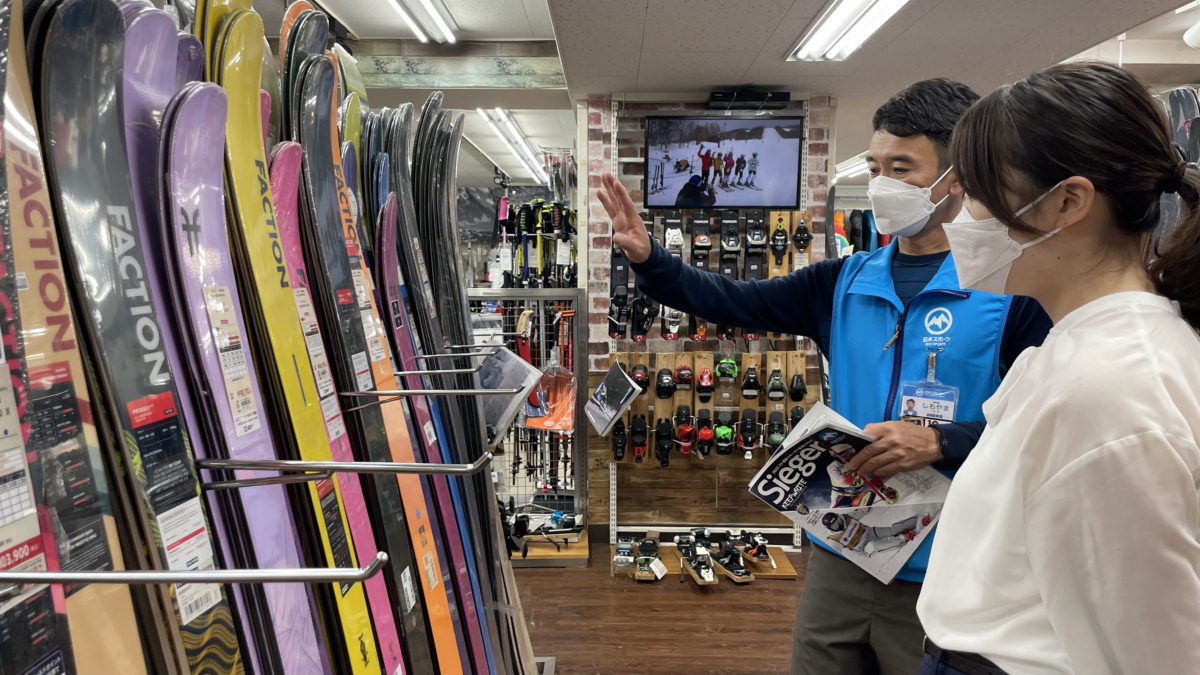
FACTION has been popular recently. It's a brand that legendary skier Candide Thovex was deeply involved in developing for a long time, right up until the 2021-2022 season. The skis were made by an all-around skier who covered all categories, from freestyle to freeride and even big mountain, so many of the skis have excellent performance in all genres. Another reason for their popularity is that they actively promote their skis through video ads on YouTube and social media
Column: A look at the differences between basic skiing, slope and park skiing, and backcountry and powder skiing gear
| Park skiing | Backcountry & powder skiing | Basic Skiing | |
| Plate shape | Twin tip, rocker | locker | Camber |
| Binding position | Center | Slightly behind the center | Behind the center |
| Center Width | From 80mm to nearly twice the thickness for foundations | 100-120mm is the standard | Approximately 65-70mm |
| How to skate | × Maneuverability △ Carving 〇 Shifting | × Maneuverability △ Carving 〇 Shifting | 〇Carving △Shifting |
| Suitable snow conditions | soft snow | powder | Groomed runs, hard snow |
| Distance to snow surface | Close (no plate) and well balanced, easy to feel and direct | Close (no plate) | The farther plate is taller, making it easier to knock the board over. |
How to choose bindings?
Slopes and parks
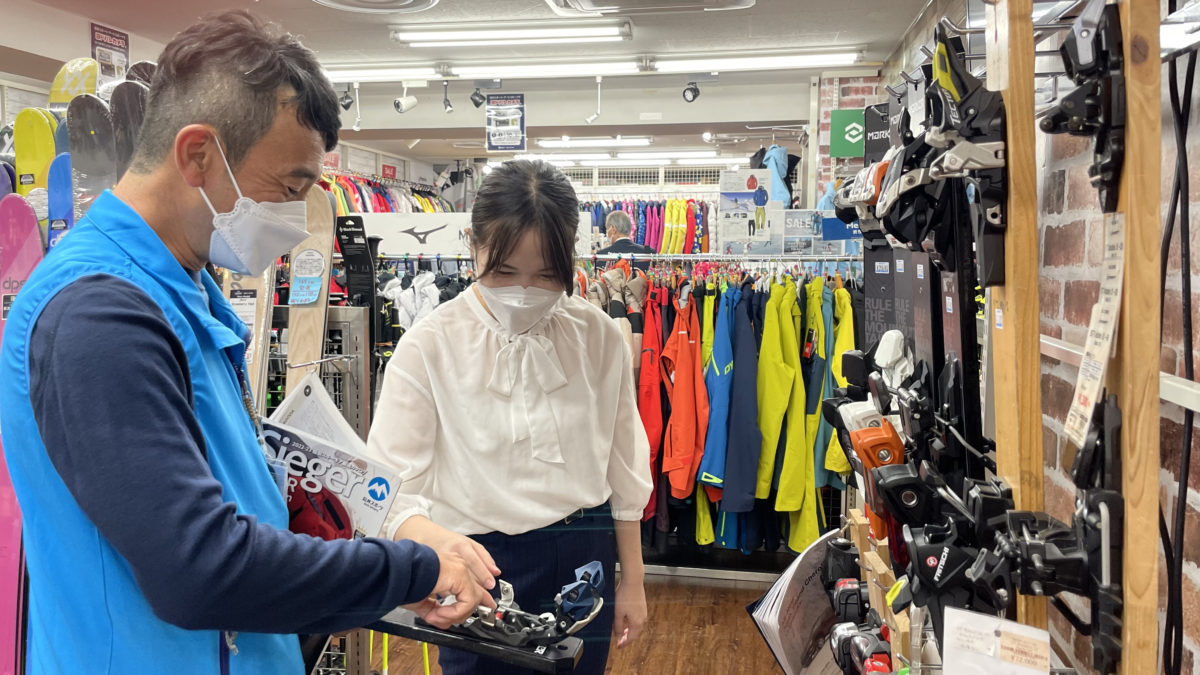
You'll want to choose a lightweight alpine binding, but the required release value will vary depending on the skier's build, skiing style, and speed. Bindings with a higher release value will inevitably be heavier. However, this is an important point, so choose a model with the necessary specifications!
And of course, we recommend bindings designed for freeskiing. These types allow you to set your boots as close to the snow as possible, making it easier to create deflection in the skis, providing excellent maneuverability and increasing stability when landing jumps. They also have excellent shock absorption
Backcountry
Tech bindings, which use pins to secure the toe, are the most common type. These were developed with a focus on ease of walking and lightness, and while they are not designed to withstand the same amount of external pressure as alpine-style bindings, they provide sufficient holding power for normal use. Recently, hybrid bindings that combine the best of tech and alpine (tech for climbing, alpine for skiing) have also become popular.
Those who ski fast on hard slopes and jump can use alpine bindings instead of touring bindings, and when climbing, they can attach gear called "Daymaker Tour" between the boots and bindings, allowing them to walk like they are in touring bindings.
The balance of rigidity between skis, bindings, and boots is important. Match sturdy items with sturdy items. Make sure you don't have a mismatch between lightweight items and stiff items
How do I install the bindings?
In basic skiing, the goal is to provide stability at high speeds, so the bindings are attached behind the center. In free skiing, the bindings are attached closer to the center, as you are required to rotate the skis around yourself
Having the bindings in the center of the skis makes it easier to switch and change the direction of your skiing, and to perform tricks. This difference makes it easier to use in freestyle skiing by adjusting the center of the skis forward or backward according to your preference, even for freeskiing, depending on the desired skiing, the skiing environment, and the boots you use, rather than the ski manufacturer's recommended center. Consult with knowledgeable shop staff to find the best position
Choosing freeski boots
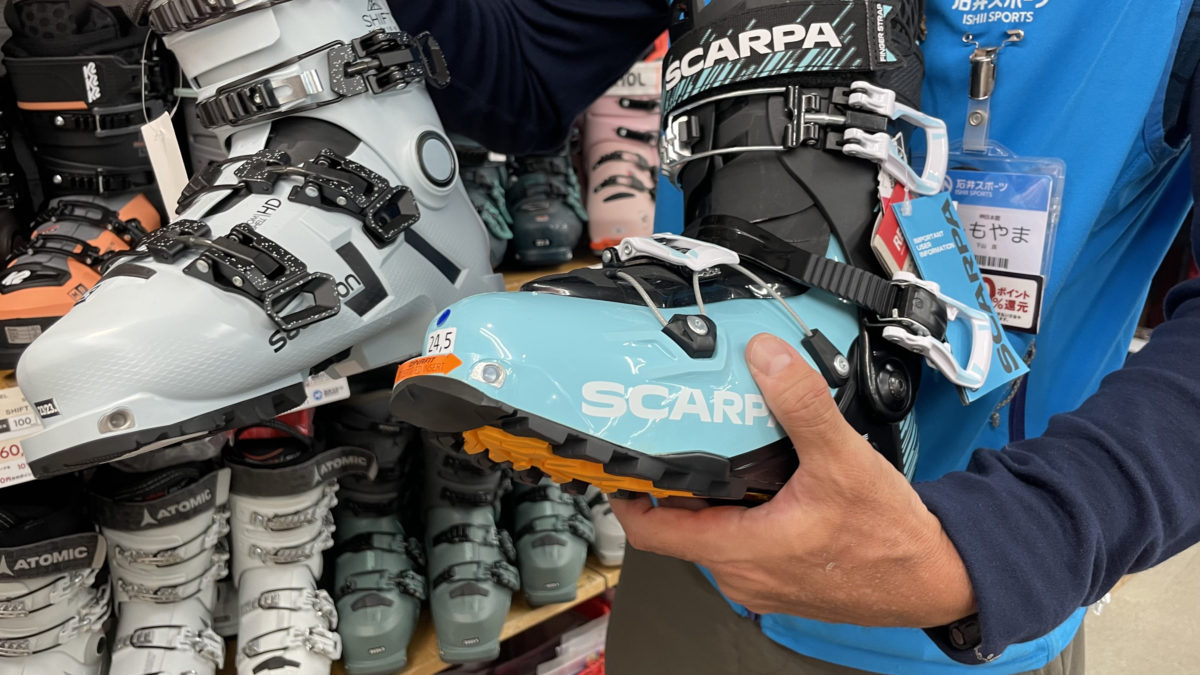
Freestyle model
The most common models are those with a three-piece structure, which are characterized by their excellent shock absorption and ease of use around the ankles. They excel in surface control rather than carving, making them easy to perform tricks. They are available in models with or without tech inserts that are suitable for hiking up, walk mode, and tech bindings
Alpine Type
Alpine boots are the type that beginner skiers will find most comfortable. This type is especially good if carving performance on the slopes is important. Flex is a matter of preference, but unlike groomed skis, the snow quality and slopes change drastically, so it's best to choose boots that are about 10% softer than the stiffness you're currently using to make it easier to adjust your ankle. Again, consider factors like walk mode and pintech compatibility when making your choice
Lightweight touring type
There are some lightweight touring models that are great for hard snowboarding, but most of them prioritize ease of walking and lightness, so their glide performance doesn't compare to that of alpine boots. While they're more necessary for long hikes, you should keep in mind that some of the glide performance may be sacrificed
Each of the three types mentioned above has boots that are compatible with tech bindings, so first choose the type that suits you and if you are also considering backcountry skiing, choose a compatible type
While each function and style is important, the shape of your foot is the most important factor. Since you'll be wearing them for long periods of time, comfort is extremely important. Fortunately, there are many models these days that allow you to heat-mold the inner boots, so you can mold them in the store to fit your foot shape, and then change to a functional insole, working with the staff to create a pair that's just for you. Pay attention to the inside
Recommended for beginner skiers!
If you want to start freeskiing, click here
From the products available in the store, Shimoyama-san chose these two models:
SALOMON QST98

With a convenient center width of 98mm, SALOMON is a manufacturer that primarily produces skis for basic and alpine skiing, so it's a good choice for those looking to switch to a new style. The skis themselves are soft, but they don't flap around underfoot, making them very stable
BRIZZARD RUSTLER11
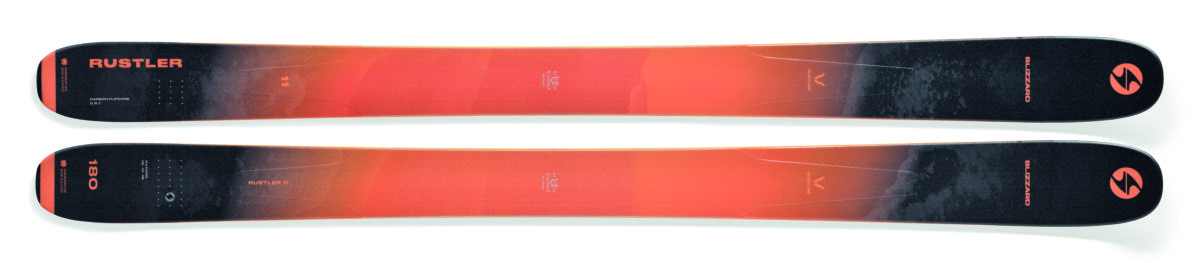
192cm|R=21m (188)|¥107,800
The Rusler series has been highly praised since its early days. The titanium sheet under the feet is effective, and even though it is a little thick, it is an all-around performer!
Bonus Q&A
: More about freeskiing
| Q: Will I no longer be able to use all of the basic gear I've been using? |
| A: Boots for basics and racing have a flex that can withstand stiff snow, and are stiff to instantly transfer power from the boots to the bindings and board. However, in freestyle, speeds don't increase that much, so such stiffness isn't necessary. The downside is that stiff equipment restricts movement on the board. It's difficult to adopt a free position, so while it's not impossible to use, if you have a specific goal, such as wanting to ski in powder, it's recommended that you purchase specialized gear. Boots for freeskiing also have a softer flex than those for basics and racing. However, it's fine to try out various things with boots you're familiar with first. Basic models are not completely unusable |
| Q: When buying boots, can I get the same flex as before? |
| A: If you are choosing women's freeski boots, you can choose the same size. If it is unisex, you may want to go down one size. If you are a woman who can ski, I think it is best to choose the top women's model |
| Q: I often hear about grip walk, but what is it? |
| A: It's a rubber that has recently become popular, attached to the bottom of boots for easier walking. Boots with this feature are much easier to walk in. Some people wonder if they don't transmit as much force as boots for foundation or alpine skiing, but it's sufficient for use on regular slopes |
| Q: What is the best set of gear to have when freeskiing? |
| A: If you're aiming for backcountry, you'll need a set of walking-type bindings and boots. You'll also need skins that match the skis you've chosen. If you're heading out into the backcountry, you'll need avalanche gear such as a beacon, shovel, and probe, as well as a backpack to store them in. Goggles should either have different lenses or come with spare lenses. Carry an extra pair of gloves. For freestyle, you'll need sturdy poles. If you're skiing in soft powder, you'll need rings with large baskets. I recommend a wide, adjustable, retractable type |
| Q: First of all, what level of skill is required for freestyle and freeride? |
| A: In terms of level, this is a genre that can be tackled by people who can "do parallel skiing" by lining up their skis. If someone who has not yet mastered parallel skiing tries it, they will not be able to master the basics of parallel skiing. In order to be able to do parallel skiing properly, it is necessary to practice using basic or slope-specific skis. If you have competed in basic skiing, there is no problem at all. The skills you have developed in basic skiing will be put to good use |
| Q: Does your skating style change significantly depending on your skating posture? |
| A: When it comes to freestyle, it's not about carving hard, but even with a 106mm center, you can carve and shift with basic skiing techniques. If you move the board away from your body, the edge will stand up, so once you understand the difference in distance, you'll get used to it. Naturally, there are no sharp edges under your feet, so you'll use the surface of the board to slide, and the silhouette will be different. You won't move as quickly, so it's difficult to make the sharp turns that are mentioned in basic skiing |
| Q: I have the impression that if the board is soft, it will flap around a lot |
| A: To begin with, you'll be skiing at basic or racing speeds, so of course it's going to flap around. The vibrations that the plate is supposed to absorb are only experienced at high speeds, so it's not an issue here. Make sure you understand that the way you use it and how you ski are different before you ski. Even so, customers who still have a strong image of it being for basic skiing still say it flap around (laughs) |
The person who taught me
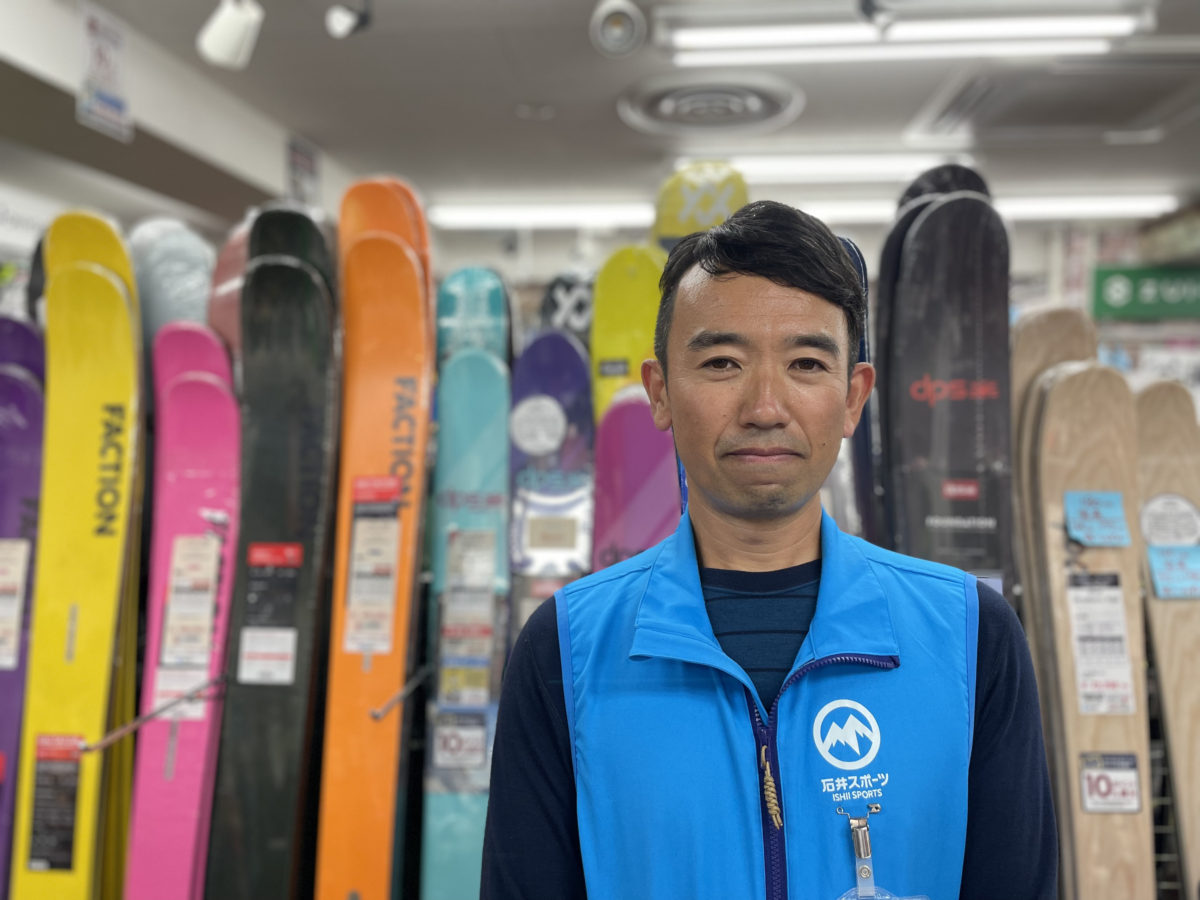
Makoto SHIMOYAMA
[Profile]
Born in 1975, from Kanagawa Prefecture.
Basic skiing is a genre packed with the foundations of skiing technique. These techniques can be applied to various genres, such as freeskiing! If you progress from freeride to backcountry, you can leave the slopes and enjoy a wide range of terrain. Backcountry skiing also requires knowledge of the mountains, so in the summer you can enjoy mountain climbing and other activities. Many side country skiing areas accessible by lift are now open, so enjoy there and eventually move on to the wide fields of backcountry skiing. You can safely enjoy backcountry skiing by taking a guided tour
[Interview cooperation]
Ishii Sports Kanda Main Building
Official website: https://www.ici-sports.com/shop/kandahonkan/
Official SNS: Instagram | Facebook | Twitter
Interview cooperation: Ishii Sports