

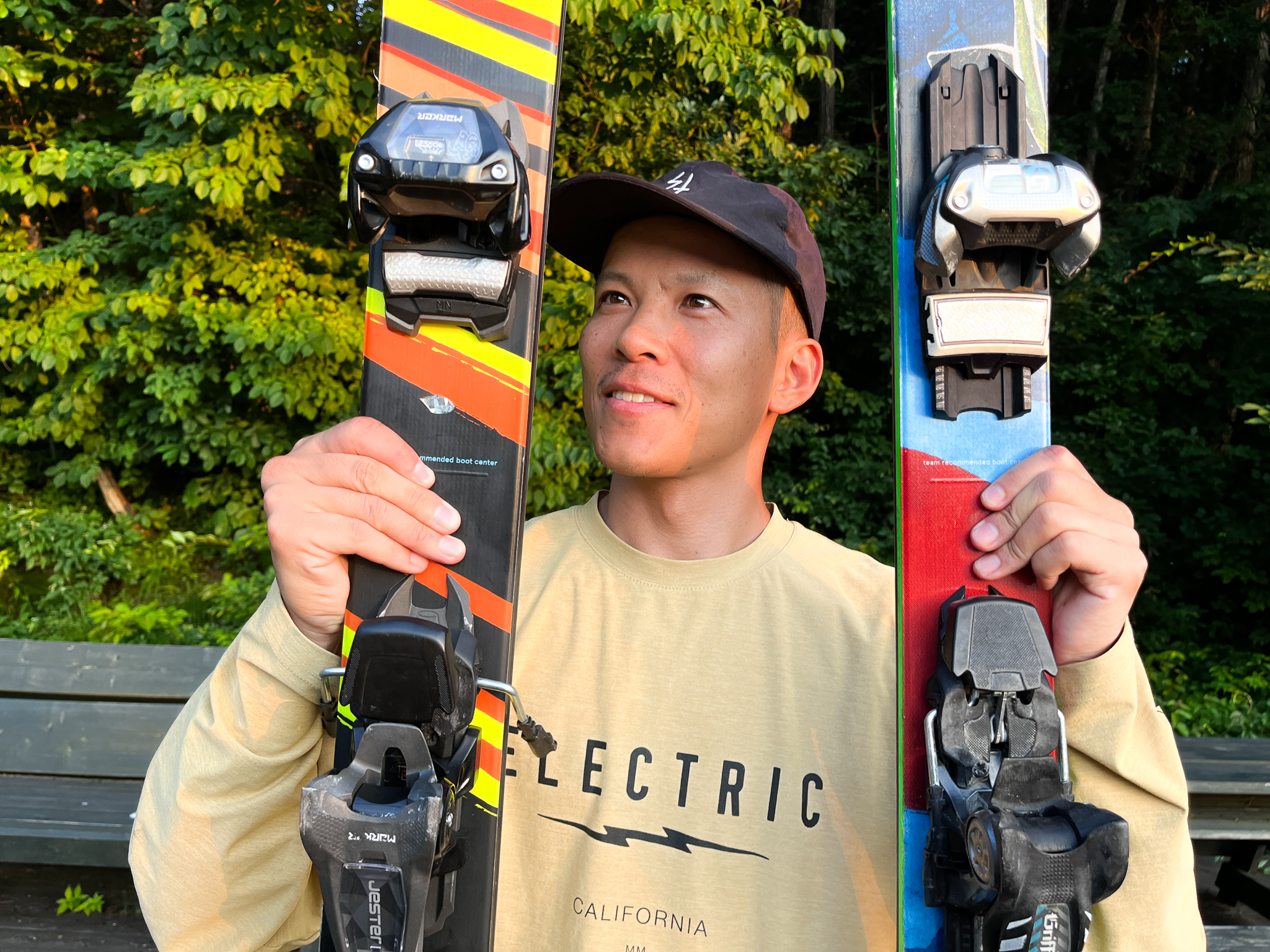
Ski bindings are gear that secures skis to boots, but their role is much more than that. They may seem like simple gear, but they are actually quite complex. Therefore, neglecting them can prevent you from performing at your best or even lead to injuries. Bindings play a very important role in skiing.
Here, Takumi Toyama, also known as "Kin-chan," a coach who works both domestically and internationally, explains the basic role, how to choose bindings, and answers various questions that are circulating.
Let's resolve all the worries you've had up until now.
Reviewing the role of bindings
First of all, bindings are devices that secure the skis and boots together. And most importantly, they are equipped with a mechanism that "safely releases" in the event of a fall. Bindings are designed to release when a certain amount of force is applied in a certain direction. If they do not release, you could, for example, twist your ankle, or in the worst case, suffer serious injury. "Secures the skis and boots, but also releases safely." Bindings are equipped with a delicate mechanism that fulfills these two opposing roles
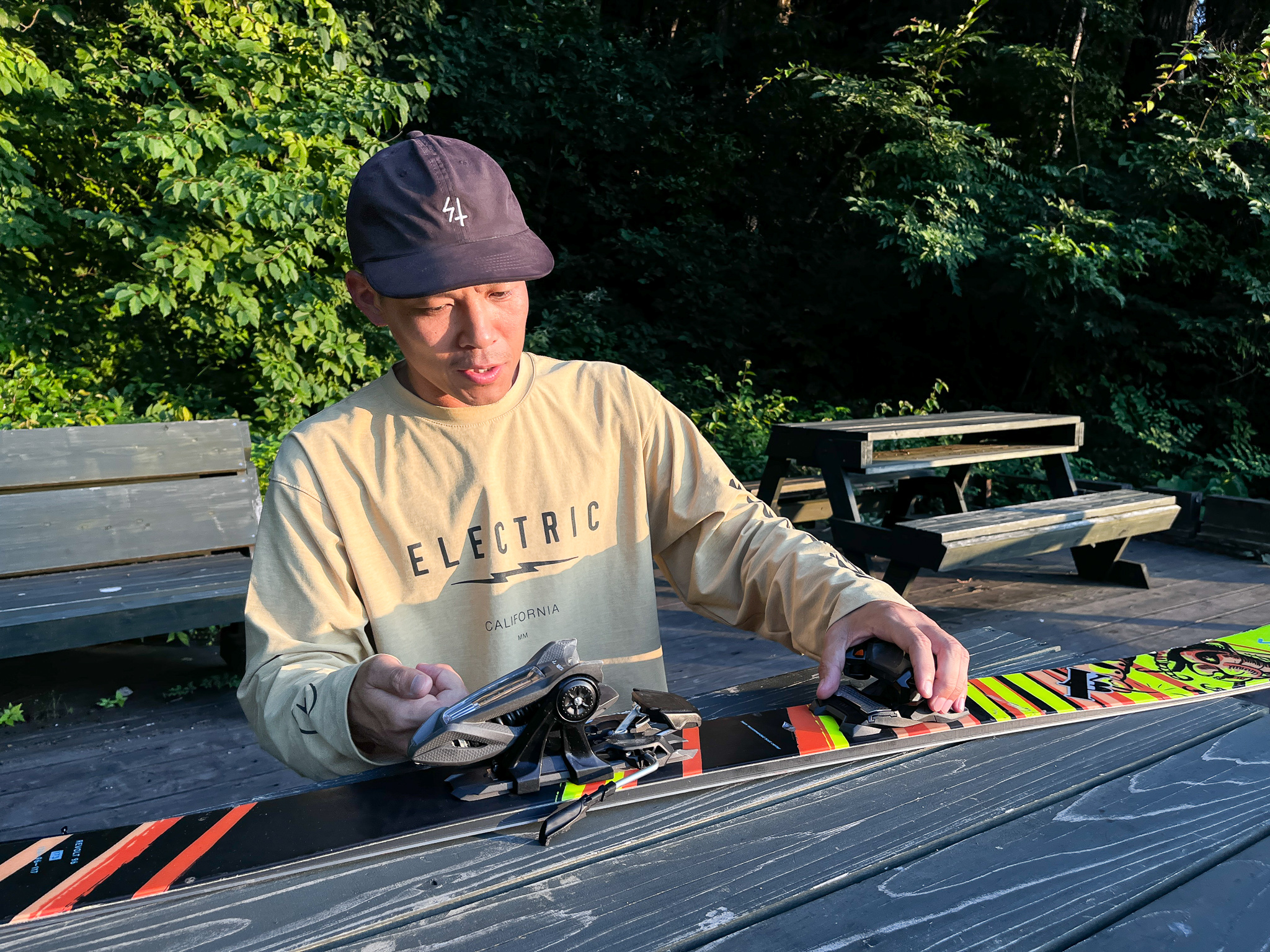
So how do you actually choose?
First of all, I would like to clarify what kind of situations I will be skating in
"Are you going to climb a mountain and ski?" "Are you going to jump and do tricks in the park?" "Are you going to the slopes?"
Also, bindings need to be considered in conjunction with skis and boots. For example, light skis with heavy bindings and soft boots are not a good match, and you won't be able to fully utilize the performance of each component. When choosing ski, boot, and binding combinations, focus on where you will be skiing.
When skiing on slopes or in the park, the bindings you choose will depend on "what kind of slopes you will be skiing on and at what speed" and "what kind of jumps you will be taking."
I use Marker bindings, so I will give an example using Marker.
For example, if you mainly ski in the park or freeride on the slopes,
● High-spec class "Jester"
● Mid-range class "Griffon"
● Entry-level class "Squire"
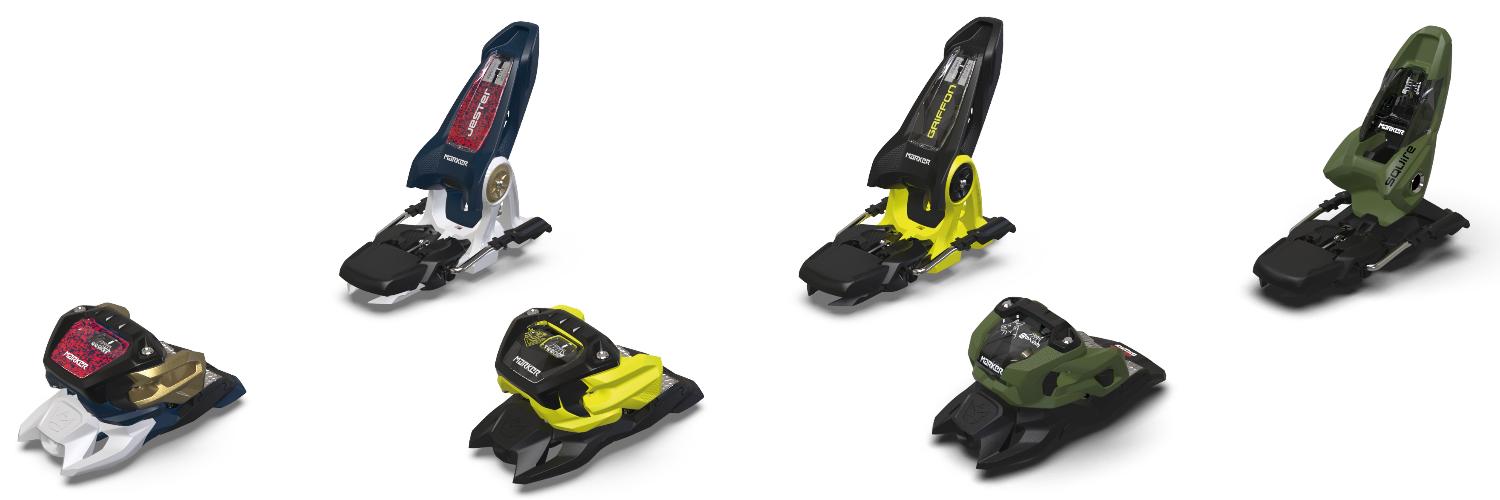
These are the three options
Those who ski at high speeds on rough slopes should choose high-spec bindings. This is because the materials used in the bindings are different, resulting in differences in the binding's rigidity and, consequently, how power is transmitted. For example, while the Jester and Griffon look similar, they are made of different materials. The Jester uses metal parts where the Griffon uses resin parts, resulting in a lighter design.
The Jester is better at transferring power to the skis, and the weight of the binding itself allows for stable skiing even at high speeds. On the other hand, the Griffon is lighter and can be seen as easier to handle for people with less muscle mass. To give you an idea, it's like the difference in stability between driving a luxury sedan and a compact car at 120 km/h.
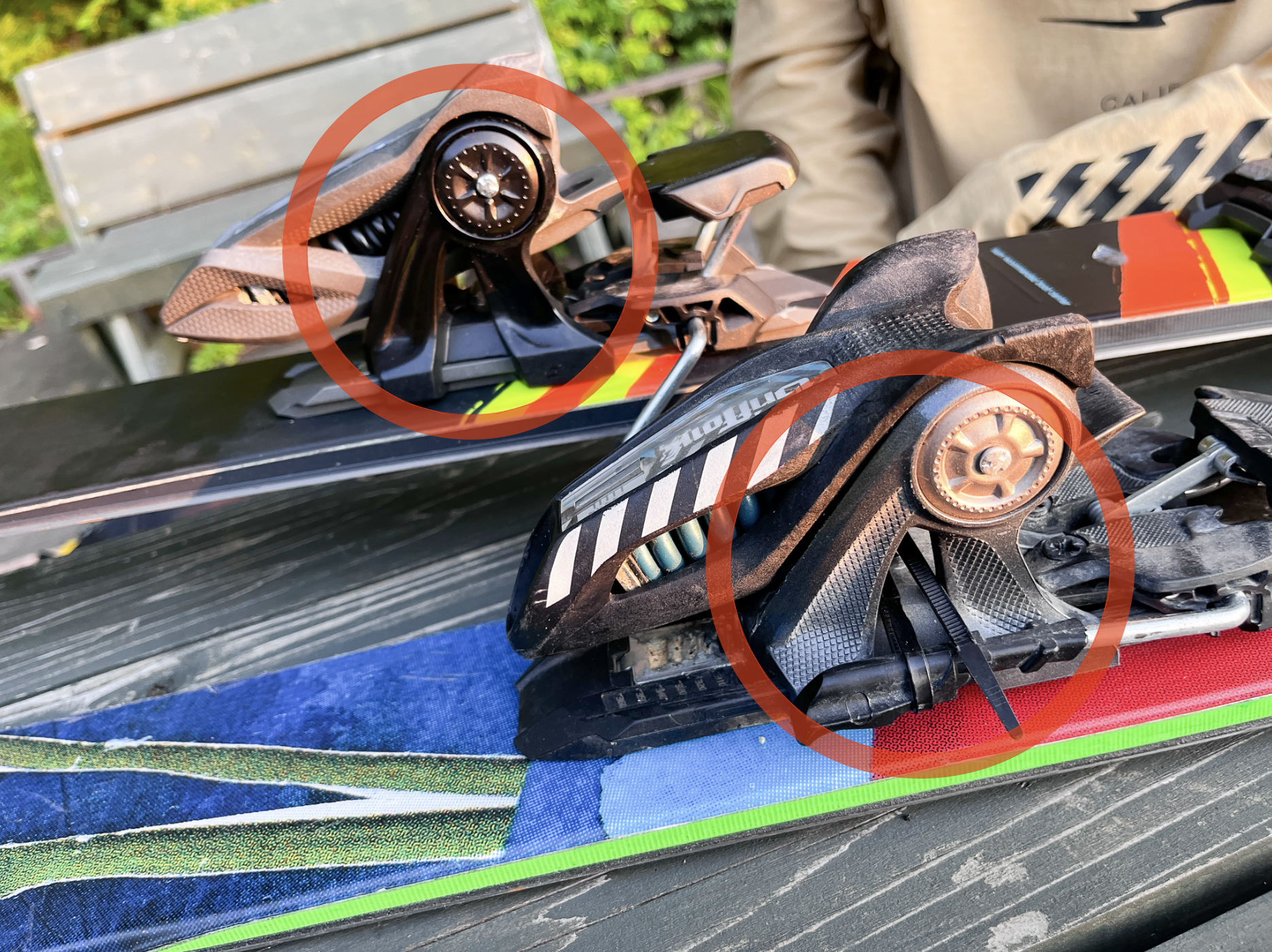
Furthermore, bindings with high rigidity that efficiently transmit power also transmit force from the snow surface to your body more easily. Therefore, fatigue accumulates in your legs, especially when skiing on rough slopes. In
other words, high rigidity isn't always the best option; you should choose bindings that suit you based on your skiing style, the type of slope, your speed range, and your muscle mass (weight). High-spec ski gear isn't always better; there's an optimal solution for each individual's skiing style. There's no
set criterion like, "You weigh X amount, and you ski at Y speed, so you should get these bindings," so we recommend actually going to a ski shop and consulting with the staff. If you only ski on groomed slopes or want to go backcountry, bindings other than the three models mentioned above will be your options. It's a good idea to explain in detail what kind of skiing you do.
Release value is the same for all manufacturers
I mentioned that stiffness differs depending on the material, but the release value is consistent across all manufacturers. For example, Marker bindings have a "release value of 9" and Salomon bindings have the same "release value of 9." This is standardized across all manufacturers through something called the DIN standard. A manufacturer's release value of 9 does not mean that its bindings are more likely to come off than other manufacturers' release values of 9. This is true for all bindings, and only bindings that have passed testing to meet the DIN standard are currently on sale, so there are no exceptions
Vertical spring? Horizontal spring? The markers are used to place the center of gravity of the rotation at the feet..
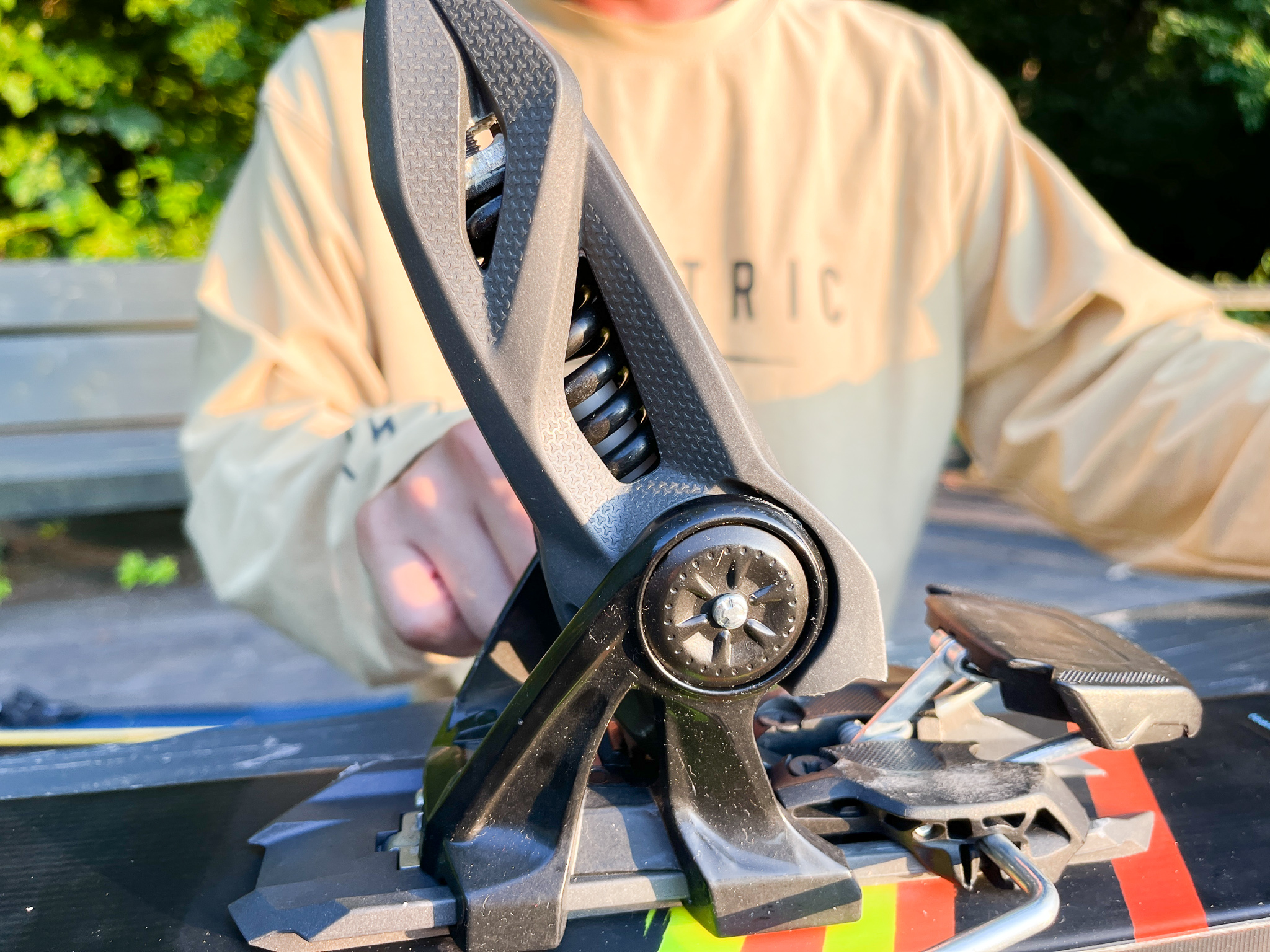
You may not know this often, but bindings contain springs. The strength of the release value is adjusted by loosening or tightening the spring. Most Marker bindings have horizontal springs in the toe piece and vertical springs in the heel piece. Many manufacturers also use vertical springs in the toe piece. Marker uses horizontal springs in the toe piece to shift the center of gravity closer to the foot, reducing centrifugal force and "lightening the swing weight." Some manufacturers also have springs in the heel piece that are built into the base, but Marker's are built into the heel piece itself. This means that when you step on your boot and the binding rises, the center of gravity shifts to the center of the ski, lightening the swing weight
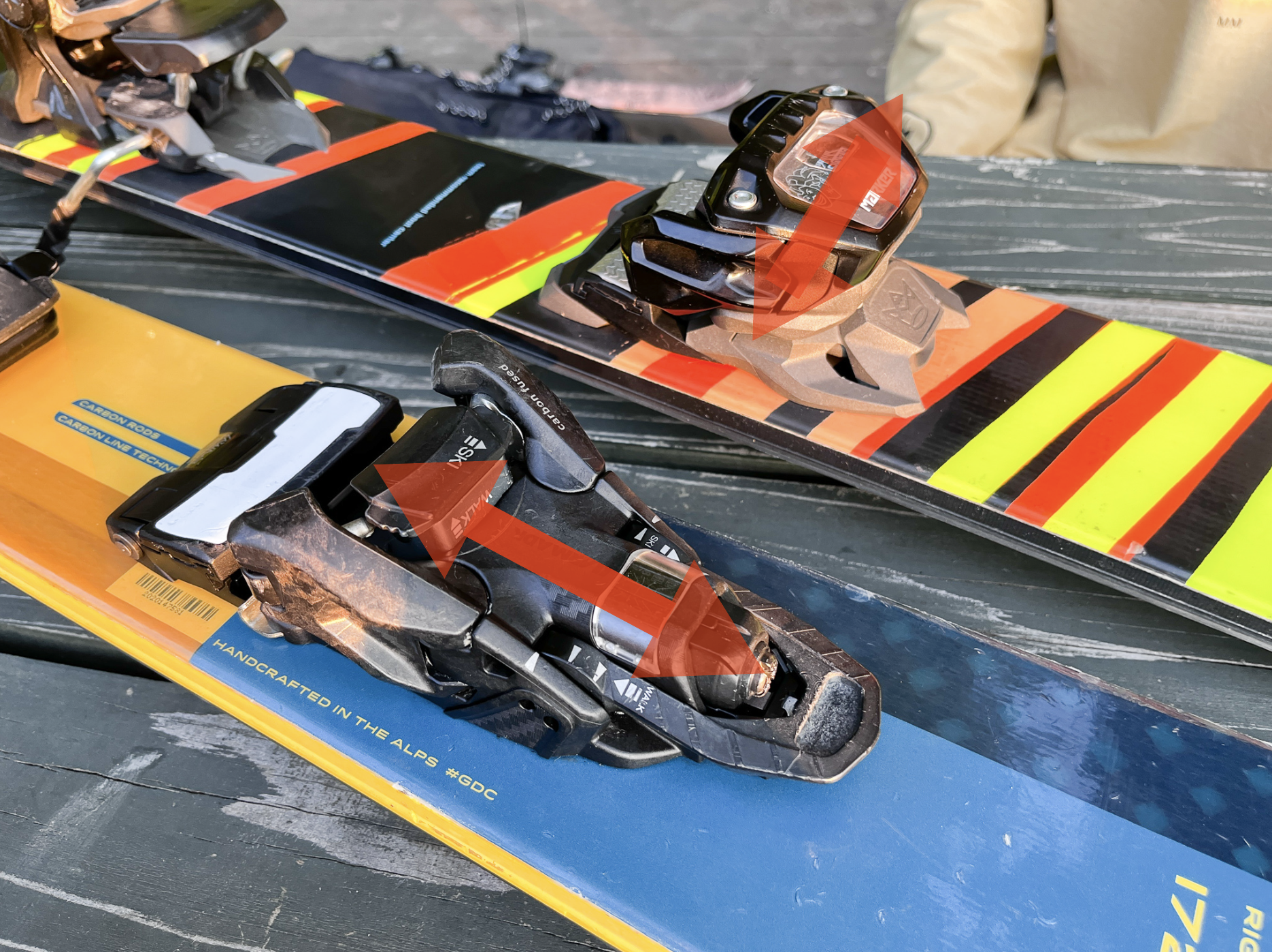
This mechanism is designed to make freestyle spinning tricks even easier. It's easy to use in parks and jumps, but it also has the benefit of improving ski maneuverability and edge grip when skiing down the slopes. Also, since the spring in the heel piece is not in the base but in the heel piece itself, it exerts a stronger pressure from above, giving a better hold
There can be no misunderstanding
Sometimes, the bindings will come off by themselves without your intention, and some people call this a "mistake release." However, this is because a certain amount of force was applied in a certain direction at the time, causing the bindings to come off properly, and not because the gear mechanism malfunctioned. There is a clear reason for the release. For example, the boots and bindings may not be properly set up, or the toes or heels of the boots may be worn down, causing the boots and bindings to not fit together properly
So, if you find yourself thinking, "Huh? It suddenly came off," check your settings, the condition of your boots, and whether the bindings are suitable for your weight and style of skiing
Light is justice?
I think that lighter bindings are definitely better for beginners and novices. Marker's Squire is light and recommended. It's easy to carry and easy to turn. I also think that Squire is a good choice for people who want to do high-spin tricks with park equipment. If you're not going very fast, lighter bindings are fine
However, those who intend to ski at high speeds will be better off choosing bindings made from heavy, rigid materials such as Griffon or Jester, so it is not necessarily the case that light bindings are always better
How do you mount the bindings?
This is a difficult question that I get asked often (laughs).
As a personal guideline, if you want to do park riding, I think it's best to have the skis set about 3 centimeters back from the middle of their actual length. This makes it easier to ride switch and provides more stability when turning.
For those who mainly ski in powder or on slopes, a 3-6cm back is recommended. After all, a shorter tail will give you better "release" when turning. Of course, each ski has a recommended binding position written on it. This is the manufacturer's recommendation after extensive testing, so I think there's no problem with just placing it there
However, if you still want to place the bindings in a position that suits you, I recommend that you try out ski test rides and ask the skiers to slightly shift the bindings and compare the results to find the position that suits you best
By the way, for the past few years, I have been setting all my park skis 1.5cm back from the center of the actual length. For powder skis, I set them 3cm back. Even though they are powder skis, I sometimes do tricks with them, so I settle on 3cm back so I don't drop them too far
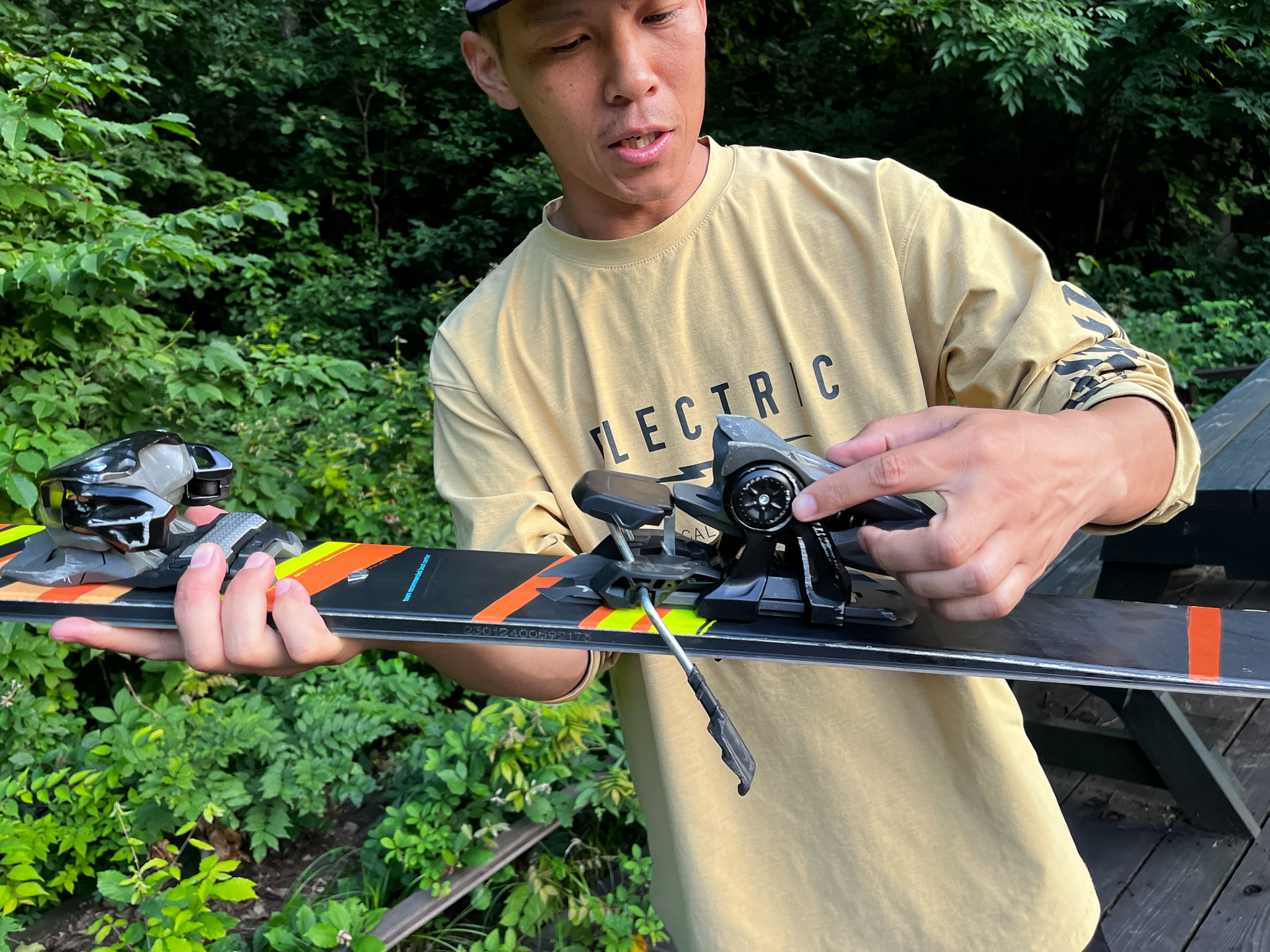
Bindings don't get much of the spotlight, but they're an important piece of gear that directly affects your safety and skiing performance. Choose the right bindings for you to enjoy a comfortable skiing experience
PROFILE
Takumi Toyama
, affectionately known as "Kin-chan" after the historical drama "Toyama no Kin-san," was a successful freestyle slopestyle skier before becoming a coach both domestically and internationally for many years. He makes lessons fun and entertaining by incorporating humor into his logical explanations of tricks. He runs the freeski lesson website "freeskiheadz.com" and also shares various freeski-related information on YouTube.
Sponsors:@volkl_japan,@electric_japan,@bn3th_japan,@ebsmission,retailerpole
https://www.instagram.com/freeskiheadz.com_t_yama/