

LOCATOR: An essential tool for backcountry and ski trips
For many people, skiing is synonymous with traveling. Traveling by car or public transportation, traveling to rural areas, enjoying the local mountains, snow, food, and people. Backcountry skiing adds an element of adventure to the experience
ARMADA's LOCATOR is the perfect ski companion for your travels and adventures
Within the ARMADA brand, the LOCATOR is positioned as a lightweight ski suitable for backcountry skiing, offering performance that will satisfy even the most discerning skiers. Boasting the brand's lightest weight, it's ideal for skiers who hike long distances or full hikes from the base of the mountain. Normally, prioritizing lightness often compromises skiing performance, but this is not the case with the LOCATOR, which is its strength.
The key feature is the use of a lightweight yet strong material called Calbacore in the core. In the case of the LOCATOR, this Calbacore is used more thinly than in regular skis, making it even lighter. Instead, thick linear carbon sheets are used as reinforcement from the nose tip to the tail. This mechanism allows for a balance between lightness and strength by using a thin core material.
L=152,162,172,182cm
D=116-88-109(172cm)
R=20.5m(172cm)
99,000 yen
L=157,164,171,178,185cm
D=127-96-117(178cm)
R=21m(178cm)
104,500 yen
L=162,170,178,186cm
D=131-104-122mm (178cm)
R=22m (178cm)
110,000 yen
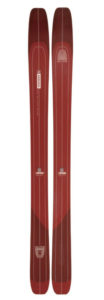
L=166,173,180,187cm
D=136-112-128mm (180cm)
R=24m (180cm)
115,500 yen
There is a skier who travels all over Japan and the world using such a LOCATOR. That is Takaya Kawaguchi, also known as TKY. After taking a leave of absence from university, Kawaguchi flew alone to Whistler, Canada to ski, and not content with Whistler, he also ventured to the Yukon and Alaska, discovering the profoundness of travel. To date, he has traveled to 20 countries on ski trips, and including his surfing trips, which he continues to pursue as a lifelong passion, he has traveled to 50 countries. In
the 22-23 season, Kawaguchi skied at Kurodake in Hokkaido and Lofoten in Norway in March, Rishiri in Hokkaido in April, and Shiretoko in Hokkaido and Mt. Fuji in May. He was probably one of the people who used the LOCATOR the most last season.
Let's hear from Kawaguchi about his travels with the LOCATOR.
Being light allows you to conserve energy and gather information
I usually spend half the season working as a guide in Nozawa Onsen and the other half traveling.
The great thing about LOCATOR is that it's incredibly lightweight. There are many situations in travel where lightness is key. For example, there are weight limits on airplanes: 20kg for low-cost carriers and domestic flights, and 30kg for international flights. You have to pay extra to bring more luggage than that. LOCATOR greatly helps in staying within those limits. Also, being lightweight makes a big difference in how tired you get when carrying it. If you don't get tired from traveling, you can enjoy your trip even more.
Touring Mount Kurodake and unnamed peaks
In March, I visited Mt. Kurodake, mainly using the ropeway to access the skiing spot and enjoyed some relatively light backcountry skiing. Unlike Niseko or Sapporo, it doesn't snow heavily, so I was able to enjoy the moderately creamy snow. I have a few other skis, but since March I've almost exclusively used the LOCATOR 96. They might seem a little narrow, but that's not an issue at all. The LOCATOR is easy to hike, and the top rocker gives it plenty of float. In addition to Mt. Kurodake, I followed other places where it had snowed, looking at maps to find good spots to ski on unnamed peaks. One of the joys of traveling is exploring different places rather than planning too much in advance
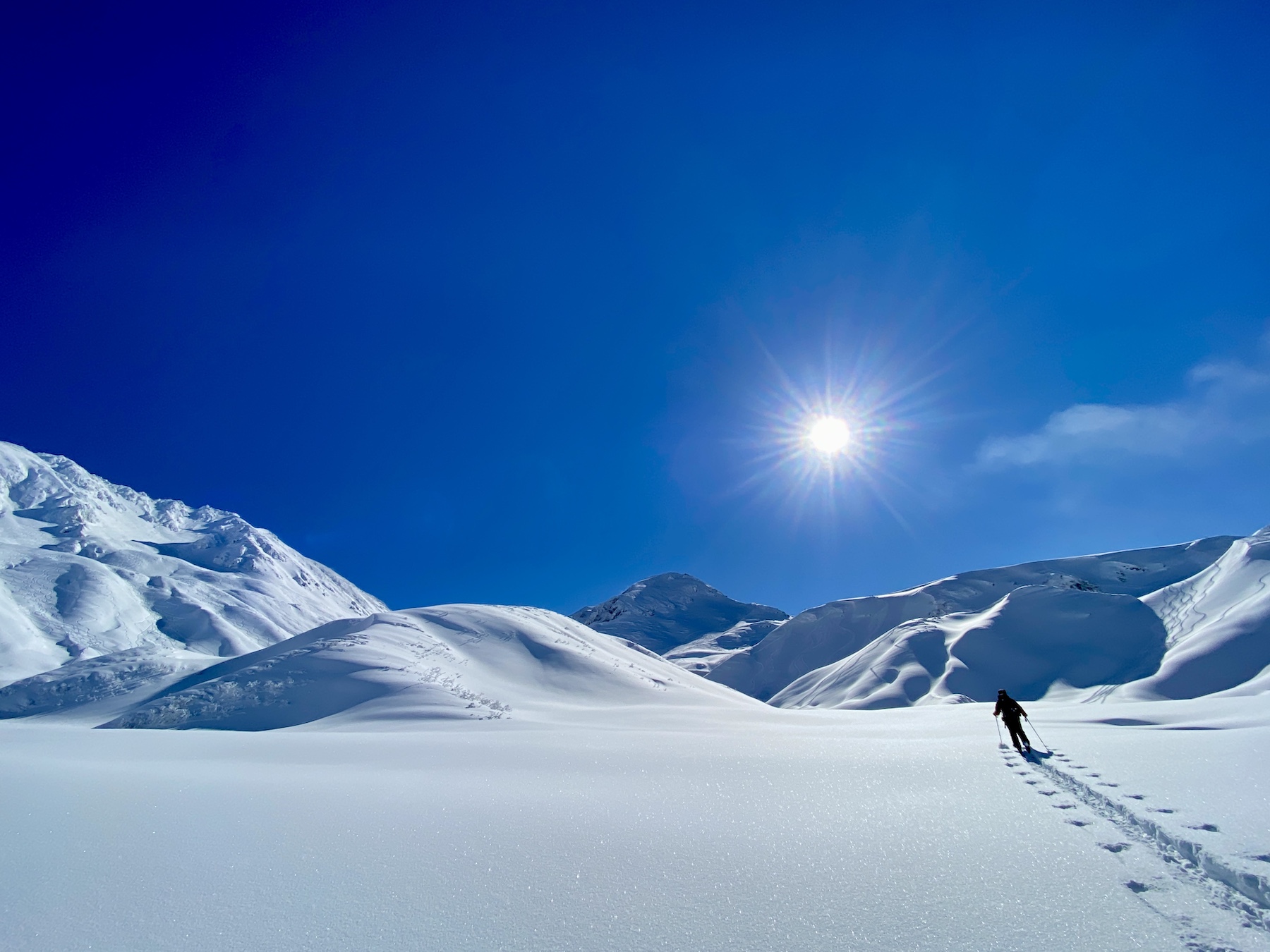
Traveling around Lofoten with just one car and a locator
Lofoten in Norway is a place with breathtaking scenery, like a massive Alpine mountain range submerged in the sea. Nordic skiing culture is thriving there, so you'll see people wearing skis while walking their dogs or running. In recent years, gear that allows you to climb deeper into the mountains has developed, and I think the number of people doing backcountry skiing has increased.
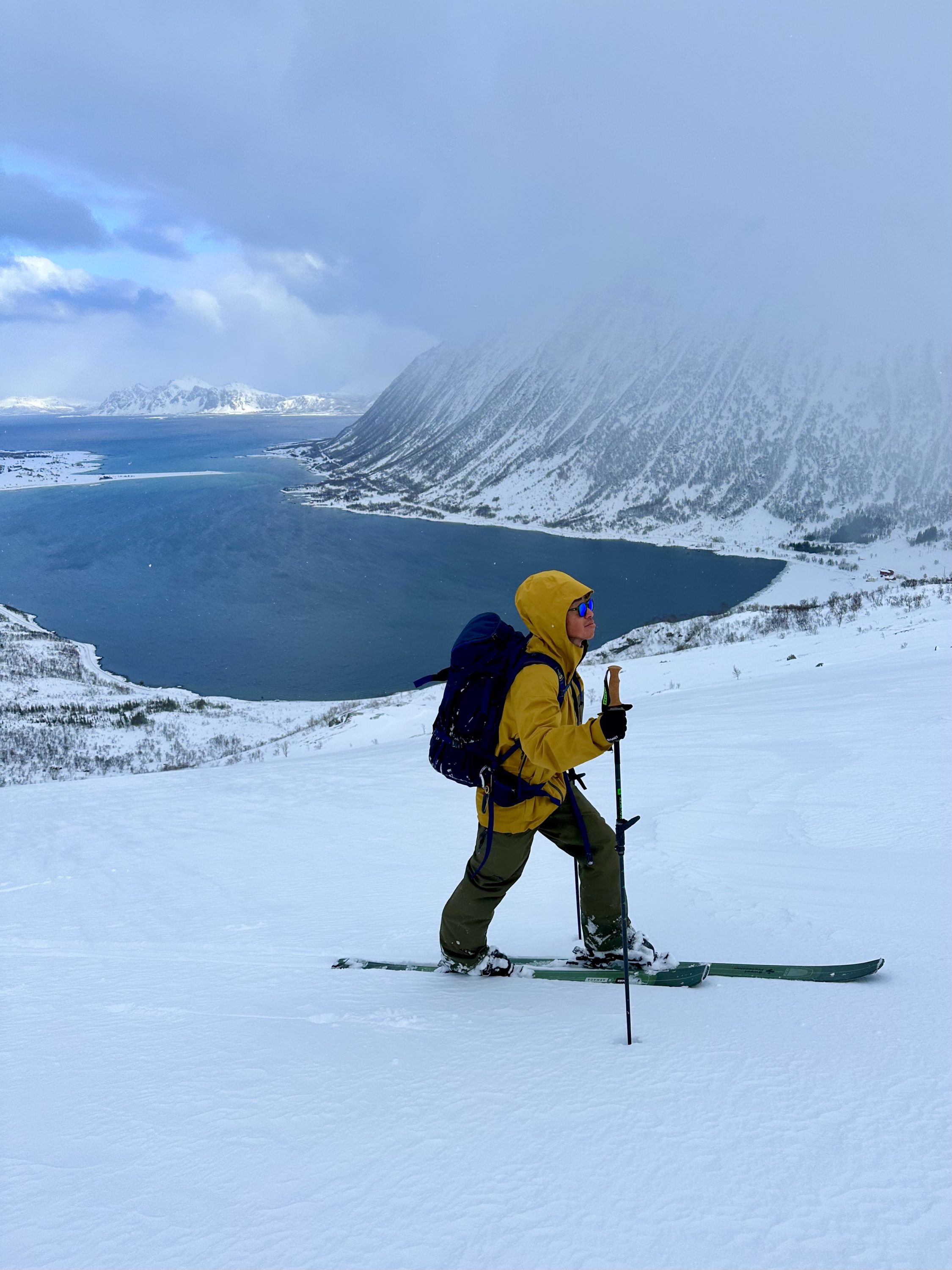
In Norway, I rented a car and traveled around looking for slopes I could ski on. When I found a good spot, I would park it by the roadside and hike for about three hours before skiing. Lofoten only gets about 200cm of snow, so it's not a climate with torrential snow like in Japan, but being in the Arctic Circle and constantly below freezing, the snow is frozen and preserved indefinitely. I think the only places that can beat the snow quality of Japan are Alaska and the west coast of Norway. That's how good the snow is.
My companion in Norway was the LOCATOR96, without a doubt. The benefits of having lightweight skis are immeasurable. I can enjoy the scenery while walking, and if I think "the other side of that ridge looks promising," I can quickly go and check it out to gather information. Most importantly, my legs aren't tired even when I reach the drop point, so I can concentrate on skiing. That's the advantage of the ARMADA LOCATOR, which prioritizes lightness because it's designed for skiing.
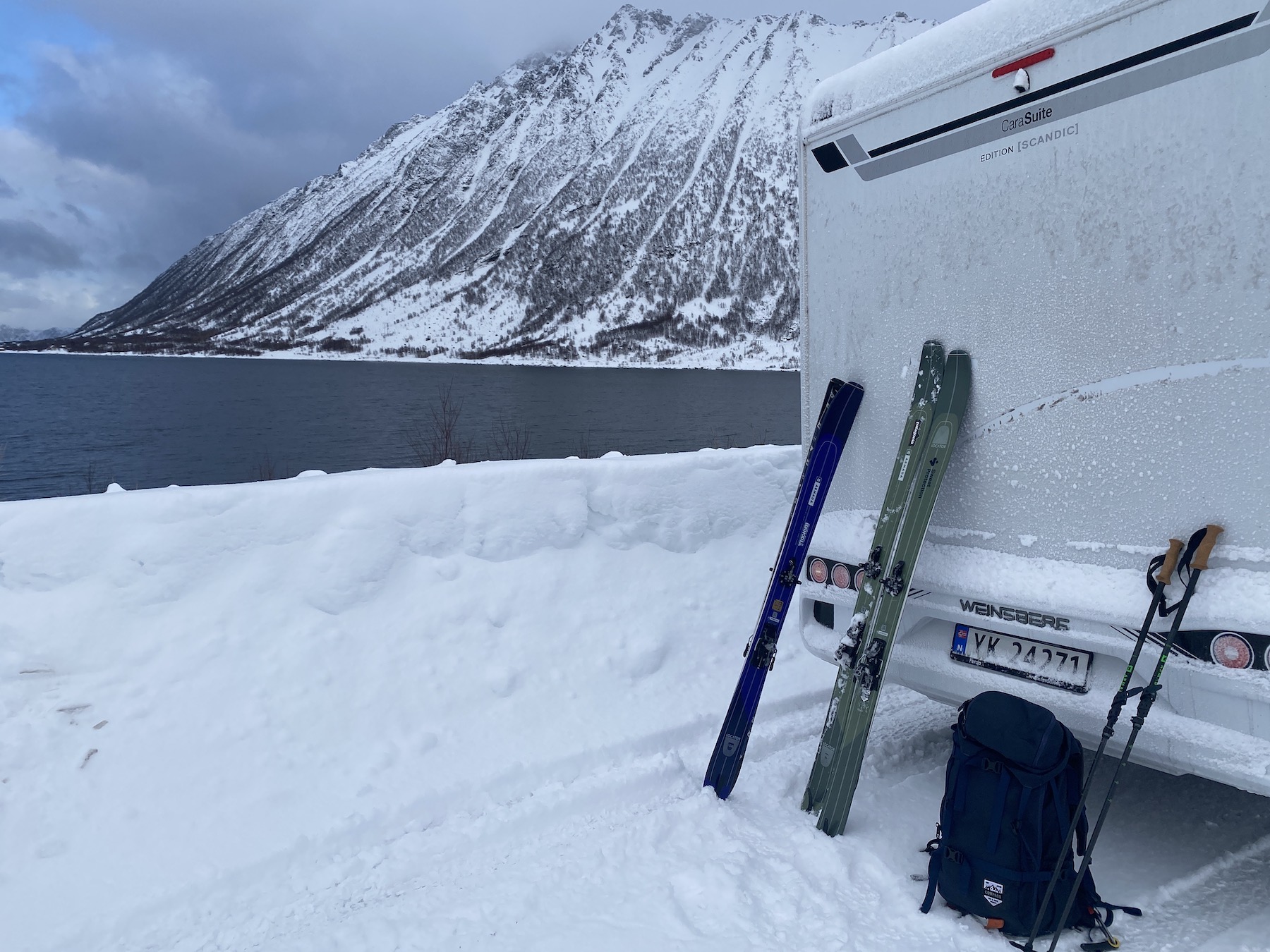
It's great fun to travel like this and venture into the backcountry at points I discover myself, but I also make sure to prepare a topographical map and track the weather history of the surrounding area in advance to minimize the risks
A spectacular island where you can enjoy skiing and surfing
Actually, I'm a Rishiri Fuji Ambassador, and I travel to Rishiri Island every year to promote travel and migration, sharing my experiences.
Rishiri Island also looks like a mountain floating in the Sea of Japan. While Lofoten is an archipelago, Rishiri is a solitary, triangular mountain floating in the sea, making it one of the most spectacular sights in Japan.
For me, it takes about 7-8 hours to reach the summit of Rishiri Fuji; it's a long hike. The wind is strong at the summit, and the snow gets blown away. It's a fantastic location for photography and other purposes, but if you want to purely enjoy the snow quality typical of Hokkaido, I recommend the stream beds at the foot of the mountain. It takes 2-3 hours to walk there as well, so this is where LOCATOR's power comes into play. I also surf as a hobby, so being able to slide and ride the waves is another reason I recommend it (laughs).
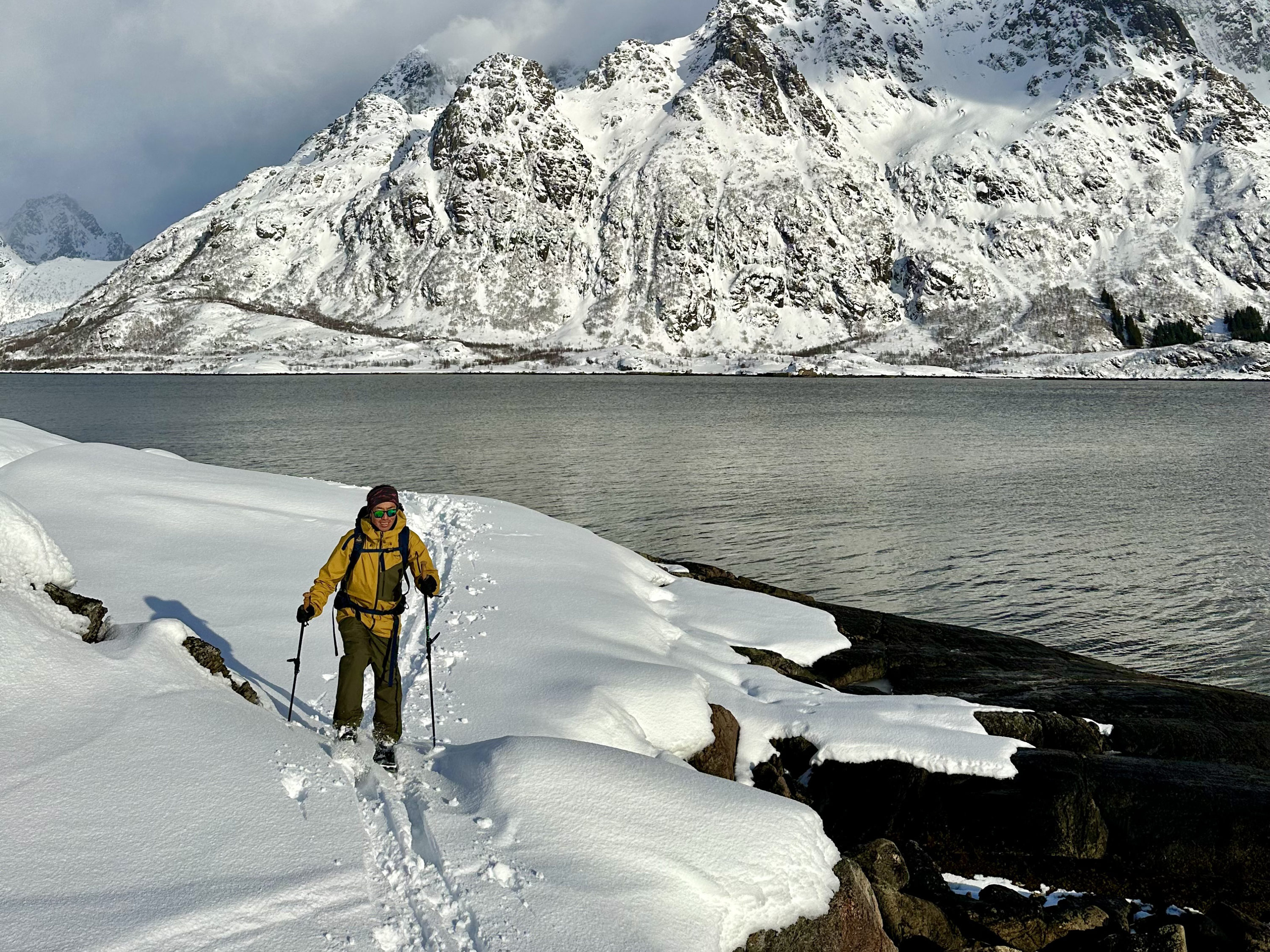
Walking up Mt. Rausu carrying the LOCATOR
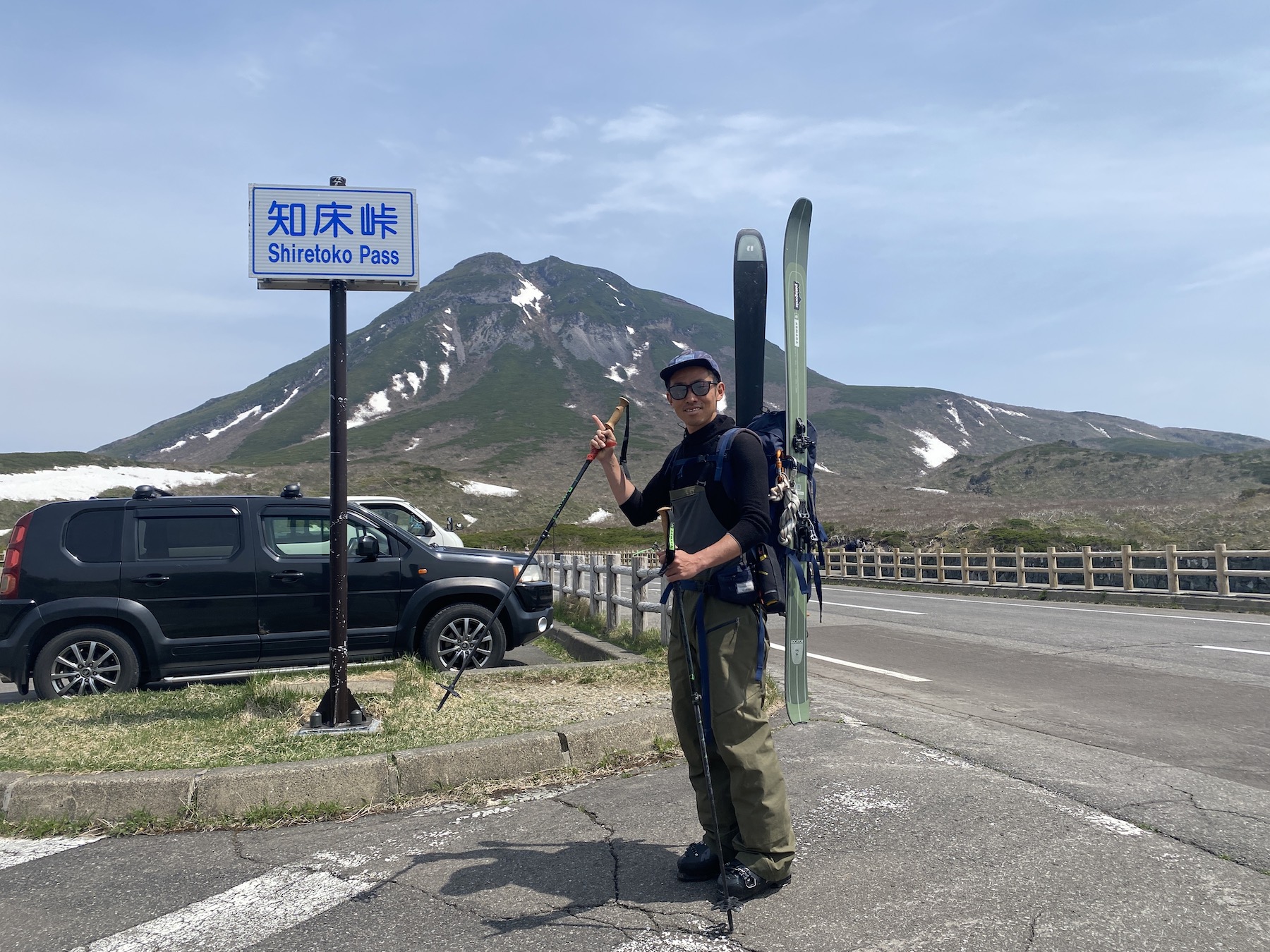
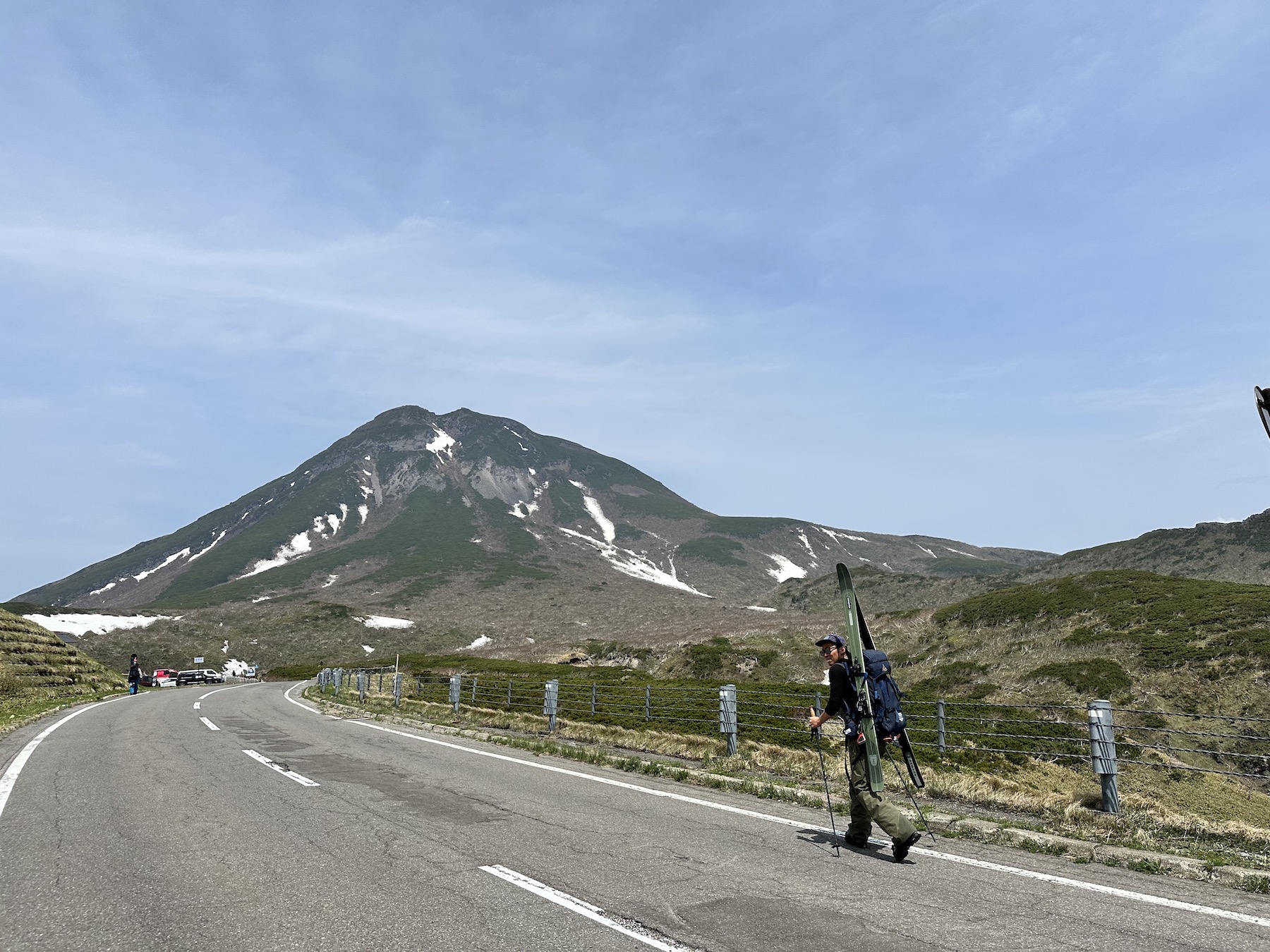
I went to Shiretoko in May, and the snow had melted, so I brought my surfboard and enjoyed both skiing and surfing. I'd skied on Shiretoko's mountains, including Kaibetsu-dake, but had never properly skied Rausu-dake, so I'd been hoping to get the chance for a while. It was the third week of May, just as Shiretoko Pass was opening. There was less snow than usual, so I felt like I was just barely able to ski, and the hike consisted mostly of shouldering my skis and paddling through the bush, then when the snow came out, putting on my skis and hiking up, then paddling through the bush again... That was my mountain trip
The only mountain in my hometown, Shizuoka where you can ski
Despite all this travel, the only place in my hometown of Shizuoka where I can ski is Mount Fuji. Surprisingly, Shizuoka residents don't climb Mount Fuji, but I make it an annual tradition to ski up there. Mount Fuji tends to be shy for mountain climbers, but as it's a solitary peak at 3,778 meters, the views are amazing. And you can see the ocean, too. Like Shiretoko, Rishiri, and Lofoten, many of the mountains I go to are ones where I ski down towards the ocean. Maybe it's because my surfing roots are there too
Incidentally, last year I also went to Sapporo, Niseko, and the Tohoku area in January and February. In the season of heavy snowfall, I also recommend ARMADA's WHITE WALKER and SHORT PANTS. Nozawa Onsen, where I usually ski, has efficient access to various slopes by gondola, so even if you're only there for a day, it feels like you're traveling through the mountains. I also use the LOCATOR when skiing in the backcountry at Nozawa Onsen. The LOCATOR is useful everywhere, whether it's the heavy snowfall of Shinshu or the light powder of Hokkaido
This ski is perfect for both climbing and skiing. Skis that will make your trip more enjoyable
Generally speaking, the Locator skis are light and easy to carry. Yet they don't ski at the expense of glide performance, allowing for serious skiing. In fact, I think they allow you to conserve your energy and focus more on skiing. Traveling can mean a lot of luggage, and the snow quality and environment can vary depending on your destination. With the Locator skis, you can handle any situation, and it makes climbing snowy mountains and traveling around easier. The result is a comfortable and enjoyable ski trip
■Profile
Takaya Kawaguchi (TKY)
is from Shizuoka Prefecture. He was introduced to skiing from a young age, thanks to his grandfather and uncle in Niigata, who were the principal and instructor of a ski school. After entering university, he flew alone to Whistler, where he had no relatives, in order to ski. He traveled to the Yukon and Alaska, and during these stays he discovered the charm of "travel." Since then, along with surfing, which is also his life's work, he has been traveling in search of places to ski and ride waves.
In winter, he often uses Nozawa Onsen as a base while working as a guide until January, and continues to travel both domestically and internationally.
ARMADA
Official website:https://armadaskis.jp/