


More and more people are wearing some kind of smartwatch when they go into the backcountry. While you may think you know about smartwatches in backcountry skiing, there are probably many uses and functions you don't actually know about. We've picked out Garmin, which has recently been gaining attention among backcountry enthusiasts, and our reader reporter asked the manufacturer for insight into how to use them in depth
Do you use a smartwatch in the backcountry?

Many people wear smartwatches when venturing into backcountry areas, right? Among my acquaintances, the Apple Watch is by far the most popular, while those who hike year-round tend to use Suunto or Garmin. I myself use a Garmin smartwatch constantly, from everyday life to backcountry areas, but I still haven't found the best way to use it. How do other BC enthusiasts utilize their smartwatches? Smartwatches
in the backcountry often feel like they know how to use them, but in reality, they're not fully utilizing their potential. So, I wanted to find out more about the uses and potential of smartwatches! With that in mind, I spoke with Mr. Taniguchi and Mr. Sakai from Garmin Japan's marketing department about the advantages of using Garmin in the backcountry.


Q. Please tell me about Garmin wearable devices.

A. "Garmin was co-founded in 1989 by electrical engineers Gary Burrell and Min H. Kao. The company name, Garmin, is derived from the names of the two founders, Gary and Min.
Initially, they introduced GPS positioning technology to aircraft pilot navigation systems. They also expanded into the marine sector, developing fish finders and other products. Through this process, their GPS positioning technology evolved into various data utilization technologies, which are now incorporated into the Garmin wearable products you see today, and have expanded into various sports and fitness fields."

The use of wearable watches is particularly prominent in the sports field, especially among runners. Based on GPS measurement technology, they combine heart rate sensors and other features to understand the body's condition, allowing for the simultaneous recording of not only activity data but also various life log data, including heart rate.
However, the information provided by GPS and various sensors is merely data. The true value of wearable devices lies in how users can utilize the accumulated data to improve their daily conditioning and create the optimal conditions for peak performance.
"We believe the true value of Garmin wearable watches lies in enabling you to perform at your best when you want to, by utilizing Garmin's unique 'Body Battery' feature, which represents your body's remaining energy, as well as life logging functions such as sleep tracking and exercise management functions,"
Taniguchi explained.
fēnix 8 Sapphire AMOLED | Flagship GPS Watch

This is the "fēnix 8," Garmin Japan's flagship model recommended for backcountry users. It
boasts excellent visibility, battery life, and durability, making it tough enough to withstand the harsh conditions of outdoor use. It perfectly embodies the image of rugby player Michael Leitch. Its
stylish design is also appealing, as it looks perfectly natural even in everyday business settings.
GARMIN
◆Official Website:https://www.garmin.co.jp/
Q. What features are useful for backcountry use?

A. "Garmin wearable watches can record over 100 different activities, from running and swimming to mountaineering. Their wide range of activity capabilities makes them popular with athletes who combine various sports, such as triathletes and adventure racers. Backcountry
activities, which combine mountaineering with skiing or snowboarding, can also be tracked using a combination of sensors. Battery life is crucial for these activities. Depending on the model, some (like the fenix 8 51mm) can run for nearly 84 hours in GPS mode, making them reliable for use in the field."
① Route tracking using highly accurate GPS

GPS tracking is a familiar feature of smartphone hiking apps, but Garmin's GPS devices are unique in that they are very accurate


Activity data from a skiing trip to the Gassan backcountry in April 2024.
The map accurately displays information on hiking and transition skiing.


The data graphically represents elevation difference, hiking and skiing time, and speed.
When combined with a map, it becomes immediately clear what actions were taken.
② Tracking log data such as elevation change, heart rate data, and calories burned

Data unique to wearable watches can be accumulated as logs, such as heart rate data during activity, elevation gain, and calories burned during activity. In particular, data such as training effect and calories burned can be obtained to determine how much strain a workout is compared to regular exercise, how many calories are needed for an activity, and other information that can be used as reference for your next activity
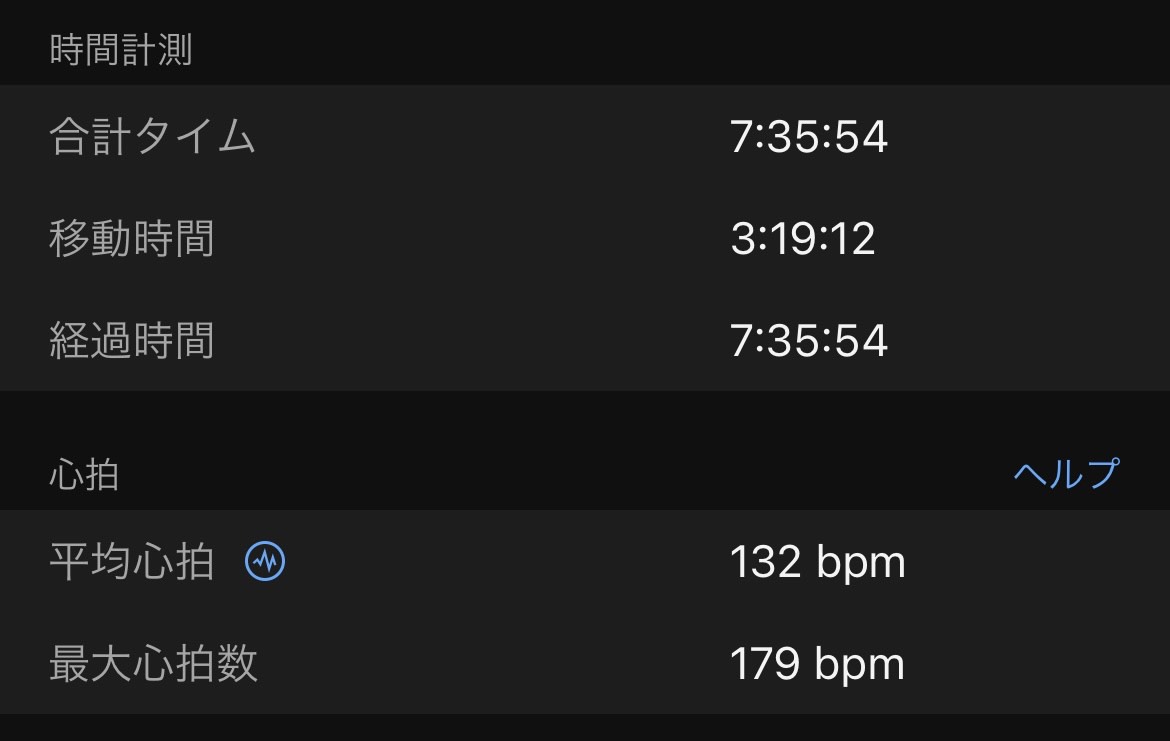
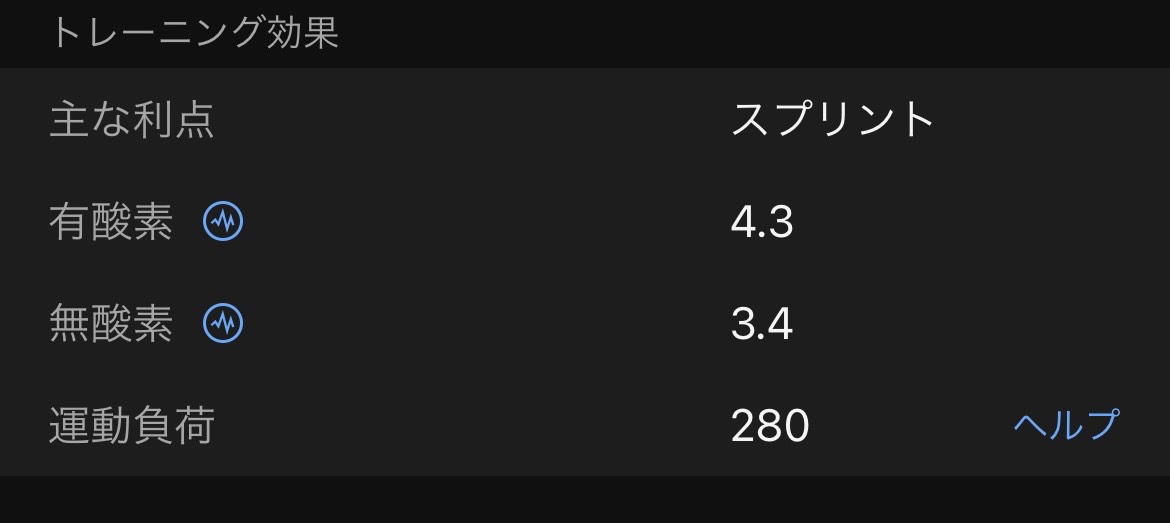
To understand how much a roughly 7-hour mountain hike affects me,
my exercise load during a week living in the city during the off-season is about 150. In comparison, it was 280, meaning that one day in the mountains puts more strain on me than a week in my normal daily life.
If you want to make mountain climbing more comfortable, you will realize that you need to be more conscious of increasing the load you can handle on a daily basis
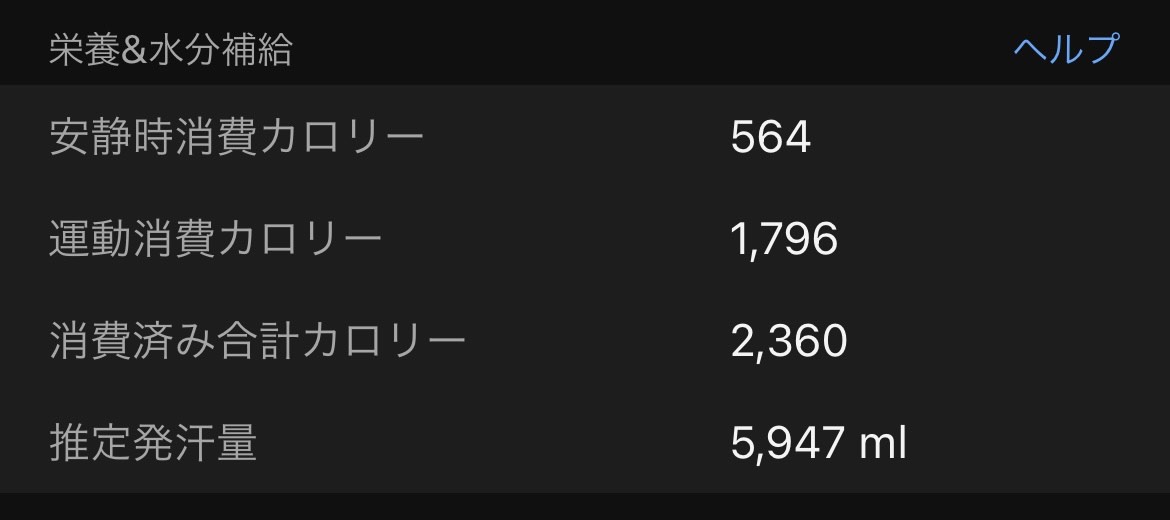
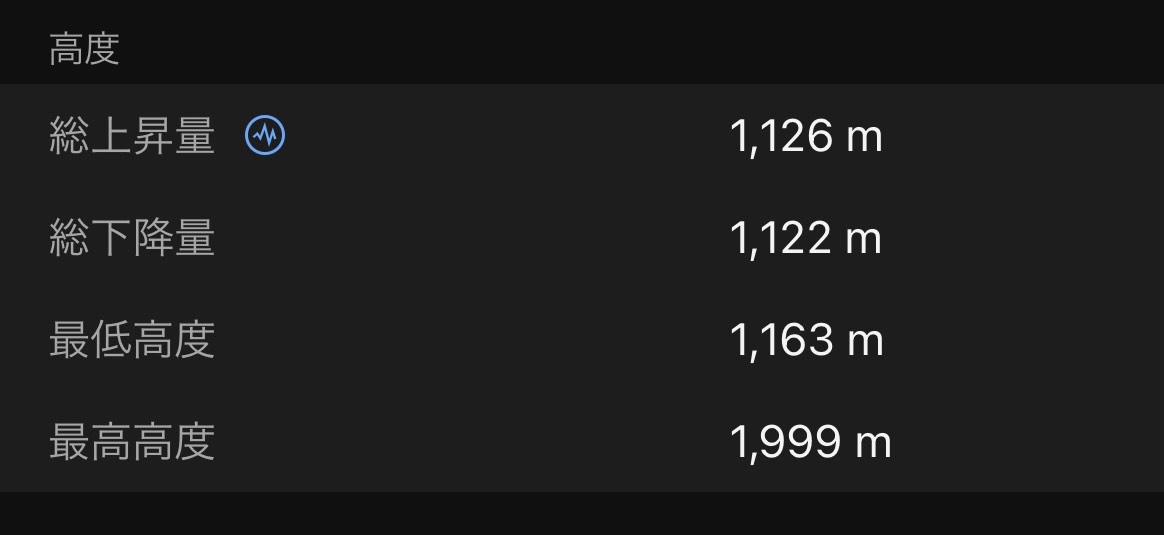
, allowed us to determine how much energy was consumed based on the elevation difference.
We burned 2360 calories and lost an estimated 6 liters of sweat. This highlights the need for calorie intake to support this expenditure the day before, as well as during the activity itself.
It was a hot day, so I probably sweated a little. I also didn't have much water with me. I was pretty tired that day, so I suspect I was actually a little dehydrated
Q. What are the advantages of using wearable devices?
A. "It's fun just tracking your activities and checking the data with a Garmin wearable watch, but Garmin actually uses this data to act as a conditioning tool to help you unleash your full potential during future activities. This is why
Garmin's smartwatch lineup is so diverse, ranging from stylish models that are easy to use every day to models for serious athletes. Based on Garmin's unique "
Body Battery" function, which analyzes data such as sleep and stress and expresses it on a scale of 5 to 100, tracking your daily physical condition and activities allows you to understand your own physical tendencies and use this as a reference for daily conditioning in preparation for days when you want to be active. This is a major advantage and unique feature of Garmin wearable watches."
Obtaining " sleep data " can change your behavior!

Garmin wearable watches provide a "sleep score" that rates your sleep quality out of 100, as well as sleep stages (light, deep, REM, and awake), and nap tracking. Knowing your sleep allows you to gain a deeper understanding of your physical condition
By reviewing your sleep patterns and the behavior you perform before bed based on your sleep score, you can identify the behavioral patterns that will give you the best sleep possible. By the way, drinking alcohol before bed is a big no-no
Let's take a look at the actual data collected. By wearing the device while sleeping, you can obtain sleep data like this
Of course, the quality of your sleep is greatly influenced by your actions before going to sleep, and it's clear at a glance that your quality can change significantly depending on your actions. The data below is from a day where you were active all day the day before, and from a day where you drank alcohol for a long time and then slept. The difference is obvious
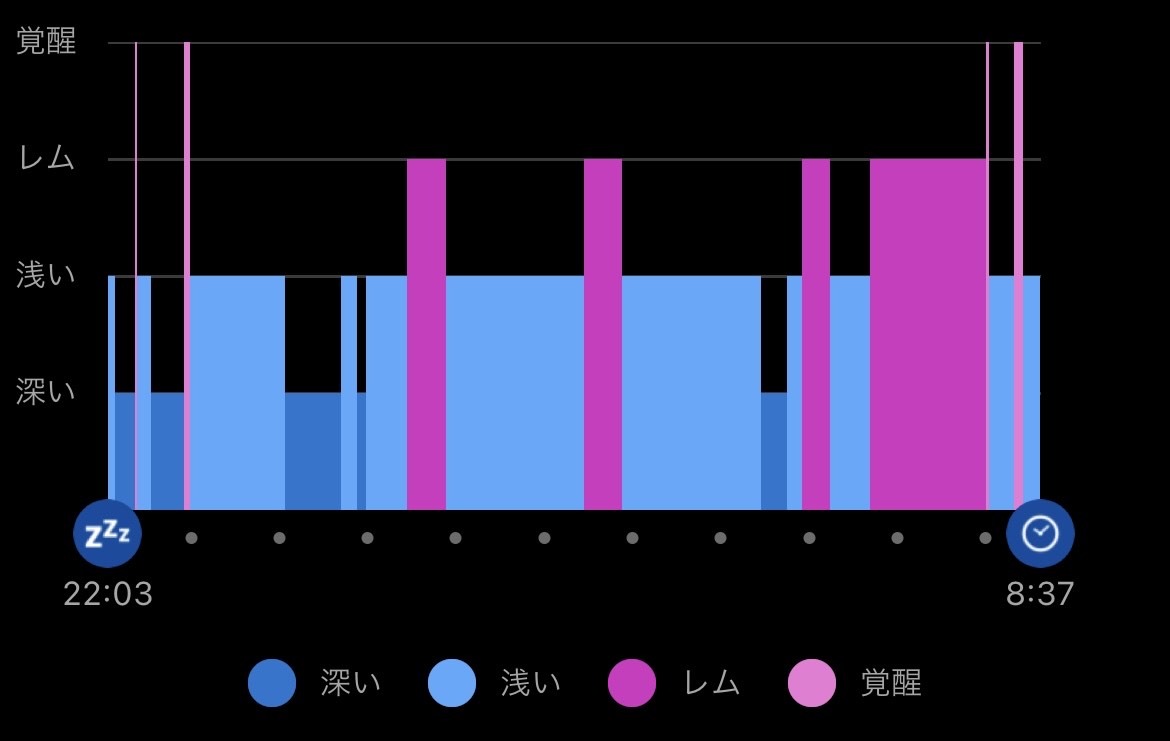
This is data from a day where I was active the previous day and got a good night's sleep. The only time I woke up was when I woke up
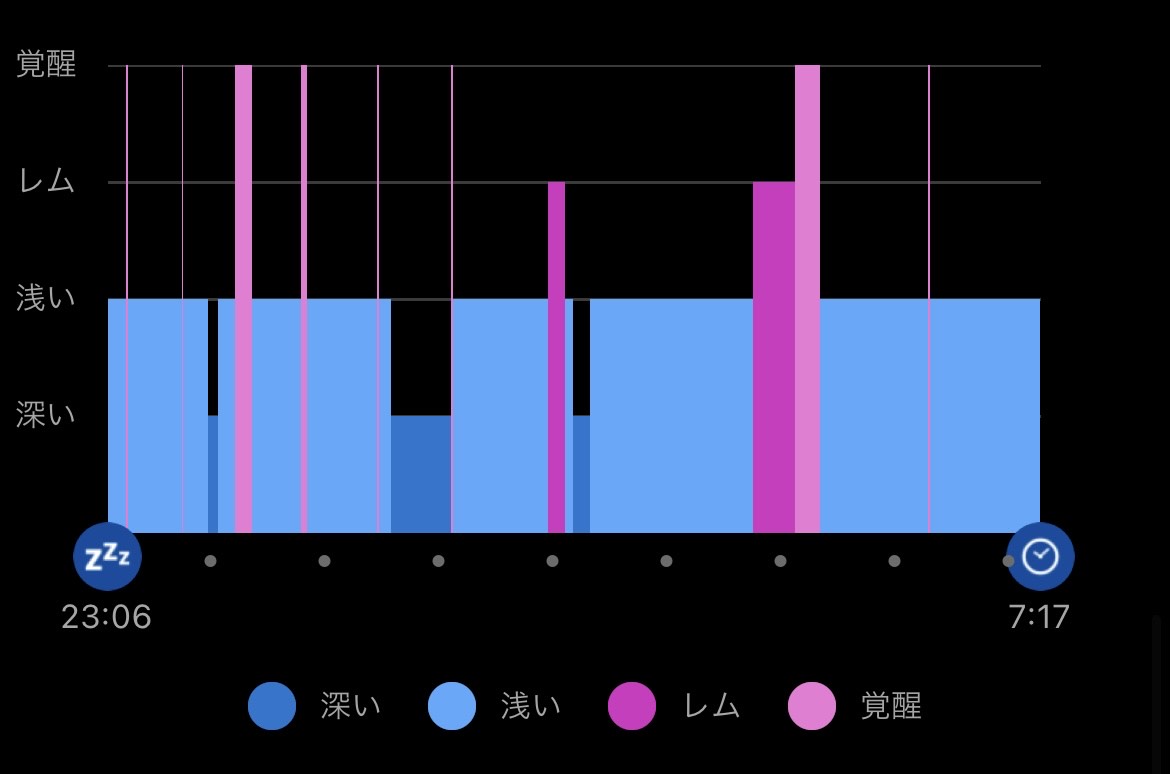
Sleep data from a patient who had been drinking alcohol for a long time the previous day. Intermittent awakenings occurred during sleep
"Body Battery" helps you understand yourself "here and now"!

"Body Battery" is a unique feature unique to Garmin that measures your "remaining body battery level" on a scale of 5 to 100. The higher the score, the more energy you have available for that day's activities and exercise
Conversely, a lower score indicates a need for adequate rest to conserve and recover
Body Battery is linked to sleep data and daytime activity. Good sleep replenishes the battery, while poor sleep doesn't. During the day, the device records your stress level using your heart rate variability (HRV), and if this is high, it consumes your Body Battery
Body Battery for the Day After an Active Day
It seems that sleep greatly restores the body battery, and that it is rapidly consumed during the day by commuting to work, going to the gym, etc

Body battery after a long drinking session
Even during sleep, stress is present, and working when your body battery is not fully recovered is difficult, and this is reflected in the data

Just looking back at some of this data reveals how much our daytime activities affect sleep and our daytime energy levels. Especially on long backcountry tours, we tend to drink too much at night, but if we want to be energetic and perform at our best, we should moderate our alcohol consumption. This is something we learn from our daily lives
as well. If we run out of energy, we can't function. Recharge before you run out of energy. This is evidence that "the body doesn't lie," and it's really useful for protecting our health.
Summary: Advantages and insights gained from using wearable devices in business continuity !

When we think of smartwatches, we tend to focus on their log-like use, collecting data during activities and using it to improve our next activities. However, after listening to the talk by the two people from Garmin, we realized that there is another way to use them
By tracking your daily health data, you can review your daily activities and prepare for the day when you want to demonstrate your potential. This type of use is not limited to the world of sports and hobbies, but is also accepted on a daily basis by business users, and I personally felt that there were various benefits to using it in this way
Of course, in the backcountry, by taking in more calories than you burn each day and improving the quality of your sleep before heading out, you can stay in top condition and have fun, whether on a long road trip or a tough one-day tour
[Finally, my review as a Garmin user]
I've been a Garmin user for over two years now. At one point, I started having trouble getting enough sleep, and after hearing that a smartwatch could measure my sleep, I bought an entry-level model from Garmin
After wearing my Garmin for a while, I discovered that my sleep problems were caused by my long-standing habits of working on the computer right up until bedtime, drinking alcohol, and eating dinner late. Drinking alcohol and eating before bed, which puts a strain on the body, significantly reduces the quality of my sleep, and working on the computer also significantly reduces the quality of my sleep because it takes time for the brain to calm down from an excited state. My work and life rhythms were significantly reducing the quality of my sleep and my daily performance
Since then, my trust in Garmin has skyrocketed. I purchased the "Decent MK3," which is suitable for diving, mountaineering, and backcountry activities. I use this one device for everything from managing my daily work and lifestyle rhythms to logging my field activities. Even on long backcountry tours, managing my lifestyle rhythms is incredibly helpful in maintaining performance, and of course, it's also useful for work.
Why not take a peek into the world of data-driven performance management with Garmin?
A new daily routine and a new world of mountains might open up for you!
Interview cooperation: Garmin LTD.